Inspiration
The idea for an AI-powered outfit stylist came to life during a weekend hackathon when we noticed a common problem: people often overlook clothes they already own, spending unnecessary time picking outfits and falling back on the same combinations. Our goal was simple but ambitious—to create a tool that encourages users to wear more of their wardrobe, discover new styles, and save time each morning. We wanted the AI to inspire users to step outside their comfort zones and try new things with the clothes they already own, reducing overconsumption and fostering a more sustainable relationship with fashion.
What it does
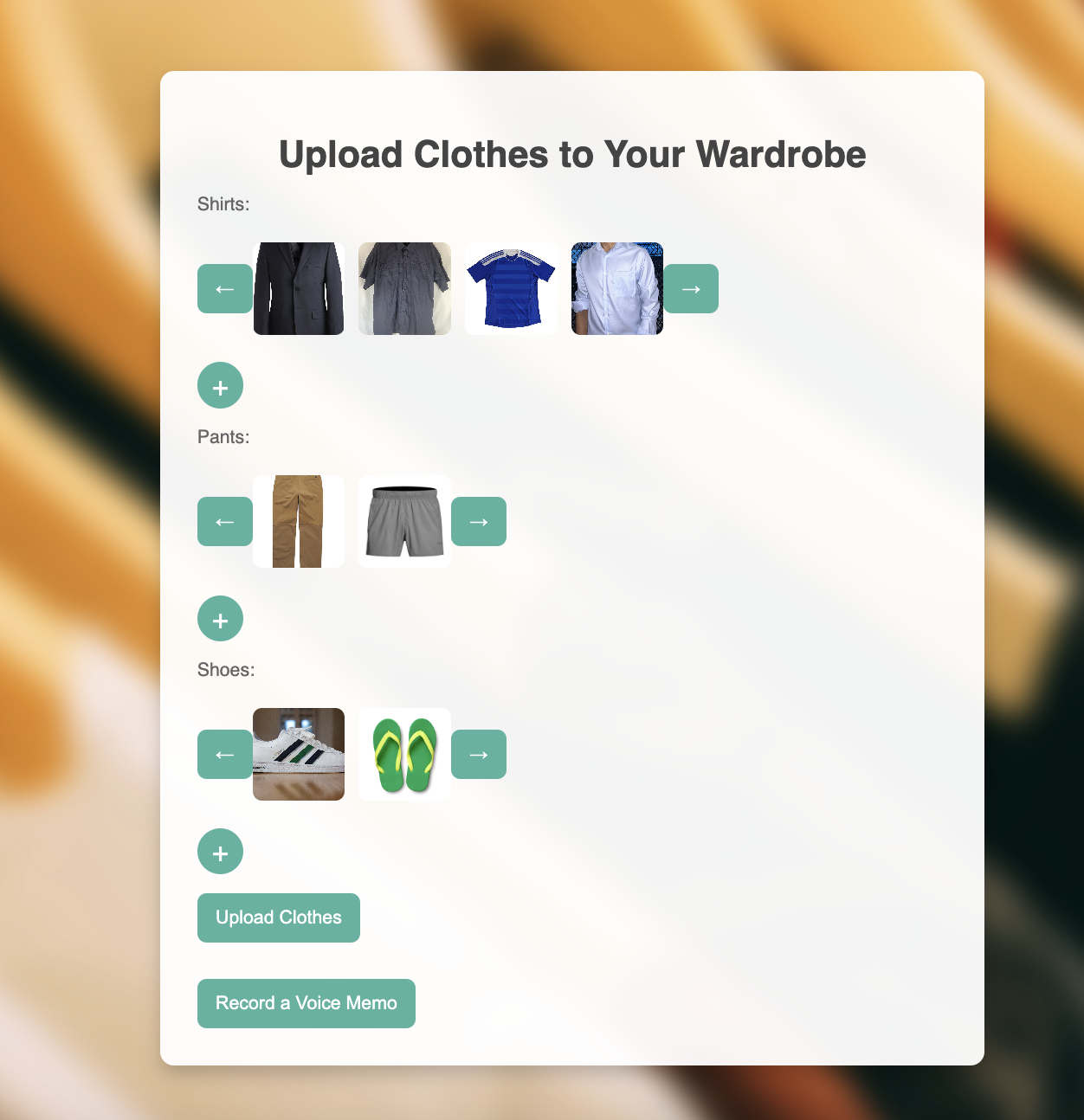
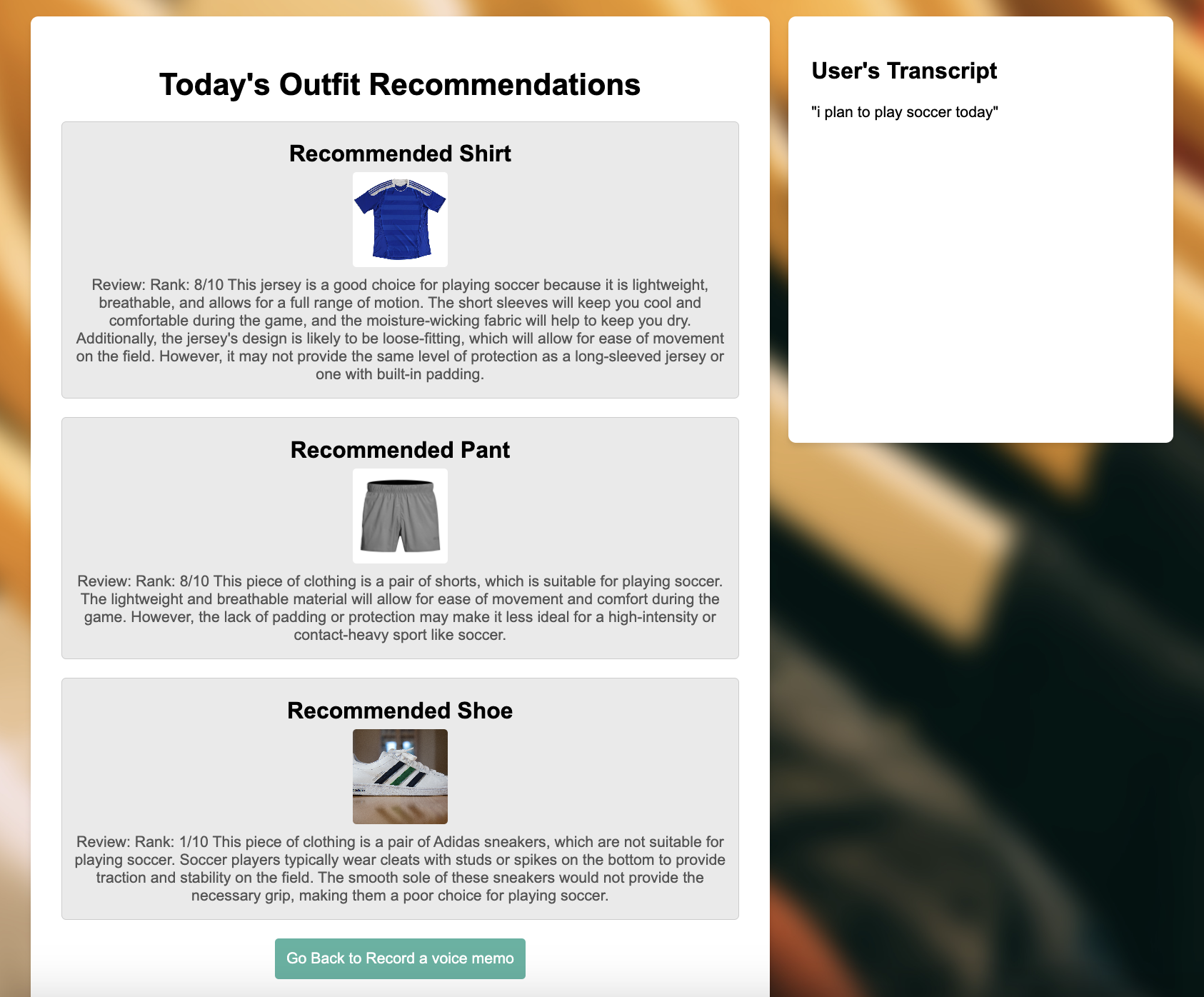
The user must first upload pictures of their clothes to the AI stylist database. We integrated a MongoDB backend to store each encoded image. Each day, the user can record a voice note, describing their plans, the type of occasion (formal or casual), or local weather conditions. With these inputs, the AI suggests outfits by combining the user’s clothing pieces in new ways. For instance, it might recommend wearing that forgotten denim jacket with chinos you always wear, or show how you can layer sweaters for colder days. A key feature we built was reviews, allowing users to get feedback on possible outfits to buy that would even better fit their activities.
How we built it
Ensemble uses several services to function. Deepgram is used for voice to text, MongoDB accesses the wardrobe database, while Groq and the multimodal Llama 3.2 help interpret and decide which outfit is best.
Challenges we ran into
One significant challenge was familiarizing ourselves with the variety of APIs and AIs available at CalHacks. We had to not only learn about what each one does, but decide which ones to use to serve our project best. Another issue was the internet connection, with both the CalHacks and public CV Events not working consistently. Ultimately, the only reliable connection we could find was through mobile hotspots, which drained our phones’ batteries quickly
Accomplishments that we're proud of
Many of our team members were doing fullstack development for the first time, so having our website perform successfully, use multiple APIs, and serve its purpose well was a first step for all of us. Our virtual wardrobe page was also a nice way of abstracting wardrobes, as well as enabling the website to handle large amounts of user-input pictures.
What we learned
We learned how to implement a backend for images and how to tune LLM hyperparameters(top_p and temperature) to get the desired randomness in outfit recommendations. We also learned how to develop voice transcription with Deepgram and pass it to the Groq API through web query.
What's next for Ensemble
This is an application that could include further considerations for improvement. Ideally it would be better if it took into account factors such as weather and even personalized fashion sense. As an example, an improved Ensemble would pull weather information directly from the internet, without user input, and could create a profile of a user’s tastes and preferences based on an initial survey as well as continuous feedback. The application was also built on a website, but a mobile application may serve more users conveniently. We have included designs (figmas) for a mobile application as well.
Built With
- deepgram
- express.js
- groq
- mongodb

Log in or sign up for Devpost to join the conversation.