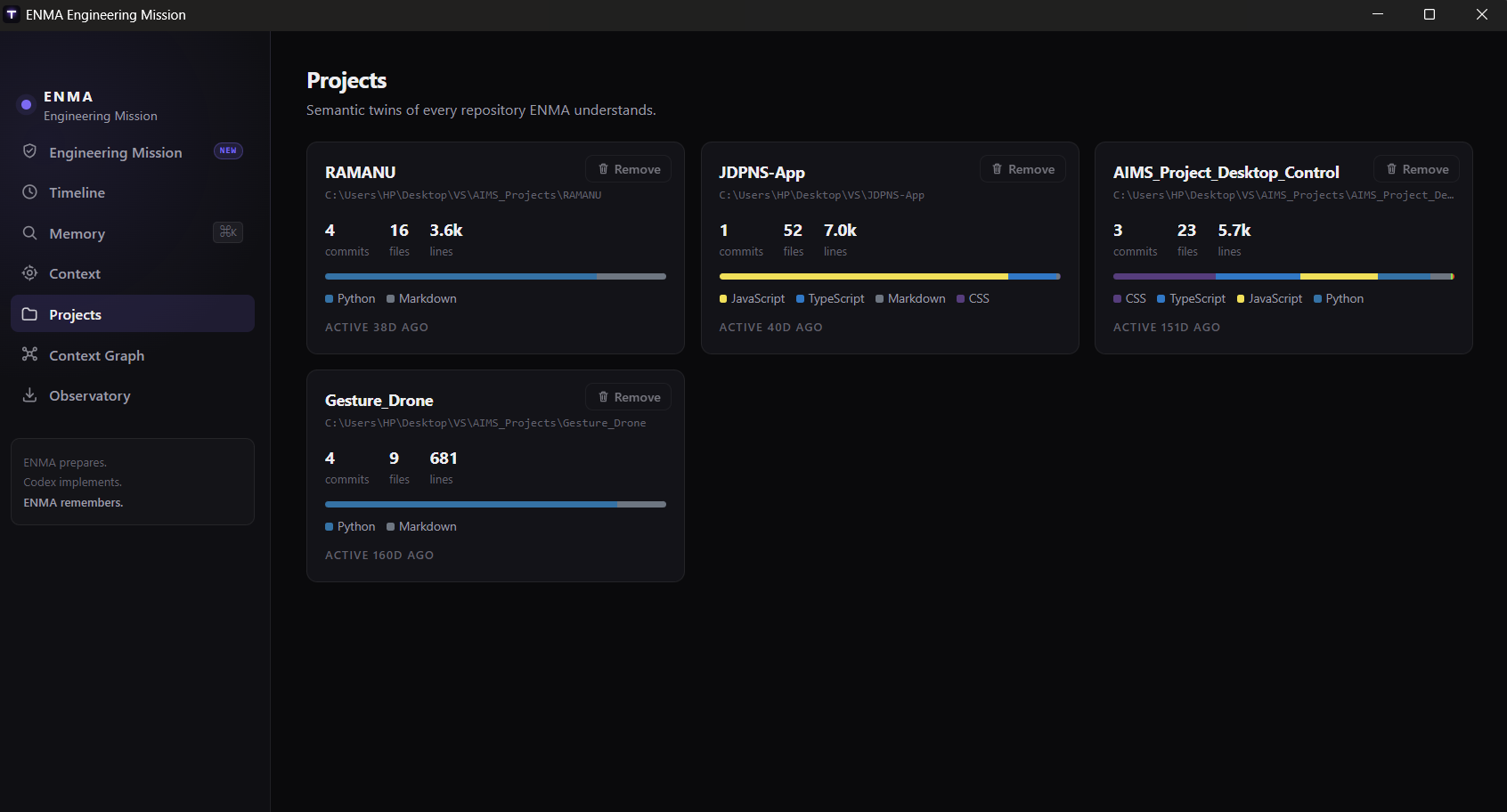
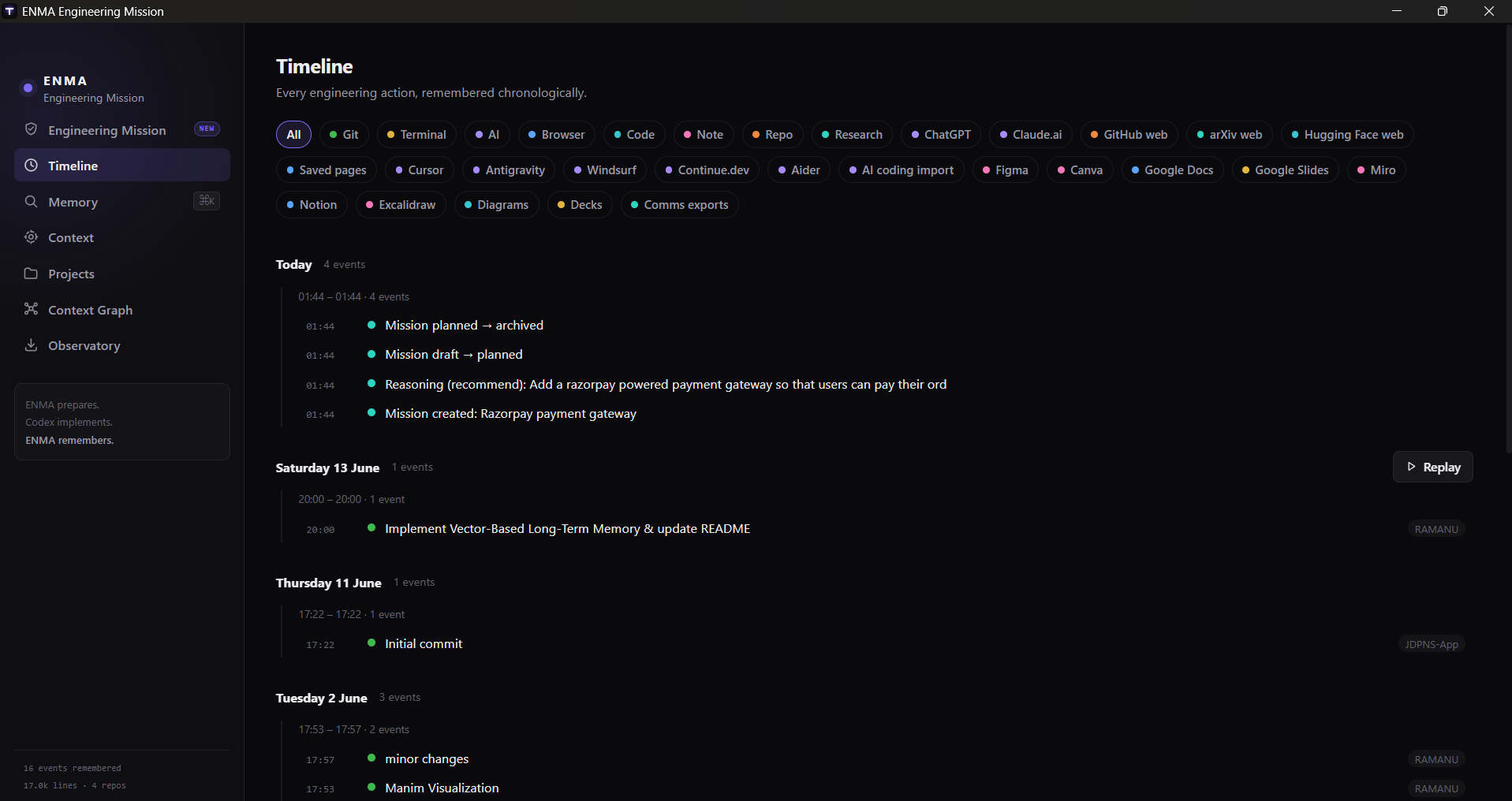
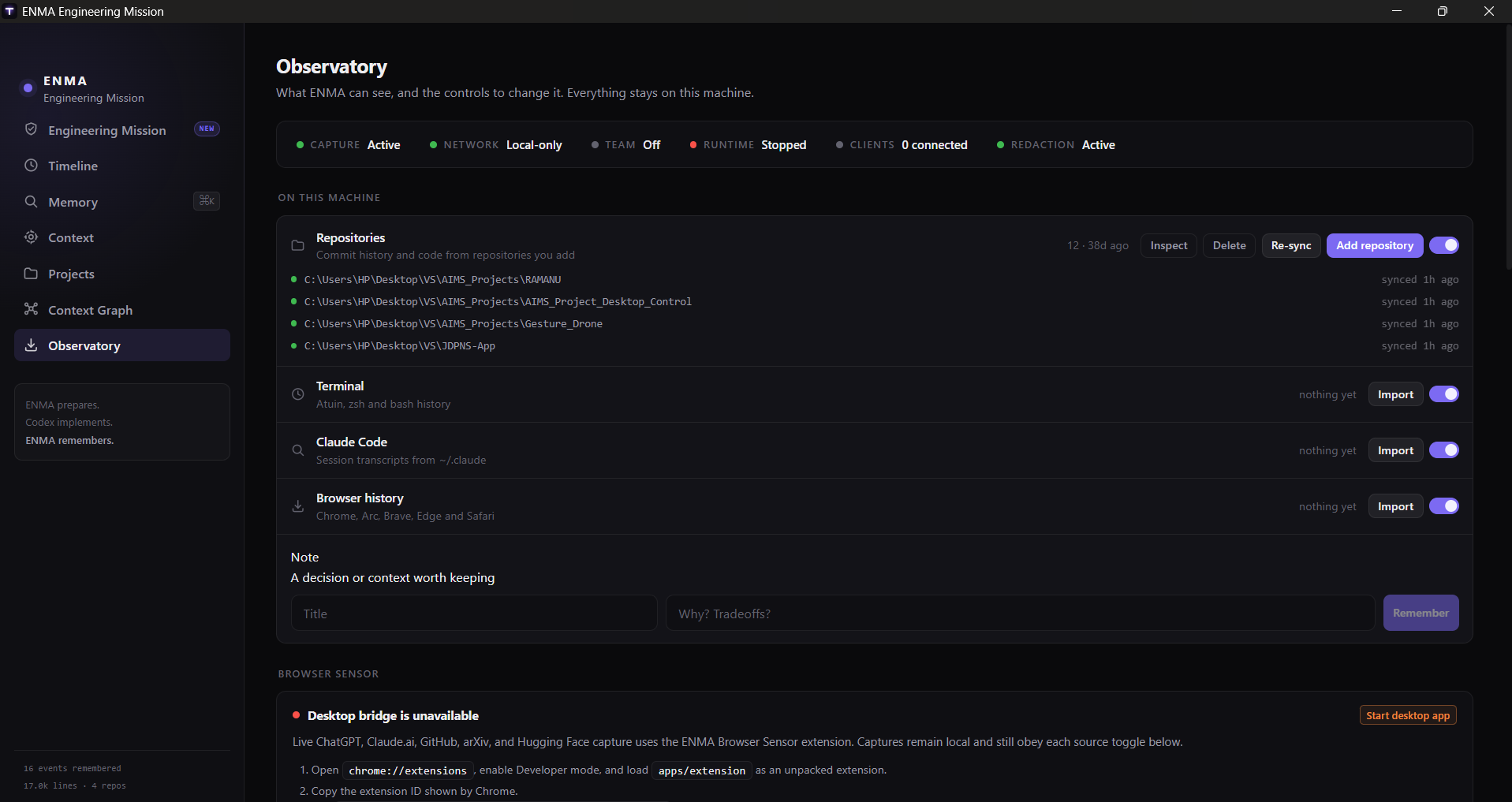
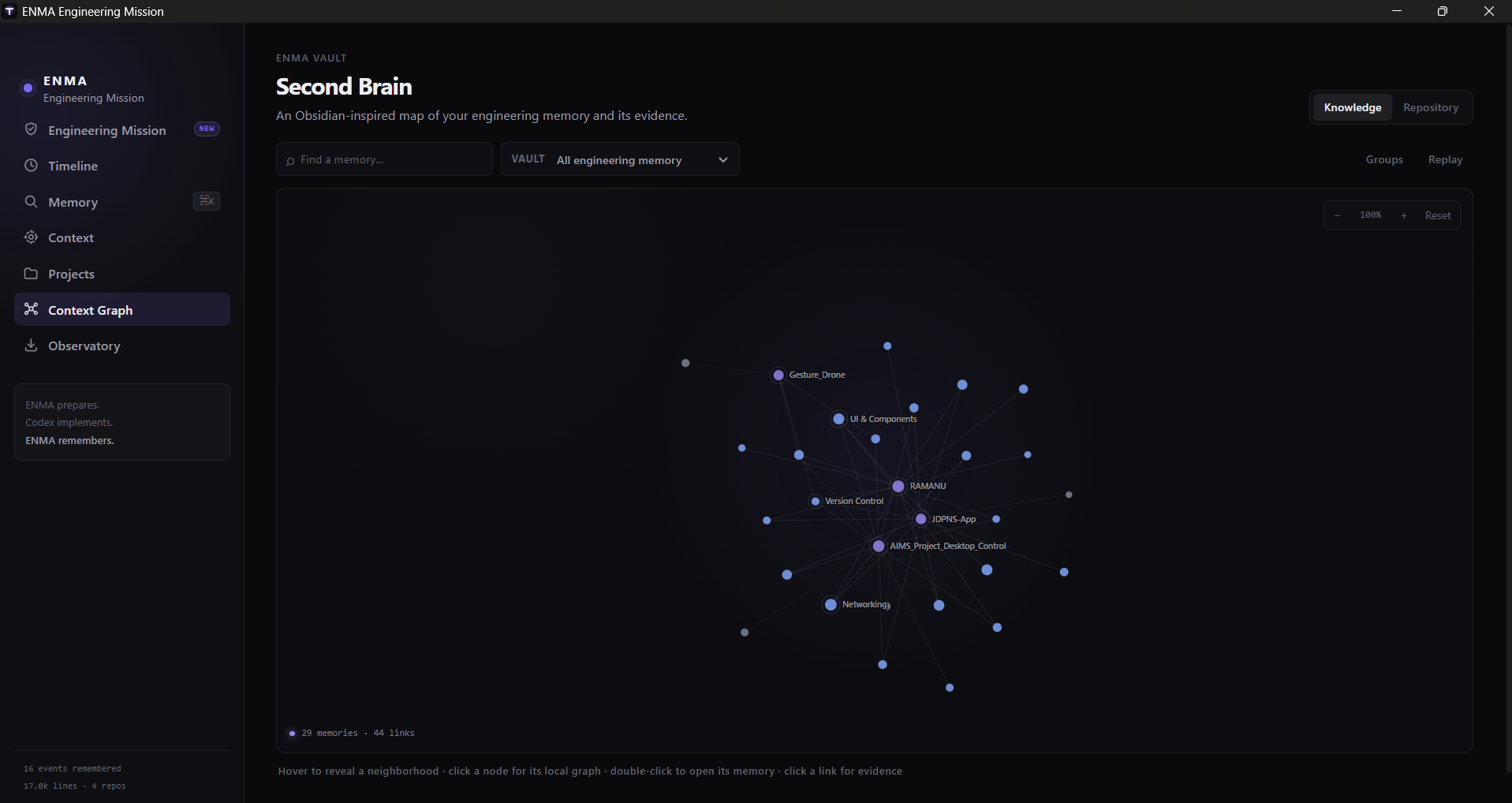
ENMA – Engineering Memory Assistant
What inspired this project
While working on larger codebases, I noticed that writing code is often the easiest part of engineering. The difficult part is understanding why something exists, what assumptions were made, what files are connected, and what might break if a change is made.
Modern coding agents like Codex can generate excellent code, but they still depend on the context we provide. If the context is incomplete or vague, the generated solution can also miss important architectural details. I wanted to build something that prepares that context automatically instead of expecting developers to gather it manually.
That idea became ENMA, an Engineering Memory Assistant that analyzes engineering knowledge, organizes evidence, predicts the impact of changes, and prepares a structured mission for Codex before implementation begins.
How I built it
I already had ENMA as a broader project, so for Build Week I created a dedicated version focused on the Engineering Mission workflow.
The application is built using React, TypeScript, Tailwind CSS, and Tauri. The interface walks through a complete engineering workflow:
- Understand the engineering task.
- Present evidence-backed claims with confidence levels.
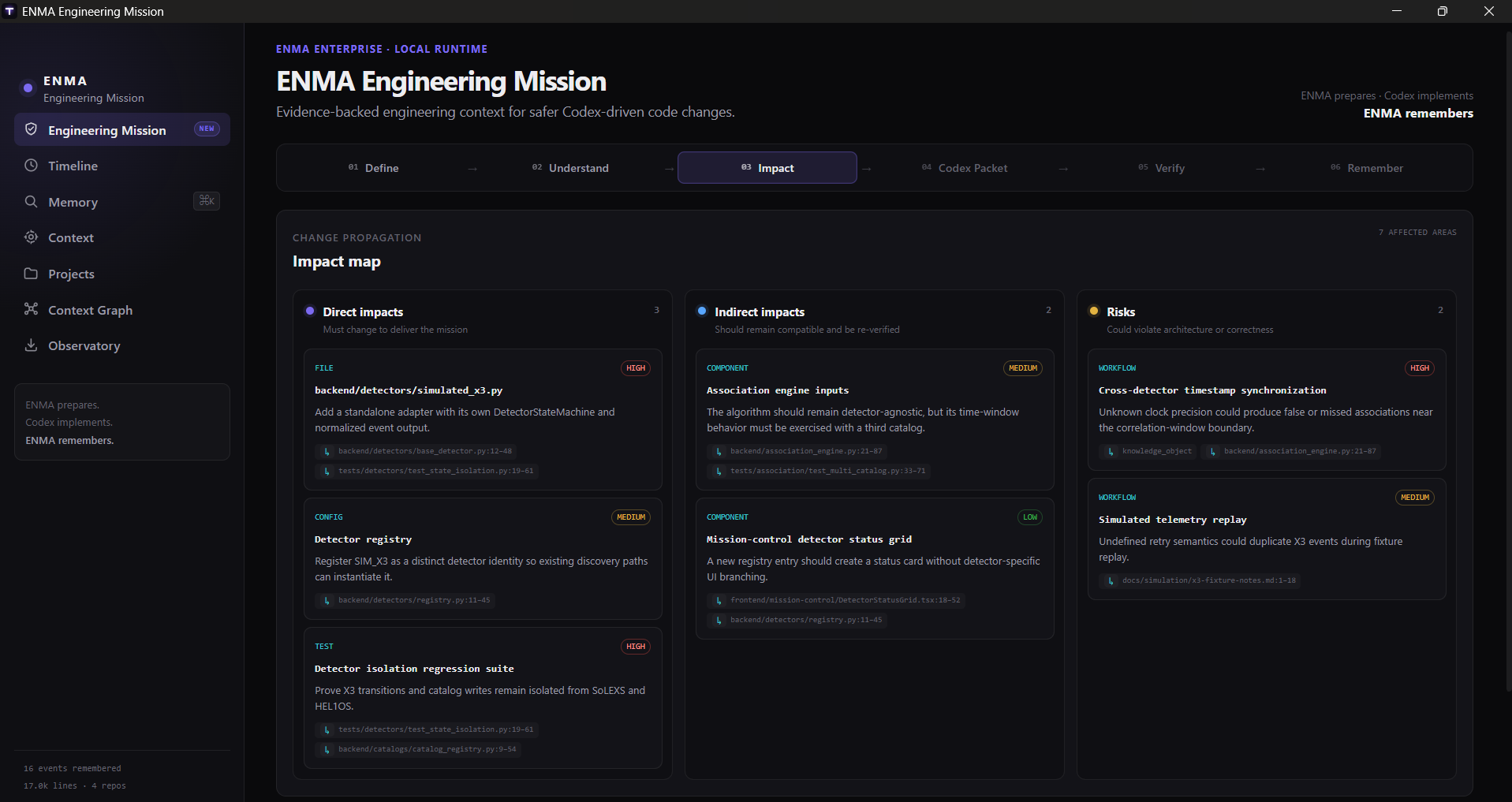
- Analyze the direct and indirect impact of the proposed change.
- Generate a structured Codex Mission Packet containing objectives, constraints, affected components, verification commands, and implementation guidance.
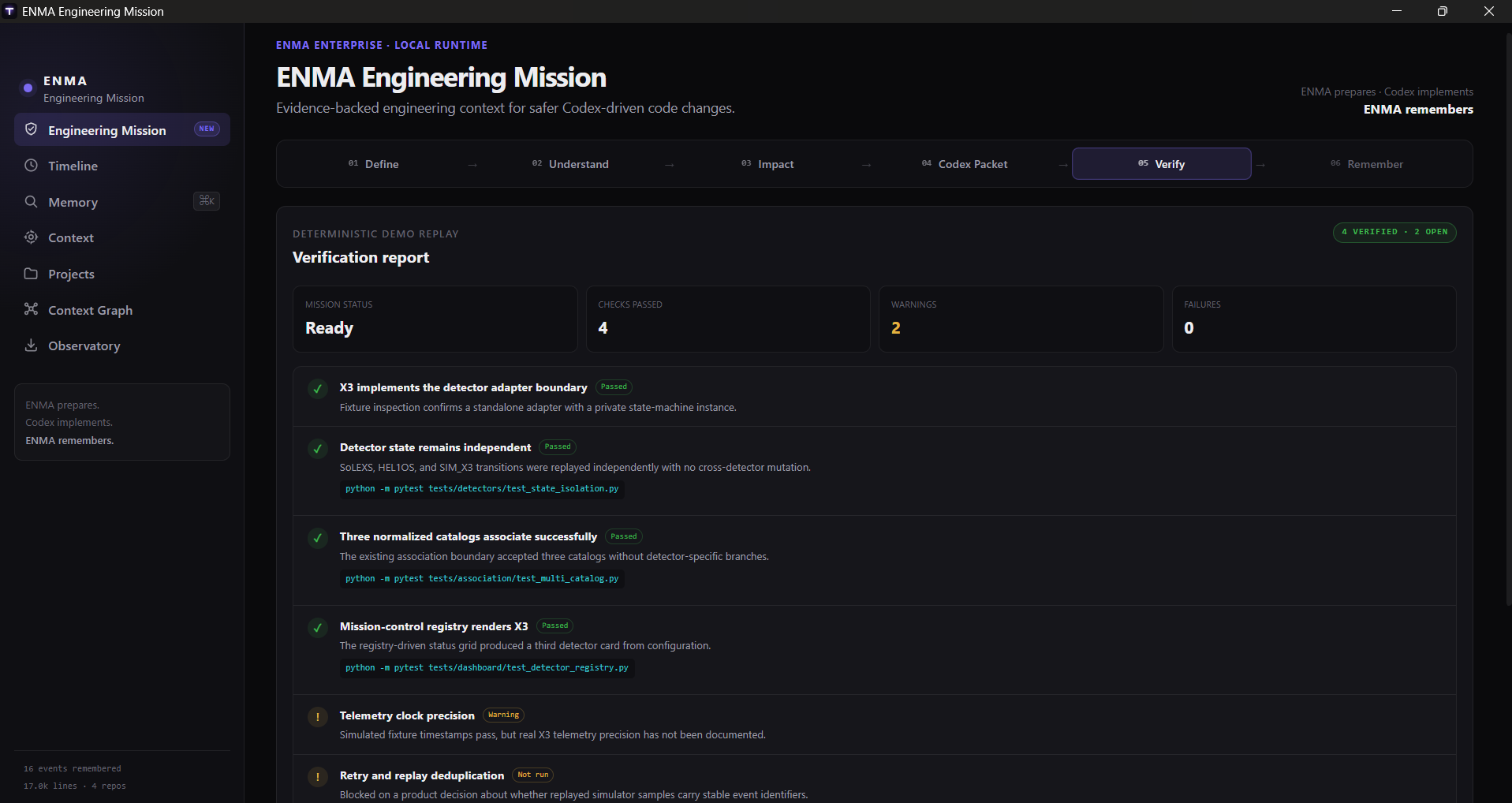
- Record verification results and preserve the reasoning behind engineering decisions.
I also used Codex extensively while building the project. Rather than asking it to generate an application from scratch, I used it as an engineering partner to audit the codebase, implement features, review architecture, improve documentation, and verify that changes remained isolated to the Build Week repository.
Challenges I faced
The biggest challenge was deciding what not to build.
The original ENMA project contains many ideas, but I wanted the Build Week submission to demonstrate one clear workflow instead of trying to showcase everything at once. I spent a significant amount of time simplifying the experience so that someone could understand the complete idea within a few minutes.
Another challenge was making the project feel trustworthy. Instead of presenting AI-generated conclusions as facts, I wanted every claim to be supported by evidence, confidence levels, and reasoning. Designing that experience required several iterations before it felt intuitive.
Finally, I wanted the project to complement Codex rather than compete with it. The goal became very clear: ENMA prepares the engineering context, Codex performs the implementation, and ENMA preserves the reasoning for future engineers.
What I learned
This project changed the way I think about AI-assisted software development.
I learned that the quality of an AI-generated solution depends heavily on the quality of the engineering context provided to it. Good prompts are useful, but structured engineering knowledge is even more valuable.
I also gained a much deeper appreciation for designing developer experiences. Small decisions in how information is presented—such as showing evidence, explaining impact, or documenting decisions—can make a large difference in how confidently engineers work with complex systems.
Building ENMA reinforced an idea that I think will become increasingly important: AI should not only help us write code, but also help us understand the systems we are changing.

Log in or sign up for Devpost to join the conversation.