-
-
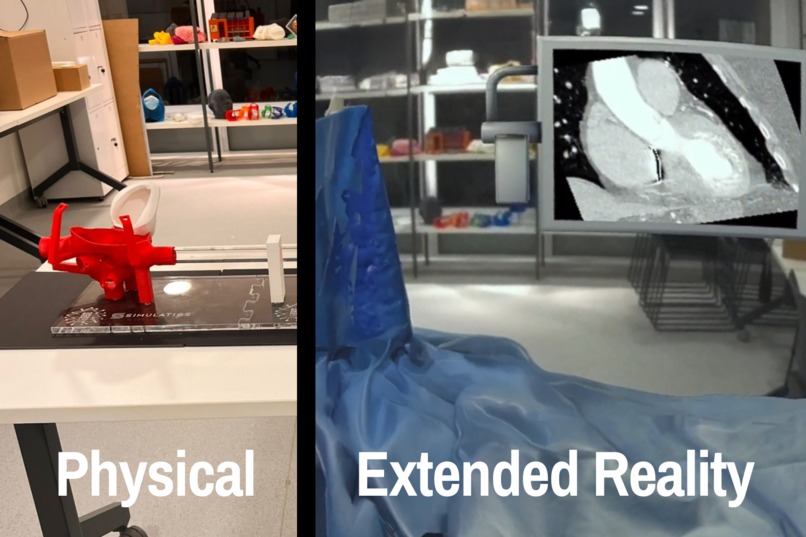
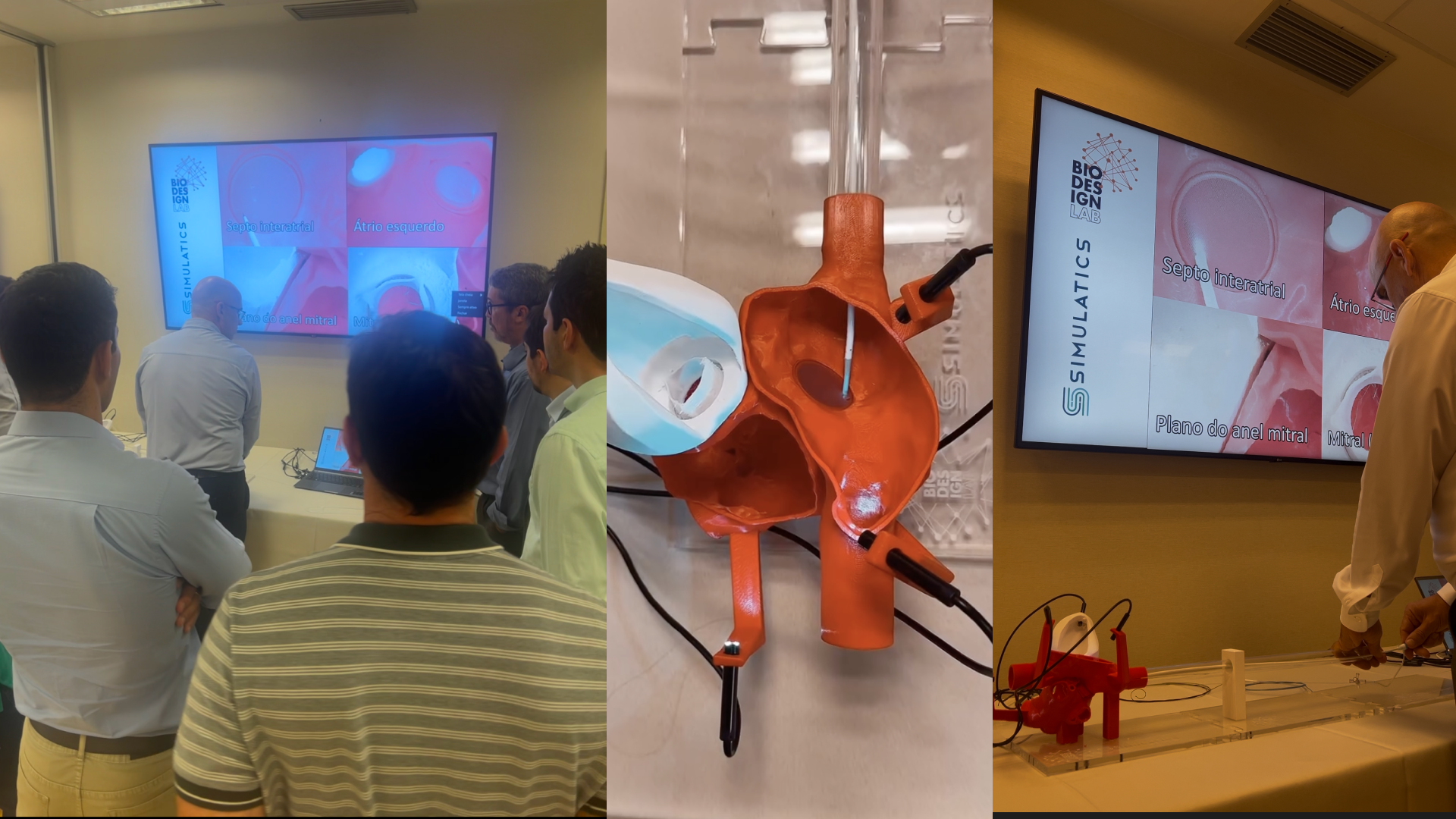
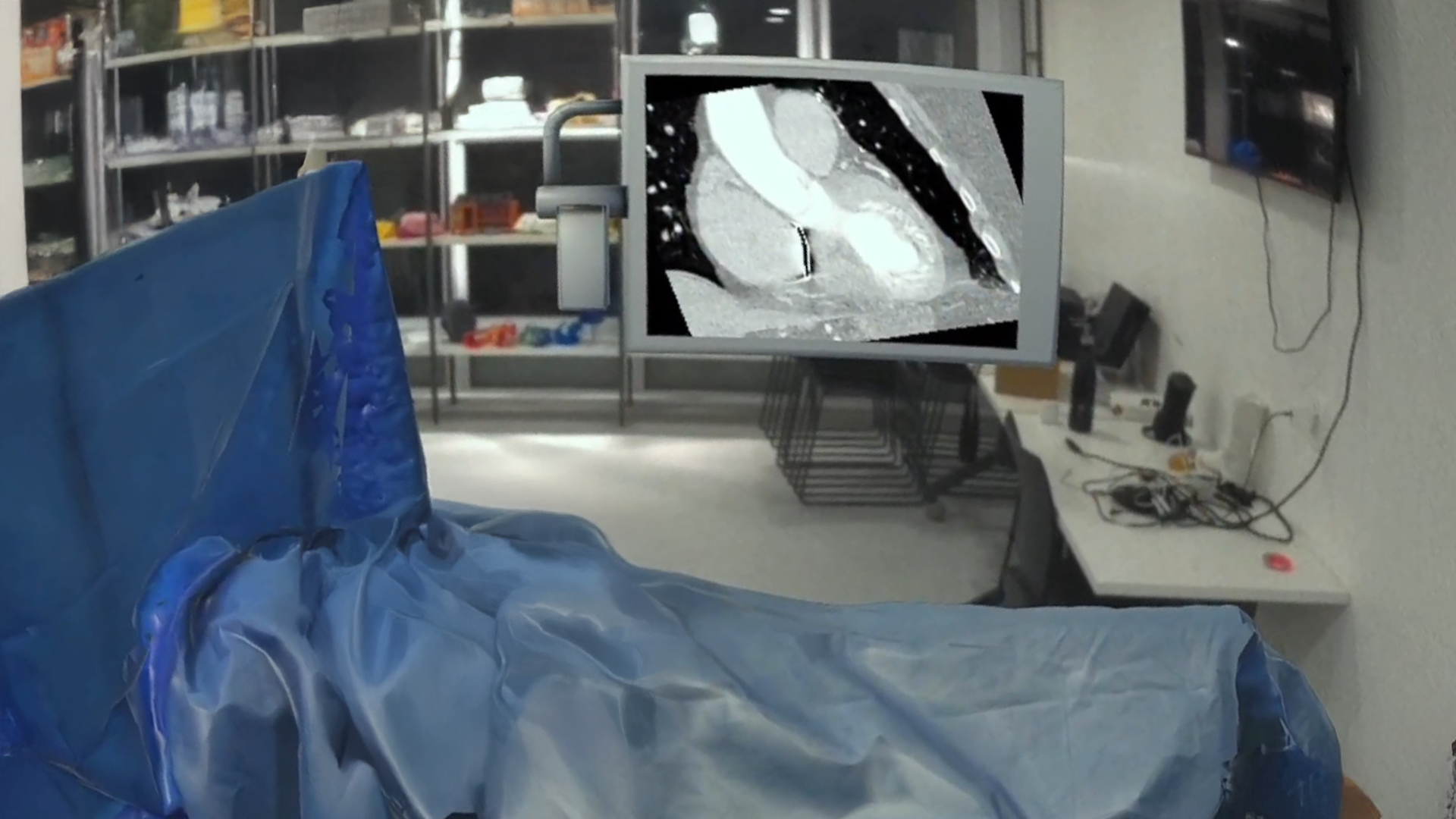
Comparison between physical simulador and the XR layer
-
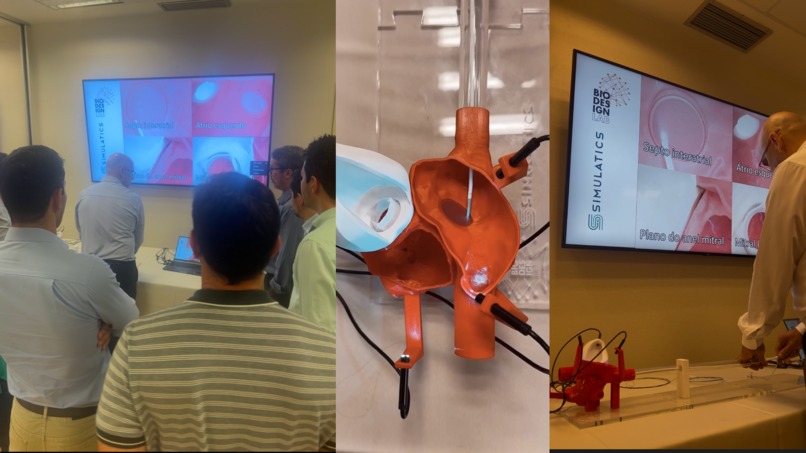
Physical simulator during a workshop of the procedures
-
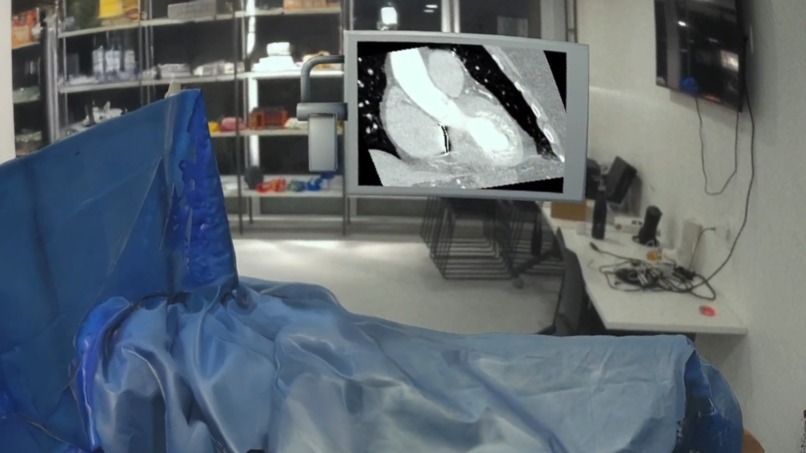
Angiographer image (the green x-ray tube is out of view)
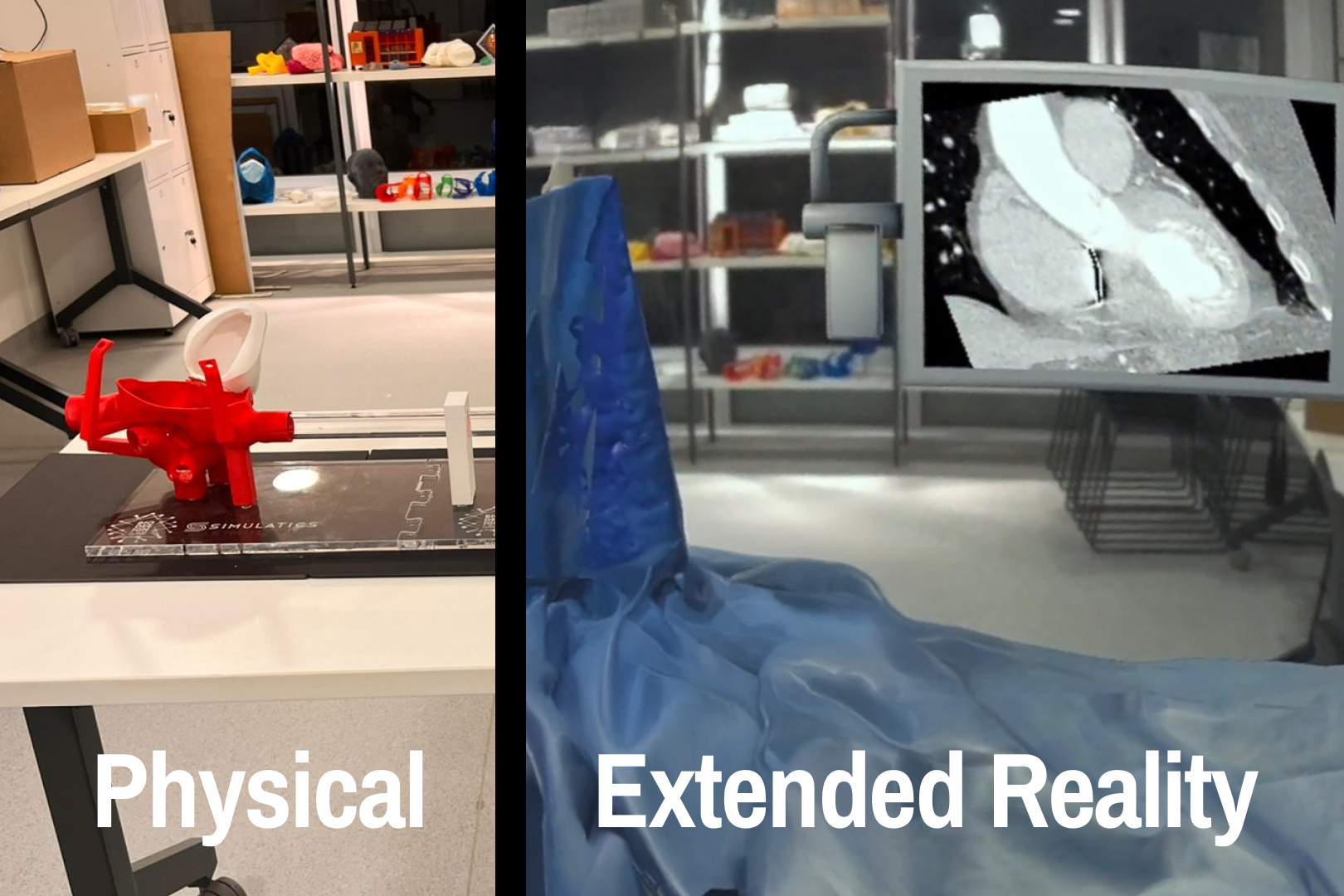
Inspiration
I was developing a realistic 3D-printed hemodynamic simulator with tactile feedback, in collaboration with a surgeon. We added cameras to track the catheter, but in actual surgery, the surgeon only sees the angiography image. Though our model is radiopaque, using real equipment is too costly.
What it does
He explains the experience, then adds an angiography simulator to the user’s view, showing a standard Mitral Valve-in-Valve and transseptal puncture procedure. Preserving the physical simulator’s camera views and tactile feedback from the physical simulator but hidding it and only shouing the image.
How we built it
The project was developed in Unity using the fo-dicom plugin to perform DICOM volume rendering and retrieve the slice relative to the angiographer’s position and rotation. We already the demo exam, used as a reference for the physical simulator development.
Challenges we ran into
I couldn’t make the fo-dicom plugin work on the standalone Oculus. So it is a PCVR experience. A future technical challenge is adding catheter position tracking—possibly through sensor integration.
Accomplishments that we're proud of
I’m proud to have understood the fo-dicom plugin and added something initially outside the simulator’s scope. Now the team is eager to push it further.
What we learned
I had little experience creating interfaces in Unity for Oculus Quest, and even less coding for manipulating with DICOM files.
What's next for Enhancing Hemodynamics Simulation with XR Integration
Add a method to track the catheter’s position, and possibly create an increasingly digital experience that supports various procedure types.


Log in or sign up for Devpost to join the conversation.