English Pathway — AI-Guided Interactive English Learning Platform
Inspiration
Millions of language learners worldwide face a common dilemma: traditional language apps rely heavily on repetitive multiple-choice quizzes that lack conversational practice, while live human tutoring is expensive and hard to schedule.
We were inspired to bridge this gap by creating English Pathway—an intelligent, accessible, and immersive English learning platform. We envisioned a tool that pairs a dynamic, real-time voice and text AI tutor with structured interactive activities, providing every student with personalized, instant feedback and real-world conversational confidence without high costs.
What it does
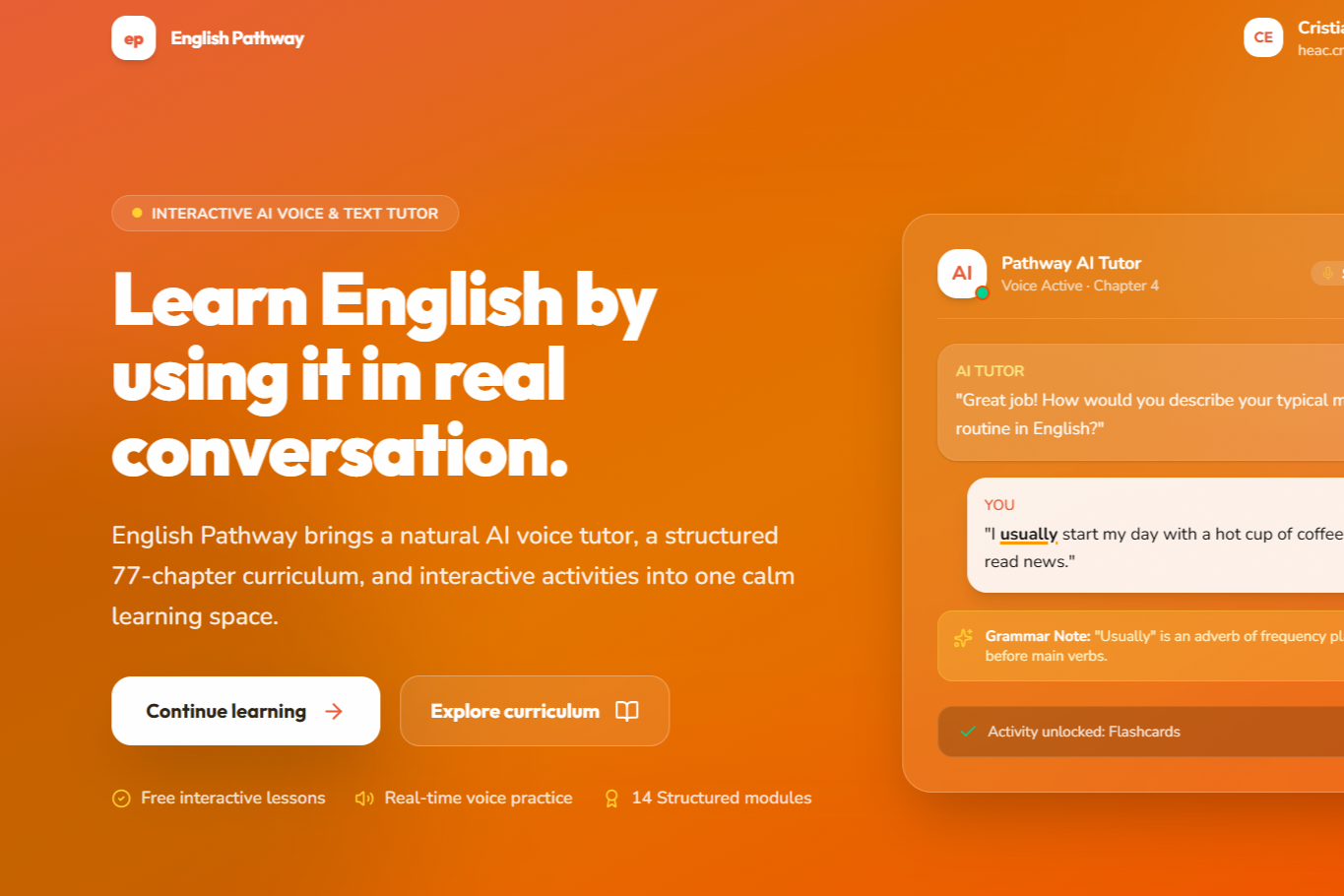
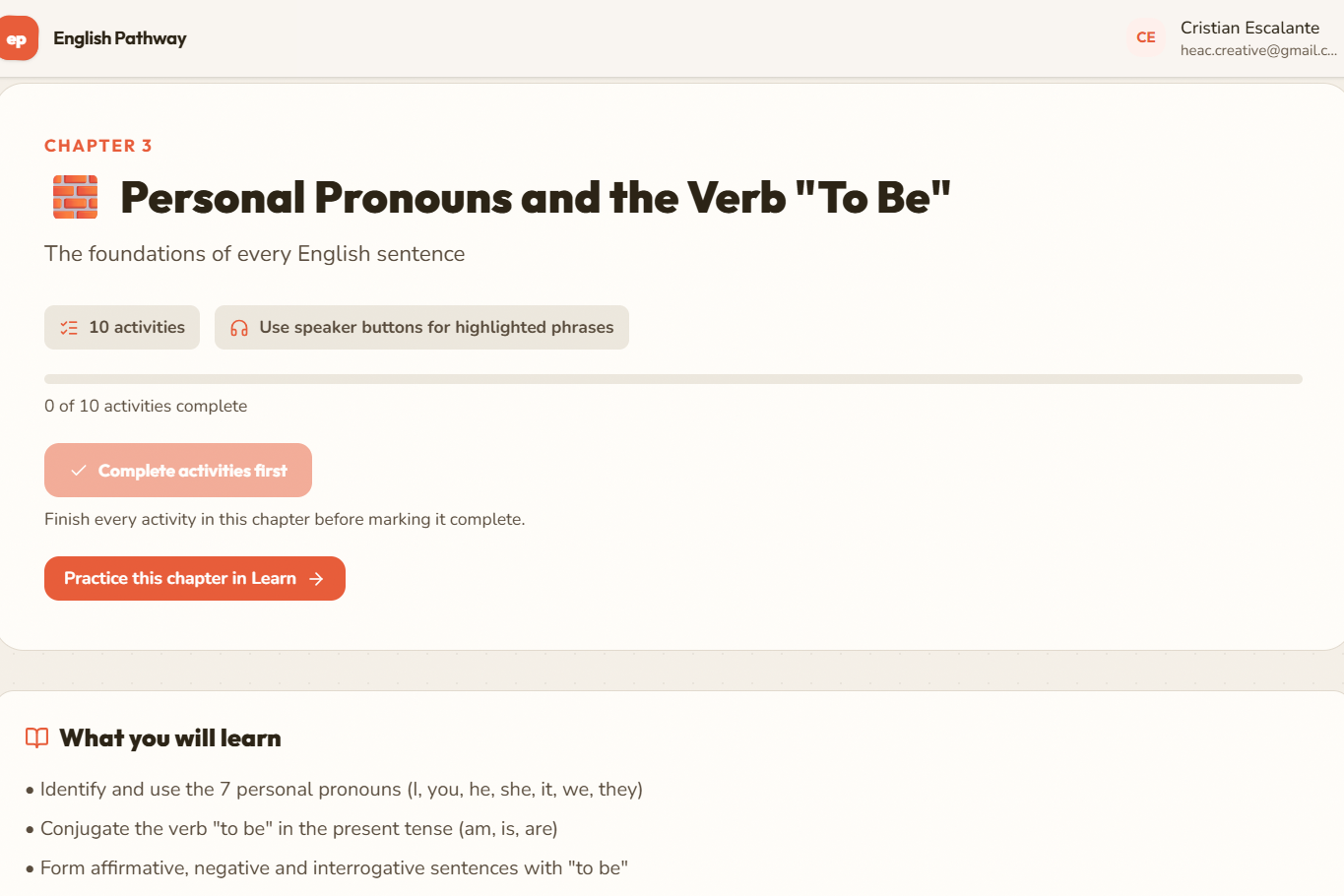
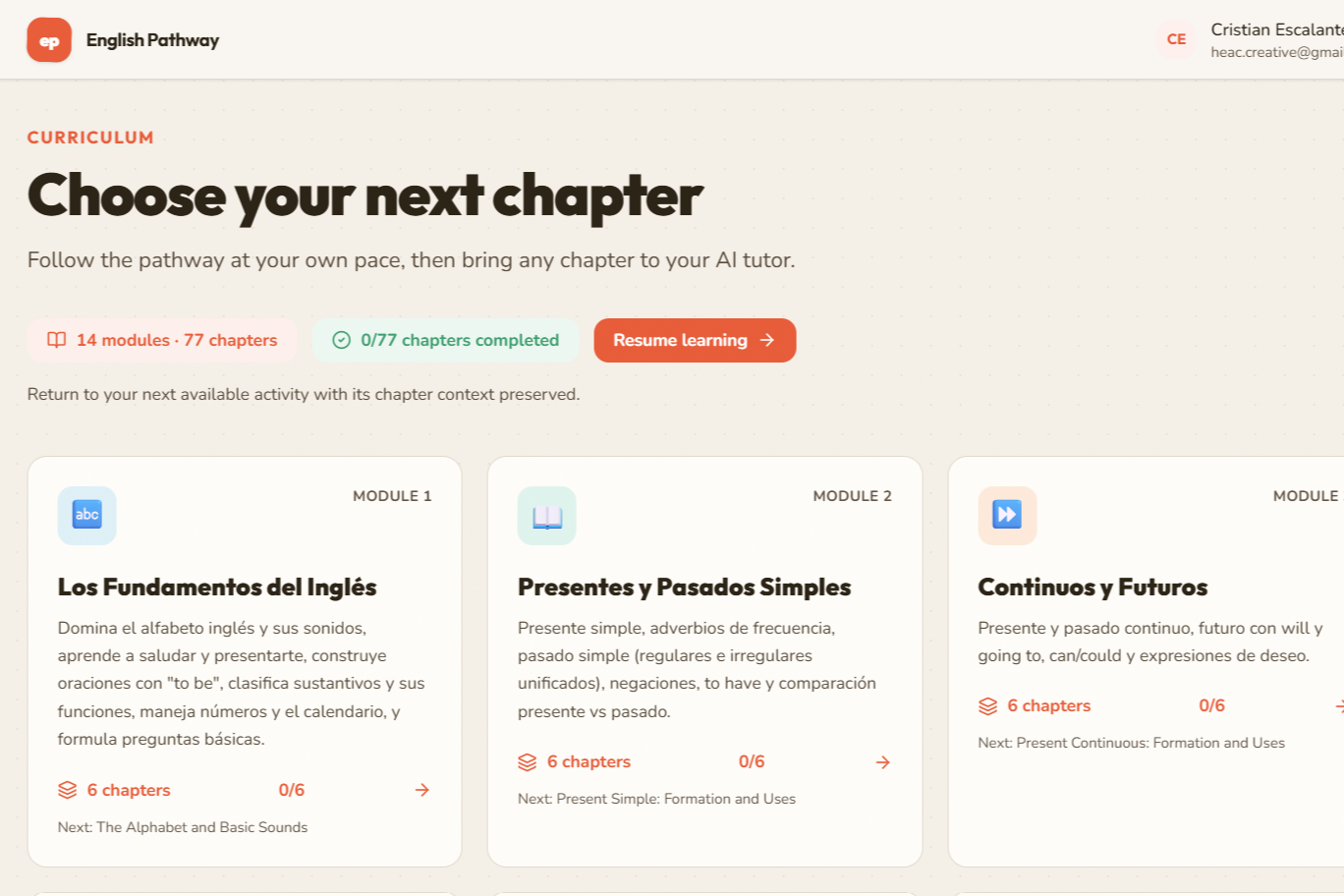
English Pathway is a modern, AI-powered English learning platform that combines interactive voice tutoring with a dynamic activity panel and structured curriculum across 14 modules and 77 chapters.
Key features include:
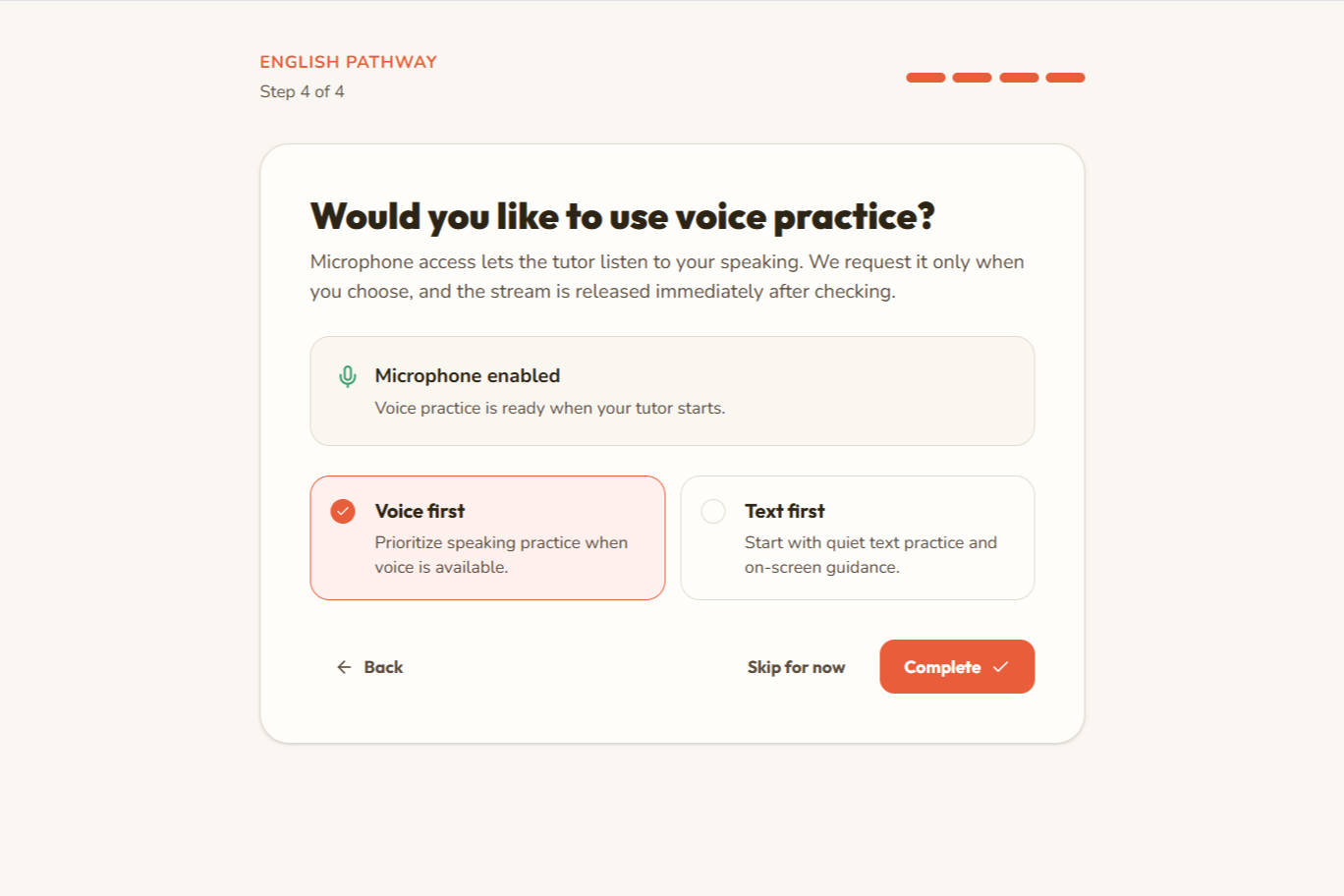
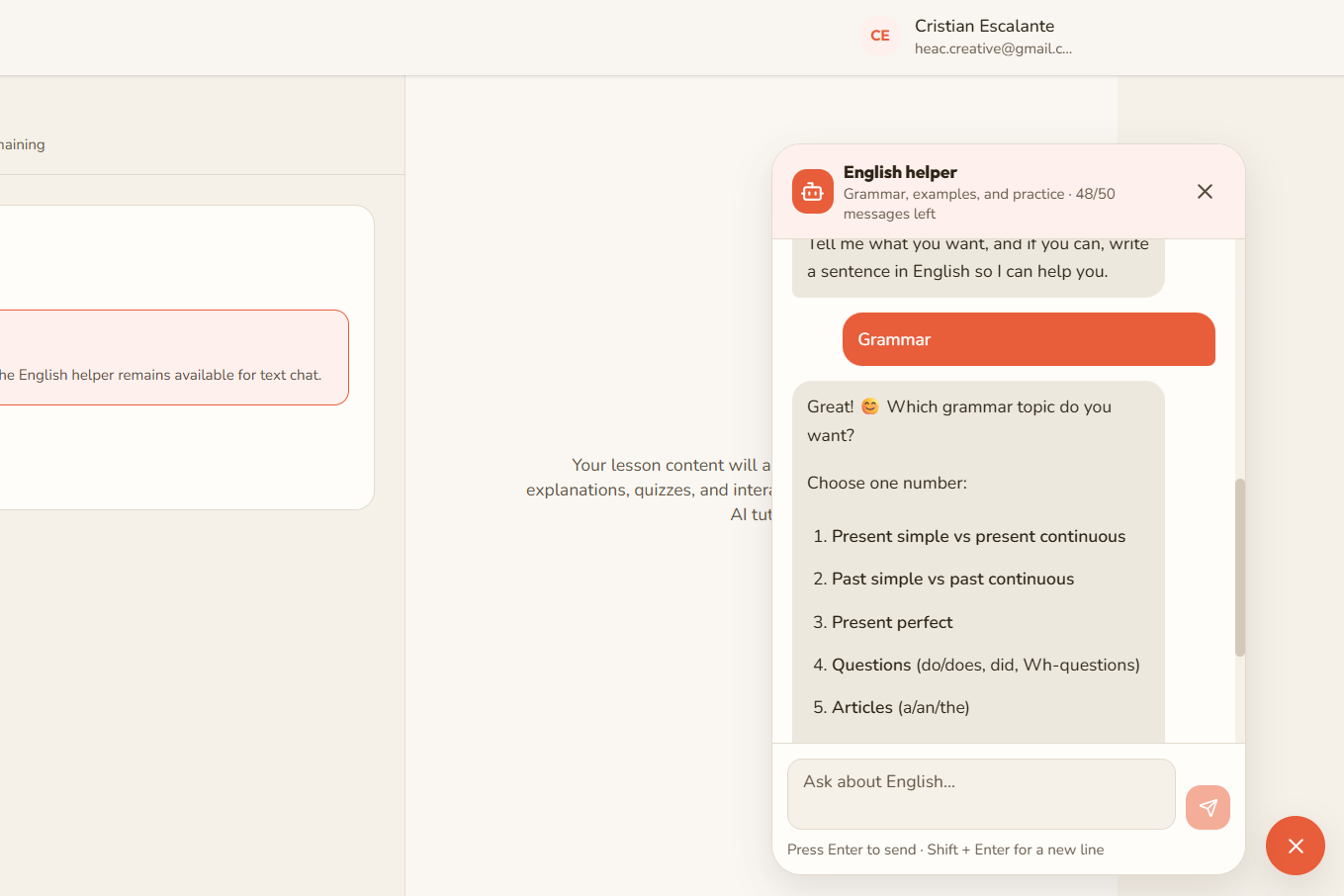
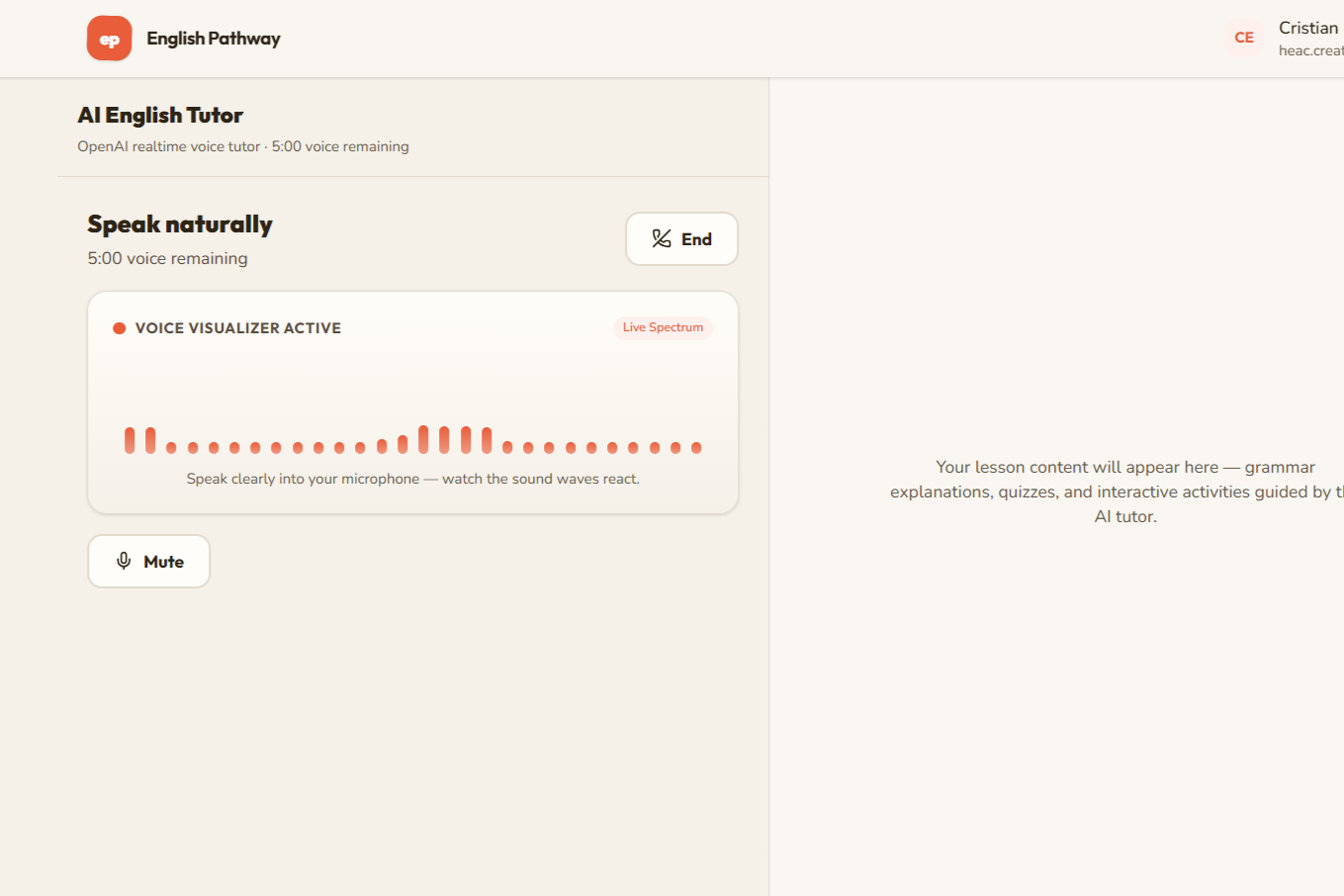
- Interactive Voice & Text Tutor: Speak directly to an AI language coach powered by real-time voice models with low-latency conversational feedback.
- Dynamic Content & Activity Panel: The AI tutor dynamically pushes live interactive activities onto the user's screen during conversation—including dictations, pronunciation drills, flashcards, word matches, sentence builders, and SVG visual scenes.
- Spaced Repetition System (SRS): Employs memory retention models based on SuperMemo-2 (SM-2) algorithms to schedule reviews right before memory decay occurs.
- Contextual RAG Knowledge Retrieval: Answers student questions strictly based on a comprehensive 77-chapter knowledge base embedded into vector storage.
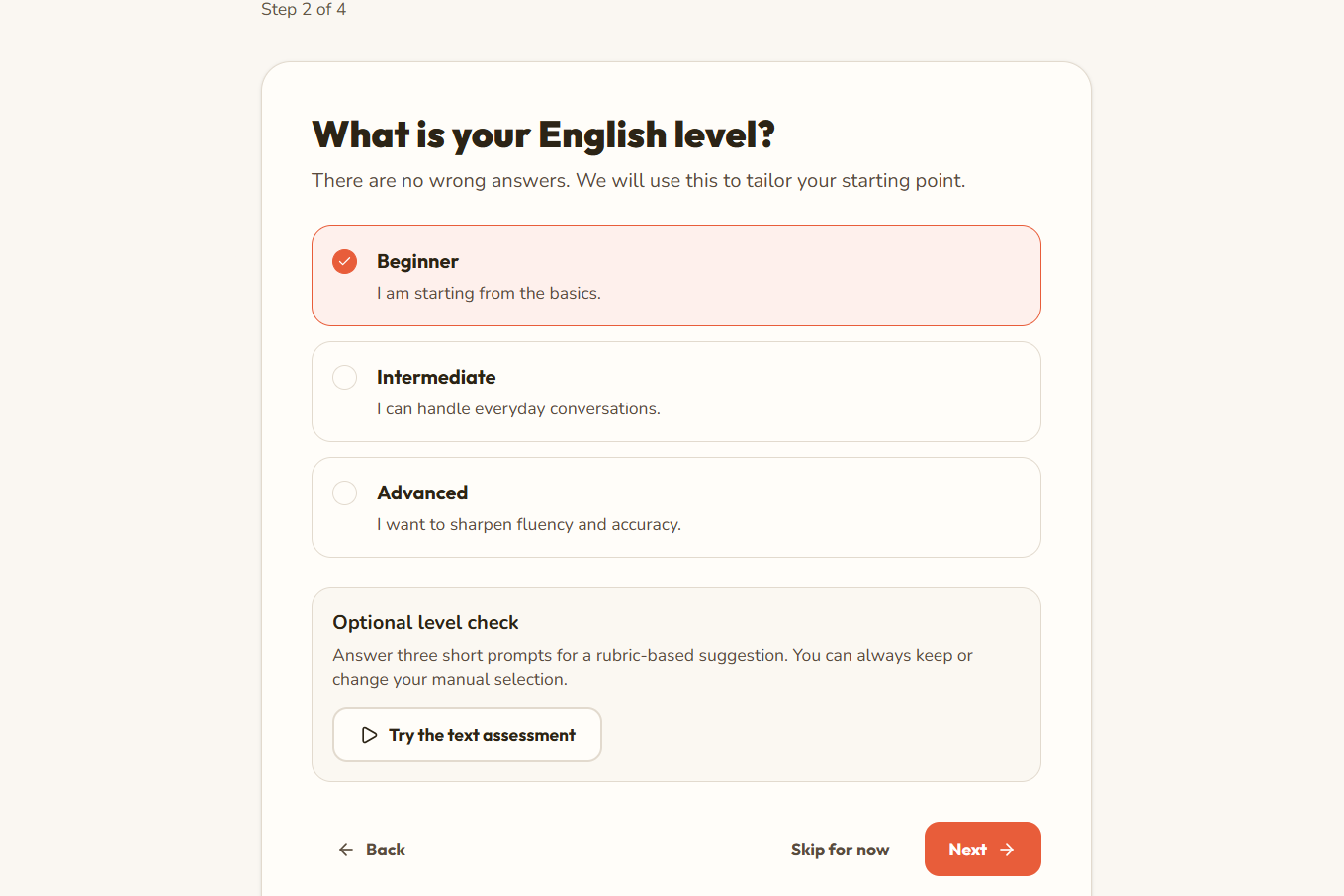
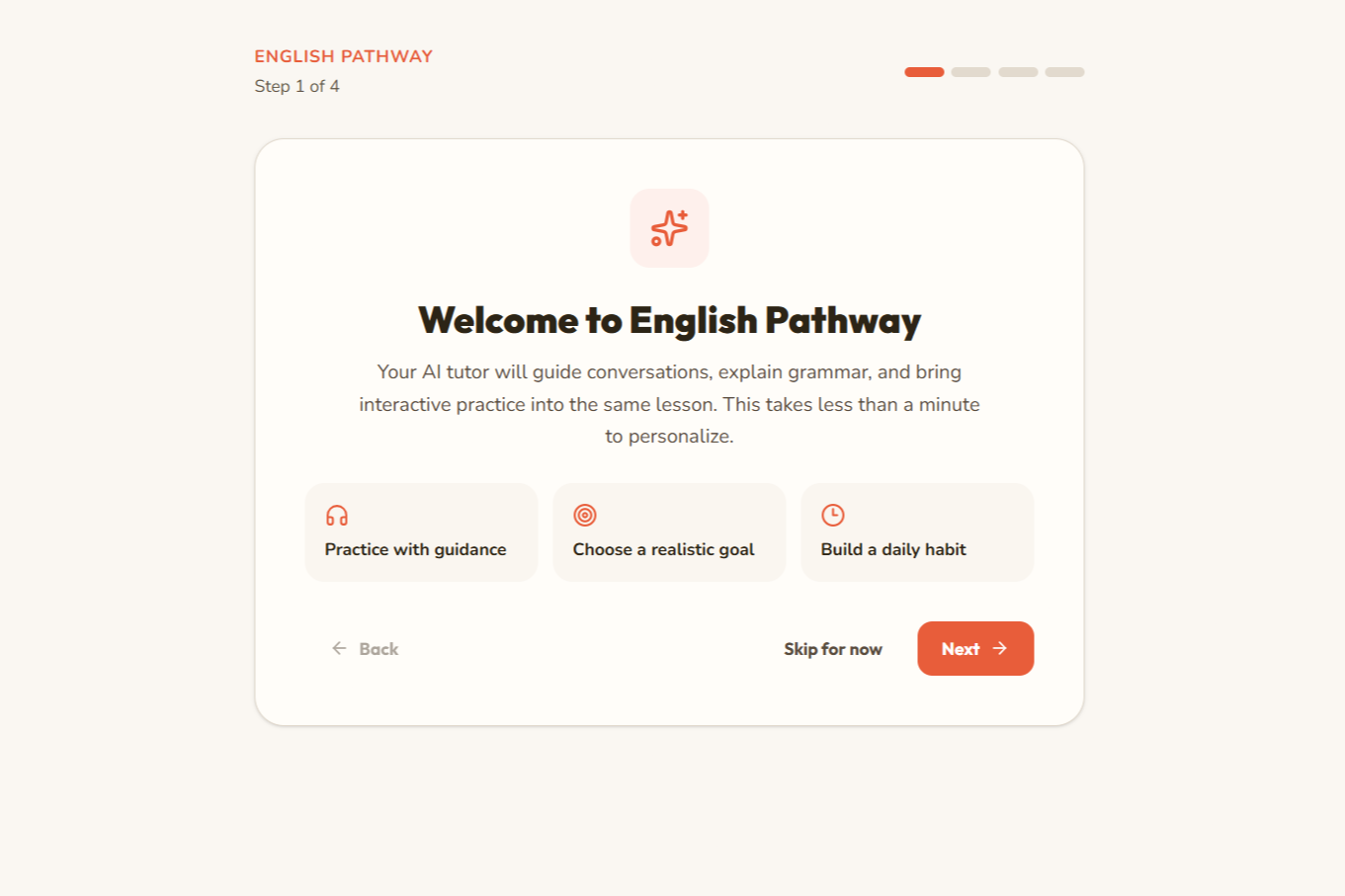
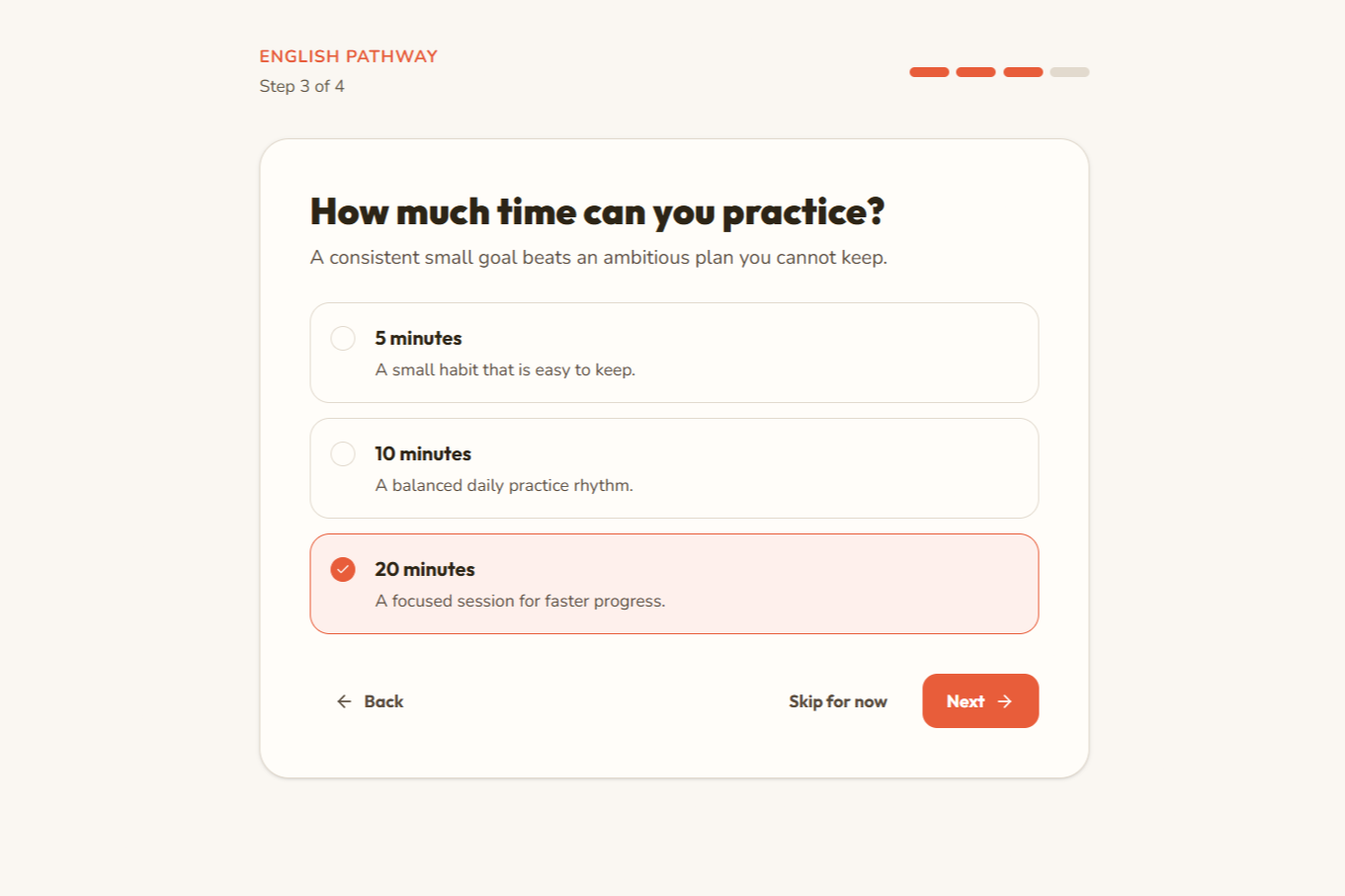
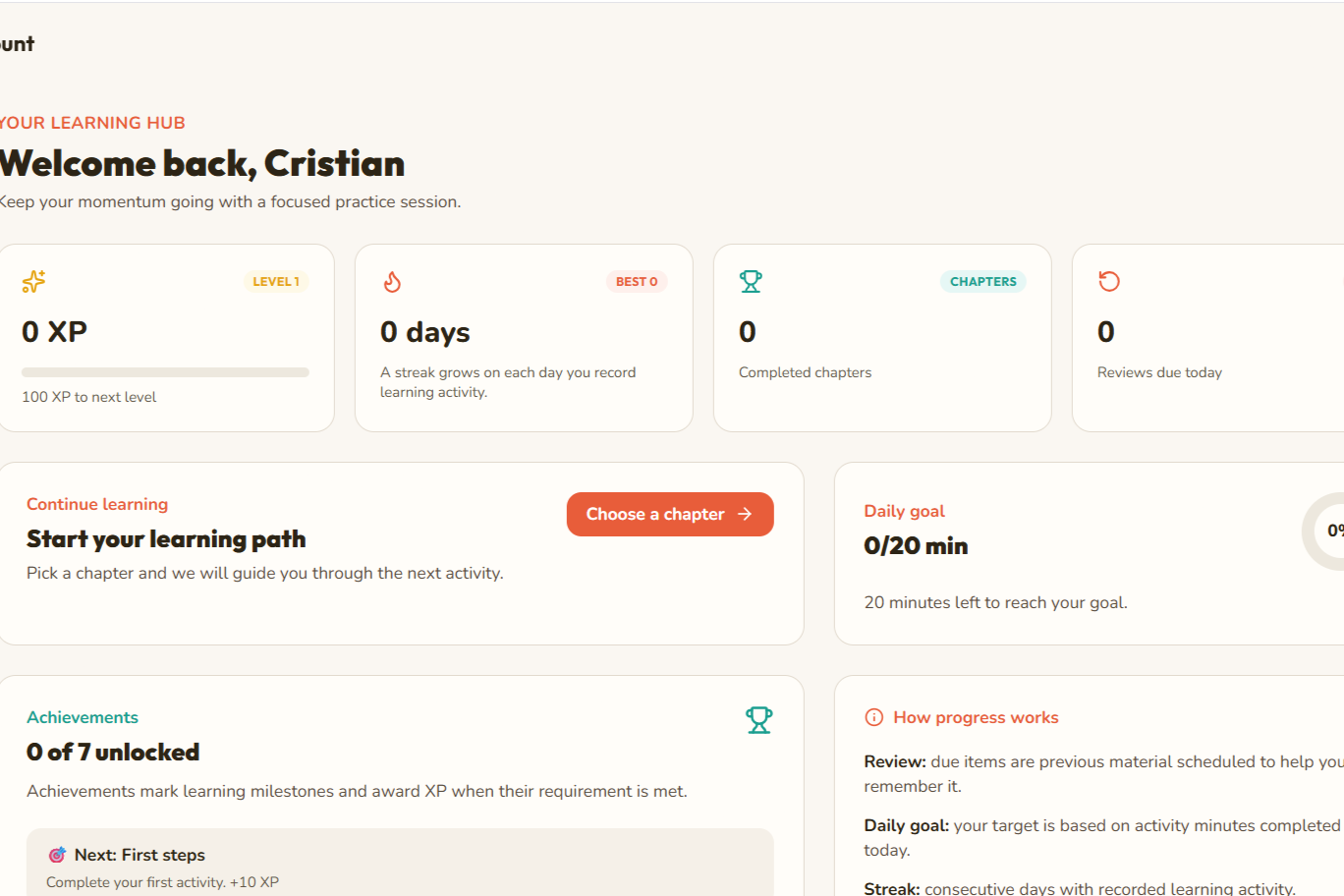
- Personalized Progress & Auth: Users track their completed activities, streak progress, and learning preferences through a seamless account settings dashboard.
How we built it
We engineered English Pathway using a cutting-edge full-stack web architecture with AI guidance and code generation assistance:
- Frontend & UI: Built with Next.js 16 (App Router), React 19, Tailwind CSS v4, Radix UI, and Framer Motion for smooth, accessible, micro-animated user interfaces.
- AI Tutors & Voice Engine: Integrated ElevenLabs React SDK and OpenAI Realtime Voice (
gpt-realtime-2.1-mini) for voice interactions, supported by custom client tool calling (showGrammar,showActivity,showQuestion,clearPanel). - Data & Vector RAG: Supabase (PostgreSQL +
pgvector) stores user profiles and knowledge embeddings generated via OpenAItext-embedding-3-small. - AI Code Generation & Agentic Assistance: Developed with OpenAI Codex and Antigravity AI Agent to rapidly construct type-safe API handlers, Zod schemas, Vitest suites, and dynamic game renderers.
- State & Logic: Zustand with persistent storage for local session state and theme management.
Challenges we ran into
- Synchronizing Voice Tutor Events with UI State: Enabling the AI tutor to trigger interactive UI activities in real time while maintaining conversational latency under 500ms required tight tool-calling orchestration and robust WebSocket event handling.
- Audio Normalization for Pronunciation Scoring: Matching spoken student inputs against target sentences required writing audio normalization routines to strip punctuation, handle contractions, and evaluate phonetic similarity accurately.
- Optimizing RAG Retrieval Speed: Embedding 77 chapters into vector chunks while ensuring fast semantic search during live voice conversations required fine-tuning chunk boundaries and indexing strategy in Supabase
pgvector. - State Persistence Across Ephemeral Session Markers: Building a resilient local session store that gracefully handles offline fallbacks and browser storage quotas while keeping live game progress uninterrupted.
Accomplishments that we're proud of
- Full 77-Chapter Activity Coverage: Engineered 8–10 interactive exercises per chapter across 10 distinct activity types (Quiz, Flashcard, WordMatch, SentenceBuilder, Dictation, Pronunciation, SVG Scene, etc.).
- Sub-Second Voice Responses: Achieved low-latency conversational voice tutoring with seamless visual fallback support.
- High Test Coverage & Quality: Passed comprehensive unit and architectural test suites (135+ Vitest tests) verifying schema compliance, SRS decay math, and API boundary resilience.
- Zero-Latency UI Design: Built a modern, accessible interface with dynamic color modes and rich aesthetic tokens.
What we learned
- Agentic AI Workflow: Utilizing OpenAI Codex and LLM tools dramatically accelerated full-stack development, enabling rapid refactoring, automated testing, and clean schema validation.
- Mathematical Memory Modeling: Implementing the SM-2 Spaced Repetition algorithm highlighted the importance of mathematical precision in tracking review intervals:
$$EF' = EF + \left(0.1 - (5 - q) \cdot (0.08 + (5 - q) \cdot 0.02)\right)$$
where $EF$ represents the Easiness Factor and $q$ denotes the user's recall quality grade ($0 \le q \le 5$).
- Real-Time Tool-Calling Patterns: Designing structured tool-calling payloads allows AI voice agents to control visual client interfaces seamlessly without blocking conversation flow.
What's next for English Pathway
- Adaptive Gamification & Streaks: Expand XP progression, level milestones, daily learning goals, and achievement badges.
- Customized Learning Paths: Allow students to upload custom documents or topics to generate personalized dynamic chapters using RAG embeddings.
- Multi-Language UI Support: Introduce localized interface translations to support beginners from diverse non-English backgrounds.
- Mobile Native Applications: Package the core web experience into iOS and Android apps using Progressive Web App (PWA) offline capabilities and React Native.
Built With
- codex
- css3
- elevenlabs
- framer-motion
- html5
- next.js
- node.js
- openai
- pgvector
- pnpm
- postgresql
- radix-ui
- rag
- react
- spaced-repetition-system-(srs)
- supabase
- tailwind-css
- typescript
- vector-embeddings
- vitest
- web-audio-api
- websockets
- zod


Log in or sign up for Devpost to join the conversation.