-
-
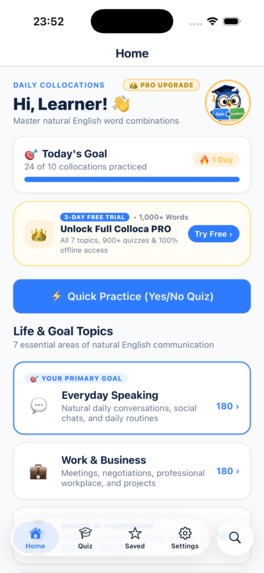
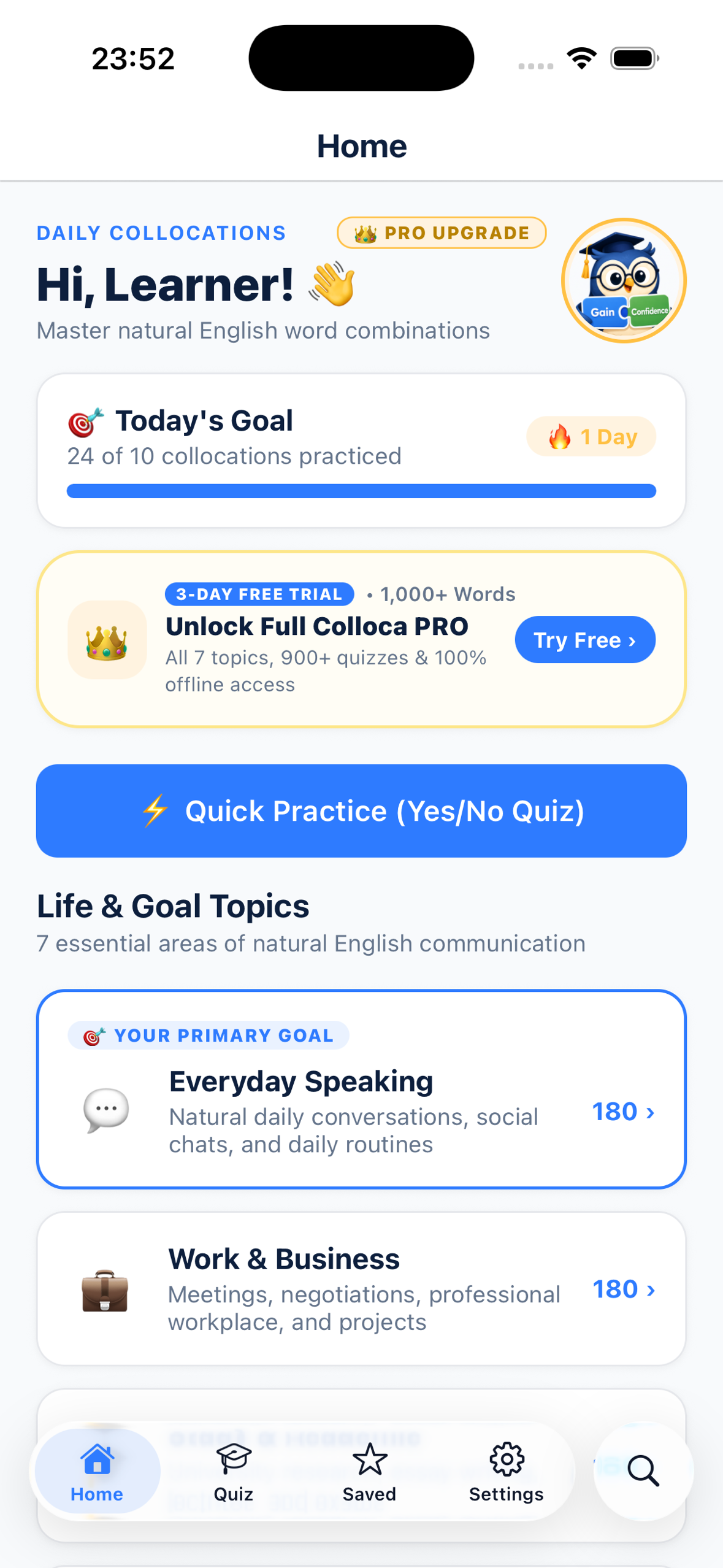
Colloca home dashboard — connected word blocks and daily practice.
-

Colloca app icon — 1024 x 1024 uncropped.

The problem
Many English learners know the words in a sentence but still sound translated because the words are combined unnaturally. “Do a decision” is understandable; “make a decision” is what fluent speakers expect. Colloca turns that hidden pattern into a small, repeatable practice loop.
What we shipped
Colloca is an offline-first English collocation trainer for intermediate and advanced learners, IELTS/PTE candidates, students and professionals. It contains exactly 1,000 collocations organised across seven practical topics, with example context, common-mistake guidance, text-to-speech, favourites, daily goals and review state.
Each session is deliberately short: learn a phrase in context, hear it, test the choice, see why an alternative sounds unnatural, then save or revisit it. Three quiz modes—Yes / No, Multiple Choice and Spot Unnatural—provide 3,000 bundled quiz records. A useful starter set is available without an account; core lesson content is bundled locally so learning can continue without a network connection.
Why the product feels different
Colloca makes the relationship between words visible through connected blue and green word blocks. A scholarly owl mascot gives lightweight guidance and celebration, while the interface keeps the learner focused on one decision at a time. The interaction adapts to iPhone, iPad and Android instead of treating a tablet as a stretched phone layout.
RevenueCat in the product
RevenueCat powers one premium entitlement and the current native offering. The paywall presents store-backed Monthly ($5.99), Annual ($19.99 with a 3-day introductory trial for eligible customers), and Lifetime ($29.99) options. Learners can dismiss the paywall, continue with free content, and restore an existing purchase. PRO is granted only after the native store and RevenueCat confirm the entitlement.
How we built it
The app is built with React Native, Expo SDK 57, Expo Router and TypeScript. Content is bundled and indexed locally; Zustand persists progress, favourites and settings on-device. Platform-specific purchase adapters isolate StoreKit and Google Play Billing from the web build, while the same catalog is mapped through RevenueCat.
What we learned and what is next
The hard part was not displaying a dictionary; it was making the right phrase feel memorable in seconds. We learned to keep the free path useful, show the correction immediately, and make the premium choice legible rather than interruptive. Next we will measure activation, quiz completion, trial starts, paid conversion, retention and restore success instead of claiming unmeasured growth.
This submission targets the RevenueCat Design Award, HAMM Award and Grand Prize. The public judging path is the US App Store listing; the Android build is currently in internal testing.

Log in or sign up for Devpost to join the conversation.