-
-
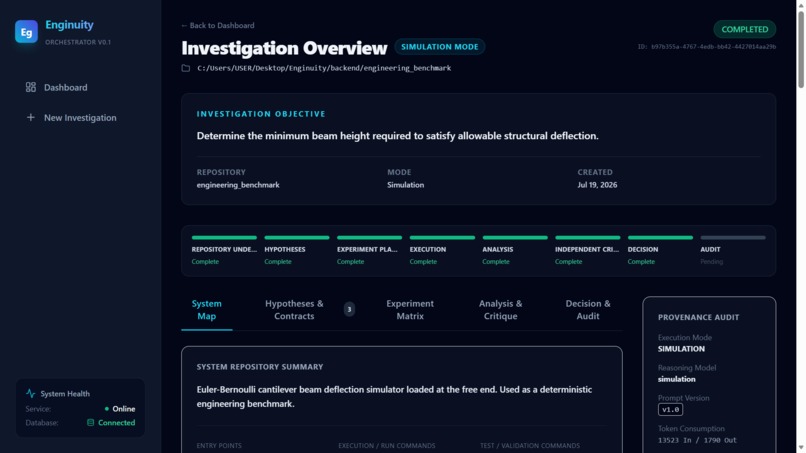
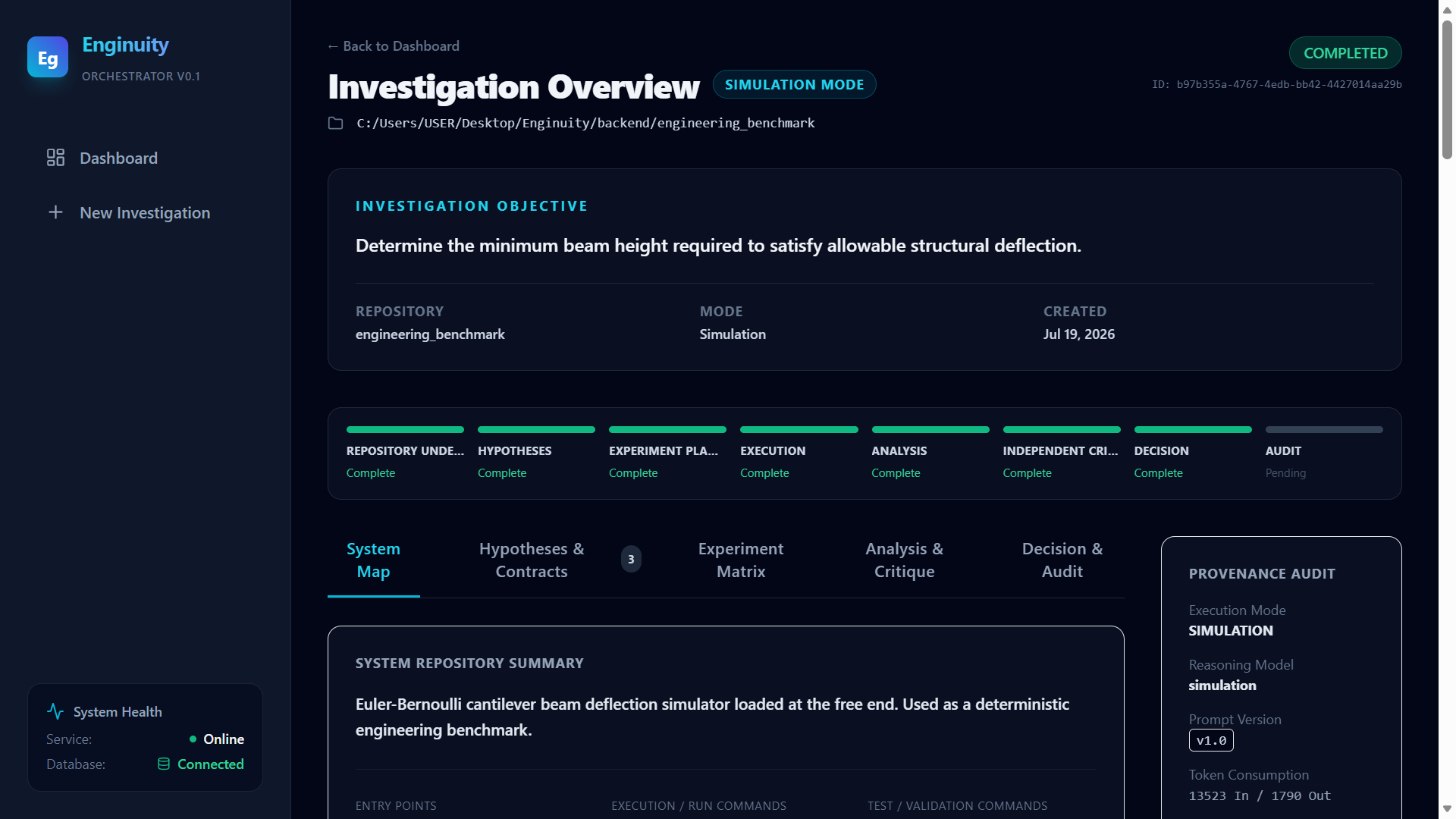
System_Map
-
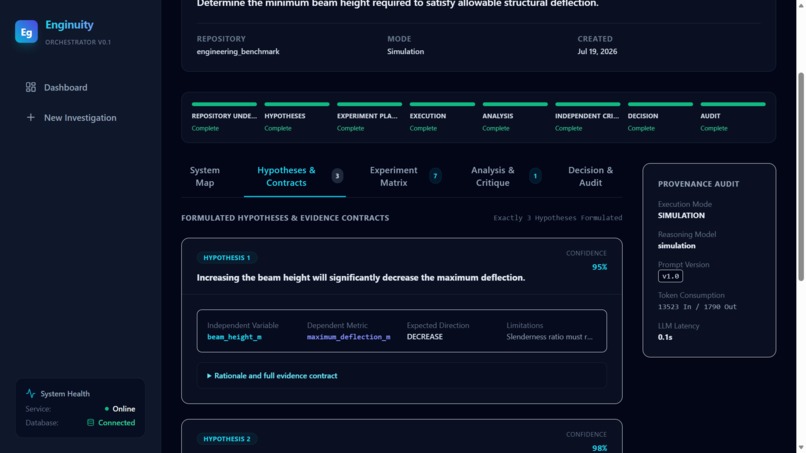
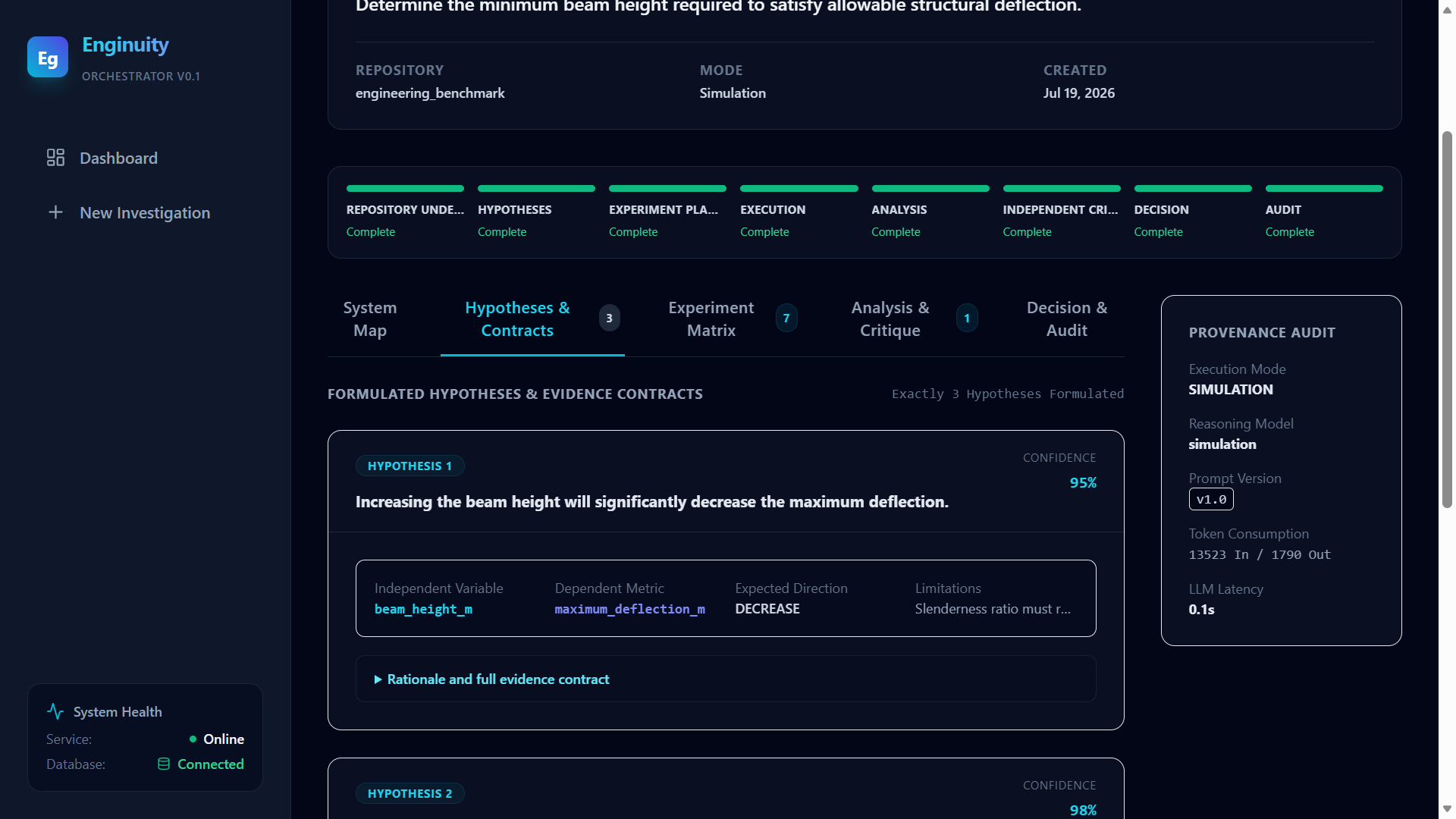
Hypothesis & Contracts
-
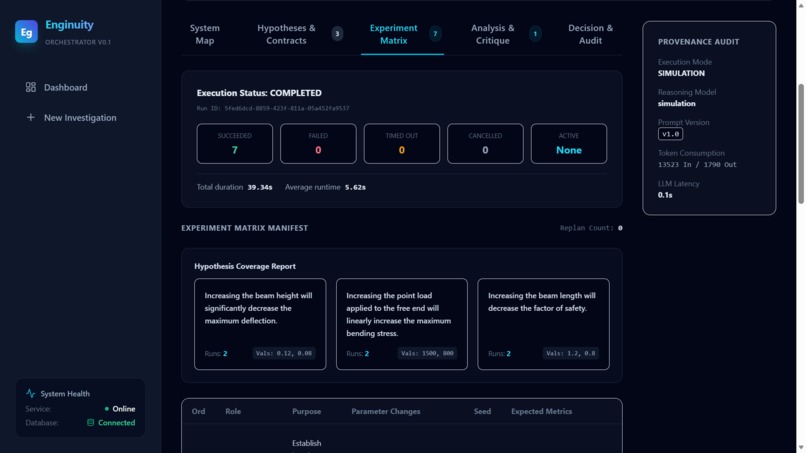
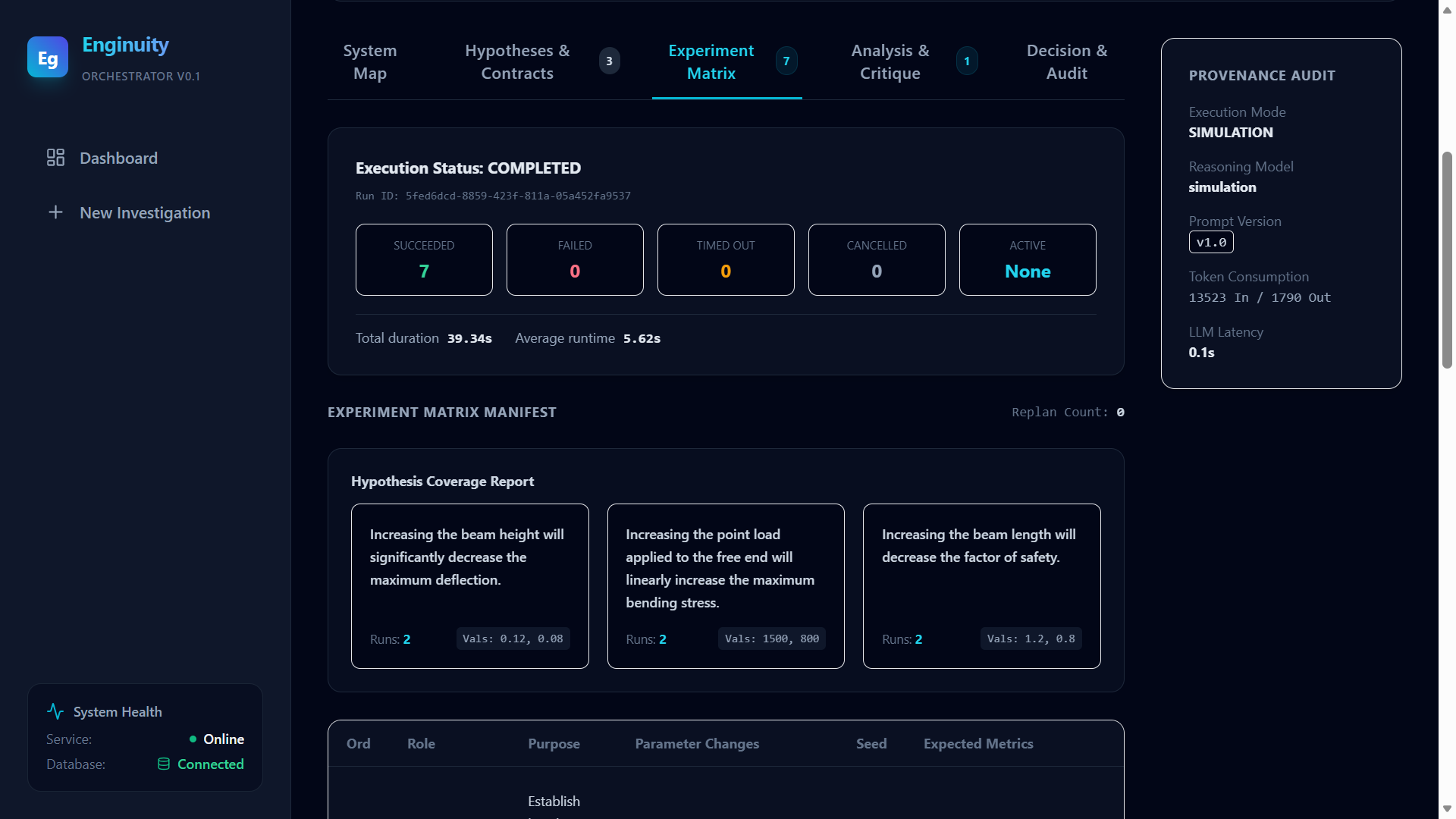
Experiment_Matrix
-
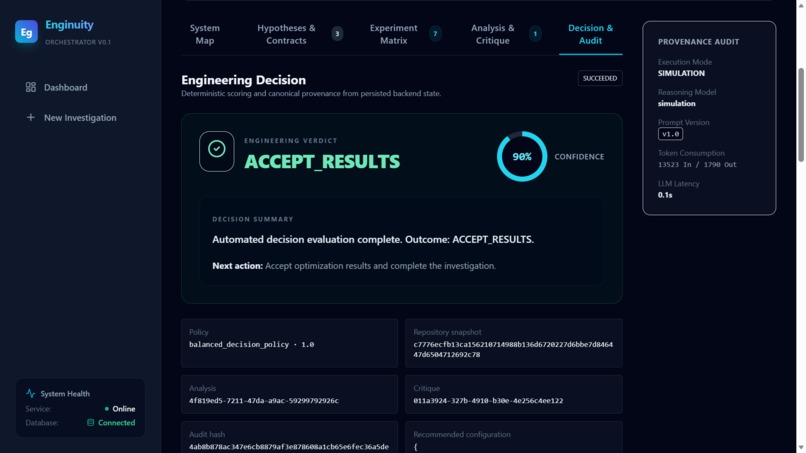
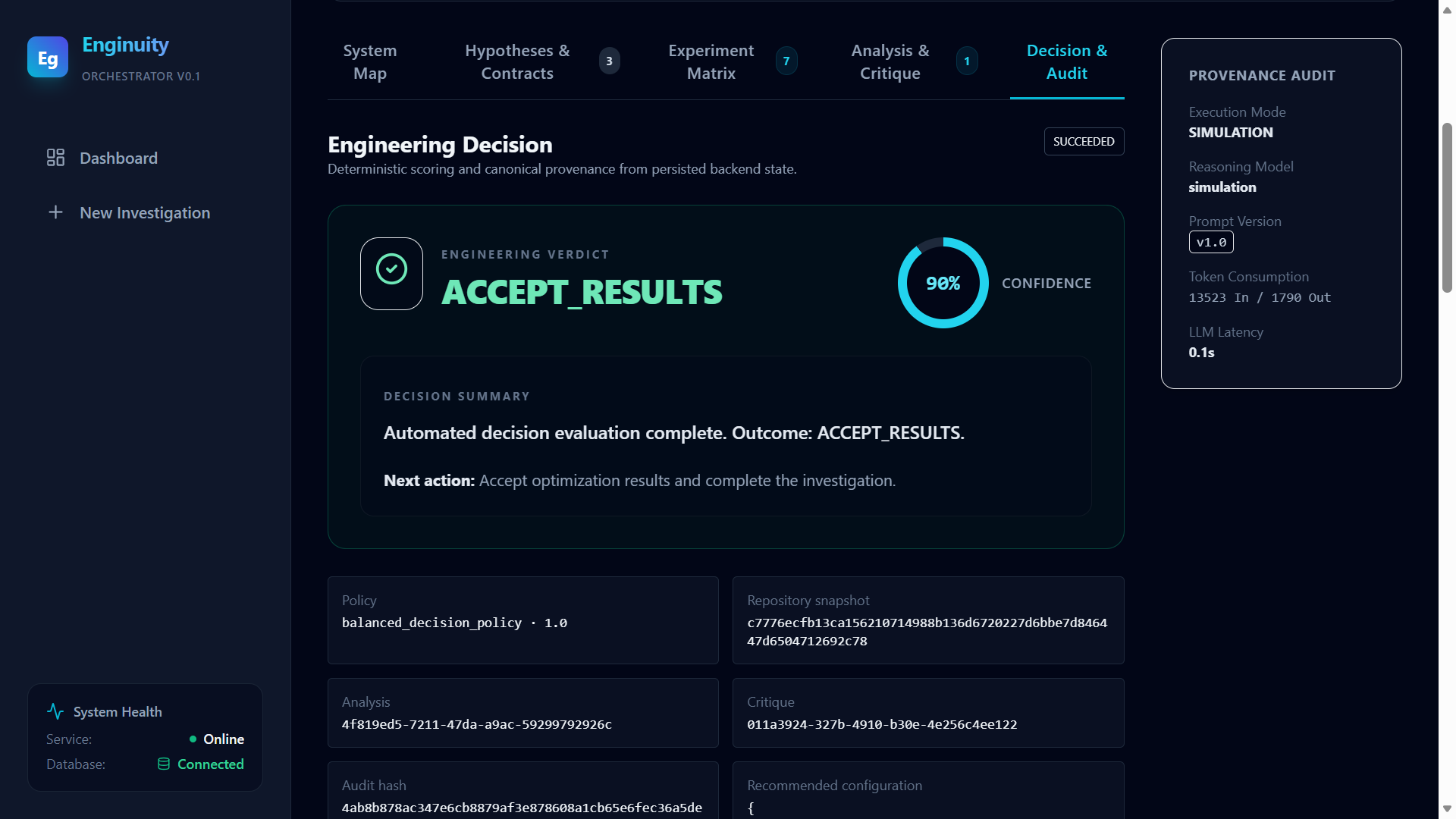
Decision & Audit
-
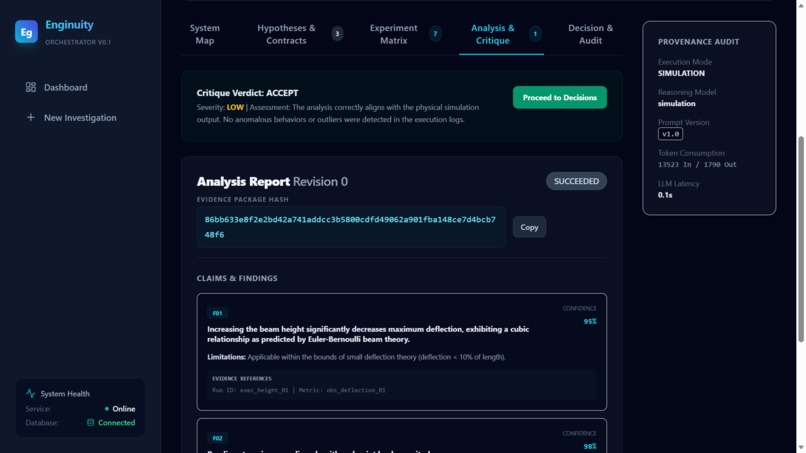
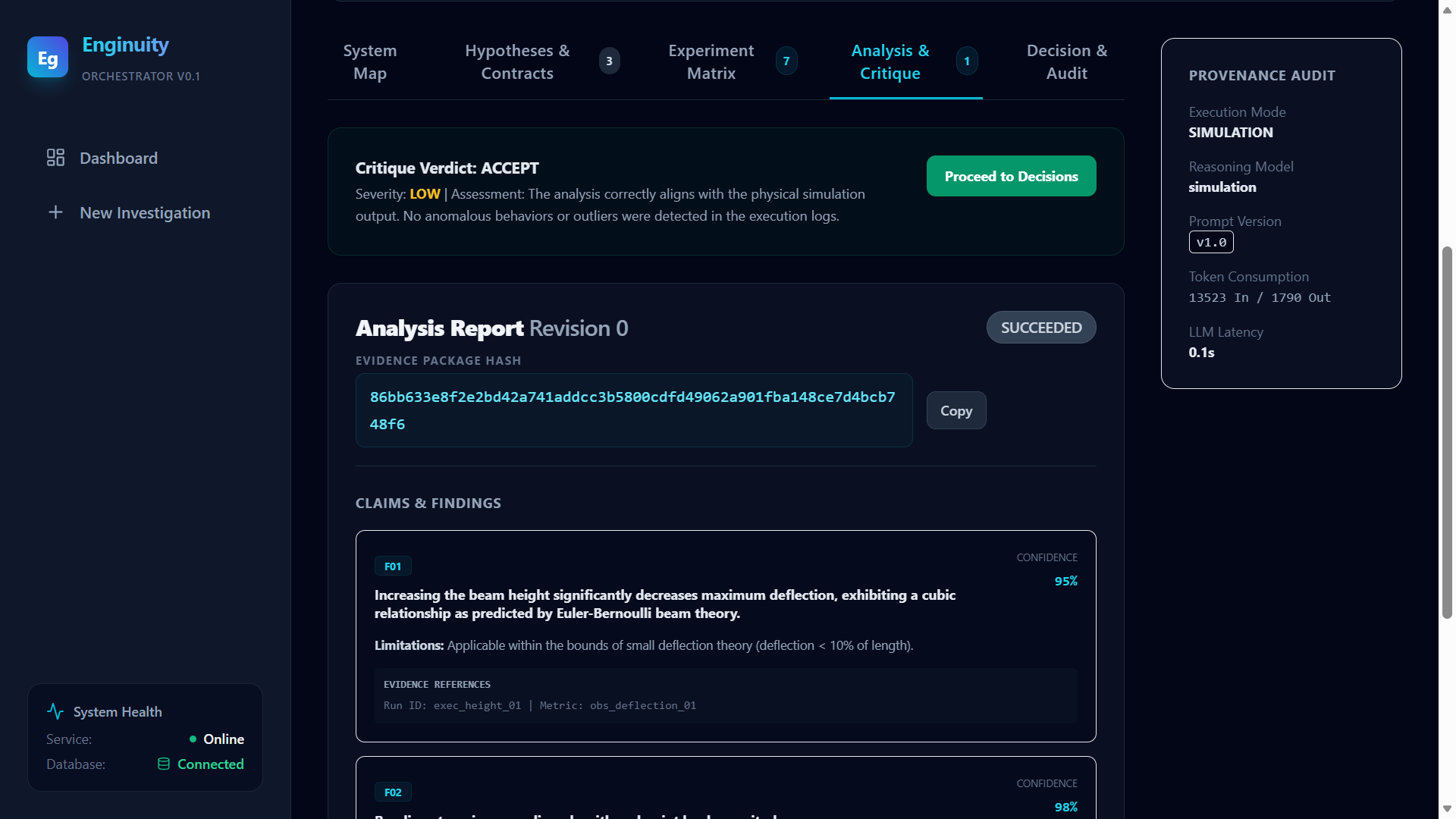
Analysis & Critique
-
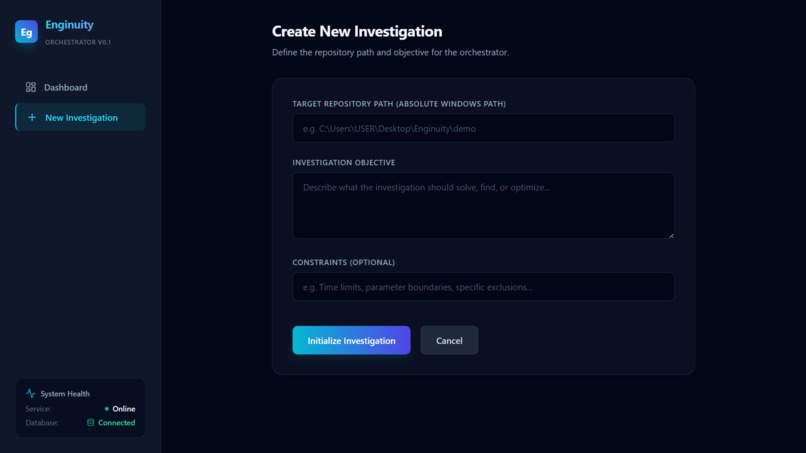
New_Investigation
-
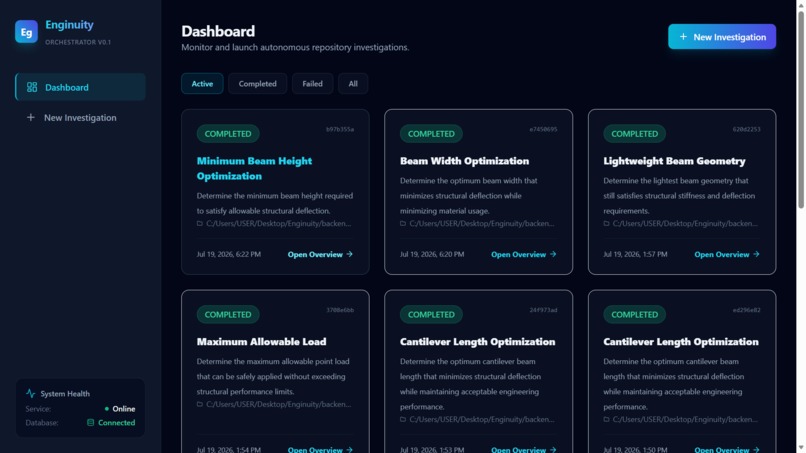
Dashboard
Inspiration
Software engineering teams often make critical decisions based on intuition, incomplete evidence, or ad-hoc experimentation. We wanted to build an AI system that approaches engineering problems like a disciplined investigator—understanding a repository, generating multiple evidence-backed hypotheses, designing controlled experiments, executing them safely, critiquing the outcomes, and producing transparent engineering recommendations.
Enginuity was created to transform engineering investigations from opinion-driven discussions into reproducible, evidence-backed workflows.
What it does
Enginuity is an autonomous engineering investigation platform powered by GPT-5.6 and Codex.
Given a software repository and an engineering objective, it:
- Understands the repository structure
- Builds evidence-backed hypotheses
- Generates bounded experiment plans
- Executes experiments inside isolated workspaces
- Automatically critiques experiment outcomes
- Repairs failed experiments within safe limits
- Produces auditable engineering decisions supported by evidence
Every investigation is reproducible, traceable, and designed to help engineers make higher-confidence technical decisions.
How we built it
Enginuity combines a modern web interface with a deterministic investigation engine.
GPT-5.6 was used for repository understanding, engineering reasoning, hypothesis generation, experiment planning, critique, and decision support.
Codex accelerated implementation by generating production-quality code, refactoring complex modules, writing tests, and helping iterate quickly throughout development.
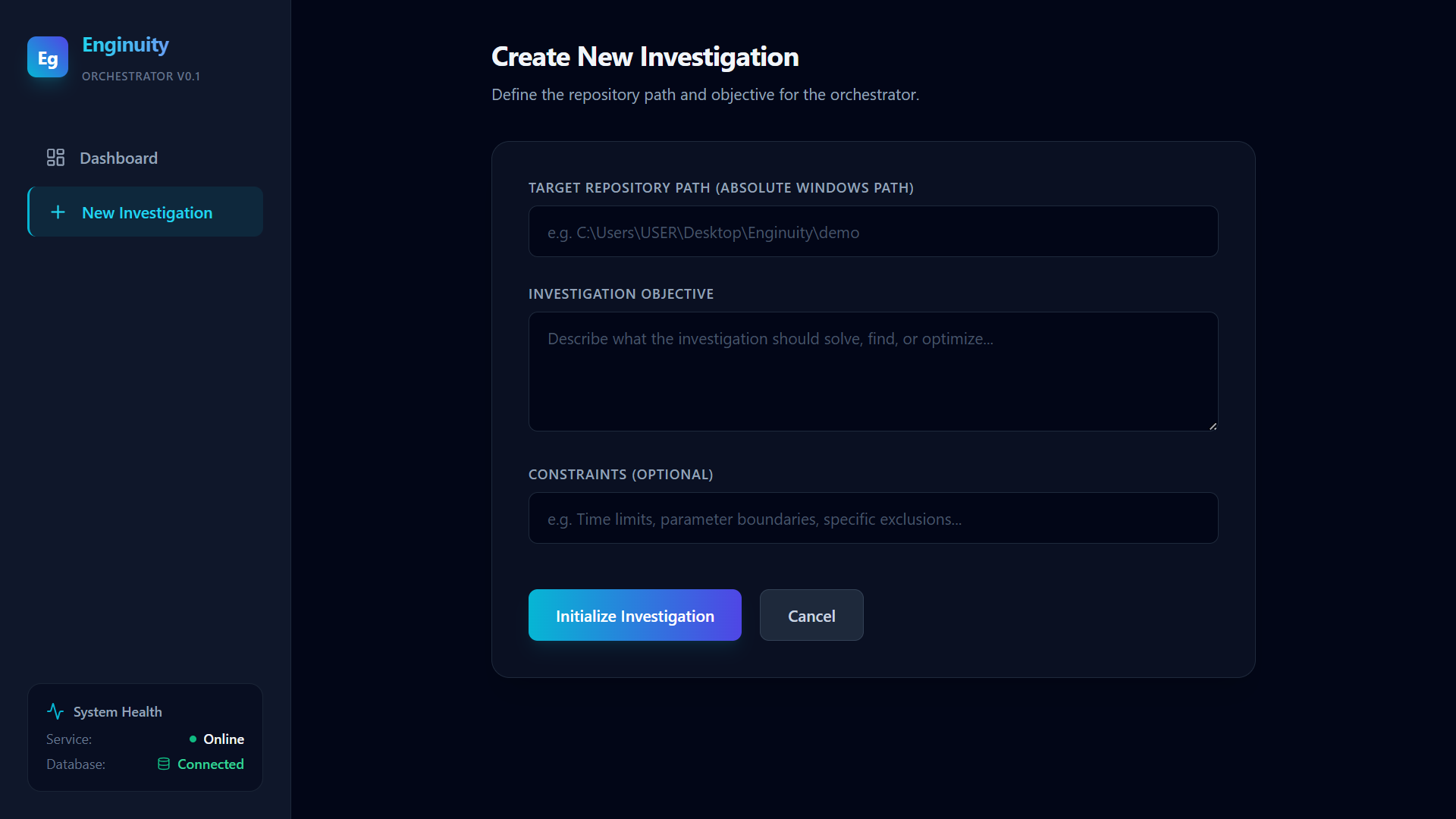
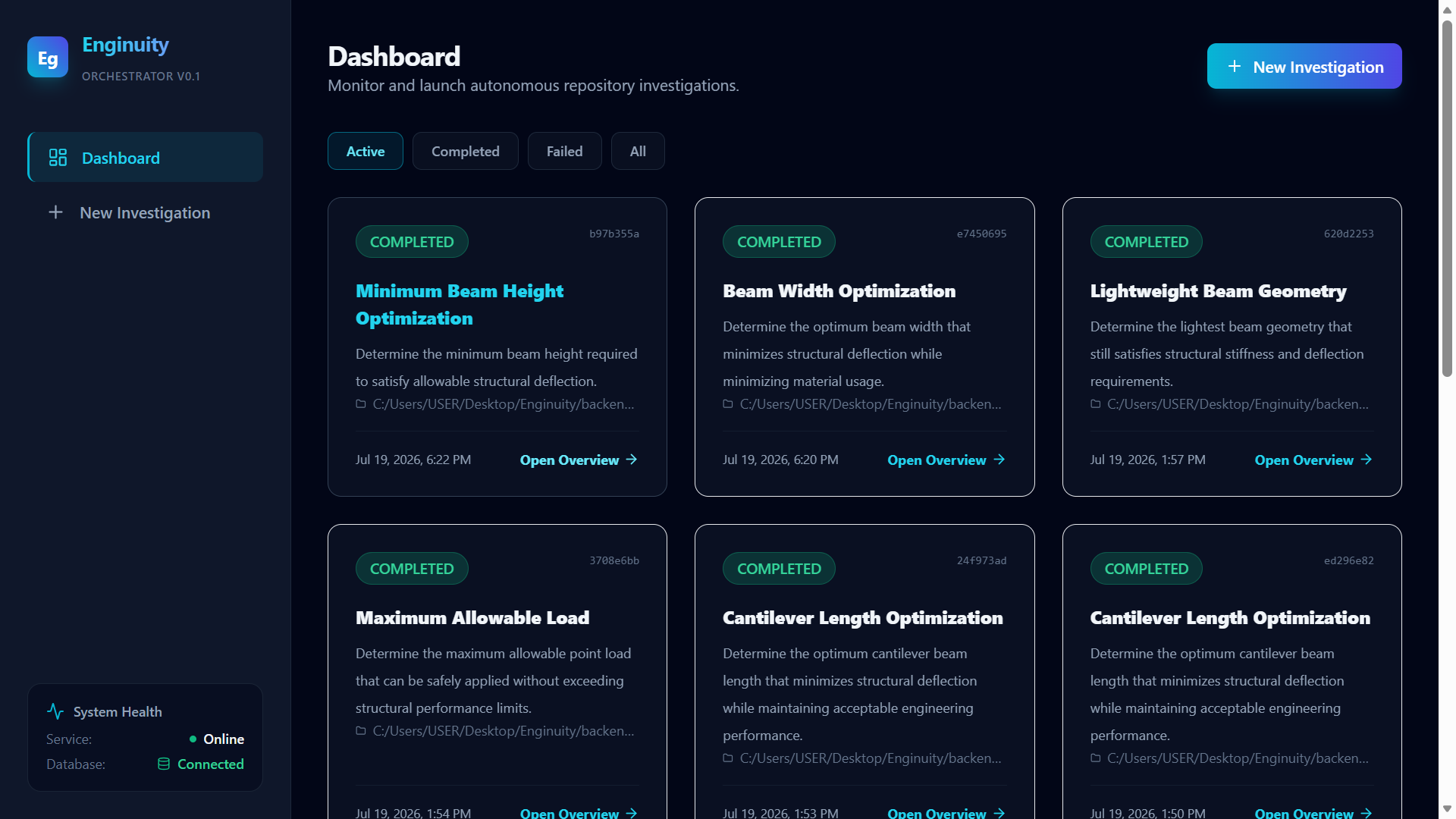
The backend orchestrates repository analysis, state management, bounded execution, repair workflows, evidence tracking, and reporting. The frontend provides an intuitive dashboard for launching and monitoring investigations while keeping every stage transparent and auditable.
Challenges we ran into
The biggest challenge was ensuring the system remained deterministic and trustworthy rather than becoming another generic AI assistant.
We designed strict state transitions, isolated experiment workspaces, bounded repair attempts, evidence contracts, and complete audit trails so every recommendation can be traced back to concrete evidence instead of opaque model outputs.
Balancing autonomy with safety was a major engineering challenge throughout the project.
Accomplishments that we're proud of
We're proud that Enginuity goes beyond generating suggestions—it performs structured engineering investigations.
Key accomplishments include:
- Autonomous repository understanding
- Evidence-backed hypothesis generation
- Safe bounded experiment execution
- Automatic repair and re-execution
- Engineering critique workflows
- Complete investigation traceability
- Production-quality architecture suitable for future expansion ## What we learned Building autonomous engineering systems requires much more than powerful language models.
We learned the importance of deterministic workflows, explicit evidence management, bounded execution, reproducibility, and transparent reasoning. These principles significantly increase trust in AI-assisted engineering.
We also gained valuable experience integrating GPT-5.6 and Codex into a complete production workflow rather than using them only for code generation.
What's next for Enginuity
Our roadmap includes:
- Support for additional engineering domains
- Distributed experiment execution
- Multi-agent collaboration
- Rich visualization of evidence and decision lineage
- Cloud-native execution environments
- CI/CD integration
- Team collaboration features
- Support for larger enterprise repositories
Our vision is for Enginuity to become an AI engineering investigator that helps development teams solve complex technical problems with confidence, transparency, and reproducible evidence.

Log in or sign up for Devpost to join the conversation.