-
-
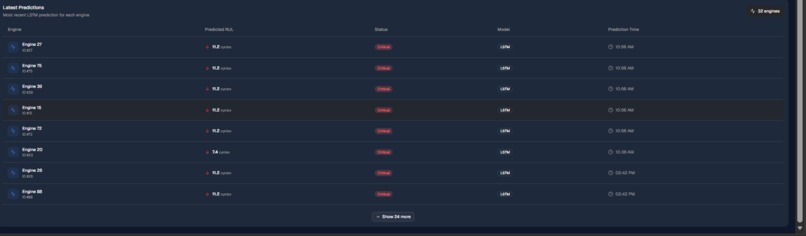
Latest predictions
-
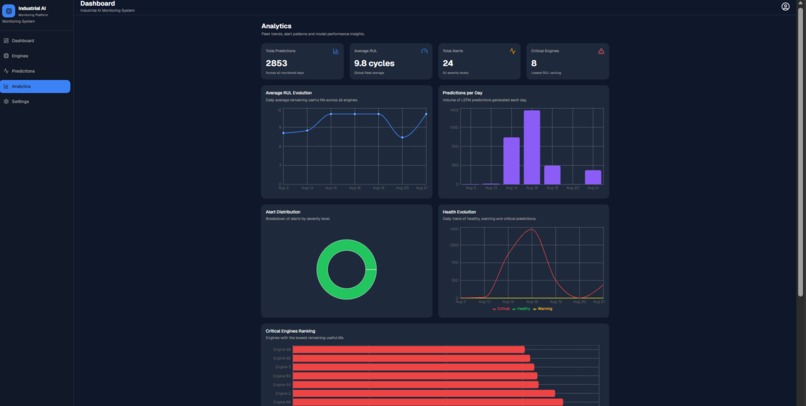
Statistics
-
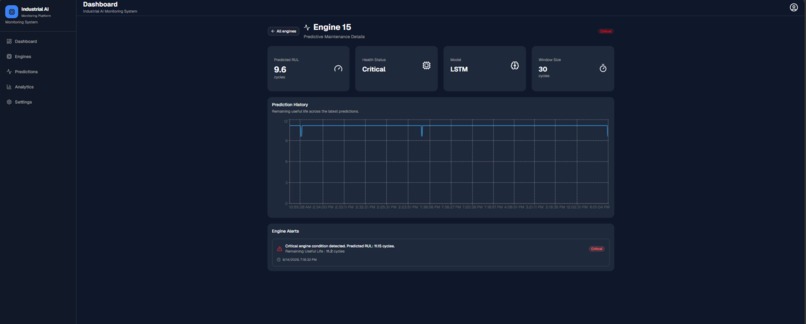
Engine ID
-
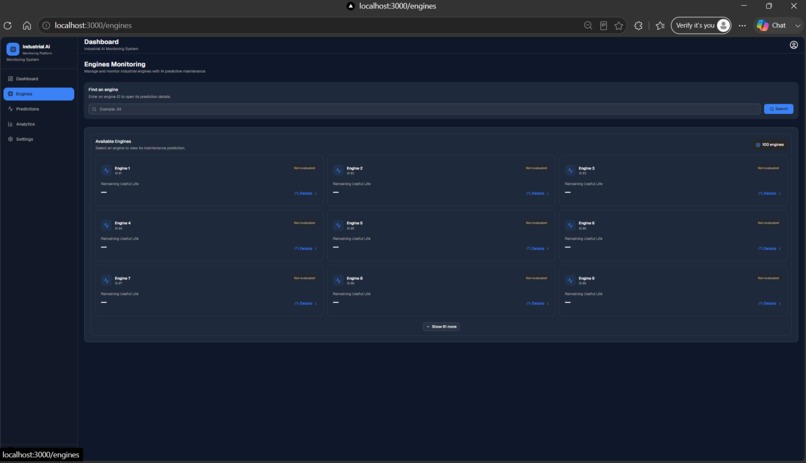
Engines
-
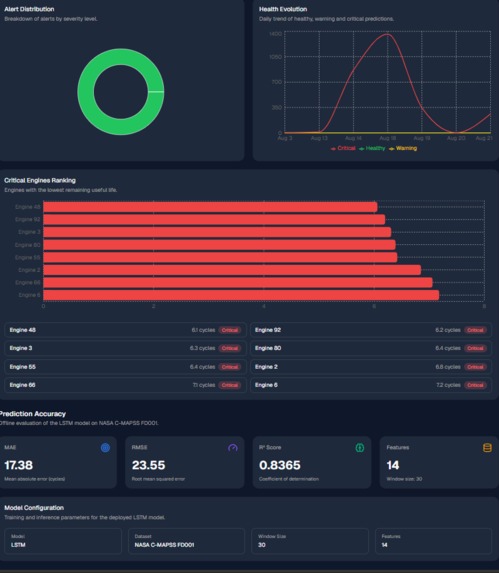
Metrics
-
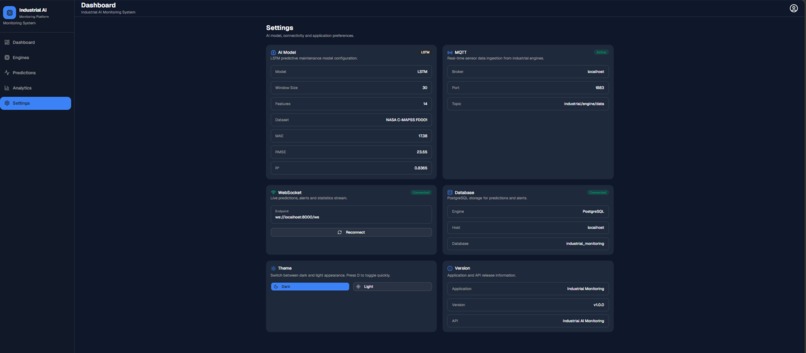
Settings
-
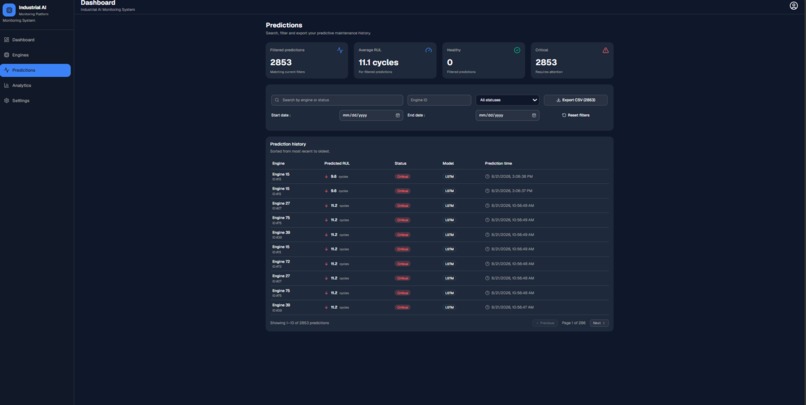
Predictions
-
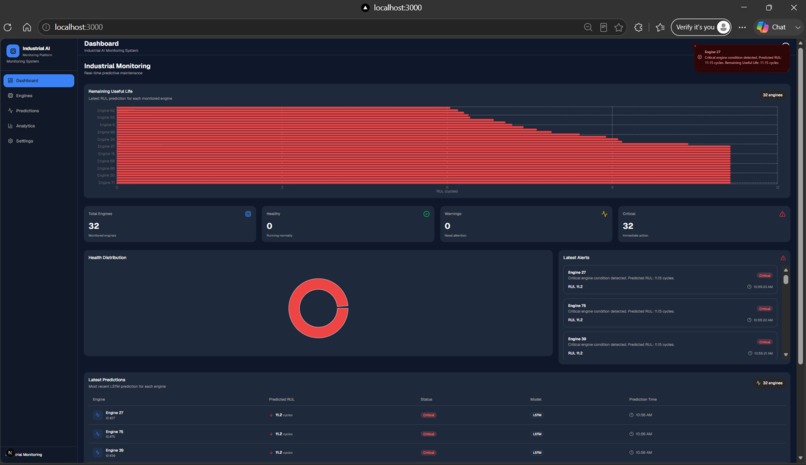
Dashboard
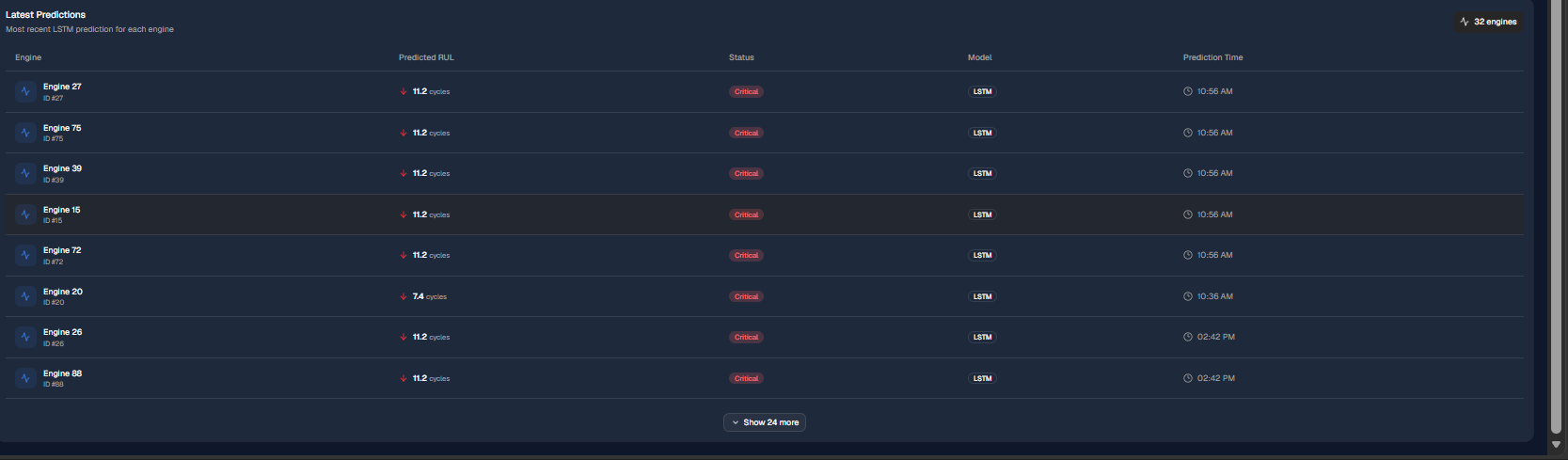
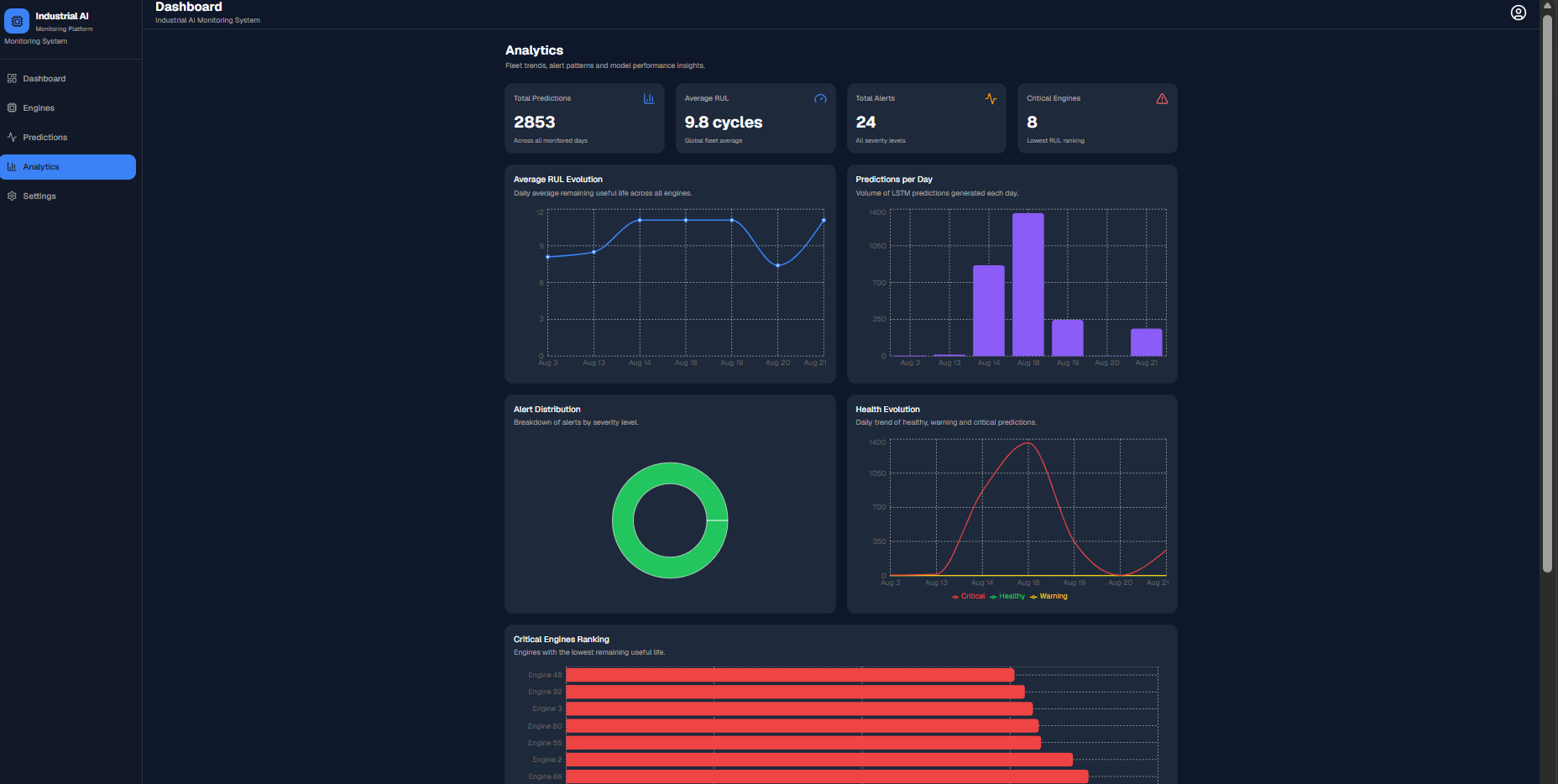
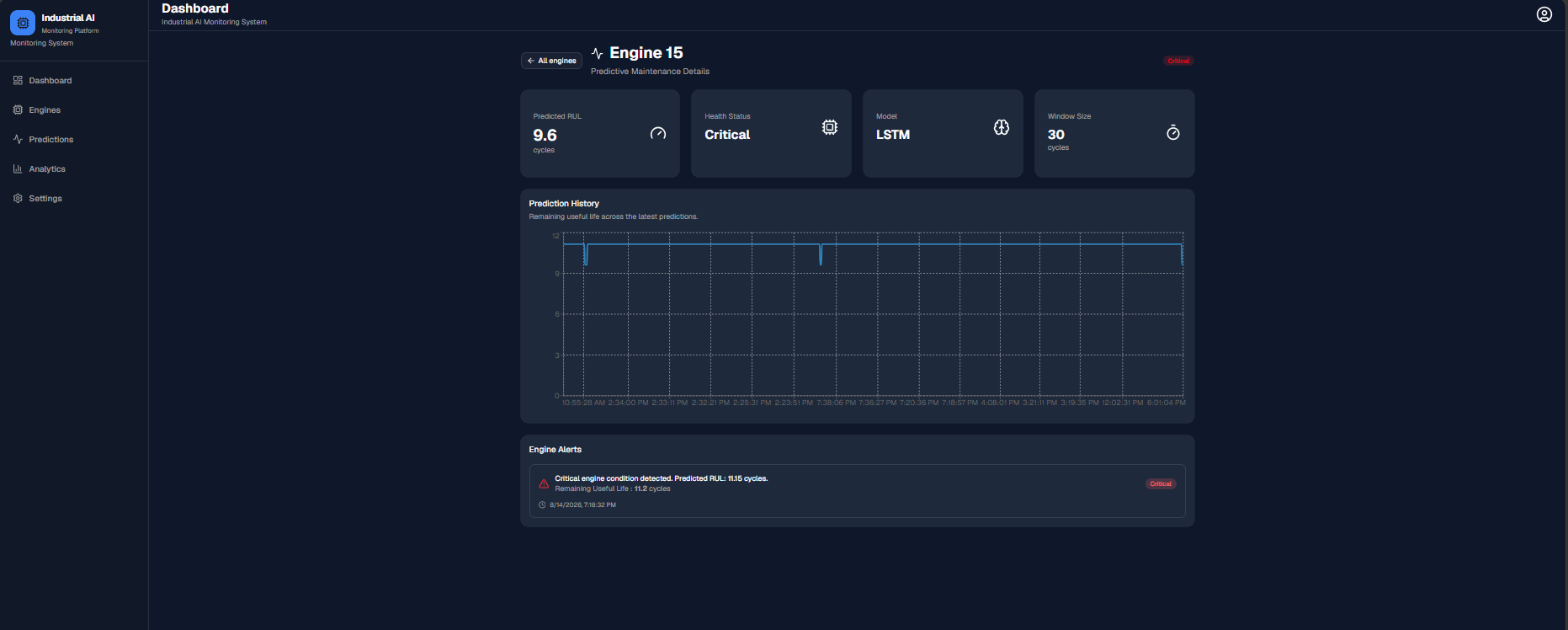
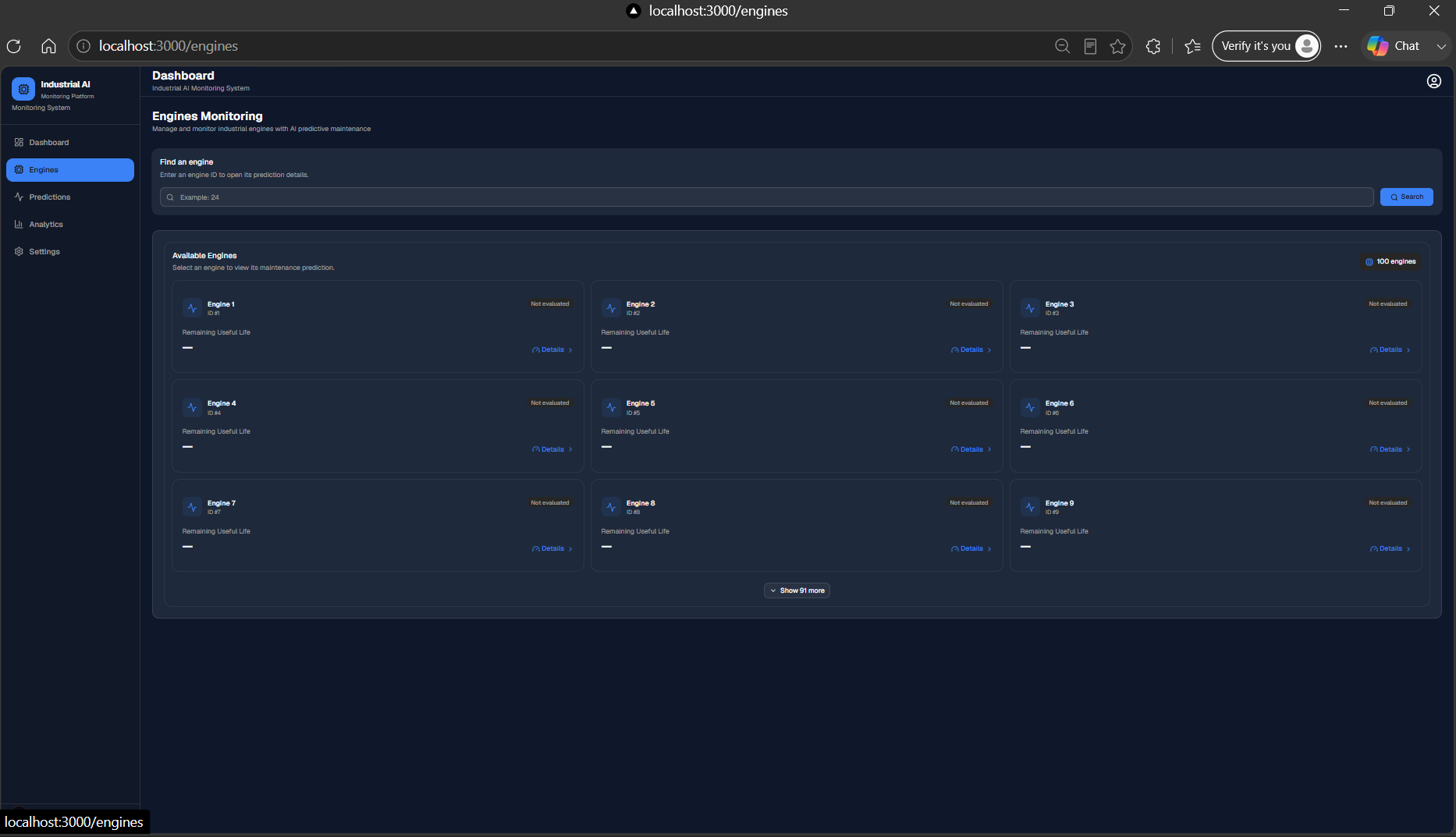
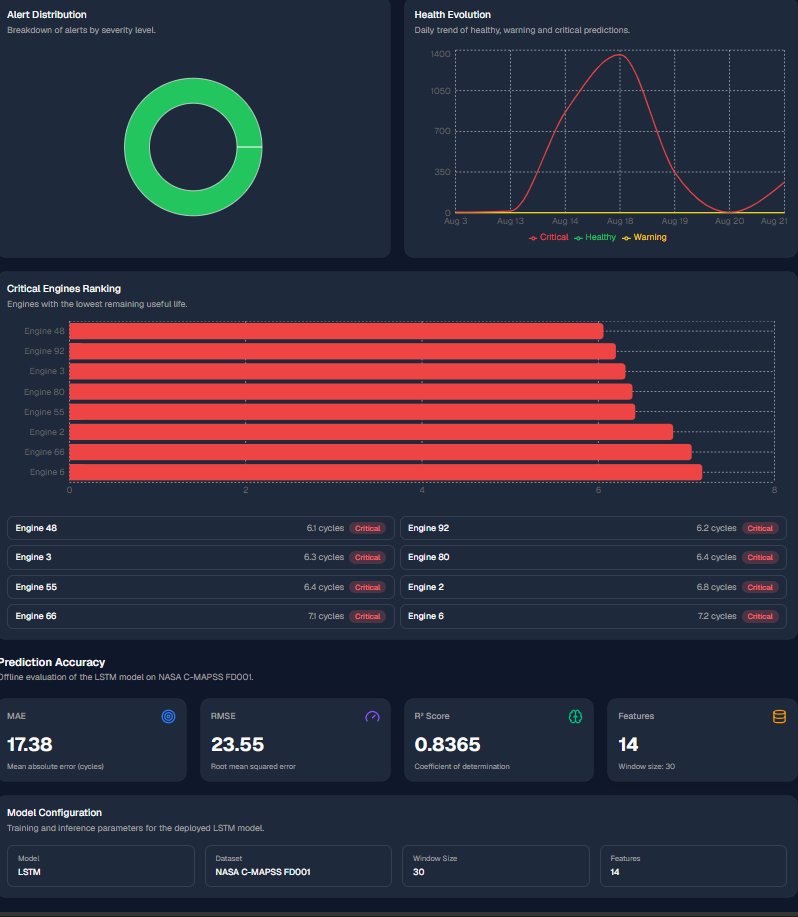
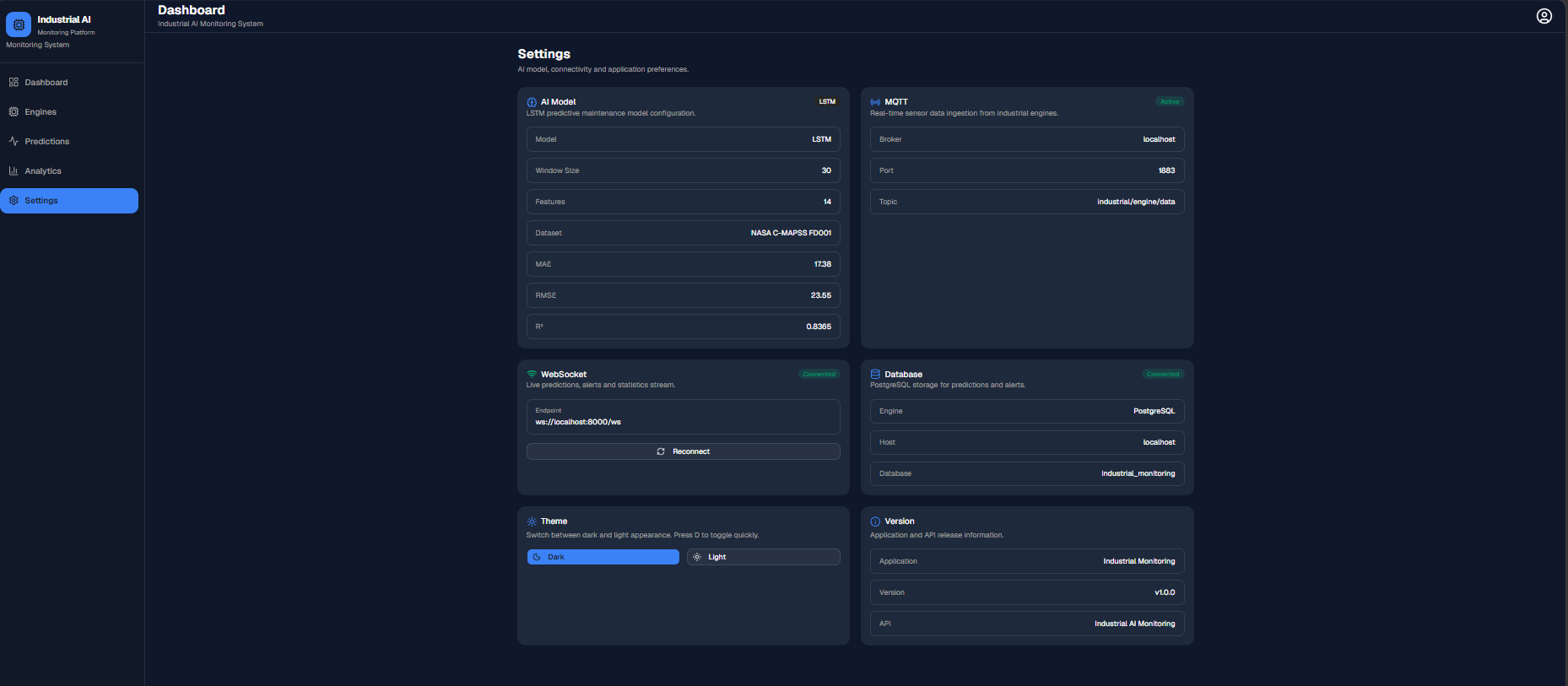
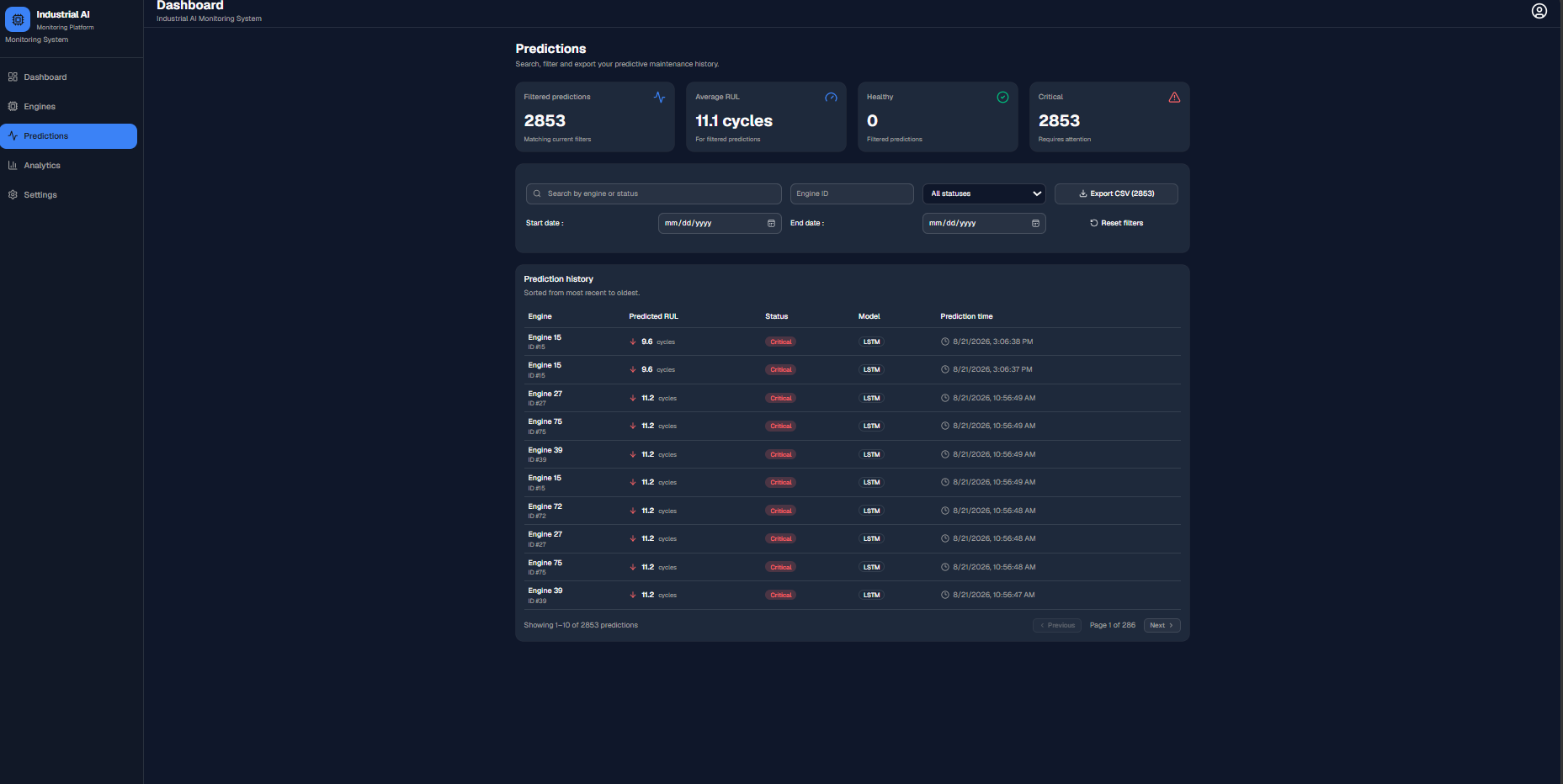
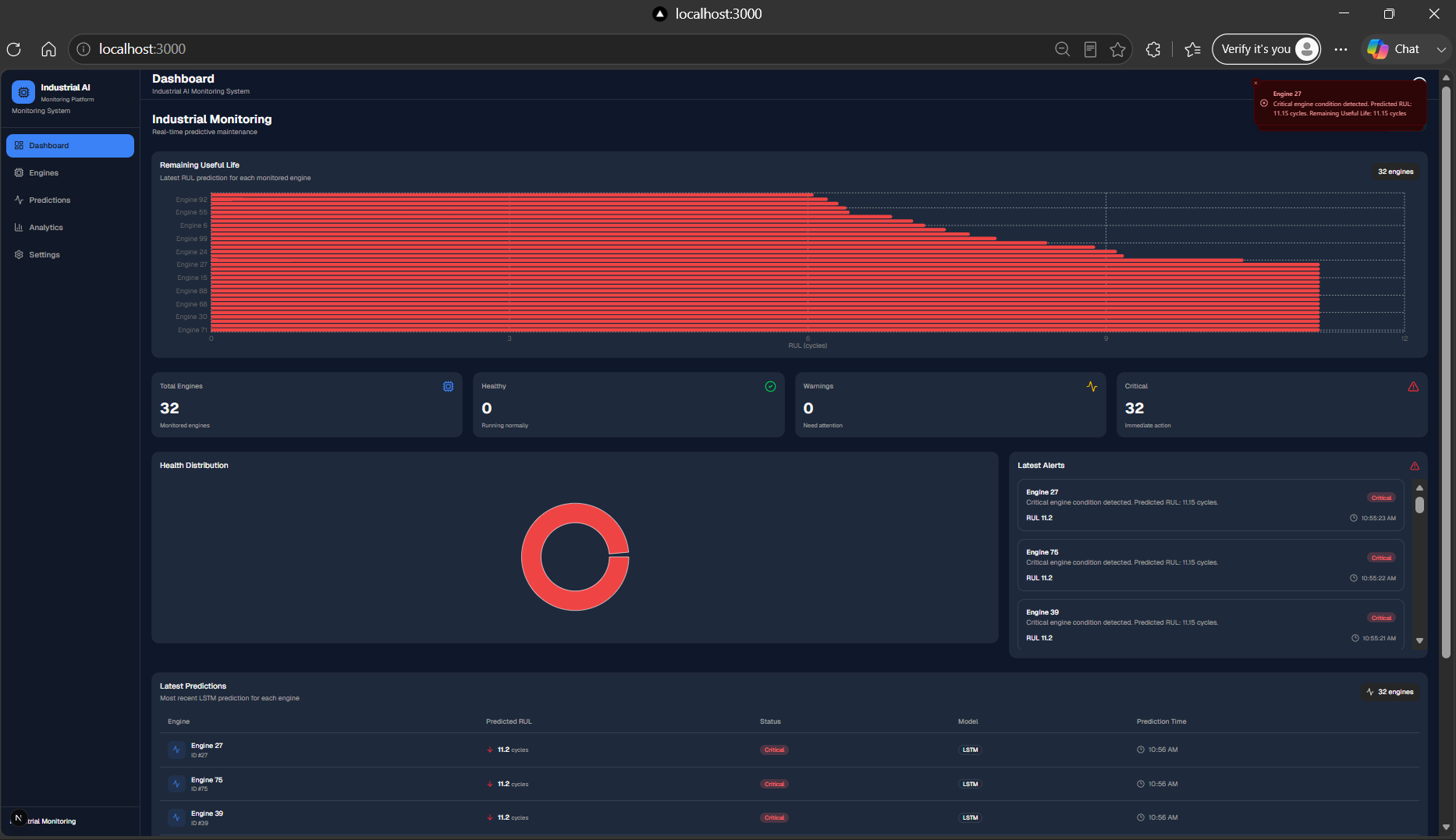
As an engineering student specializing in Management and Governance of Information Systems, I have already developed several web applications. However, I had never built a complete Artificial Intelligence system from scratch. My goal was not simply to create another dashboard or web application, but to design a complete AI-powered system capable of solving a real industrial problem. Industrial equipment generates large amounts of sensor data every second. Unexpected failures can lead to expensive downtime, production losses, and safety risks. This inspired me to develop an intelligent predictive maintenance platform capable of anticipating failures before they occur.
EngineGuard AI is an end-to-end predictive maintenance platform that combines Artificial Intelligence, IoT communication, and real-time visualization. The system continuously receives industrial sensor data, preprocesses it, predicts the Remaining Useful Life (RUL) of each engine using a Long Short-Term Memory (LSTM) neural network, stores prediction history, and updates an interactive dashboard in real time. The platform includes:
- AI-based Remaining Useful Life prediction
- Industrial sensor simulation
- MQTT real-time communication
- FastAPI backend services
- PostgreSQL database
- WebSocket live updates
- Next.js monitoring dashboard
- Analytics and prediction history
The project started with the NASA C-MAPSS turbofan engine dataset. The preprocessing pipeline included:
- Creating the Remaining Useful Life (RUL) target variable
- Variance analysis to remove constant features
- Correlation analysis for feature selection
- Data visualization using Matplotlib
- Feature normalization using Min-Max Scaling
- Sequence generation using a Sliding Window approach
The processed sequences were then used to train a Long Short-Term Memory (LSTM) neural network capable of learning engine degradation patterns over time. Once trained, the model was integrated into a FastAPI backend. To simulate a real industrial environment, I developed an MQTT-based simulator that continuously publishes engine sensor data. The backend receives these messages, performs predictions, stores the results in PostgreSQL, and pushes live updates to the dashboard using WebSockets. The frontend was developed with Next.js and React to provide operators with an intuitive real-time monitoring interface.
One of the biggest challenges was understanding how to transform raw industrial data into a format suitable for deep learning. Another challenge was generating sequential data for the LSTM model using the Sliding Window technique while avoiding data leakage between training and validation engines. Integrating several technologies into a single real-time pipeline was also challenging. Connecting MQTT, FastAPI, PostgreSQL, WebSockets, and the AI model required careful synchronization to ensure that predictions were generated and displayed instantly. Finally, designing a dashboard that presents technical AI predictions in a clear and user-friendly way required multiple iterations.
This project taught me much more than training a neural network. I learned how to build a complete AI system, from data preprocessing and deep learning to backend development, database integration, real-time communication, and frontend visualization. More importantly, I learned how Artificial Intelligence can be integrated into real-world industrial systems to support smarter maintenance decisions and reduce operational risks. This project represents my first complete AI-powered platform, and it has significantly strengthened both my software engineering and machine learning skills.
Built With
- ai
- css
- fastapi
- git
- github
- keras
- lstm
- matplotlib
- mqtt
- next.js
- numpy
- pandas
- postgresql
- python
- react
- recharts
- scikit-learn
- sql
- tailwind
- tensorflow
- typescript
- uvicorn
- vscode
- websocket

Log in or sign up for Devpost to join the conversation.