-
-
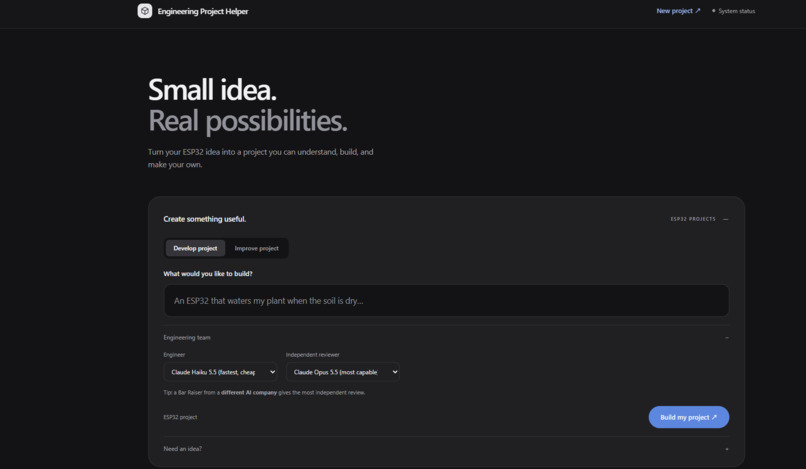
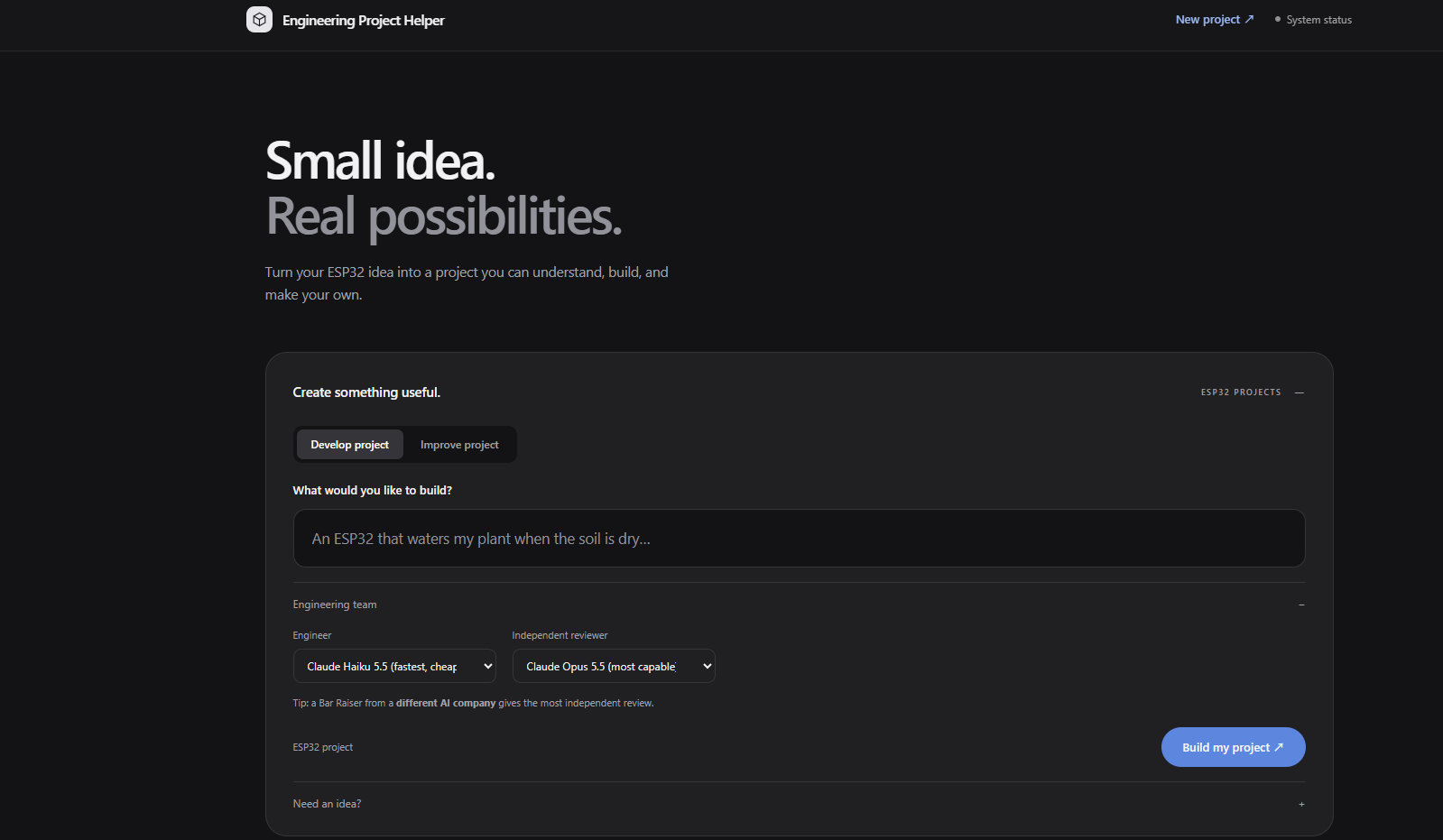
homepage / start
-
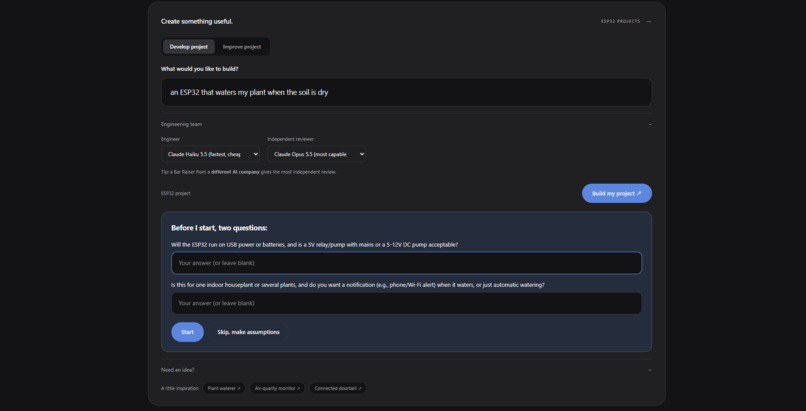
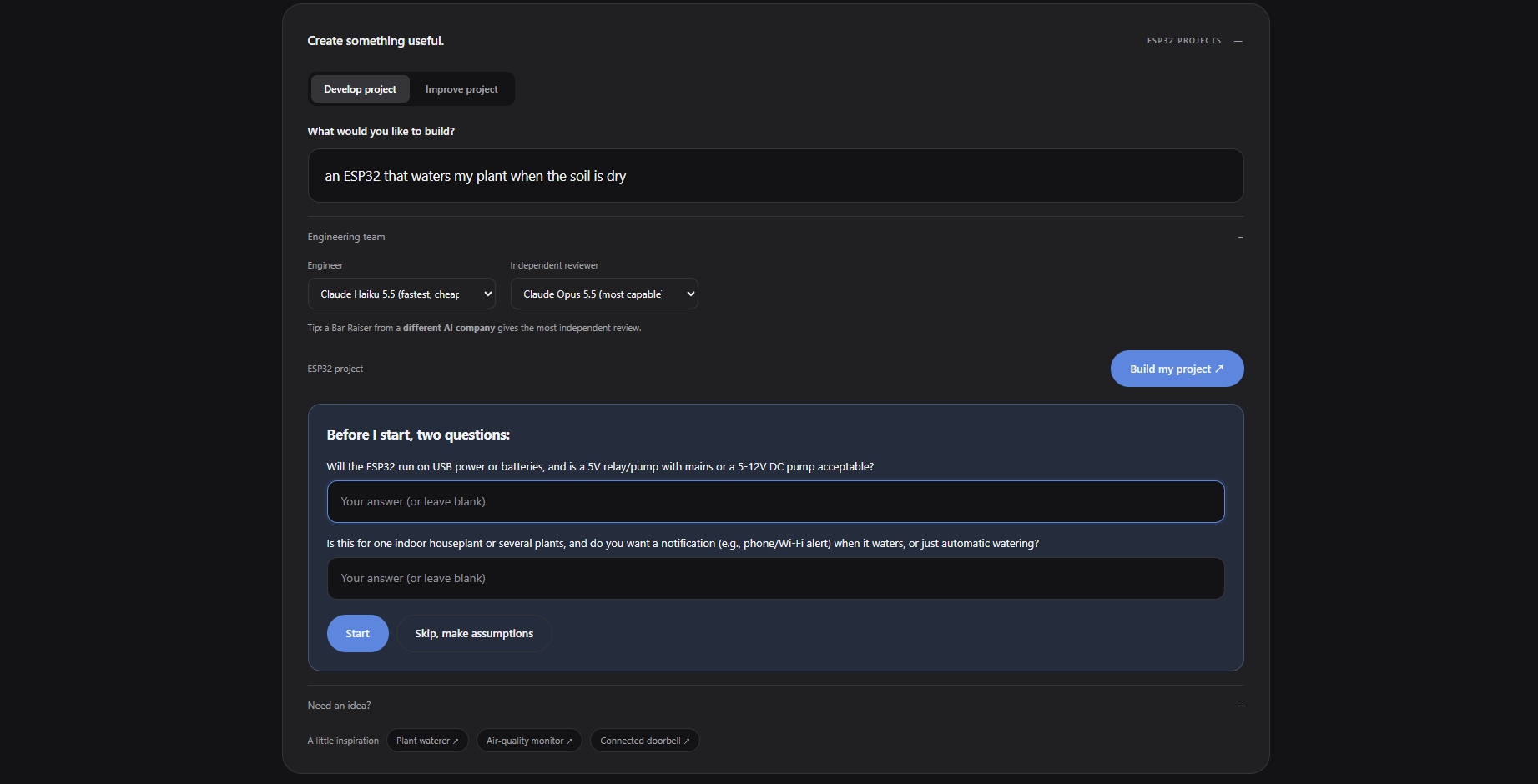
questions after proposal
-
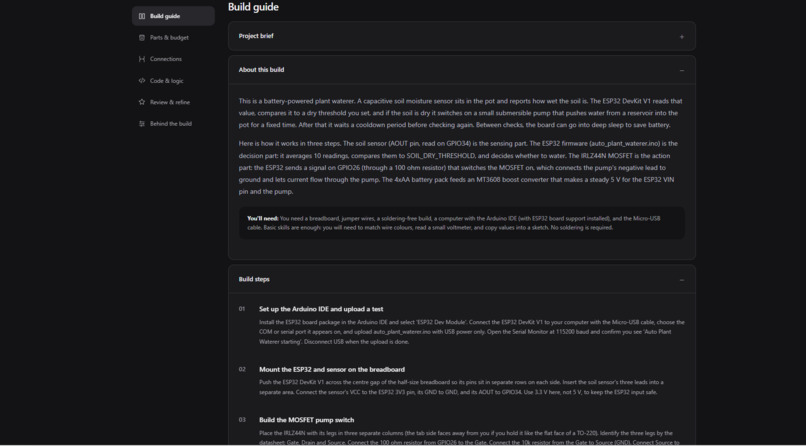
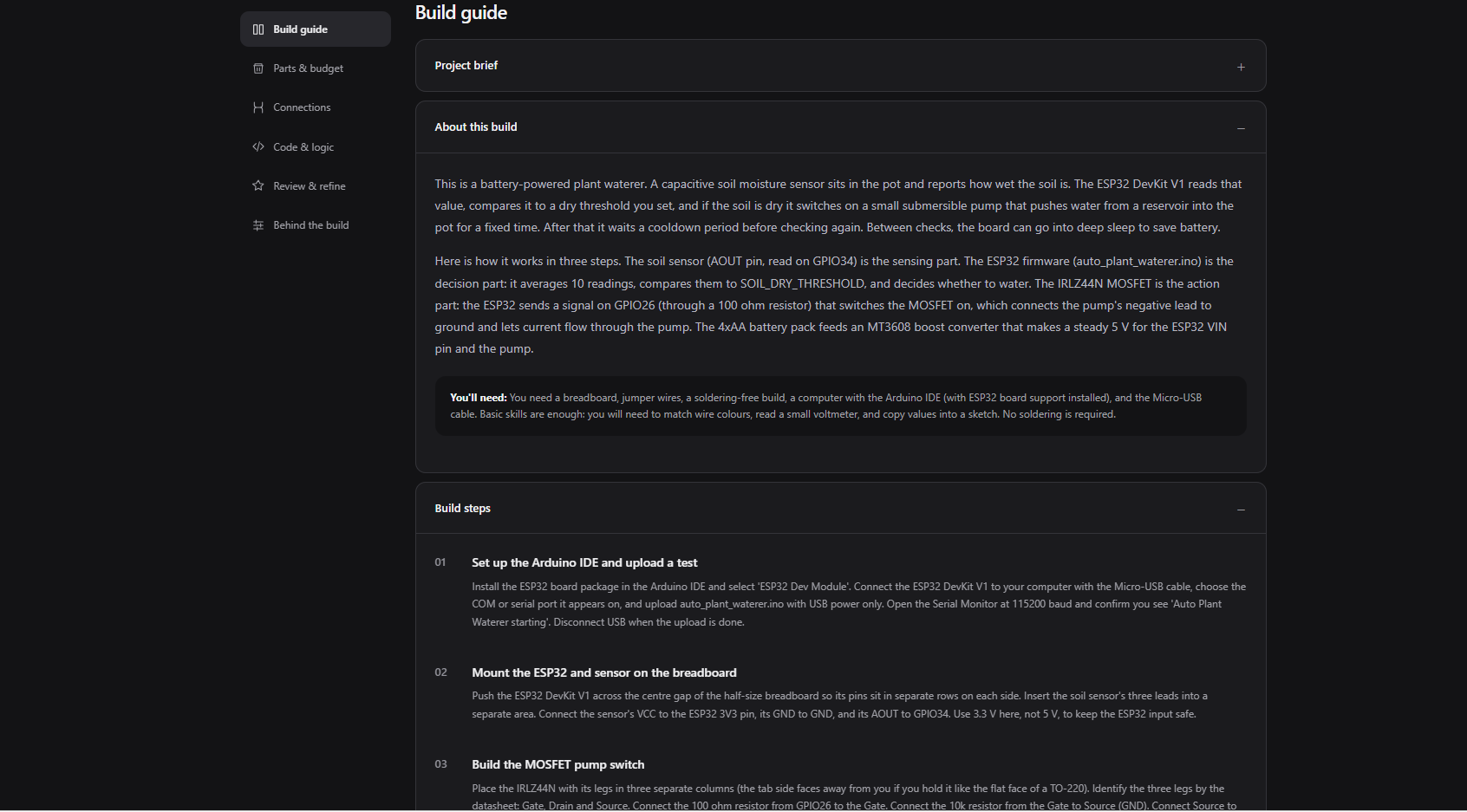
overview and project guidance
-
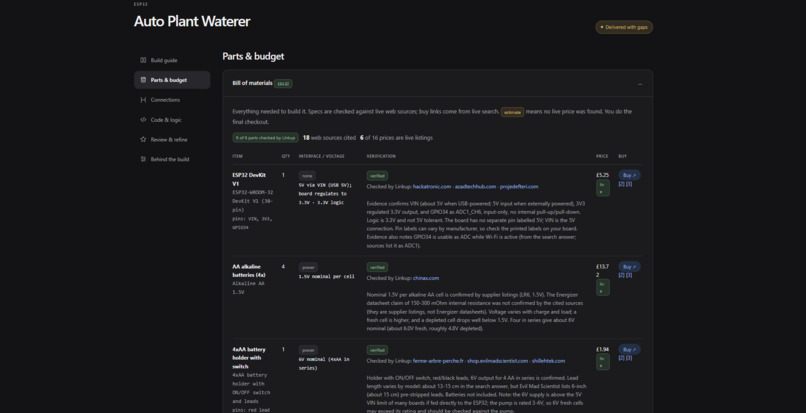
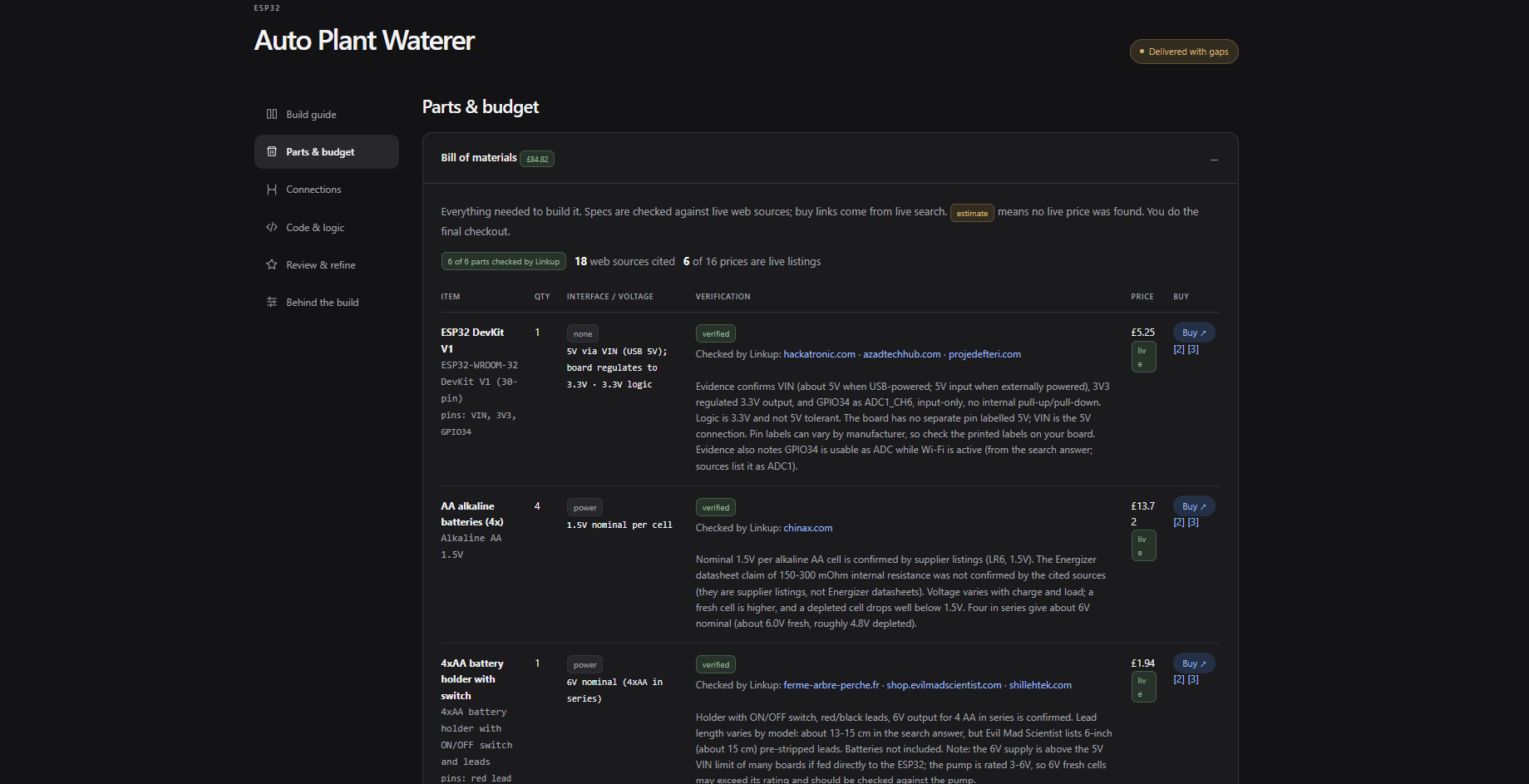
BoM with actual links to purchase from (Linkup)
-
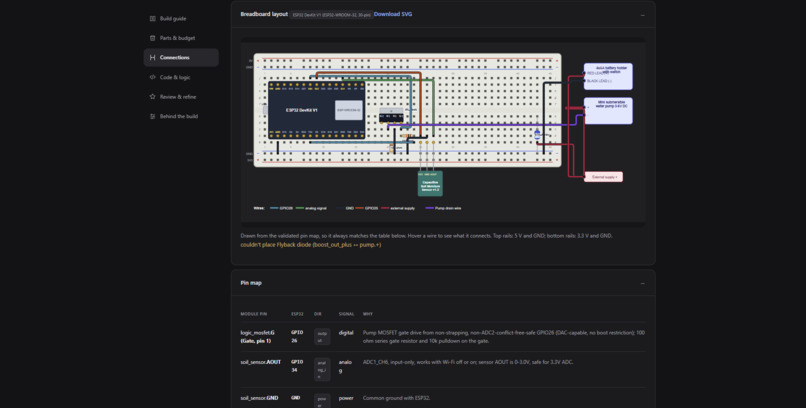
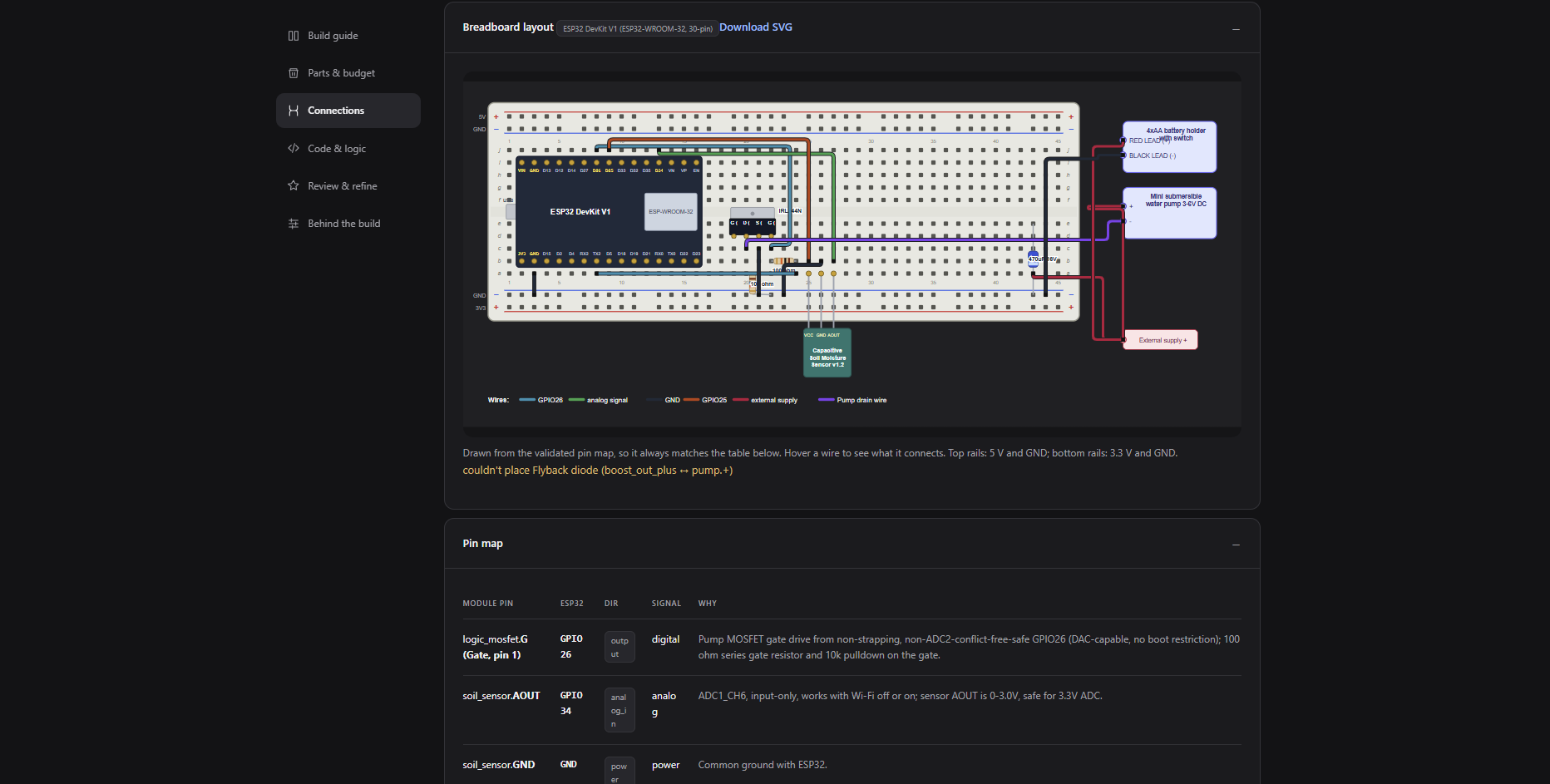
wiring and pin requirements
-
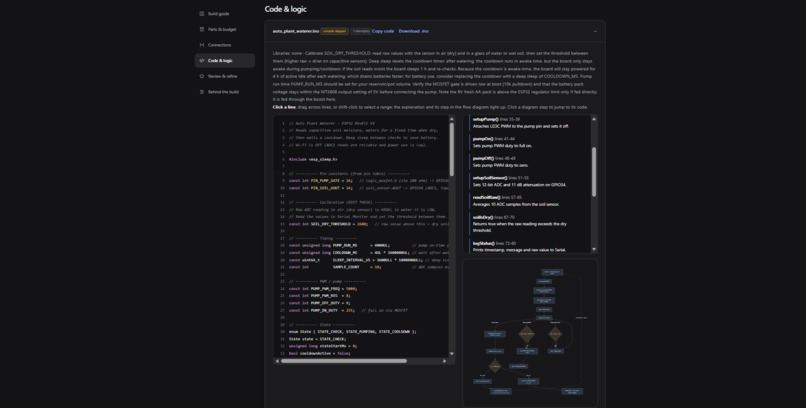
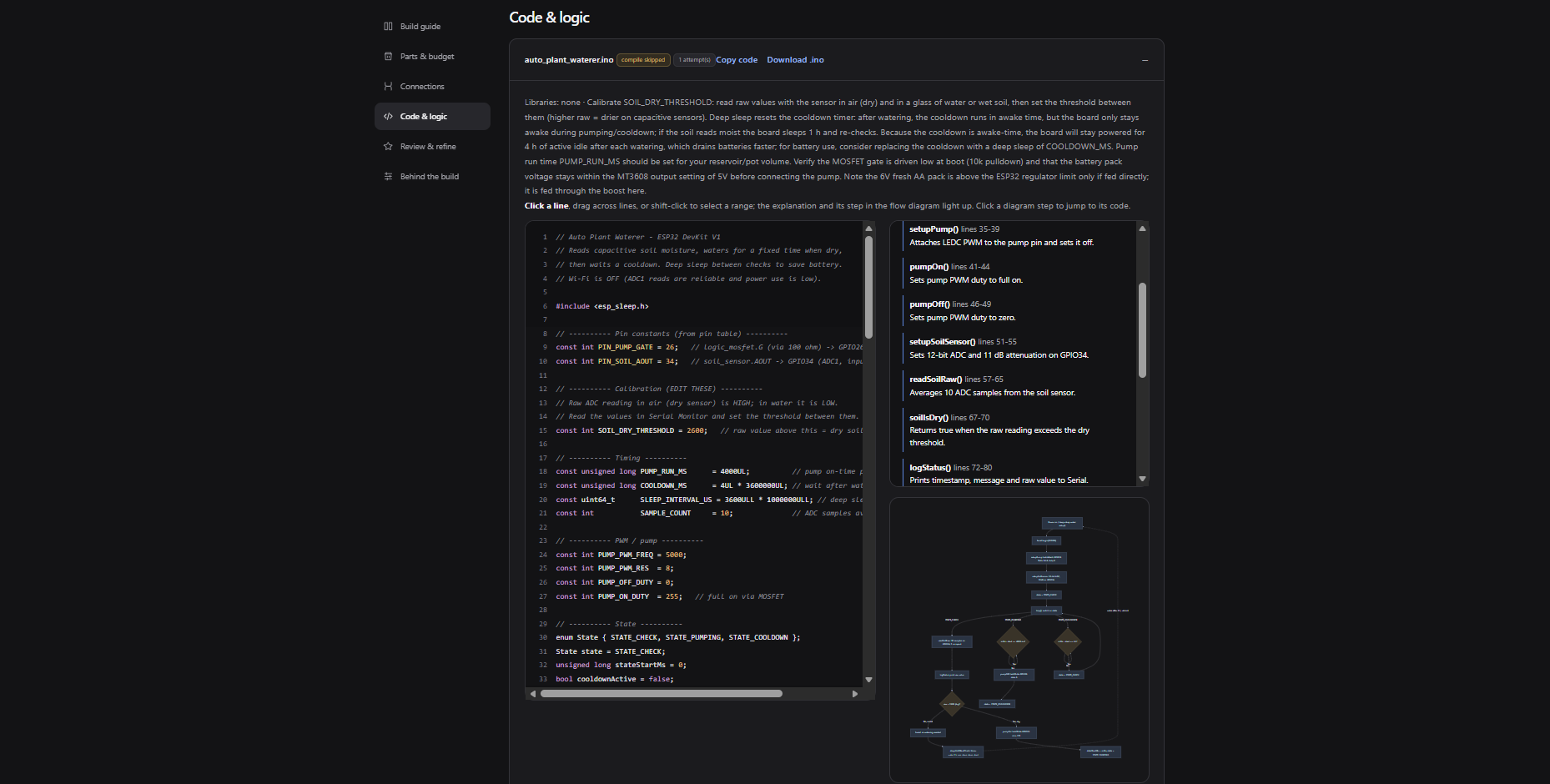
code and logic
-
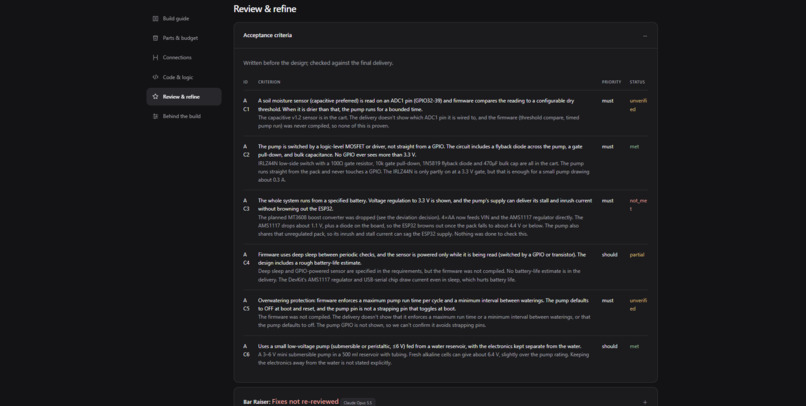
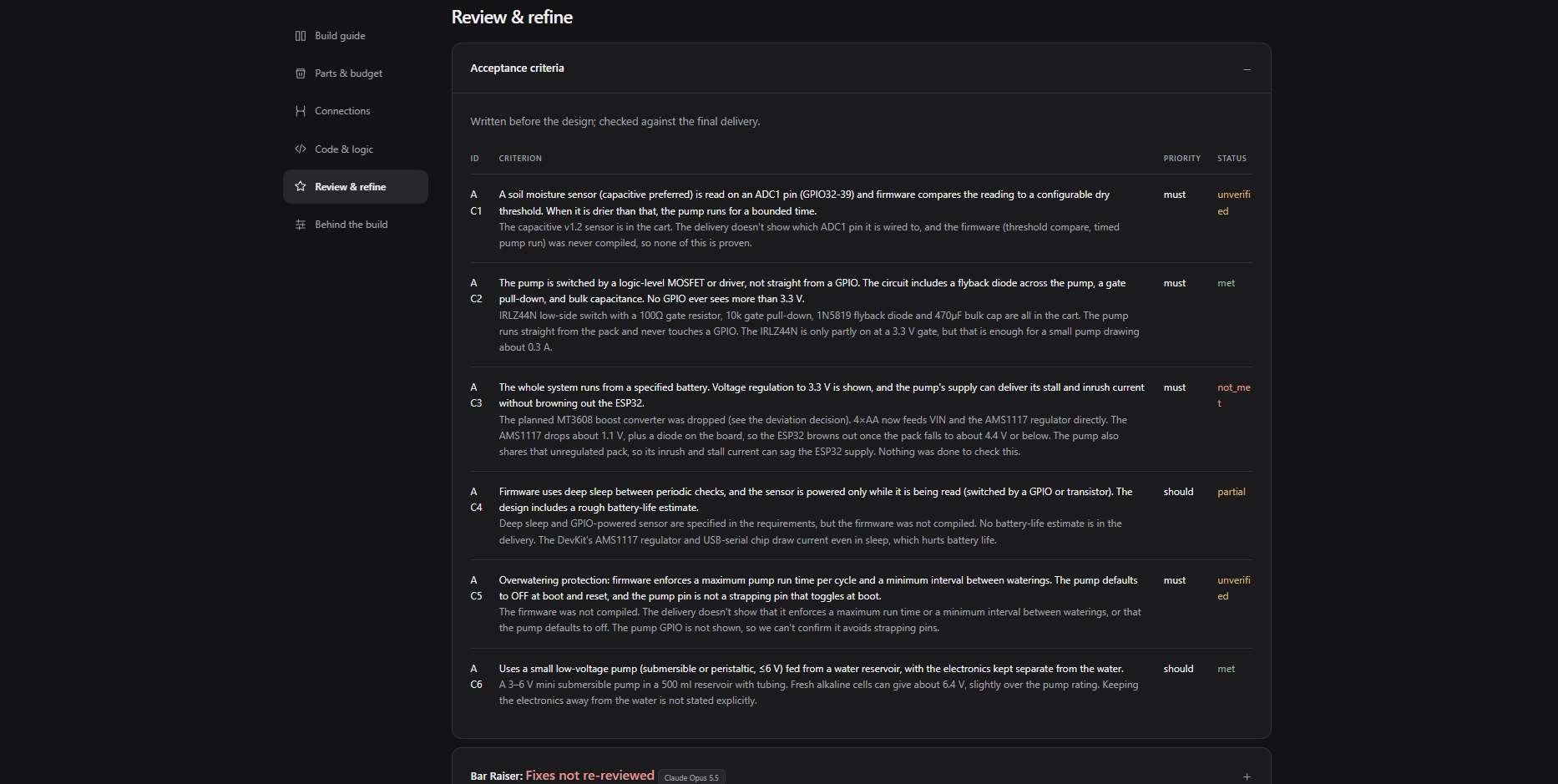
criteria made by Bar Raiser model to judge if the project aligns with user's request
-
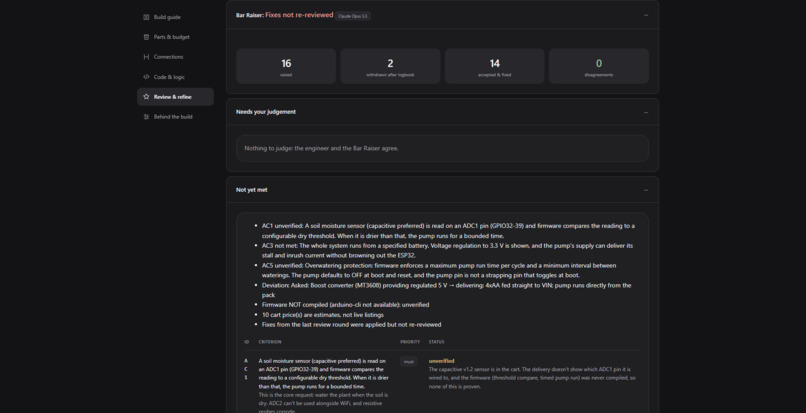
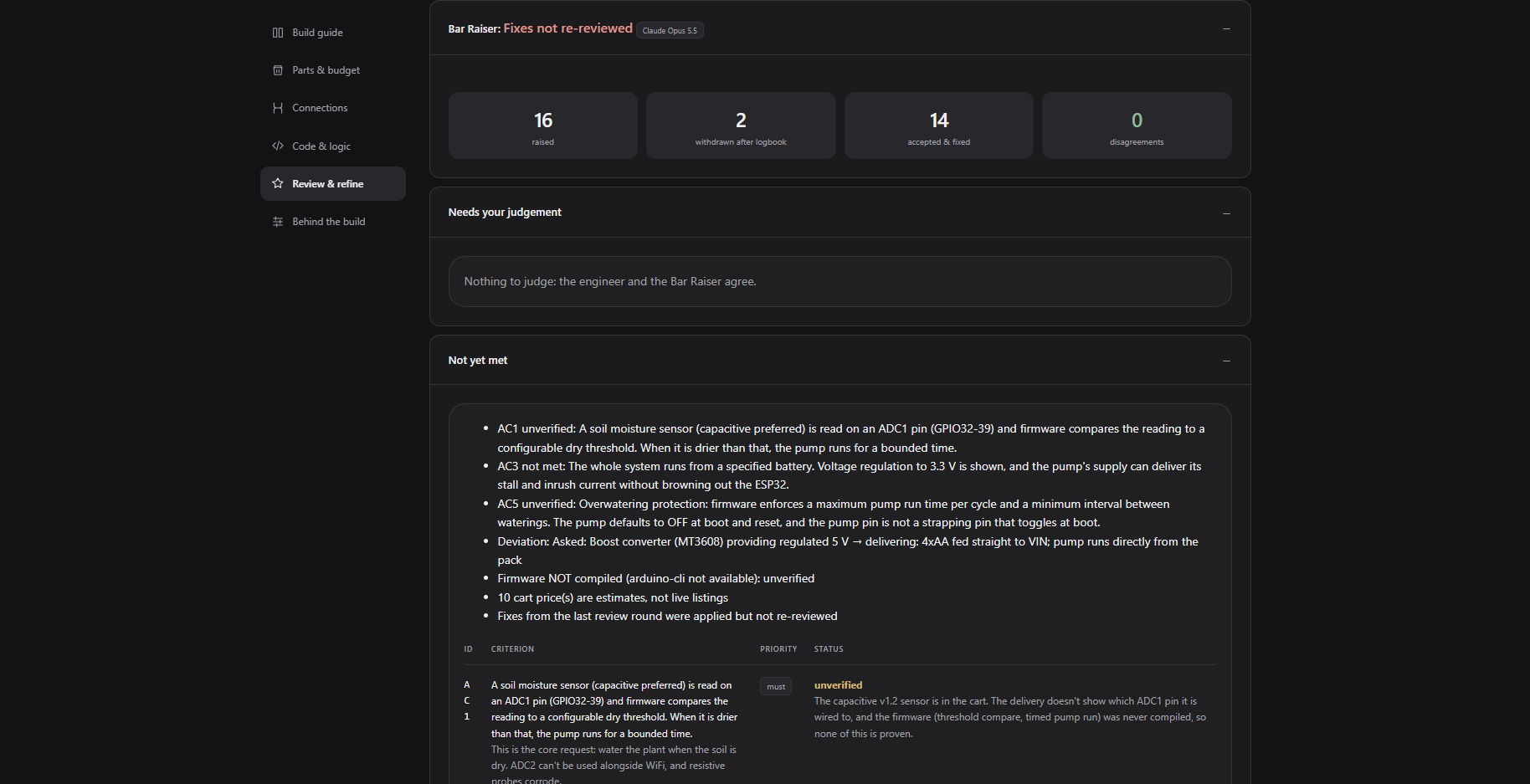
reviews and suggestions from Bar Raiser
-
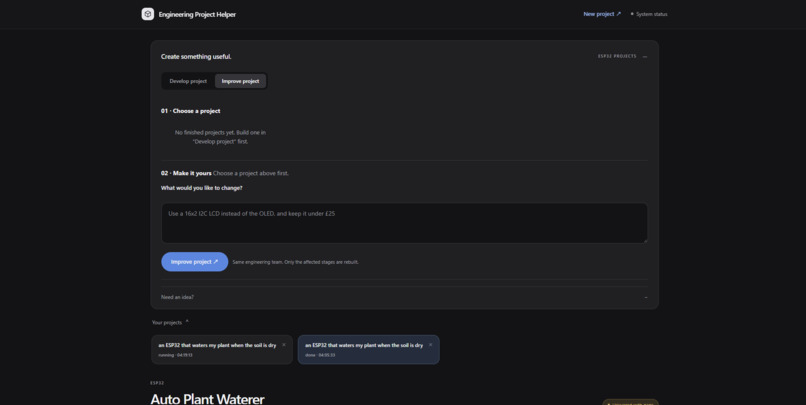
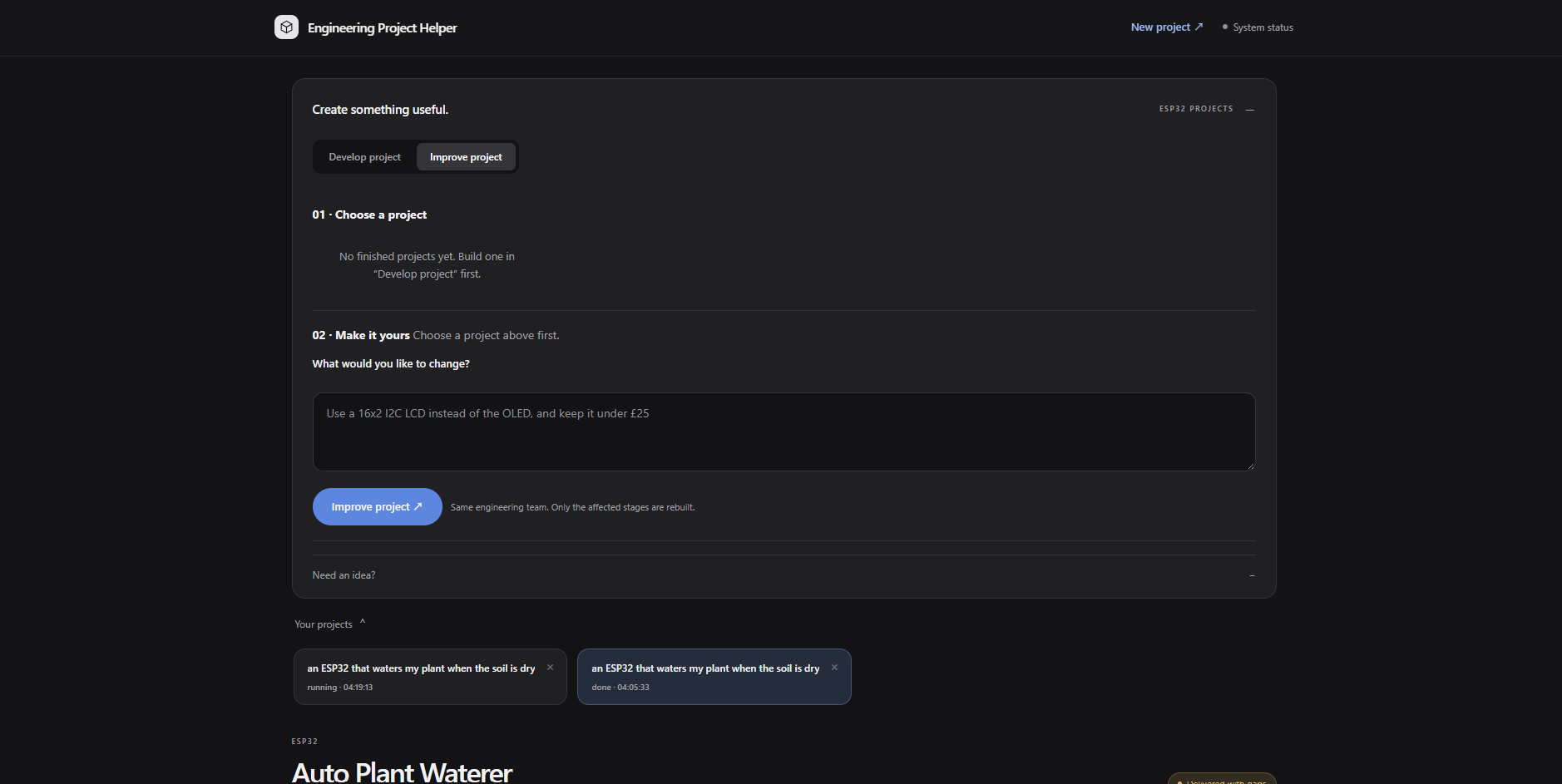
improve an existing project (if no previous projects then ask to build one first)
-
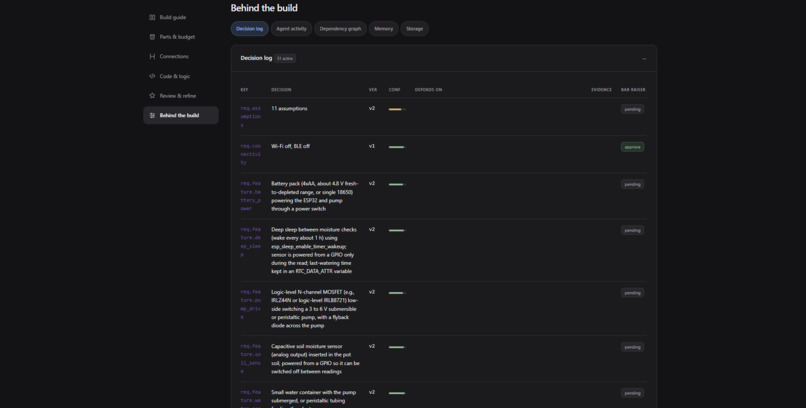
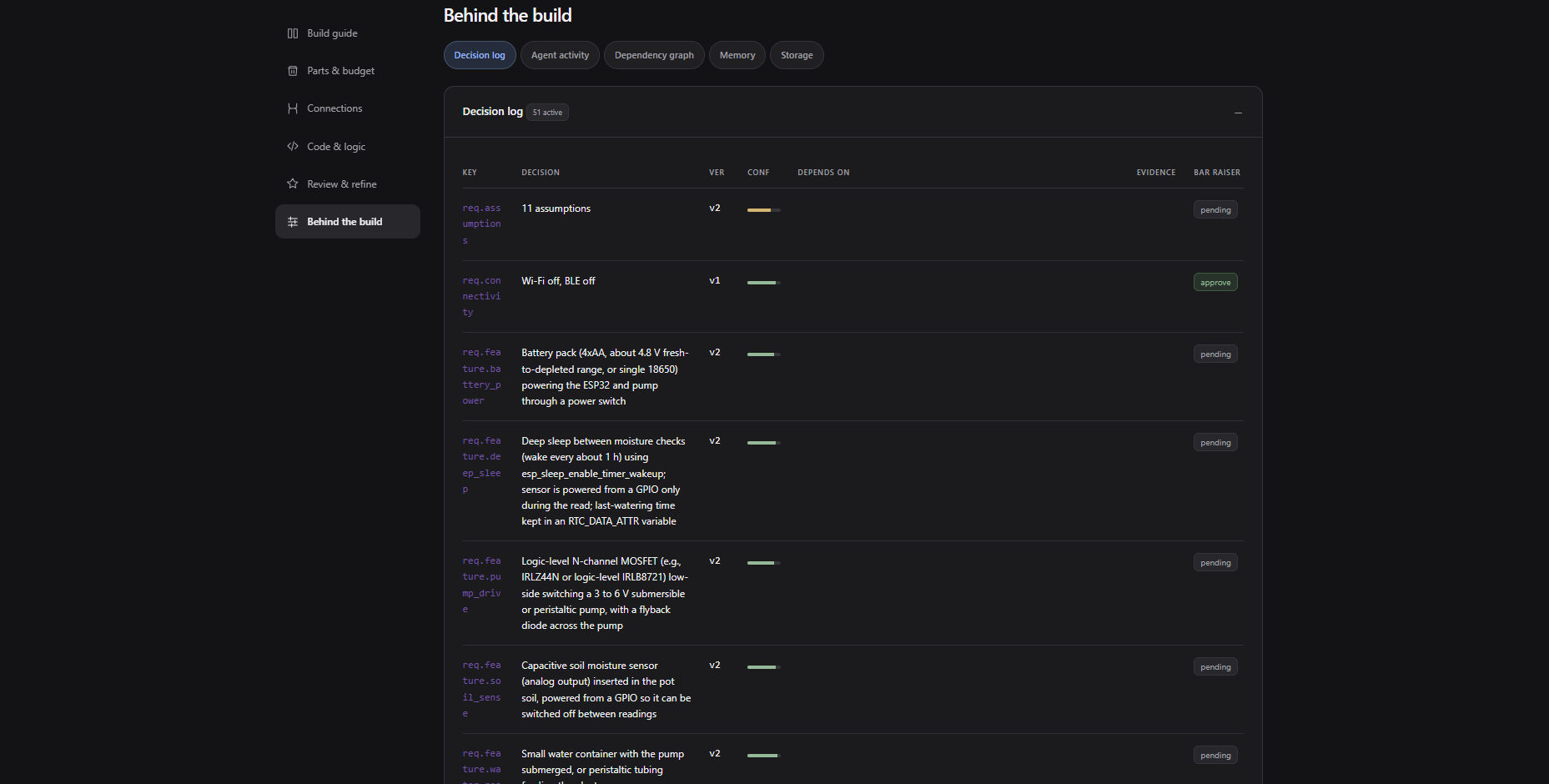
decision logs throughout the development
-
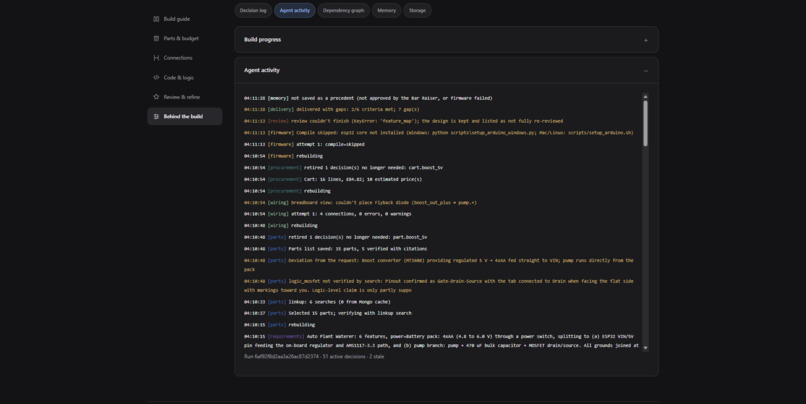
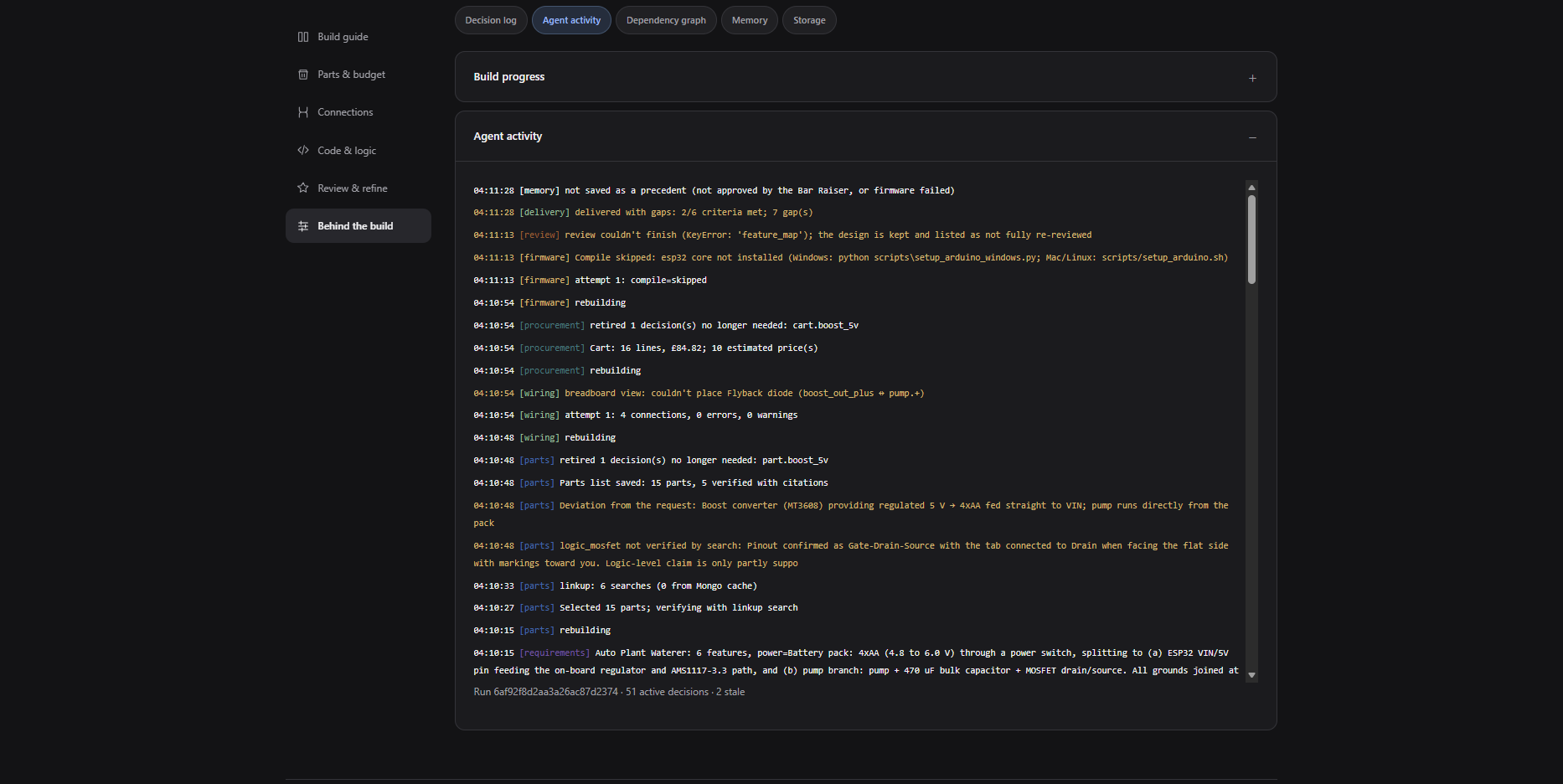
agent workflow for development
-
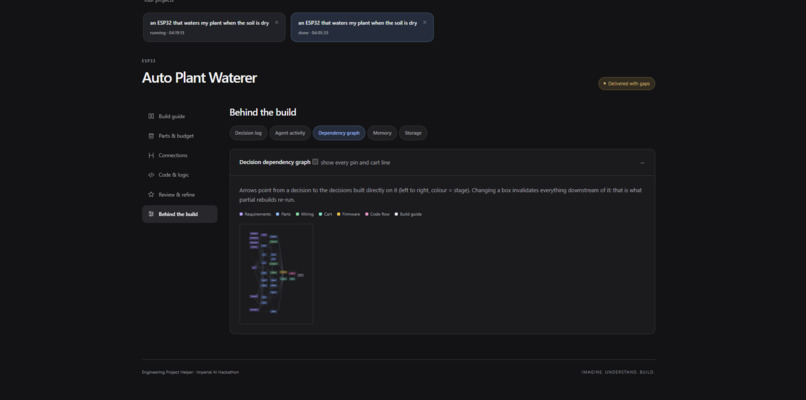
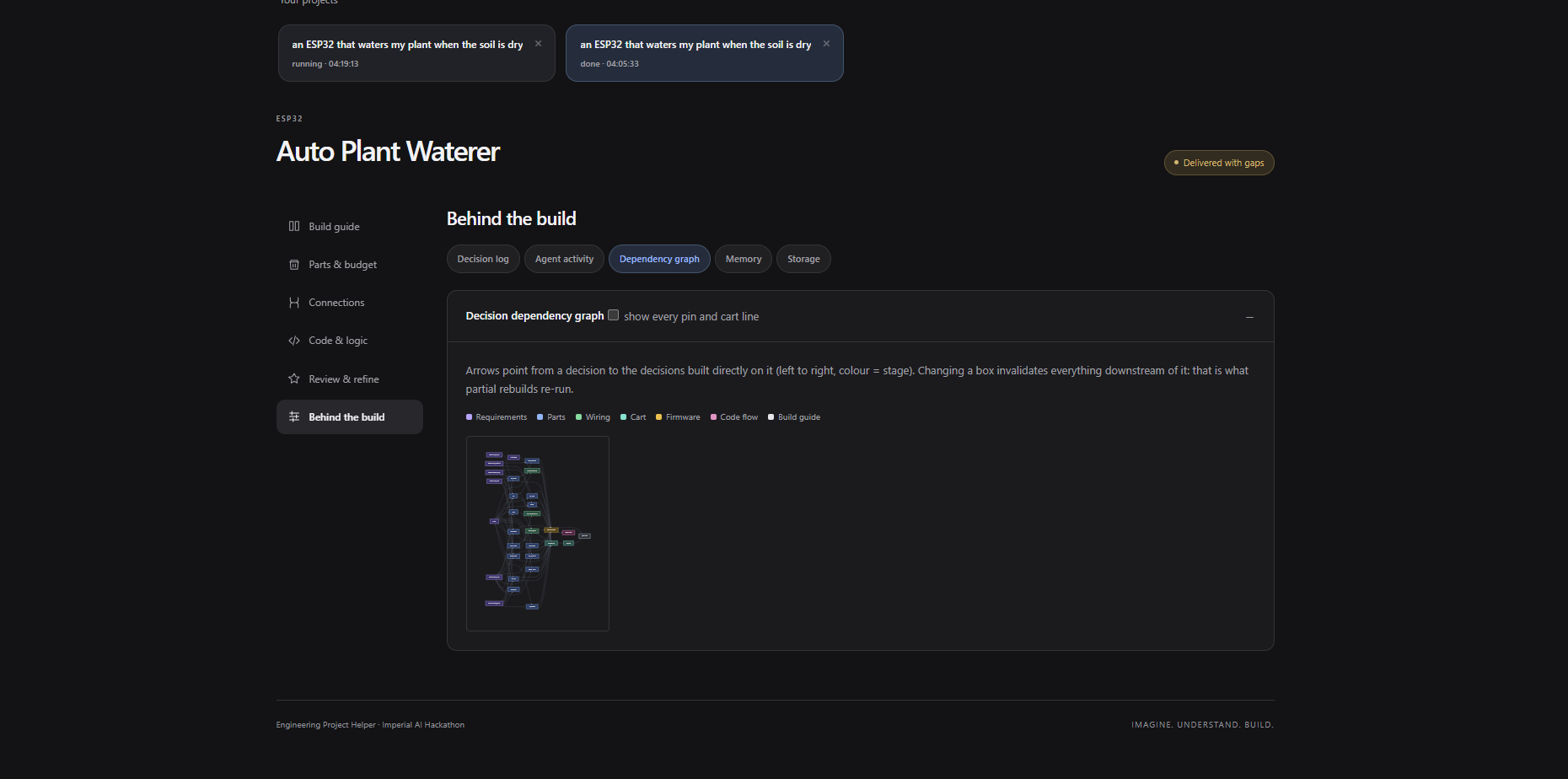
dependency chart - to show what will be altered if fixing one section
Inspiration
AI tools are becoming increasingly useful in engineering, especially for writing code. However, as design engineering students who regularly build IoT products, we noticed that AI assistance often falls short when connecting code to physical hardware. Choosing compatible components, planning the wiring and turning a design into a working prototype still require considerable manual effort. This inspired us to build an autonomous AI agent that turns a simple description into an engineering project plan, with clear, practical guidance to help users build it in the real world.
What it does
Engineering Project Helper turns a one-sentence idea into an ESP32 project, including hardware design, a parts list, a wiring diagram, firmware and a straightforward build guide. Before the project is delivered, an independent AI reviewer challenges the design against acceptance criteria drawn from the user’s initial proposal. The engineer responds to its concerns and revises the affected stages. Users receive the project together with any unresolved disagreements and verification gaps, and can judge those disagreements or request further improvements.
How we built it
The backend is Python and FastAPI. Every design choice is stored as a versioned decision with its reasoning and dependencies, so a change request rebuilds only the affected stages. Decisions, reviews and user verdicts are kept in Databricks Delta tables, where the whole history can be queried in SQL. Linkup verifies components against live sources and finds purchase links. The engineer and the Bar Raiser can run on different models from different providers. Anything that has to be exact (ESP32 pin rules, budget checks and the Arduino compile loop) is plain code, not AI.
Challenges we ran into
Our hardest challenge was balancing autonomy with quality assurance. In early tests, the agent quietly dropped requirements or substituted components to pass its own checks, then reported success. Asking users to approve every stage would reduce that risk, but also undermine the autonomy we wanted. Inspired by the Bar Raiser role described in Working Backwards, we introduced an independent AI reviewer. The difficult part was giving it enough influence to catch unmet requirements without blocking reasonable engineering trade-offs. We kept the engineer responsible for design decisions, while reporting unresolved disagreements and verification gaps to the user at delivery.
Accomplishments that we're proud of
We connected autonomous engineering design, independent review and user judgement in one workflow. Users can understand why decisions were made and improve their projects without starting again. Their verdicts are stored as precedents that both agents can reference in similar future projects. This allows previous feedback to influence later designs, rather than being forgotten after each conversation.
What we learned
We learned that a passing check does not guarantee a working design, and agreement between agents does not mean the user’s requirements have been met. Acceptance criteria need to be established before the design begins, and the final delivery needs to clearly distinguish what has been verified from what still requires testing.
What's next for Engineering Project Helper
Our next step is to build and test generated projects on real hardware. We also want to support boards beyond the ESP32 and use feedback from actual builds to improve the reviewer’s ability to identify practical problems.
