Inspiration
Sfu's existing course planning tools were slow and hard to read. Engineering students like me needed a simple way to map prerequisites and plan terms.
How we built it
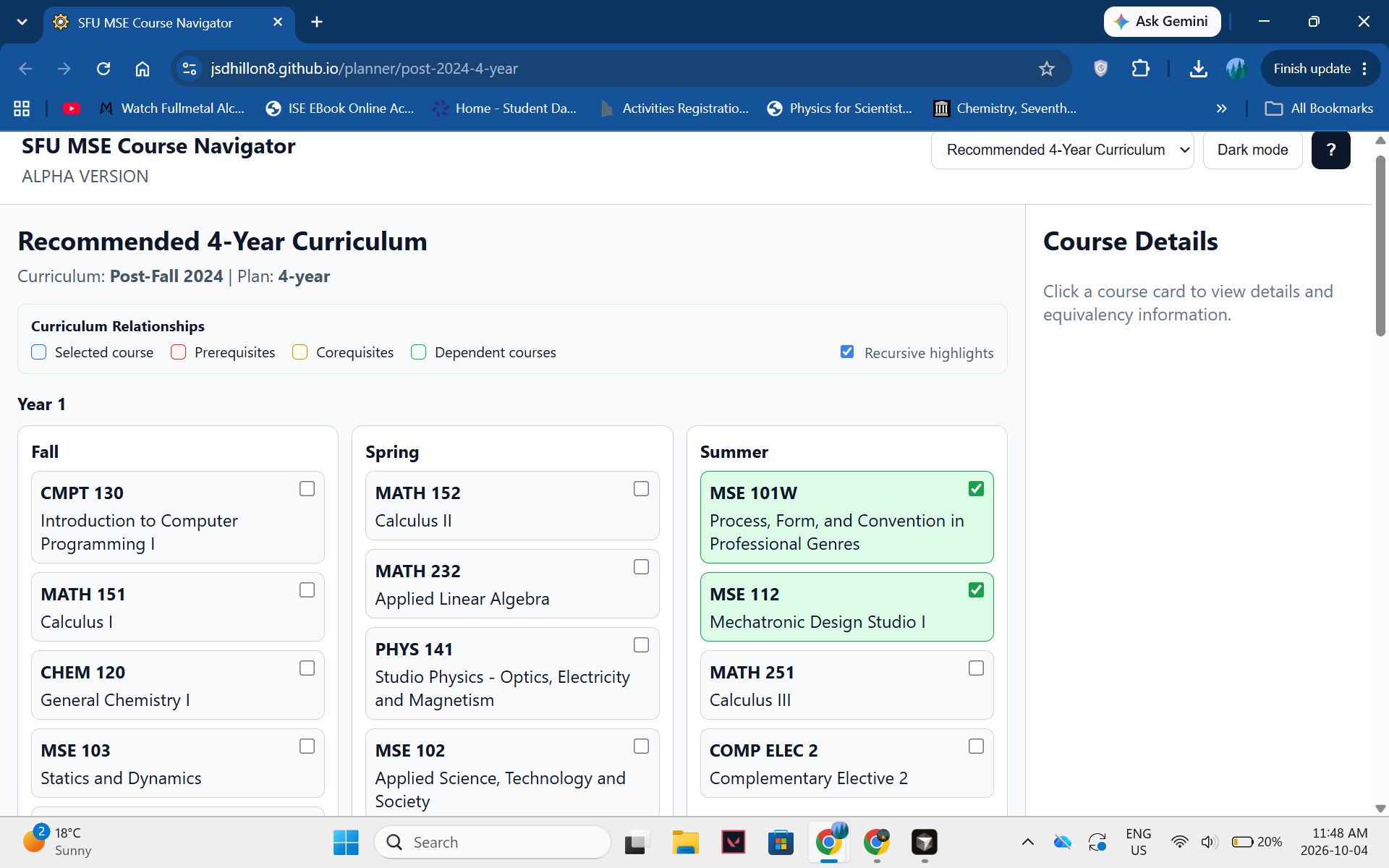
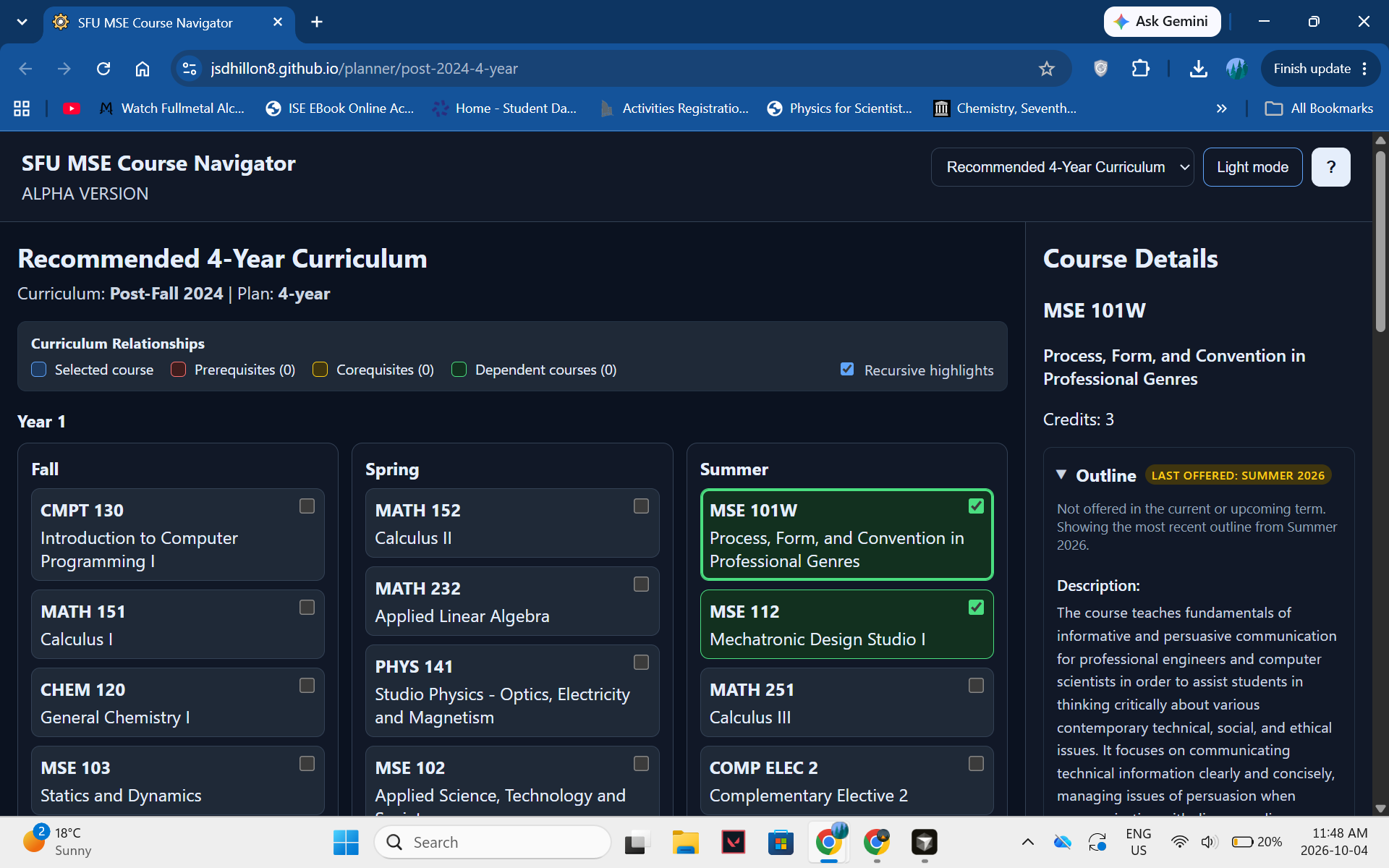
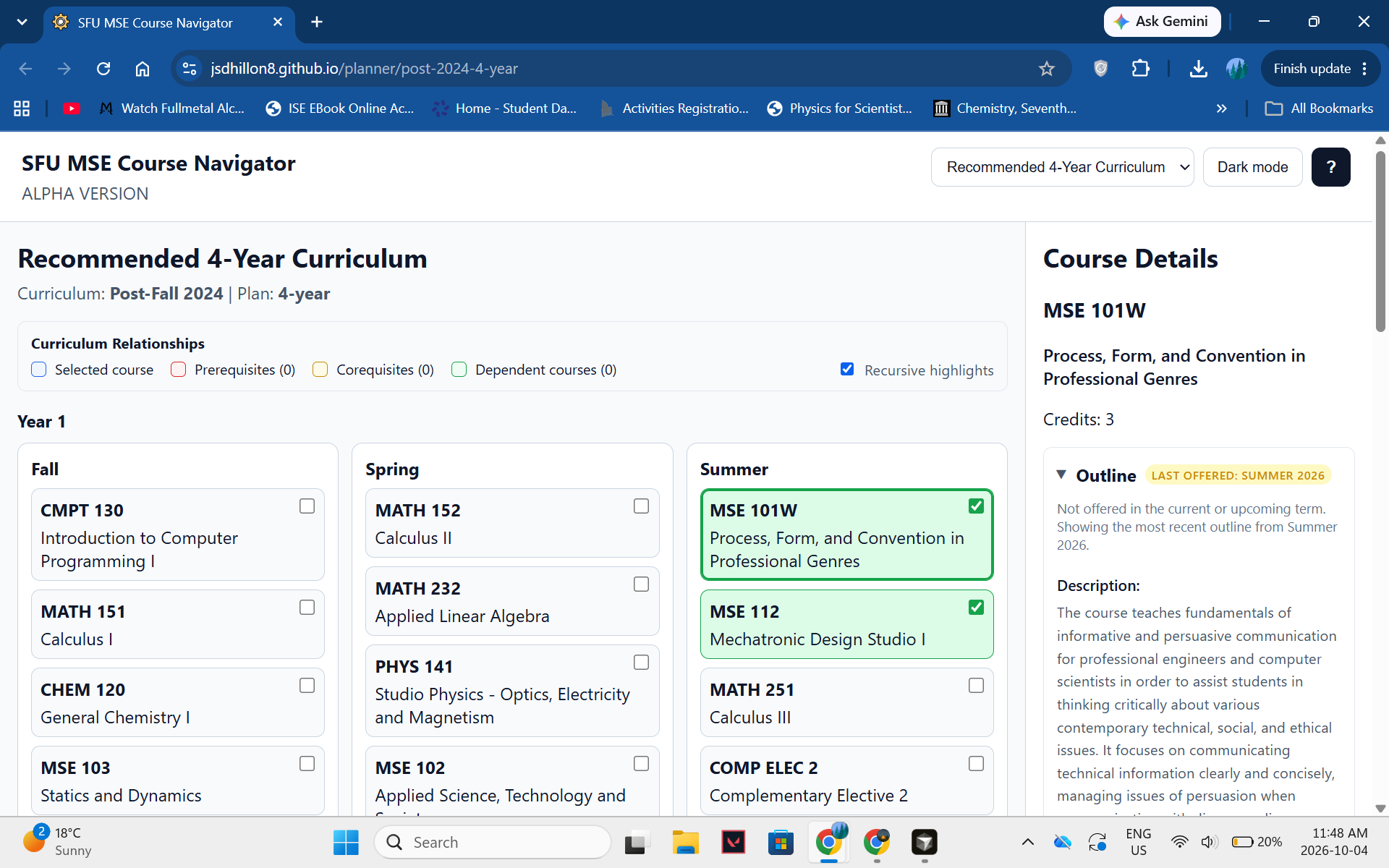
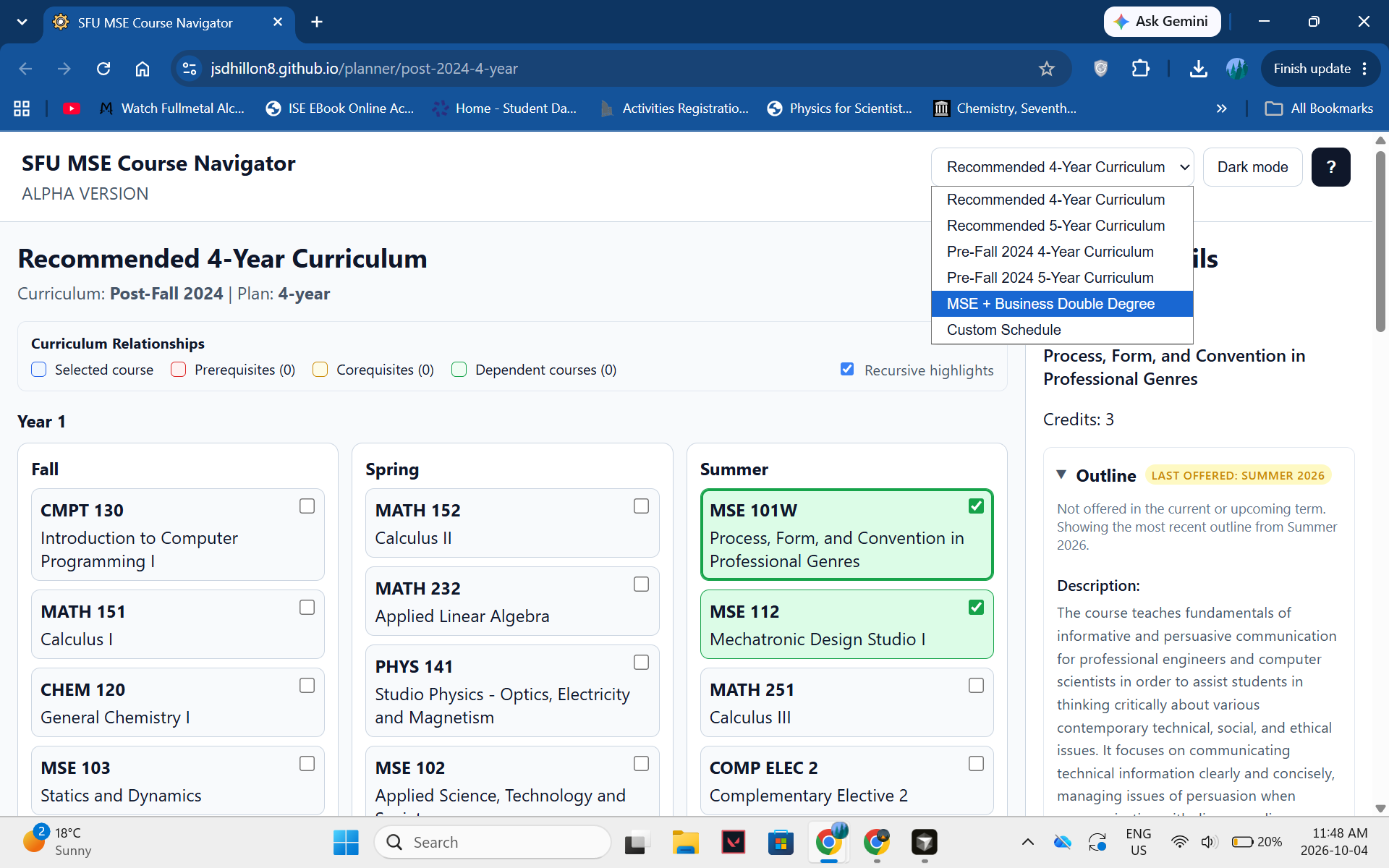
We built the SFU MSE Course Navigator from scratch during the hackathon, using react, javascript, typescript, and css.
The main challenge was turning the MSE degree requirements into a structure that our application could actually understand. We created our own course database containing prerequisites, credits, terms offered, and different degree pathways.
From there, we built an interactive interface that lets students:
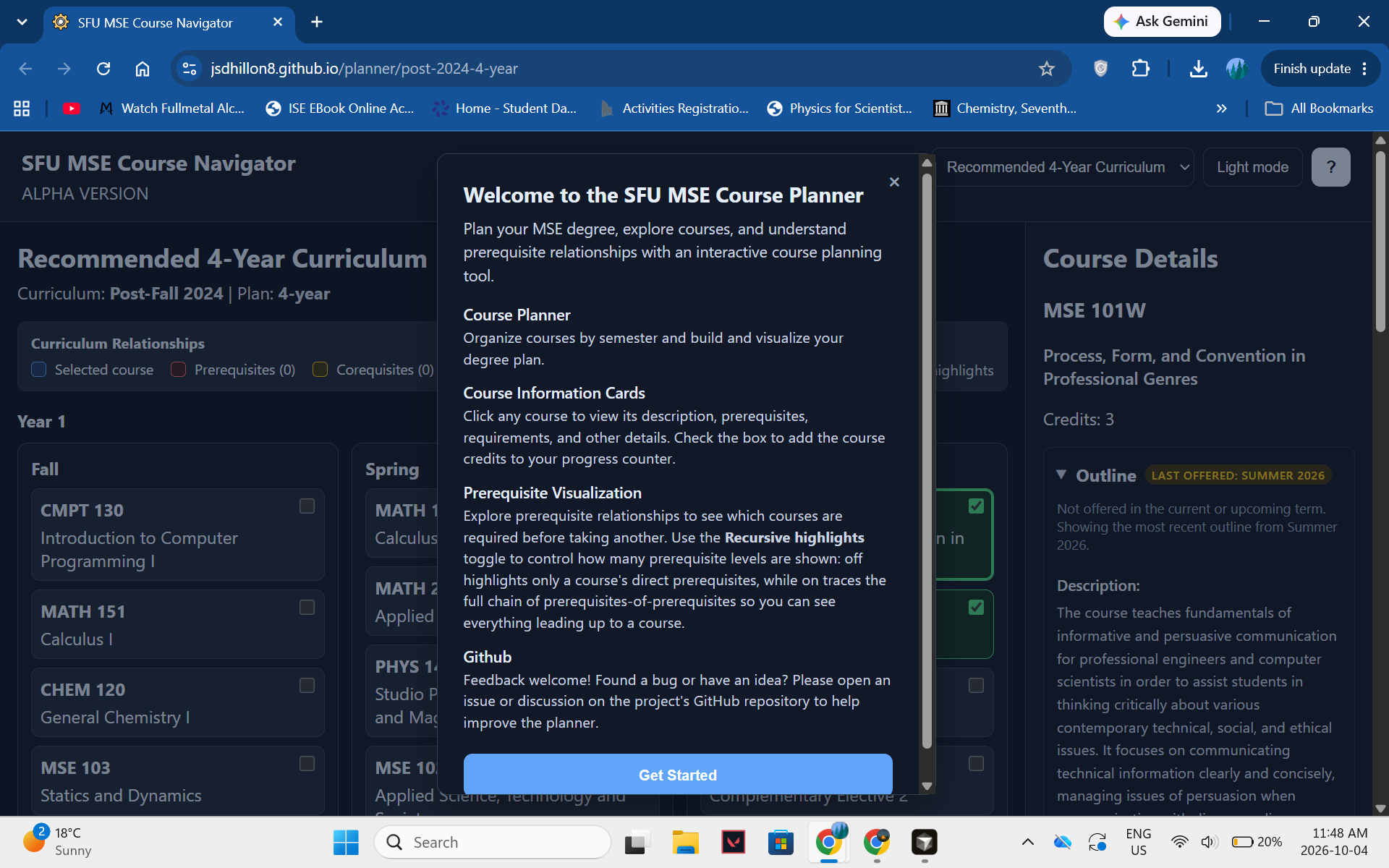
Switch between degree plans including 4-year, 5-year, legacy, and business-related options See prerequisite and equivalent connections between courses Track completed credits and overall degree progress Check graduation requirements as they plan their courses Explore different paths without having to manually rebuild their schedule Use dark mode for those late-night course planning sessions.
Challenges we ran into
This was our first hackathon, so we had to learn a lot while building the project. Our biggest challenge was the academic audit system. Courses can depend on other courses, which creates a large network of prerequisites. We needed to make sure the application could check these relationships quickly without getting stuck in repeated calculations. We also had to account for different degree structures and changing academic requirements. In addition we incorporated a credit progress system.
What we learned
The biggest thing we learned was how important good data structure is. At first, it was tempting to focus on the interface, but we quickly realized that the application was only going to work if the underlying course data was organized properly. We also learned a lot about working with prerequisite graphs, dynamic validation, and interactive UI design in a short amount of time. Most importantly, talking to other MSE students helped us understand what people actually wanted from the tool. We got feedback from 5 MSE students and found that things like co-op planning, prerequisite visibility, and being able to quickly understand your remaining degree requirements were especially useful.
What's next for Engineering Course Planner
Course-load warnings for semesters that may be unusually heavy Better co-op planning More detailed semester-by-semester recommendations RateMyProf links More degree programs beyond MSE

Log in or sign up for Devpost to join the conversation.