-
-
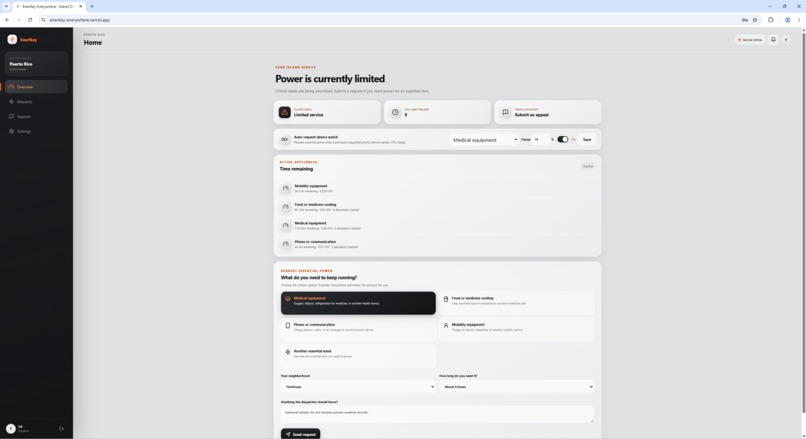
Dashboard
-
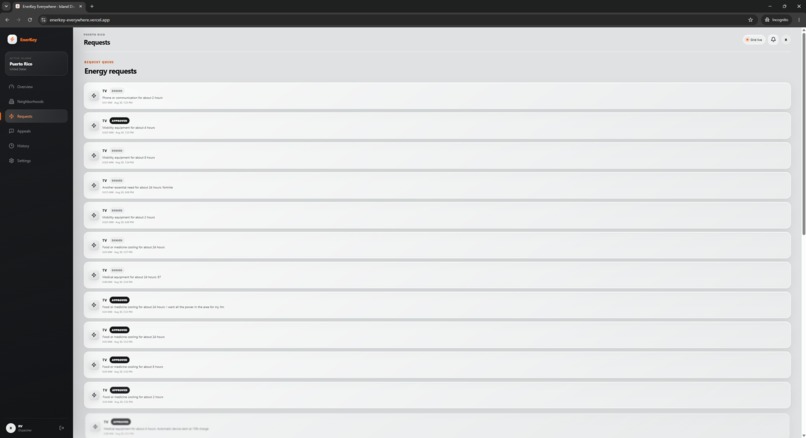
Resident Requests
Inspiration Isolated islands often have limited electricity and cannot easily receive additional power from a larger electrical grid. During shortages, communities must decide how to distribute energy without repeatedly disadvantaging the same residents. We created EnerKey to make this process more efficient, transparent, and fair while ensuring that essential services remain available.
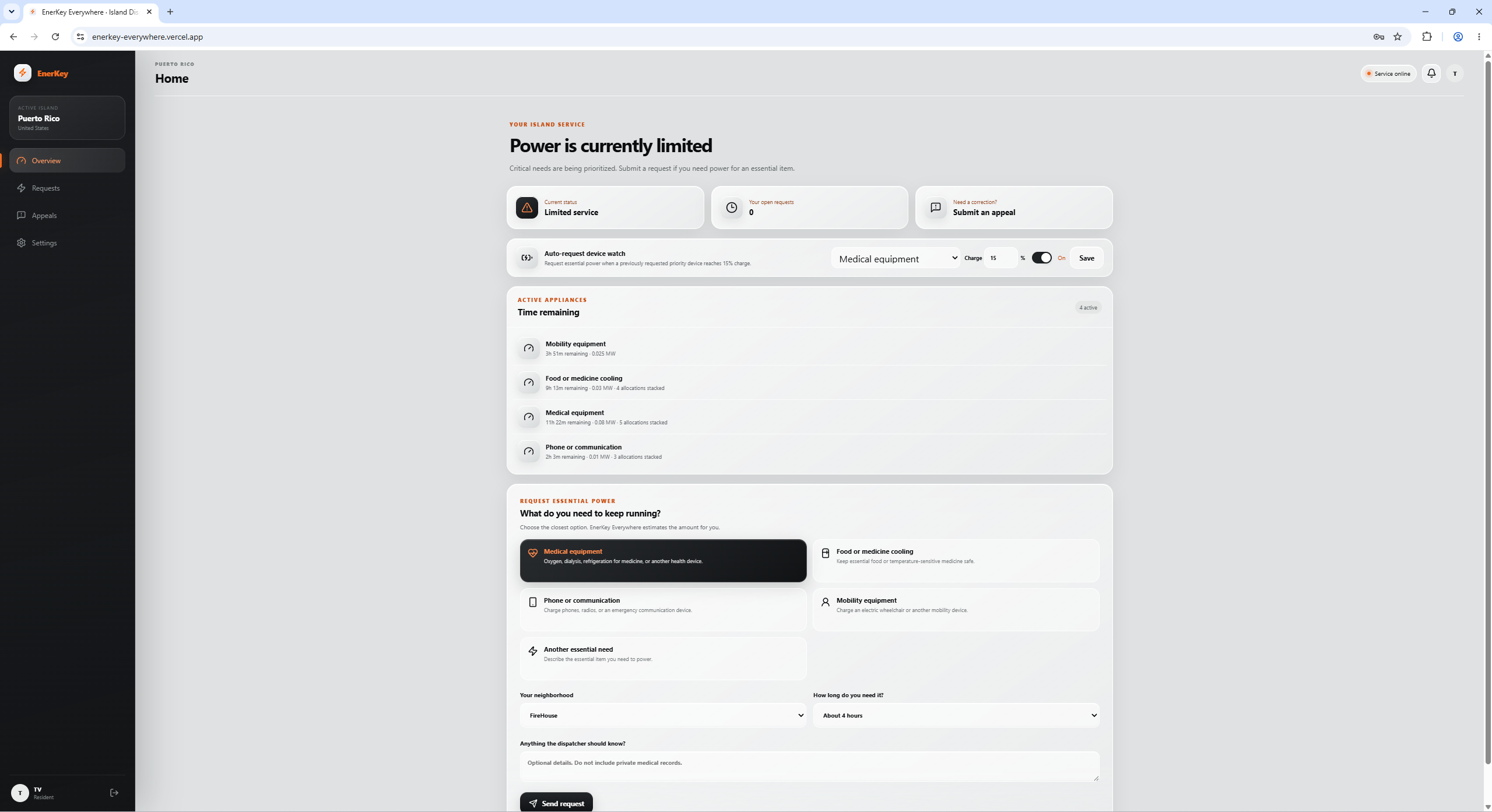
What It Does EnerKey is a website that helps isolated island communities manage their limited energy resources. Residents can request electricity for a specific amount of time and explain why they need it, such as for medical equipment, emergency communication, refrigeration, or another essential purpose.
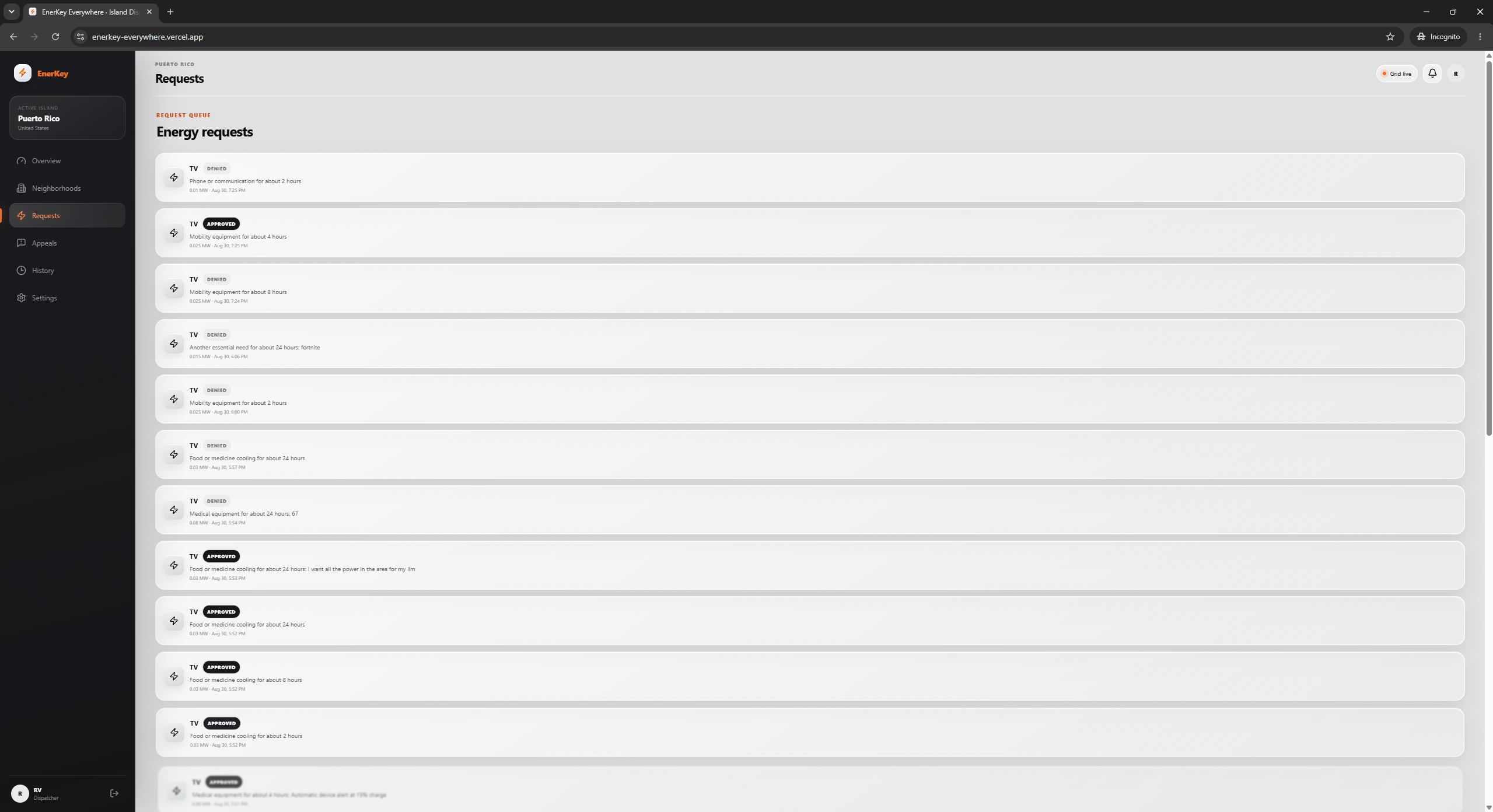
The system uses live information—including available generation, battery levels, current demand, building type, and emergency needs—to evaluate each request. It then assigns priority based on urgency, safety, fairness, and how recently the resident or district received power. Emergency and medical needs receive the highest priority.
EnerKey can also create temporary energy budgets and reduce nonessential electricity use during shortages. Most importantly, it explains why each decision was made instead of presenting residents with an unexplained approval or denial.
How We Built It We designed EnerKey as a user-friendly website containing separate tools for residents and community energy managers. Residents can submit energy requests, select their reason, enter the requested duration, and view the status of their request. The management dashboard displays the island’s available energy, current demand, active requests, and allocation decisions.
We developed an AI-based scoring system that compares requests using several factors:
Urgency: How quickly the electricity is needed
Safety: Whether denying the request could place someone at risk
Fairness: Whether energy has been distributed evenly across the community
Recent access: How much electricity the resident or district recently received
Resource availability: How much energy the island can currently provide
The prototype allows users to simulate an energy shortage and observe how EnerKey adjusts allocations while protecting critical services.
What We Learned Through this project, we learned that intelligent automation is not only about making fast decisions—it must also make responsible and understandable decisions. Energy distribution affects real people, so efficiency cannot be the system’s only goal.
We also learned how live environmental data, automated decision-making, and user input can work together within one system. Developing EnerKey helped us better understand interface design, prioritization algorithms, ethical AI, and the importance of giving users a way to question automated decisions.
Challenges We Faced One of our greatest challenges was defining fairness. Giving all residents exactly the same amount of electricity may appear fair, but it does not account for urgent medical or emergency needs. However, prioritizing only urgency could repeatedly reduce power to the same neighborhoods.
We addressed this challenge by considering both immediate need and recent access to electricity. We also added explanations for allocation decisions and an appeal process so residents can report incorrect classifications or missing information.
Another challenge was presenting complex energy data clearly. We simplified the dashboard so users can quickly understand the island’s energy supply, current demand, and why certain requests receive priority.
What’s Next In the future, EnerKey could connect to real smart meters, batteries, renewable-energy systems, and environmental sensors. We would also like to improve its forecasting abilities so it can predict shortages before they occur and recommend preventive actions. Our long-term goal is to help island communities become more sustainable, resilient, and prepared while ensuring that every resident is treated fairly.

Log in or sign up for Devpost to join the conversation.