-
-
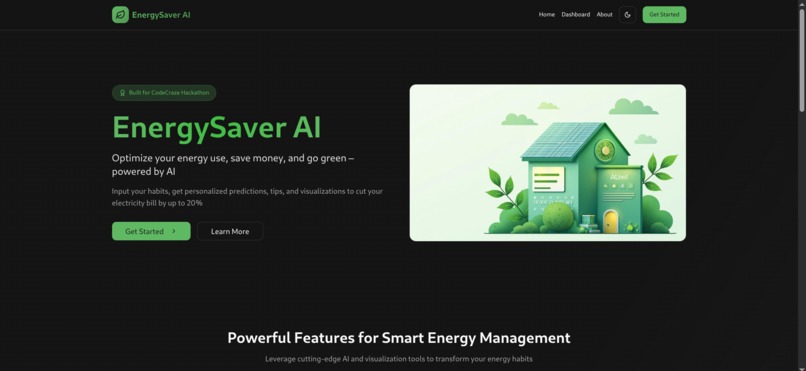
Home page
-
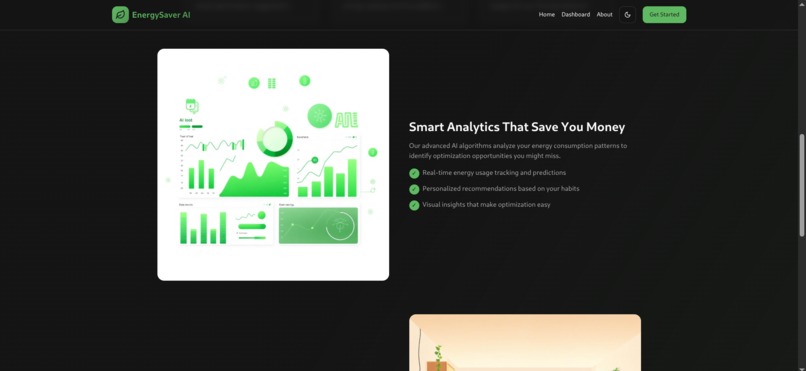
Features section
-
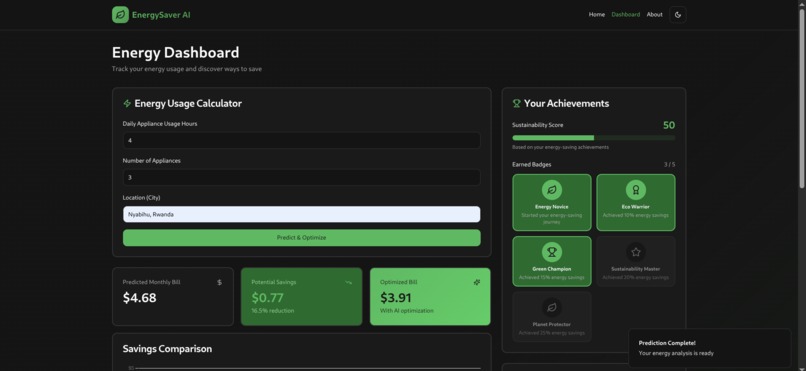
Dashboard actions
-
Footer section
-
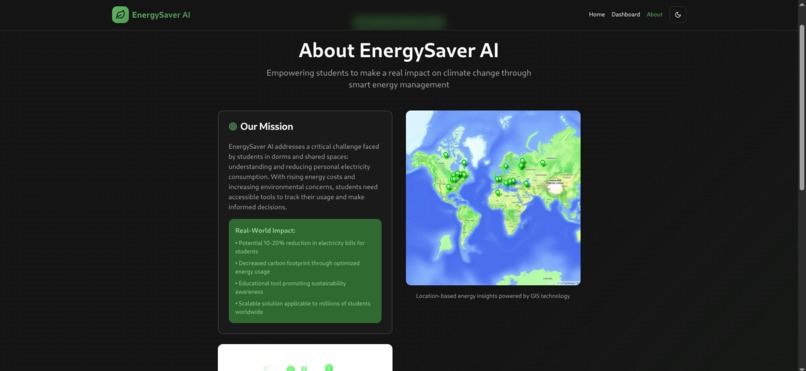
About page
-
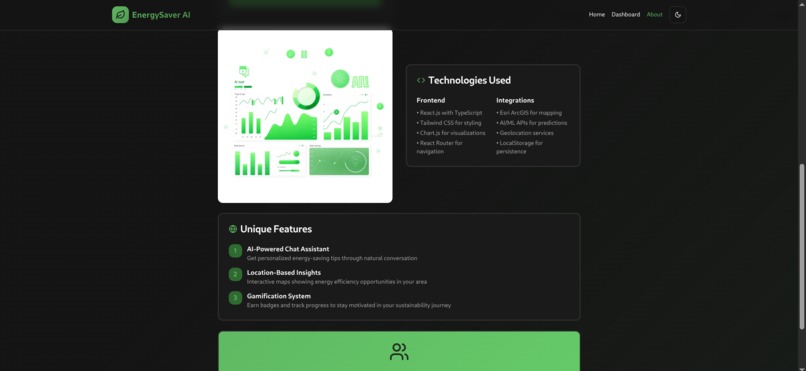
About content
-
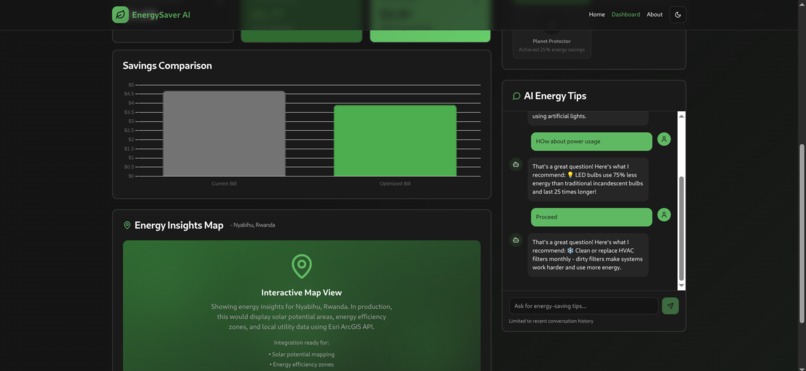
AI assistant on tips


Inspiration
As a team of passionate students and tech enthusiasts, we were inspired by the dual challenges of skyrocketing energy costs and the urgent need for sustainable living, especially in shared student spaces like dorms. In 2025, with global energy prices fluctuating due to geopolitical tensions and climate change impacts, many young people struggle with unexpected utility bills that strain already tight budgets. We drew from personal experiences—late-night study sessions with forgotten lights on, or roommates debating over AC usage and combined this with the hackathon's focus on innovative tech solutions. Sponsors like Helm Electric (energy experts) and Esri (mapping pros) further motivated us to blend AI with geospatial insights, creating a tool that not only saves money but empowers users to contribute to a greener planet. Energywise AI was born from the idea that small, AI-guided changes can lead to big environmental and financial wins.
What it does
Energywise AI is an intuitive web app that helps users, particularly students in dorms or shared apartments, track, predict, and optimize their personal electricity usage. Users input simple details like daily appliance hours, number of devices, and location, and the app leverages machine learning to forecast monthly bills and suggest personalized savings strategies—potentially reducing costs by 10-20%. It features an interactive chat for real-time energy tips powered by an LLM, gamification with badges and progress scores to encourage eco-friendly habits, and a dynamic map using Esri ArcGIS to visualize location-specific insights like solar potential or regional energy trends. The result? A fun, educational tool that turns energy management into an engaging experience, promoting sustainability while easing financial burdens.
How we built it
We built Energywise AI as a full-stack MVP in under 24 hours, focusing on efficiency and sponsor-aligned tech. For the frontend, we used React.js with Tailwind CSS for a responsive, green-themed UI, incorporating React Router for navigation and libraries like Chart.js for bill comparison visuals. The backend was powered by Node.js/Express, handling API endpoints for predictions and tips. We integrated a simple ML model with scikit-learn (via Python subprocess calls) for bill forecasting based on user inputs and dummy datasets. For the AI chat, we used an LLM API (like Grok) to generate tailored advice. The standout feature—interactive maps—came from Esri's ArcGIS JavaScript API, geocoding user locations and overlaying energy data. Gamification was implemented with localStorage for badge persistence. We deployed the frontend on Vercel and backend on Render, ensuring a seamless demo. Version control via GitHub kept our solo/small-team workflow smooth.
Challenges we ran into
Time was our biggest enemy in this one-day hackathon—balancing ambitious features like ML integration and real-time chat while learning Esri's API on the fly proved tricky. We hit snags with API rate limits and cross-origin issues during backend-frontend integration, requiring quick debugging sessions. Mocking LLM responses without full API access (due to setup time) meant relying on placeholders, and ensuring mobile responsiveness added extra iterations. Data privacy concerns arose when handling location inputs, so we prioritized anonymization. Despite sleep deprivation and a few caffeine-fueled all-nighters, these hurdles taught us to prioritize core MVP elements and iterate rapidly.
Accomplishments that we're proud of
We're thrilled to have delivered a polished, functional MVP that uniquely combines AI personalization, geospatial mapping, and gamification—standing out in a sea of hackathon projects. Aligning with sponsors by leveraging Esri for maps and energy-focused insights feels like a win, as does the potential real-world impact: simulations show users could save $50-100 monthly. Our demo video captures the app's intuitiveness, and we even incorporated accessibility features like WCAG compliance. Most proudly, we transformed a concept into a deployable app in record time, proving our ability to innovate under pressure.
What we learned
This hackathon was a crash course in full-stack development and emerging tech. We deepened our React and Node.js skills, mastered Esri's GIS tools for the first time, and explored ML basics with scikit-learn—highlighting how accessible AI can be for quick prototypes. We learned the value of modular design for rapid iteration, effective error handling in APIs, and user-centric UX (e.g., gamification boosts engagement). On a softer note, it reinforced teamwork dynamics, even remotely, and the importance of sustainability in tech—reminding us that coding can drive positive change.
What's next for Energywise AI
Post-hackathon, we're excited to scale Energywise AI into a full platform. Next steps include integrating real-time energy data APIs (e.g., from utilities), expanding ML with user-submitted datasets for accuracy, and adding community features like shared dorm challenges. We'll pursue mobile apps for iOS/Android, partner with campuses for pilots, and explore monetization via premium insights or eco-partner ads. Ultimately, we aim to open-source parts of the code, contribute to global sustainability goals, and evolve it into a tool that helps millions reduce their carbon footprint while saving money.
Built With
- axios
- chart.js
- esri-arcgis-api
- express.js
- github
- node.js
- react
- render
- scikit-learn
- tailwind-css
- vercel


Log in or sign up for Devpost to join the conversation.