-
-
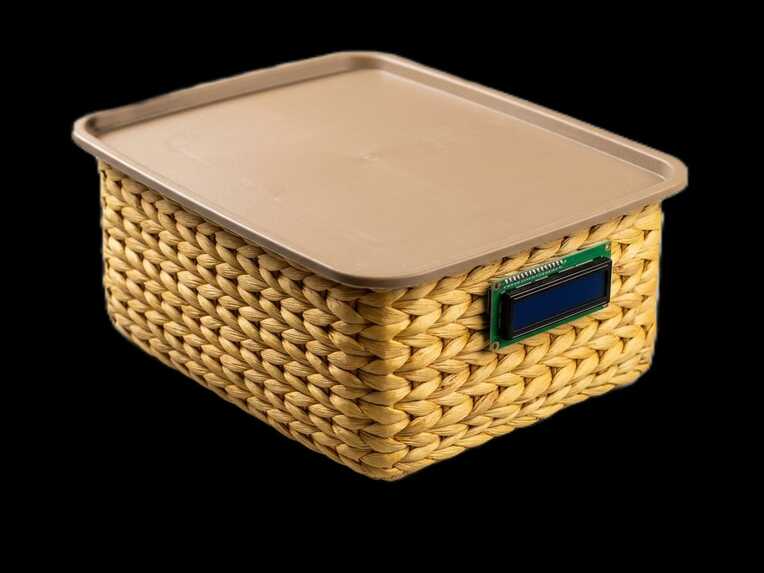
Prototype Image
Inspiration
Energy Hive was inspired by a simple but important question: Why should access to electricity and basic cooling depend entirely on having a reliable power grid?
In rural communities, roadside markets, and agricultural areas, unreliable electricity creates problems beyond inconvenience. Farmers and small vendors struggle to keep perishable products fresh, charge essential devices, and operate basic electrical appliances. These challenges can lead to financial losses, food wastage, and reduced productivity.
We wanted to develop a compact, portable solution that could bring renewable energy and essential utilities closer to the people who need them.
This idea led us to create Energy Hive – a modular, solar-powered energy hub that integrates energy generation, storage, intelligent control, and thermoelectric cooling into one portable system.
What it does
Energy Hive is a portable solar-powered energy storage and utility system designed for applications where reliable electricity is limited or unavailable.
Its key capabilities include:
Solar Energy Utilisation: Uses solar energy as its renewable power source to support off-grid operation.
Battery Energy Storage: Stores electrical energy in a rechargeable battery for use when solar generation is insufficient.
Thermoelectric Cooling: Integrates a Peltier-based cooling system with a fan and heatsink arrangement to help preserve temperature-sensitive products.
Intelligent Temperature Monitoring: Uses a temperature sensor to monitor the cooling compartment.
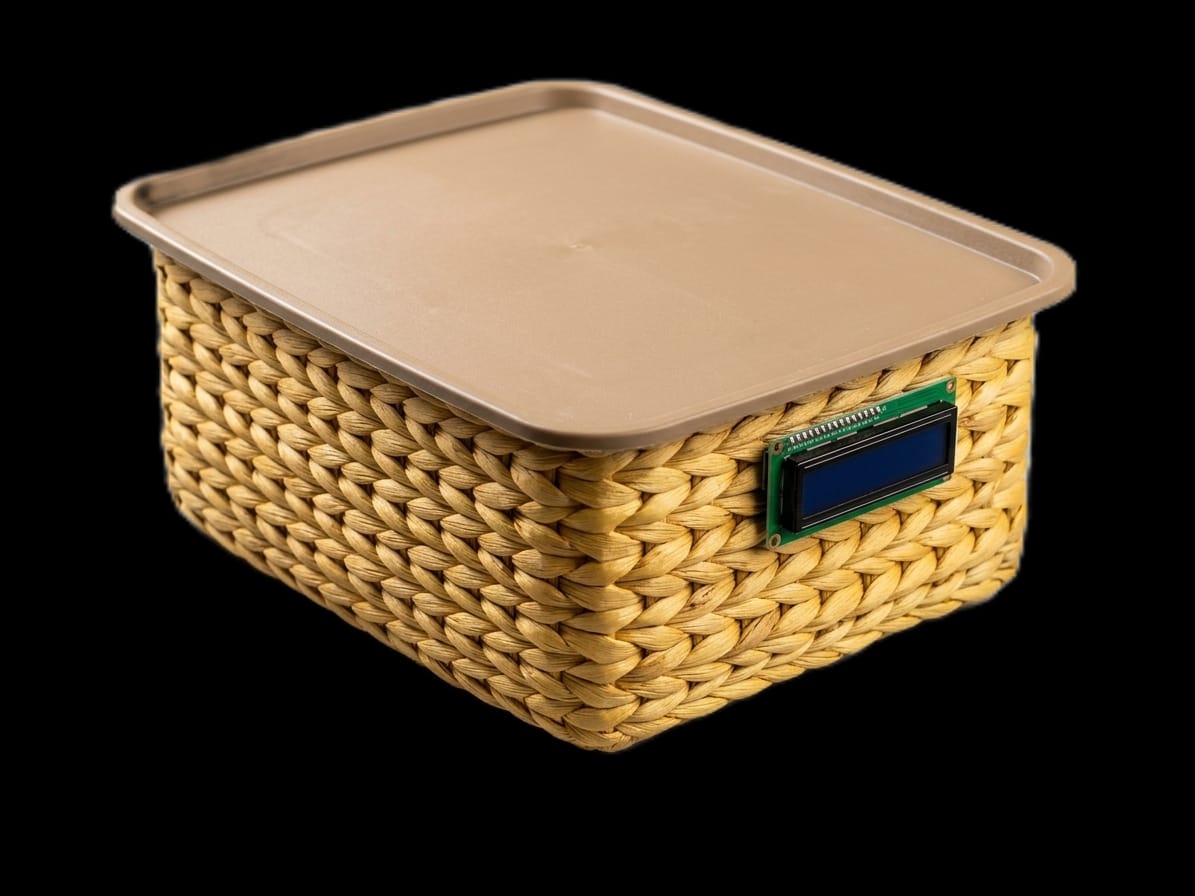
Real-Time Information: An LCD interface displays relevant system information.
Controlled Power Distribution: Uses an Arduino-based control architecture to coordinate system functions and electrical loads.
Portable Applications: Designed to support farmers, vegetable vendors, small businesses, and communities requiring basic off-grid electricity.
The broader vision is to make Energy Hive a modular platform that can accommodate additional applications, including agricultural monitoring, emergency lighting, and specialised storage modules.
How we built it
We approached Energy Hive as an integrated hardware and software engineering project.
First, we identified the major requirements: renewable energy input, electrical storage, controlled power distribution, temperature monitoring, and cooling.
We then developed the physical prototype by integrating the following components and subsystems:
Energy Generation: A solar panel provides renewable electrical energy.
Energy Storage: A 12V LiFePO4 battery provides stored energy for system operation.
Control System: An Arduino Mega acts as the central controller.
Temperature Monitoring: A DS18B20 digital temperature sensor monitors the cooling system.
Cooling Assembly: A thermoelectric Peltier module, cooling fan, heatsink, and thermal interface components form the cooling subsystem.
User Interface: An I2C LCD provides system information.
Power Conversion: DC-DC converter modules provide the required voltage levels for different electrical components.
We developed the control logic to coordinate temperature monitoring, cooling operation, and system functions.
Rather than treating solar generation, battery storage, cooling, and electronics as separate components, we integrated them into one functional prototype.
The result is a physically constructed and working Energy Hive prototype.
Challenges we ran into
Building Energy Hive involved several engineering challenges.
- Power Management
One of our biggest challenges was coordinating the energy requirements of multiple subsystems. Solar generation, battery capacity, cooling demand, and electronic loads had to be considered together.
- Thermal Management
The Peltier cooling system requires careful thermal management. We had to consider the cooling side, heatsink performance, airflow, and heat dissipation to achieve effective operation.
- Hardware Integration
Integrating the Arduino Mega, temperature sensor, LCD, power converters, battery, and cooling components required careful attention to electrical connections and compatibility.
- Balancing Portability and Functionality
We wanted the system to remain compact and portable without compromising the functionality of its major subsystems.
- Developing a Reliable Control System
Coordinating temperature monitoring and cooling operation while considering available electrical power required us to approach the project as a complete system rather than a collection of individual components.
These challenges helped us understand that building an engineering solution requires much more than assembling hardware. Every subsystem must work together reliably.
Accomplishments that we're proud of
Our biggest accomplishment is transforming an idea into a physically constructed, working prototype.
We are particularly proud of:
Integrating solar energy, battery storage, and electrical power distribution into one portable system.
Successfully developing an Arduino Mega-based control architecture.
Integrating temperature monitoring with a thermoelectric cooling subsystem.
Creating a functional LCD-based information interface.
Combining electrical, thermal, mechanical, and software engineering concepts in one project.
Developing a platform that can potentially be expanded for different community requirements.
Most importantly, Energy Hive represents our attempt to solve a real-world problem through practical engineering rather than limiting ourselves to a theoretical concept.
What we learned
Energy Hive taught us how interconnected different engineering disciplines are.
We learned about renewable energy systems, battery storage, DC power conversion, microcontroller programming, temperature sensing, thermoelectric cooling, and hardware integration.
We also learned the importance of power budgeting, thermal management, systematic troubleshooting, and testing individual subsystems before integrating them into a complete system.
One of our most important lessons was that an innovative idea becomes meaningful only when it can be translated into a functional and practical solution.
The project strengthened our understanding of systems thinking: improving one subsystem can affect the performance of the entire system.
What's next for Energy Hive
Energy Hive is a foundation for a larger modular energy platform.
Our next objectives include:
Improved Energy Intelligence: Develop smarter energy allocation based on battery availability, solar generation, and connected loads.
Enhanced Cooling Performance: Improve thermal insulation, airflow, and temperature regulation.
Agricultural Applications: Explore dedicated modules for crop storage and agricultural monitoring.
Emergency Power Support: Expand its capabilities for lighting and essential low-power applications during electricity interruptions.
Modular Expansion: Develop interchangeable modules for different users and applications.
Performance Evaluation: Conduct more systematic testing of energy efficiency, battery endurance, temperature stability, and operating performance.
Our long-term vision is to make Energy Hive an adaptable, accessible, and sustainable energy solution that can support communities, small businesses, and agricultural activities.
Energy Hive is not just about generating electricity. It is about making available energy more useful, intelligent, and accessible.
Built With
- arduino
- arduino-mega
- automation
- battery-management
- c++
- cleantech
- electronics
- embedded-systems
- energy-storage
- engineering
- green-technology
- hardware
- innovation
- internet-of-things-(iot)
- mechatronics
- microcontrollers
- off-grid-technology
- peltier-technology
- power-management
- renewable-energy
- smart-energy
- solar-energy
- sustainability
- temperature-monitoring
- thermoelectric-cooling


Log in or sign up for Devpost to join the conversation.