-
Blank Page
-
Example Test
Inspiration
We were inspired by the feature to choose different eco-friendly routes such as biking and walking on travel apps, and we decided to see what it would be like if the user was aware how much they could save in carbon emissions by walking.
What it does
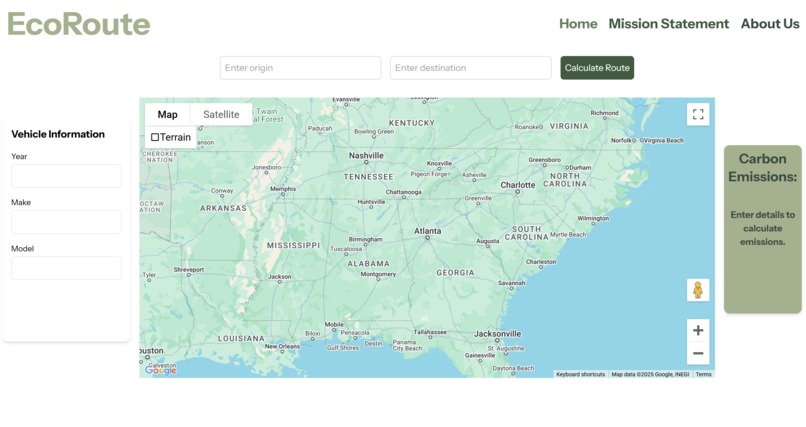
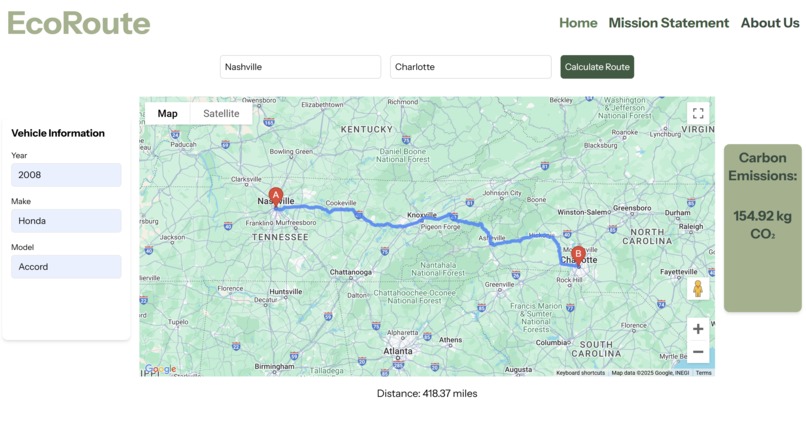
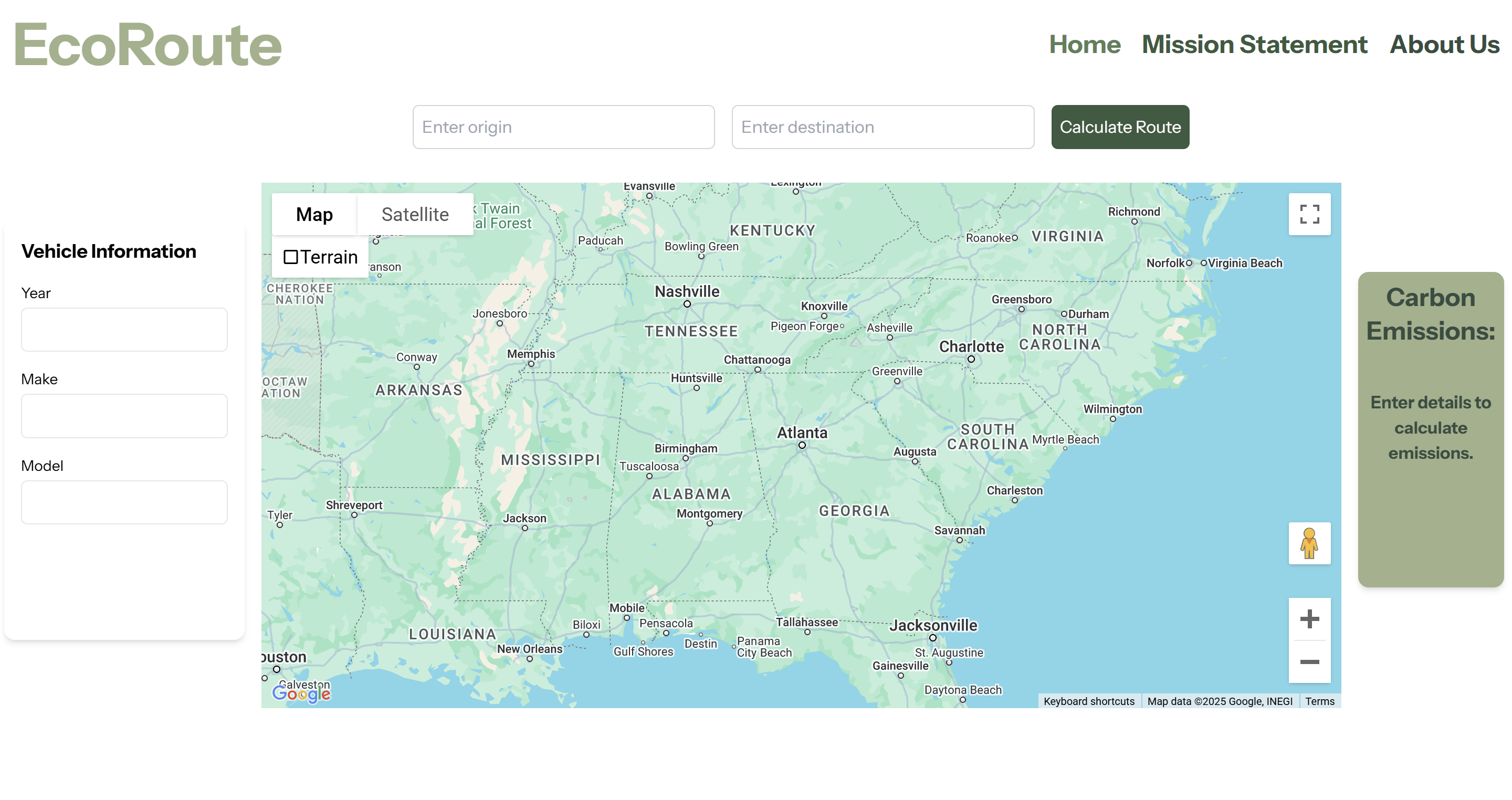
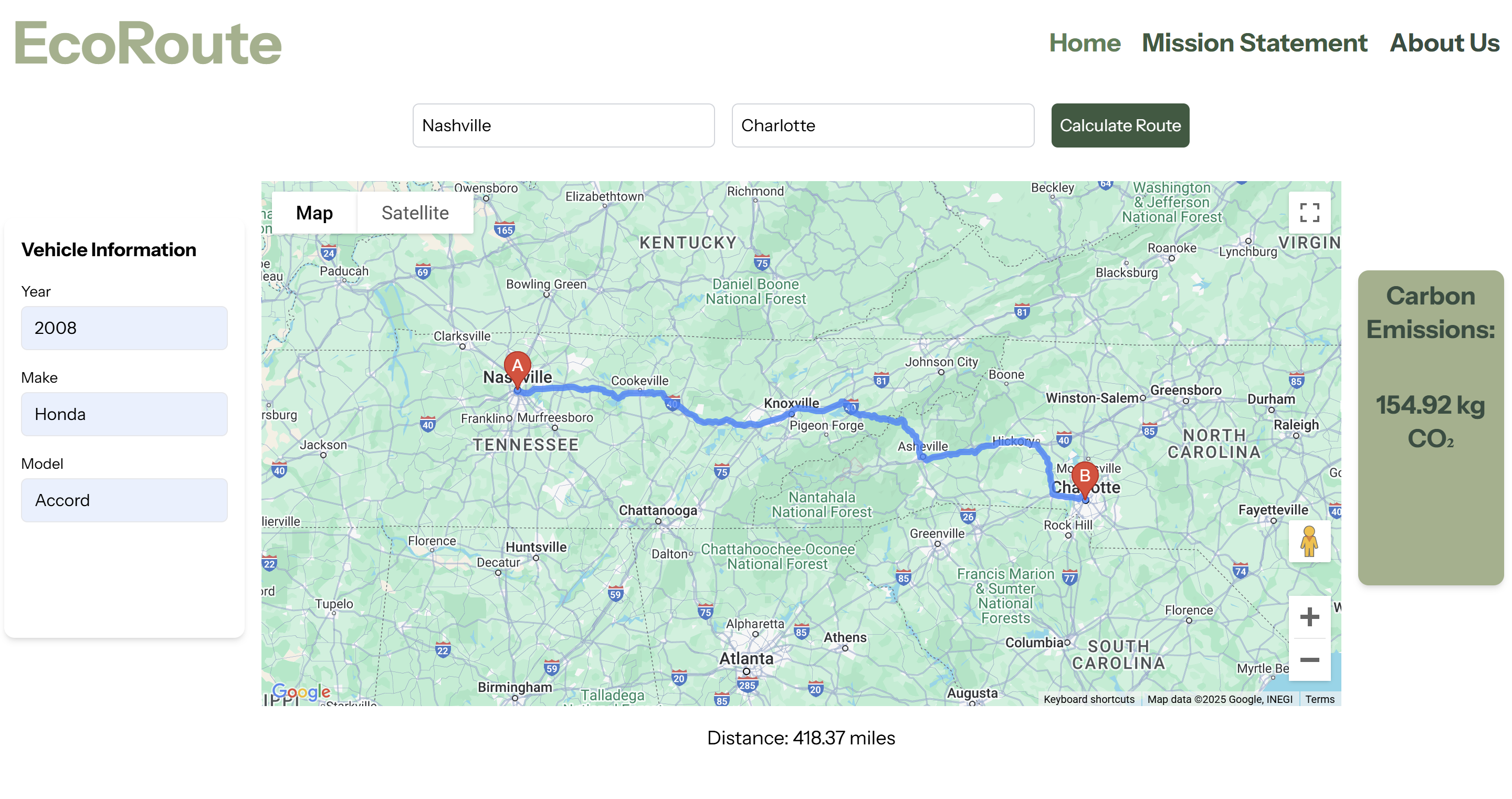
Essentially, the user inputs a route with a origin and destination, and using the Google Maps Embed API, we were able to get a route, pull the distance, and using another API called Carbon Interface, grab the make, model, and year of a car and calculate the carbon emissions across the route.
How we built it
We used React.js with TailwindCSS to build the front end, and then used two APIs, the Google Maps Embed API and an API called Carbon Interface to gather location data, distance data for the routes, and carbon footprint data on vehicles of different years, makes, and models.
Challenges we ran into
We ran into a lot of challenges with what we knew, due to the fact that the team had little exposure to projects like this. However, we learned, adapted, and made the changes we needed to our projects to actually deliver.
Accomplishments that we're proud of
We are really proud of the ability to pull from many different APIs utilize the data effectively.
What we learned
We learned that while difficult, it is little things that get us closer to a greener tomorrow. We realized that just understanding our impact on the world might inspire change that can make the world a little cleaner.
What's next for Energy Hackathon
Possibly to build on the foundation that we had laid out. We could expand to displaying greener alternative forms of travel and seeing how much they would save. We could make it more maps centric and actually focus on routing users in greener ways.
Built With
- javascript
- node.js
- react.js
- tailwindcss

Log in or sign up for Devpost to join the conversation.