-
-
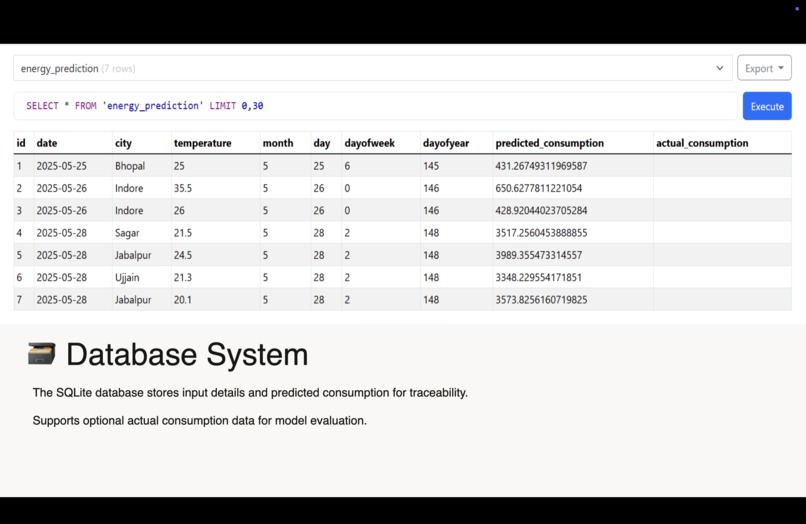
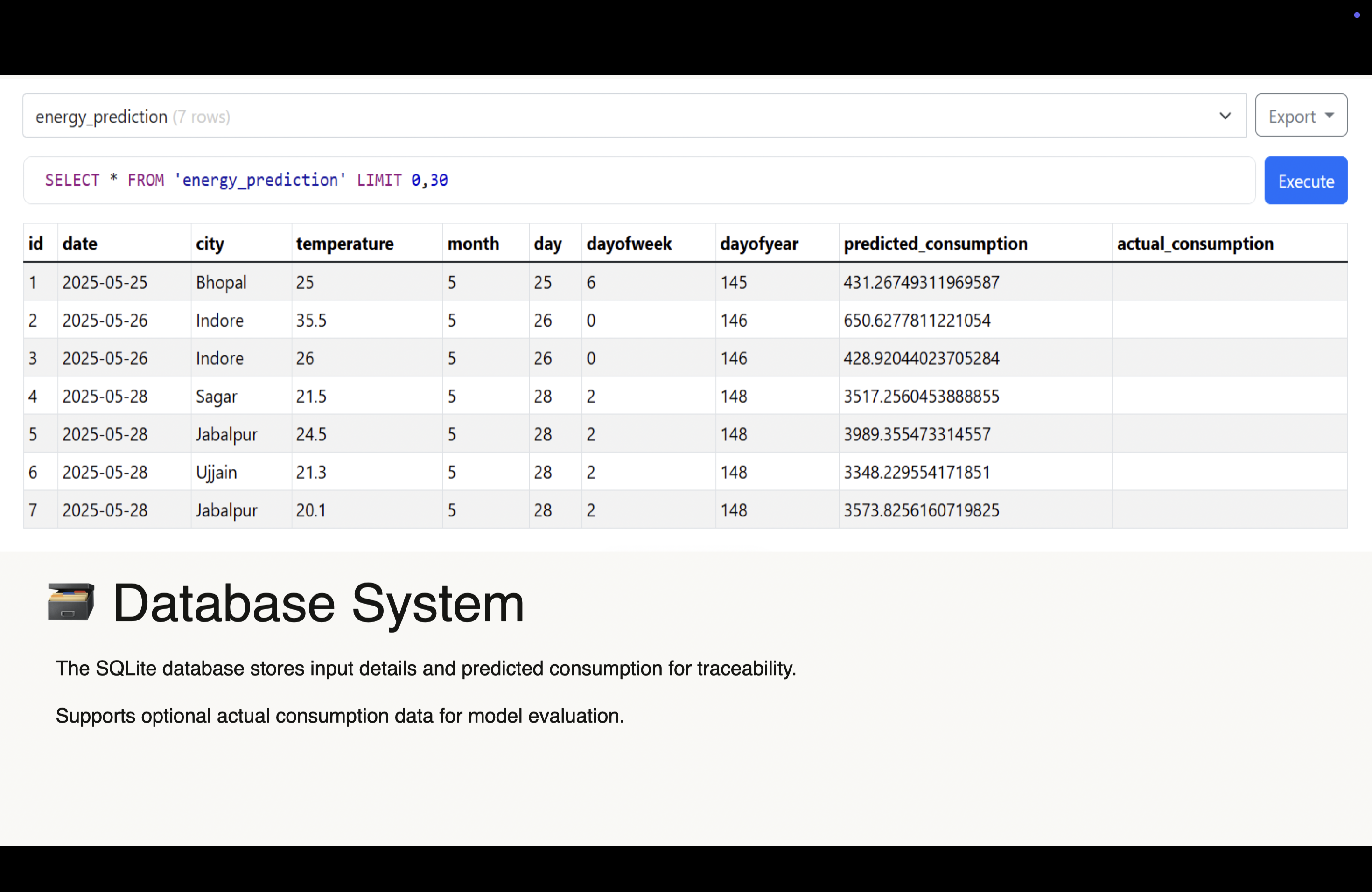
Database
-
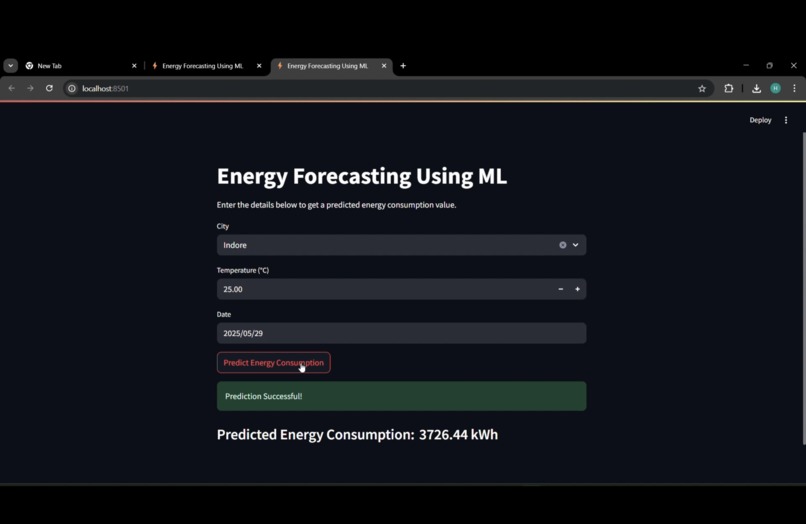
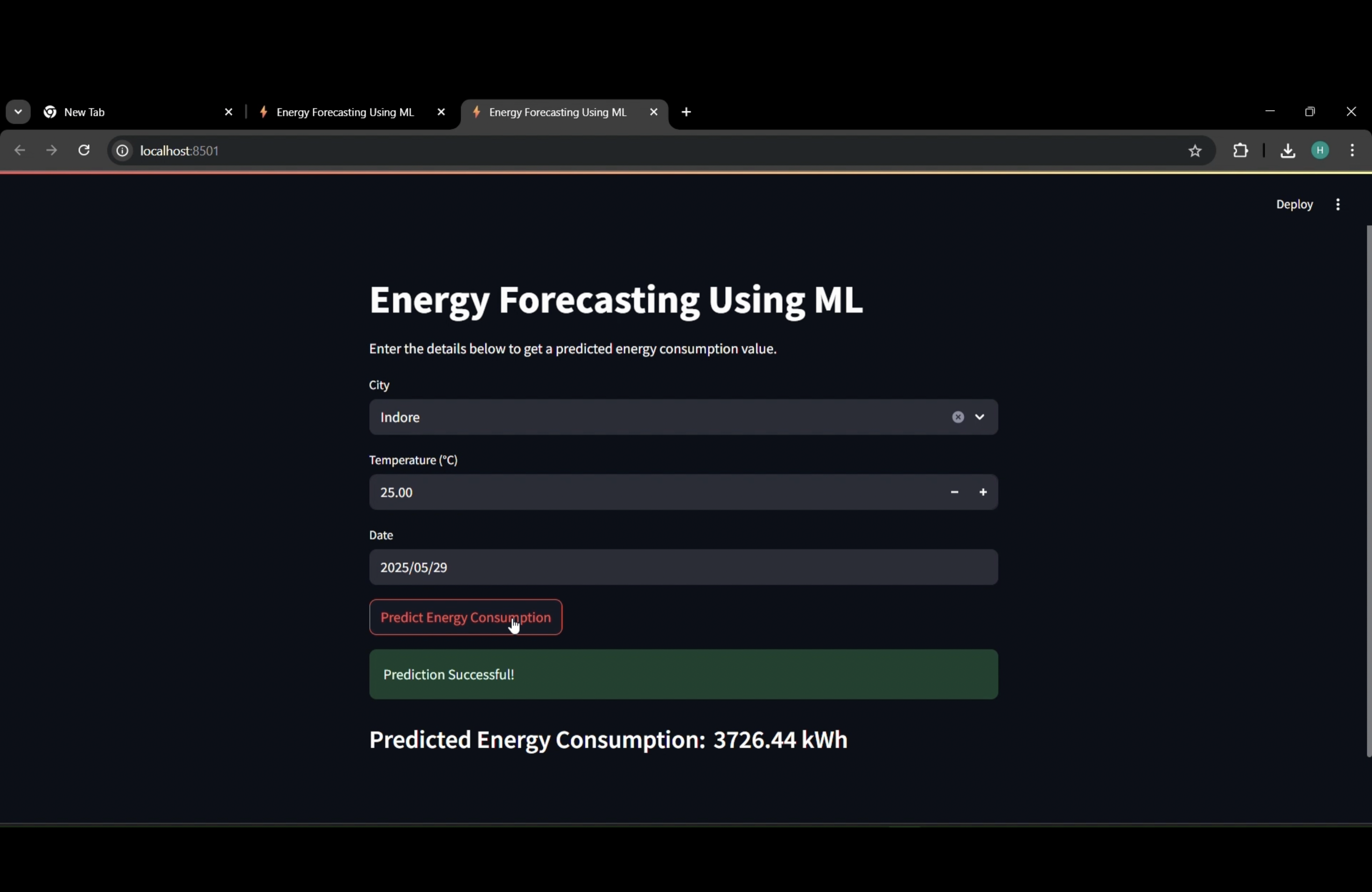
app.py
-
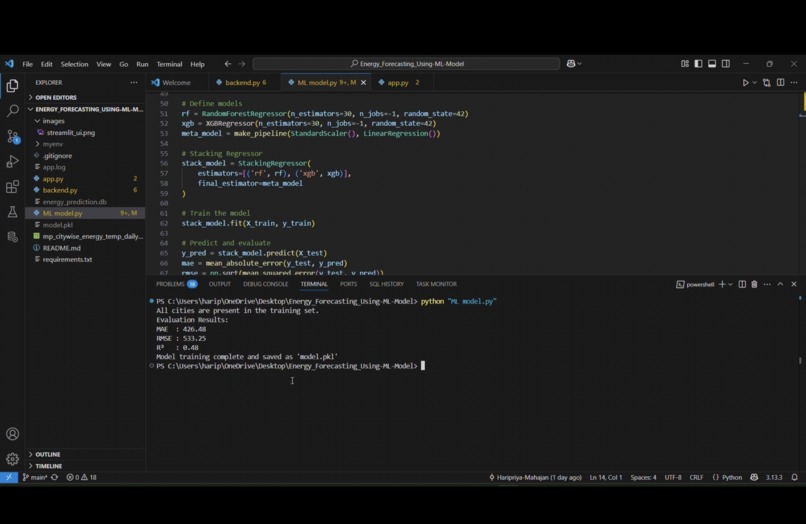
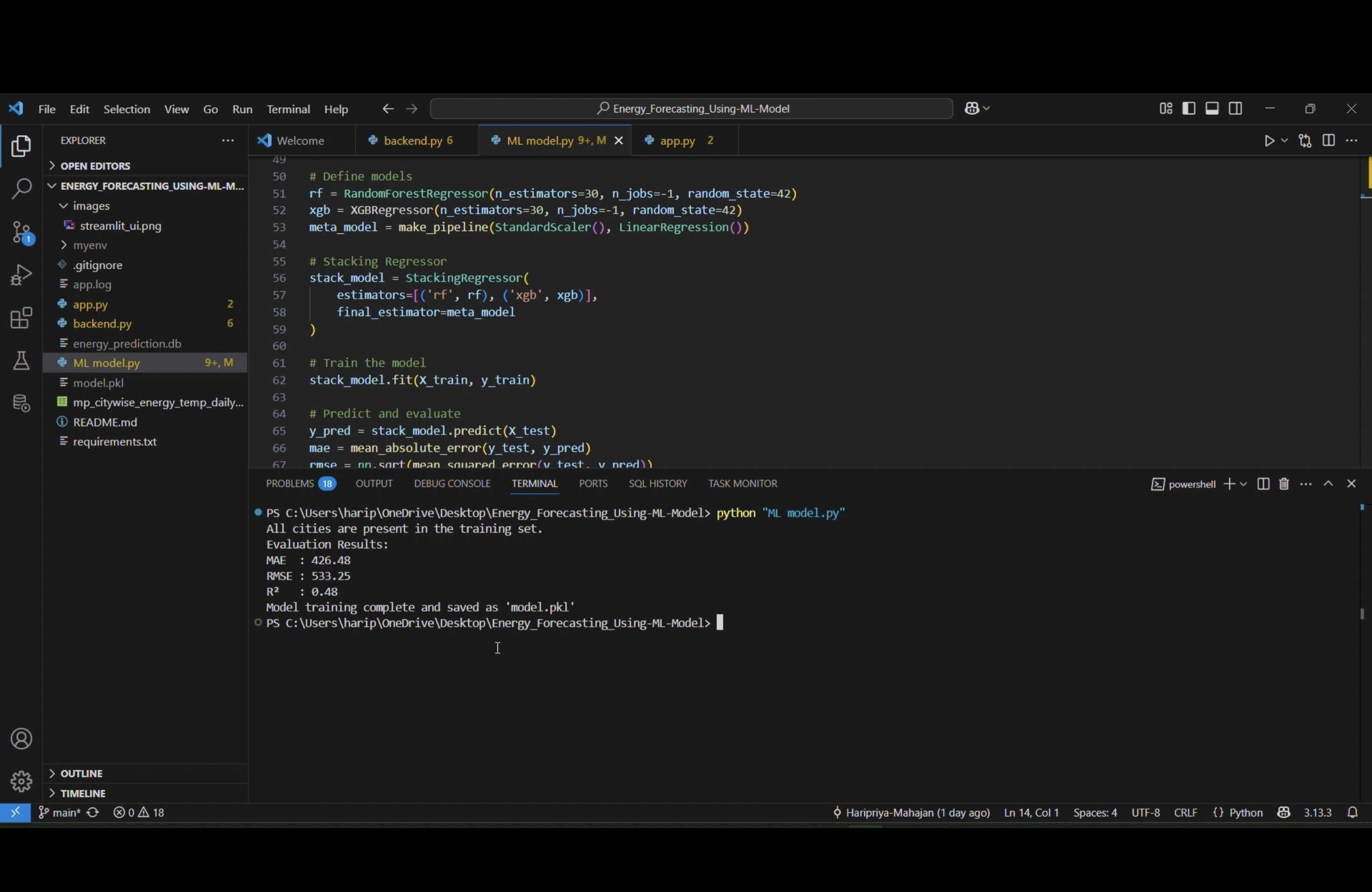
ML Model.py
-
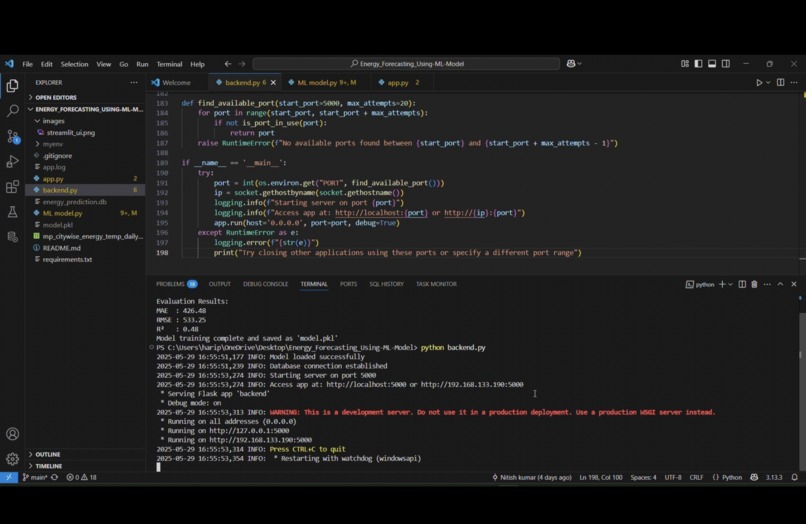
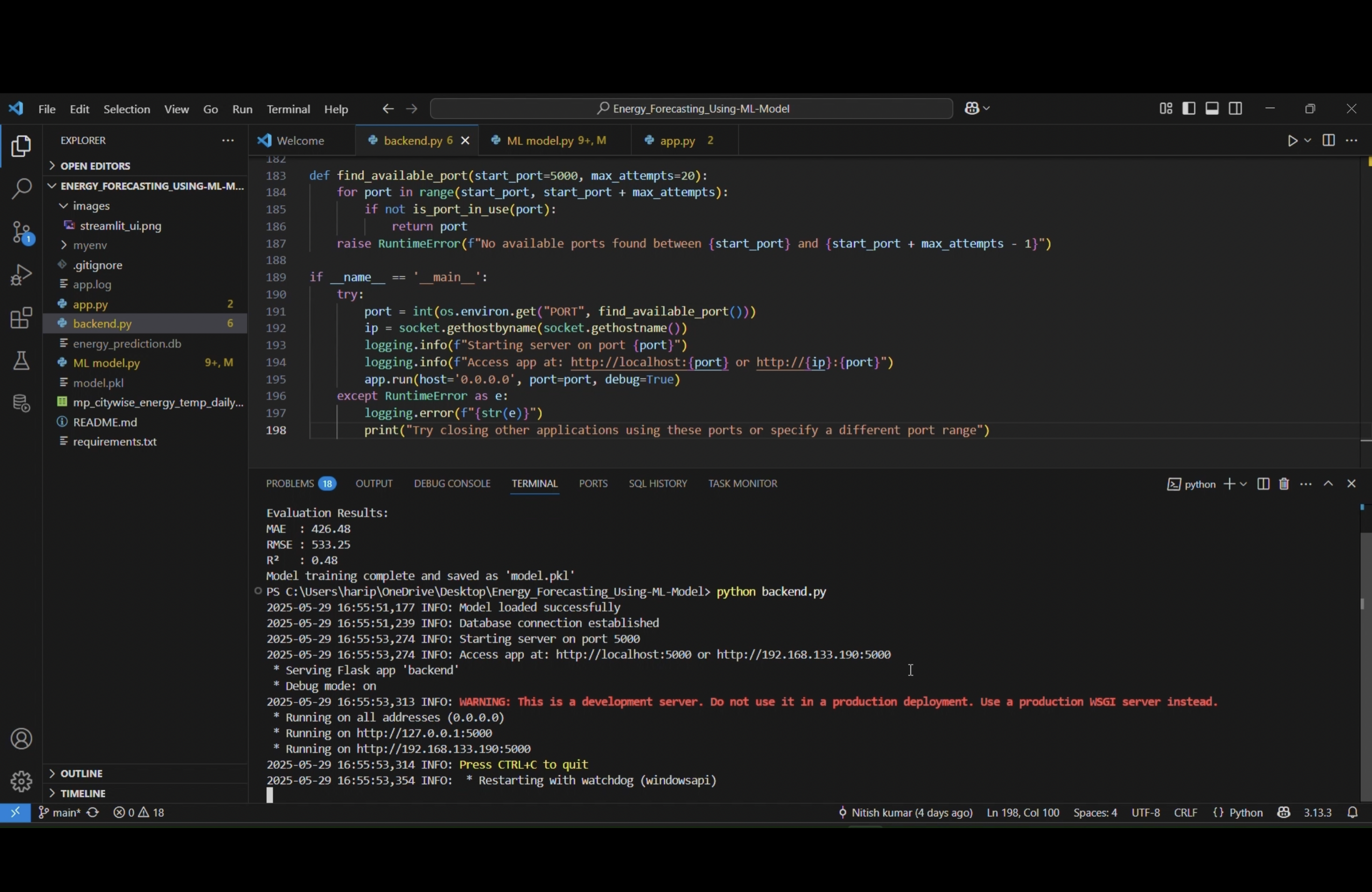
Backend.py
Inspiration Power companies face a constant challenge: balancing energy supply and demand. Over-predicting leads to energy waste, while under-predicting risks blackouts. Inspired by this real-world problem, we set out to build an AI-powered Energy Forecasting Model to help energy providers make data-driven, sustainable decisions. With increasing adoption of renewable energy sources, accurate forecasting becomes even more essential.
⚡ What it does Our project predicts daily energy demand based on inputs like temperature, date, and city. Users enter basic information through a Streamlit interface, and the system instantly returns an accurate energy usage prediction. Behind the scenes, a machine learning ensemble model makes this possible, while a Flask backend handles communication and an SQLite database stores the results.
🛠️ How we built it Model Architecture: We used ensemble stacking, combining: • Random Forest • XGBoost • A Linear Regression meta-model
Technologies Used: • Python – Core development • scikit-learn & XGBoost – Model training • pandas & NumPy – Data preprocessing • joblib – Model serialization • Flask – Backend API • Streamlit – Frontend UI • SQLite – Prediction logging
Features: • One-hot encoding for multi-city support • Date-based feature engineering (weekday, month, etc.) • Local storage of all predictions for future analysis
🧗 Challenges we ran into Model complexity: Tuning multiple models and stacking them correctly took time.
Date feature handling: Extracting meaningful date features like weekdays and holidays was tricky.
Integrating frontend and backend: Streamlit and Flask communication required CORS handling and testing.
Data limitations: Lack of access to real-time DISCOM or smart meter data limited us to historical datasets.
🏆 Accomplishments that we're proud of Successfully built and deployed an ensemble-based energy prediction system
Created a fully functional and clean Streamlit UI for user interaction
Built a working Flask API and SQLite database integration for prediction tracking
Achieved good prediction performance with low error metrics
📚 What we learned Hands-on experience with ensemble learning and stacking
How to deploy a machine learning model with Flask
How to make a user-friendly frontend with Streamlit
The value of feature engineering, especially time-based data
Importance of smooth backend–frontend integration in real-world systems
🚀 What's next for Energy Forecasting Model Add real-time weather API integration for dynamic predictions
Build interactive dashboards for trend analysis and visualization
Enable model retraining on new data for improved accuracy
Integrate real-world DISCOM or IoT smart meter data
Explore cloud deployment for broader scalability and industry readiness


Log in or sign up for Devpost to join the conversation.