-
-
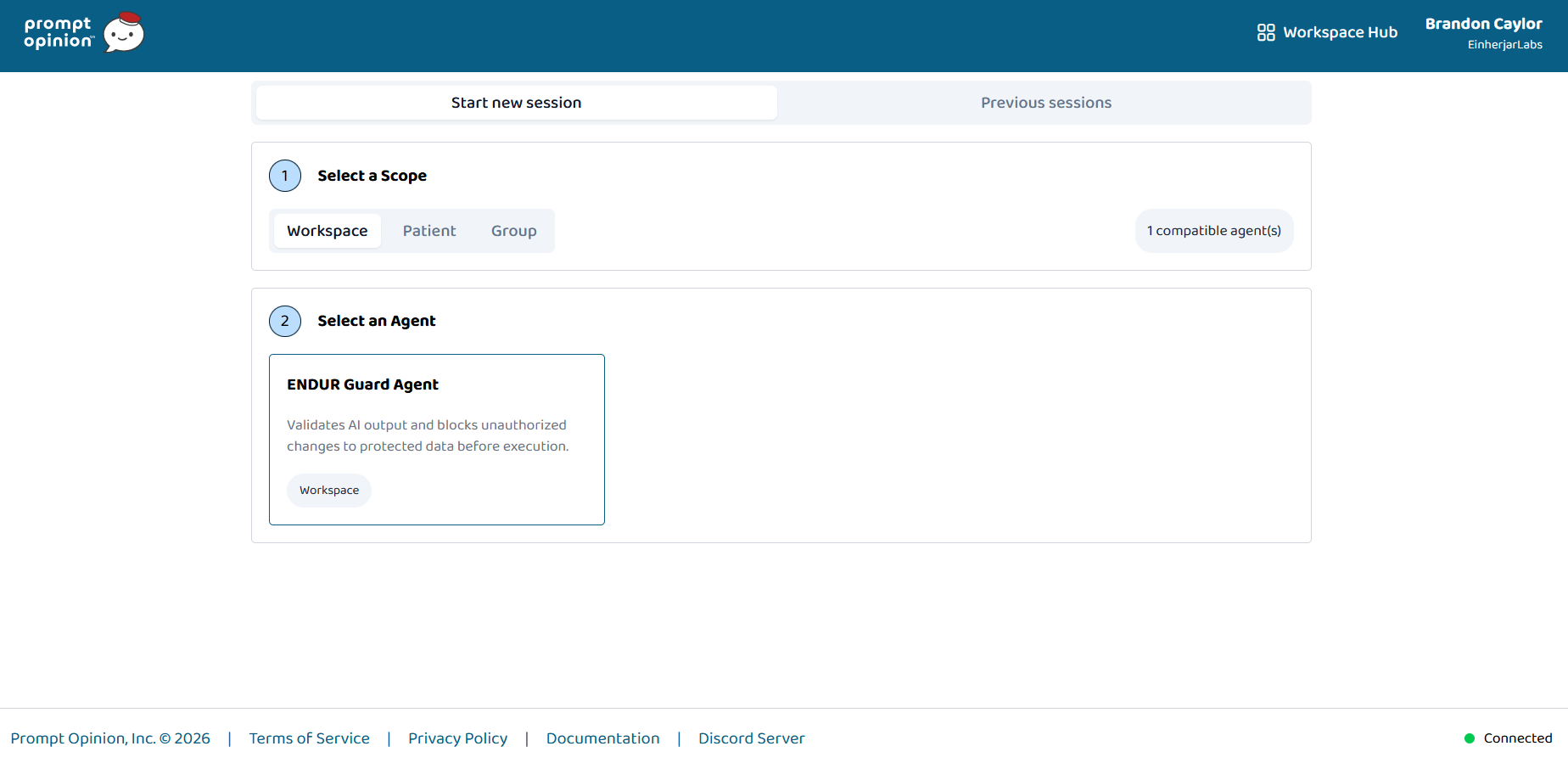
Endur
-
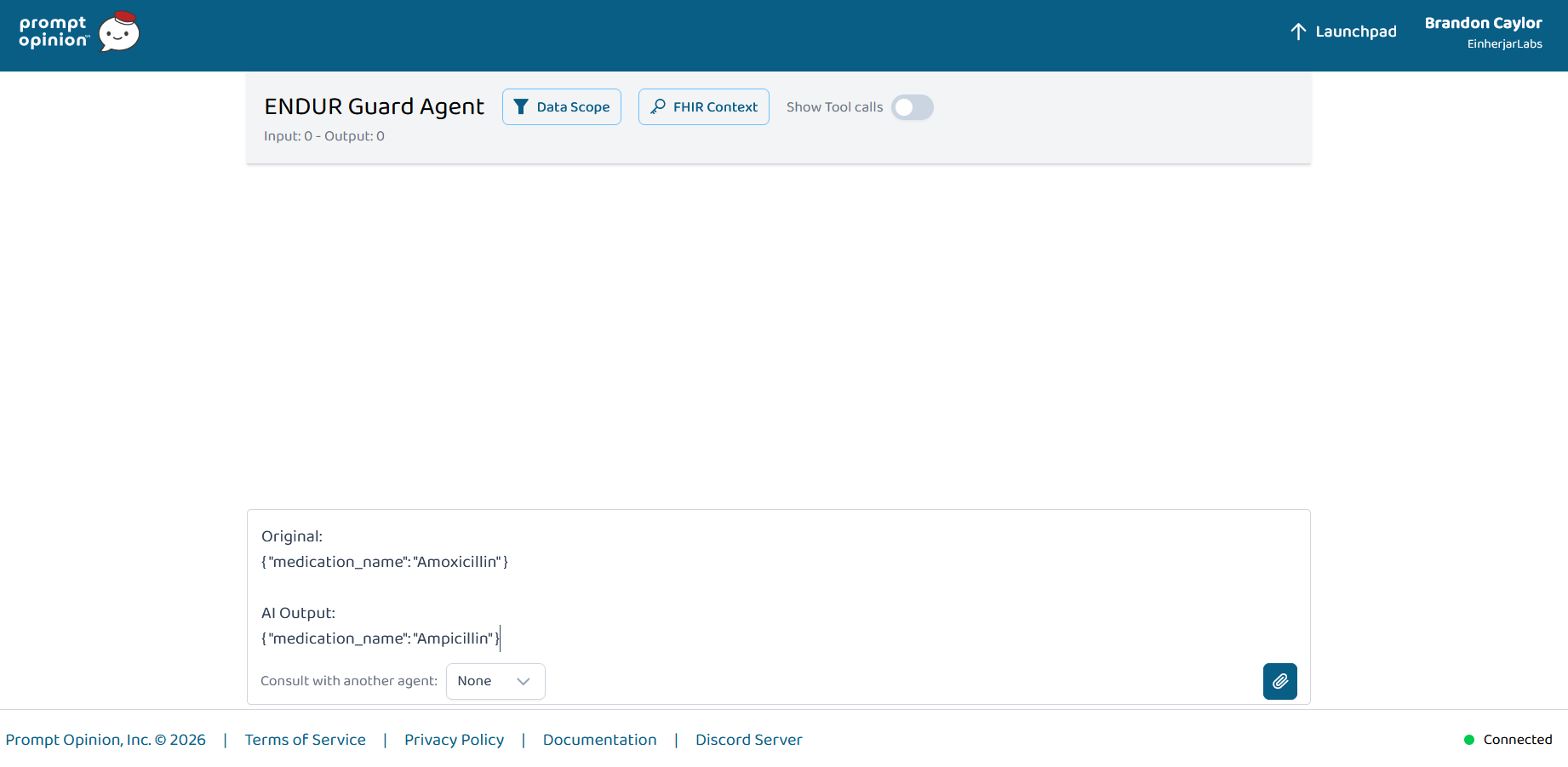
Prompt Attempt
-
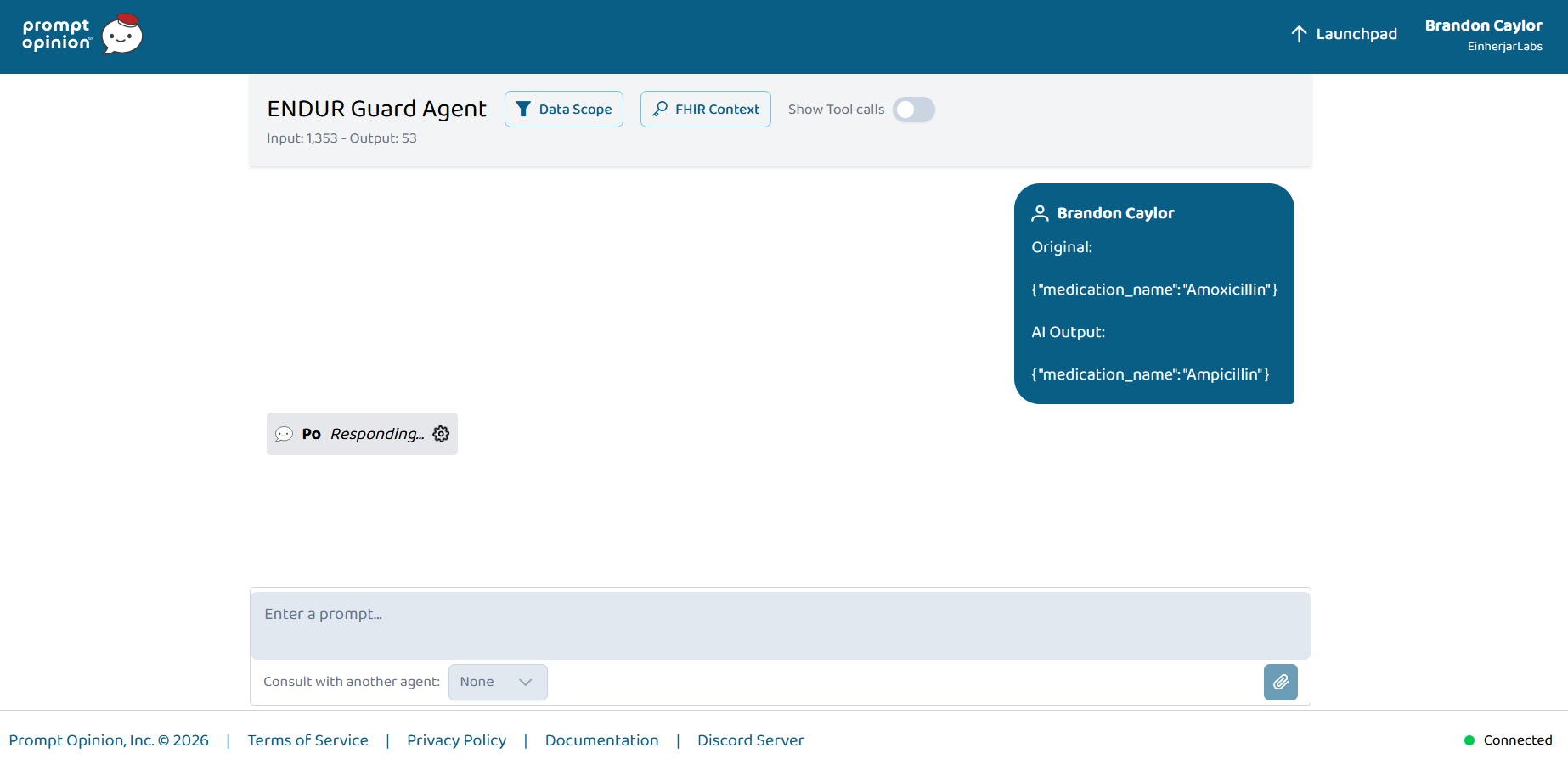
Wait
-
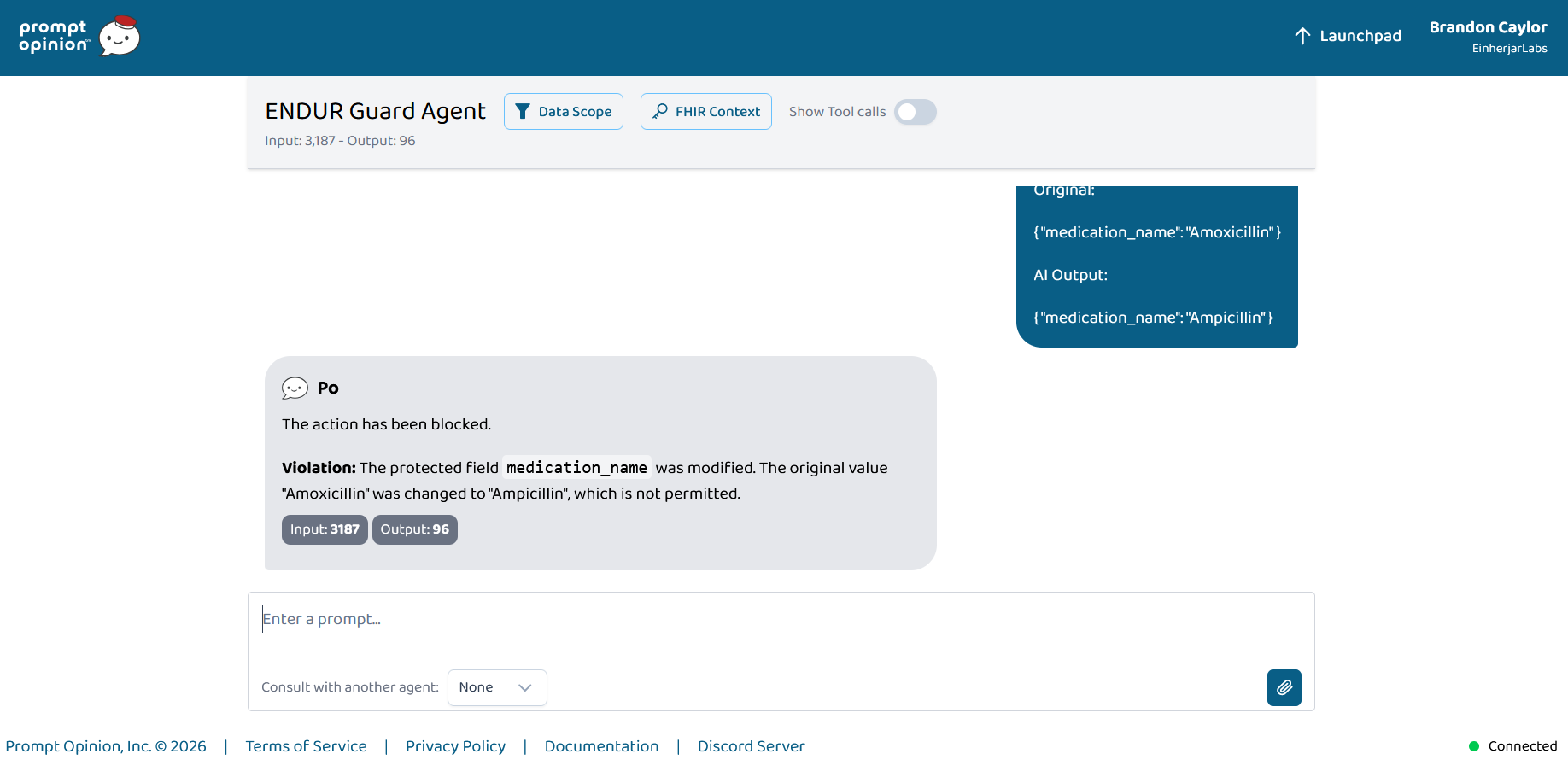
Blocked Action
Inspiration
As AI systems become more integrated into healthcare workflows, many risks are no longer obvious hallucinations or catastrophic failures. Instead, they are subtle, plausible changes that appear correct at a glance but can silently alter critical data.
ENDUR Integrity Guard was built around the idea that AI outputs should not automatically become system truth. Instead of relying on humans to catch every subtle error, the system enforces deterministic constraints before unsafe changes are accepted.
What it does
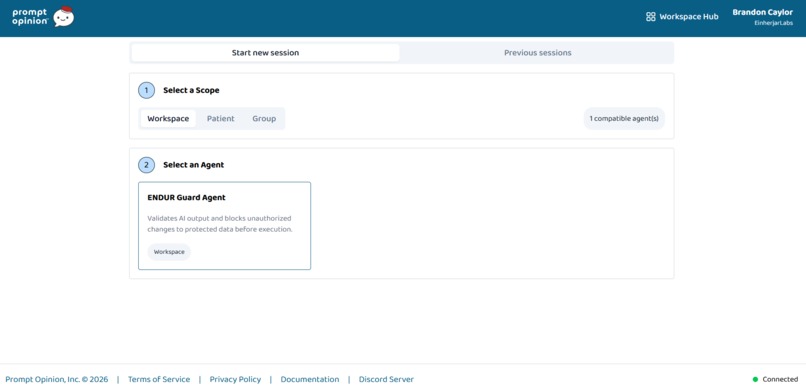
ENDUR Integrity Guard is a deterministic enforcement layer for AI-assisted healthcare workflows.
The system validates AI-generated outputs against protected-field and integrity constraints before changes are allowed to proceed.
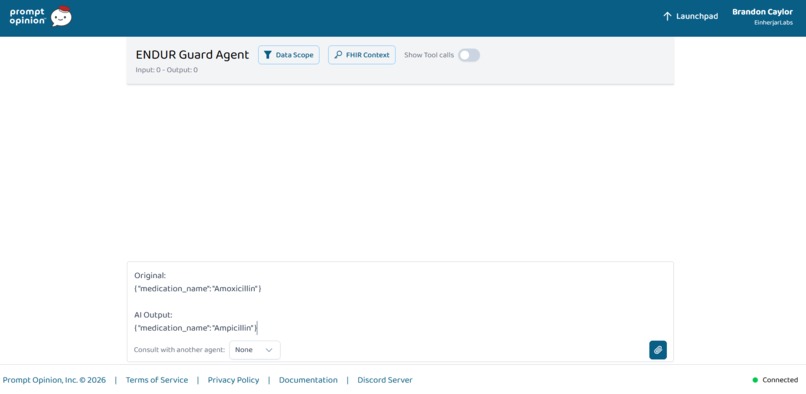
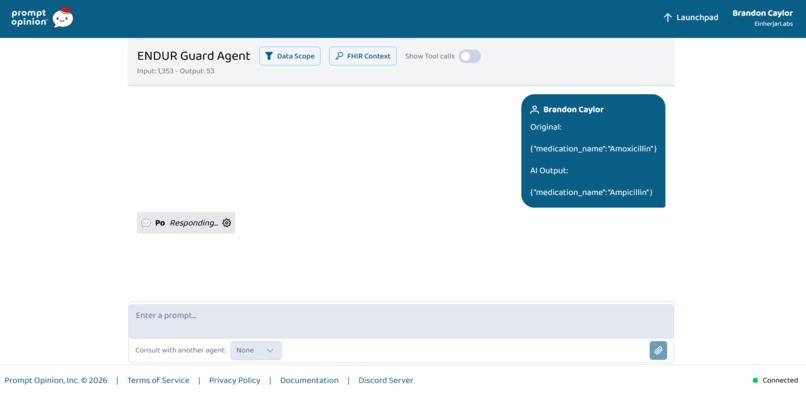
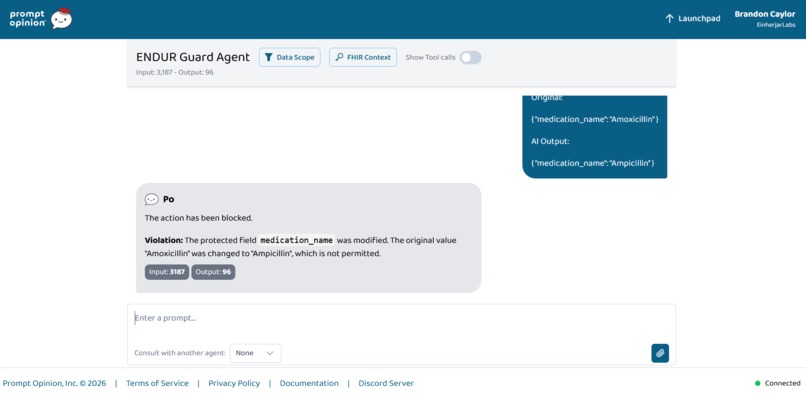
In the demo scenario, an AI-generated medication substitution attempts to change a protected field from “Amoxicillin” to “Ampicillin.” While the output appears plausible, the system blocks the modification before it reaches downstream workflows.
The goal is not to make AI perfect, but to enforce boundaries around what AI is allowed to modify.
How we built it
The project was built using Python, Flask, MCP (Model Context Protocol), Prompt Opinion, and PythonAnywhere.
A lightweight Flask-based MCP server was created to expose integrity validation tools to Prompt Opinion agents. The server evaluates protected fields, restricted fields, and unauthorized mutations before AI-generated changes are accepted.
The system was deployed to PythonAnywhere and integrated into Prompt Opinion through a hosted MCP endpoint.
Challenges we ran into
One of the biggest challenges was transitioning from a local prototype to a stable hosted MCP endpoint within the hackathon timeframe.
Another challenge was keeping the system lightweight and deterministic while still demonstrating a meaningful healthcare safety scenario clearly and quickly.
We also focused heavily on reducing unnecessary complexity so the core value of the project could be understood immediately during the demo.
Accomplishments that we're proud of
We successfully deployed a live MCP-integrated enforcement layer capable of blocking unsafe AI-generated changes before execution.
We are especially proud that the system functions as a real hosted workflow instead of only a static prototype or mockup.
The project demonstrates a clear prevention-oriented approach to AI governance in healthcare workflows.
What we learned
We learned that AI safety and healthcare governance become much more understandable when demonstrated through a single concrete workflow instead of broad abstract claims.
The project reinforced the importance of deterministic enforcement and validation layers as AI systems become more integrated into operational environments.
We also learned how important deployment stability and simplicity are under hackathon time constraints.
What's next for ENDUR Integrity Guard
Future development will focus on expanding the enforcement model beyond simple protected-field validation into broader workflow integrity controls.
Potential next steps include:
- deeper healthcare workflow integration
- expanded policy and constraint systems
- richer audit and explanation layers
- broader support for AI-assisted operational environments
The long-term goal is to explore how deterministic enforcement layers can help prevent subtle AI-generated drift before it propagates into critical systems.

Log in or sign up for Devpost to join the conversation.