-
-
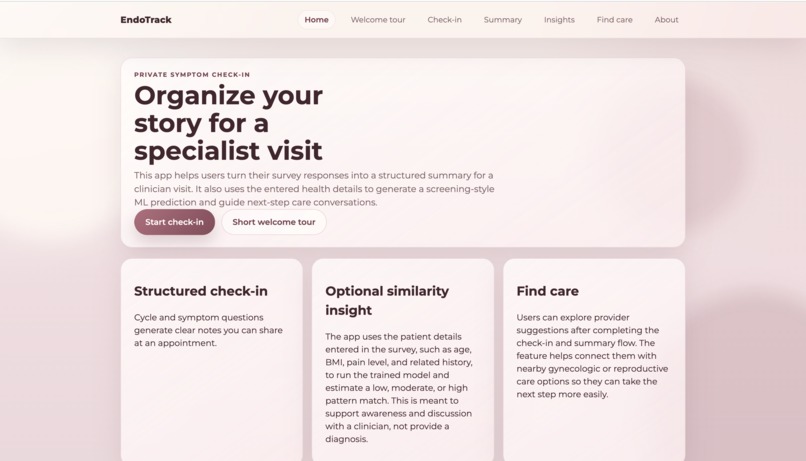
Home Page
-
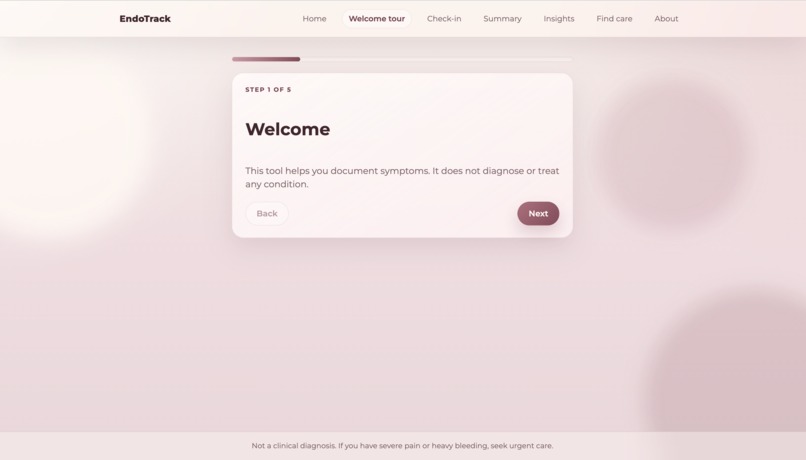
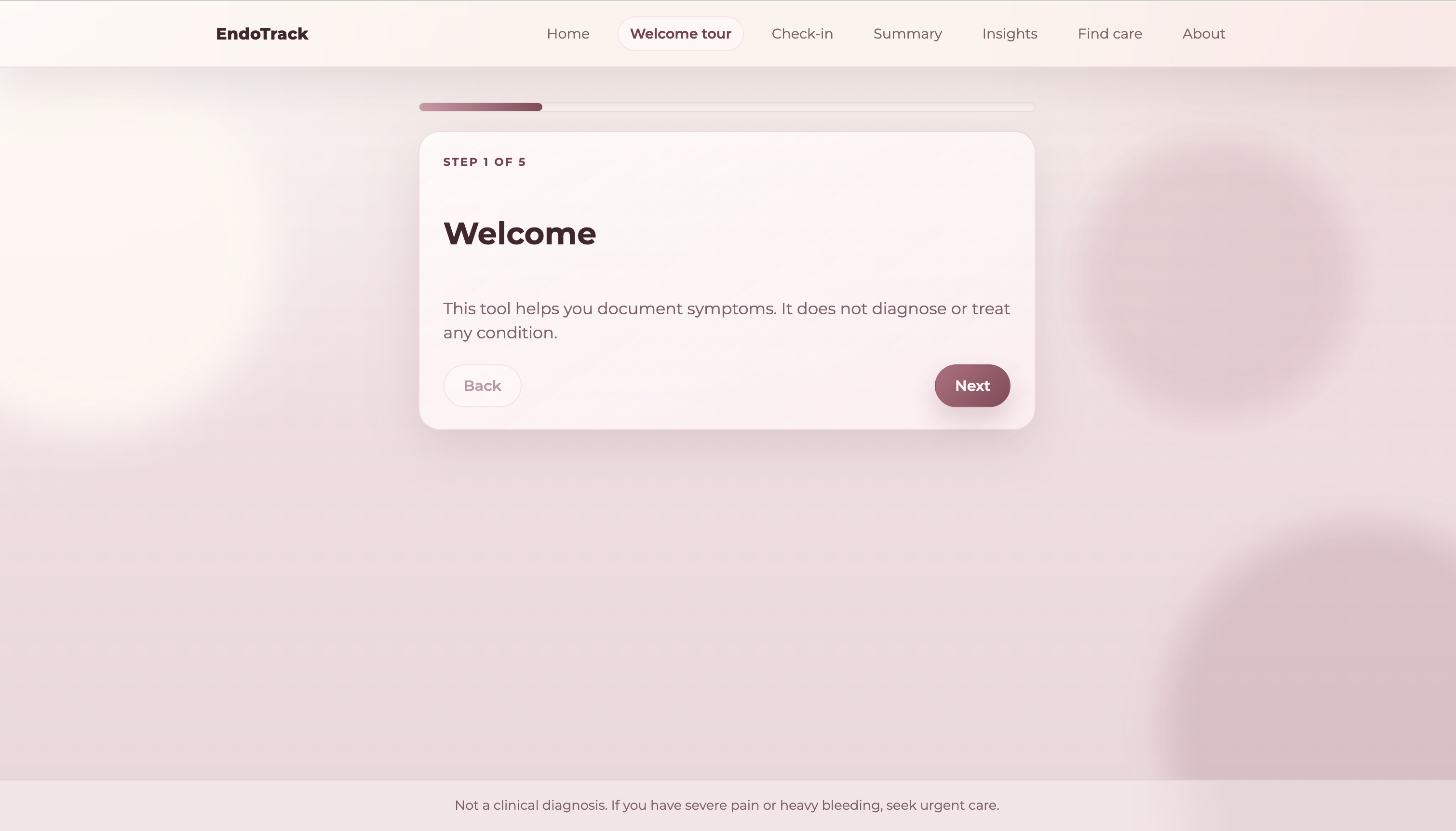
Welcome Tour
-
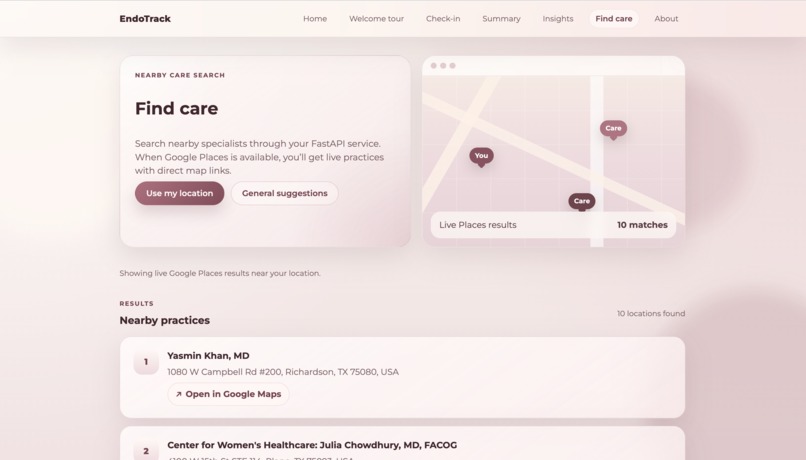
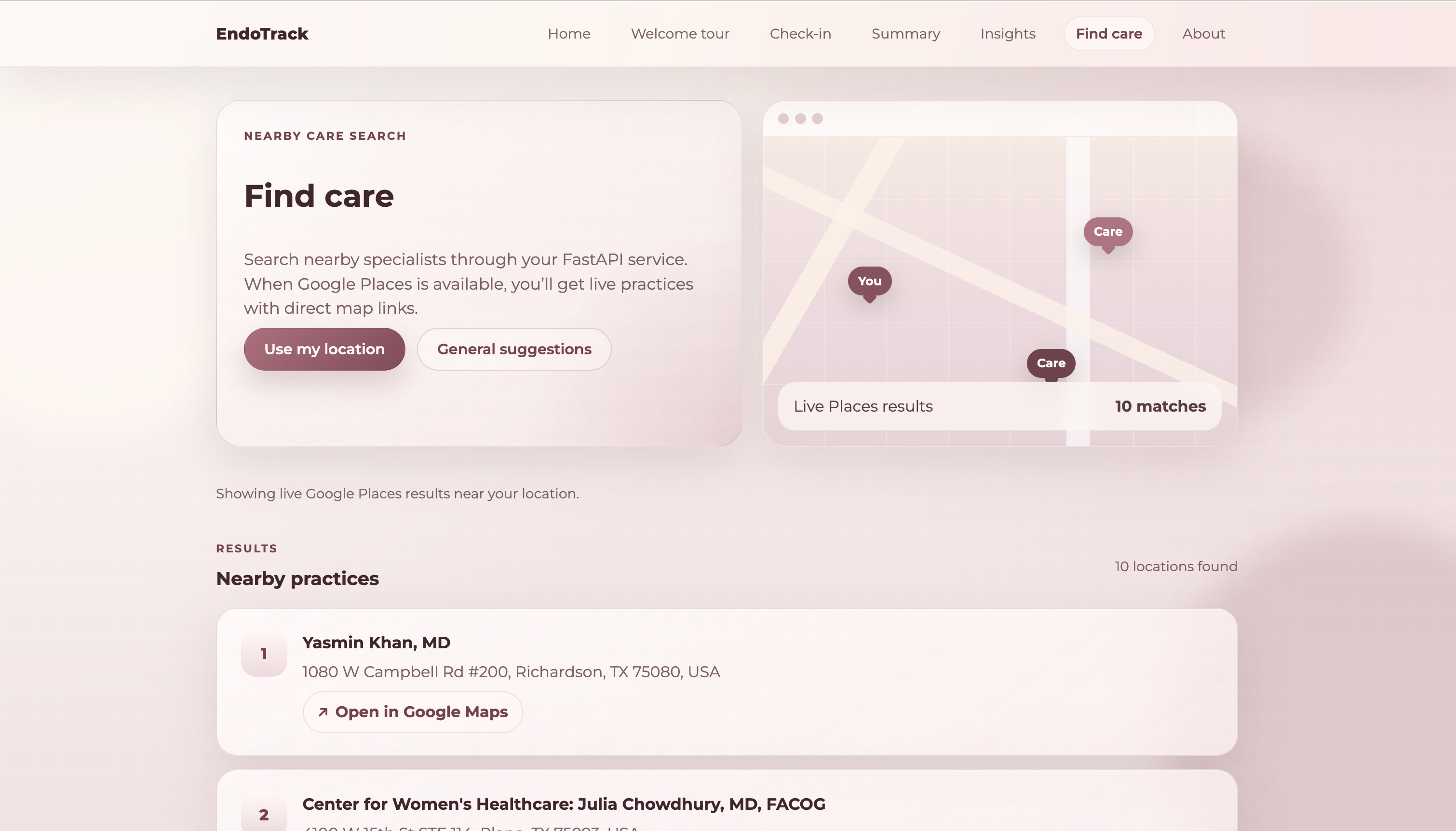
Find Care - Shows nearest specialists
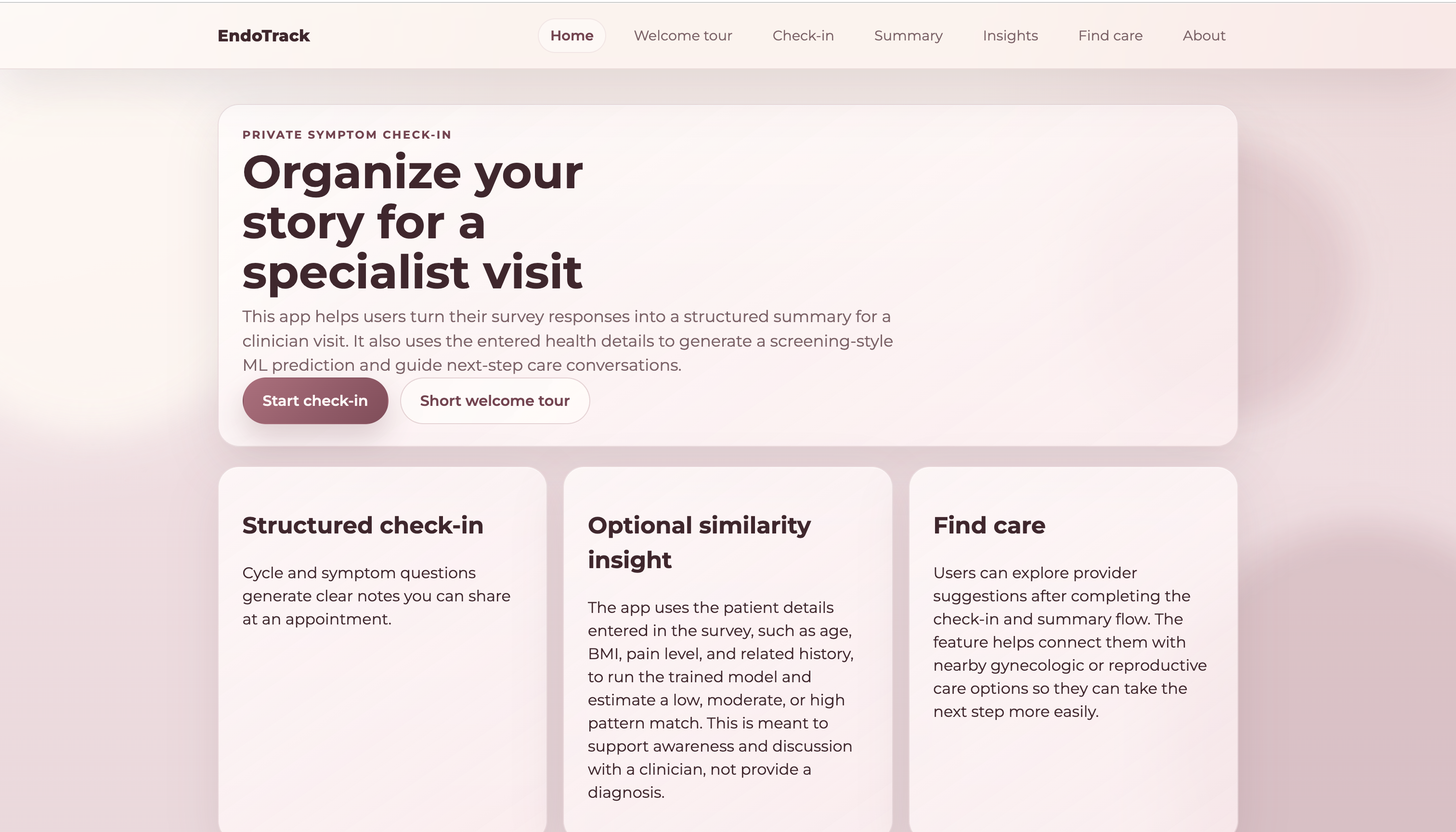
Inspiration
EndoTrack was inspired by how long and frustrating the endometriosis journey can be for people trying to describe symptoms clearly to a clinician. The idea was to create a supportive tool that helps users organize their experiences, turn them into shareable visit notes, and make it easier to know when a specialist referral may be warranted.
What it does
- Guides users through a structured symptom check-in and cycle history survey
- Generates a clear visit summary that can be shared with a clinician
- Provides an optional similarity-based insight band (low / moderate / high) based on anonymized endometriosis patterns
- Creates downloadable PDF visit briefs with symptom highlights and model context
- Offers care suggestions via Google Places
How we built it
Front end: React + TypeScript + Vite web app Back end: FastAPI service powering survey schema, analysis, reports, auth stub, and places lookup ML: a RandomForest-based structured endometriosis classifier trained on the included dataset Report generation: Python PDF generation for visit summaries Provider lookup: Google Places integration
Challenges we ran into
One challenge we ran into was aligning the user-facing check-in questions with the actual ML dataset. At first, the survey questions were more general symptom questions, but the model required very specific structured inputs like age, BMI, chronic pain level, menstrual irregularity, hormone abnormality, and infertility. We had to redesign the check-in so the frontend and backend matched the model’s training data. We also ran into API integration issues with Google Places.
A separate challenge was keeping the system usable while parts were still evolving. For example, we had to make sure the app still worked even before the ML model artifacts were trained, and we had to restart and sync backend/frontend services carefully so the newest routes and schemas were actually being used.
Accomplishments that we're proud of
We’re proud that we built a working end-to-end product rather than just an isolated model. A user can complete a structured check-in, get an ML-backed prediction, receive a clear summary, download a PDF report, and find nearby gynecologists. We’re also proud that we successfully connected the frontend and backend in a meaningful way.
What we learned
We learned that building a health-related product is not just about making a model work. It also requires clear user flows and responsible disclaimers that are actually useful in a real-world setting.
We also learned how important data alignment is. The ML model only becomes meaningful when the frontend questions, backend schema, and training dataset all match exactly. That was a big technical and product lesson for us.
Another thing we learned was how to integrate multiple systems together under pressure
What's next for EndoTrack
Next for EndoTrack, we want to make it more clinically useful and scalable. The next step is to improve both the data quality and the real-world usability.

Log in or sign up for Devpost to join the conversation.