
Inspiration
In the world of diagnostics, Video Capsule Endoscopy (VCE) has revolutionized the way we explore the gastrointestinal tract. But there's a catch — while the technology captures thousands of images, interpreting them remains a manual, time-consuming, and error-prone task for clinicians. This inefficiency inspired us to ask: What if AI could do the heavy lifting? What if we could automate abnormality detection and give doctors more time to focus on treatment rather than interpretation? Thus, EndoScopeAI was born — a step toward making faster, smarter, and more accessible diagnostics a reality.
What it does
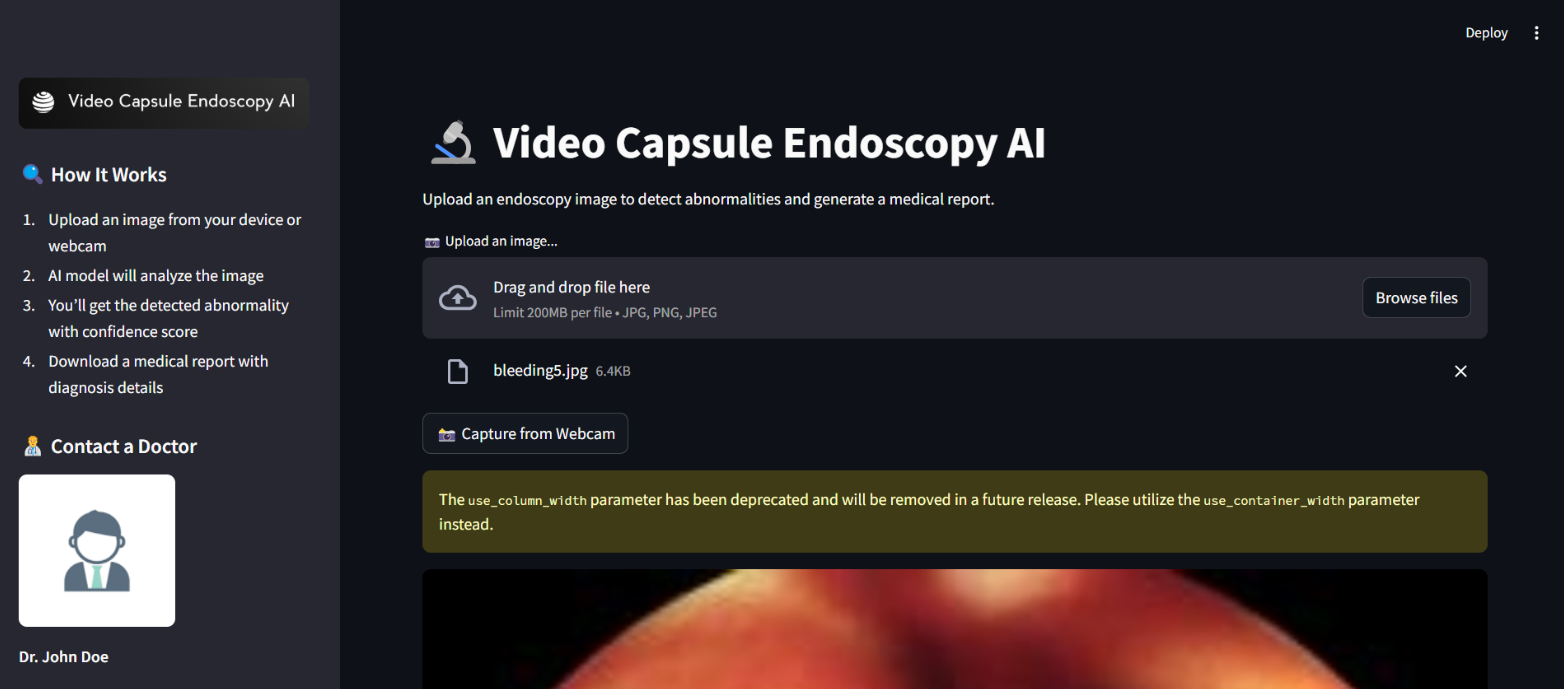
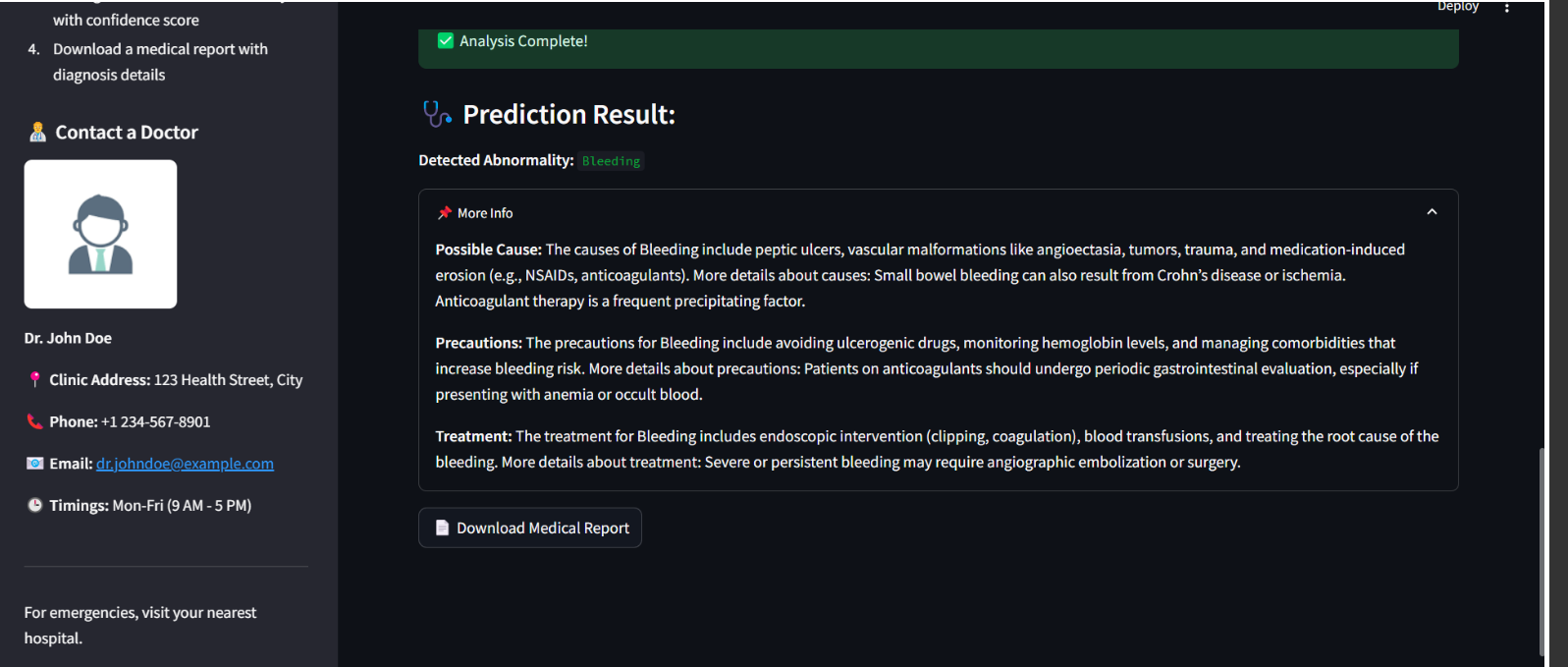
EndoScopeAI is an AI-powered platform that automates the analysis of endoscopic images captured via VCE. Users can upload endoscopic images through a clean, intuitive interface. Behind the scenes, a pre-trained model scans the image for abnormalities and outputs:
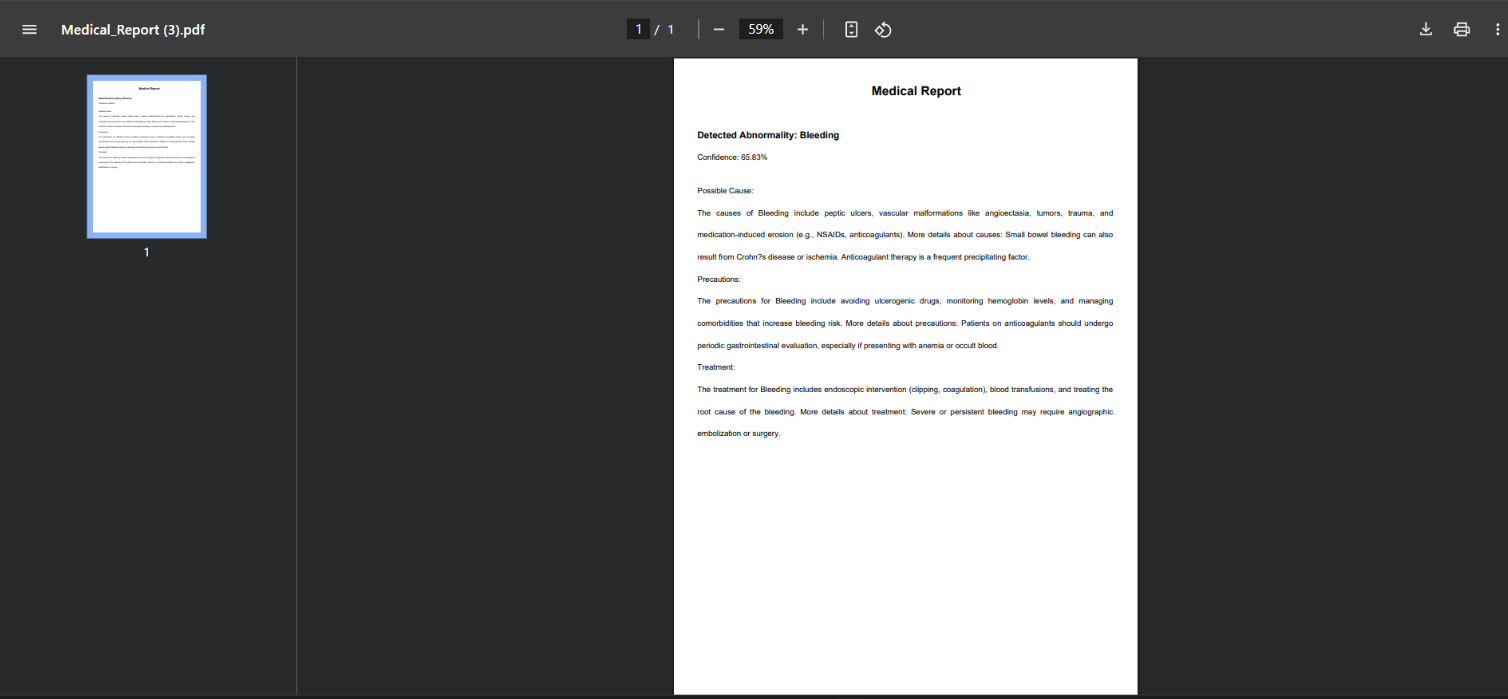
- A detailed diagnostic report
- Confidence scores for each finding
- Likely causes, precautions, and treatment suggestions It even auto-generates a professional PDF report, ready for clinical use — making diagnostic support just a few clicks away.
How we built it
We built EndoScopeAI using a deep learning pipeline centered on a pre-trained model further trained on annotated gastrointestinal imagery.
- Streamlit powers the user interface for simplicity and speed.
- OpenCV and Pillow handle preprocessing tasks like resizing, noise reduction, and normalization.
- Disease metadata is organized in structured formats (CSV, DOCX) and fetched dynamically.
- Final medical reports are created using FPDF, giving users downloadable PDFs with every prediction.
Challenges we ran into
Building EndoScopeAI wasn’t without hurdles:
- Finding high-quality, annotated medical data was a major challenge.
- Dealing with file encoding issues across CSV and DOCX formats added complexity.
- Ensuring the model runs in real-time without compromising accuracy required intense optimization.
- Designing an interface that’s both technically robust and clinician-friendly pushed our design thinking.
Accomplishments that we're proud of
- We turned a complex AI pipeline into a fully functional, user-friendly diagnostic tool.
- Achieved high classification accuracy on limited but well-curated datasets.
- Developed automated, explainable reporting to assist real-world medical decisions.
- Created a solution that bridges the gap between AI innovation and clinical usability.
What we learned
Throughout the development, we learned:
- The importance of preprocessing in medical image analysis.
- How to balance performance and interpretability in deep learning models.
- That real-world deployment means solving not just technical, but UX and data-handling challenges.
- Most importantly, we saw how AI can make a real difference in healthcare — when applied with purpose.
What's next for EndoScopeAI
We're just getting started. Here’s what’s ahead:
- Expanding to real-time video stream analysis for full-length VCE footage.
- Integrating with Electronic Health Record (EHR) systems for seamless data flow.
- Improving disease coverage with larger, more diverse datasets.
- Adding explainability features to support clinical trust and transparency. And ultimately, bringing AI-powered diagnostics to remote and under-resourced areas where skilled specialists are scarce. EndoScopeAI isn't just a project — it's a mission to redefine diagnostics with intelligent, accessible tools.
Built With
- fpdf
- huggingface
- keras
- matplotlib
- numpy
- opencv-python
- pandas
- pillow
- python-docx
- requests
- scikit-learn
- seaborn
- streamlit
- tensorflow

Log in or sign up for Devpost to join the conversation.