-
-
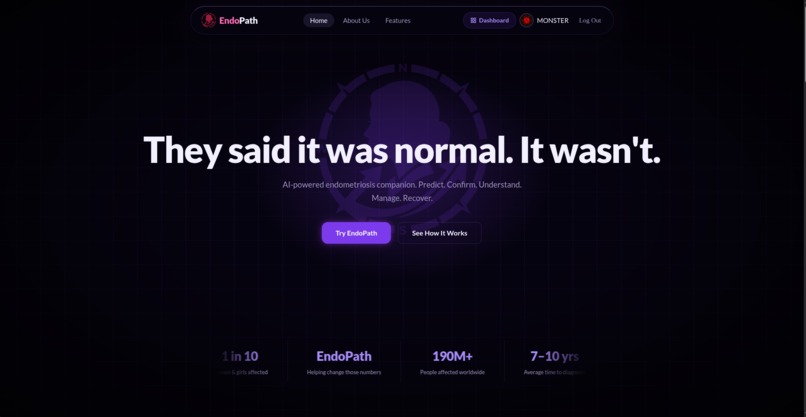
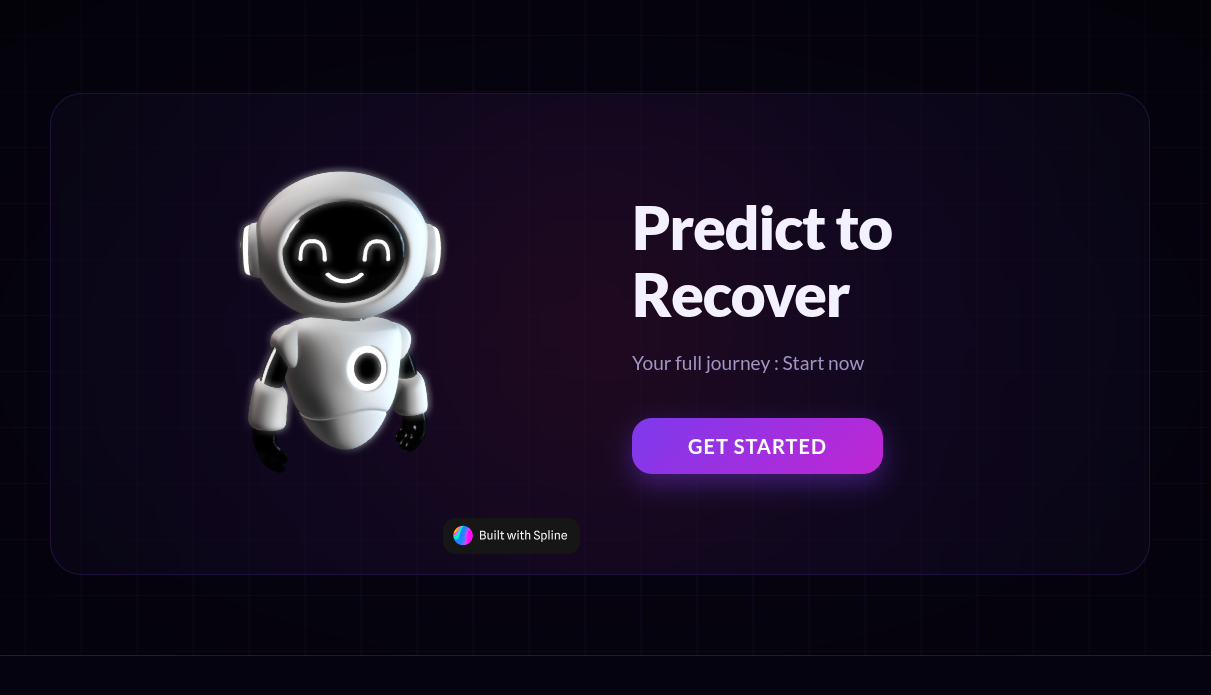
Landing Page
-
-
-
-
-
-
Inspiration
She was 23 when the pain started.
It came every month like clockwork — not cramps, not "period pain," but something that made her curl into herself on the bathroom floor, unable to move. She went to doctors. She was told she was being dramatic. She went again. She was told this was normal. For seven years, she was dismissed — until someone finally cut her open and saw what her body had been screaming about the entire time.
Endometriosis. Stage 3. She is not alone. 200 million women worldwide live with this disease — tissue growing outside the uterus, bleeding internally every month with nowhere to go, silently building scar tissue, fusing organs, stealing fertility. And because no blood test catches it, because the only confirmation requires surgery — women are dismissed for years.
The average wait for diagnosis is 7 to 10 years. It costs the US economy $78 billion annually. In India, most women never get diagnosed at all. This isn't just a medical failure — it's a systemic, social one. I kept thinking — what if she had something in her corner? Weeks of logged symptoms. An AI risk score mapped against clinical criteria. A referral letter in language no doctor could dismiss. What if machine learning could do what the healthcare system has failed to do for decades — actually listen?
Note: As this project is hosted on a free-tier server, it may take up to ~1 minute to start up on first access due to cold starts—thanks for your patience while it loads
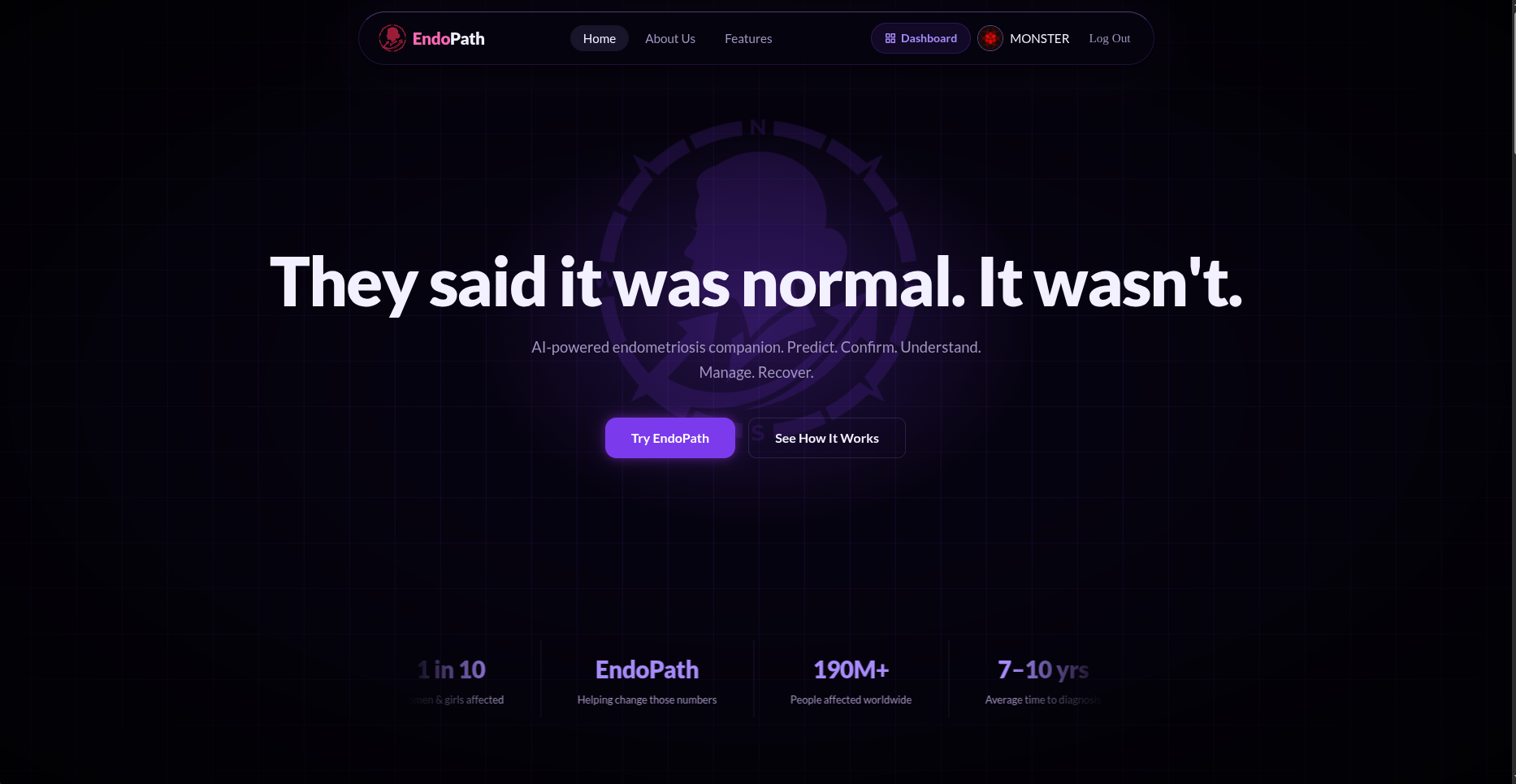
That question became EndoPath — a full-stack AI companion with three specialized agents: EndoAI guiding all five stages of the journey, Puffy for emotional support, and Nerd for making sense of your entire health history. Together, so no woman ever has to fight this alone. Because 200 million people deserve better than being told their pain is normal.
What it does
EndoPath is a full-stack, AI-powered health companion built specifically for the endometriosis journey — from the first dismissed symptom to long-term recovery. Three specialized AI agents work together, each with a distinct role: EndoAI for medical guidance, clinical staging, and symptom logging; PuffyAI as a 24/7 app concierge and navigation support; and NerdAI as a personal medical data analyst living inside the Library.
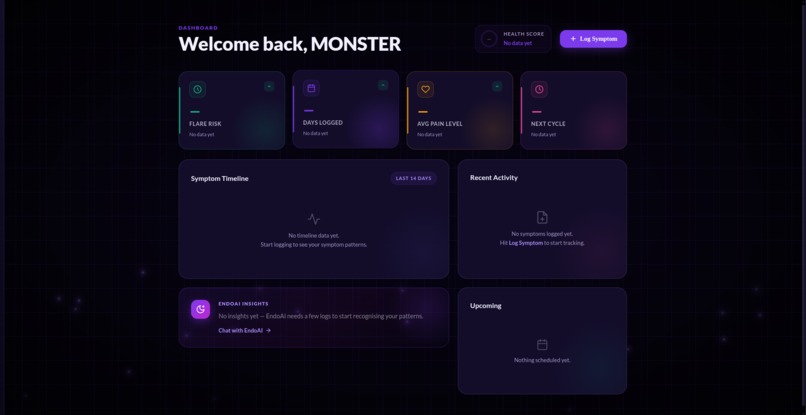
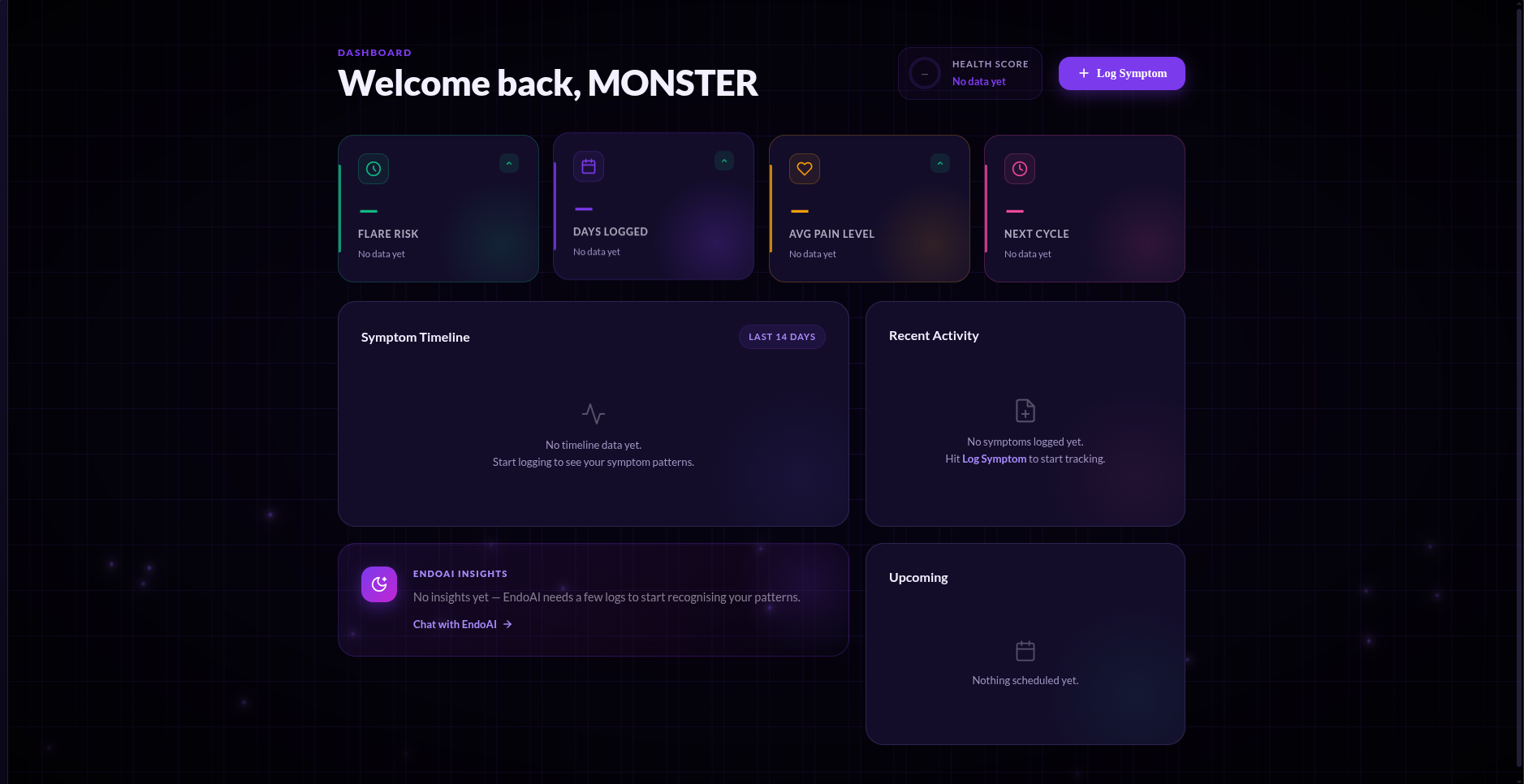
The Dashboard — Command Center The moment you open EndoPath, your health is visible at a glance — every widget designed so you know exactly where you stand in under 10 seconds. A Health Score Ring shows your 0–100 overall score with a live status label. A Quick Log button gets you into EndoAI in one tap. The Stats Grid surfaces your Flare Risk percentage with weekly trend, Days Logged this month, Average Pain Level with a directional arrow, and a countdown to your Next Predicted Cycle. Below that, a 14-Day Symptom Timeline visualizes pain intensity as a color-coded bar chart — red for high, orange for medium, blue and purple for low. A scrollable Recent Activity Feed logs symptoms, dietary entries, and medication with intensity stamps. An EndoAI Insights Card surfaces dynamic AI-generated observations from your latest data, and an Upcoming Calendar keeps cycle starts, doctor appointments, and weekly symptom reviews all in one place.
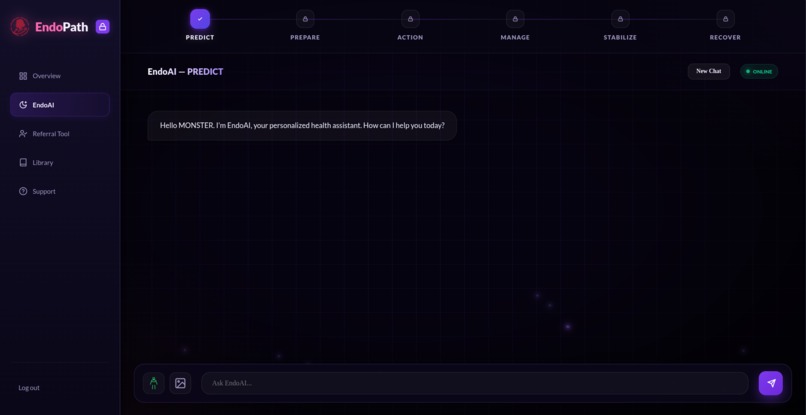
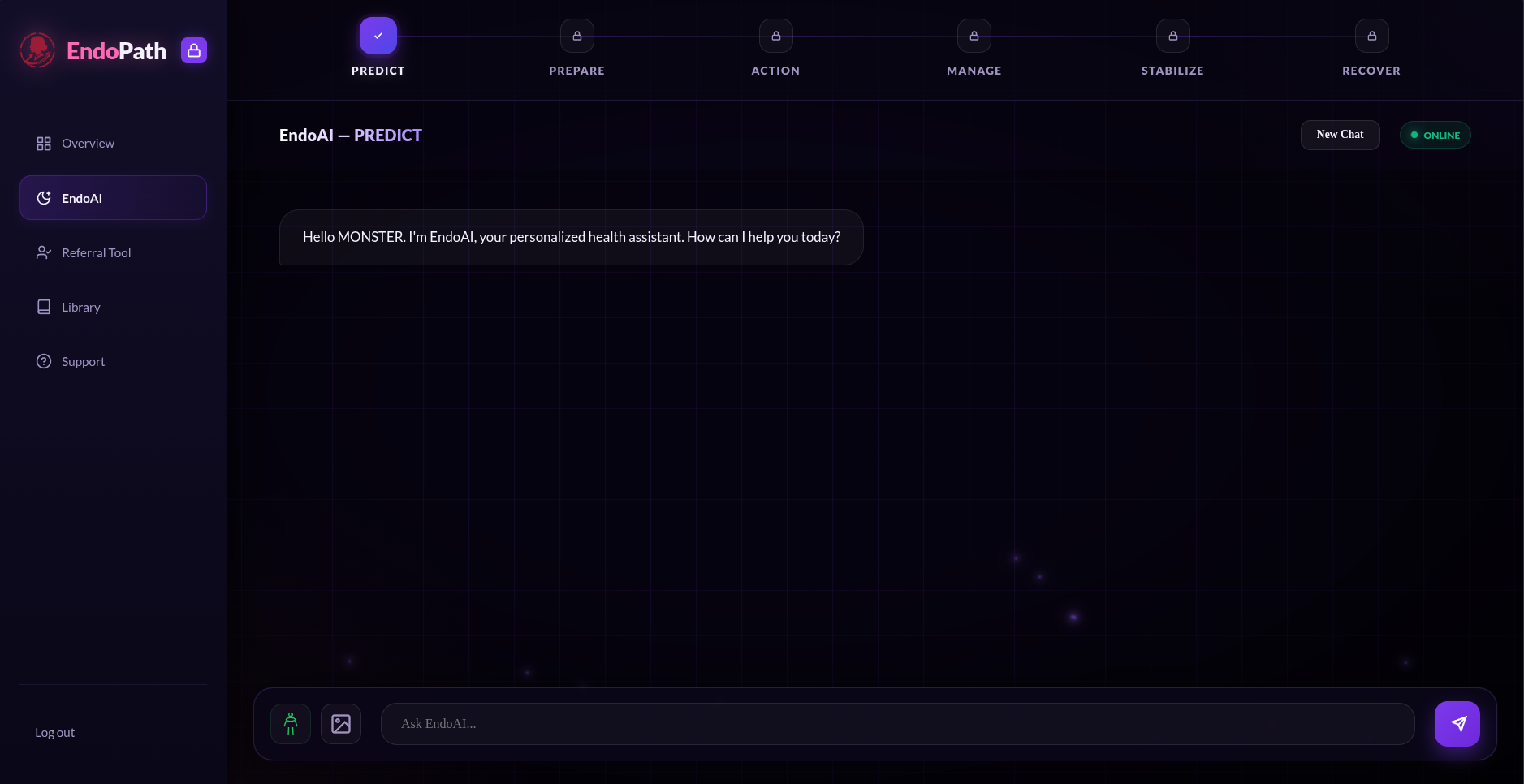
EndoAI — The 6-Stage Clinical Journey A Stage Stepper bar tracks your real-time progress across six clinical stages — Predict, Prepare, Action, Manage, Stabilize, and Recover. Each stage unlocks as you hit real milestones. When EndoAI detects you've reached one — like receiving a diagnosis — it surfaces a Probability & Next Steps modal, automatically prompting you forward. No manual switching needed. Within each stage, EndoAI supports multi-modal input — voice, text, image uploads, and an interactive Body Mapper where you tap directly on an anatomical diagram to pinpoint pain locations. It automatically parses conversations to create symptom logs, calculate flare probabilities, and surface key insights — no forms, no friction.
Referral Tool — Clinical Action Center A dedicated page that turns AI recommendations into real-world medical actions, organized by clinical stage. Every time EndoAI mentions a specialist or test, it automatically populates a Referral Card — no copy-pasting needed. Each card shows a type badge (APPOINTMENT, TEST, or SCHEDULE), a color-coded urgency tag (High, Medium, or Low), the date EndoAI flagged it, and a dynamic action button — "Book Now" for appointments, "Find Clinic" for tests, "View Schedule" for management protocols.
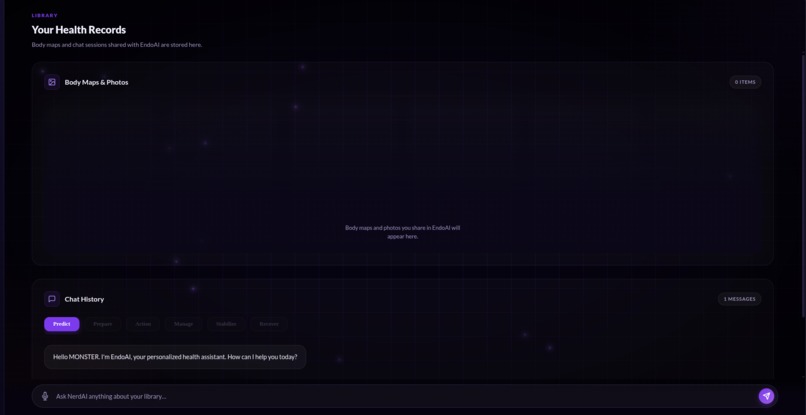
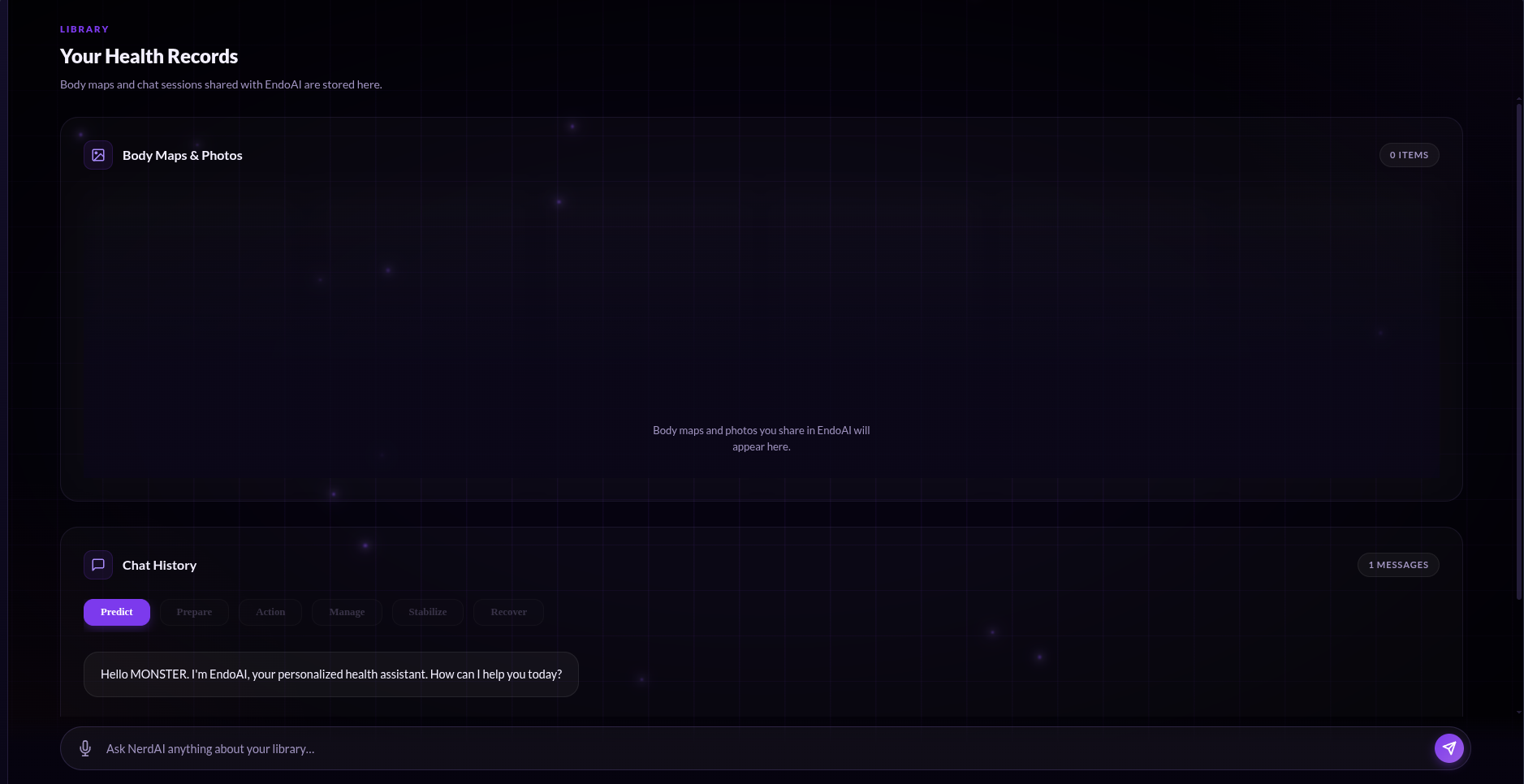
Health Library — Your Medical Archive Every body map, uploaded photo, symptom log, and AI session is permanently archived here, organized by clinical stage. Medical photos and body maps sit behind a Privacy Blur by default — revealed only when you click "Reveal Records." Inside the Library, NerdAI answers specific questions about your entire history instantly — "When did I last report a level 8 pain?" or "How many flares did I have after eating dairy in March?" One click generates a professional PDF Health Report — your symptom history, AI insights, and referral recommendations compiled into a multi-page clinical document designed to be handed directly to your doctor.
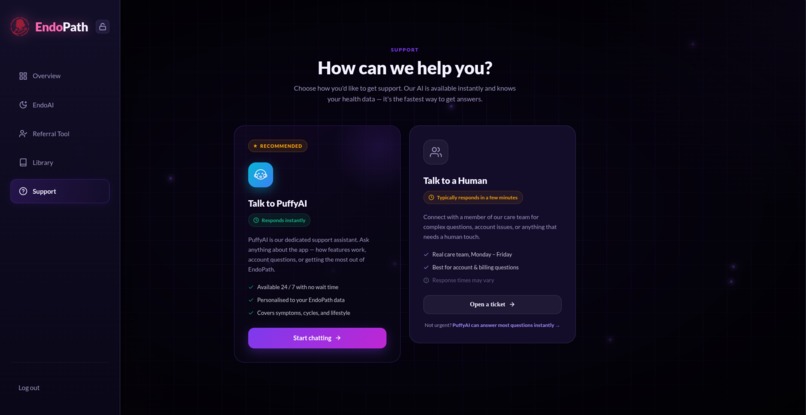
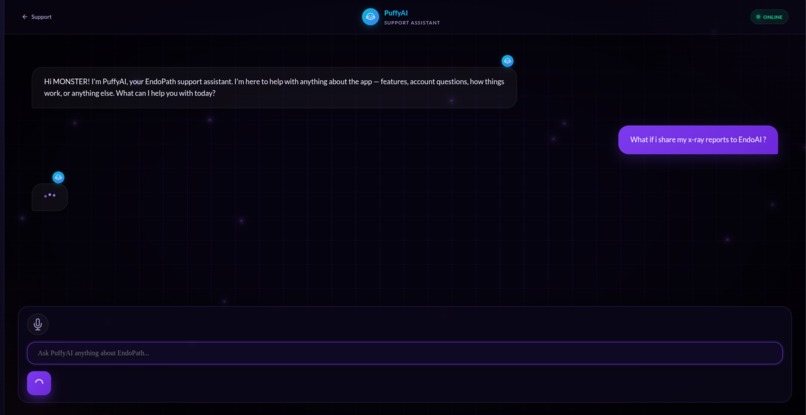
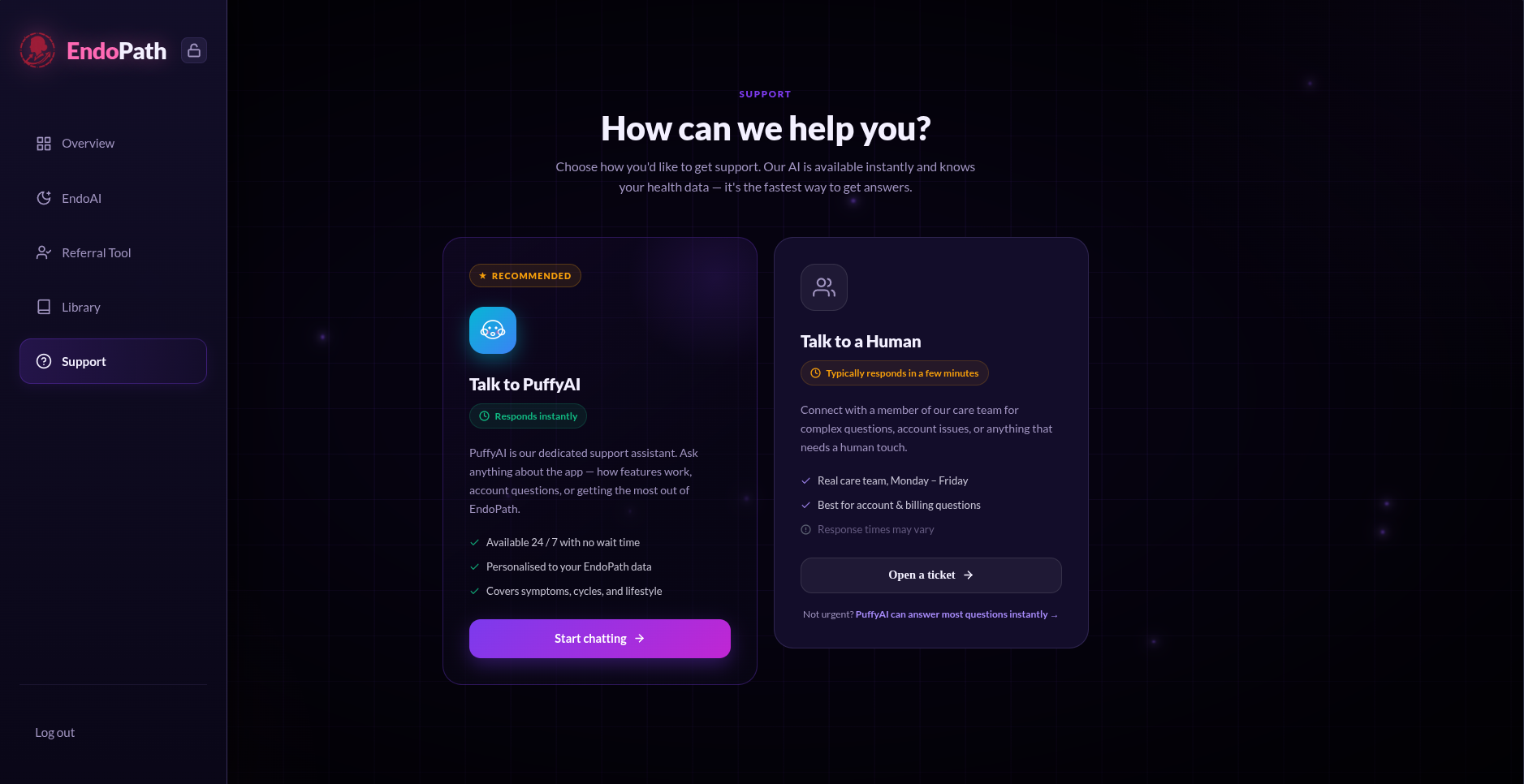
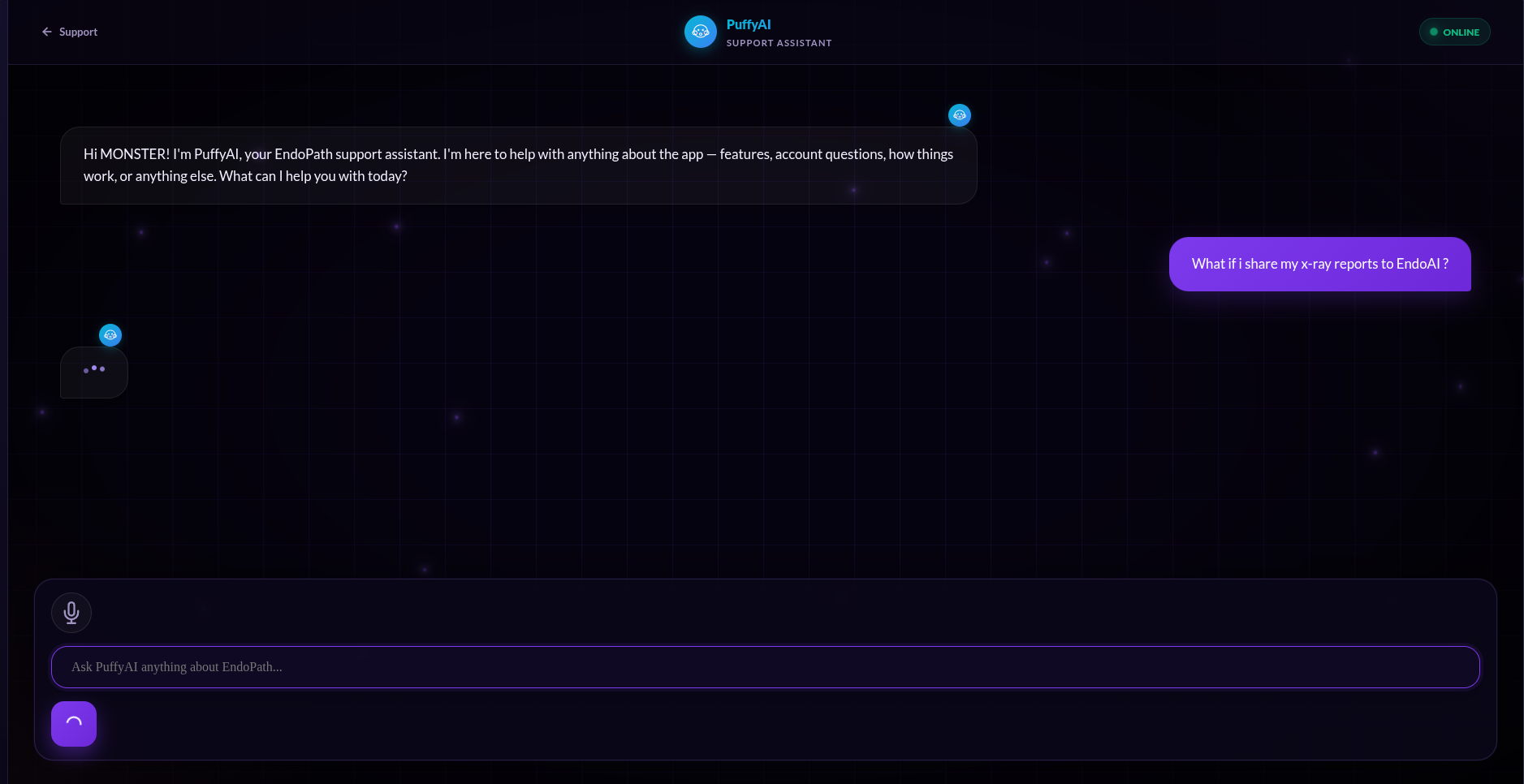
PuffyAI and Human Support PuffyAI is your 24/7 app concierge — not a medical tool, but a guide. It knows your account, your stage, and your usage. Ask it "Where are my body maps?" or "How do I export my report?" and it answers instantly. For sensitive account needs, a human Care Team is available via support ticket during business hours.
Privacy and Security Every piece of data is locked to your account via a persistent authentication layer. Your symptoms, AI history, body maps, and reports are yours alone — shared only when you choose.
Because managing endometriosis shouldn't feel like a second full-time job.
How we built it
It started with research — deep, uncomfortable research. The numbers were too hard to ignore: 200 million people affected, 7-10 years to diagnosis, and an entire population of women drowning in conflicting reports, dismissed symptoms, and a healthcare system with no real management tools for them. That research shaped every single product decision that followed.
The build started on the frontend. Using React with Vite and Tailwind CSS, the entire user experience was built out first — the pre-login homepage, the post-login dashboard with its health widgets and analytics, the EndoAI chat interface with its animations, the Library, PuffyAI, the Referral Tool — all of it wired up with demo data to validate the experience before a single backend line was written.
Once the frontend felt right, the backend was set up in Django — handling data models, authentication, and API routing. Google Auth login was integrated to ensure a secure, frictionless entry point into the app. The AI layer was built on Featherless AI via its API. Each of the three agents — EndoAI, PuffyAI, and NerdAI — was individually prompt engineered to match its specific role. EndoAI speaks clinically, guiding users through medical stages with precision. PuffyAI speaks conversationally, built to navigate and support. NerdAI speaks analytically, trained to query and surface personal health history. Same underlying model, three completely different personalities and purposes — all through prompt engineering.
From there it was about connection — wiring the frontend to the backend, linking the AI responses to the Library archive, feeding the Referral Tool from EndoAI's outputs, and making sure every piece of the journey talked to every other piece seamlessly.
Challenges we ran into
The hardest problem wasn't technical — it was conceptual. Endometriosis doesn't have a single moment of diagnosis. It's a slow, messy, non-linear journey where symptoms overlap, stages blur, and no two patients follow the same path. So the question that kept us up was: how do you build an AI that doesn't just track symptoms, but actually knows when to move someone forward?
If the transition logic was too loose, users would get pushed to the wrong stage prematurely — potentially with dangerous misinformation. Too rigid, and the app would feel like a cold checklist, not a companion.
The solution was a probability-based transition system built into EndoAI. Rather than letting users manually switch stages, EndoAI continuously monitors the conversation for clinical signals. When it detects that a user's symptom pattern, responses, and history have crossed a stage-specific probability threshold, it surfaces a final pinpoint question — one last confirmation check. If that clears, a Probability & Next Steps modal appears, walking the user through what just changed and what comes next before unlocking the following stage. It means the app never rushes someone. It never stalls them either. It moves exactly when the data says it should.
Getting that threshold logic right — figuring out what signals matter, how much weight each one carries, and how to make it feel natural rather than algorithmic — was the real challenge at the heart of EndoPath.
Accomplishments that we're proud of
Building something this complete, this fast, alone — that in itself felt like a win. But the accomplishment I am most proud of isn't the code.
It's the fact that EndoPath actually works as a system. Three AI agents with distinct personalities and purposes, a six-stage clinical journey with intelligent transition logic, a dashboard that makes a chronic condition feel manageable, a library that turns scattered health history into something a doctor can actually use — and all of it connected, seamless, and built around one person: the woman who has been dismissed one too many times.
We're proud that the solution to the hardest problem — when to move a patient forward — didn't come from a library or a tutorial. It came from thinking hard about the actual human experience of getting diagnosed with endometriosis and working backwards from there.
What we learned
That the best AI products aren't about the model — they're about the prompt. Getting EndoAI, PuffyAI, and NerdAI to feel like three genuinely different intelligences, each with their own voice and purpose, came entirely down to how they were instructed. Same API, completely different experiences.
We also learned that not all AI is built the same for every job. Text generation and image understanding are fundamentally different tasks — and trying to force one model to do both cleanly will break things in ways you don't expect. Knowing when to separate your models, and why, is a lesson that only comes from actually hitting that wall.
And more than anything — that constraints make you creative. Building alone, on a deadline, forces decisions that committees never make. Every feature in EndoPath exists because it had to, not because it was easy to add.
What's next for EndoPath
EndoPath is live — but this is just the beginning. Phase 1 : Distribution partnerships We start with fertility and period tracking apps — Flo, Clue, Natural Cycles. A quarter-screen pop-up, once a week, contextually triggered when a user logs pain or cycle irregularity. Getting EndoPath in front of the women who need it most, inside apps they already trust.
Phase 2 : Big platform partnerships Pitch Spotify and YouTube on contextual health discovery. When a woman plays a pain relief playlist or watches period pain content — EndoPath surfaces. Not an ad. A relevant, timely discovery at the exact moment she needs it.
Phase 3 : Monetization activation Free tier with ads stays permanent — the clinical journey is never paywalled. Before the Action stage, users choose: stay free with ads, one-time payment, or monthly subscription. YouTube meets Spotify. Ethical, flexible, sustainable.
Phase 4 :Clinical data partnerships Anonymized symptom data from thousands of endometriosis patients is extraordinarily scarce and valuable. License it to pharmaceutical companies running clinical trials. White-label EndoPath to OBGYN clinics as a pre-appointment data capture tool.
Phase 5 :Beyond endometriosis The six-stage journey, the three-agent AI architecture, the body mapper, the PDF health report — none of this is endometriosis-specific. PCOS is next. Adenomyosis. Fibroids. EndoPath becomes the platform for every invisible women's health condition the medical system has failed to take seriously.


Log in or sign up for Devpost to join the conversation.