-
-
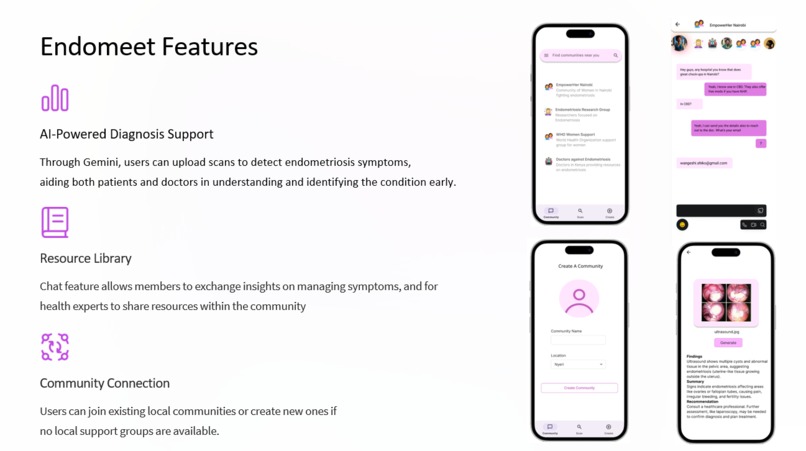
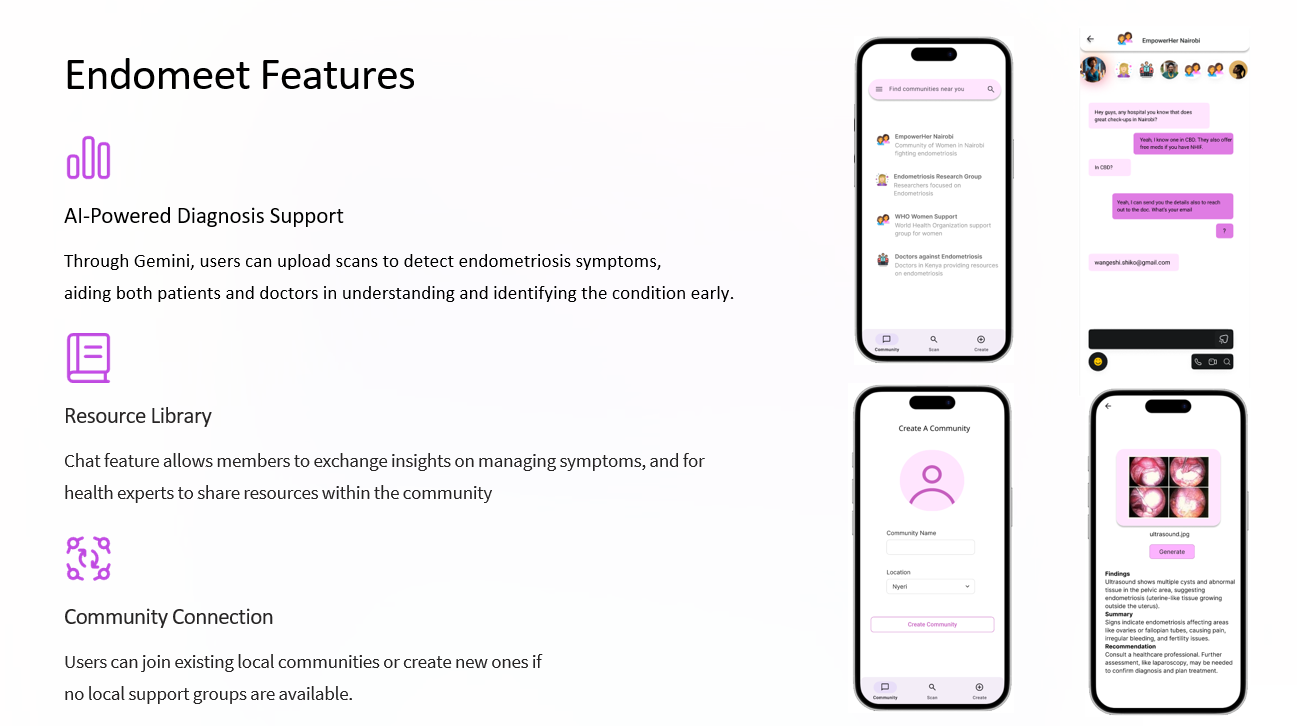
Endomeet's Features
-
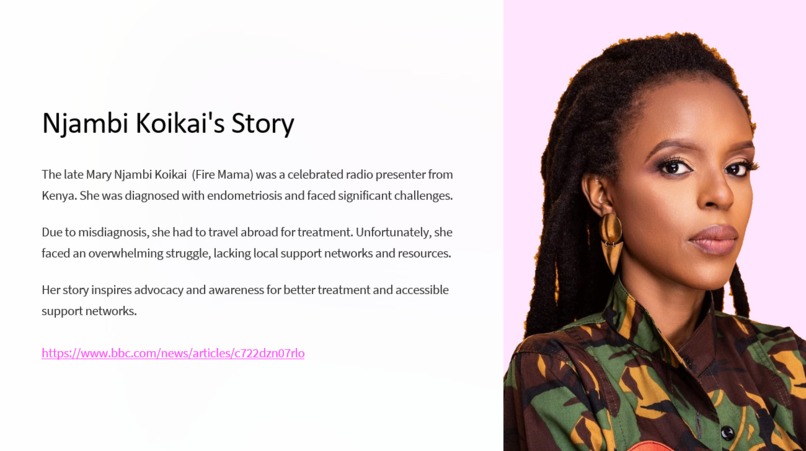
The story behind our inspiration
-
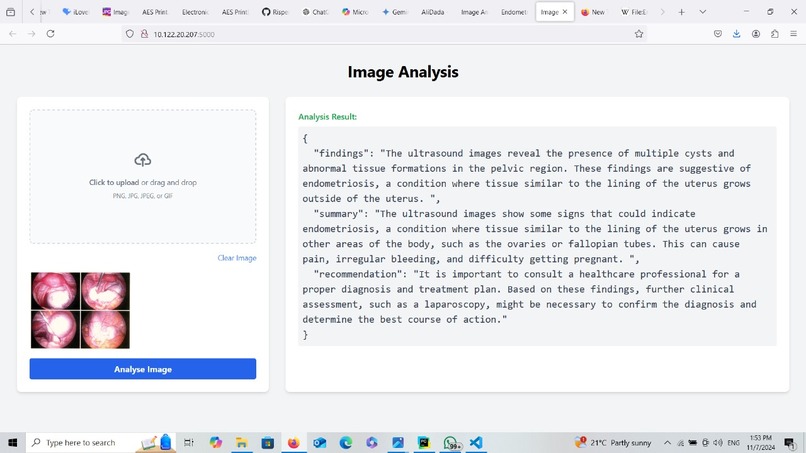
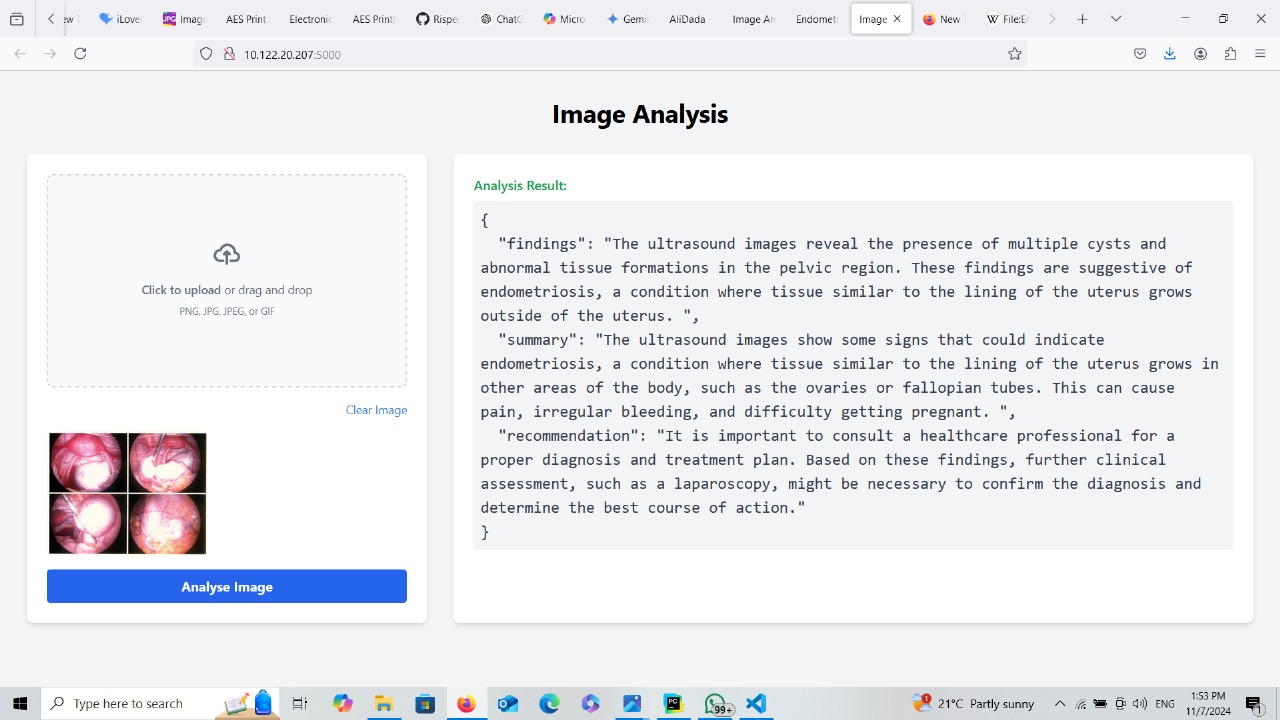
A test of the image analysis model in action using Gemini
Inspiration
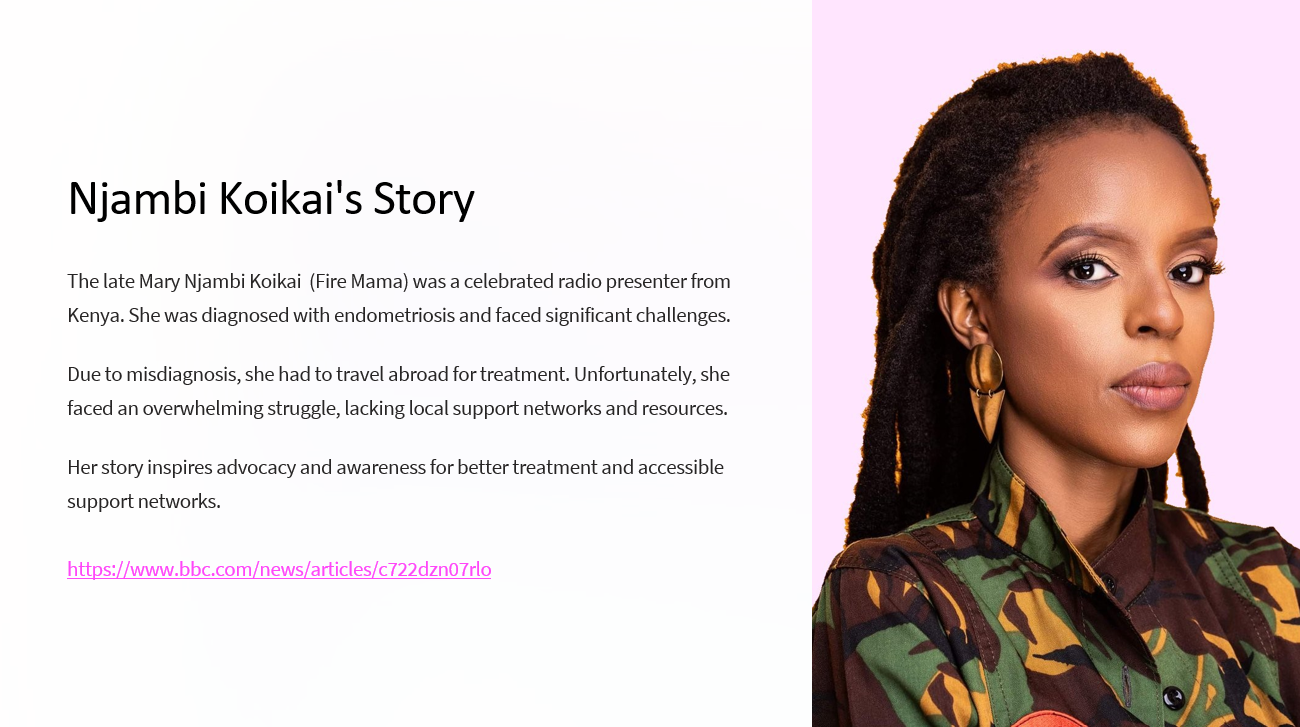
Endomeet was inspired by the story of Njambi Koikai, a Kenyan radio presenter who struggled for 17 years to get an accurate diagnosis and find a community of support for her endometriosis journey. Her story highlighted how hard it can be to get proper information, avoid misdiagnosis, and connect with others who understand. We wanted to create a platform that could help change that. Our goal with Endomeet is to create awareness and strengthen communities fighting against endometriosis while utilising an accessible, accurate, and supportive AI tool to reduce cases of misdiagnosis.
Njambi Koikai's Story
What it does
Endomeet is a platform that aims to make diagnosis and support for endometriosis easier and more reliable. The core feature is an AI-based tool that lets users upload ultrasound scans to check for signs of endometriosis. After the scan is analyzed, users receive tailored recommendations based on the severity detected, helping them understand their condition better and take steps toward management. In addition, there are community spaces for patients to share their experiences and support each other, and for doctors to share research and resources on endometriosis.
How we built it
Our team of five worked together to bring this idea to life using various technologies:
Frontend: We used Kotlin to create a smooth, user-friendly mobile interface.
Backend: Firebase handles our backend, managing data storage, user authentication, and real-time updates.
AI and Image Processing: We integrated with Gemini, which processes the ultrasound images and provides diagnostic insights based on advanced AI analysis.
Design: Our prototype was designed in Figma, helping us plan out the user journey and interface before development.
Challenges we ran into
- Privacy and Security: Protecting sensitive user information was essential. We had to take extra steps to secure the users' data such as login details and other personal information in compliance with data privacy standards.
- Balancing Accuracy with Accessibility: We wanted a tool that’s easy to use for anyone, but it was a challenge to keep the interface simple without losing essential details about diagnosis and recommendations.
Accomplishments that we're proud of
- Effective AI Integration: The AI feature we integrated with Gemini provides real, actionable insights for users based on their scans. This has the potential to help users understand their condition more accurately.
- User-Friendly Design: Despite the complex tech in the background, we managed to build an interface that’s straightforward and accessible.
- Community Building: Establishing spaces for patients and doctors means resources and information is shared widely within the community channels.
What we learned
Creating Endomeet taught us a lot, both technically and personally:
- Empathy-Driven Design: Listening to stories like Njambi’s made us more focused on creating a product that would actually serve and support users going through similar experiences.
- The Importance of Privacy: Handling health-related information showed us the significance of strong privacy measures and made us more cautious and informed about data handling.
What's next for Endomeet
- Event Notifications: Adding a feature to alert users about local events and support groups focused on endometriosis. This would help users connect and find more community support.
- Expanded Diagnostic Tools: In the future, we’d like to enhance diagnostic capabilities with other types of scans and add more in-depth insights while working in collaboration with medics in the field.
- Self-Management Notifications: Setting up reminders and follow-up notifications based on a user’s diagnosis to help them stay on top of their health and management practices.
- Live Webinar Sessions: We’d like to organize regular webinar sessions with women’s health specialists to give users direct access to expert advice.


Log in or sign up for Devpost to join the conversation.