-
-
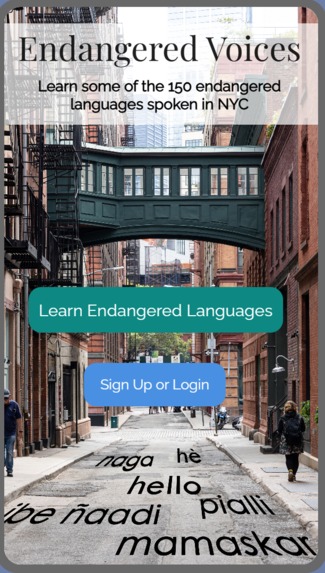
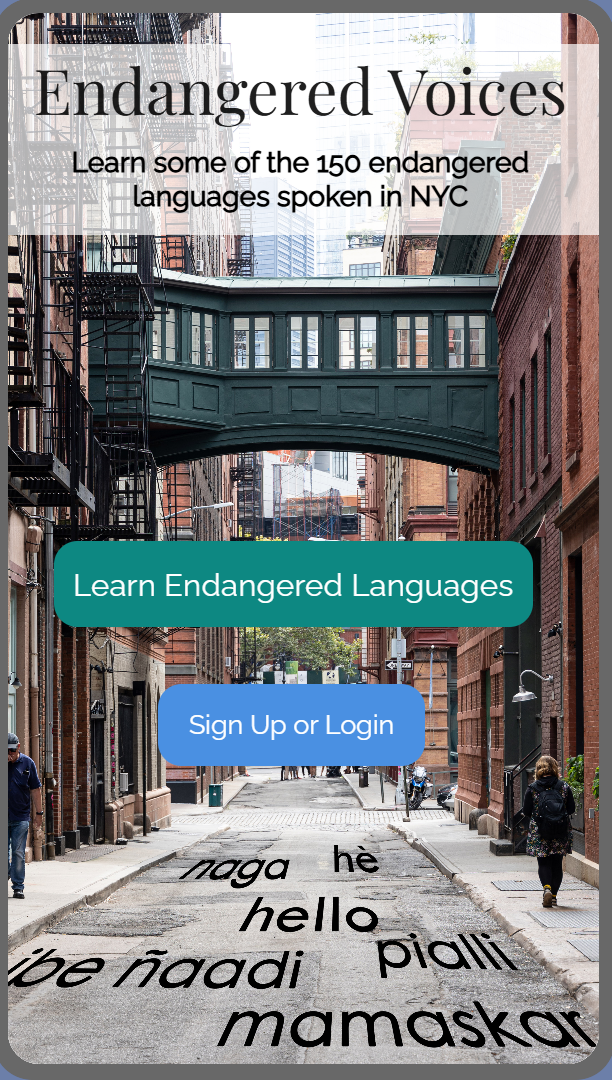
Opening screen
-
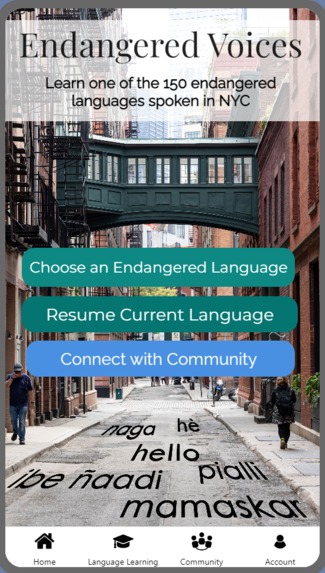
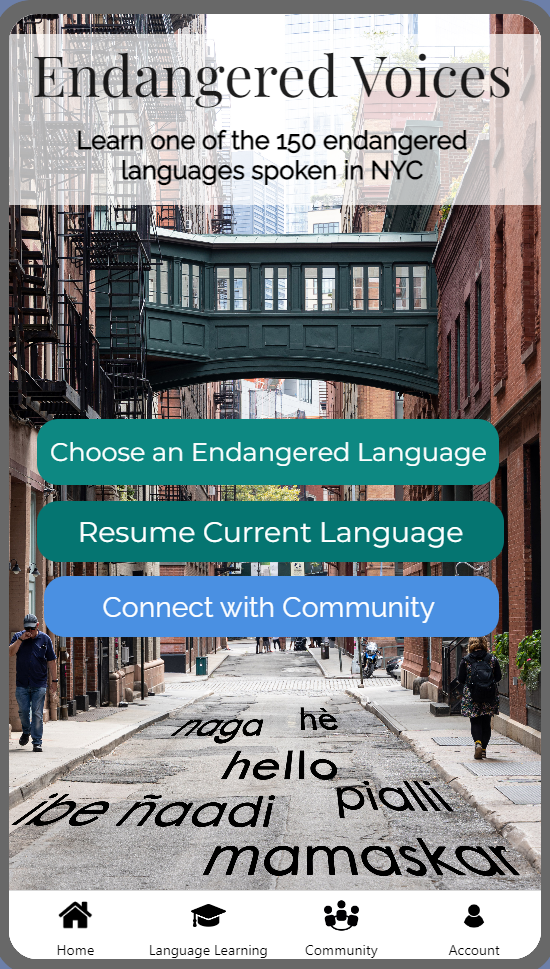
Home screen
-
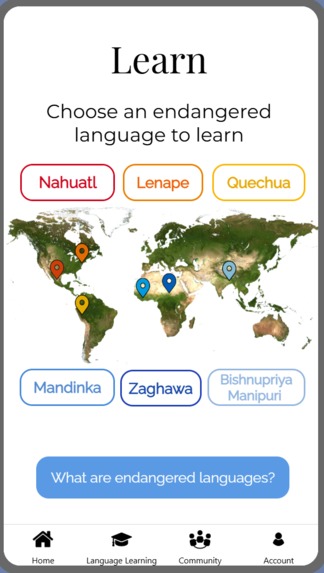
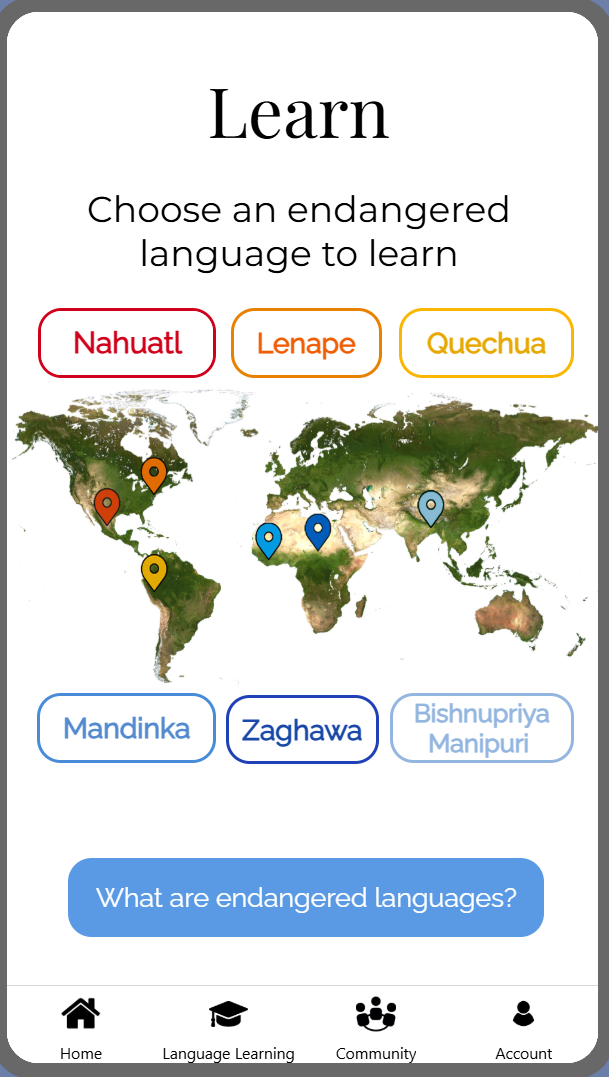
Language selection screen
-
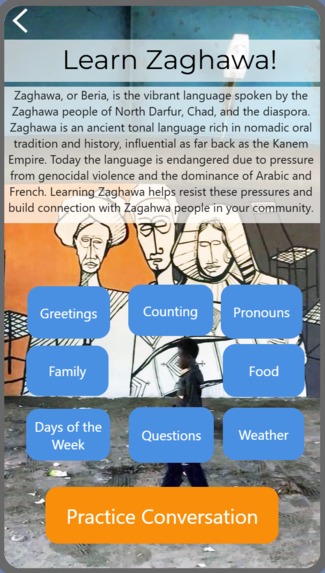
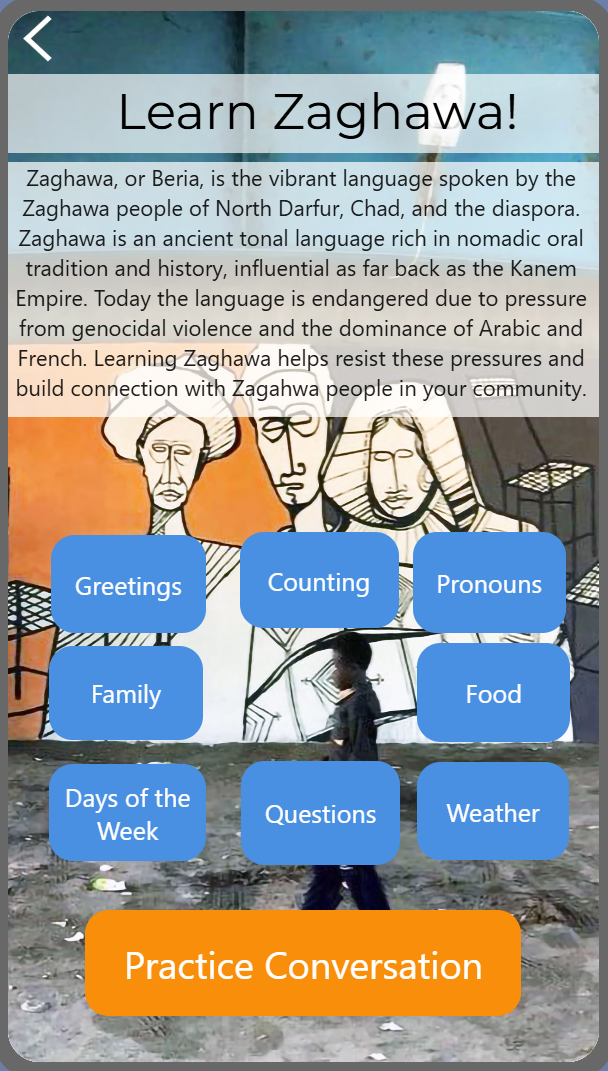
Zaghawa learning screen
-
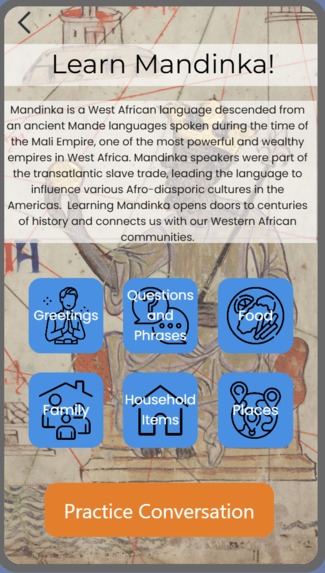
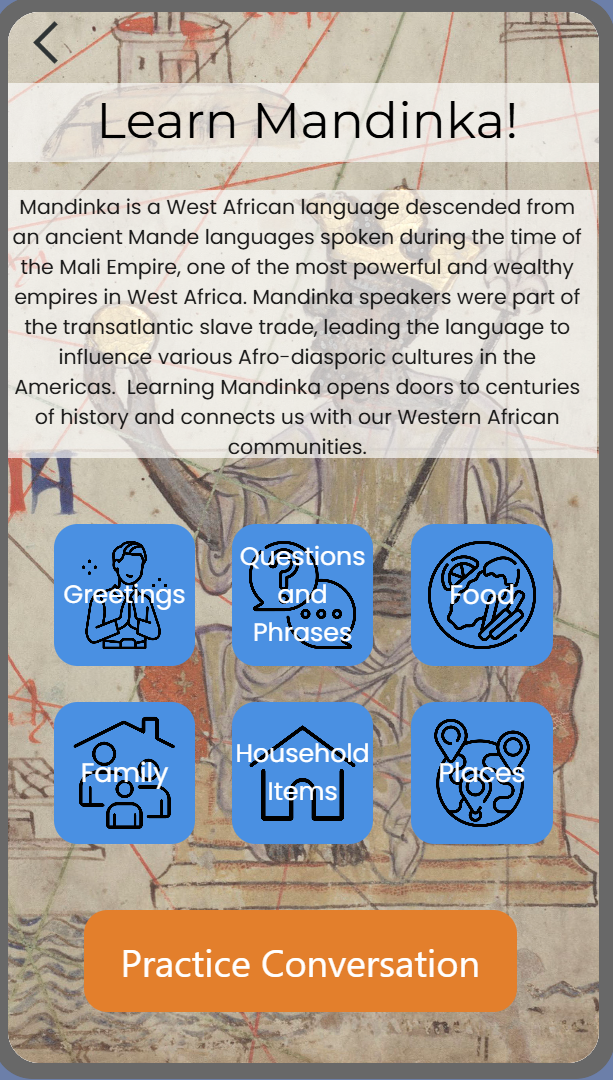
Mandinka learning screen
-
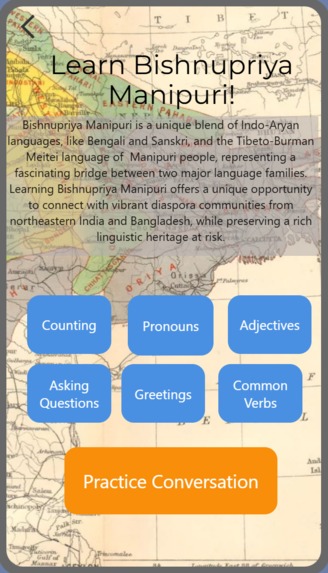
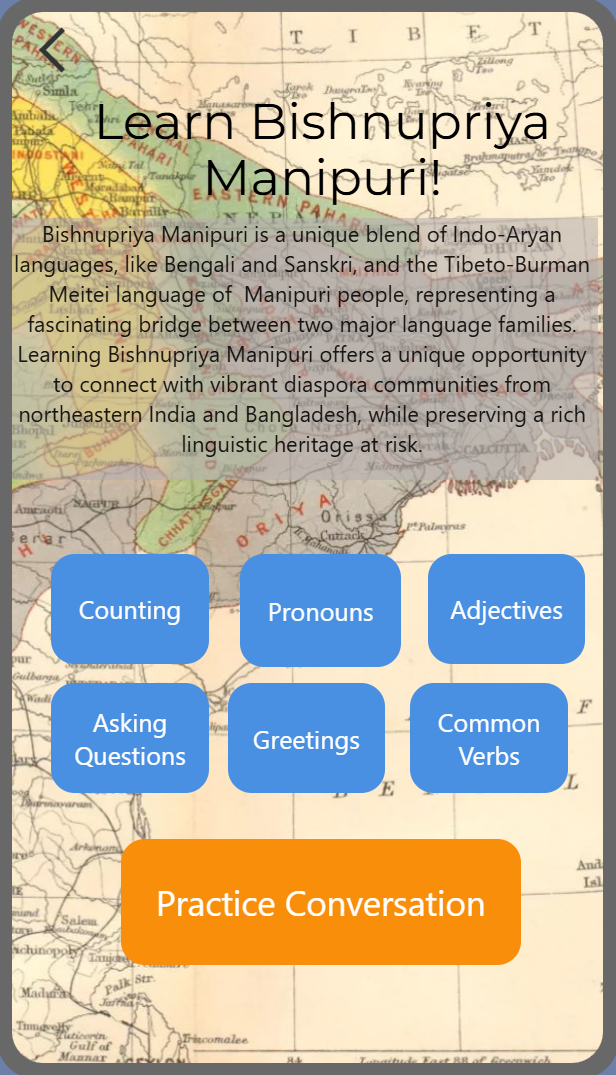
Bishnupriya Manipuri learning screen
-
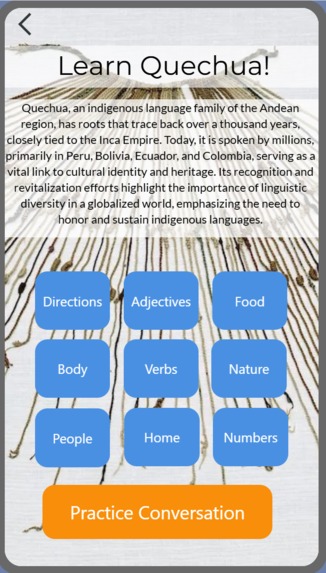
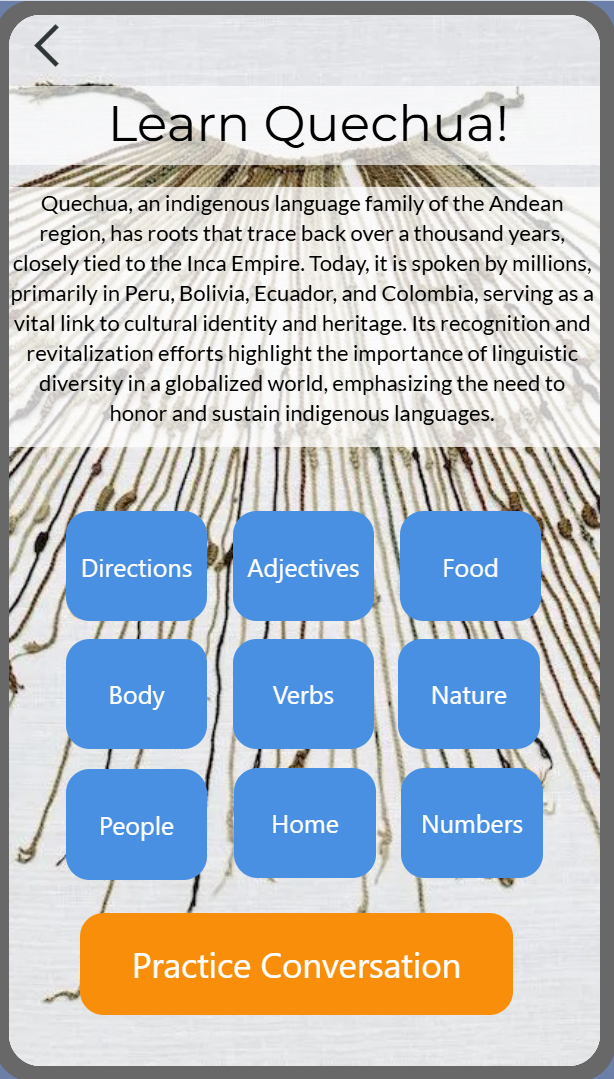
Quechua learning screen
-
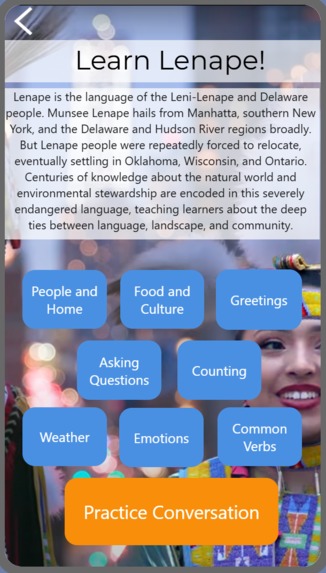
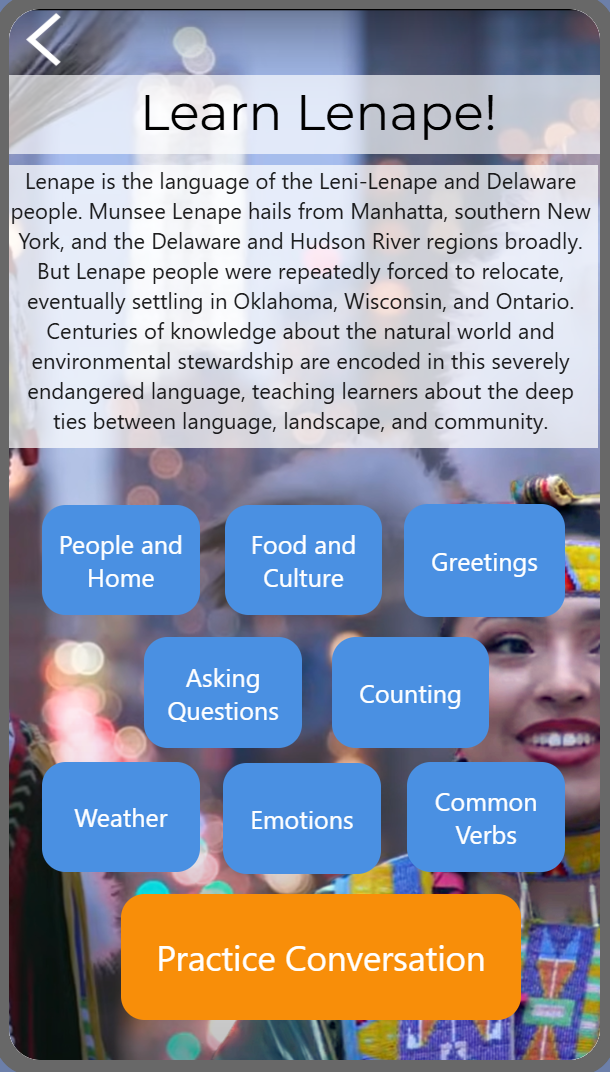
Lenape learning screen
-
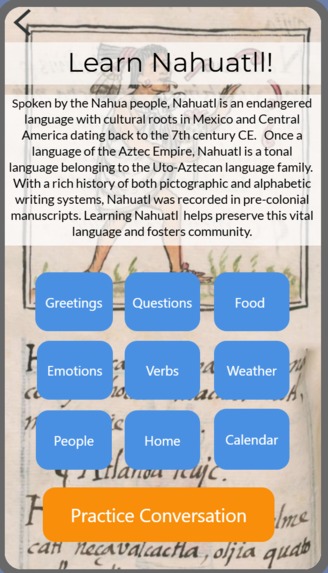
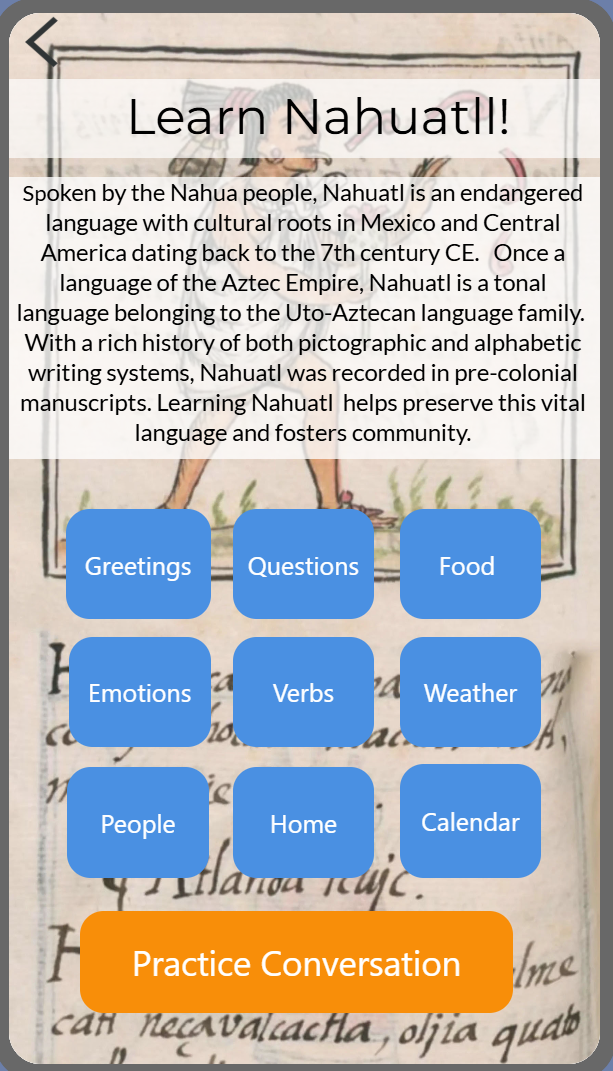
Nahuatl learning screen
-
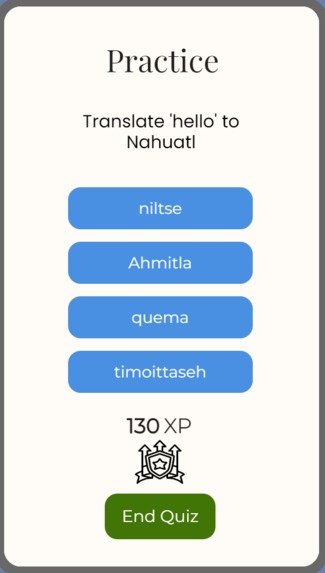
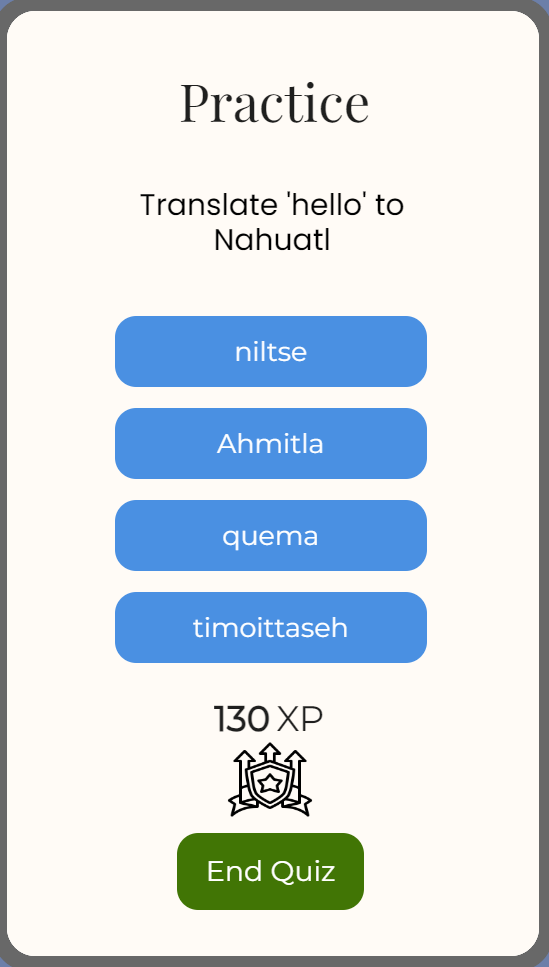
Quiz game learning mode
-
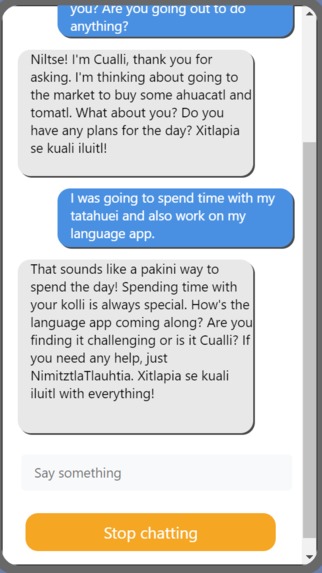
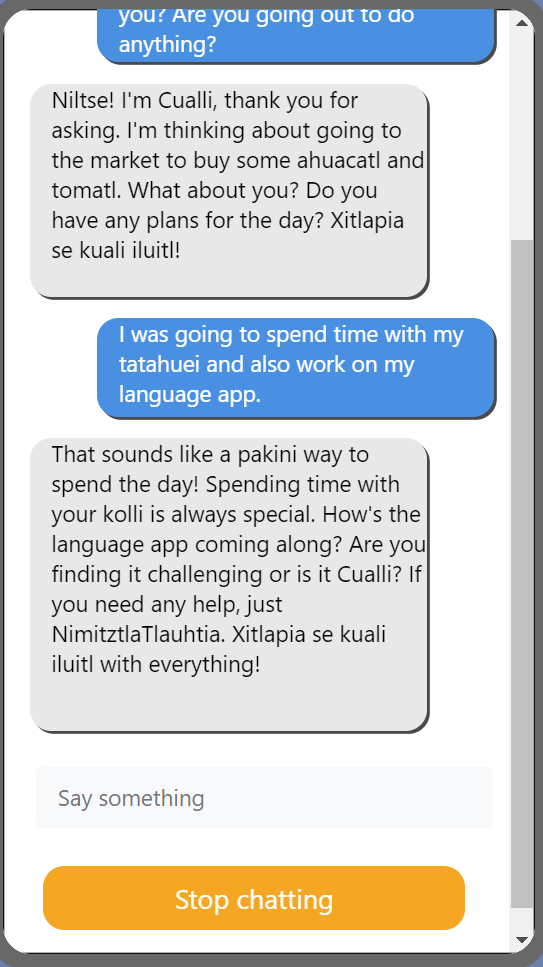
Conversational chat learning mode
-
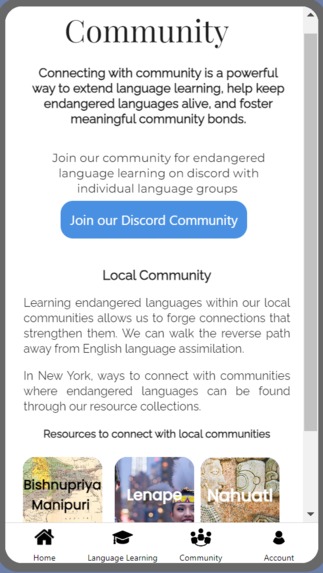
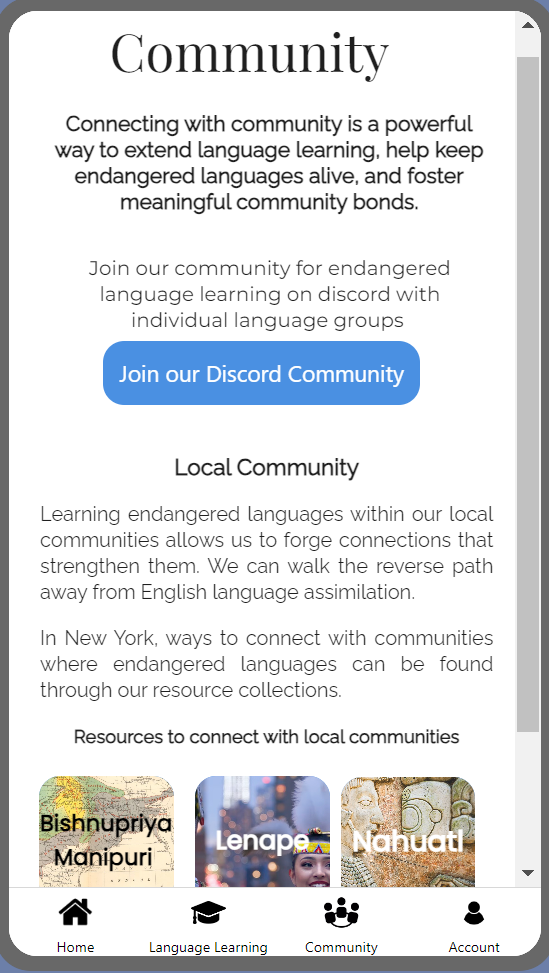
Community learning mode
-
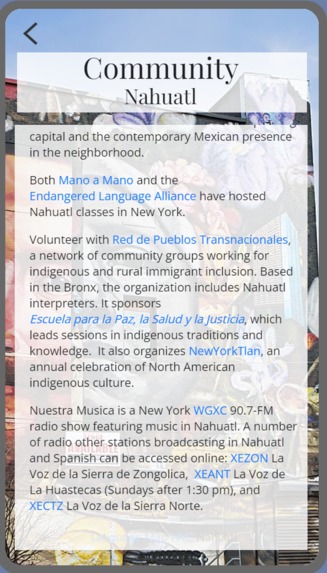
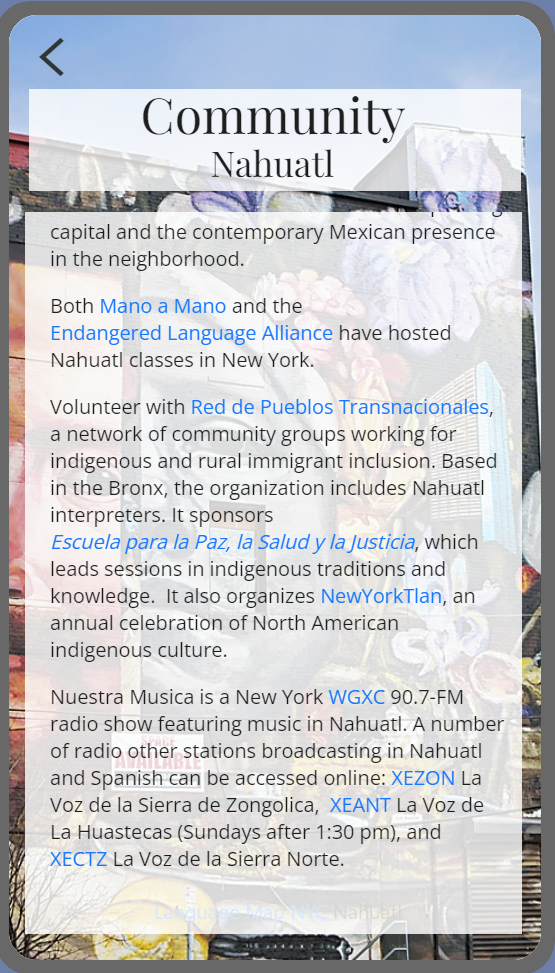
Community learning screen: Nahuatl
Endangered Voices
A language dies every two weeks, taking with it centuries of history, culture, and knowledge.
The Endangered Voices app makes learning endangered languages accessible and fun, helping preserve rich cultural perspectives and building connections within our communities.
Endangered Voices teaches a range of endangered languages spoken using multiple learning modes to support diverse learning styles. The app rests on three pillars: conventional quiz-type learning, an innovative AI-powered conversational learning mode, and community-based learning. The quiz mode uses dynamic gamification to teach vocabulary, a method shown by studies to enhance motivation. An AI-powered conversational learning mode incorporates learned words into interactive chat conversations. To build community through language and further your learning journey, the app provides local community resources and a discord community for further live practice.
When a language is lost, its wisdom, culture, and diversity perish with it. The Endangered Voices app helps preserve not just languages, but a way of seeing the world. Languages are also at the heart of community and identity. The app goes beyond mere language acquisition. It is designed to be a bridge, not just to the past but to the future, helping foster connection and community across generations and cultures.
The Challenge
Half of the world's languages are at risk of disappearing by the end of the century, threatened by assimilation, dominance of common languages, and declining language transmission. These languages are considered endangered, defined as ranging from vulnerable to critically at risk by UNESCO.
Helping stem the tide of language loss meets UN sustainability goals of promoting well-being, sustainable communities, promoting inclusive societies, and promoting life-long learning opportunities for all.
The loss of endangered languages has significant consequences, representing an erosion of culture, community, and knowledge. The decline of languages can be culturally devastating, cutting off communities from their histories and disrupting intergenerational bonds. Language loss also correlates with the marginalization of the communities that speak them, exacerbating social inequities. Further, languages often embody traditional knowledge about the environment, including medicinal practices, agricultural techniques, and ecological systems that disappear with language loss. And language loss isn’t just about losing words — it is about losing a part of one’s identity, about being heard.
Educational institutions rarely, if ever, teach languages beyond the most prevalent world languages. Finding local classes that teach endangered languages is challenging, even in major metropolises. Where educational opportunities do exist to preserve endangered languages, they often pose financial, travel, and accessibility challenges for learners. The Endangered Voices app fills this gap.
What it does
Endangered Voices features six endangered languages: Nahuatl, Leni-Lenape, Bishnupriya Manipuri, Mandinka, Beri/Zaghawa, and Quechua. These languages are still spoken in the US, offering opportunities to connect with native speakers and build community through language.
When beginning with the app, learners may create an account to have their progress saved or directly begin learning. Reaching the home screen, learners can choose to continue with an existing language they’ve started learning, select a new language to learn, or connect with communities to further their language learning.
On each language’s main screen, learners are greeted with background information about the language and a range of topics to learn in the language, ranging from greetings to culture. Selecting a language topic, users start with a set of word and phrase definitions in the language and then move on to practicing through gamified questions. In this quiz game learning mode, users win points for correctly defining a word, gaining a bolt of success. Studies have shown that gamification increases motivation and learning overall.
Significantly, the app moves beyond quiz-based learning to provide a unique conversational learning mode. Harnessing the OpenAI API, the app engages learners in conversation that replaces English with the endangered language words the user has gotten correct in quiz learning mode. The conversational mode reinforces learning and provides a learning style that may better suit some learners. It grows with the learner’s progress and extends learning, allowing learners to become familiar with conversing in the language.
Last, the community learning area provides ways for people to engage with community to further their language learning, including in the Discord community. Each language’s community screen highlights communities and organizations with the language’s speakers, including volunteering opportunities, with a current focus on the New York metro (home to one in twenty Americans). The Endangered Voices Discord community allows for real-time conversations and connections in these languages worldwide.
Design and Methods
The Endangered Voices mobile app was designed and implemented in block code using the Thunkable integrated development environment, which supports dual iOS and Android development and user interface (UI) libraries. The UI was designed to provide a rich, varied graphical experience for enhanced engagement (IL).
The app was designed to have three learning modes: a gamified quiz learning mode, an AI-powered conversational practice mode, and a community learning mode. For each language, vocabularies were categorized by topic area and stored in a cloud-based database integrated through the Google API. The OpenAI API was combined with prompt engineering to produce the conversational chatbot that incorporates the endangered-language words which the user has learned in the quiz mode, directing conversation towards topics that use these words. After these modes were implemented for one endangered language, additional languages were added through a language variable designed to provide an index into the vocabulary database.
Challenges overcome
The first set of technical difficulties faced in building the app lay with the gamified quiz learning mode. Originally, the app did not use a database-based approach to coding the quizzes, which made it difficult to construct questions in an efficient manner. After moving to a vocabulary database integrated through the Google API, the code efficiently pulled data into the app. To streamline the process further, a randomized word selection for the quiz questions and potential answers was implemented. Last, methods to store user progress with the vocabulary quiz answers had to be developed. This allows experience points to be awarded and user-mastered vocabulary to be channeled into the conversational chat learning mode. For users who choose not to log in, the app had to implement storage of user progress through on-device storage.
A second challenge was optimizing the conversational chatbot to provide a second, more natural learning method. After integrating the chat feature using the OpenAI API, the app still had to implement a conversational style that incorporated the endangered language using prompt engineering. I had to experiment with ways to simulate realistic dialogue, since OpenAI models like chatGPT have various purposes and are not inherently conversational. I also had to develop a method for transferring the words the user had successfully practiced in the quiz learning mode to the chat feature, so the chatbot could use these words in conversation to reinforce the language learning.
What's next
Endangered Voices has the potential to be a hub for learning at-risk languages. Future versions of Endangered Voices will include audio features to enhance spoken language learning. Audio clips will be included in the vocabulary and quiz-based learning screens to help users with pronunciation. Ultimately, spoken conversation could be incorporated into the AI chat-based learning mode.
Future updates will also expand the number of endangered languages taught and the scope of existing languages. It would deepen learning for each language by including more vocabulary units and advanced grammatical concepts. The AI conversational learning mode would be extended to further incorporate the language’s linguistic structure as learners progress.
Vision for the Future
Every word we learn in an endangered language is a step toward preserving not just a language, but a way of seeing the world. Endangered Voices is a bridge, not just to the past but to the future — ensuring that endangered languages don’t simply disappear but continue to build connection and well-being.

Log in or sign up for Devpost to join the conversation.