-
-
encore
-
mobile
-
glasses
-
glasses
Inspiration
Practicing piano should keep you focused on the instrument. But when something sounds wrong, figuring out why often means stopping, reaching for your phone, and searching for an explanation.
We wanted to make that moment easier: what if you could see what to improve while keeping your hands on the keys?
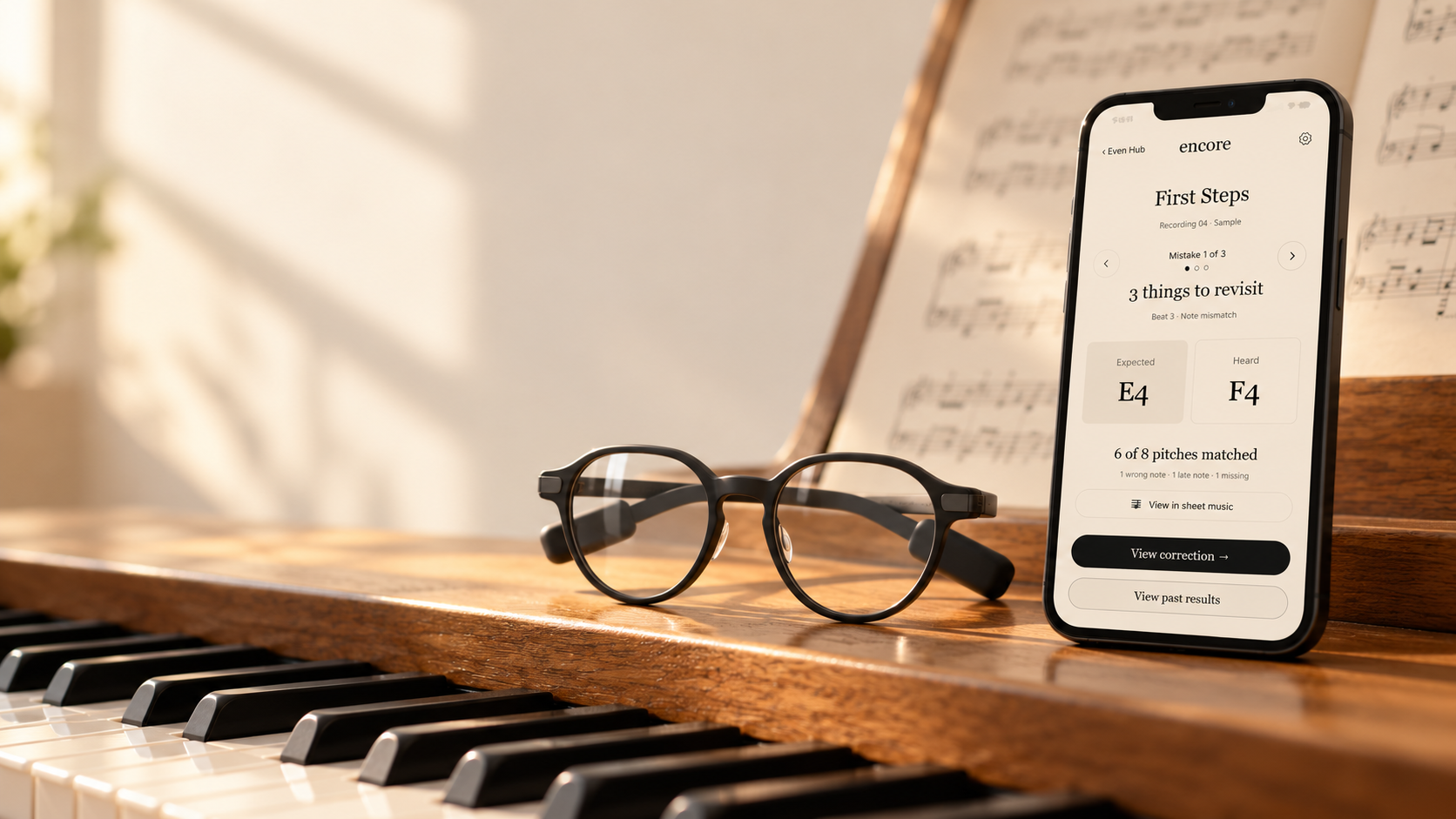
That became Encore, a piano practice experience built for Even Realities G2 glasses. Inspired by quiet technology, it stays out of the way while you play and offers useful feedback when you pause.
What it does
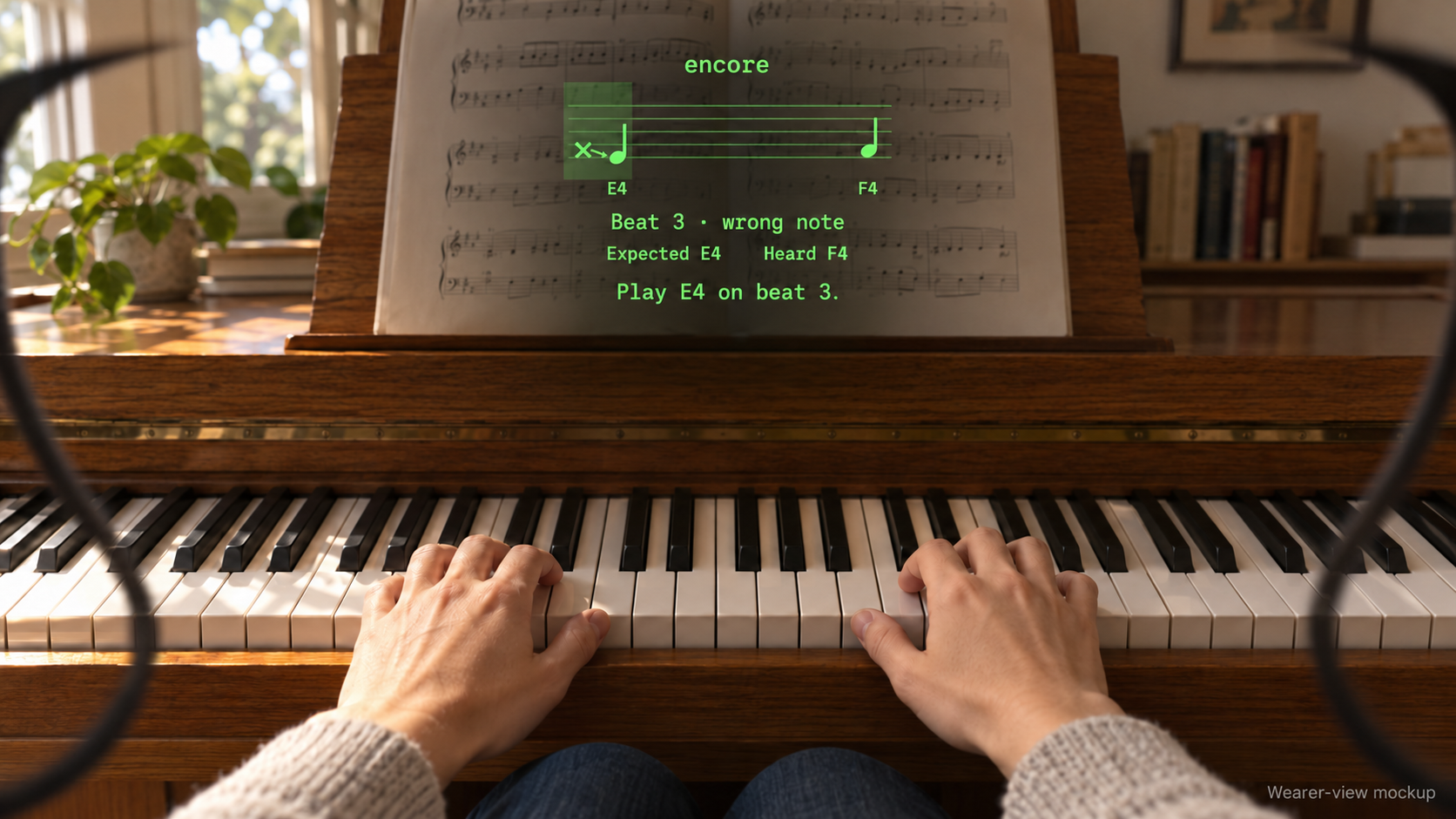
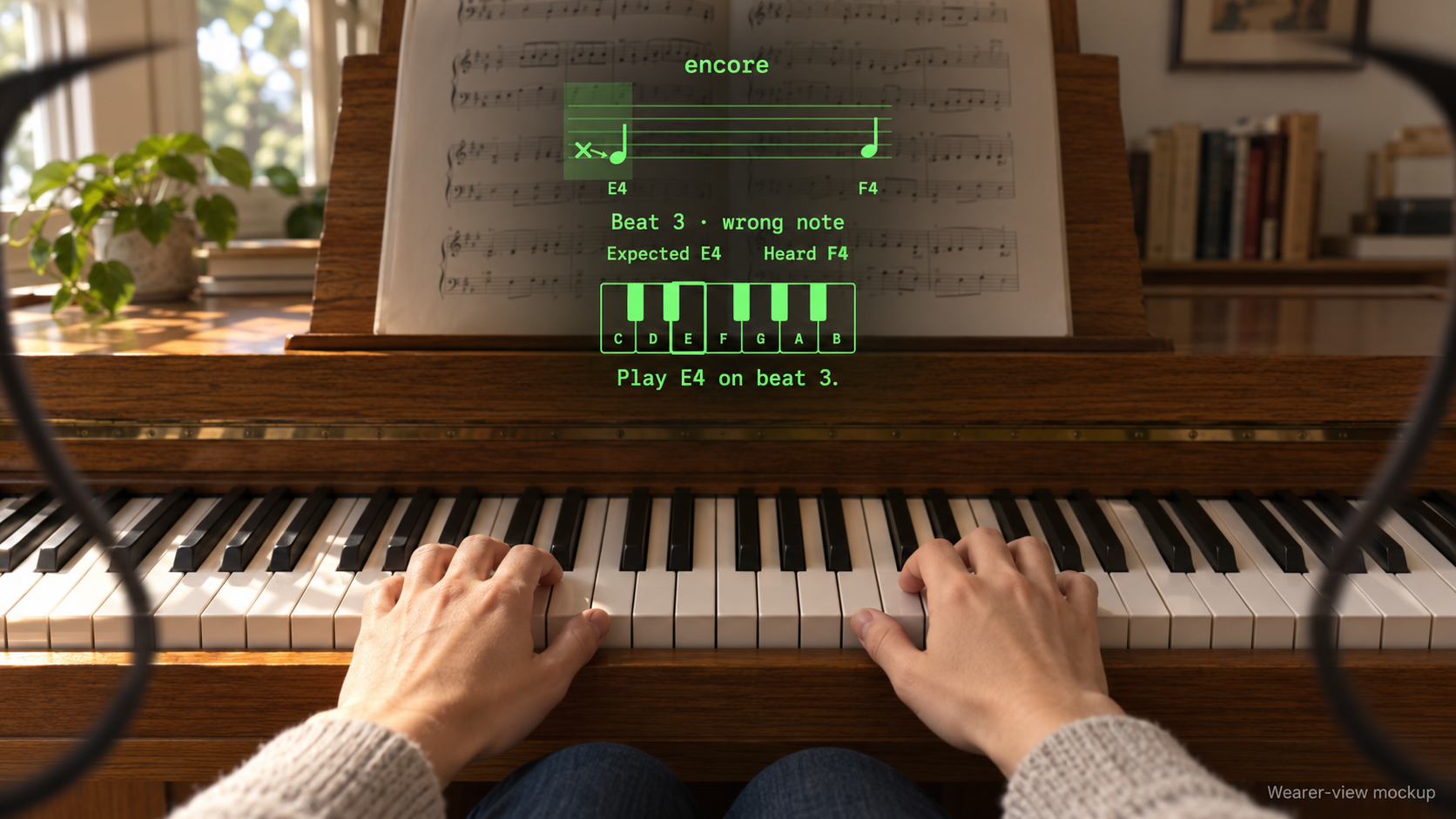
Encore turns a short piano performance into focused visual feedback. Choose a prepared passage, record an attempt, and review where your playing differed from the reference, including wrong notes, missed notes, and timing issues.
The experience combines:
- A concise coaching suggestion grounded in your performance
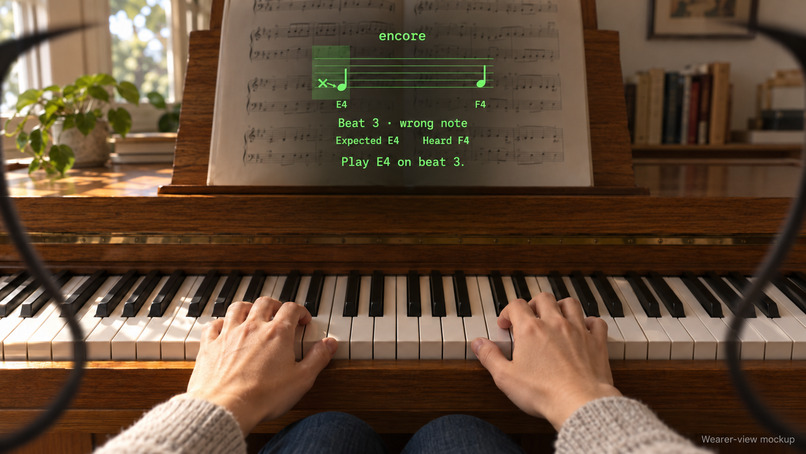
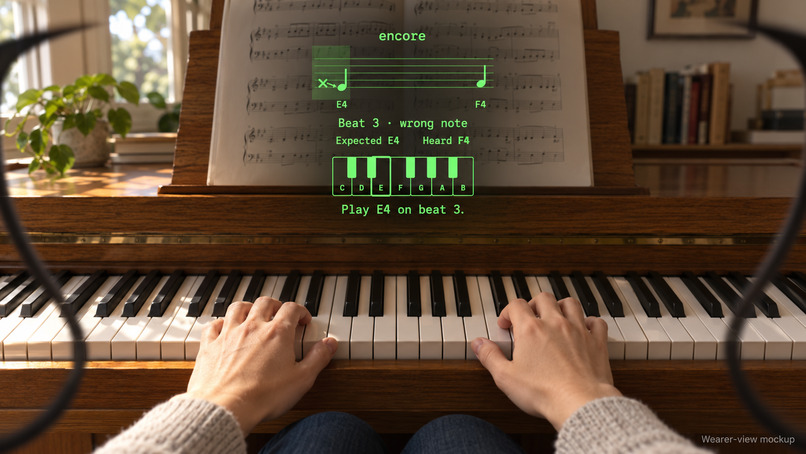
- Highlighted notes and piano-key diagrams explaining the correction
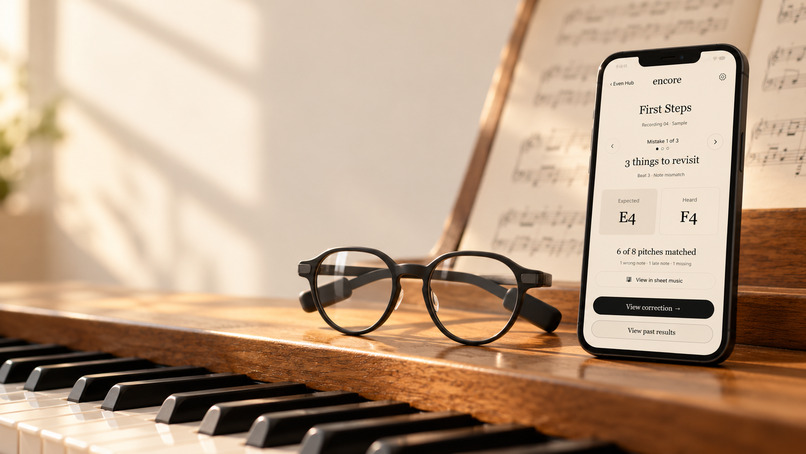
- A phone companion for choosing passages and reviewing previous attempts
- A glasses interface designed to keep essential feedback within view
After reviewing your results, return to song selection and play again.
How we built it
We built Encore using TypeScript, the Even Hub SDK, Python, Spotify Basic Pitch, Gemini, and the Strands TypeScript SDK.
- Capture and normalize a recording into WAV audio
- Use Basic Pitch to extract note events
- Compare those events against the passage’s reference notes and tempo
- Send the recording and measured findings to a Gemini coaching agent through Strands
- Validate the response and render concise feedback and visual instructions through code
The phone connects to G2 through Even Hub. Browser storage supports practice history where available, and Sentry helps us investigate errors and performance. Our demo backend runs on a laptop, with HTTPS connectivity for device integration.
Challenges we ran into
Separating a musical mistake from an unreliable recording was a major challenge. Background noise, audio formatting, repeated notes, and timing alignment can all affect the analysis. We needed to acknowledge uncertainty instead of confidently giving the wrong correction.
Designing for a small monochrome display also meant deciding what to leave out. We prioritized one useful correction over a screen full of information.
Connecting the glasses, phone, and backend introduced additional challenges around Bluetooth audio, HTTPS routing, WebView permissions, and storage behavior.
Accomplishments that we're proud of
We built an audio-analysis and coaching pipeline and validated it with prepared audio and regression tests. We also developed a shared feedback structure connecting musical findings to concise suggestions and visual explanations.
Most importantly, we kept the experience focused on helping someone understand their next improvement without turning practice into another screen-heavy task.
What we learned
A useful coach needs more than a convincing explanation. Its advice needs evidence. Combining note detection and reference matching with language-model coaching gave each part of the system a clear responsibility.
We also learned that designing for glasses means showing less, more intentionally. A single clear correction can be more useful than a full page of analysis.
What's next for encore
- Validate the complete experience on physical G2 hardware across different recording environments
- Improve response time and recording reliability
- Verify persistent practice history inside Even Hub
- Expand the passage library and support more expressive playing
- Test with piano students and teachers to make each correction clearer and more useful
Built With
- cognition
- css
- even-hub-sdk
- even-realities-g2
- google-gemini
- html
- indexeddb
- javascript
- node.js
- python
- sentry
- spotify-basic-pitch
- strands-agents-sdk
- typescript
- vite


Log in or sign up for Devpost to join the conversation.