Why I build Encore
I'm inspired by the idea that the best experiences are the ones that make people feel connected to the music, the atmosphere, the culture, and to one another.
Planning an event involves more than choosing a venue, creating a schedule, or putting together a list of activities. It's about understanding the people who will attend and creating an experience that feels relevant to them.
I wanted to explore how cultural intelligence could help make that process more thoughtful. What if event organizers could use cultural signals to move beyond generic event templates and develop concepts with a stronger creative direction? That question inspired me to build Encore for the Qloo hackathon.
My goal was to explore how Qloo's cultural intelligence could become a practical tool for event design, not just a source of recommendations, but an input into a broader creative process that helps organizers turn an initial idea into an event concept they can refine, understand, and share.
What it does
Event planning is more than choosing a venue and putting together a schedule. It’s about creating experiences that resonate with people. Encore uses Qloo’s cultural intelligence to transform an event brief into a culturally informed event concept, complete with music direction, activities, scheduling, and budget planning. With interactive refinement, a transparent Decision Trace, and a professionally designed PDF blueprint, Encore helps organizers turn cultural insights into actionable event experiences, from the first idea to a plan ready to share.
Key Features
1. Culture-Informed Event Concept Generation Using Qloo
Encore combines event-planning inputs with cultural intelligence from the Qloo API to generate event concepts that feel relevant to the intended audience.
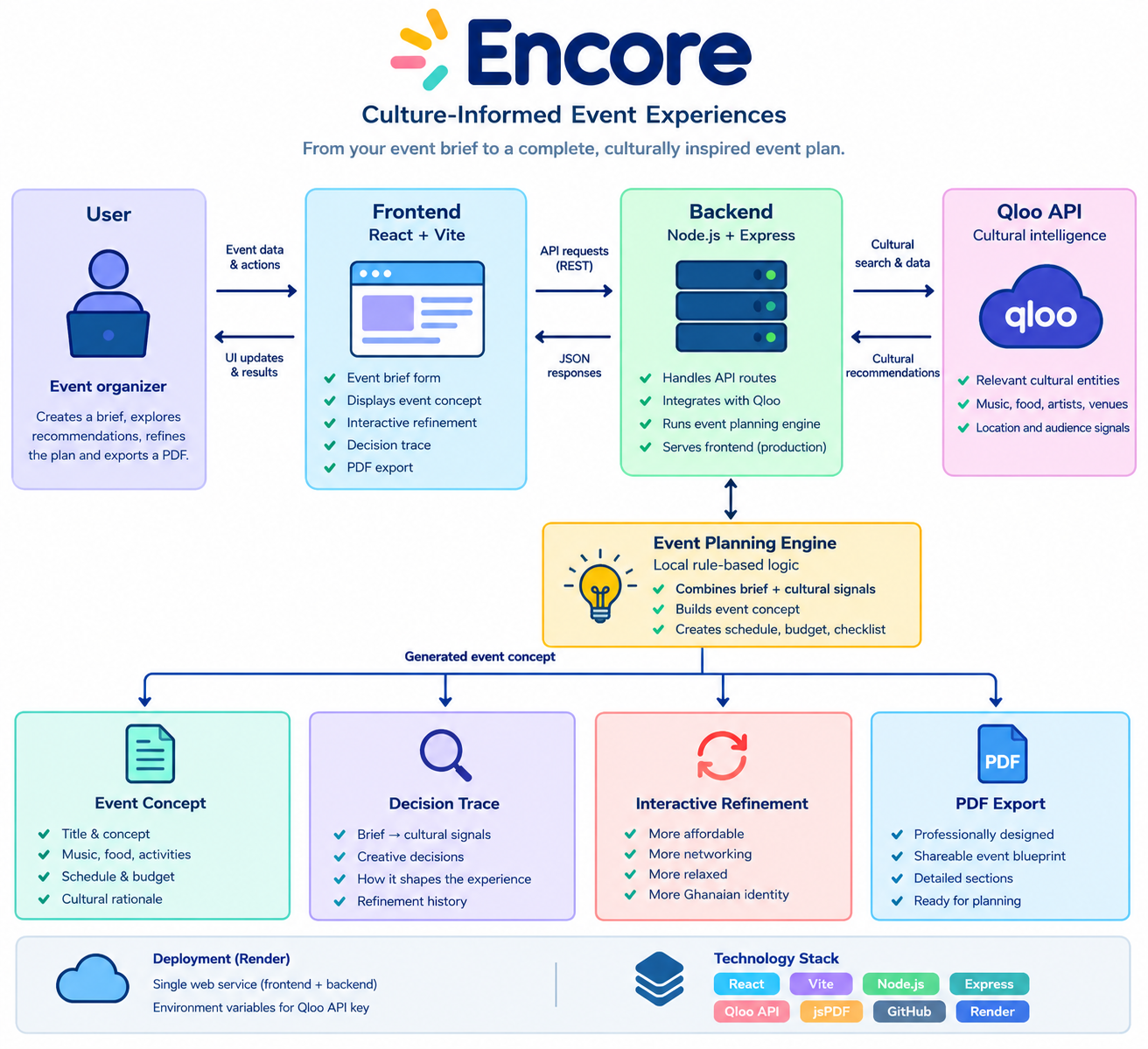
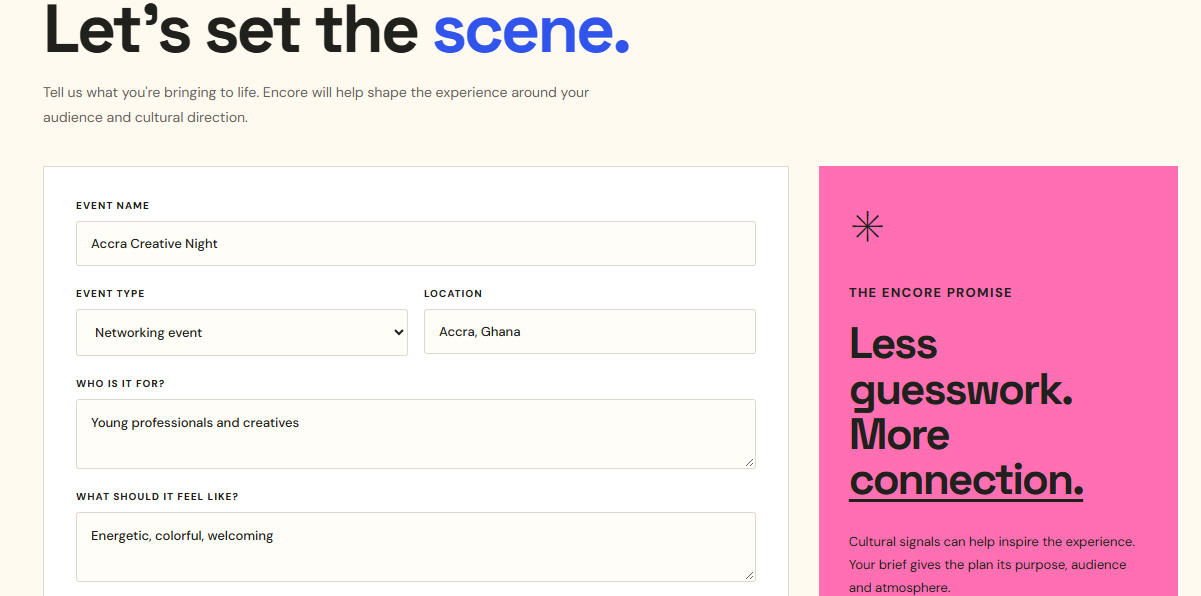
Organizers provide a brief containing details such as the event type, target audience, location, budget, desired atmosphere, and cultural interests. Encore retrieves relevant cultural entities through Qloo and uses those signals to inform its local event-planning engine.
The result is a structured event concept that can include:
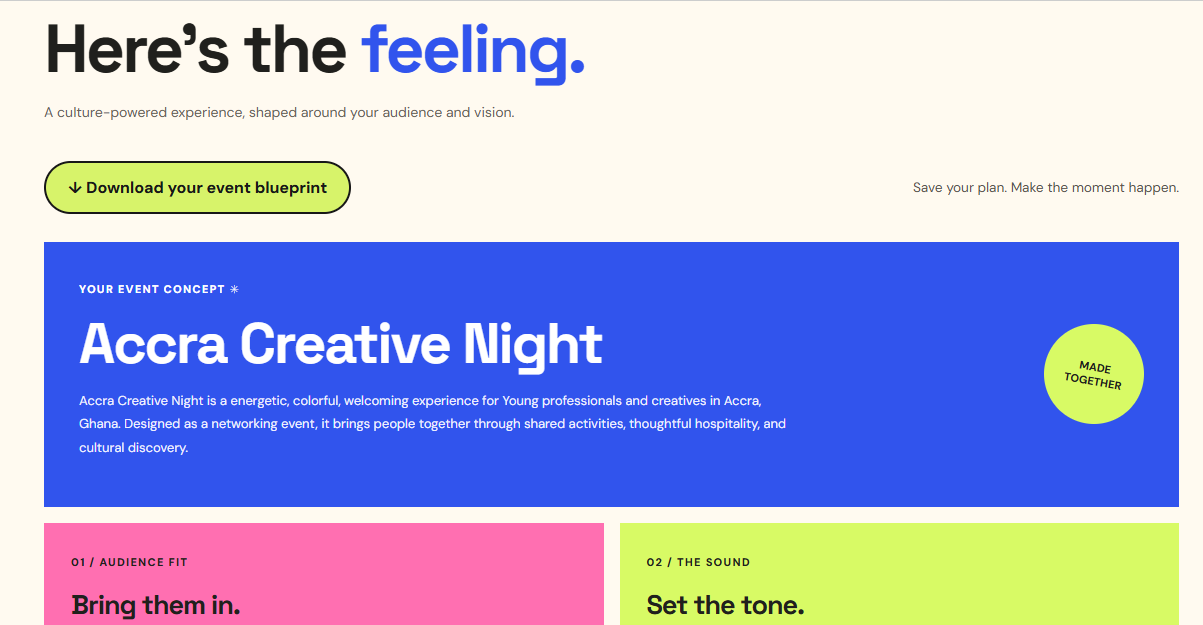
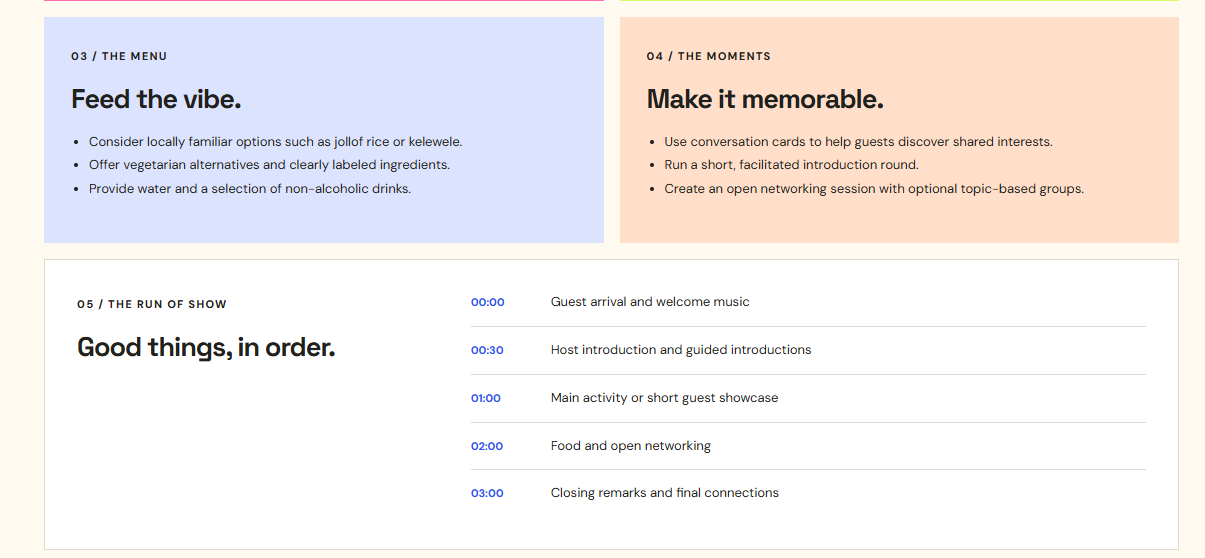
- Event identity: A proposed title, central concept, and creative direction.
- Audience alignment: An explanation of how the concept relates to the intended audience and event objectives.
- Music and entertainment: A suggested musical direction informed by relevant cultural signals.
- Food and activities: Ideas for refreshments, networking, interactive experiences, and event programming.
- Atmosphere and scheduling: A suggested mood, event flow, and schedule.
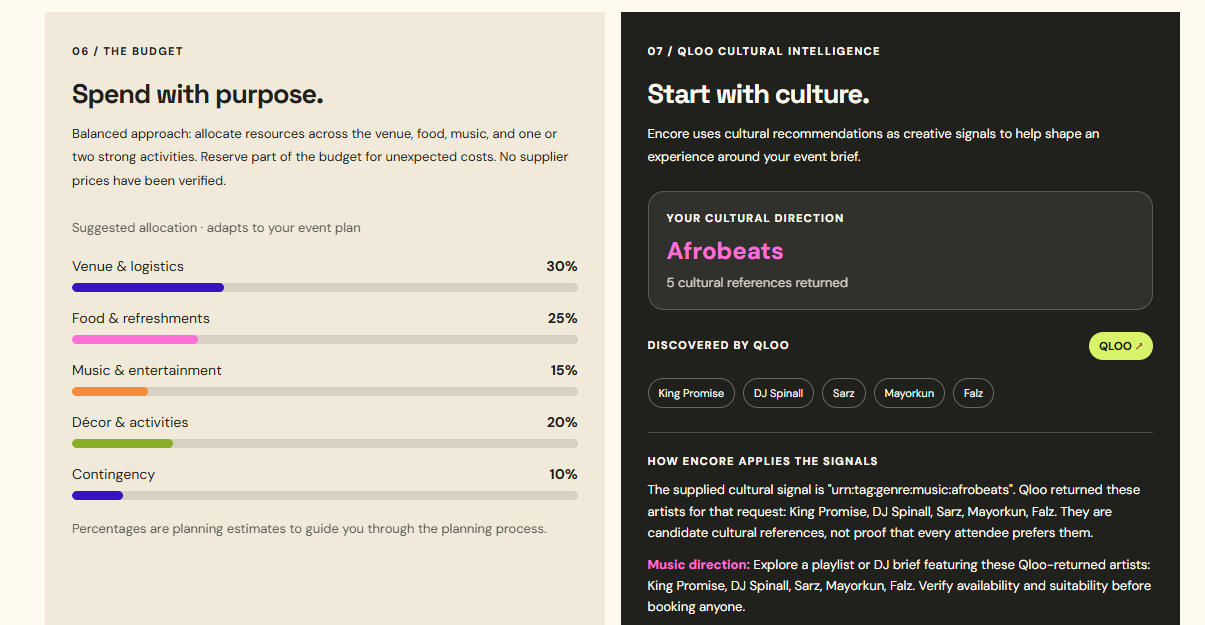
- Budget planning: Illustrative budget allocations across major event categories.
- Cultural rationale: An explanation connecting retrieved cultural signals to the proposed experience.
Rather than treating cultural data as a list of disconnected recommendations, Encore uses it as creative input for a broader event concept. This helps organizers move from a basic event brief toward a more coherent experience.
2. Interactive Refinement to Adapt an Event to Different Needs
Event planning is iterative. Organizers often need to adjust a concept when their priorities, budget, audience expectations, or creative direction change.
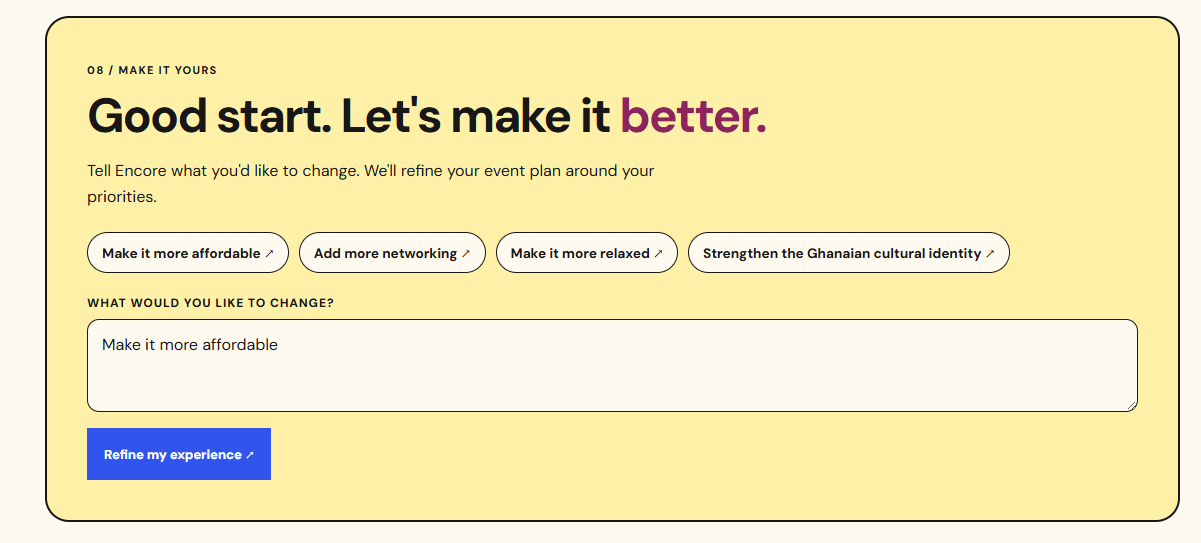
Encore provides interactive refinement controls that let users evolve an existing concept without starting the planning process over.
Organizers can request changes such as:
- Make it more affordable: Adjust the planning direction toward cost-conscious choices.
- Add more networking: Emphasize introductions, group interaction, and opportunities for attendees to connect.
- Make it more relaxed: Shift the atmosphere toward a less formal, more comfortable experience.
- Strengthen the Ghanaian cultural identity: Give greater emphasis to Ghanaian cultural elements and locally relevant creative choices.
After a refinement is applied, Encore updates the relevant parts of the event concept and provides feedback describing the change.
This feature makes event planning more flexible and interactive. Instead of accepting a single generated proposal, organizers can explore different directions and shape the concept around their practical requirements.
3. Decision Trace: Making Creative Decisions Easier to Understand
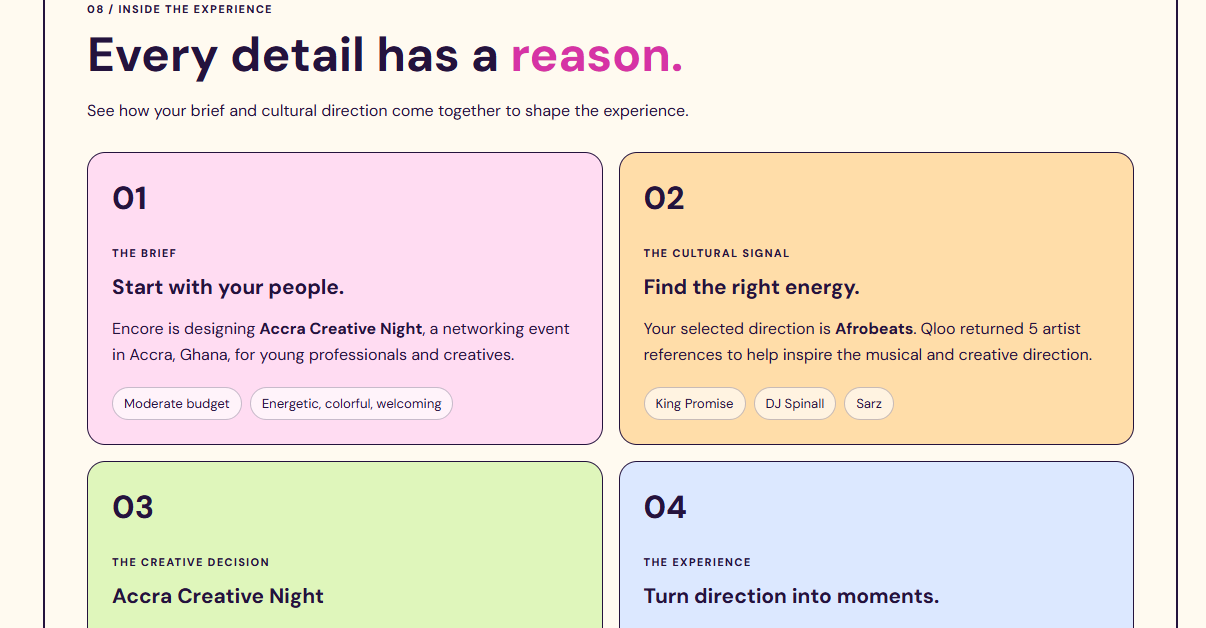
Event recommendations are more useful when organizers can understand why they were proposed. Encore's Decision Trace makes the connection between the original brief, cultural signals, planning decisions, and intended experience more visible.
The trace presents the planning process through four stages:
- Event brief: Captures the organizer's original goals, audience, location, budget, and desired atmosphere.
- Cultural signals: Highlights relevant cultural information retrieved through Qloo.
- Creative decision: Explains how the brief and cultural signals inform choices such as the event's music direction, activities, or atmosphere.
- Proposed experience: Shows how those choices contribute to the overall event concept.
The Decision Trace also reflects supported refinements, helping organizers understand how a change in priorities affects the proposed direction.
By making the reasoning behind recommendations easier to inspect, Encore supports greater transparency and gives organizers a clearer basis for reviewing, accepting, or adjusting the proposed plan.
The trace is an explanation of Encore's planning logic and the relationships represented in the application, not a claim that Qloo itself generated the complete event plan or that every recommendation is objectively optimal.
4. Professionally Designed PDF Export for Sharing an Event Blueprint
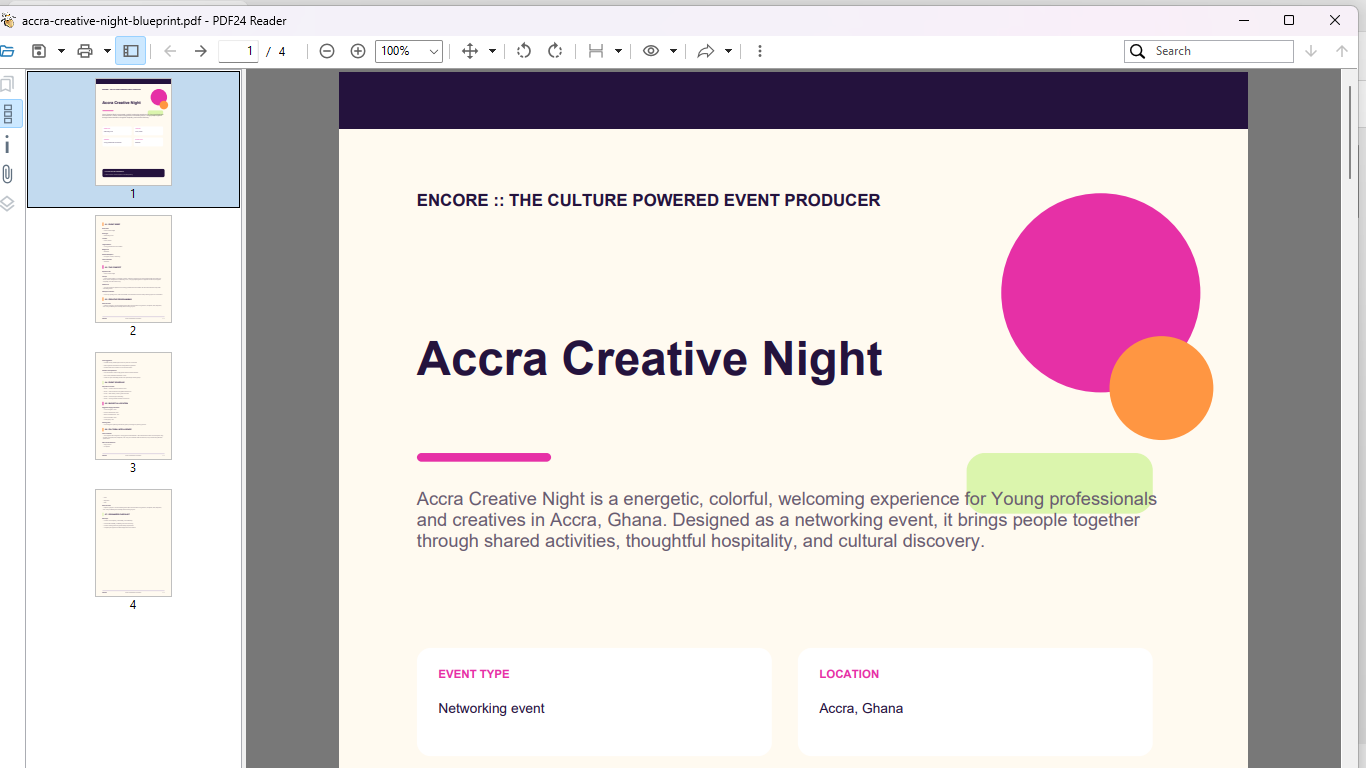
An event concept becomes more practical when it can be shared with collaborators, stakeholders, vendors, or a planning team. Encore turns the generated plan into a professionally designed PDF event blueprint.
The export organizes the concept into a readable document with branded visual styling, structured sections, and clear information hierarchy.
Depending on the generated plan, the blueprint can include:
- Event overview: The event name, type, location, audience, and core concept.
- Creative direction: The concept rationale, audience fit, and atmosphere.
- Programming: Music direction, food suggestions, activities, and proposed schedule.
- Budget allocation: Suggested percentage allocations across venue and logistics, refreshments, entertainment, décor and activities, and contingency.
- Cultural references: The Qloo-informed cultural signals used as inspiration for the concept.
- Organizer checklist: Practical follow-up items to help move the proposal toward execution.
The PDF is designed to be more than a raw text export. It presents the plan as a shareable planning artifact that collaborators can review outside the application.
Because the document reflects the generated concept, it helps bridge the gap between exploring ideas in Encore and discussing an event plan with the people responsible for delivering it.
Budget percentages are planning estimates rather than verified prices or vendor quotations, and the final plan should be reviewed before execution.
How I built it
I built Encore, a culture-informed event planning application that helps organizers transform an event brief into a structured, creative event concept.
I integrated the Qloo API to retrieve cultural signals and used a local rule-based planning engine to turn the event brief and those signals into proposed music directions, activities, schedules, budget allocations, and organizer checklists.
Moreover, I also built interactive refinement features so users can adjust their event concepts, a Decision Trace to show how the brief and cultural signals inform the proposed experience, and a professionally designed PDF export to make the resulting blueprint easy to share.
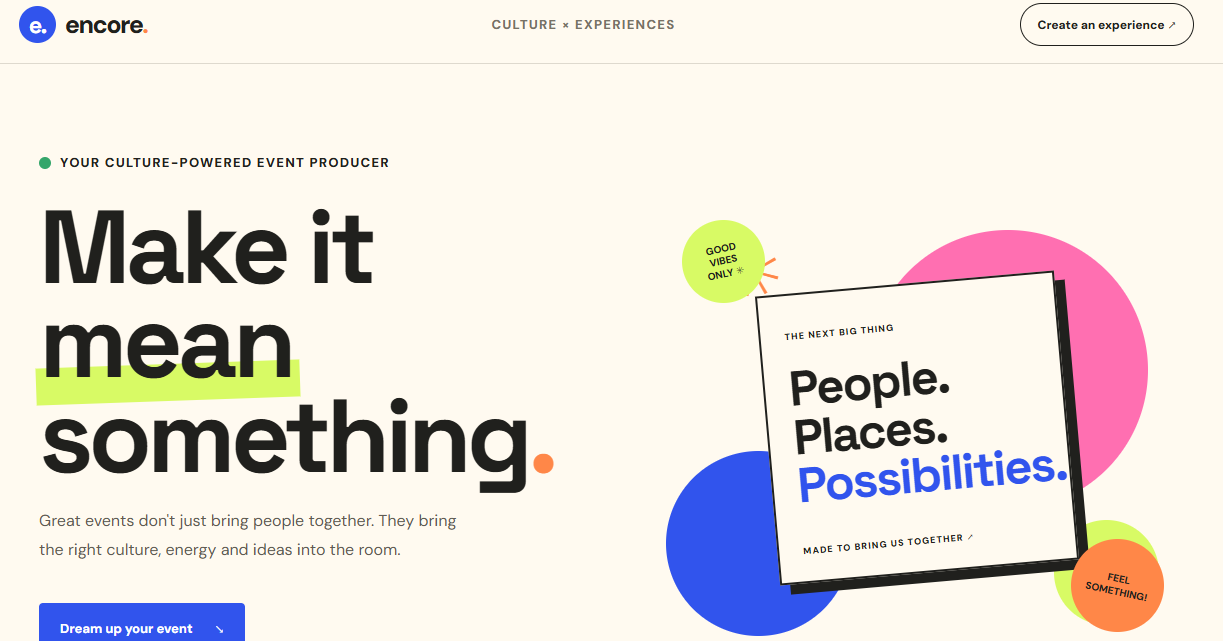
For the interface, I chose a bold, colorful visual identity rather than the conventional dark aesthetic often associated with AI applications. I wanted Encore to feel creative and expressive, reflecting the experiences it helps people design.
Challenges I ran into
One of my biggest challenges was getting the application to build and run successfully on Render. Although it worked locally, deploying it introduced a different set of problems.
I encountered build configuration issues, including Render looking for a package.json file in the wrong directory and later failing to find Vite during the frontend build. I had to troubleshoot the deployment settings, understand how dependencies were installed, and configure the build process correctly for a project with separate frontend and backend folders.
Another challenge was ensuring that the cultural signals retrieved from Qloo contributed meaningfully to the event-planning experience, rather than simply displaying a list of recommendations.
These challenges reminded me that building an application is only part of the journey. Making it work reliably in a production environment requires additional problem-solving, testing, and patience.
Accomplishments that I'm proud of
Honestly, I'm supper proud that I took Encore from an idea to a working application that people can access online.
Some accomplishments that stand out to me are:
- Integrating the Qloo API into a functional event-planning workflow.
- Building an interactive interface with event generation and refinement.
- Implementing a Decision Trace to make the planning process easier to understand.
- Creating a professionally designed PDF export that turns a generated concept into a shareable event blueprint.
- Deploying the frontend and backend together as a live application on Render.
- Working through deployment errors until I could generate an event and successfully export its PDF from the deployed application.
Most importantly, I now have a publicly accessible application rather than just a local project on my computer.
What I learned
This project taught me that developing a useful application involves much more than writing code.
I learned more about integrating third-party APIs, connecting frontend and backend systems, handling environment variables securely, managing dependencies, building for production, and troubleshooting deployment failures.
For the first time, I learned how to use Render to deploy my application and make it accessible online. That was a particularly meaningful milestone for me. I had to work through real deployment errors, understand what the logs were telling me, and adjust the configuration until the application built successfully.
I also learned to pay closer attention to the role an API plays in a product. Integrating an API is not enough on its own; the real value comes from how its capabilities are translated into a useful, coherent experience for the user.
What's next for Encore
Encore is a starting point, not a finished destination.
My next steps are to strengthen the connection between Qloo's cultural intelligence and the creative decisions Encore makes, improve the transparency and usefulness of the Decision Trace, and continue testing the application with realistic event briefs.
I would also like to explore richer cultural discovery, more audience-specific planning options, and ways to help organizers turn generated concepts into practical event plans with greater confidence.
Ultimately, I want Encore to demonstrate how cultural intelligence can become more than data or recommendations. It can become a starting point for designing experiences that resonate with people.
My Final Reflection
Building this application challenged me to move beyond local development, solve unfamiliar deployment problems, and put a working application online for others to try.
It wasn't a completely smooth journey, but that's part of what made the experience valuable. I finished with a live application, a better understanding of the development-to-deployment process, and new skills I can carry into my next project.
You can try Encore for a better culture event planning experiance!
Built With
- express.js
- node.js
- qloo
- react
- render
- vite
