Inspiration
Right now, musicians run on word of mouth. No central hub. No easy way to find gigs, scout collaborators, or see what's out there. Just hope someone knows someone. Encore changes that — with full artist profiles, smart matching based on your preferences and availability, and a marketplace where opportunity finds you.
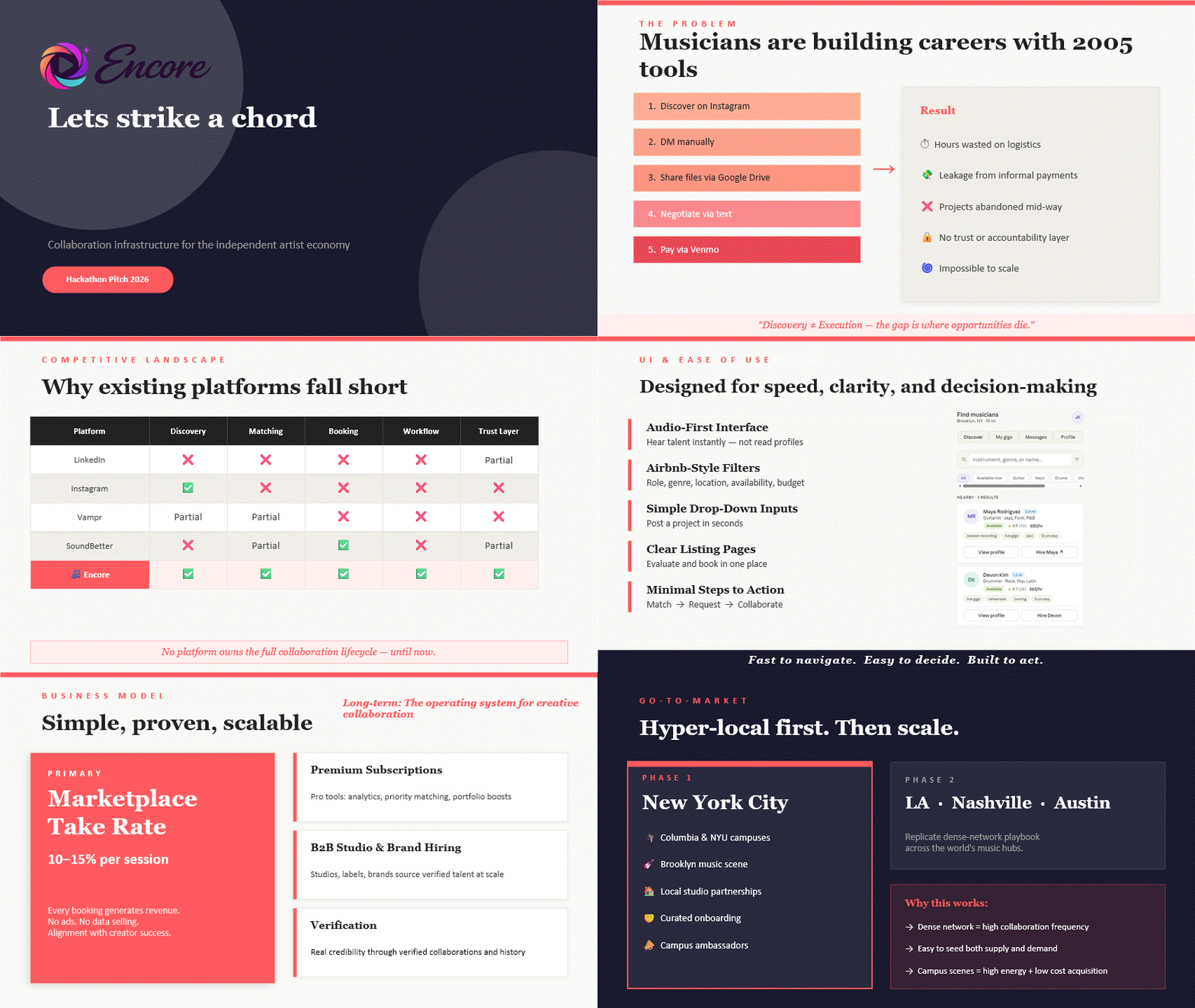
Today, musicians are building careers using completely fragmented tools. They discover collaborators on Instagram, message manually, share files on Google Drive, negotiate over text, and pay through Venmo. The result is hours lost to logistics, unreliable payments, and projects that never get finished.
At the same time, the opportunity is massive. The global music industry is over $30 billion, the creator economy exceeds $100 billion, and there are more than 50 million independent musicians — all collaborating without a structured platform.
Existing platforms don’t solve this. LinkedIn isn’t built for creativity. Instagram enables discovery but nothing beyond that. Tools like Vampr and SoundBetter only solve pieces of the workflow. No one owns the full collaboration lifecycle — until now.
What it does
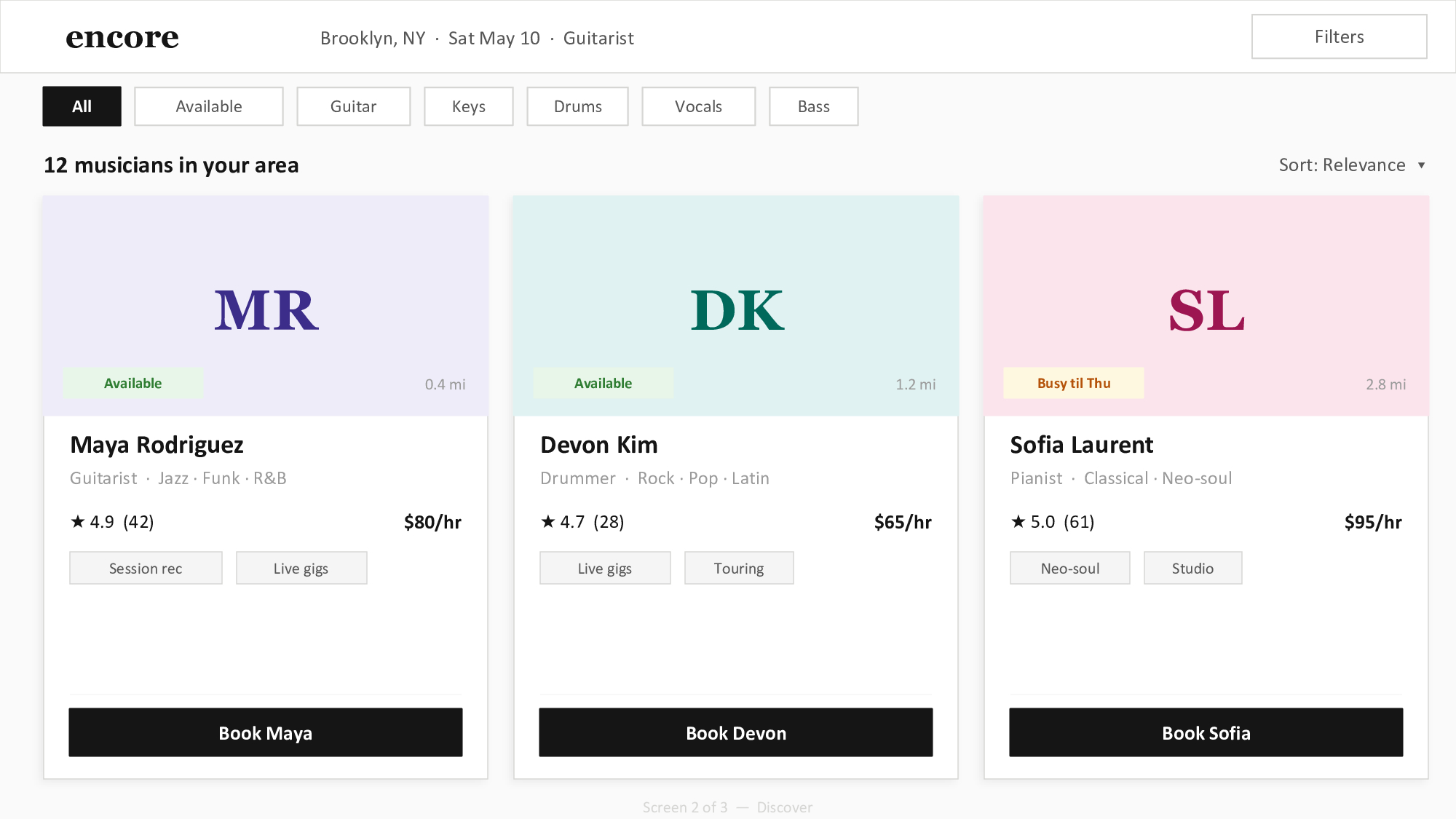
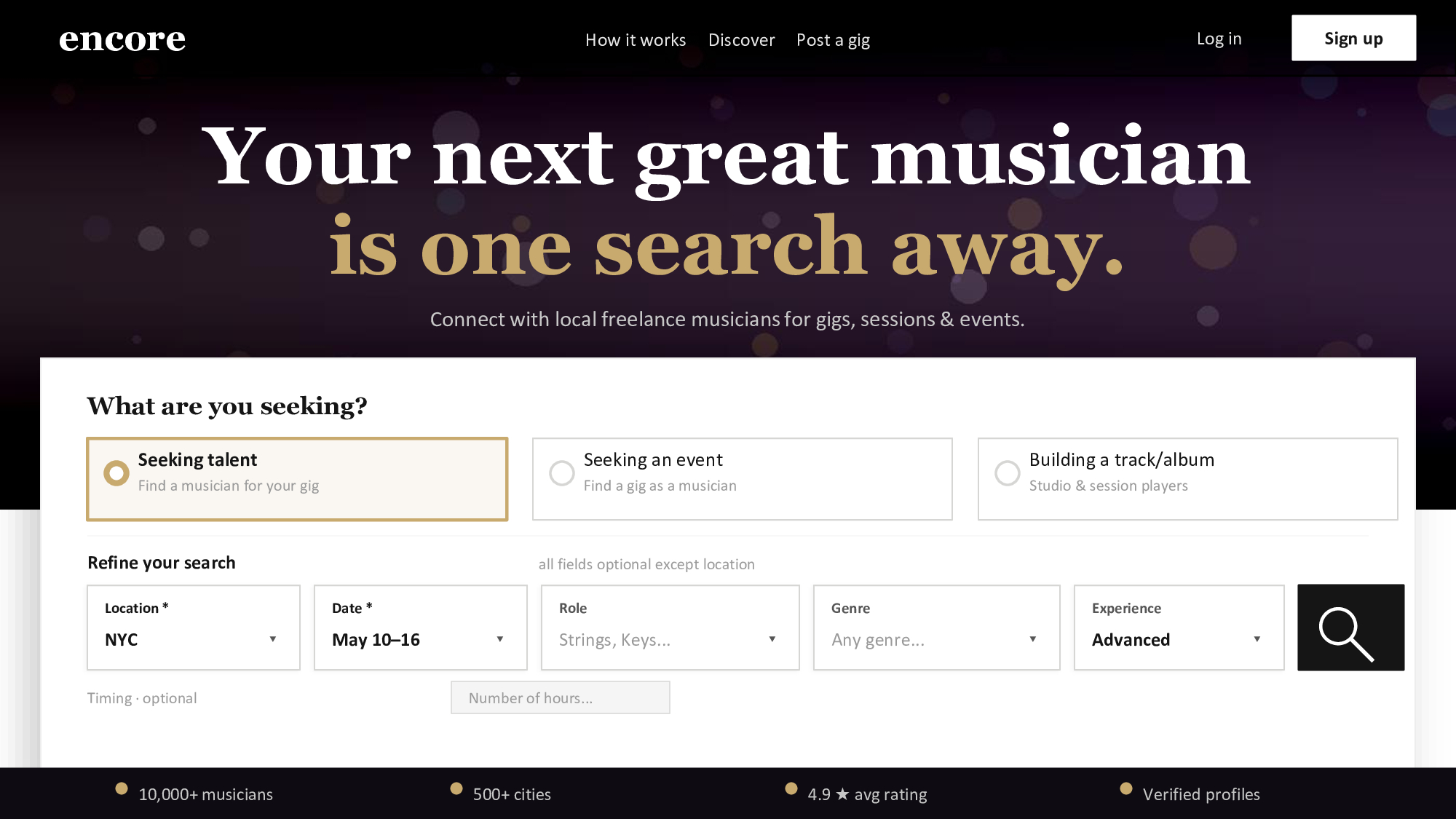
Encore brings everything into one place: discover, match, book, and collaborate. With an audio-first interface and Airbnb-style filters, artists can go from search to collaborator in seconds.
Our business model is simple — we take a 10 to 15 percent fee per session, aligned with creator success, and layer in premium tools and B2B hiring over time.
We start in New York, focusing on dense communities like Columbia, NYU, and the Brooklyn music scene, then scale to major hubs like LA, Nashville, and Austin.
Encore isn’t just another platform — it’s the operating system for creative collaboration.
How we built it
We built Encore as a full-stack web application with a Flask backend and React frontend. The backend serves as an API layer with two responsibilities: proxying external media integrations (YouTube Data API v3 for video stats and embeds, SoundCloud oEmbed for audio players, and TikTok embeds) and managing our own data layer using SQLite for musician profiles, bookings, reviews, and availability. The frontend is a single-page React app built with Vite, styled with a custom dark theme inspired by the aesthetic of recording studios. We used a state-based routing pattern to create four core views — Discover, Profile, Booking, and Dashboard — all making live fetch calls to our Flask server. The entire system runs locally with the backend on port 8000 and the frontend on port 5173, communicating via REST endpoints with CORS enabled.
Challenges we ran into
Port conflicts were our first roadblock — macOS AirPlay was occupying port 5000, which silently intercepted our Flask requests. Debugging that cost us valuable time before we discovered the issue and switched to port 8000. CORS and URL encoding problems caused our SoundCloud integration to fail initially, requiring us to restructure how the backend called external APIs. Coordinating between four team members working simultaneously on different parts of the stack meant we frequently hit Git merge conflicts and had to rebase. Safari's date and time inputs also behaved differently than expected, preventing our booking form from registering user input until we adapted our validation logic.
Accomplishments that we're proud of
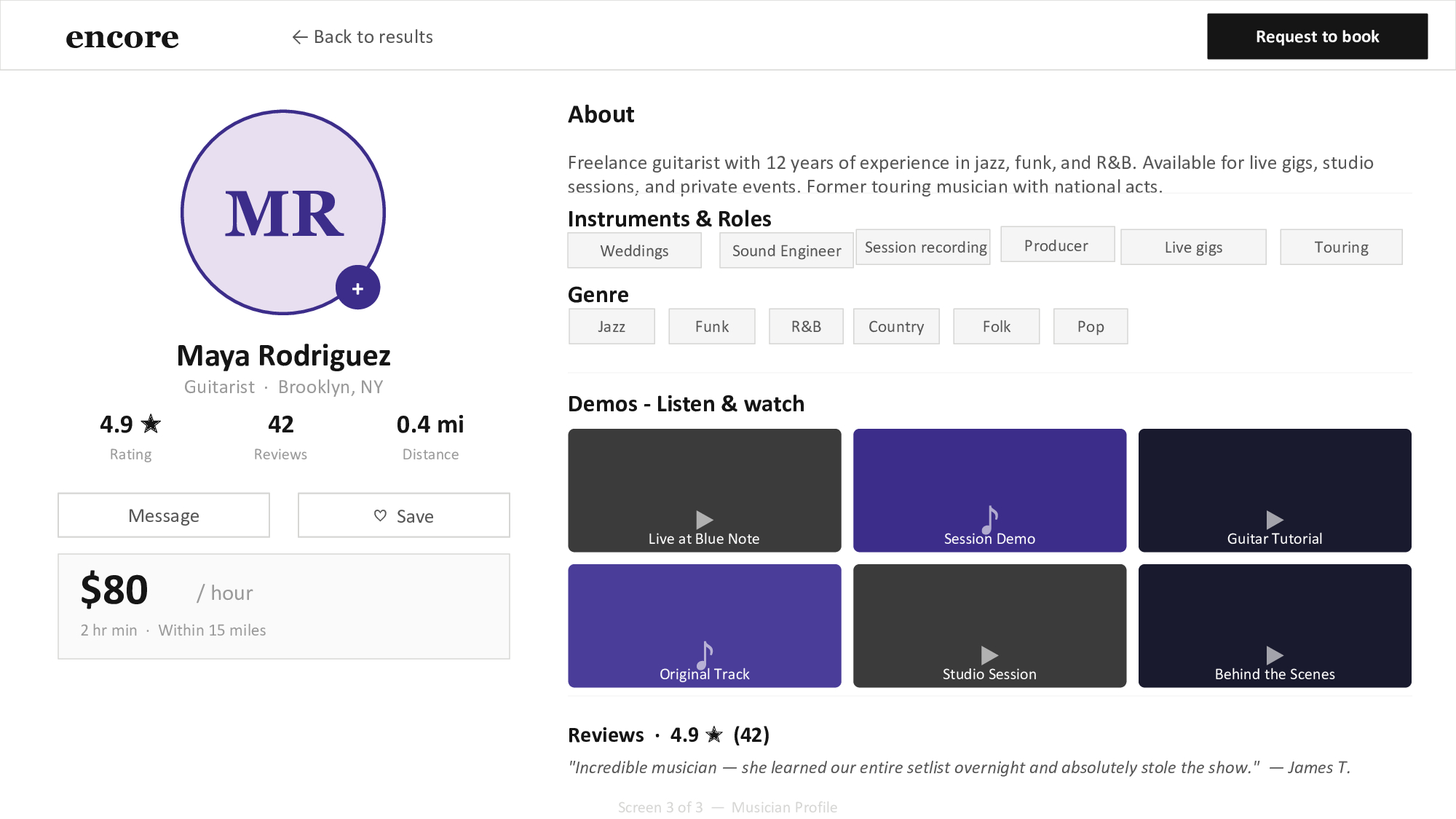
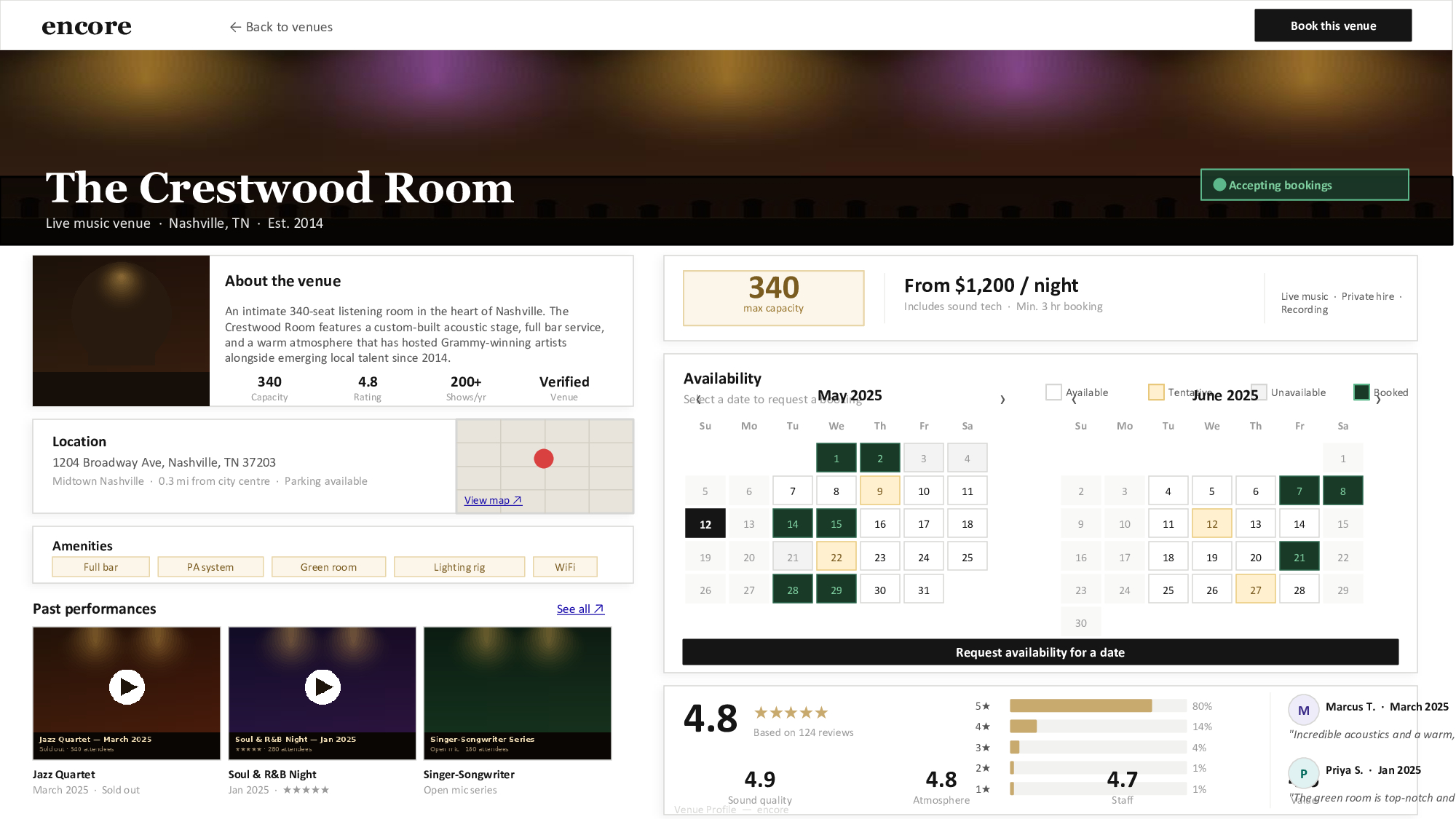
We built a working end-to-end product in under six hours. A venue can search for musicians by instrument, genre, and neighborhood, view their profiles with embedded YouTube and SoundCloud demos, read reviews from past collaborators, send a booking request with date, time, and cost estimate, and manage those requests from a dashboard. The API integration layer is clean and extensible — adding Spotify or Bandcamp would follow the same pattern. We seeded the platform with 12 realistic NYC musician profiles, 22 reviews, and real availability data to demonstrate what the network looks like with actual density. Most importantly, we identified and addressed real pain points that existing platforms like Vampr have failed to solve.
What we learned
We learned that building a marketplace is fundamentally a data design problem. Getting the relationships right between users, profiles, reviews, bookings, and availability — and serving that data through clean API endpoints — matters more than flashy features. We also learned the practical value of building a backend API layer to proxy external services: it eliminates CORS issues, centralizes API key management, and gives the frontend team a single consistent interface to code against. On the product side, our research into Vampr's user complaints taught us that local density, verification, and a clear path from discovery to transaction are the three things musician networking platforms consistently fail to deliver.
What's next for Encore: A Networking Marketplace for Musicians
Our immediate roadmap starts with real authentication and user-generated profiles so musicians can sign up and build their own presence. From there, we want to integrate Stripe for payment processing so booking requests include a deposit and musicians get paid through the platform. Google Calendar sync would let musicians manage their availability from tools they already use. Longer term, we see Encore expanding city by city — starting with NYC, then LA, Nashville, Atlanta, and Chicago — building local density before going national. We also want to add a recommendation engine that matches musicians to gigs based on their genre, instruments, past ratings, and location proximity. The vision is to become the platform where every working musician in America gets their next gig.
Built With
- claude
- colab
- github
- javascript
- python
- react
- soundcloud
- spotify
- tiktok
- vscode
- youtube

Log in or sign up for Devpost to join the conversation.