-
-
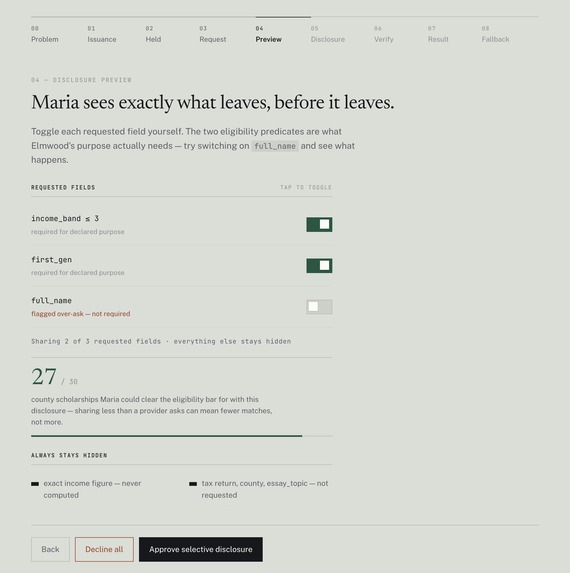
Disclosure Preview
-
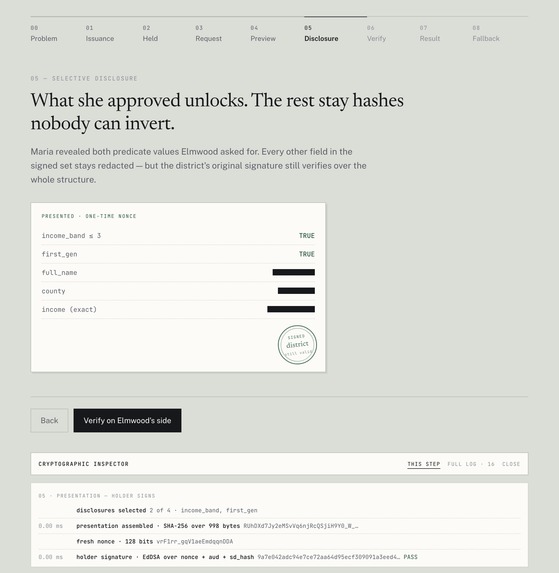
Selective Disclosure
-
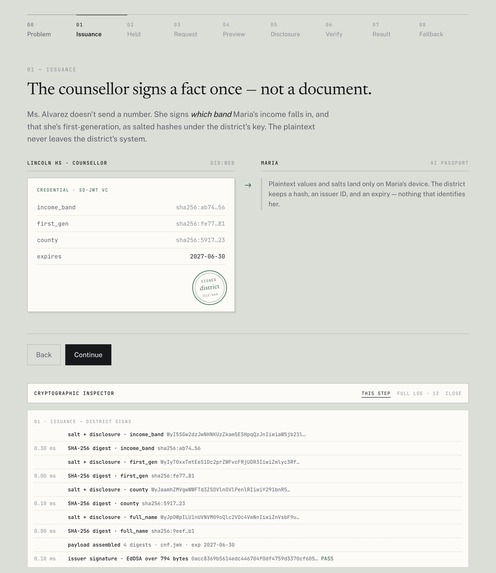
Issuance
-
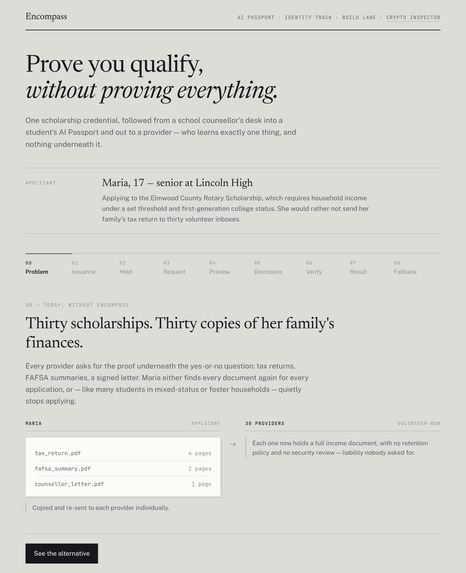
Problem
-
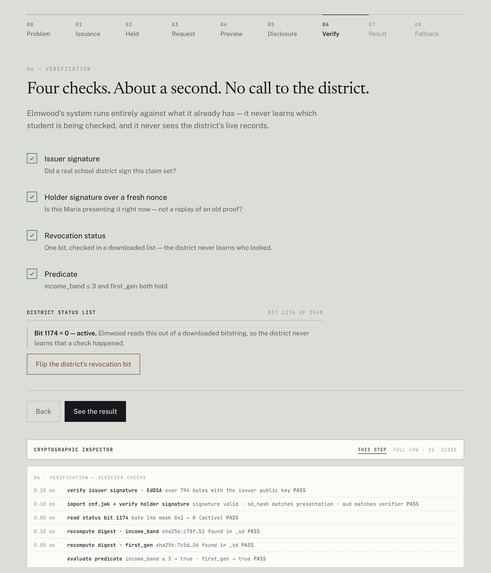
Verification
-
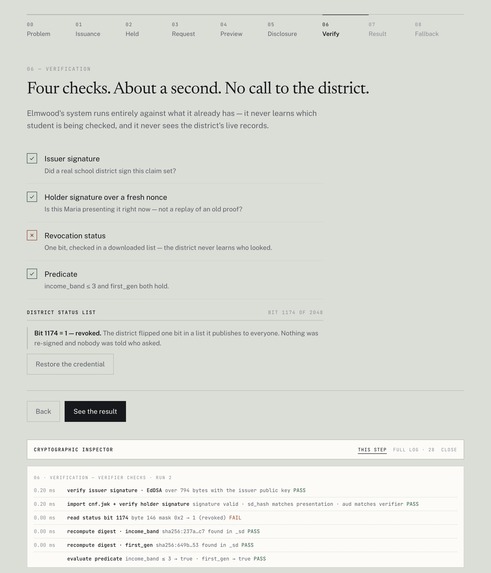
Revoked
-
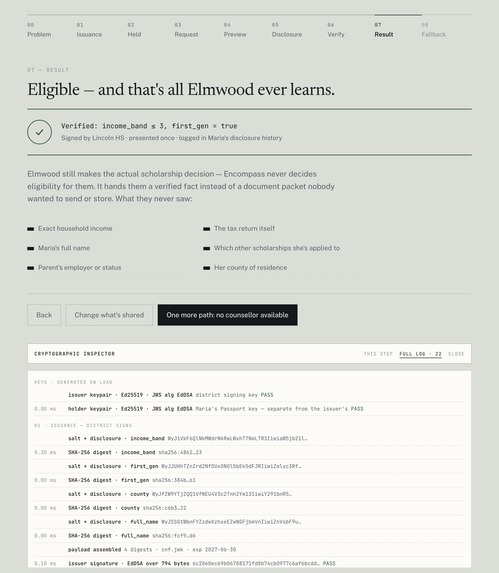
Result and Full Log
-
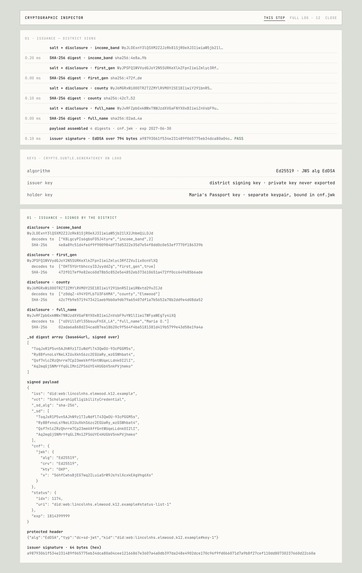
Signed Artifact
Track: Identity - Lane: Build
Inspiration:
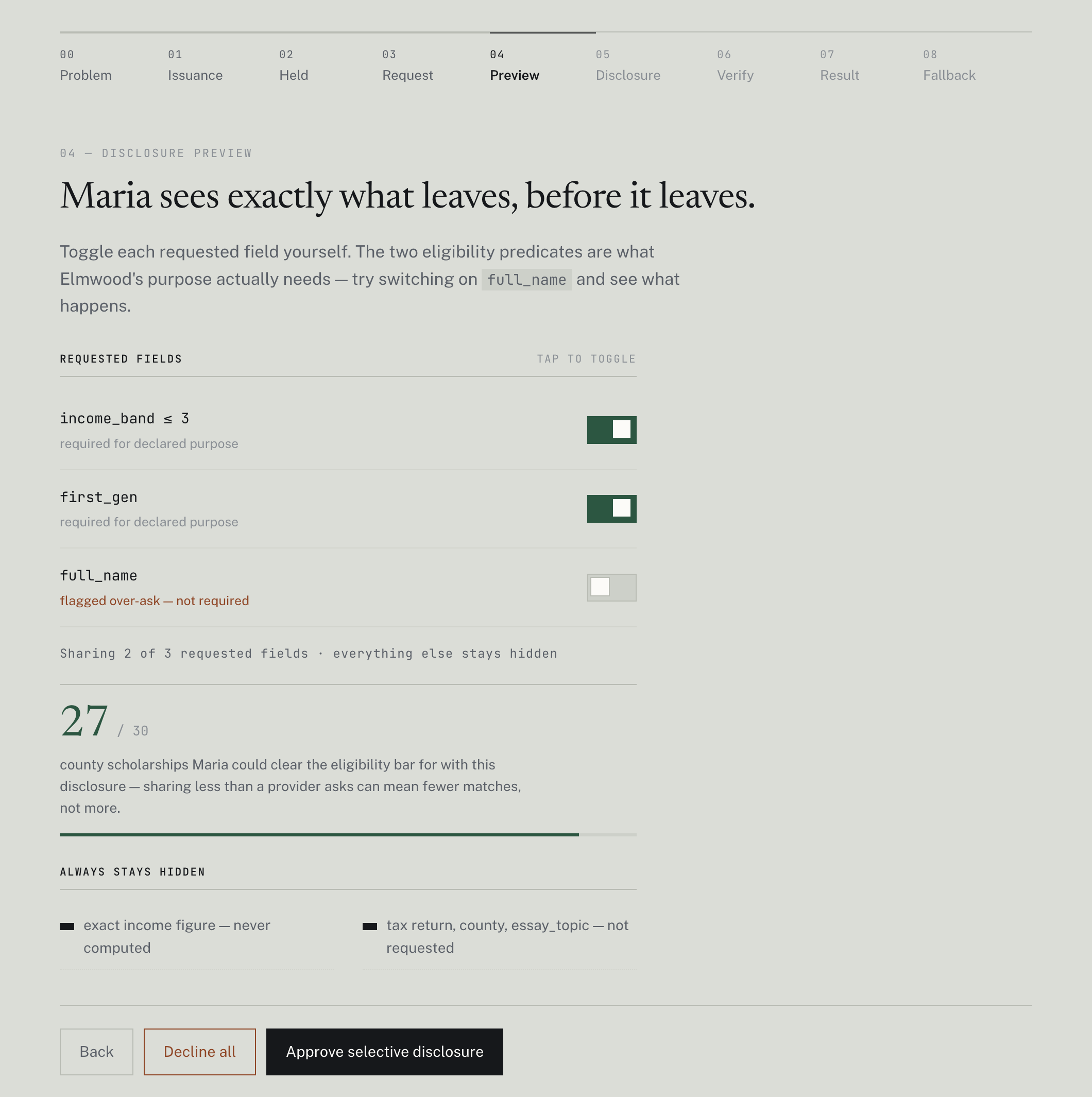
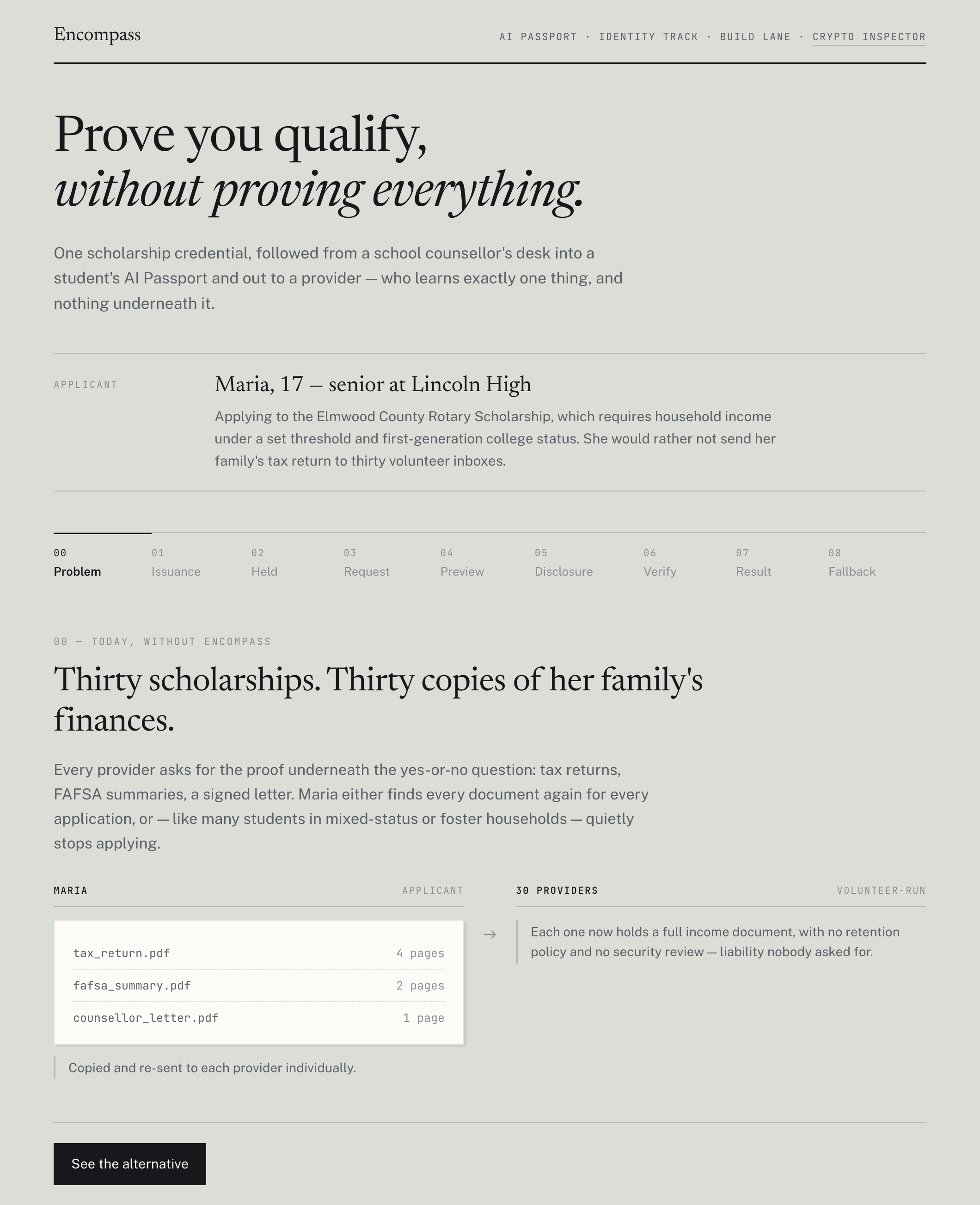
Maria, a seventeen-year-old at Lincoln High, needs financial aid. Eligibility requires yes-or-no answers. Is her household income under a specific limit? Is she a first-generation student? Since providers cannot directly check these boxes, they demand intrusive documents like tax returns. Maria must assemble these packets and send them to thirty different scholarships, leaving her family's sensitive financial data in thirty insecure, volunteer-run inboxes. Providers dislike this liability, and vulnerable students unable to produce these documents quietly stop applying.
Maria is an example, but the problem isn't: we're high school students ourselves, and we've assembled this project for our own applications.
The FUTURE Act Direct Data Exchange solved this federally by pulling verified IRS data into FAFSA without transcripts, yet local organisations still require PDFs. We are giving smaller providers access to an existing trust model.
What it does:
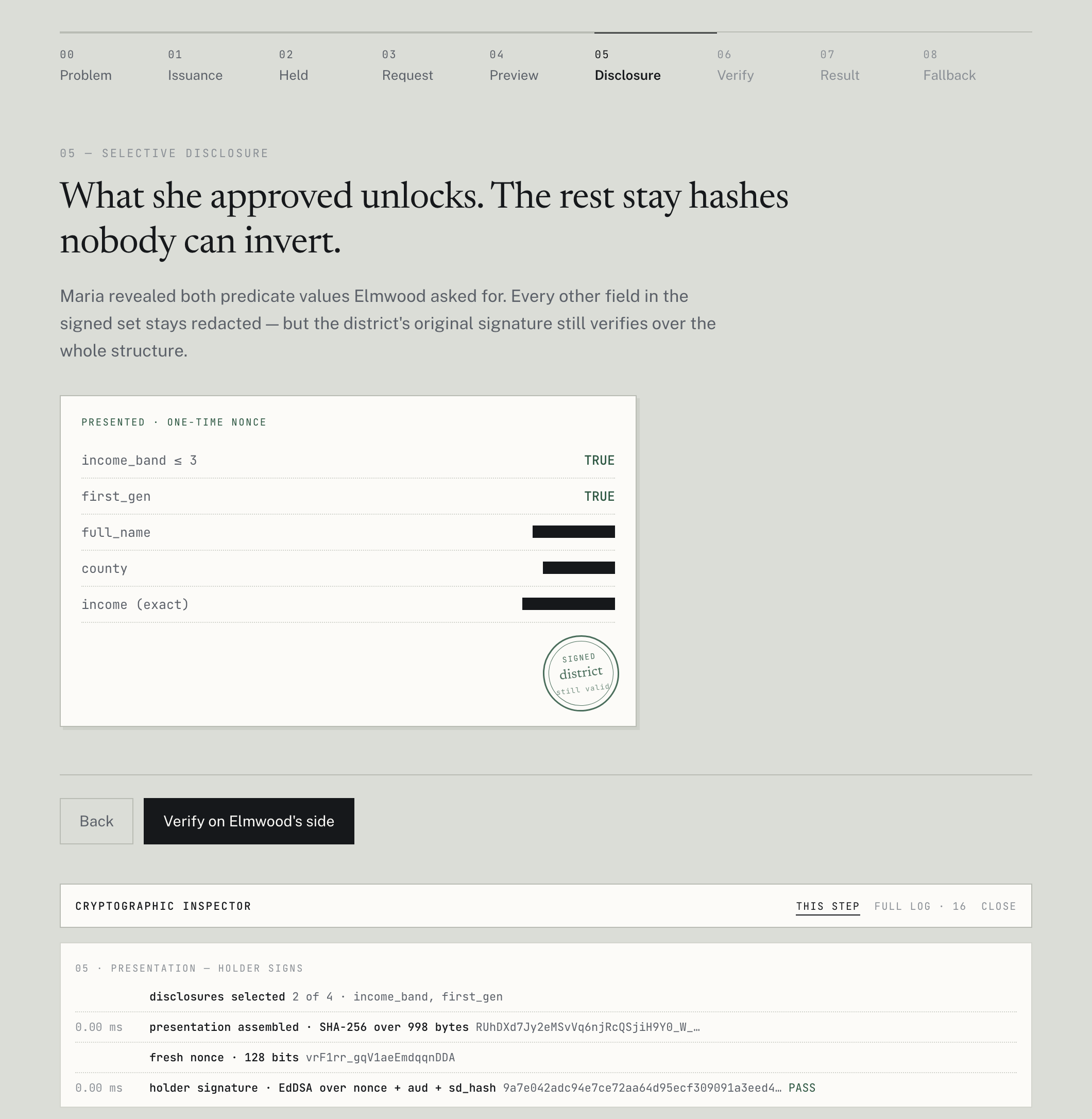
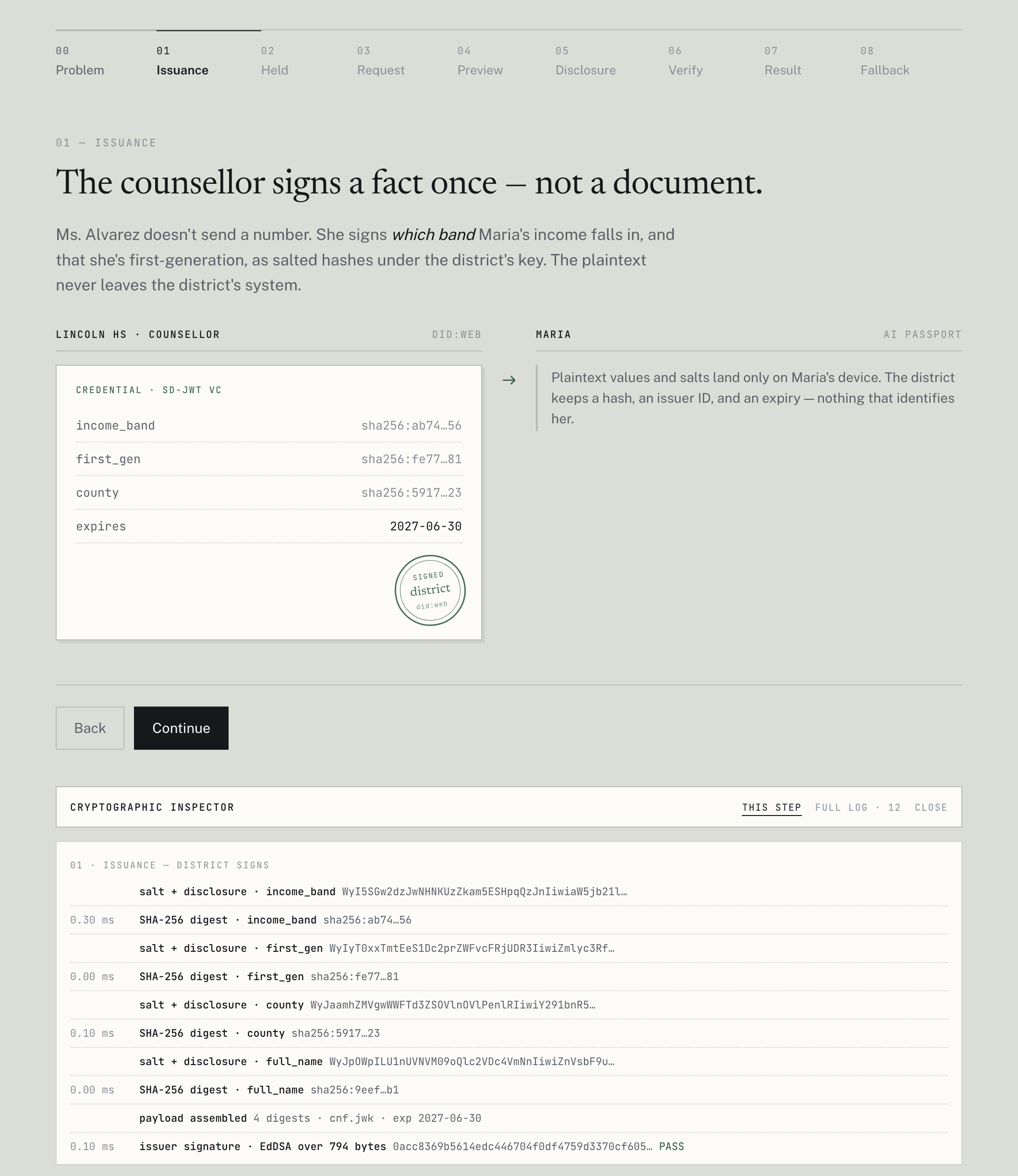
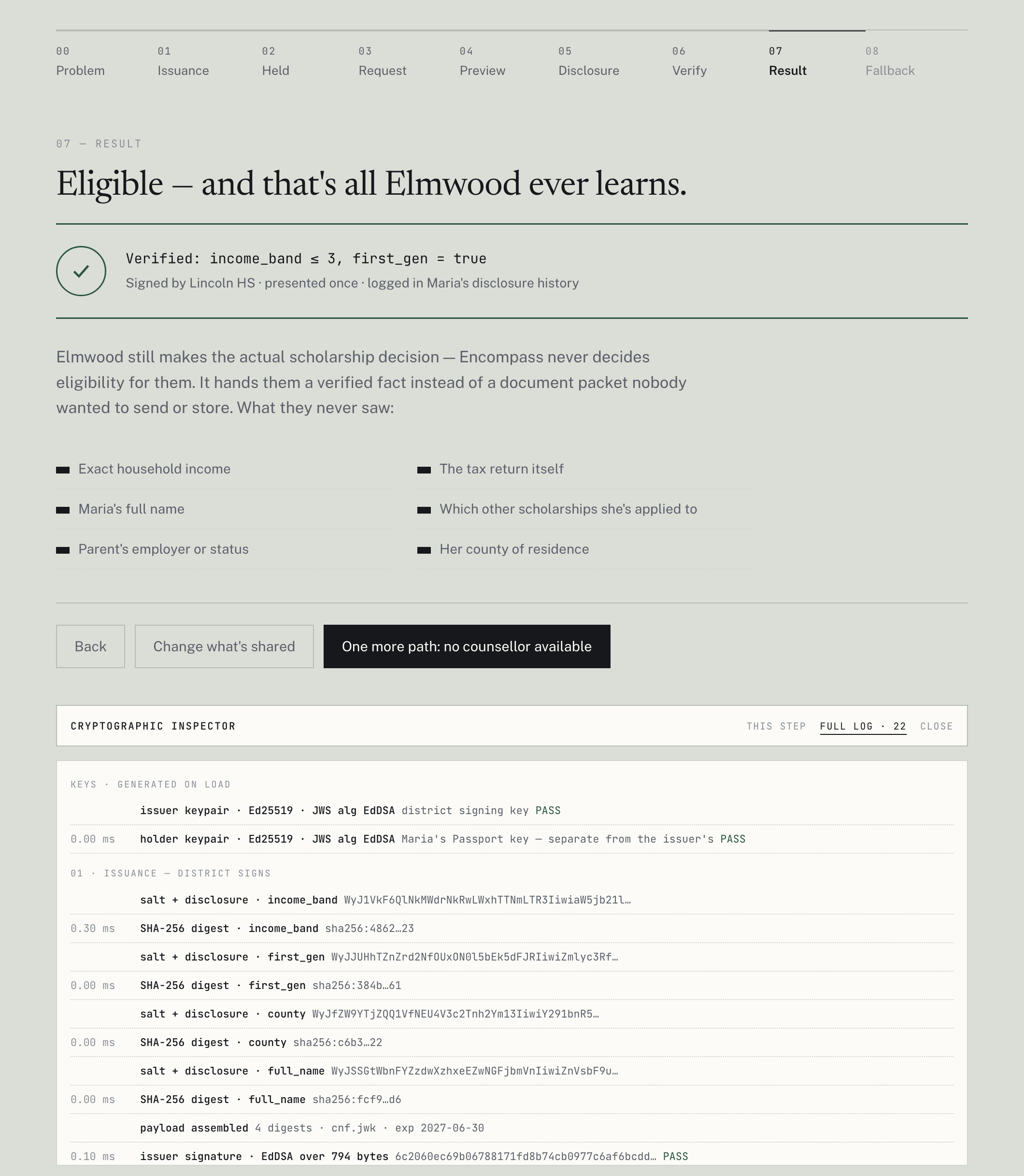
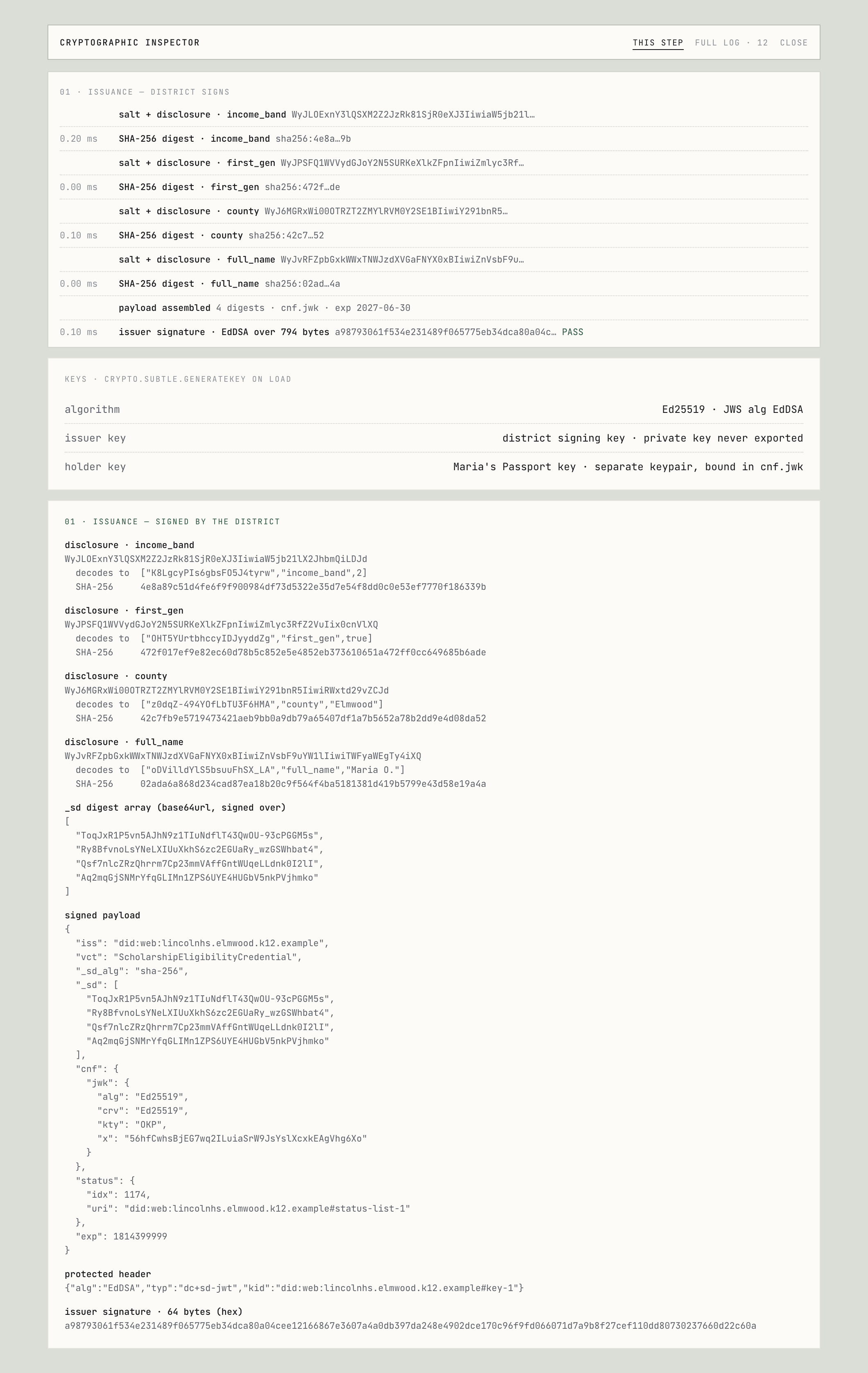
Encompass helps students like Maria prove eligibility to low-trust verifiers without revealing underlying data. A counsellor certifies a fact (income band, first-generation) once, signing it with a district cryptographic key, stored in the student's AI Passport. When asked if a student meets a band, the Passport answers only "yes."
Novel outcomes:
-No leakable storage: Claims remain encrypted on personal devices. Servers hold only hashes, issuers, and expiry dates.
-Visible over-asking: Passports compare requests against declared purposes, logging over-asks.
-Clear boundaries: Distinguishes verified claims from self-asserted text.
How we built it:
As a Build Lane entry, we implemented a working browser prototype of the flow utilising W3C Verifiable Credentials in SD-JWT VC format. Districts sign salted hashes, preventing brute-forcing low-entropy fields. Students hold values and salts, revealing only requested data.
Districts use did:web for identity without blockchains. Counsellors authenticate via passkeys under district authority. We issue the band, not the exact number, enabling selective disclosure without complex zero-knowledge range proofs. True ZK cryptography is reserved for the optional NFC passport chip tier, built on Self (formerly OpenPassport), scanning physical e-passports for on-device age and citizenship proofs.
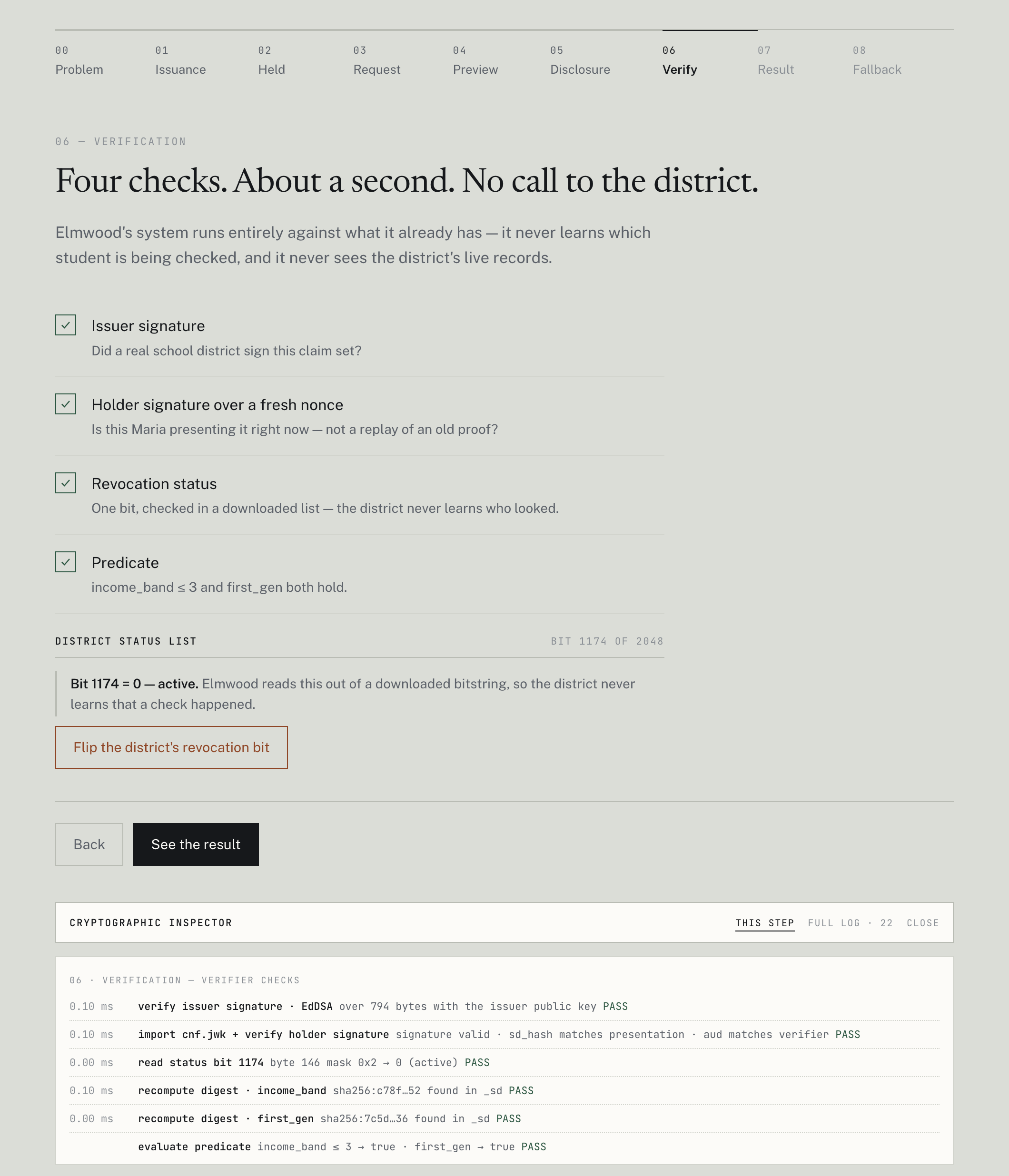
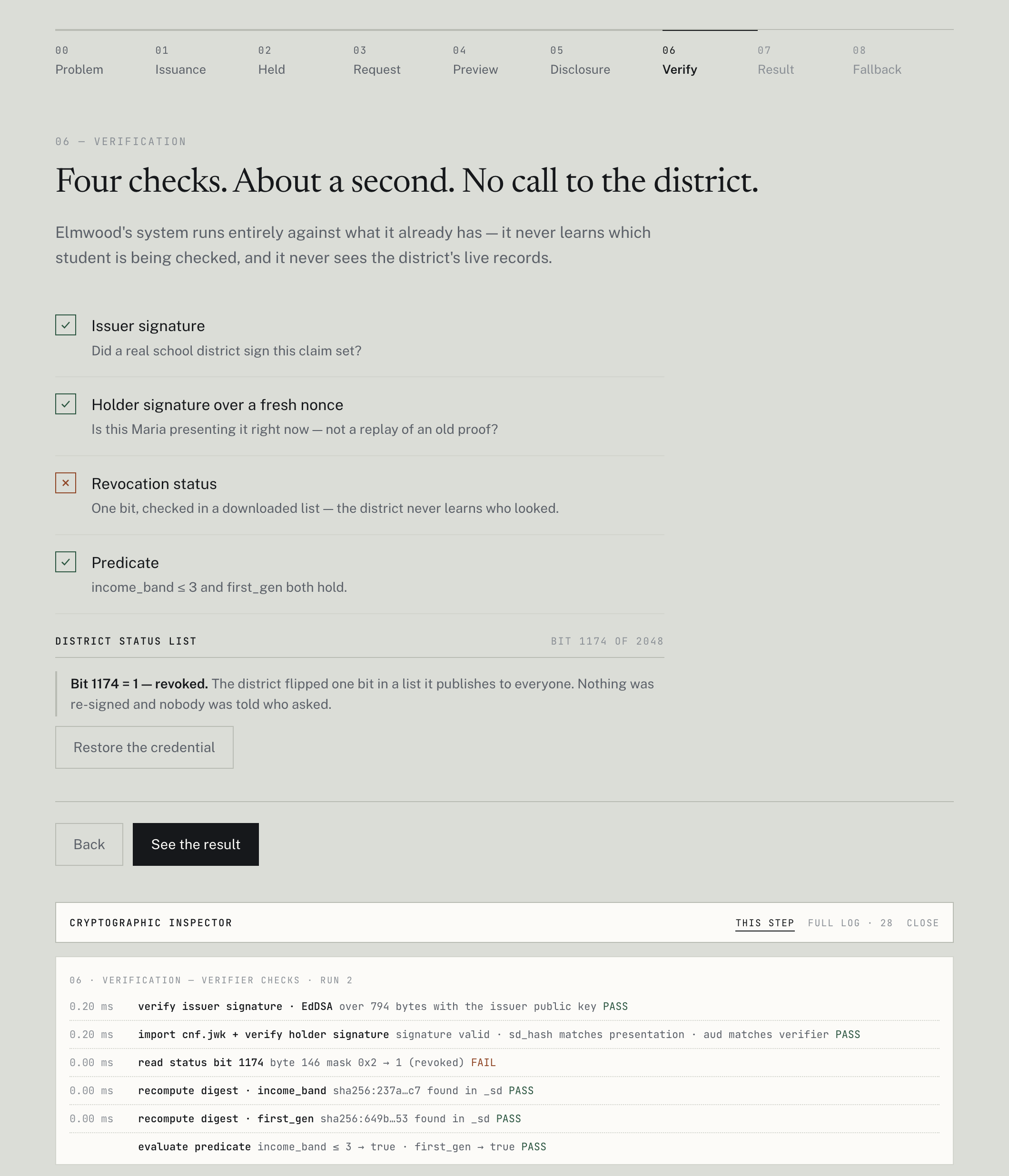
Verification takes one second via four checks: issuer signature, holder signature over a fresh nonce, active status, and predicate clearance. Verifiers check compressed lists locally. Integration scales from QR-coded letters to script tags to existing scholarship platforms.
Who controls what:
-Student controls disclosure: Nothing leaves unapproved; refusals are logged.
-District controls validity: Can revoke claims via an instant bit flip. Credentials have academic-year expiries.
-Never revealed: Exact income, tax returns, parent names, employers, or immigration status.
Challenges and Risks:
The primary challenge is verifier trust. Why would a provider accept this? The solution is that the Passport is merely a carrier; providers trust the district's signature exactly as they already trust a traditional counsellor letter.
We also built structural mitigations for three critical risks:
-Coercion: A parent or guardian could force a student to share data. Because the Passport only proves narrow predicates, forced disclosures yield simple booleans rather than full financial histories.
-Stigmatisation: Self-asserted claims could render students visibly second-class, creating a new way to sort marginalised students. Tiers must always be presented strictly as provider requirements, never as student ratings.
-Exclusion: Hardware NFC proofs heavily favour wealthier households. Therefore, the counsellor tier remains the primary path, and the NFC chip tier is strictly optional.
Accomplishments, Lessons, What's Next:
Finding the FA-DDX precedent showed this trust model already works at federal scale. We learned documents are flawed trust mechanisms, selective disclosure requires active design pressure, and portability launders provenance — a claim that travels and arrives looking more official at every stop.
Next, we will expand our prototype into a single-county pilot. Since the same district issues apply to every provider in the county, there is no cold-start problem. Success is measured by counsellor time per student and by increased completion among marginalised applicants. Afterwards, we integrate with centralised scholarship platforms to reach thousands simultaneously.
This entry is designed for a first-generation student applying for financial aid who needs to demonstrate eligibility to a small scholarship provider without exposing their family's complete financial records.
Built With
- bitstring-status-list
- claude
- css
- did-web
- ecdsa
- ed25519
- html
- javascript
- key-binding-jwt
- nfc
- sd-jwt-vc
- selective-disclosure
- self-protocol
- sha-256
- w3c-verifiable-credentials
- web-crypto-api
- zero-knowledge-proofs

Log in or sign up for Devpost to join the conversation.