-
-
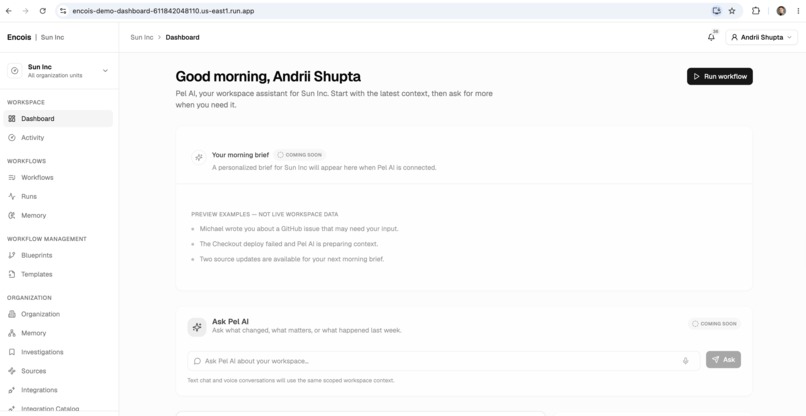
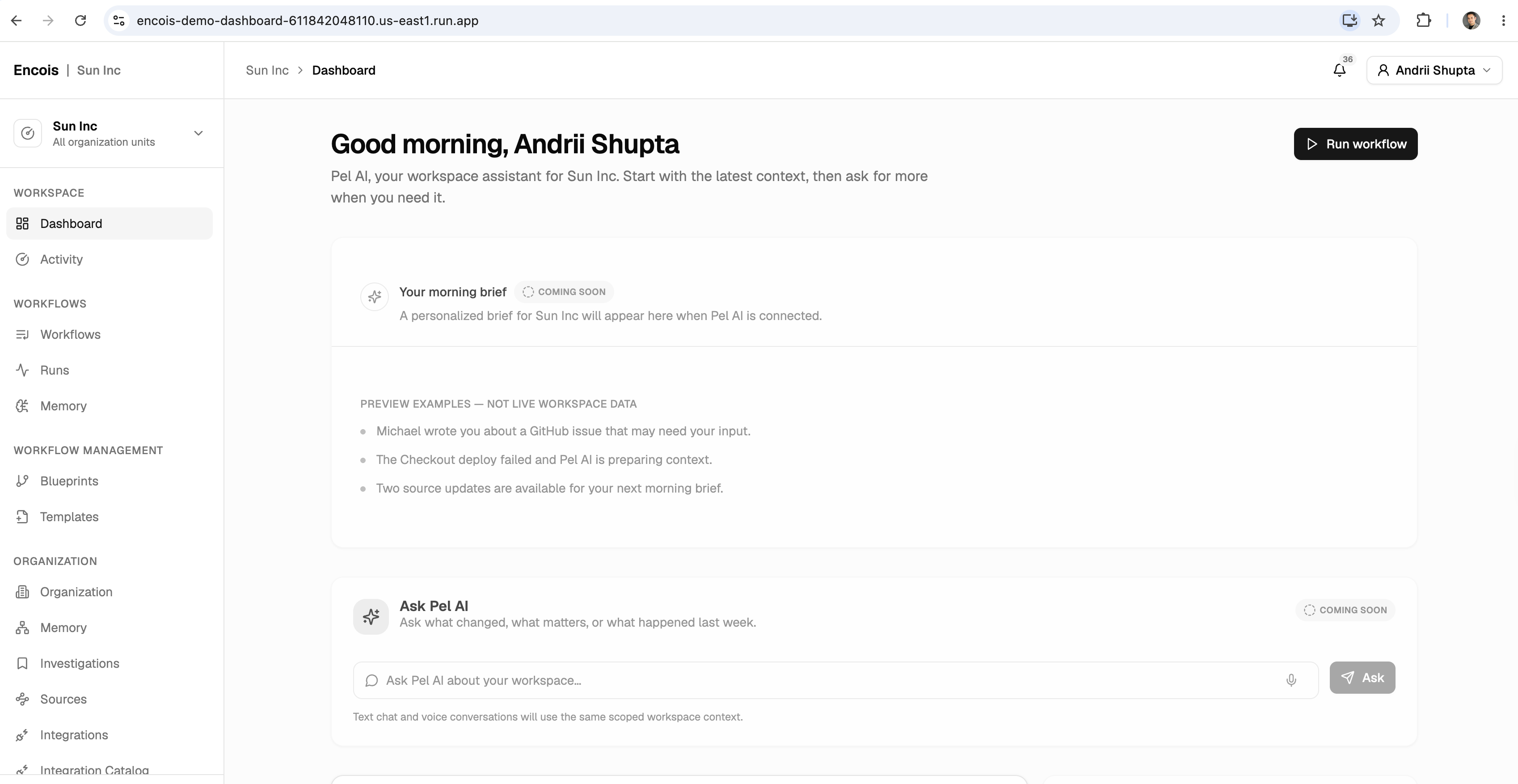
Dashboard
-
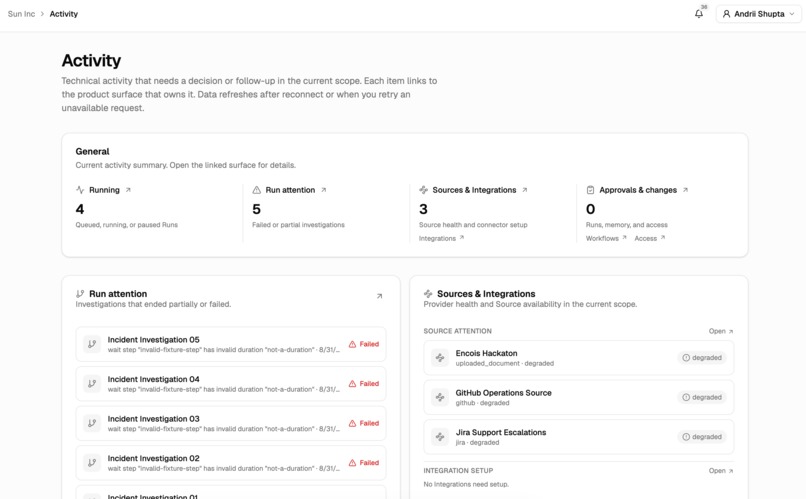
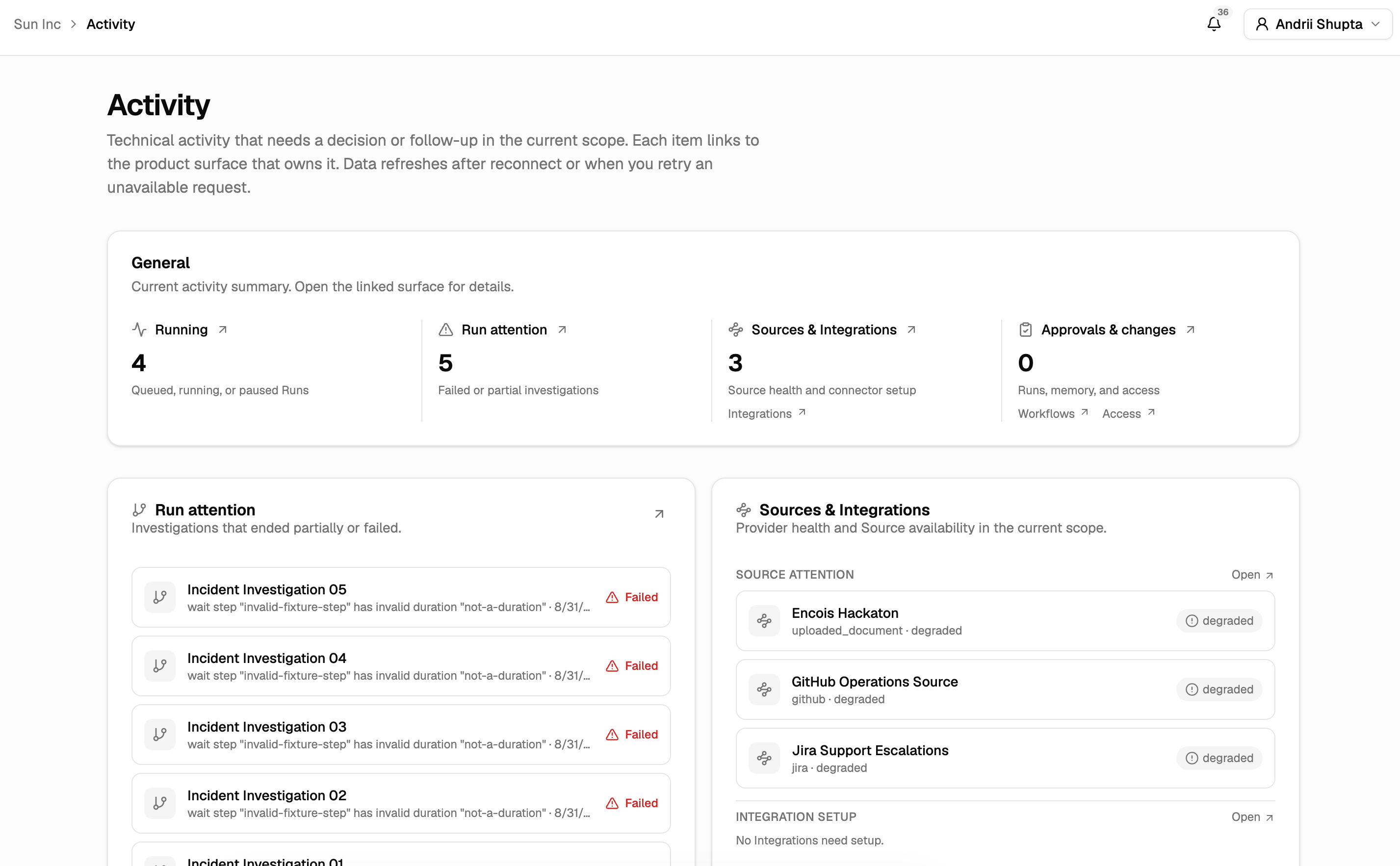
Activity
-
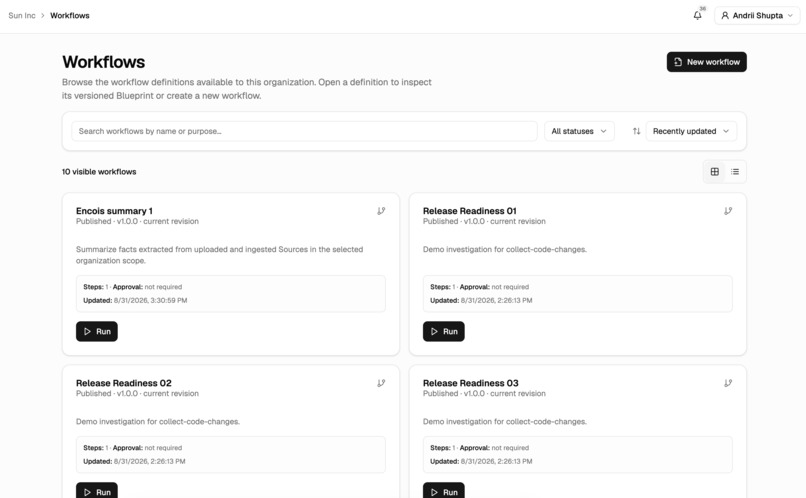
Workflows
-
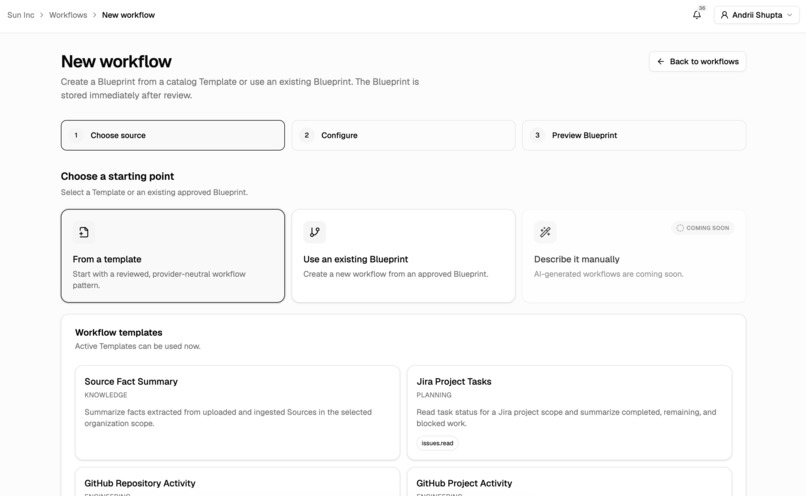
New Workflow
-
Runs
-
Run Example
-
Organization units
-
Organization Memory
-
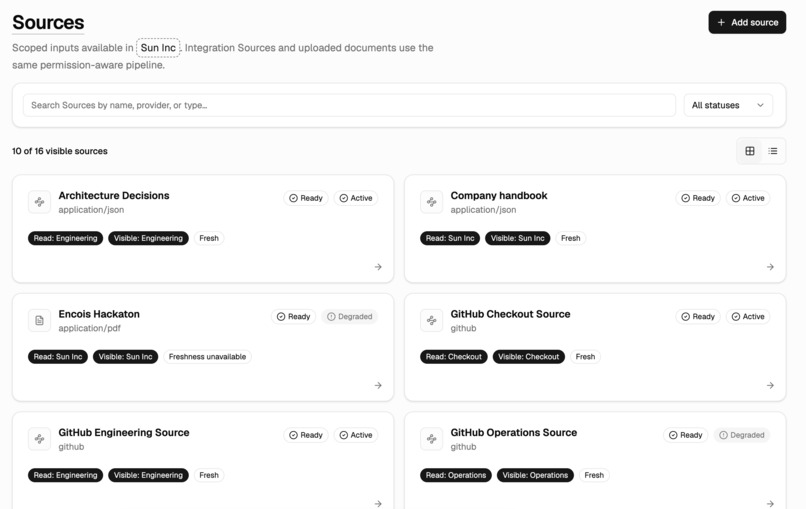
Sources
-
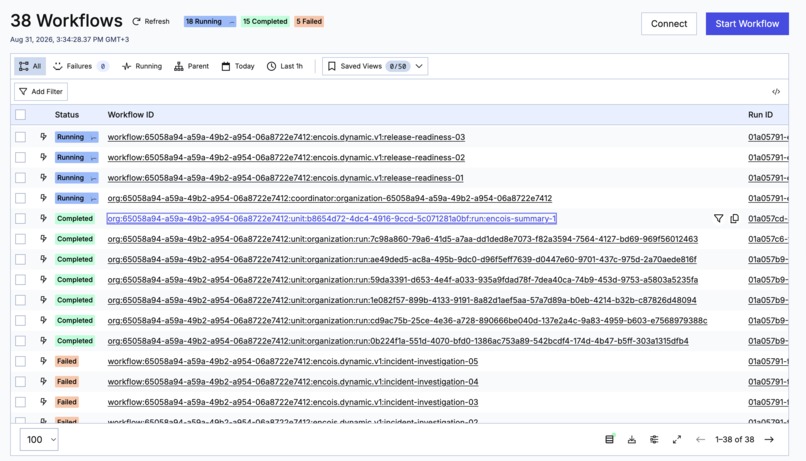
Temporal Workflows
Inspiration
When I was thinking about what to build, I focused on how much important information is spread across a company.
To complete a task, people often need to ask different managers and team members about documents, tickets, deployments, decisions, and ongoing work. One manager may know a lot, yet they still need to collect information from many people and systems.
AI agents can help gather information, but they may lack the full company context or provide answers without clear evidence. I wanted to build a system that brings this information together, keeps it secure, and helps people make better decisions.
This led me to the idea of building a Palantir-like intelligence system for SMBs. The name Encois comes from Enterprise Context Intelligence System.
What it does
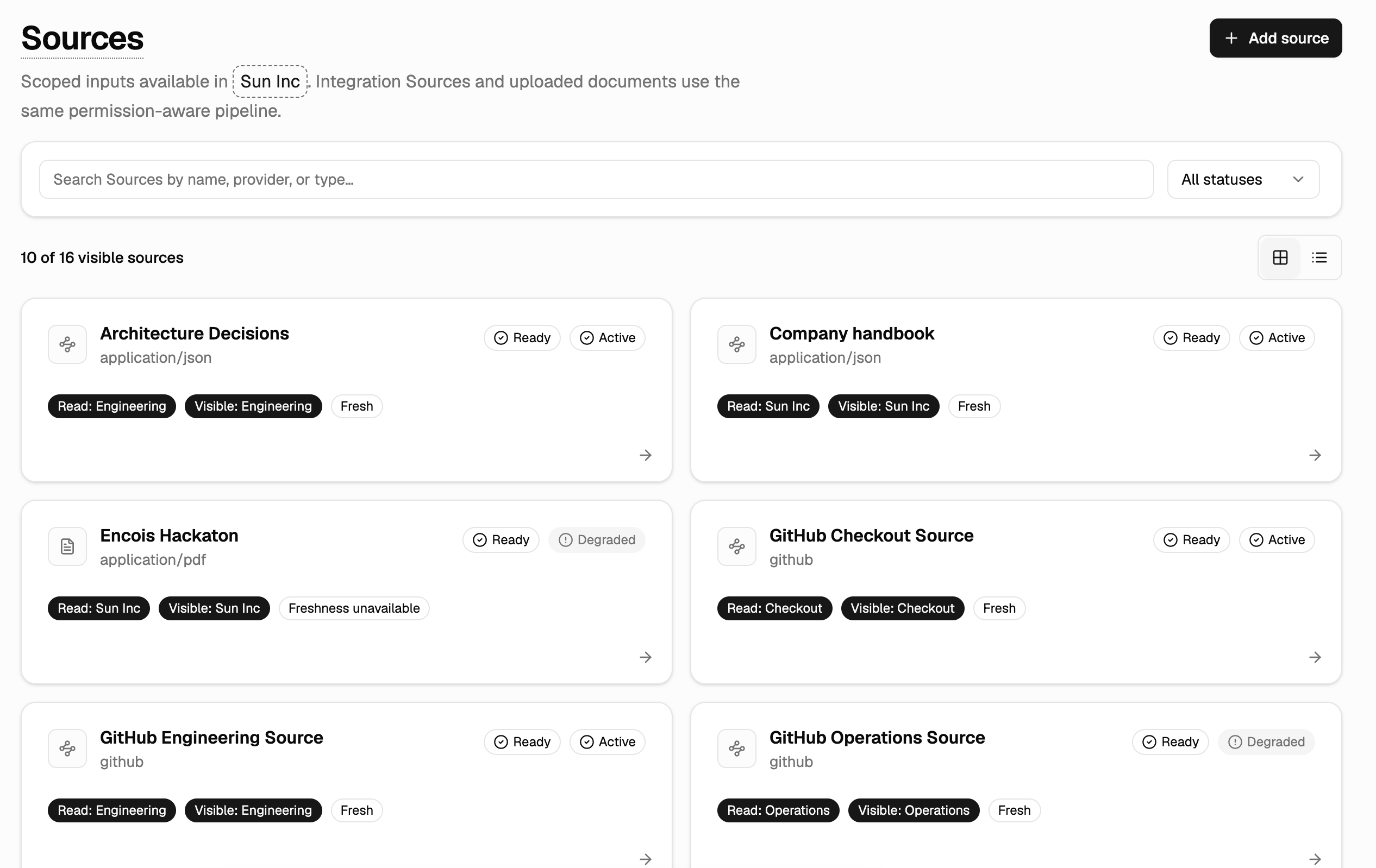
Encois gathers company context from sources such as documents, Gmail, Slack, Jira, GitHub, and deployments.
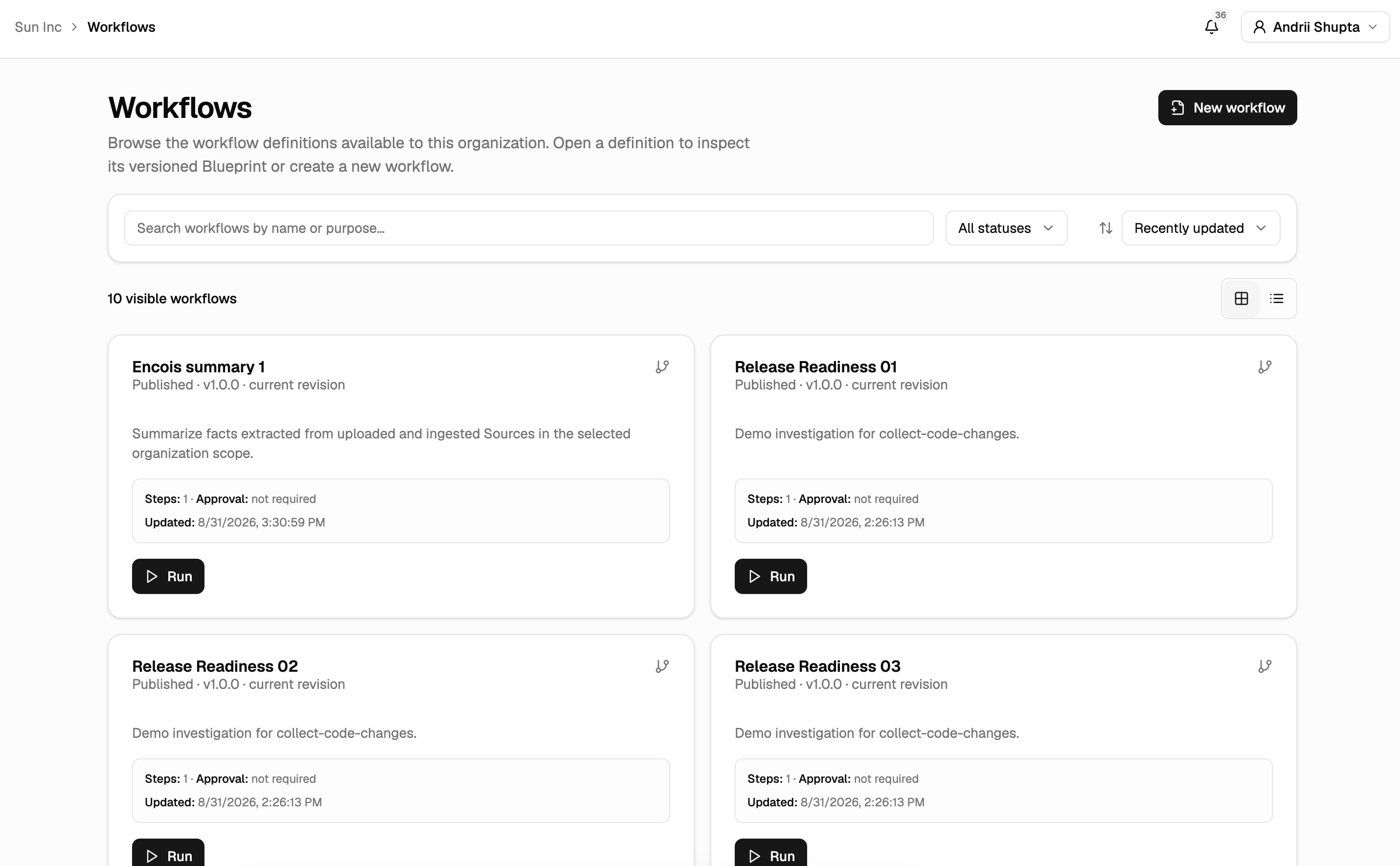
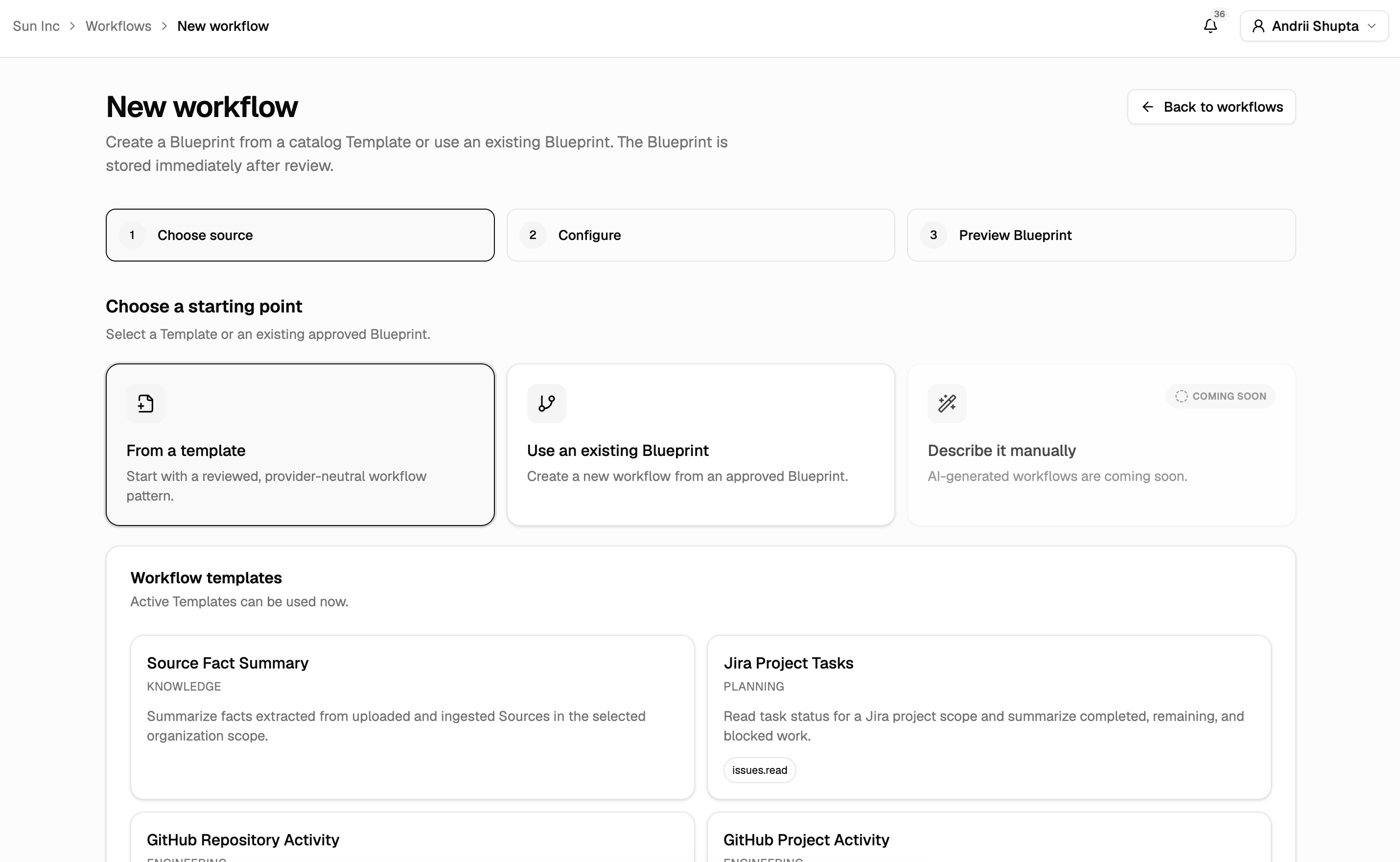
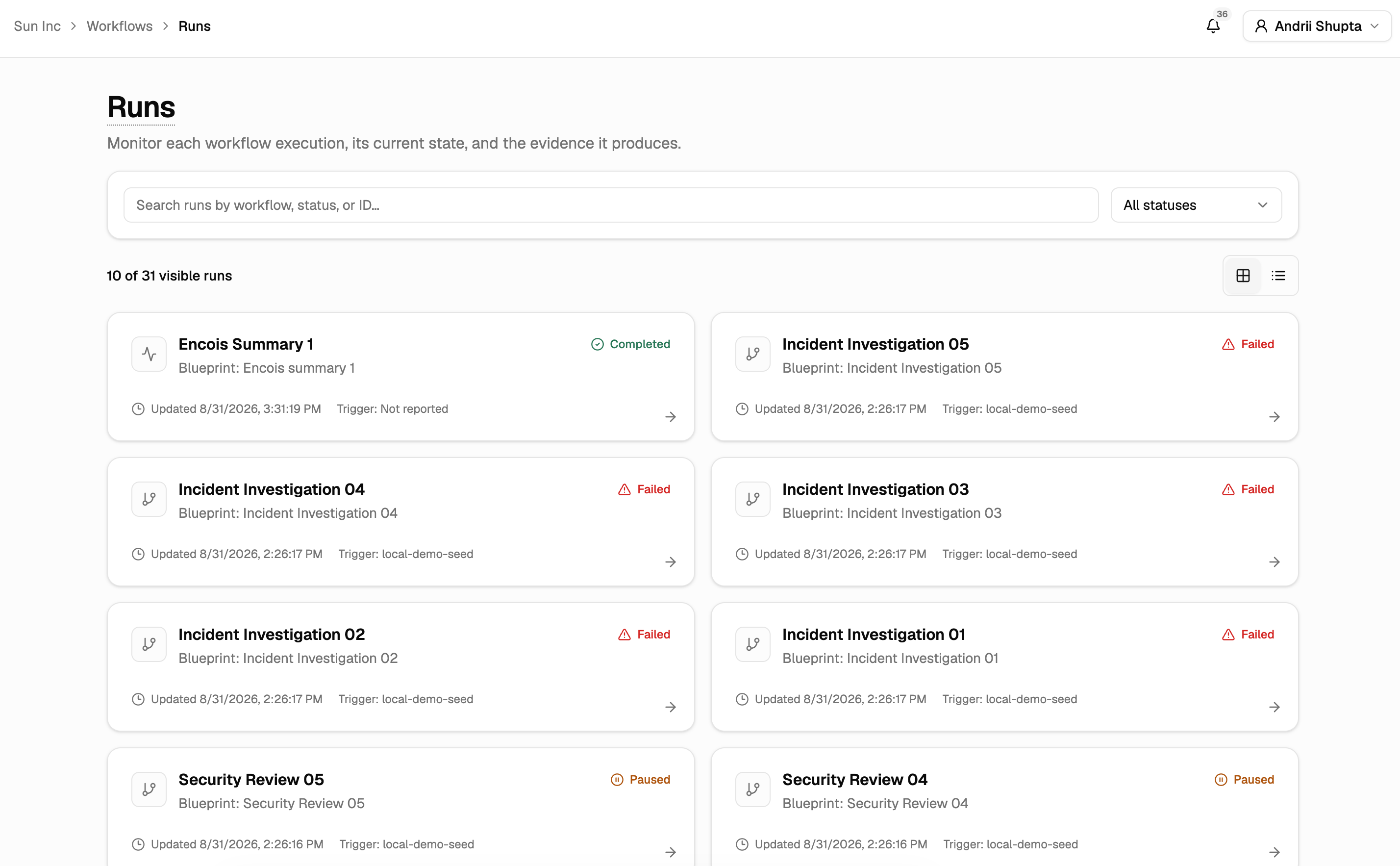
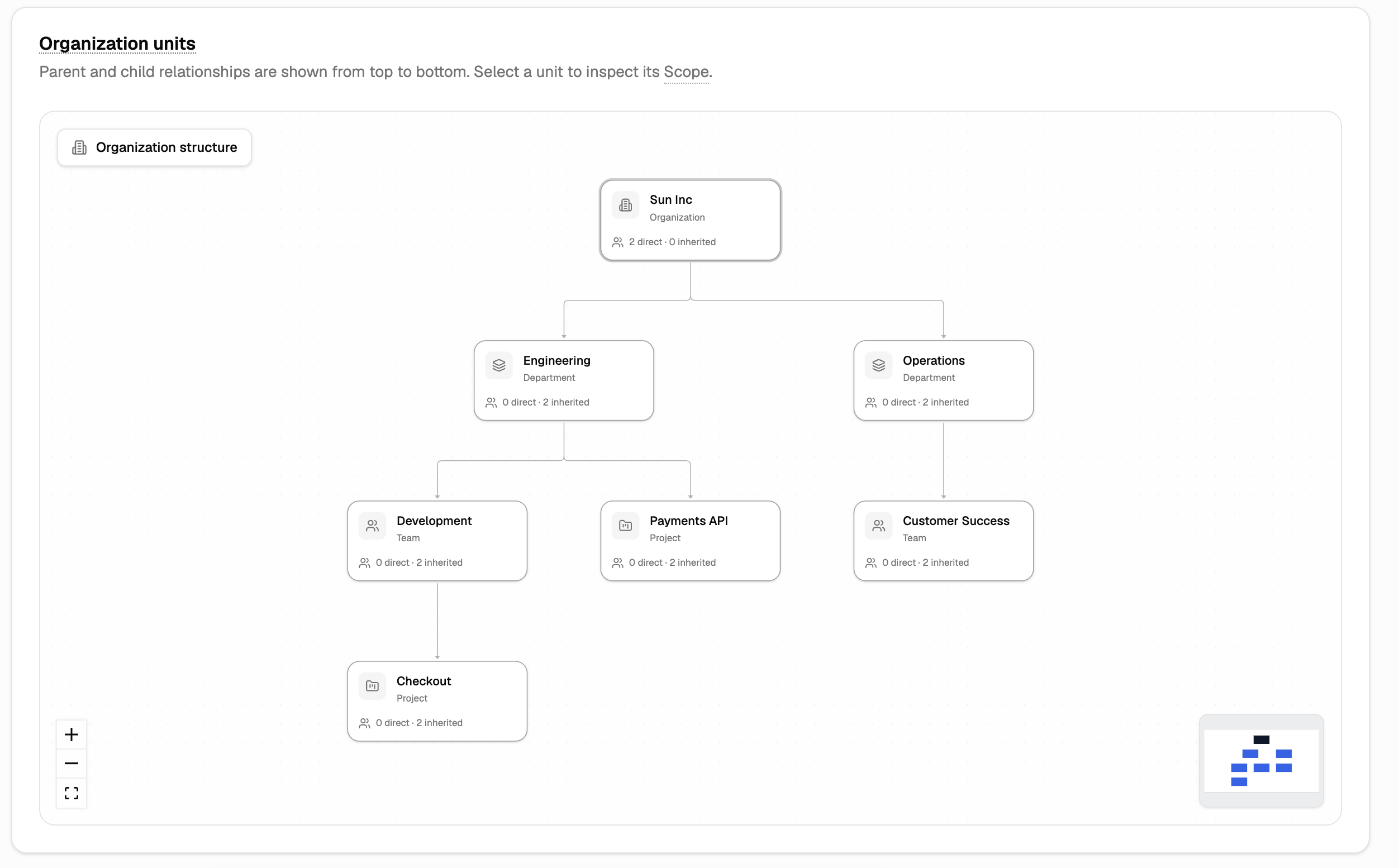
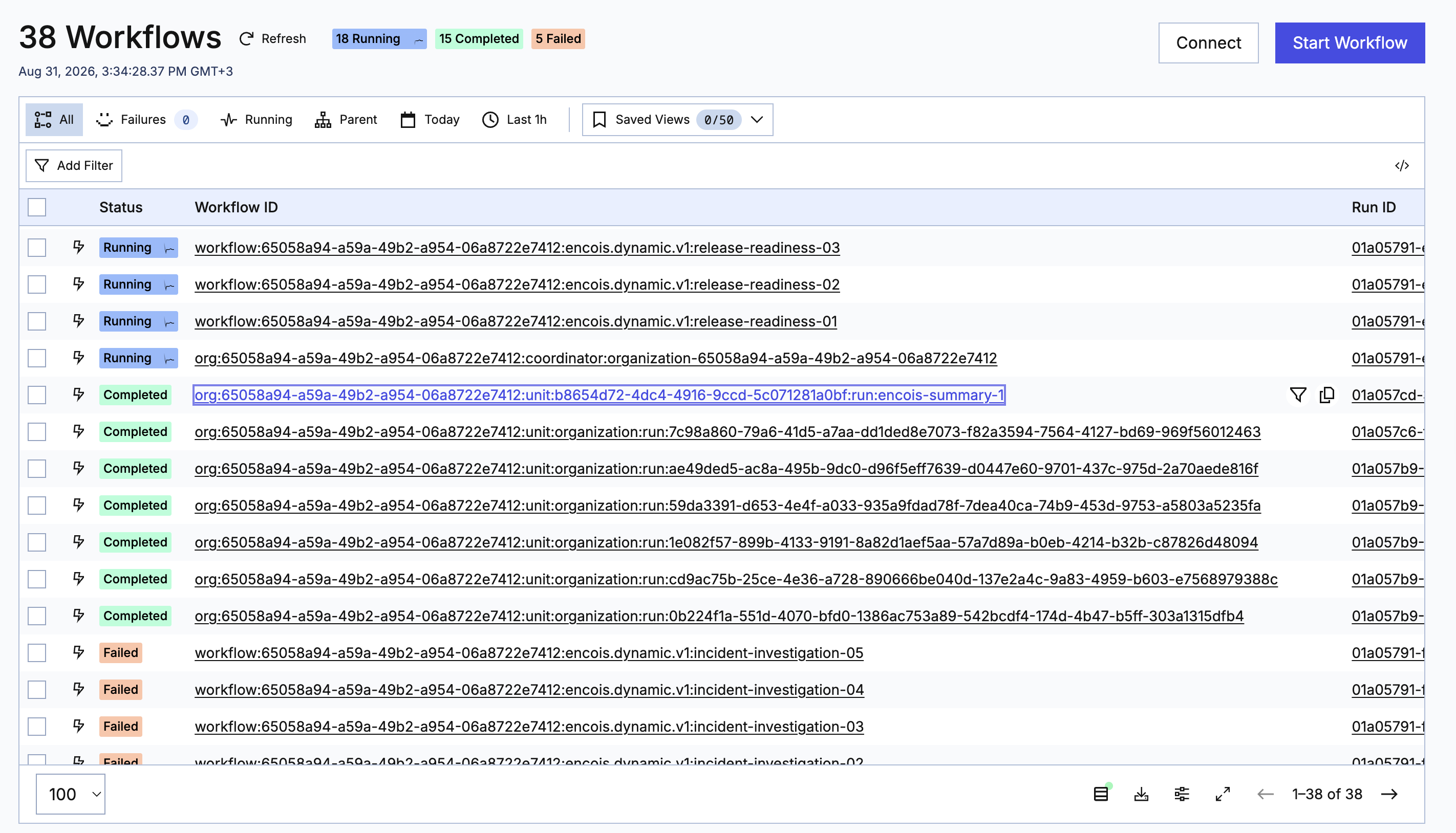
The working MVP can manage organization scope, sources, integrations, workflows, workflow runs, agent memory, and organization memory. It runs multi-step investigations and returns results connected to source evidence.
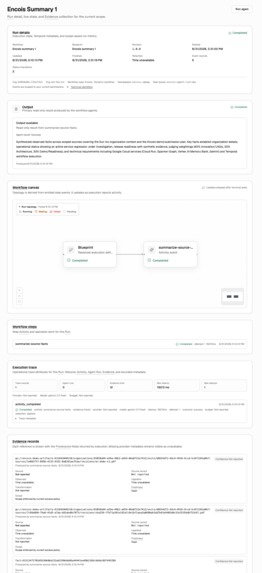
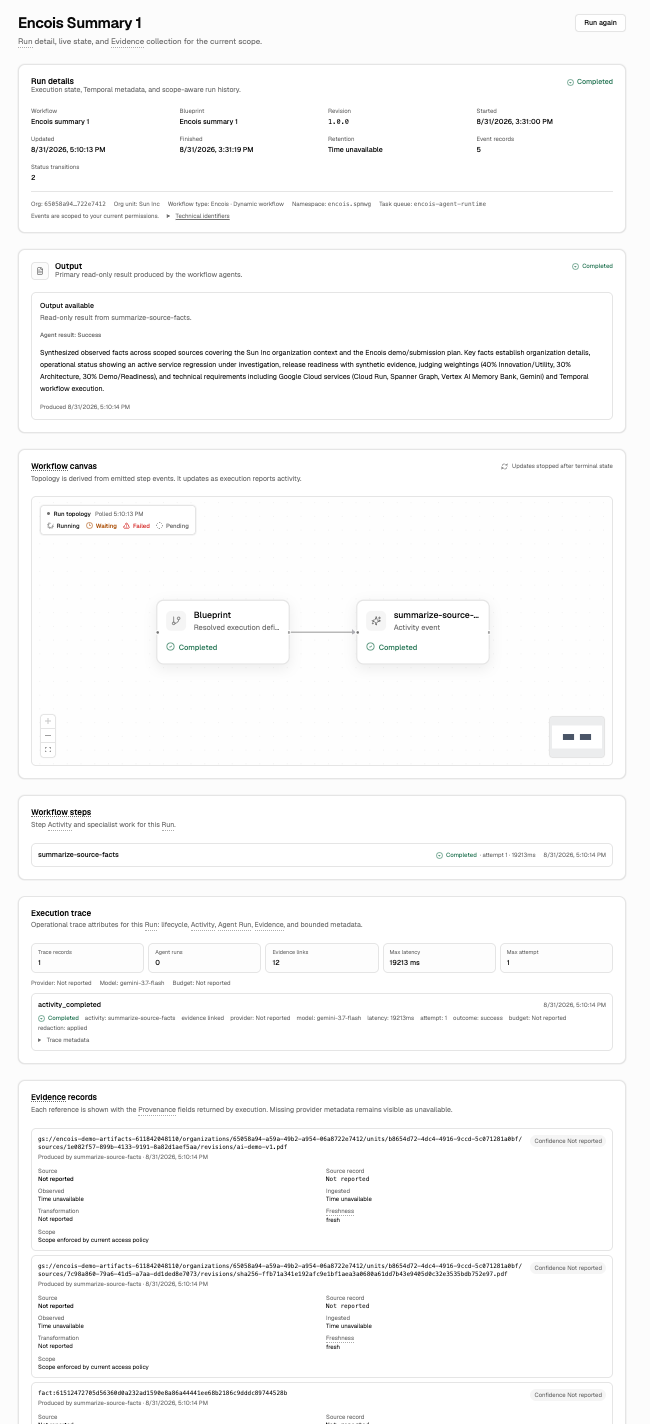
Each claim should be traceable to a document, ticket, commit, or another approved source record. The system keeps information such as source references, scope, timestamps, and freshness.
The MVP is mainly read-oriented. It helps people understand what changed, investigate activity, and make evidence-backed decisions.
How I built it
The system includes a React Dashboard, a TypeScript Gateway API, a Go Agent Runtime, a private Agent Gateway, and Temporal-based workflows.
I used Google ADK and Gemini on Vertex AI for agent work. The project also uses Cloud Run, Cloud SQL, Cloud Storage, Spanner Graph, Memory Bank, Secret Manager, Cloud Logging, Cloud Trace, and Terraform for Google Cloud deployment.
The Dashboard and API manage the human-facing control plane. Temporal manages durable workflow execution. The Go Runtime executes approved steps, while the private Agent Gateway checks scope, permissions, and tool access before connecting to external systems.
The demo uses synthetic company data.
Challenges I ran into
The biggest challenge was the limited time and the number of ideas I wanted to implement. I had to focus on one working MVP and leave some improvements for later.
Building the system from scratch with several services was also challenging. I learned Go during the project, worked with Temporal durable execution, and created a Terraform deployment for Google Cloud for the first time.
Another challenge was designing the boundaries between users, agents, tools, memory, and external systems. Agents should not choose their own permissions or invent company facts.
Accomplishments that I am proud of
I am proud that the main application works end to end.
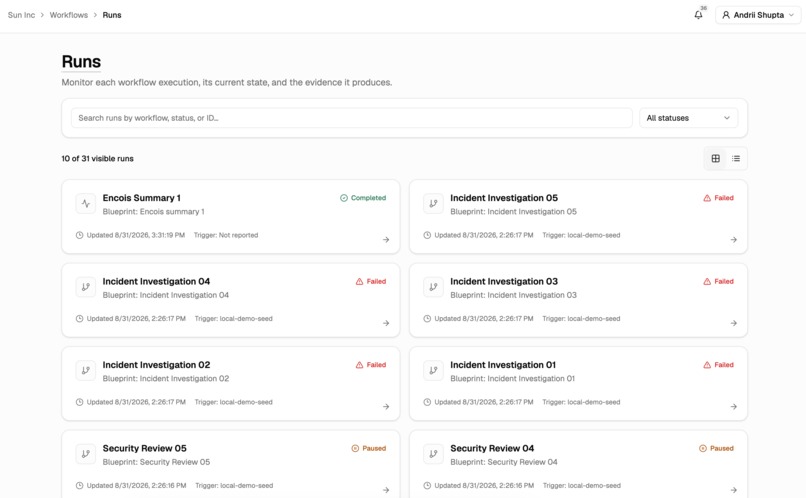
The Dashboard works, connections and source ingestion work, workflows can be created and executed, and the system can show run status, activity, memory, and evidence-backed results.
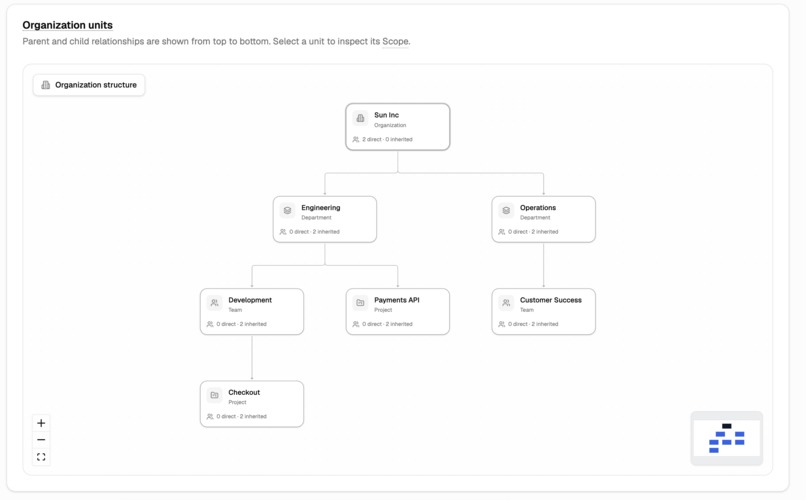
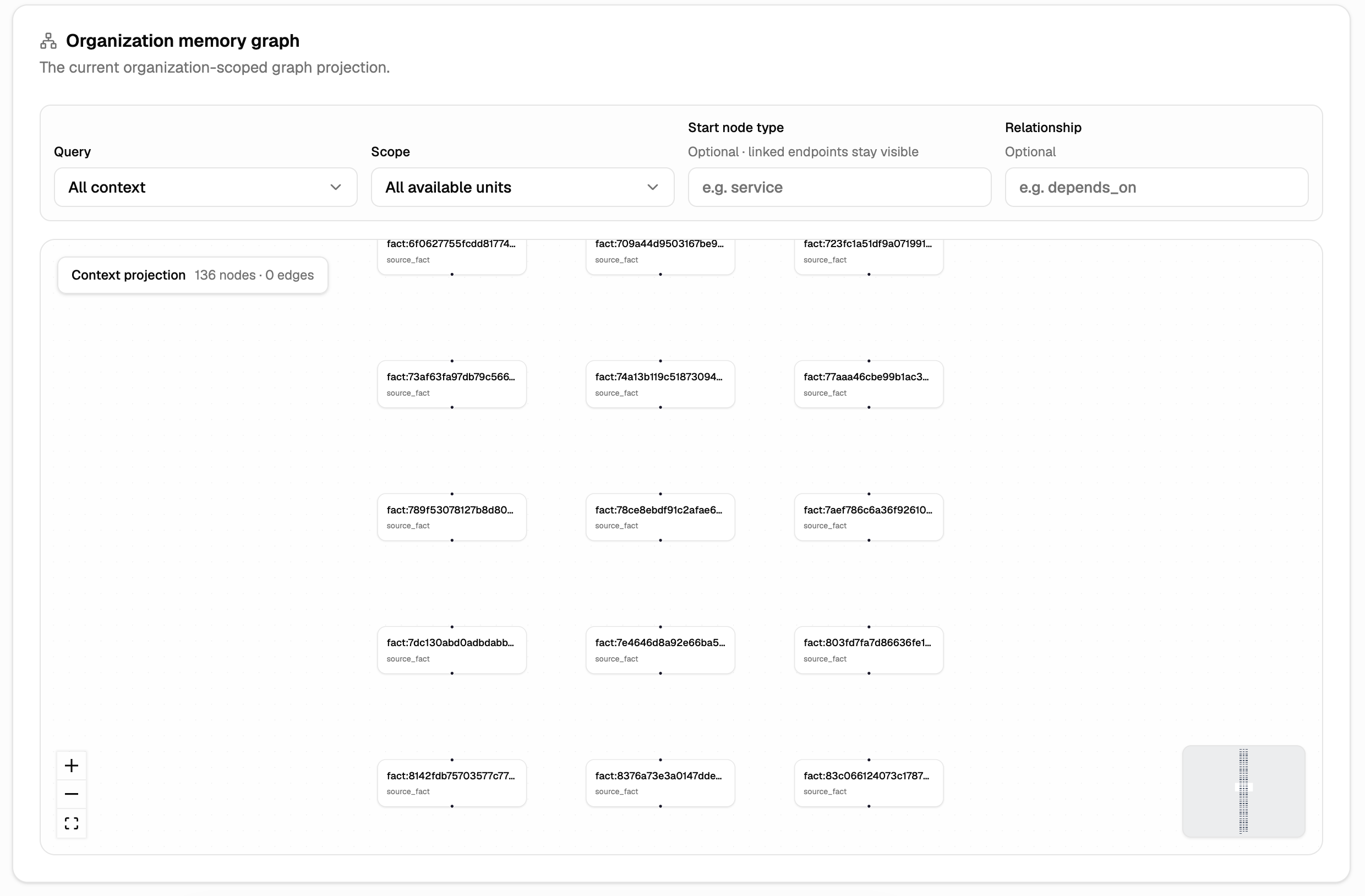
I am also proud of the separation between organization memory and workflow memory, the organization-unit scope model, the private Agent Gateway, and the use of Temporal for durable execution.
What I learned
I learned that an agent system needs more than a model and a prompt.
It needs durable execution, clear scope, limited tools, validated outputs, persistent context, and evidence for important conclusions.
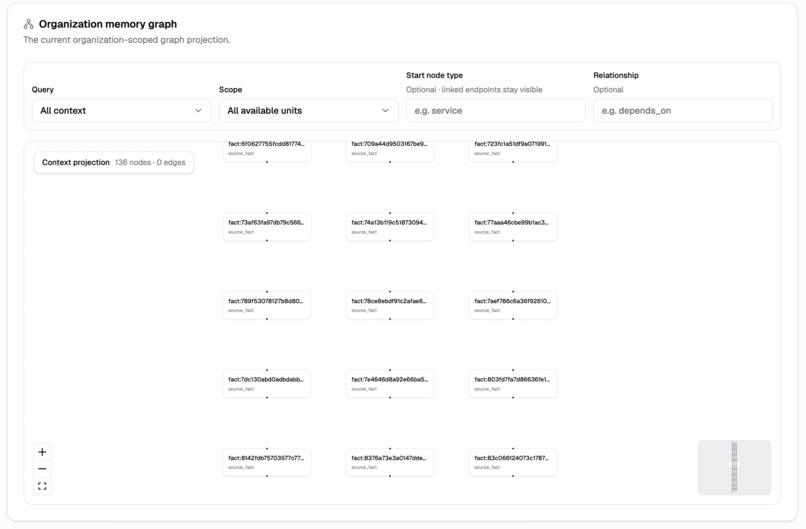
I also learned that company memory and agent memory are different. The Organization Memory Graph stores structured company facts, while Workflow Memory stores useful context for future agent work.
The project also taught me a lot about Go, Google Cloud, Terraform, multi-service architecture, and running asynchronous workflows.
What's next for Encois
The next step is to make Encois more useful and natural for everyday work.
The Dashboard can become more intelligence-focused, with less technical backend detail and more daily guidance. Voice interaction could allow a manager to describe a workflow, which Encois would convert into a validated Blueprint with approved agents, tools, and scope.
Future versions can add richer Graph relationships, more real integrations, stronger production security, and approval-based actions that write back to external systems.
The current MVP provides the foundation: connected company context, scoped agents, durable workflows, persistent memory, and evidence-backed decisions.
Built With
- agents
- go
- google-cloud
- node.js
- postgresql
- react
- temporal
- terraform
- typescript


Log in or sign up for Devpost to join the conversation.