-
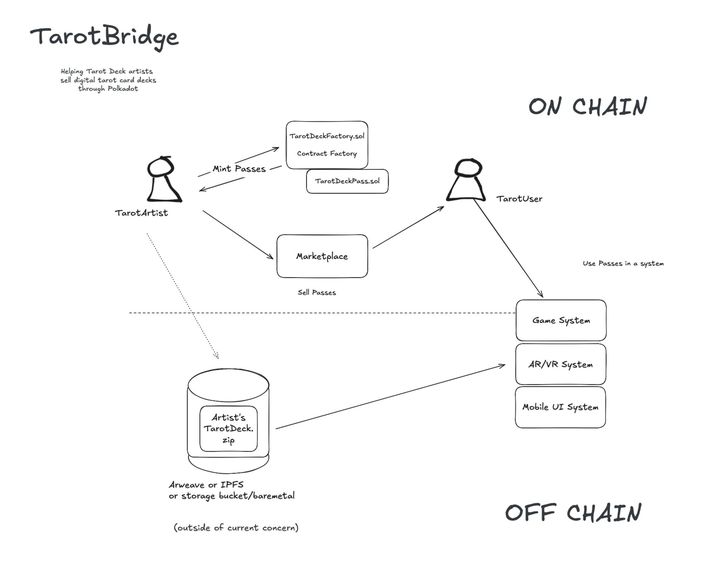
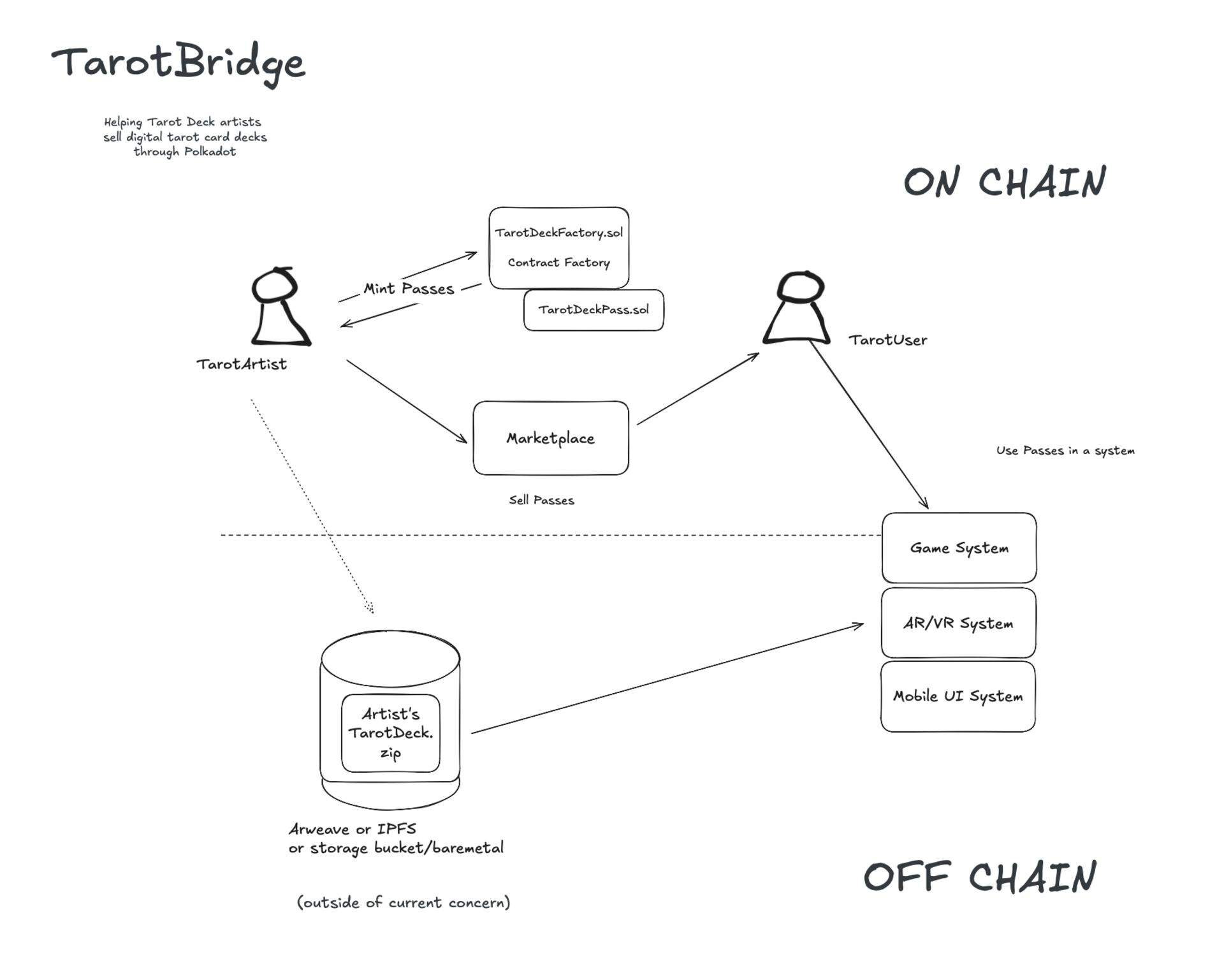
Rough system diagram
-
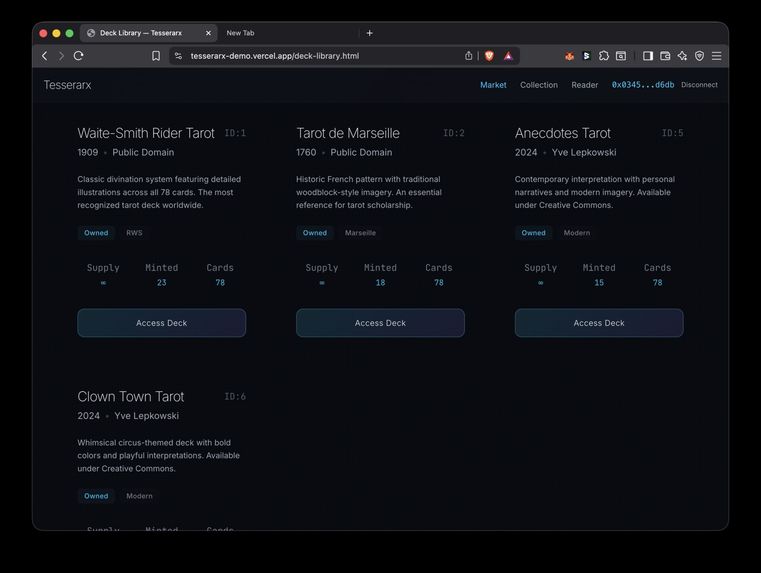
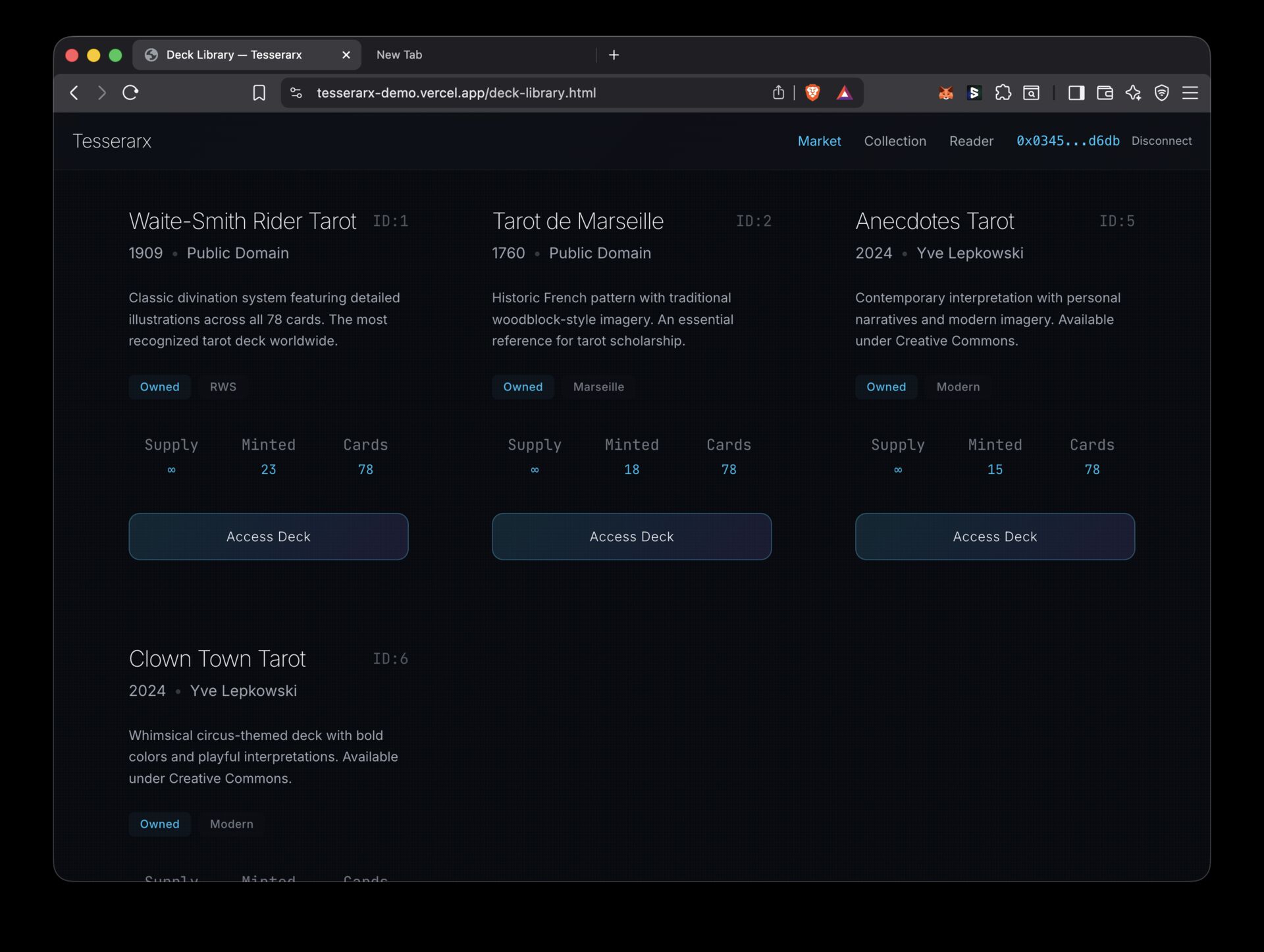
Marketplace of decks
-
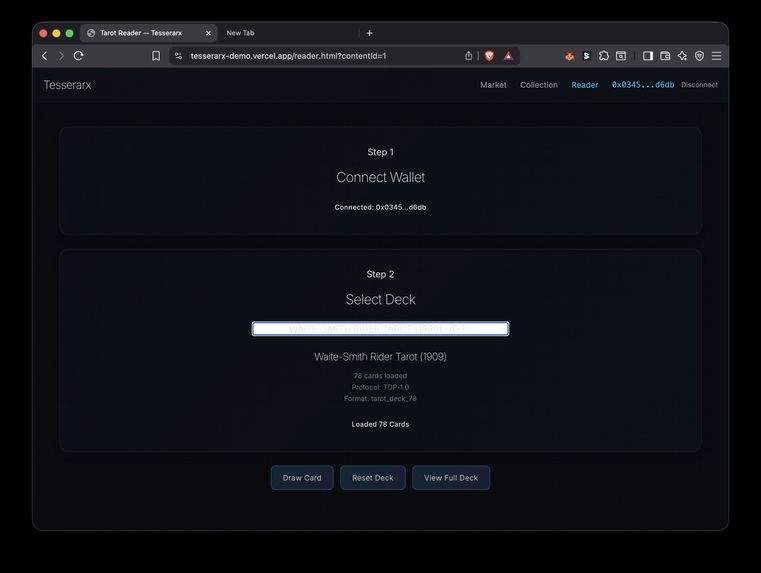
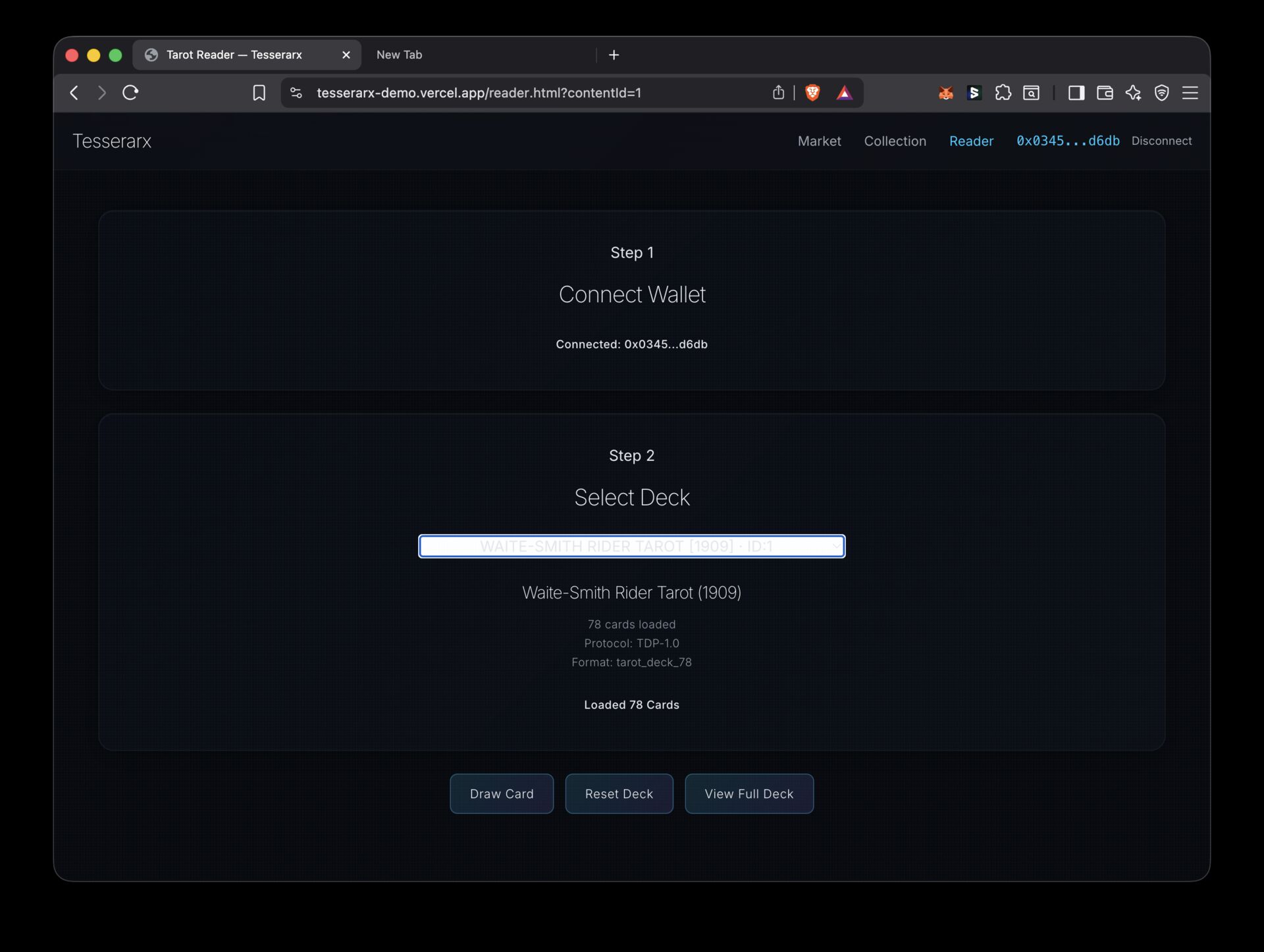
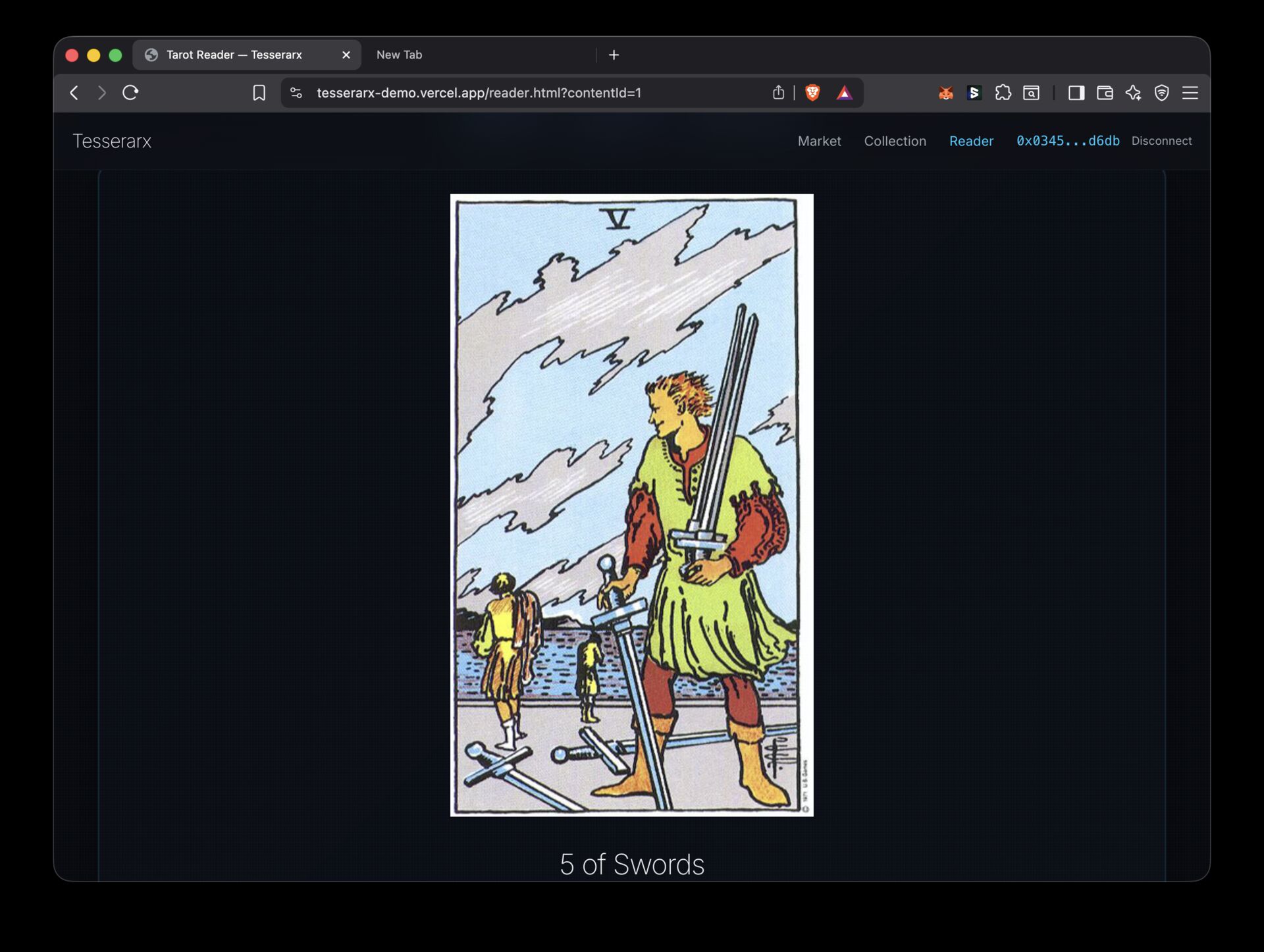
reading experience
-
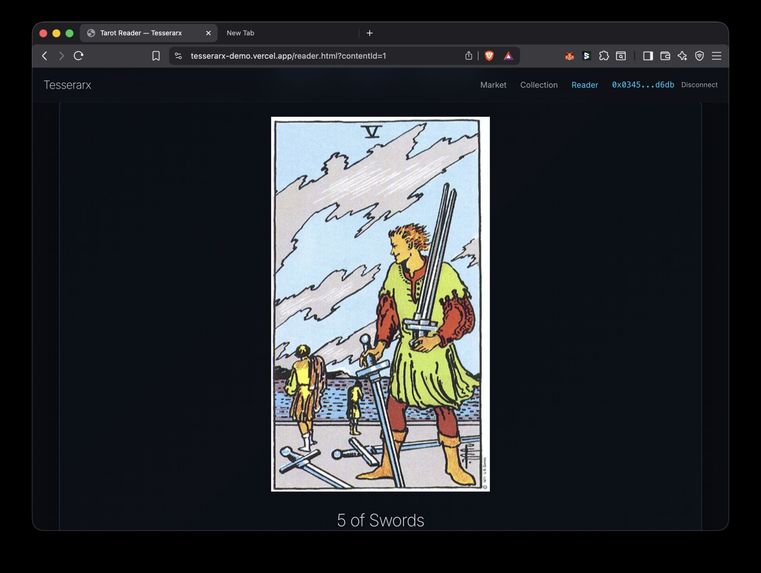
card draw
-
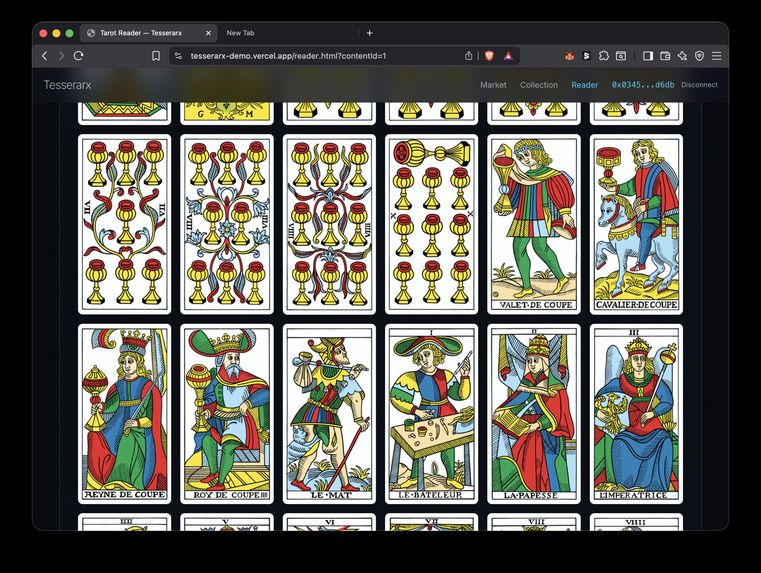
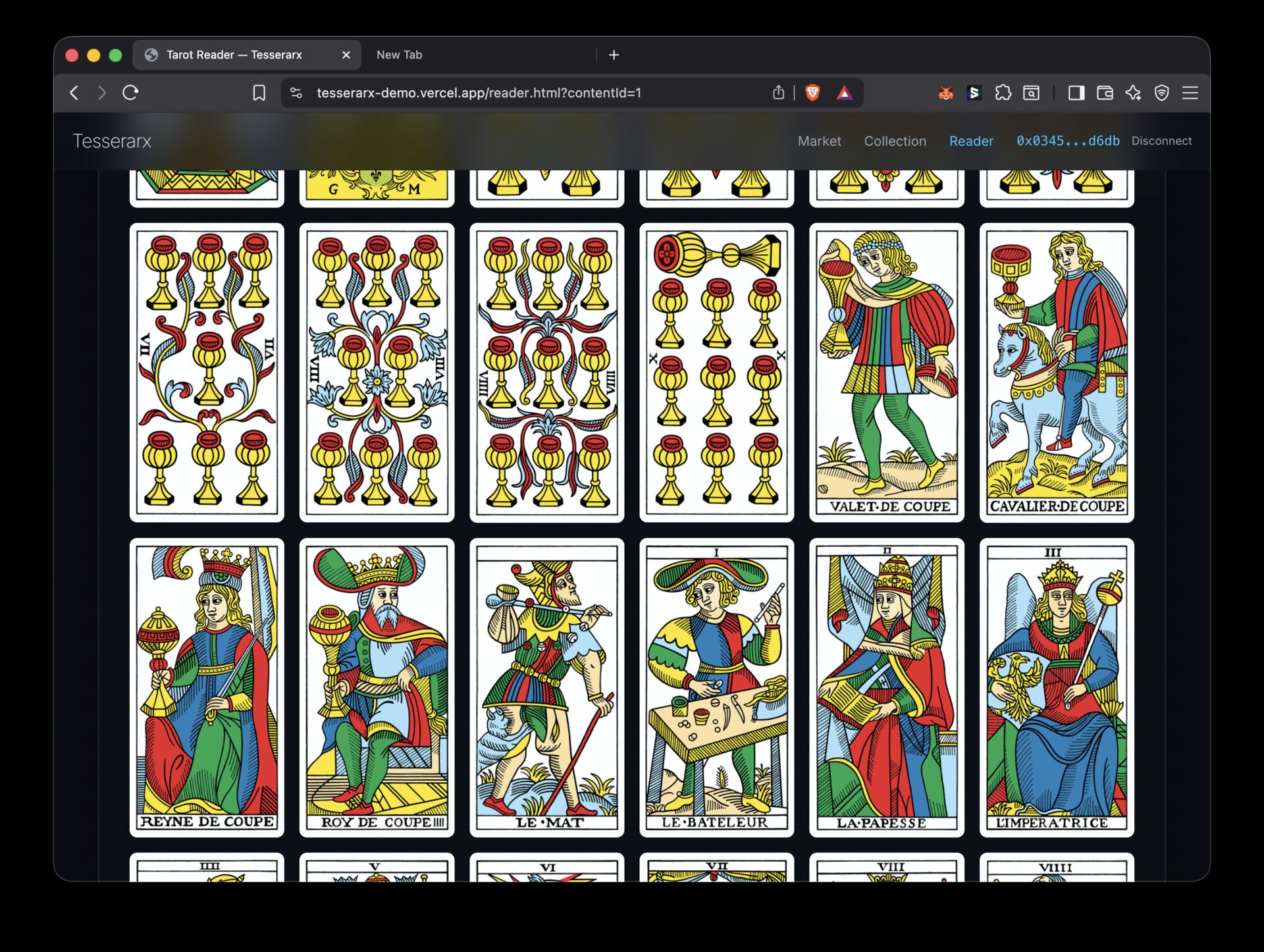
deck view
Unfortunately there has been a breaking change with the attempted integration of Subwallet support.
We will work to migrate this project off of the current solidity and moonbeam set up to correct for the breaking change.
At this time the core functionality of project is offline.
tl;dr
I built a DRM-friendly ERC-1155 styled content-access pass system that enables digital creators (starting with tarot deck artists) to monetize their work through standardized, interoperable content passes. Apps can load encrypted content using on-chain proofs of access, and multiple stakeholders (artists, app developers, curators) can be compensated fairly via smart-contract incentives.
The Journey
I entered this project with no wallet, no smart-contract experience, and only a hunch:
digital tarot cards should exist, and blockchain might solve the problems that kept them from thriving.
Despite a strong community of tarot collectors and a steady flow of talented artists, digital tarot decks have never had a sustainable operating model. I personally know people (artists and collectors) who would benefit from a healthier digital ecosystem.
As I dug deeper, a pattern emerged:
ERC-1155–style content access passes could form the basis of a blockchain-native DRM system.
This lets artists mint access tokens for their work while letting applications load and interpret that work consistently.
Although my first use case was tarot decks, the model generalizes well to ebooks, audiobooks, comic books, and all of the digital goods I don't have familiarity with(music sample packs?).
For this POC, I focused on tarot 🃏
How It Works
Authoring Content
A creator uses the contract to define a “content item” with three core URIs (stored off-chain via IPFS/Arweave or, for the demo, local assets):
- Payload URI – the encrypted content itself
- Public manifest URI – metadata, presentation details, thumbnails, “book cover”
- Handling specification URI – a schema that tells apps how to use the payload (e.g., tarot deck spec, EPUB spec)
This structure lets any compatible app discover how to interpret and render the content.
Minting & Using Passes
Once the content item exists, consumers can buy or claim access passes.
Apps can then:
- Check the user’s on-chain pass
- Fetch the encrypted payload
- Decrypt and load it into the app’s context
For tarot, this enables apps for:
- mobile daily-reading journals
- AR tarot experiences
- multiplayer or social reading platforms
- anything a developer wants, backed by an ecosystem of artists
By standardizing this pipeline, creators get reliable monetization while developers get plug-and-play content.
Multistakeholder Incentives
While exploring smart-contract patterns, I learned I could implement:
- Affiliate/referrer rewards
- Treasury fees
These support:
- apps integrating in-app purchases
- platform sustainability (storage, encryption services, ecosystem growth)
- community-driven funding for new features or standards
Everyone participating in the value chain can be compensated fairly.
Looking Forward
Potential
This approach can empower small creators, especially niche or independent artists, to earn meaningful income from digital content without relying on centralized platforms.
Work Ahead
On-chain
- Migrating contract logic to ink!
- Deploying to Paseo testnet and prepping for Polkadot mainnet
- Improving efficiency and simplifying creator setup flows
Off-chain
- Refining the tarot deck handling specification with real community input
- Hardening the encryption/decryption workflow
- Building developer-friendly tools for content ingestion and validation
Appreciations & Asks
I’m incredibly grateful for the Polkadot community. Especially the folks I met in Toronto! I’ve only been involved for about 10 days, and the support and encouragement have been amazing.
I’d love feedback on:
- the use case and economic model
- the contract architecture, payload handling, storage, encryption/decryption
- the path to making this impactful for creators, builders, and consumers
Thank you for taking the time to check out my project!

Log in or sign up for Devpost to join the conversation.