-
-
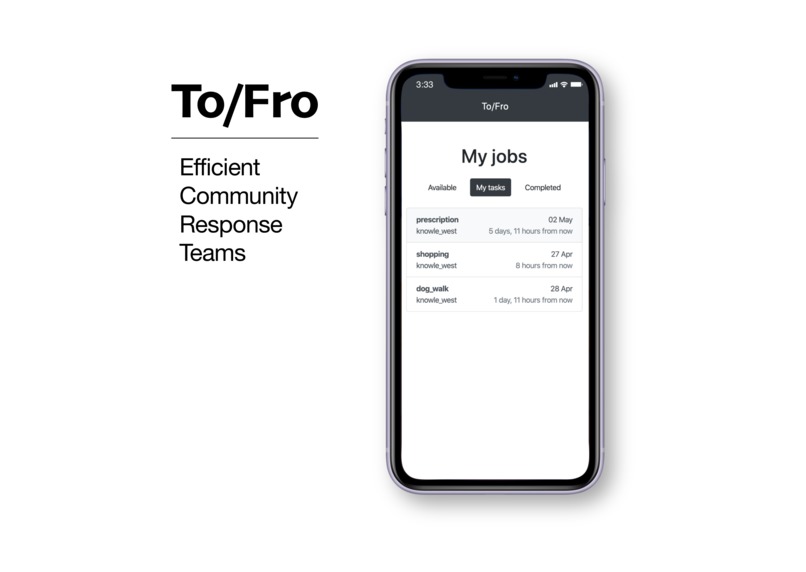
Helper View / Web App / iPhone (viewing 'my tasks')
-

What can we do together to build an even stronger community?
-
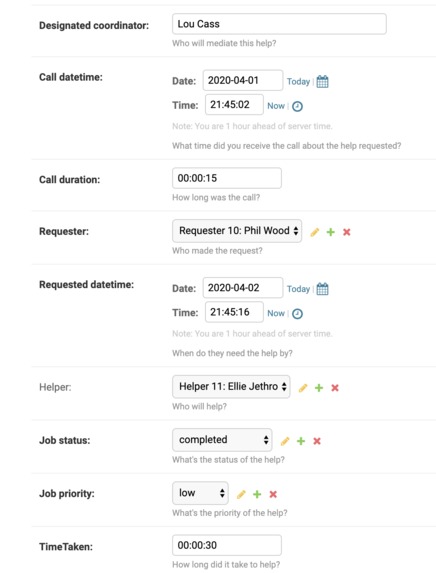
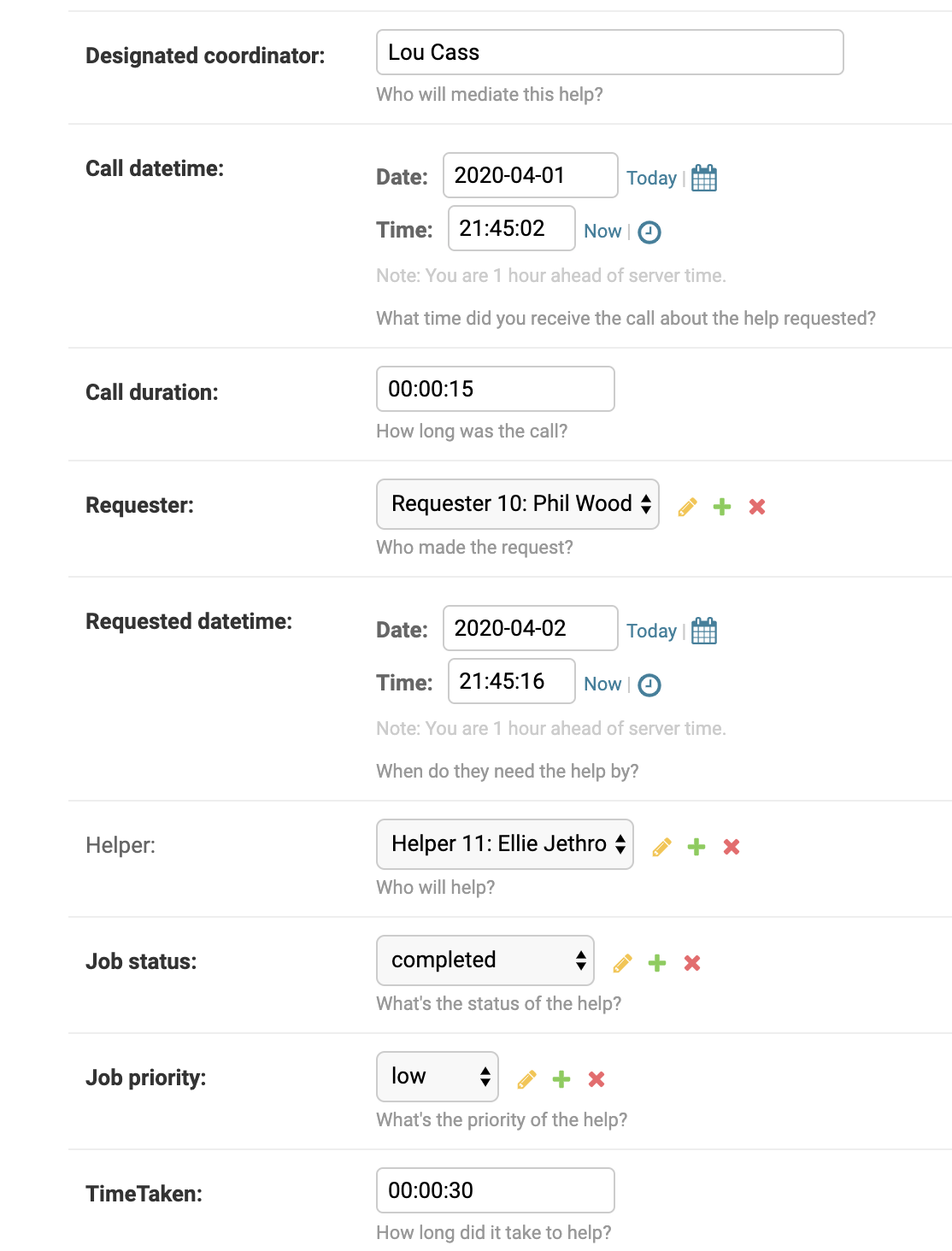
Co-ordinator View / Web App / Desktop (adding a task)
-
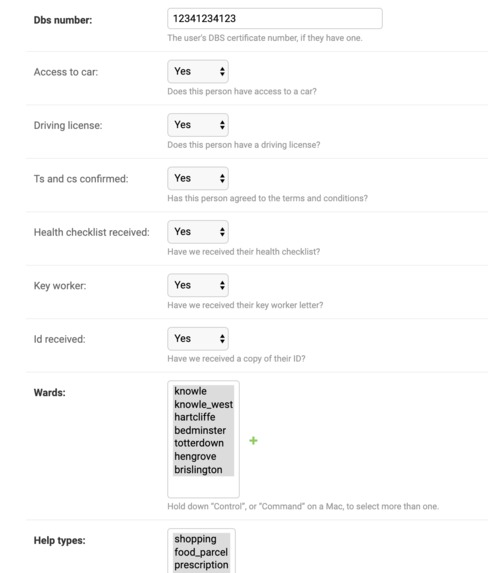
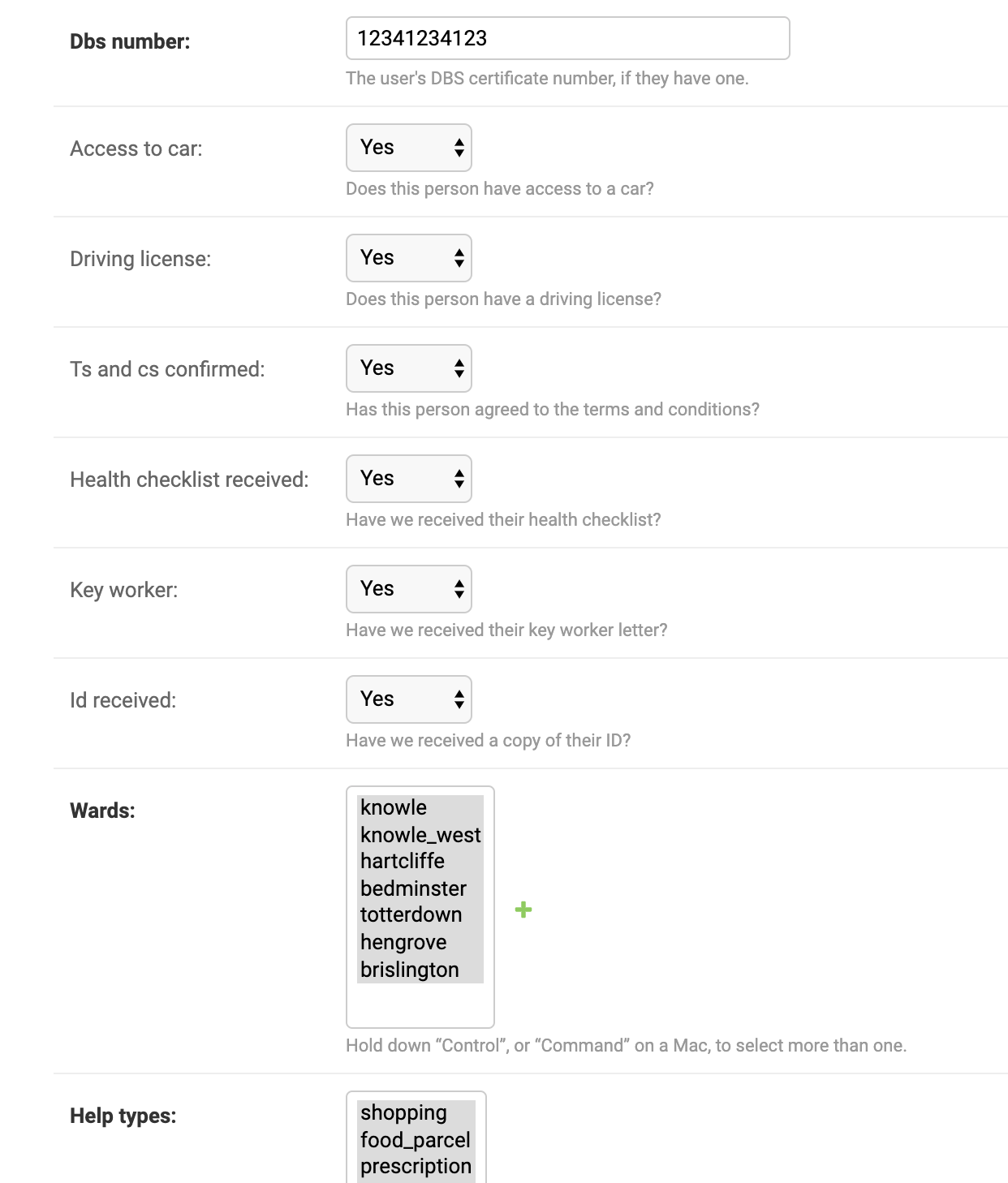
Co-ordinator View / Web App / Desktop (adding a helper)

Background
Here in Bristol, in Knowle West there has a been an incredible community-led response to help those left vulnerable and isolated as a result of the Covid-19 pandemic. An astonishing support network has been setup in very little time. With something already in place and working, we felt that now is a good time to look at how we can share the important lessons and best practices we’ve learnt along the way, whilst exploring how we could make use of technologies to enable more efficient community response teams. These lessons and tools are made to be shared with other communities experiencing similar hardships right now and will put everyone in a better, more prepared position if we were to face a similar crisis in the future.
Current Situation
Knowle West rates highly on the indices of multiple deprivation, with many of its residents experiencing health problems, social isolation and digital exclusion; these problems were compounded with the Covid-19 pandemic. The Knowle West Alliance (KWA), a group setup by residents and local organisations in 2018, recognised that to reach these people, a “tech-first” approach wouldn’t be suitable.
A city-wide telephone line was setup by Bristol City Council and the KWA has spread the word by leafletting every house in the area. There are currently 4 co-ordinators and 40 volunteers (and growing) helping 100s of people in South Bristol with things like shopping, picking up prescriptions, to other physical errands like dog walking. There’s a focus on “buddying-up” so that people can find a trusted and known person to carry out repeat tasks such as weekly shopping.
However… all of this is currently being organised via spreadsheets and emails; the KWA is finding this cumbersome and inefficient.
Challenge
We wanted to create a system that could be used by different communities to help them self organise, keep track of need and effectively deploy help. We currently have a working and active “human system” in place, but there are certain parts that could be greatly improved using technology and both the technology and best practices could be shared to help other communities now, and to provide a valuable resource in more usual times (as these care needs won’t disappear) or should we face another similar global pandemic.
Solution
Over the past weekend we started building an open source tool to keep track of requested help and to contextually notify volunteers about relevant available jobs. This drastically improves on the current situation of sending out mass emails to everybody on the helpers list, or people receiving irrelevant requests/offers.
We have carefully balanced things to incorporate the already effective and working human support systems, so that those needing help, but without a computer, smart phone, or internet access aren’t forgotten about.
We’re fortunate because there are already checks and balances in place to verify whether the volunteer helpers have enhanced criminal record checks and are therefore eligible for certain tasks.
How does it work?
Most if not all contact with those needing help is done over the phone, so we’ve made a Dashboard (please see image gallery) allowing Co-ordinators to enter the details of Requesters (people needing help), Jobs (tasks that need carrying out) and Helpers (volunteers who have offered to help).
The system matches tasks with the preferences and characteristics of Helpers. So for example, if a Requester needs someone to pick up a big shop from a supermarket in a particular area and it’d require a car, the system will only offer the job to the relevant Helpers i.e. those who live in that area, drive, and have indicated that they’d be willing to do shopping tasks.
Fortunately the majority of the Helpers are digitally connected, so from their perspective, they get an instant notification when new, important, and relevant jobs become available; as well as a daily digest of other relevant, but less pressing jobs. Using the Web App (please see image gallery) they can view the tasks available to them and offer their help. Once ratified by a co-ordinator, they are put in touch with the person Requesting the help, from which point they can carry out the task and report back to the Co-ordinator.
This greatly improves efficiency whilst maintaining the proven, safeguarded and effective workflow currently in place.
...how does it really work?
- Python API (created with Django framework)
- PostgreSQL database
- API & DB containerised with Docker
- Bootstrap front-end
- GitHub
To plan, communicate and organise we used:
The Future
We recognise that different communities work in varying ways and were cognisant of this when building the tool. To make it extensible for other communities, the other parts - such as being able to sign up as someone needing help, creating jobs without needing to go through a co-ordinator, and signing up as a volunteer - could all be built into the system and in fact, if it will help your community, we actively encourage and welcome you to do so! In our case, we have focussed on our particular community’s needs and its current support system so we could get something in place to help people most effectively as quickly as possible.
There are a few specific things we want to iron out and improve over the coming weeks:
- Include “repeating tasks”.
- Ensure email notifications work reliably without going to spam.
- Verify that our authentication methods restrict access to the correct parts, depending on user type.
- Make our instance publicly available on the web - Bristol Is Open have kindly offered to host our server and make our site publicly available. Bristol Is Open is a super-fast, local and most importantly, trusted and secure location to store this private information.
- Get confirmation from a lawyer that our simple to understand Data Processing Agreement is legally (GDPR) compliant and add a clear communication channel for any data processing requests (email address).
- Make the interface “lickable” :P and include some nice graphics.
We hope that this will be a valuable resource for everyone and will ensure that people - whether internet connected or not - can experience the benefits of technology to get us all through these difficult times together and that the human connections formed through “buddying up” will strengthen the relationships in our community and in others.
We strongly believe in sharing our practices and tools so that other communities can support each other at this critical time and we hope that this continues further, as many of these care needs won’t miraculously disappear along with Covid-19. By building a strong community of helpers, with effective tools to self organise and provide effective and efficient emergency support, we aim to help those in need now and ensure that should we face another similar global pandemic, we will find ourselves better equipped and better prepared.
I’d like to thank Antti, Charlie, Romaric and Vijay for lending their brilliant minds, boundless generosity and dogged determination.
lucas
Knowle West Community Website - Hotline Info
Bristol247 Article - “Knowle West Community Coming Together”


Log in or sign up for Devpost to join the conversation.