-
-
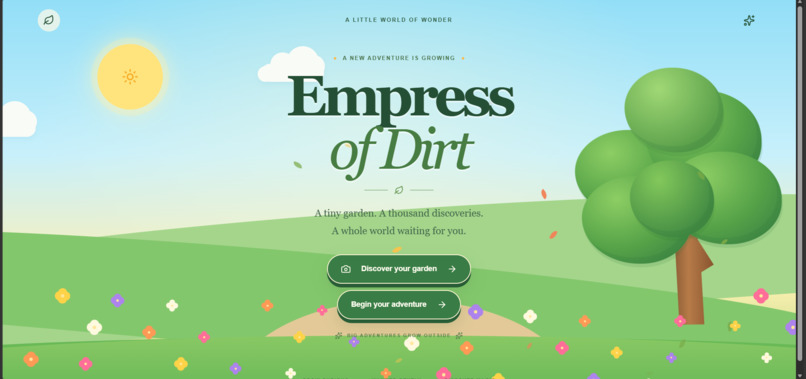
Homepage
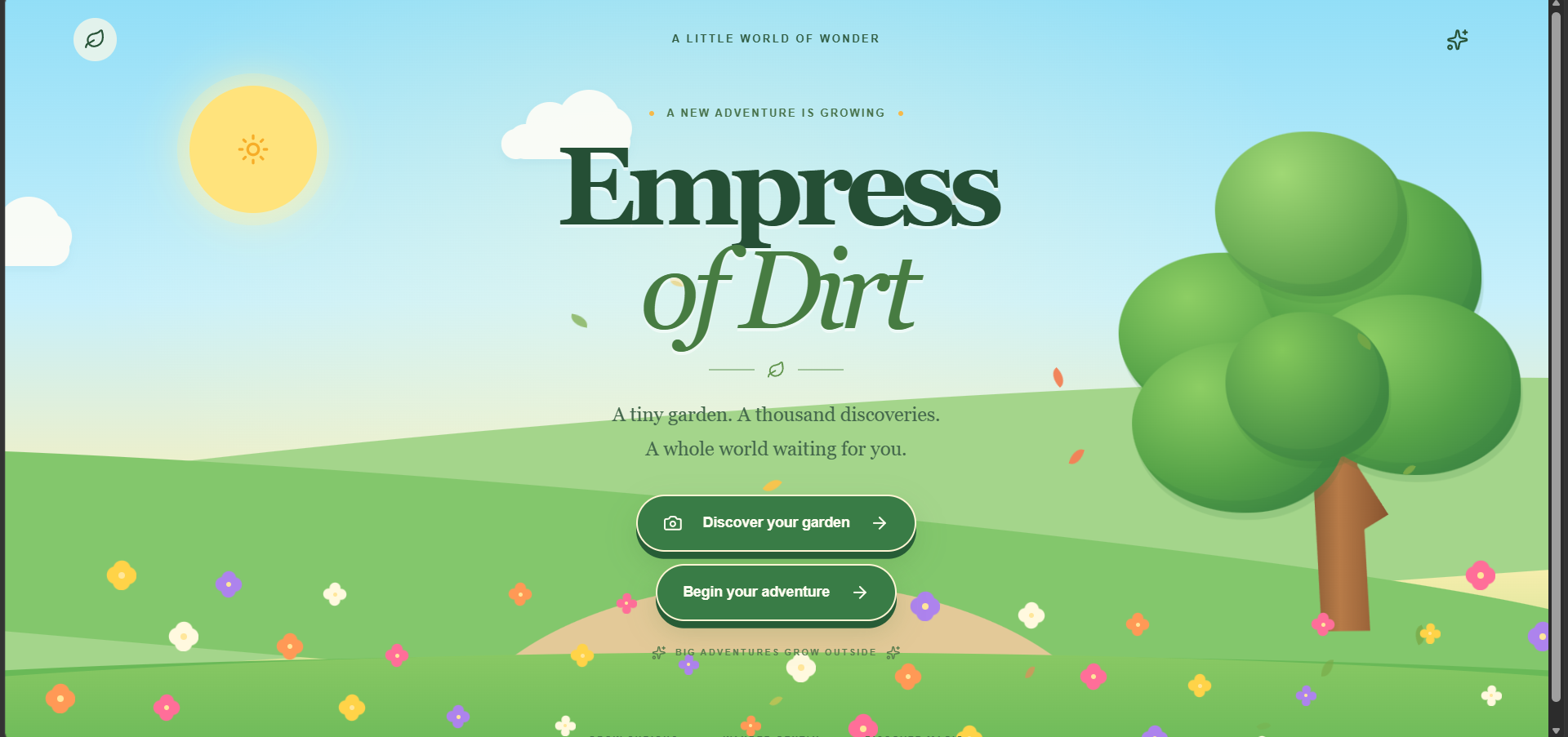
Empress of Dirt: An AI Garden Companion for Kids
Inspiration
The idea for Empress of Dirt came from watching my 11-year-old niece spend a lot of time on her phone. I wanted to build something that would encourage her to spend more time outside, explore nature, and learn about plants. Instead of creating another app that keeps children staring at a screen, I wanted to use AI to help them interact with the real world.
That is how Empress of Dirt started: an AI-powered garden companion that turns a child's garden into a place for discovery and adventure.
What It Does
Empress of Dirt helps children explore their gardens through AI-powered quests.
A child can upload a photo of a plant or their garden. Gemma helps identify plants from the photo and provides information that can guide the next activity. Children can review the suggested plants and confirm the ones they want to add to their garden profile.
The application remembers confirmed plants and previous quest activity using SQLite. It then creates garden quests with a title, story, instructions, difficulty, duration, and safety considerations.
For example, a child might receive a quest to observe a plant's leaves, check the soil, or explore how a plant changes over time. ElevenLabs can narrate the quest, making it feel more like an adventure than a list of instructions.
The goal is to make children curious about their surroundings and encourage them to learn by doing.
How I Built It
I built the frontend using Next.js, React, and TypeScript. The backend uses Python and FastAPI to handle requests, garden analysis, quest generation, and quest completion.
The main technologies include:
- Gemma: Helps analyze garden photos and identify possible plants.
- Python and FastAPI: Handle the backend and quest-generation logic.
- SQLite: Stores confirmed garden information and quest history.
- ElevenLabs: Turns quest instructions into spoken narration.
- Mastra: Used for a separate orchestration workflow that connects backend health checks with quest generation.
- Render: Hosts the deployed frontend and backend.
I also explored simulated garden sensor readings and how Arduino UNO Q could eventually connect the experience to real garden sensors. Physical sensor integration remains a future direction.
You can try the application and explore the code through the links below.
- Live demo: https://empress-of-dirt-frontend.onrender.com
- Source code: https://github.com/S-Bhardwaj21/empress-of-dirt
Challenges I Faced
One challenge was connecting the different parts of the application so they worked together. Plant analysis, garden memory, quest generation, and narration each had to handle their own tasks while sharing the right information.
Another challenge was debugging narration. The application could generate a quest successfully even when the narration service was not configured correctly. I updated the frontend to show the actual narration error instead of silently playing a generic audio file. This made it easier to understand what was failing and fix the configuration.
Deploying the application also meant making sure the frontend and backend communicated correctly and that API keys were configured securely through environment variables rather than stored in the source code.
What I Learned
This project taught me that building an AI application involves much more than connecting a model to a prompt. The surrounding system matters too: memory, validation, APIs, error handling, deployment, and the experience of the person using it.
I also learned to think more carefully about the role technology should play. AI can be useful without becoming the centre of every activity. In this project, it helps create an experience that encourages children to put the screen down and explore their gardens.
What's Next
I want to make Empress of Dirt more adaptive to each child's garden and previous activities. I also want to explore real sensor integration so quests can respond to actual garden conditions, rather than relying only on photos and simulated readings.
My long-term goal is to create a garden companion that makes learning about nature feel playful, personal, and rewarding.
The idea behind Empress of Dirt is simple: AI stays inside. The kid goes outside.
Built With
- elevenlabs
- fastapi
- gemma
- mastra
- nextjs
- python
- react
- render
- sqlite
- typescript

Log in or sign up for Devpost to join the conversation.