Inspiration
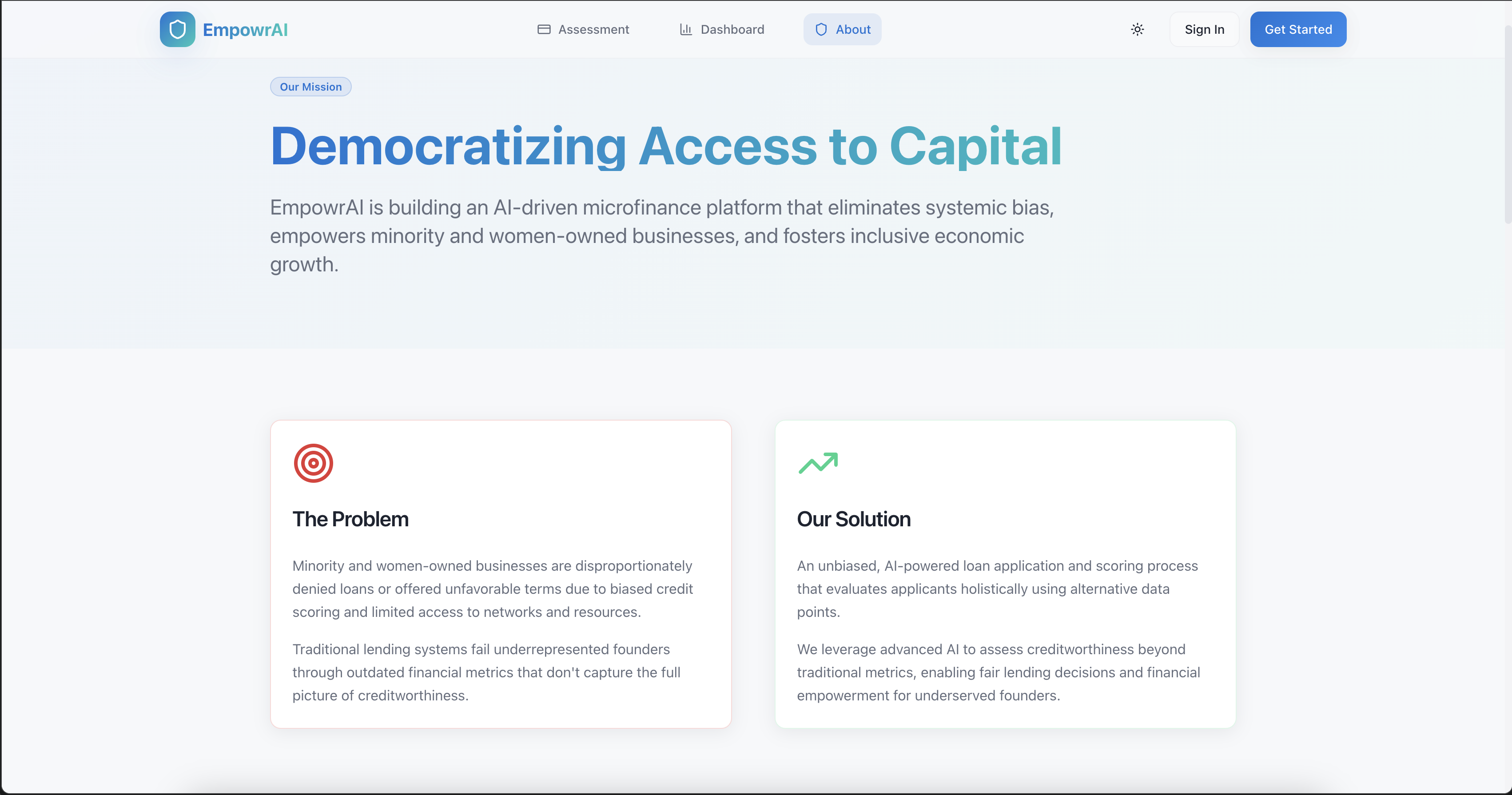
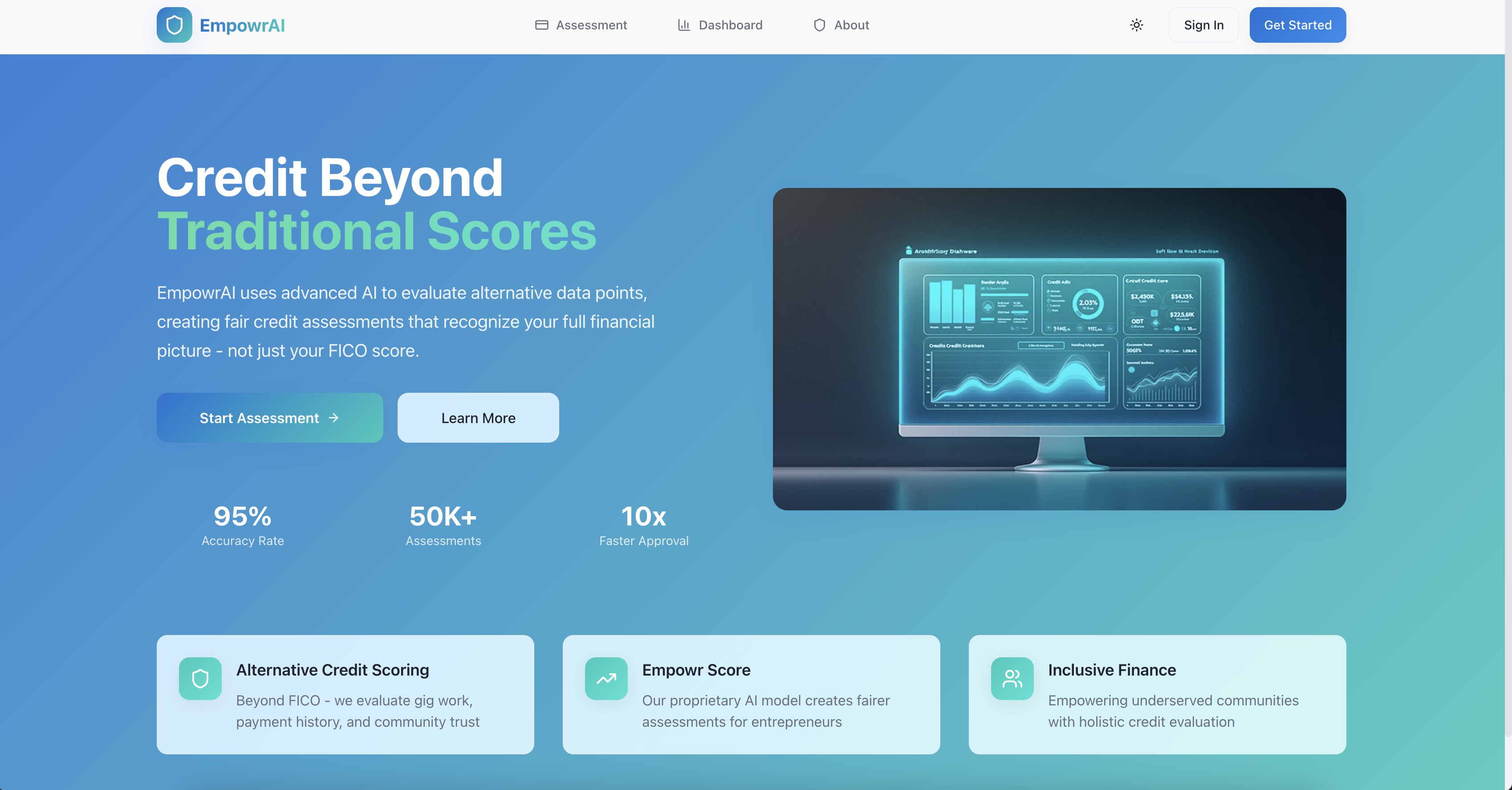
As a child of immigrant parents, I’ve seen many talented and hardworking people get denied bank loans simply because they don’t have an established credit score. This motivated the creation of Empowr AI, a tool that evaluates creditworthiness fairly by combining traditional credit factors with alternative data sources.
What it does
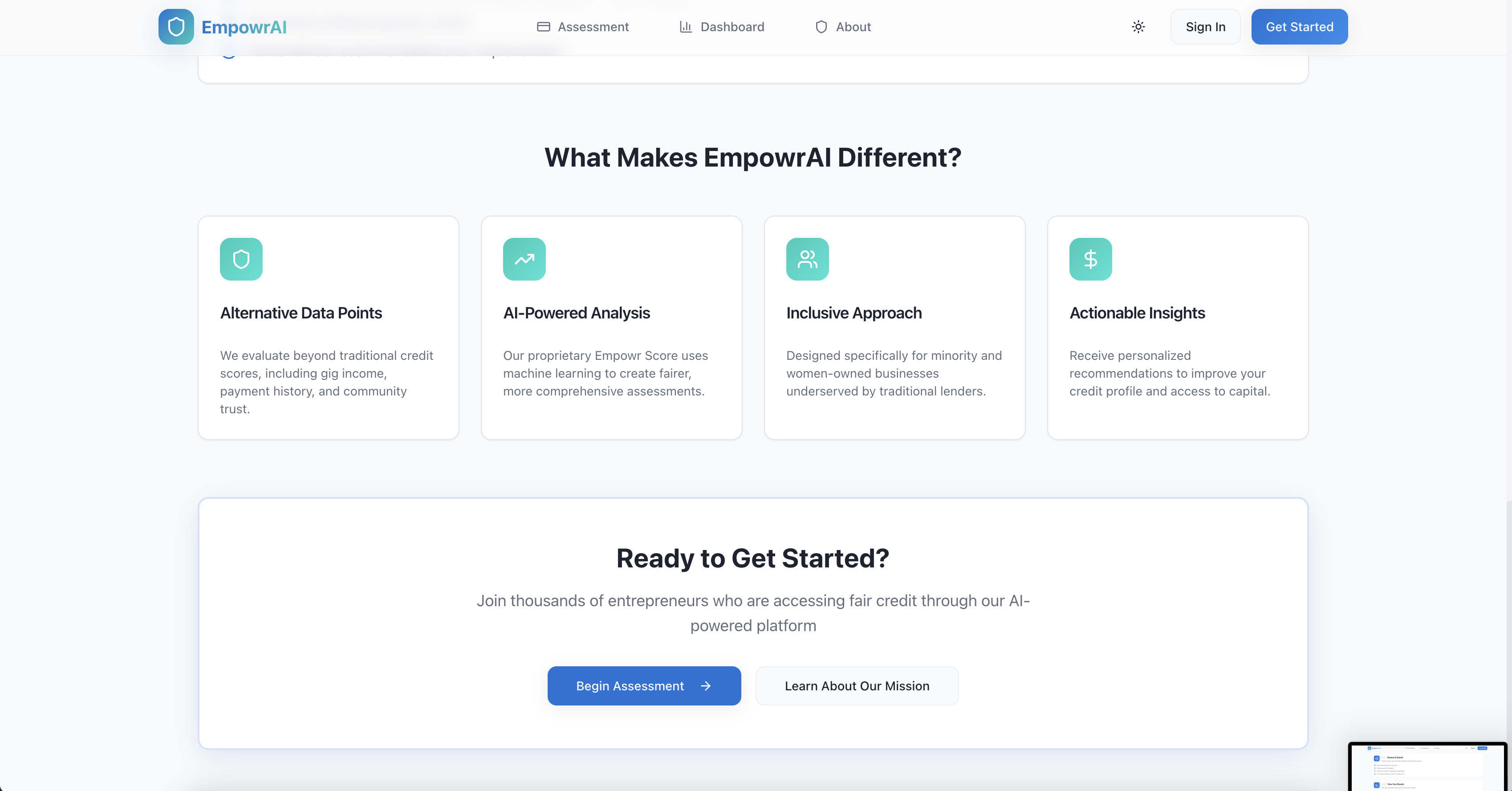
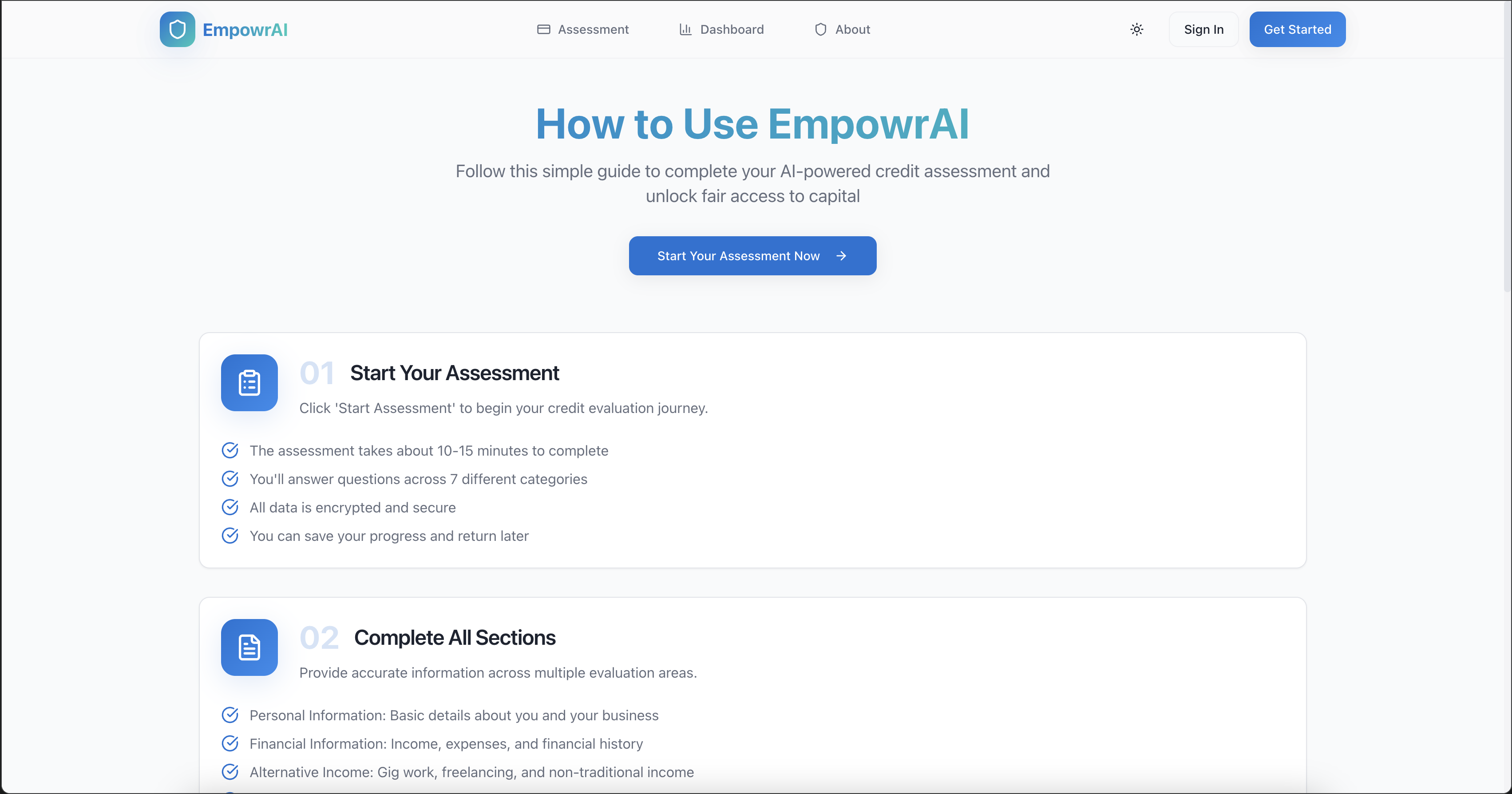
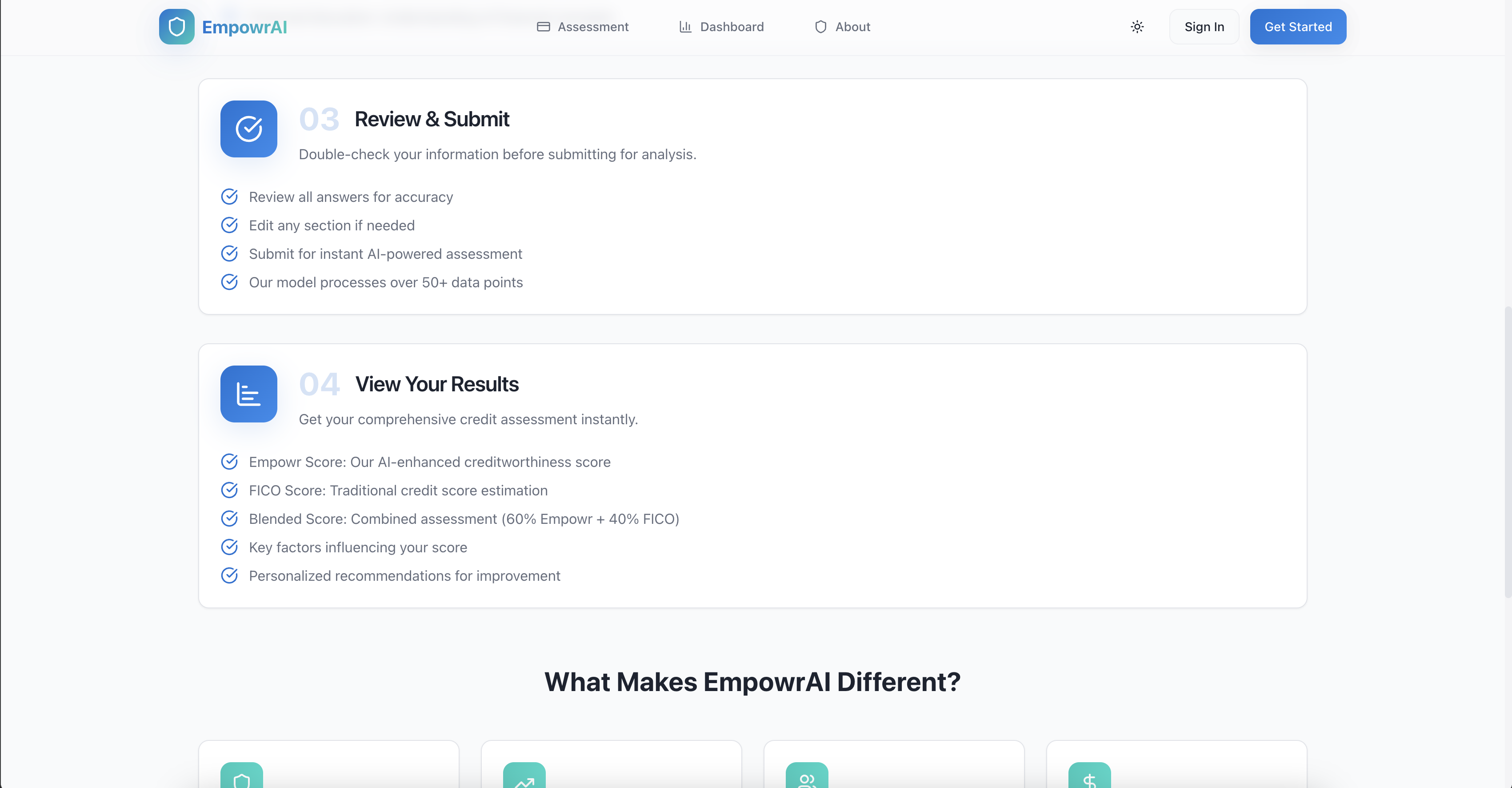
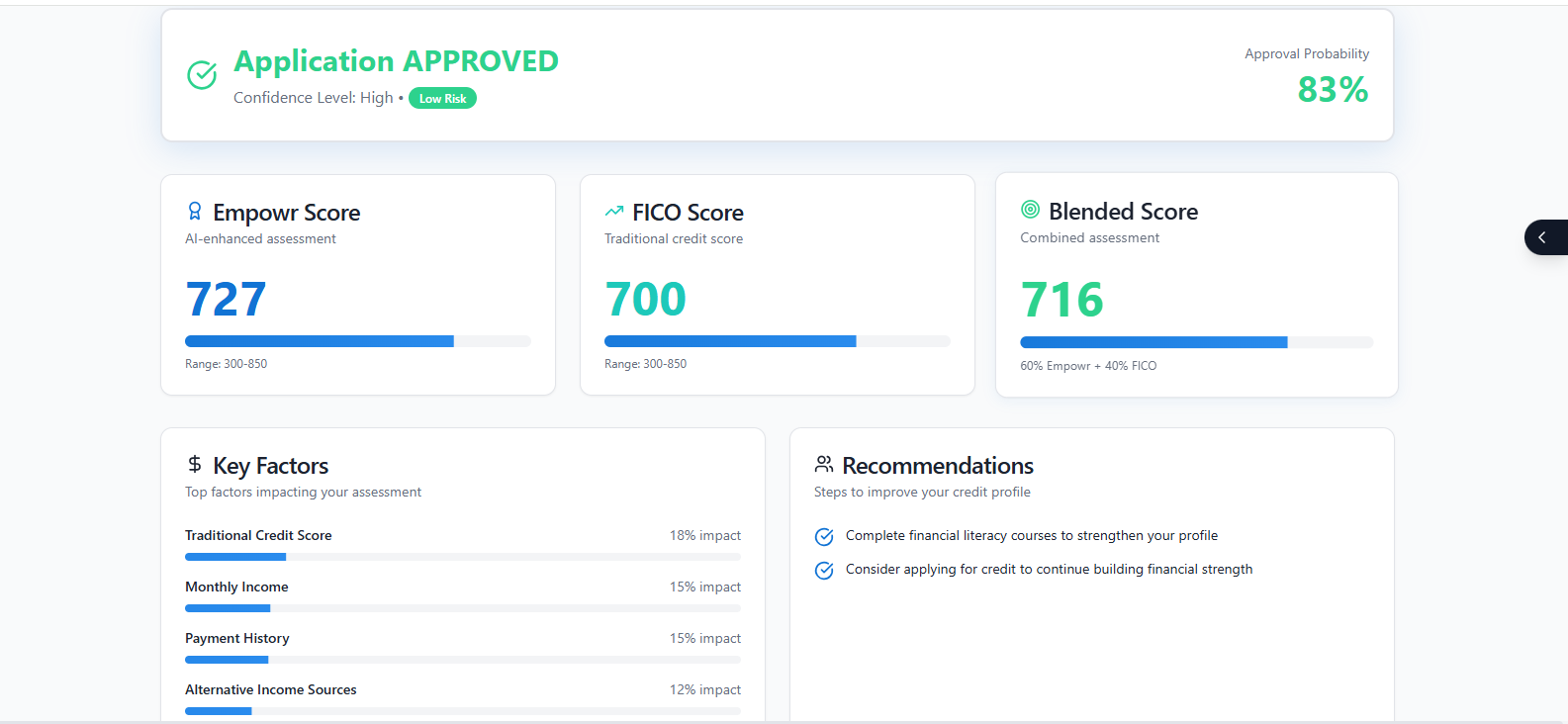
Empowr AI assesses loan eligibility for underserved entrepreneurs. It takes into account traditional credit scores, income, and alternative financial indicators like cash flow consistency, gig work performance, and community trust. It generates a detailed credit assessment with a decision (Approved, Conditional, or Denied), confidence level, risk score, and the top factors contributing to the decision.
How we built it
Backend: Built with Python and FastAPI, creating a POST endpoint /assess-credit that accepts applicant data and returns a detailed assessment.
Model: Developed EmpowrAICreditModel, a Random Forest + Gradient Boosting ensemble trained on synthetic data combining traditional and alternative financial features.
Frontend (planned): Uses a .tsx React component to send requests to the API and display results in a user-friendly interface.
Version Control: Code maintained on GitHub for collaboration and deployment.
Challenges we ran into
Aligning input features from the frontend with the features the model was trained on.
Handling missing model files and ensuring proper error messages in the API.
Generating meaningful explanations for credit decisions while keeping the model fair and unbiased.
Troubleshooting API errors, including repeatedly receiving a 422 Validation Error in FastAPI Swagger UI due to mismatched or missing input fields, which required careful updating of the request schema and model input alignment.
Accomplishments that we're proud of
Successfully built an AI model that combines multiple data sources for credit assessment.
Created a working FastAPI backend that returns detailed and interpretable results.
Developed a system that can monitor potential biases and fairness in decisions.
What we learned
How to build and deploy machine learning models as an API.
The importance of feature alignment between training data and real inputs.
Techniques for interpreting model decisions and presenting them clearly to users.
What's next for Empowr AI
Integrate the API with the frontend .tsx application.
Expand the model to include more alternative financial and social indicators.
Improve fairness metrics and continue testing on real-world user data.
Deploy the project for actual users and refine based on feedback.
Built With
- aws-s3-for-hosting-models-or-aws-ec2-for-deployment)-databases:-none-(synthetic-datasets-generated-within-python)-apis:-fastapi-rest-endpoints-for-credit-assessment-other-tools:-git-&-github-(version-control)
- e.g.
- joblib-(model-serialization)-frontend:-react-+-typescript-(.tsx-file)-cloud-&-deployment:-(if-applicable
- pandas-&-numpy-(data-handling)
- programming-languages:-python-(backend-model-and-api)
- scikit-learn-(machine-learning)
- swagger-ui-(api-testing)
- typescript/javascript-(frontend-.tsx)-frameworks-&-libraries:-backend:-fastapi-(api-development)


Log in or sign up for Devpost to join the conversation.