
Inspiration
During one of our early brainstorming sessions, my teammate started talking about her grandmother’s experience navigating the Canadian healthcare system.
She had been dealing with pelvic pain and irregular bleeding for months. Even when she finally got an appointment with a gynecologist, the instructions she received in the clinic didn’t translate into action afterward. Referral forms weren’t complete, follow-up tests required multiple calls, and medical jargon made her care plan almost impossible to follow. She felt anxious, confused, and alone, and my teammate told us how hard it was to watch someone you love struggle just to follow the care they needed.
We realized that this isn’t a problem for just one patient or one grandmother, it’s a gap that affects women of all ages. We realized that no matter how excellent a doctor is, patients often leave the clinic without the support they need to carry their care forward. And in Canada, where the system has many moving parts, this gap can create stress, delays, and worse outcomes.
That moment changed the way we approached our project. We stopped thinking about AI in abstract terms and started thinking about real patients—about the anxiety my teammate’s grandmother felt, about the uncertainty and effort required just to follow through on instructions. We asked ourselves: what if the system could hold a patient’s hand after the appointment ends?
That’s how empowHER was born.
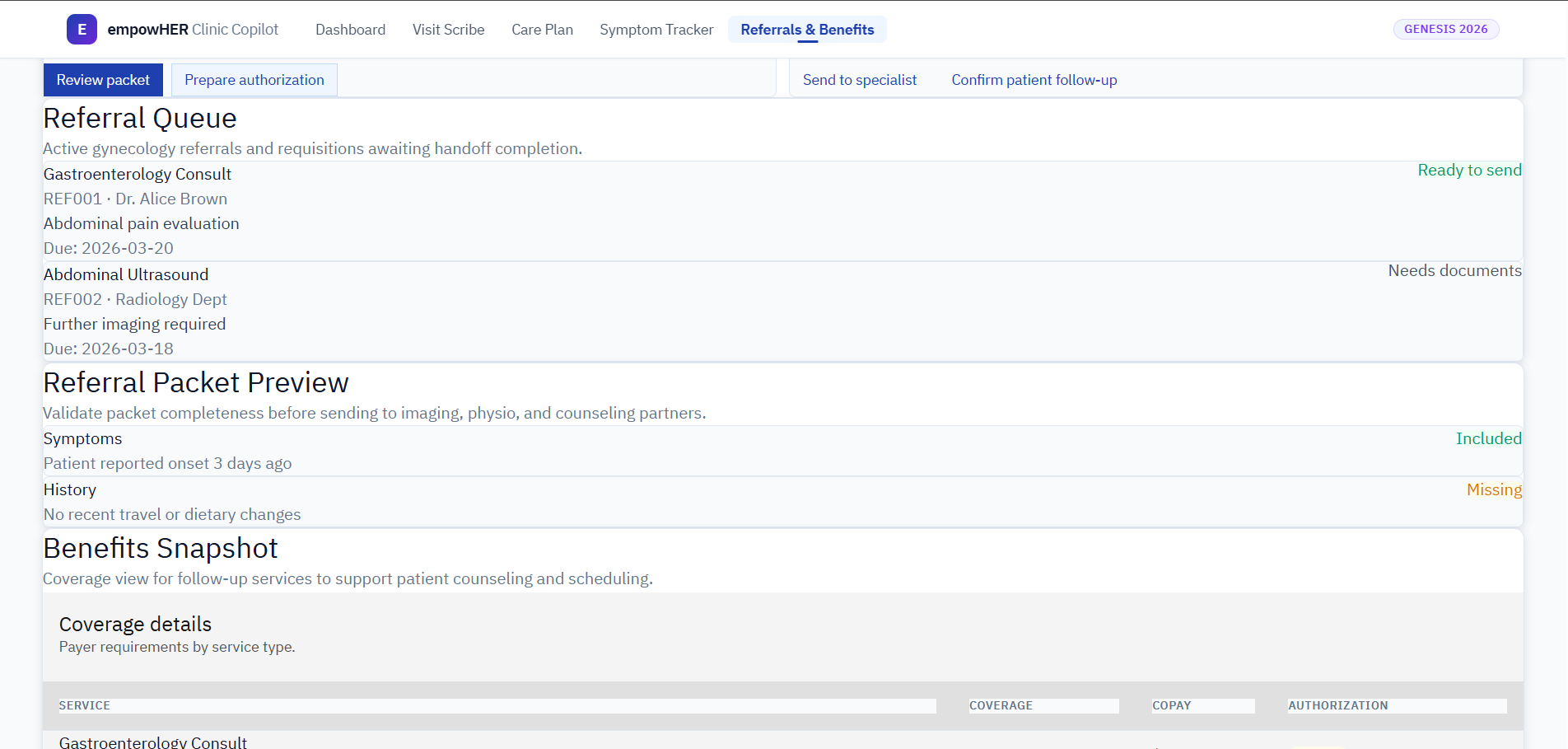
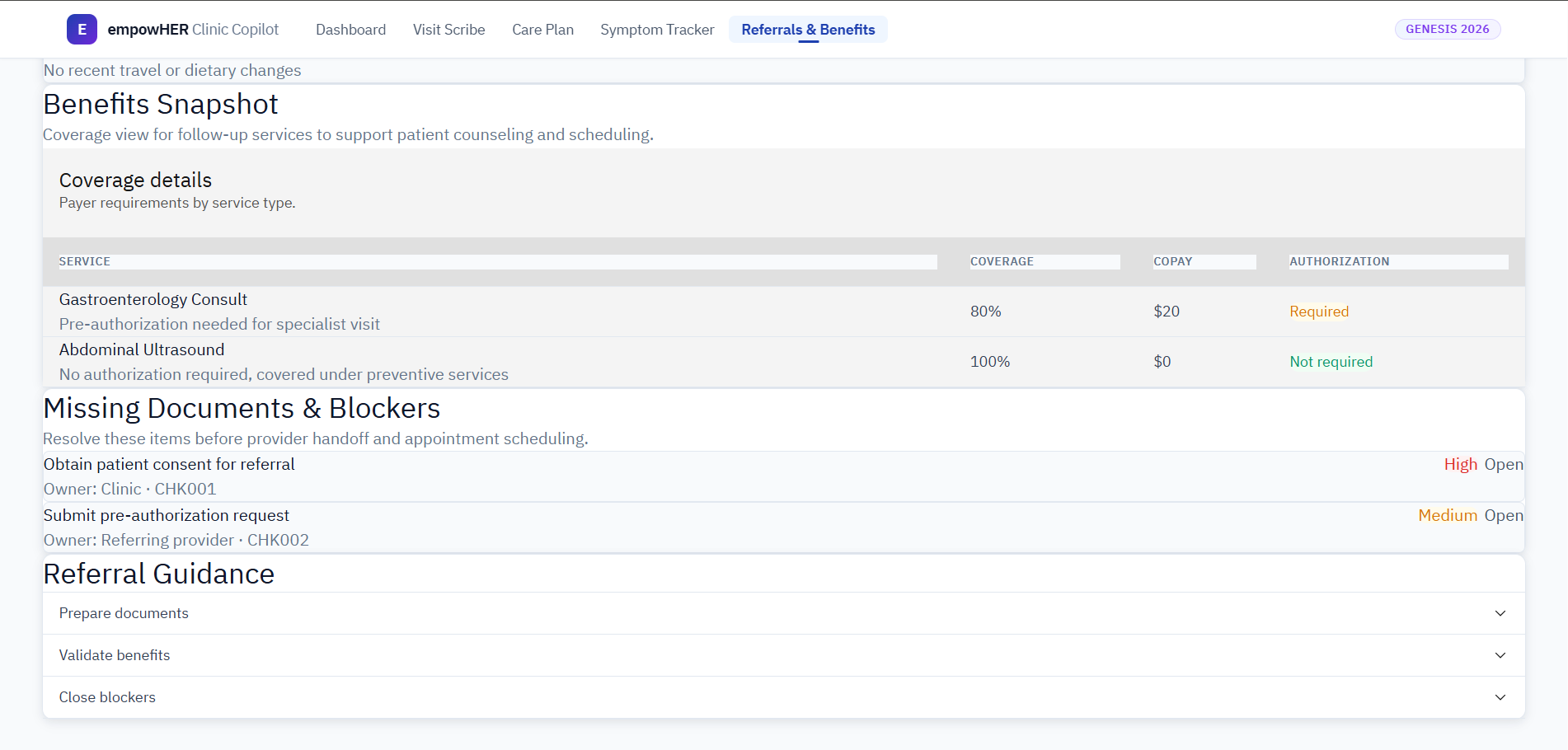
We designed it as an AI clinic copilot. It listens to the conversation between doctor and patient with consent, extracts every key action, and transforms them into structured next steps. It generates patient-friendly care plans, organizes symptom tracking between visits, and prepares complete referral and insurance packets. Building this made us more aware of the human side of healthcare than any textbook or lecture ever could. Our goal is simple but powerful: make the moment after leaving the clinic clear, supported, and reliable, so that women of all ages don’t have to navigate follow-up care alone.
For our team, empowHER isn’t just a project. It’s a response to what we saw that day in the brainstorming room: the stress, confusion, and vulnerability that women face when the system leaves them to manage on their own.
What it does
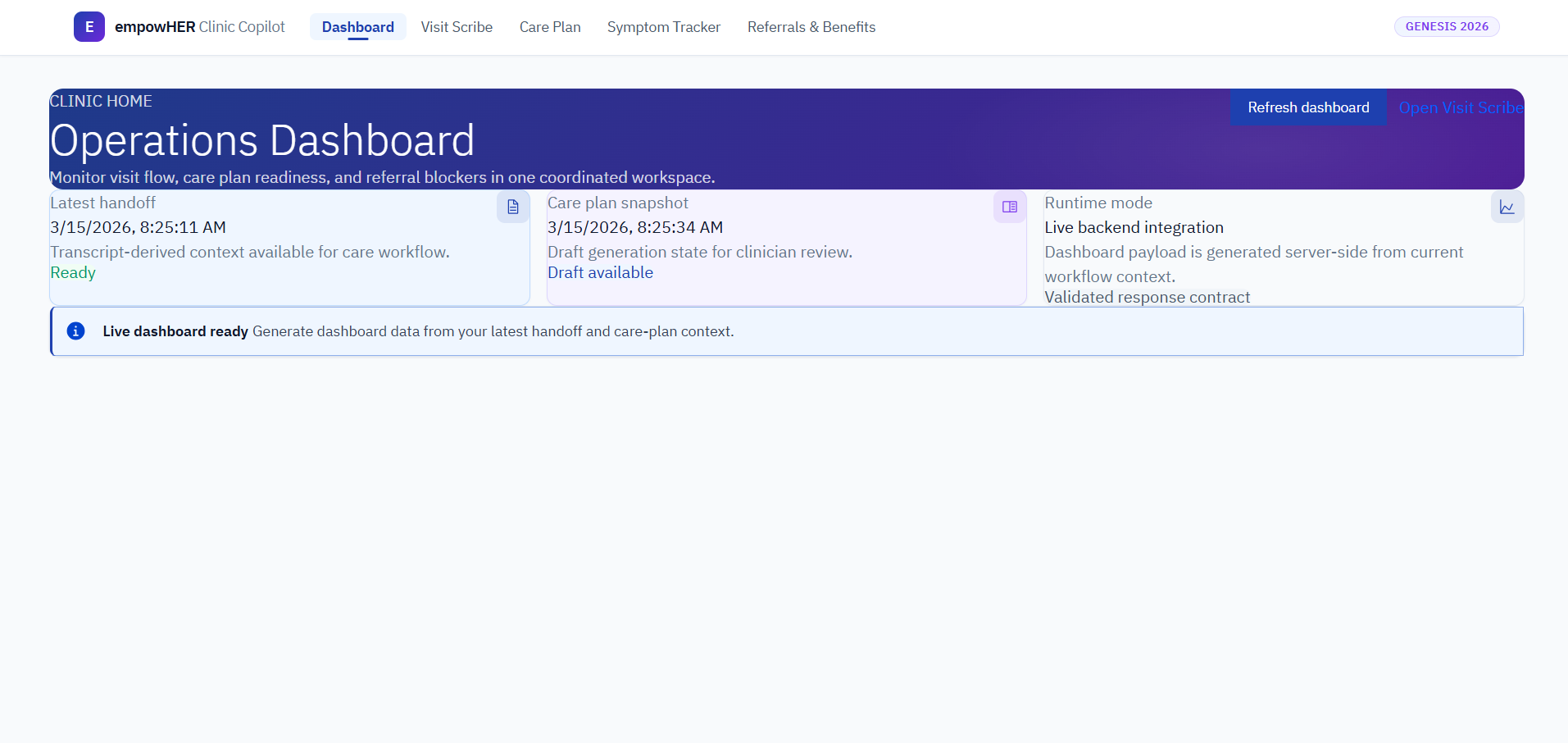
empowHER is an AI-powered workflow engine that transforms clinical visits into actionable care:
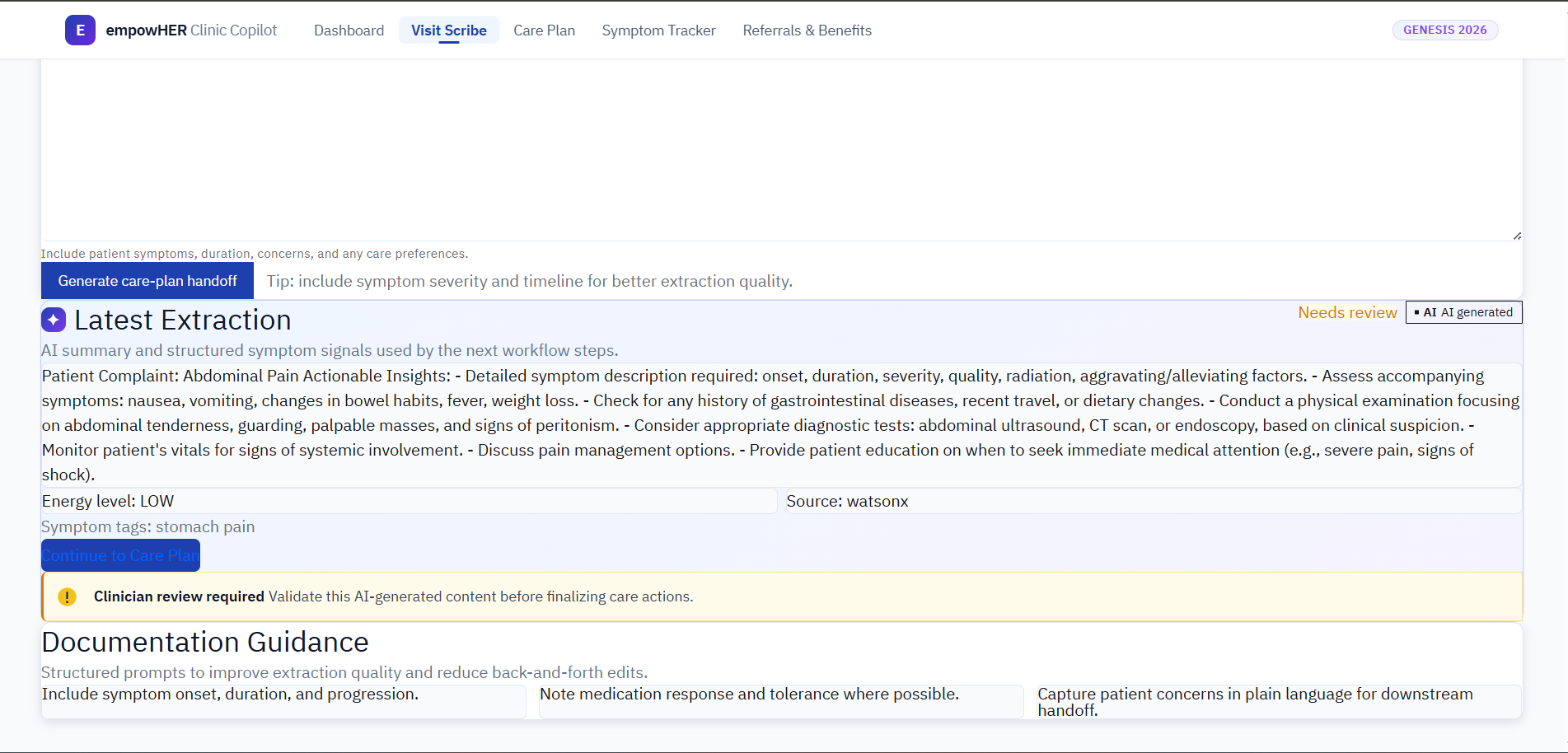
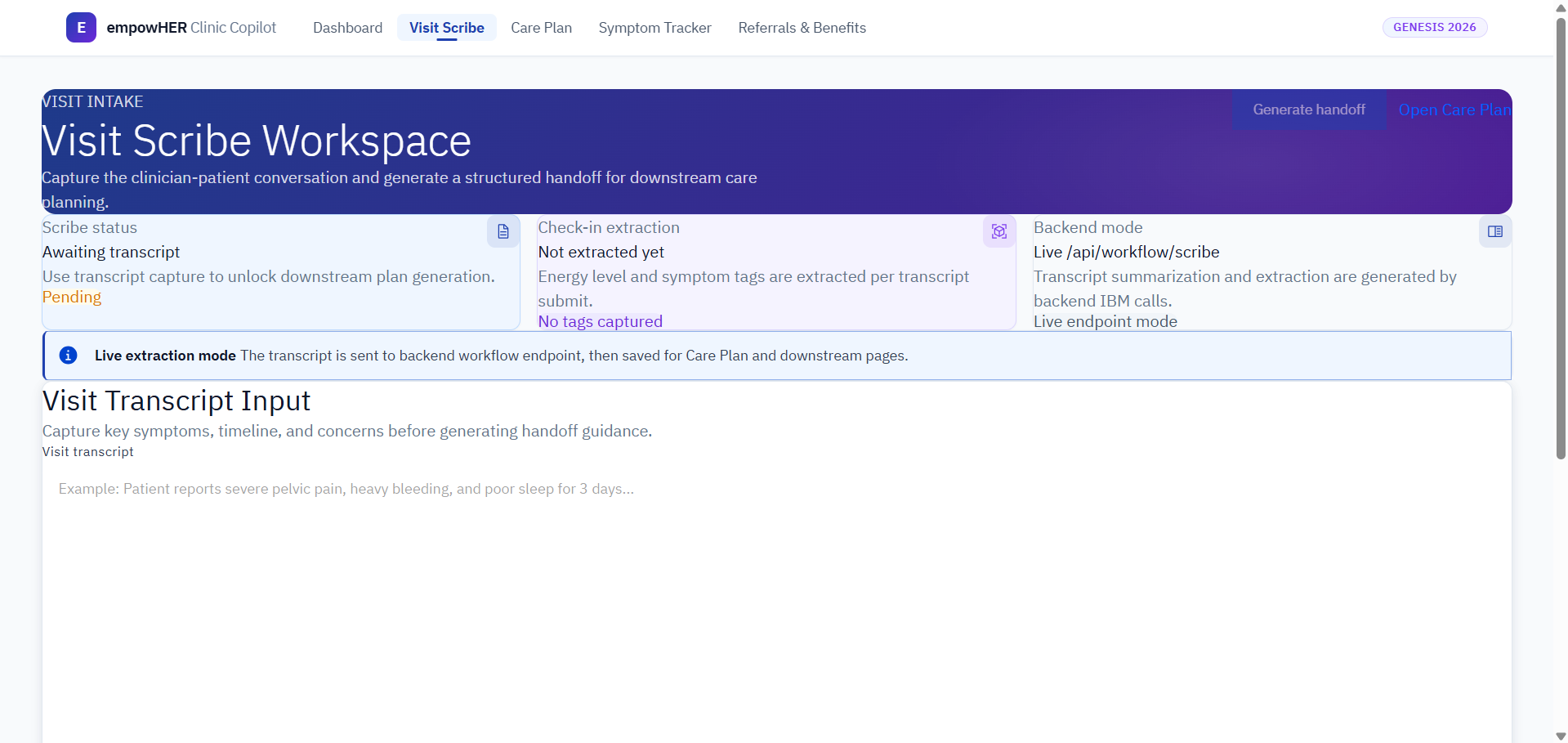
Visit Scribe & Clinical Action Extractor – Transcribes consented visit audio in real-time and extracts follow-ups, tests, referrals, and prescriptions.
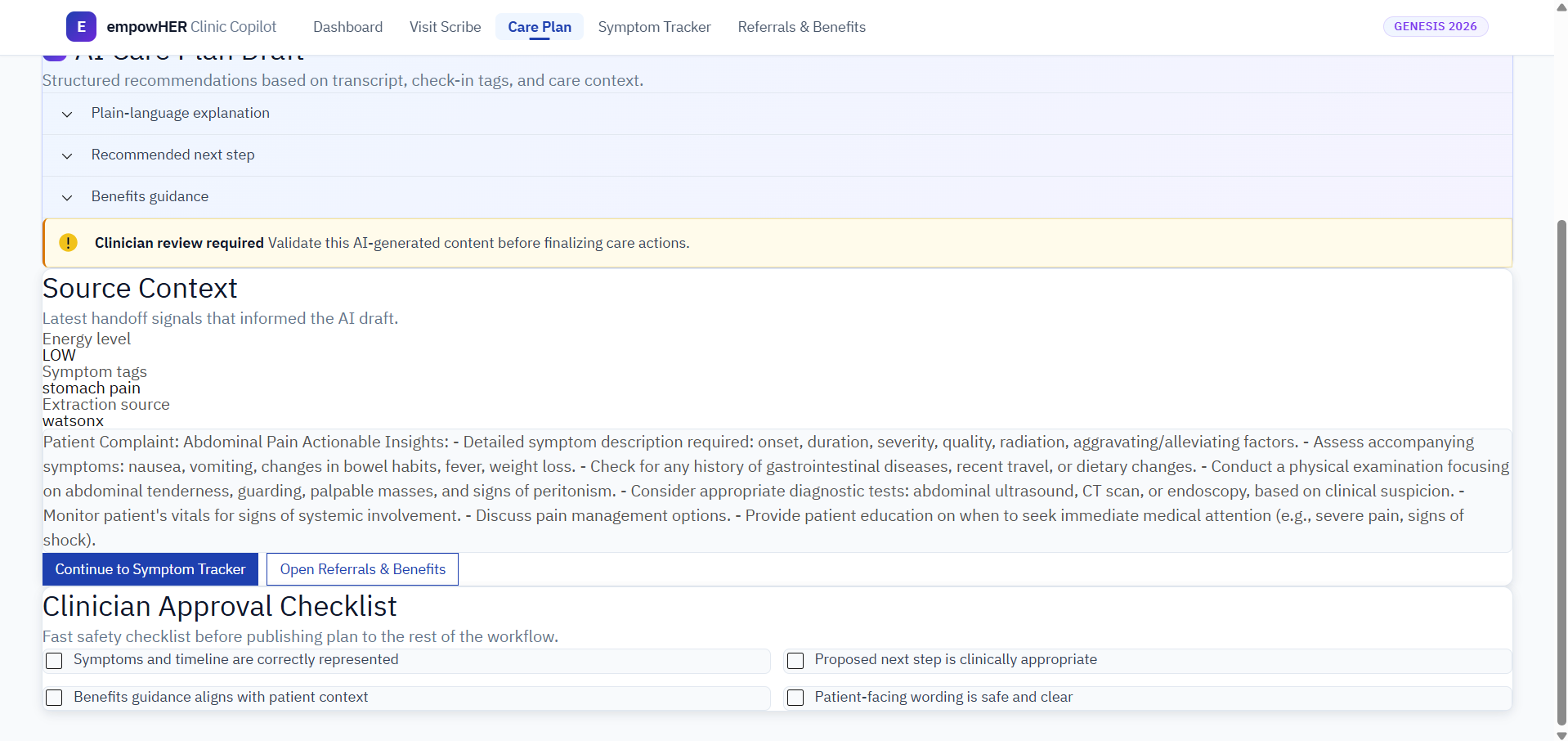
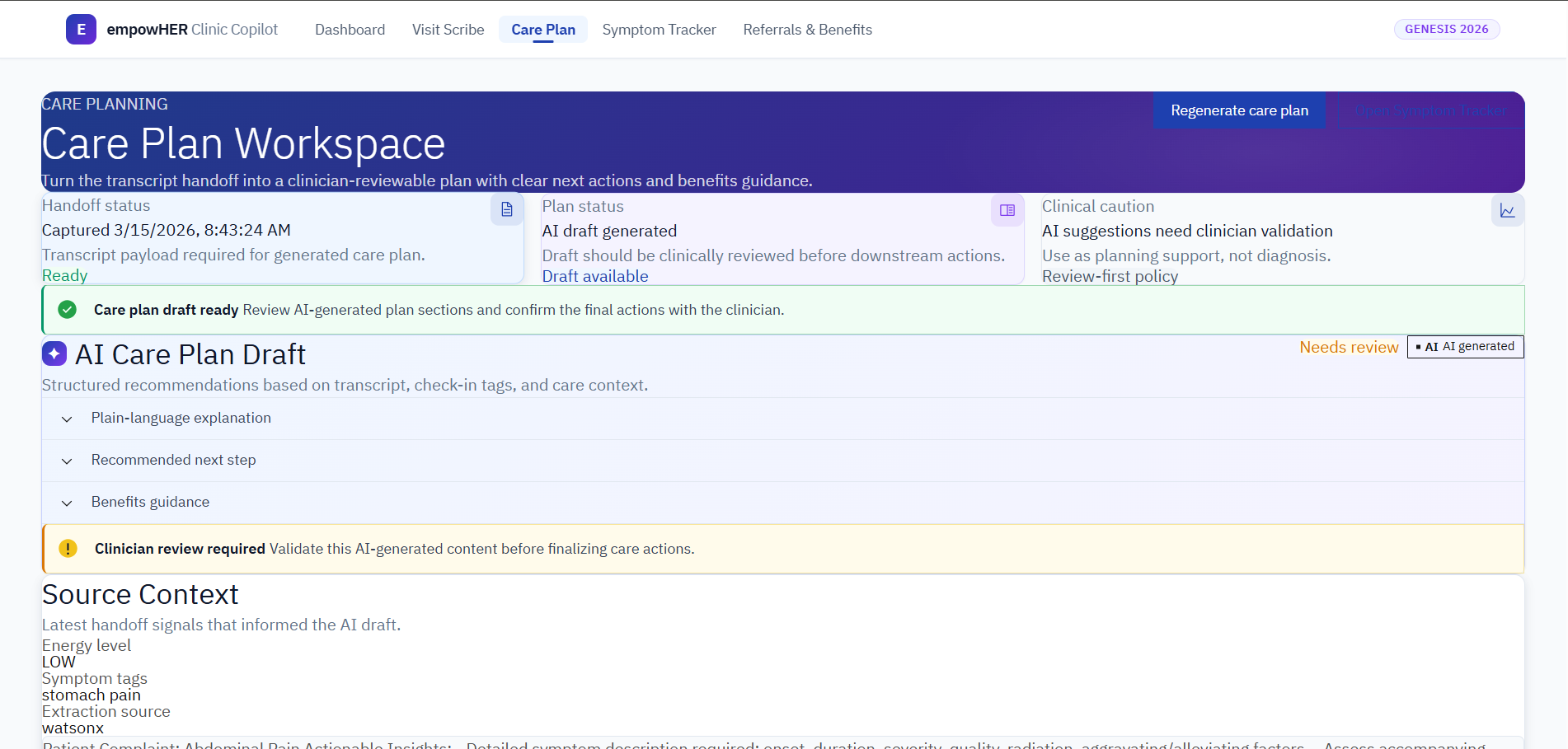
Care Plan Builder – Converts clinical instructions into patient-friendly summaries, timelines, and actionable checklists.
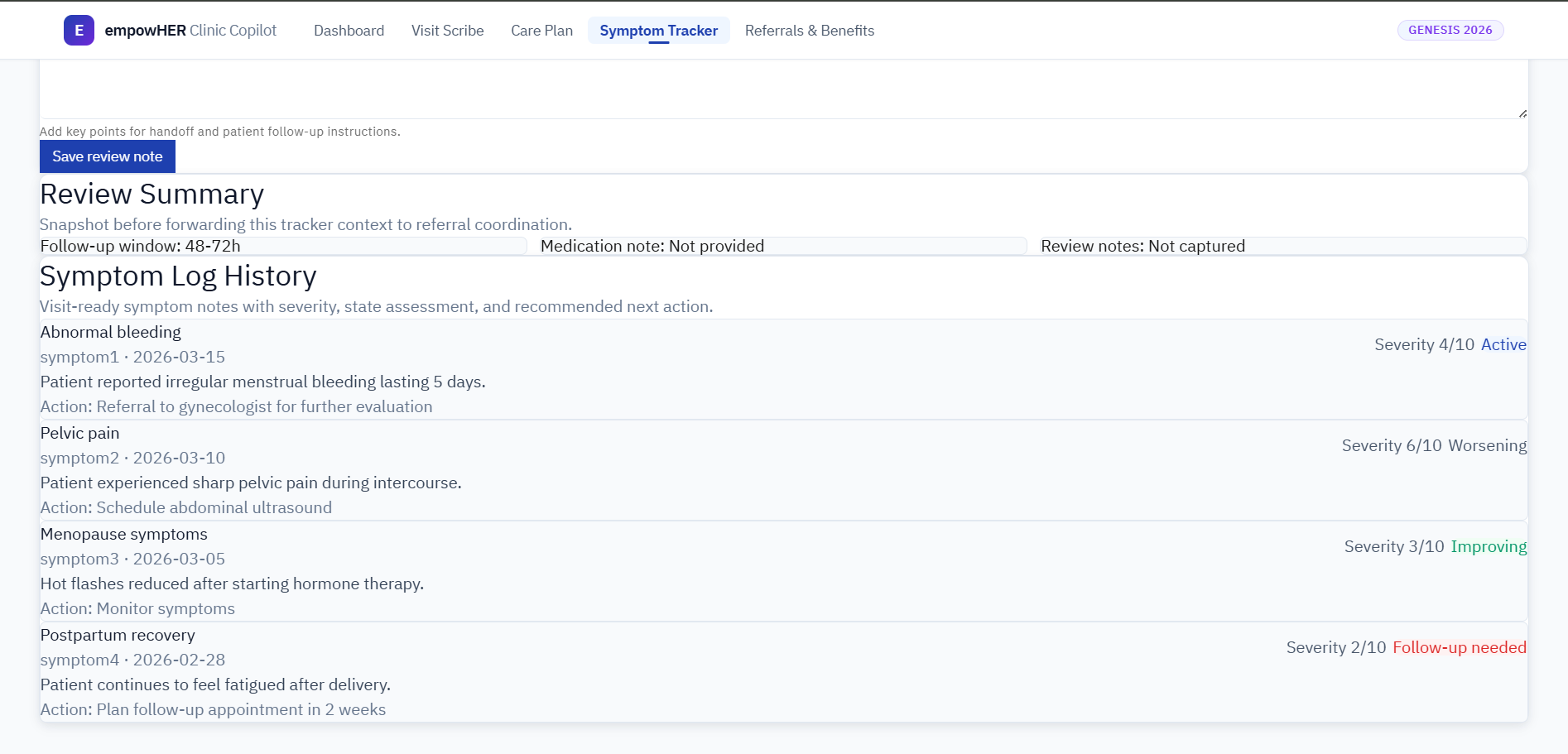
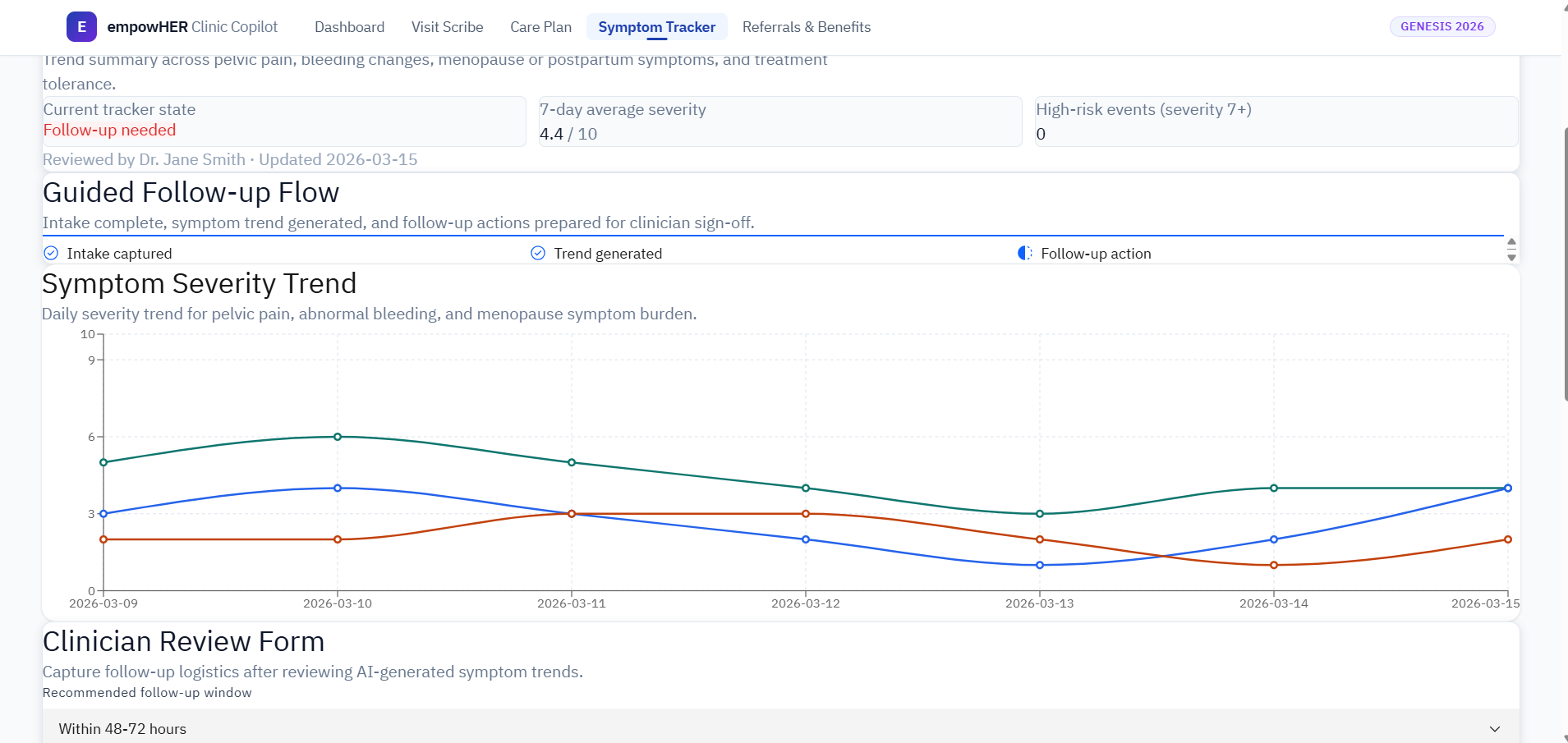
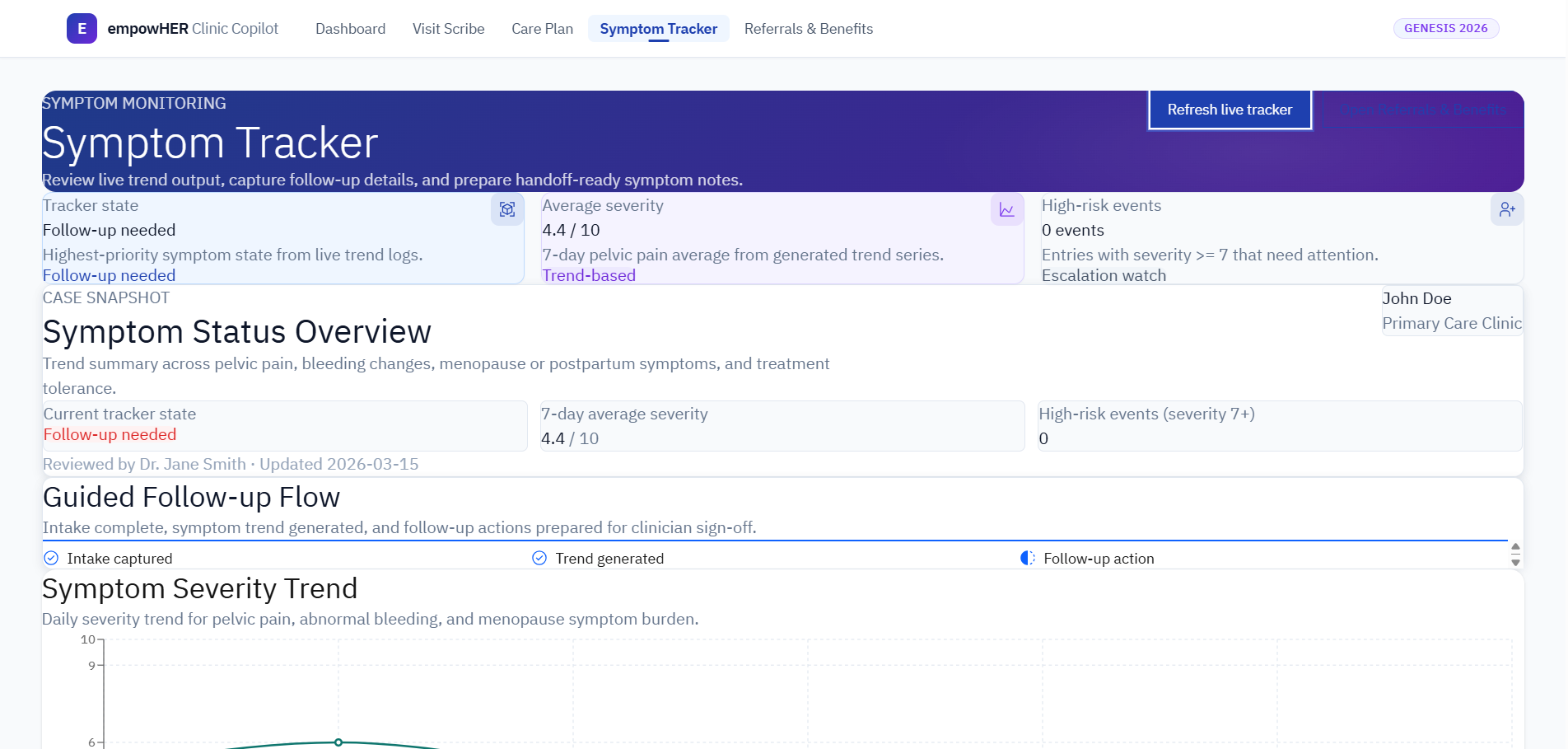
Symptom Tracker & Return-Visit Summary – Logs medication, side effects, and symptoms between visits and highlights trends to doctors.
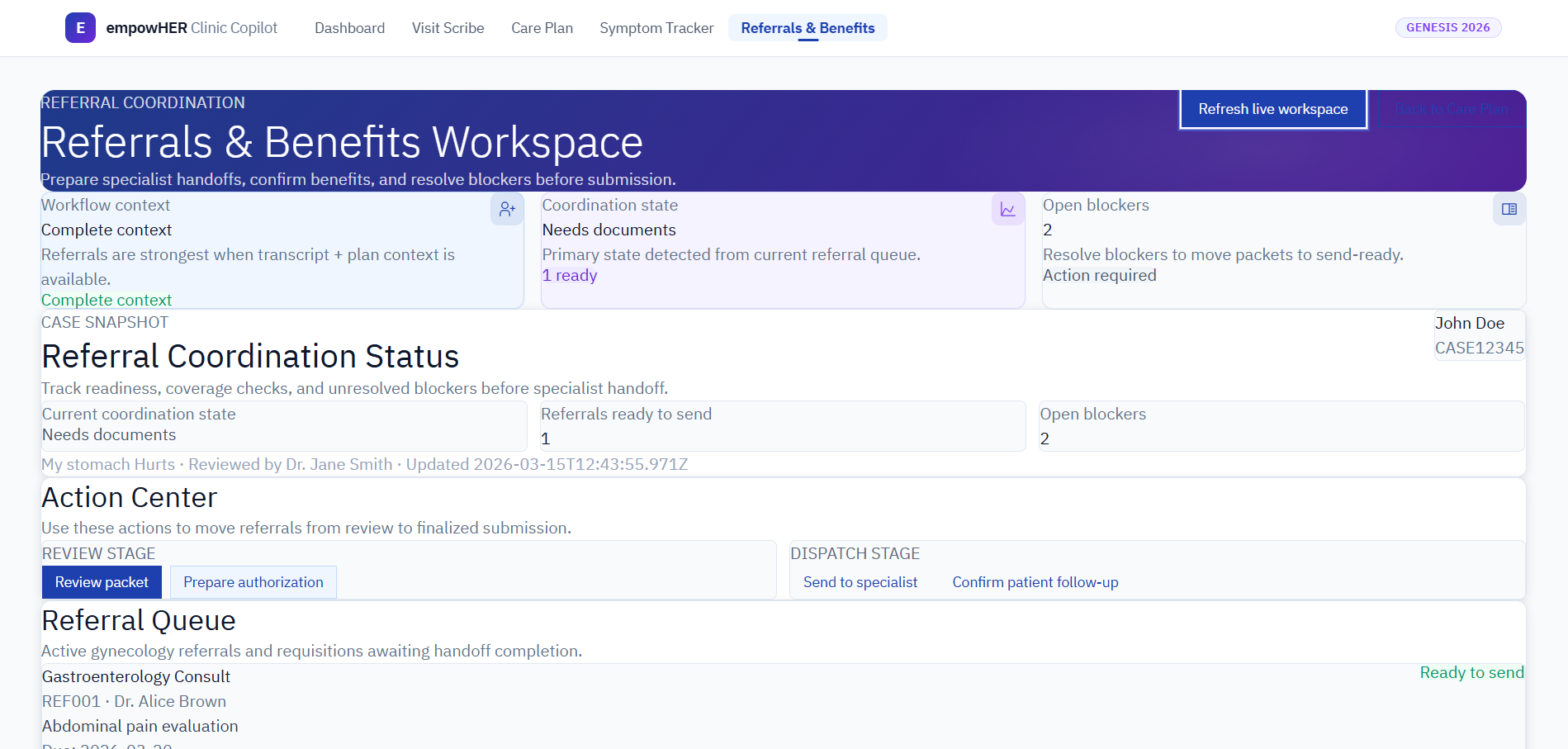
Referral, Benefits & Provider Handoff Agent – Generates complete referral packets, flags missing documents, and clarifies benefits to ensure smooth handoffs.
How we built it
Frontend: Next.js 14 + TypeScript + Tailwind CSS
Dashboard UI (shadcn/ui components)
Forms & Trackers (React Hook Form)
Data Visualization (Recharts)
Backend: FastAPI (Python)
REST API endpoints
Agent orchestration logic
Authentication & authorization
Async job processing (Redis + Celery)
IBM AI Services:
- watsonx.ai → clinical reasoning, summarization, action extraction
- watsonx Orchestrate → multi-agent workflow coordination
- Watson Speech → real-time audio transcription
- Langflow → visual AI workflow builder
- Db2 → secure structured data storage
- Cloud Object Storage → medical documents, audio files, generated packets
- IBM Cloud IAM → role-based access control
System Flow: Clinic Dashboard → FastAPI Server → AI Agents (Watson + watsonx + Langflow) → Patient & Provider Portals
Challenges we ran into
Ensuring AI-generated JSON outputs were consistently structured, and designing robust fallback logic when parsing failed.
Integrating real-time speech transcription (Watson Speech) with action extraction (watsonx.ai) and downstream storage (Db2 / Cloud Object Storage) without data loss.
Coordinating multi-agent workflows with watsonx Orchestrate while keeping patient safety the absolute priority.
Handling latency and concurrency issues in the FastAPI backend while supporting simultaneous frontend requests.
Maintaining frontend-backend consistency with TypeScript + Next.js + Carbon UI, especially for dynamic dashboards and real-time updates.
Accomplishments that we're proud of
Pulled together a full end-to-end workflow in 36 hours: live transcription, AI action extraction, care plans, and referral packets.
Coordinated multiple AI services to produce accurate, complete outputs while keeping clinician approval central.
Built a system that handles errors gracefully, so the experience never breaks even when AI misbehaves.
Grew as a team in person, debugging together, dividing tasks, and staying focused under intense time pressure.
Delivered an MVP that demonstrates both what’s technically possible and how it could genuinely help patients.
What we learned
The human side of healthcare is just as critical as the technical side; empathy shapes every design decision.
In-person collaboration sparks creativity and makes problem-solving more dynamic.
Humor and camaraderie aren’t distractions, but essential fuel for the team's resilience and innovation.
Working with real-world AI outputs and data taught us the importance of careful planning, fallback systems, and ethical safeguards.
What's next for empowHER?
Multi-language support to make care accessible to everyone.
Voice-based symptom logging to reduce friction for patients.
Smart appointment scheduling based on symptom trends and care plan requirements.
Expand beyond gynecology into cardiology, oncology, primary care, and more.
Population health analytics and direct payer integration for seamless claims and pre-authorizations.
Telehealth integration to support virtual visits with the same structured workflow.
Built With
- cloud
- db2
- ibm
- javascript
- langflow;
- object
- python;-react-+-next.js-+-vite-+-carbon-ui-+-recharts;-express-+-fastapi;-ibm-watson-speech
- storage
- typescript
- watsonx-orchestrate
- watsonx.ai


Log in or sign up for Devpost to join the conversation.