-
-
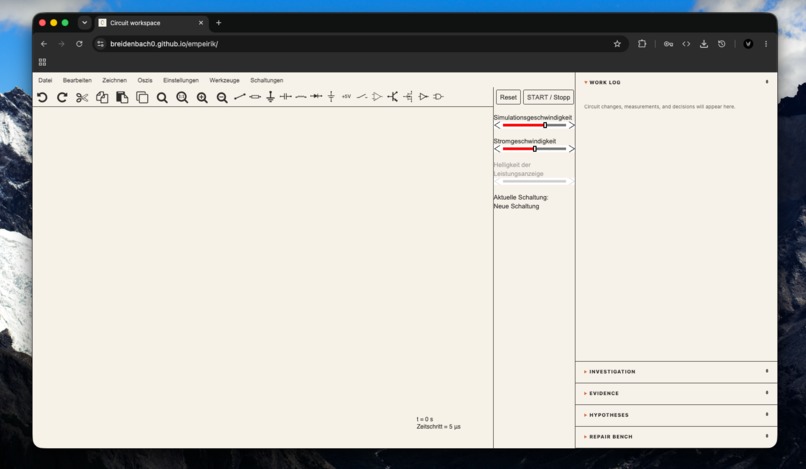
Overview
Debugging electronic circuits is often a slow and fragmented process, especially when the problem is not immediately obvious or the person working on it does not have deep experience with the specific hardware. Finding the cause can involve jumping between schematics, measurements, datasheets, simulation tools, and external help. AI can assist with the diagnosis, but the usual workflow of sending screenshots, measurements, and explanations back and forth through chat quickly becomes confusing and loses context.
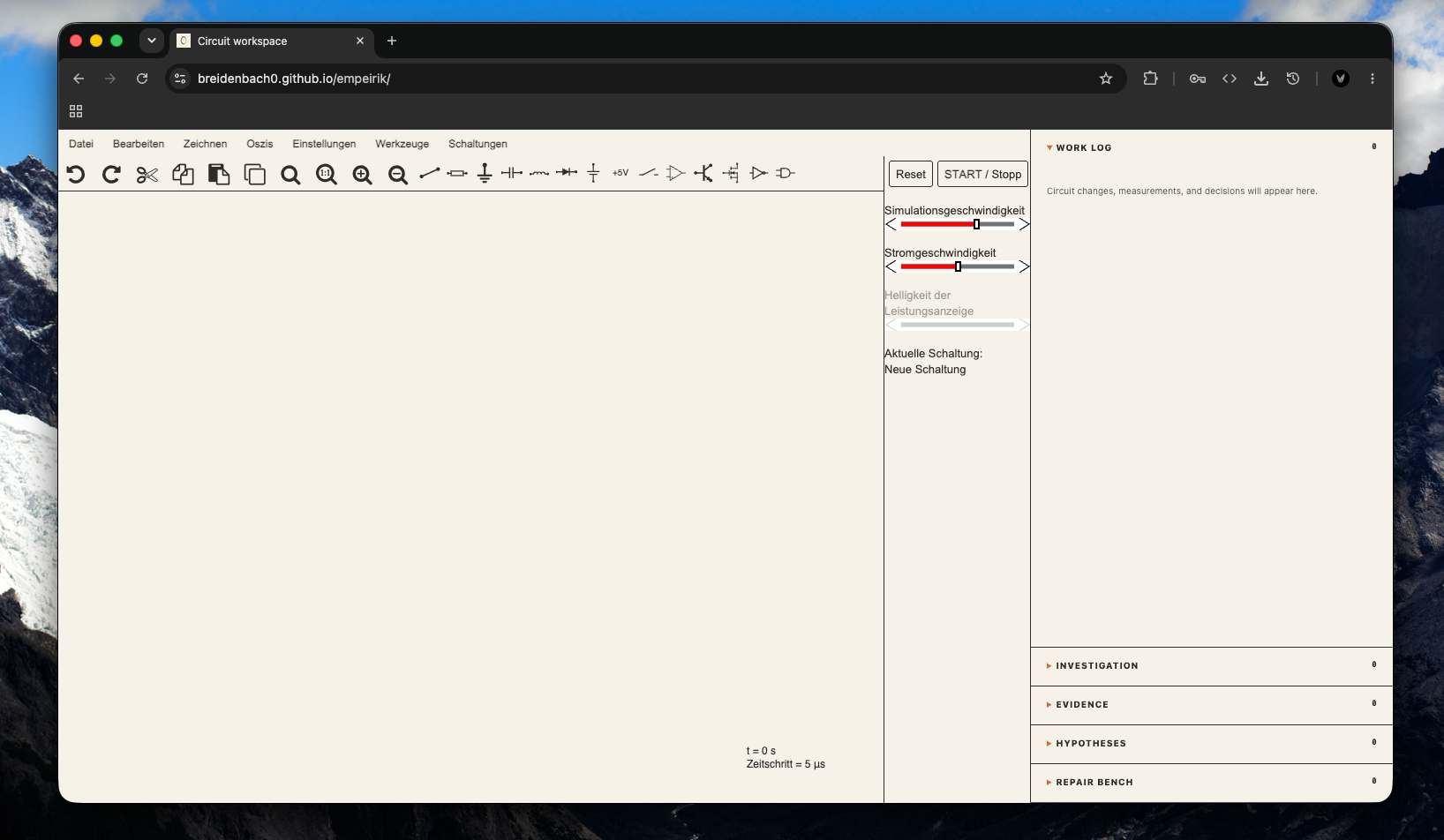
empeirik was built to bring that process into one shared workspace. The circuit, measurements, hypotheses, diagnostic steps, and proposed fixes all remain visible in the same environment while the AI works directly with the current state of the problem. It can inspect the circuit, decide which measurements are useful, narrow down likely causes, propose repairs or directly implement them, and verify them in simulation instead of repeatedly reconstructing the situation from a conversation.
The project is built on top of CircuitJS1 for circuit rendering and simulation, with an additional diagnostic layer for measurements, hypotheses, repair testing, a shared activity timeline, and WebMCP tools that let the AI interact directly with the workspace. One of the main challenges was turning a traditional circuit simulator into a structured environment that both the user and the AI can operate at the same time while keeping every diagnostic step synchronized and visible.
Learning and building electronics made it quickly clear how much context is lost when AI assistance is limited to a separate chat window. Giving the agent direct access to the same tools, state, and visual environment as the user makes the debugging process much more continuous and practical.
Built With
- circuitjs1
- codex

Log in or sign up for Devpost to join the conversation.