
Inspiration
In today’s fast-paced digital world, emotional intelligence is more important than ever—especially for professionals in healthcare, education, and leadership roles. Despite its importance, empathy is rarely taught in a structured, measurable way.
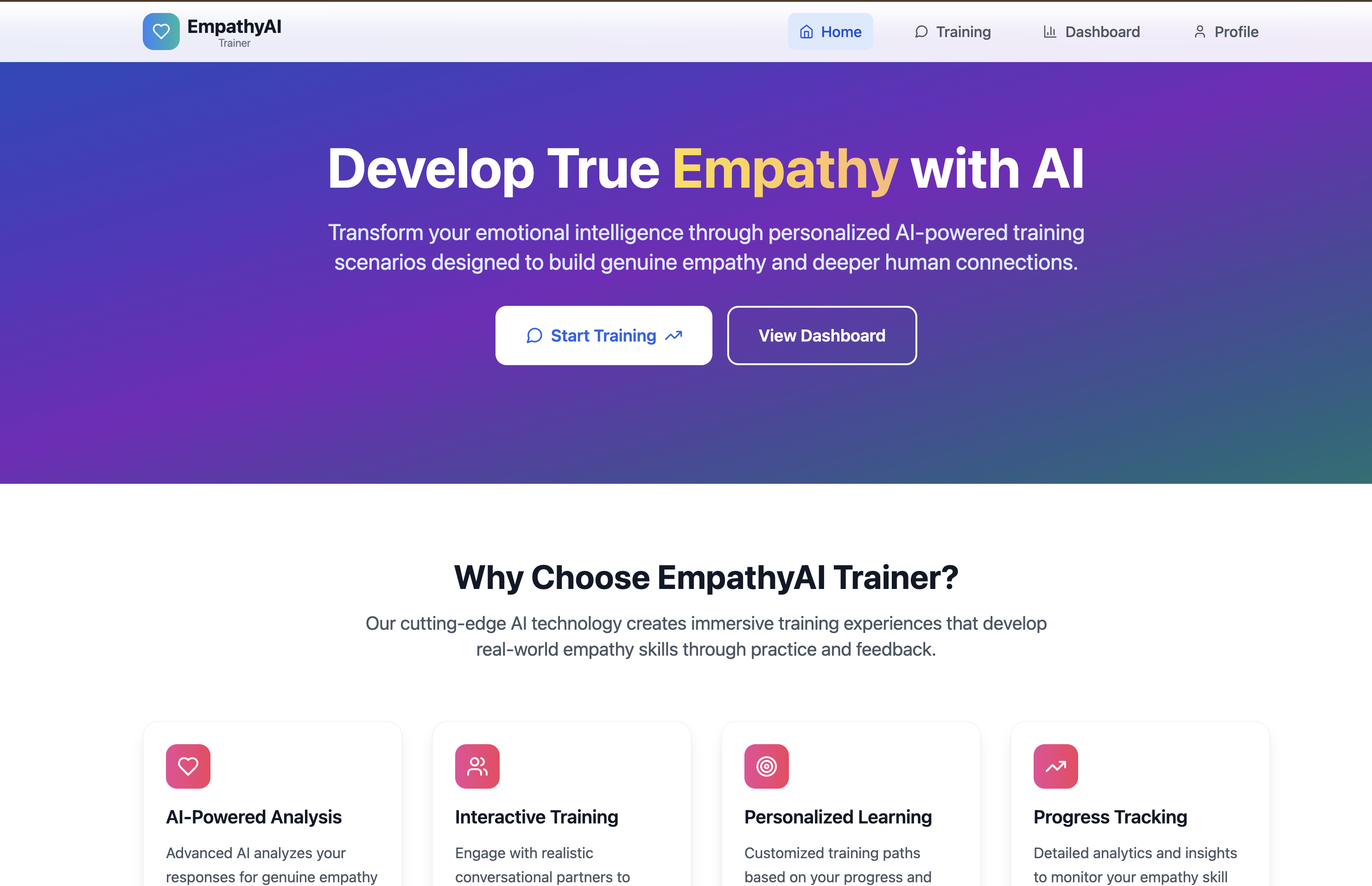
We built EmpathyAI Trainer to fill that gap: a tool that enables users to develop empathy through guided, AI-powered simulations of emotionally charged conversations. Whether comforting a grieving friend or calming an anxious student, users can safely practice how to respond with care and confidence. What it does
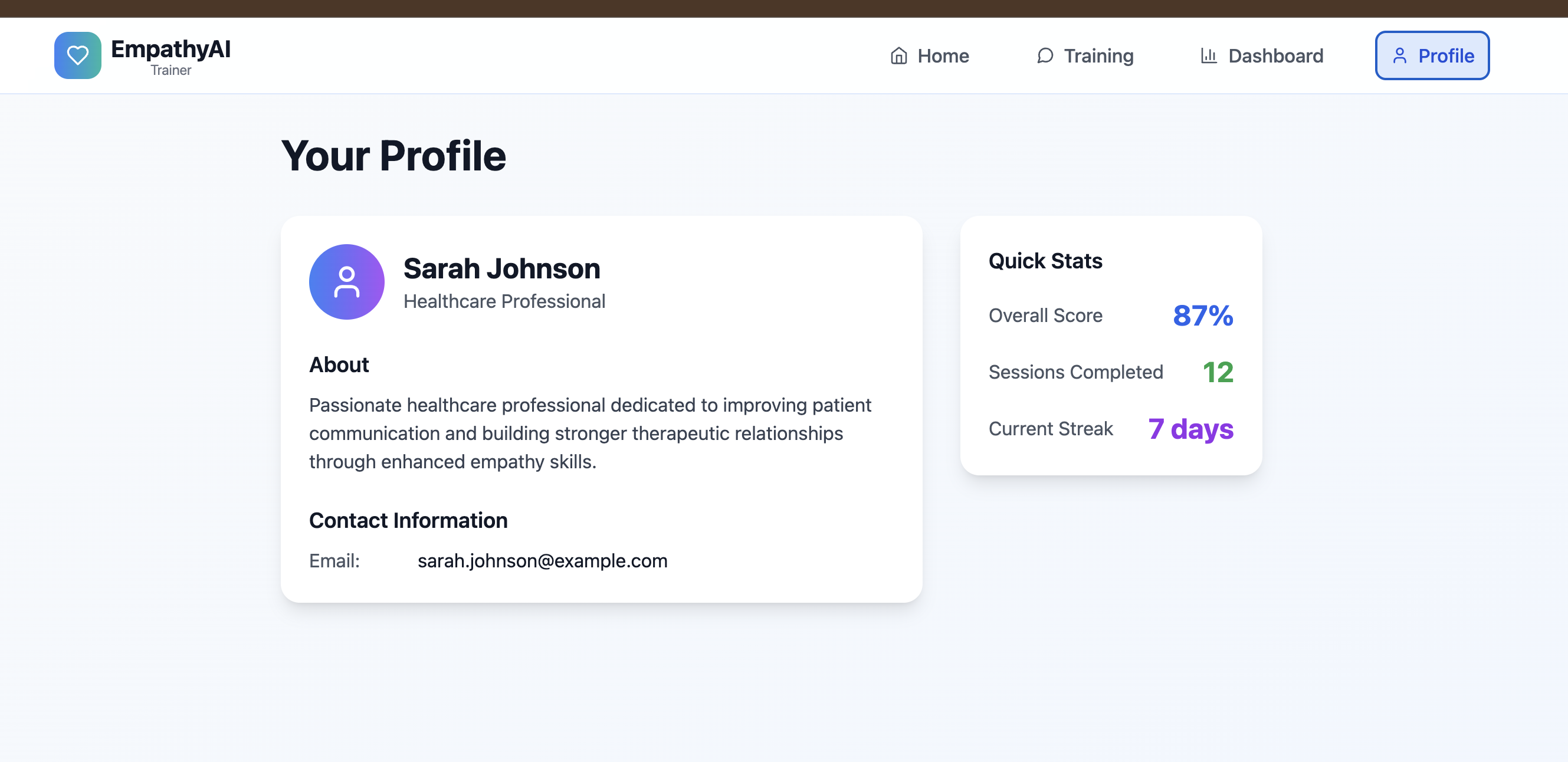
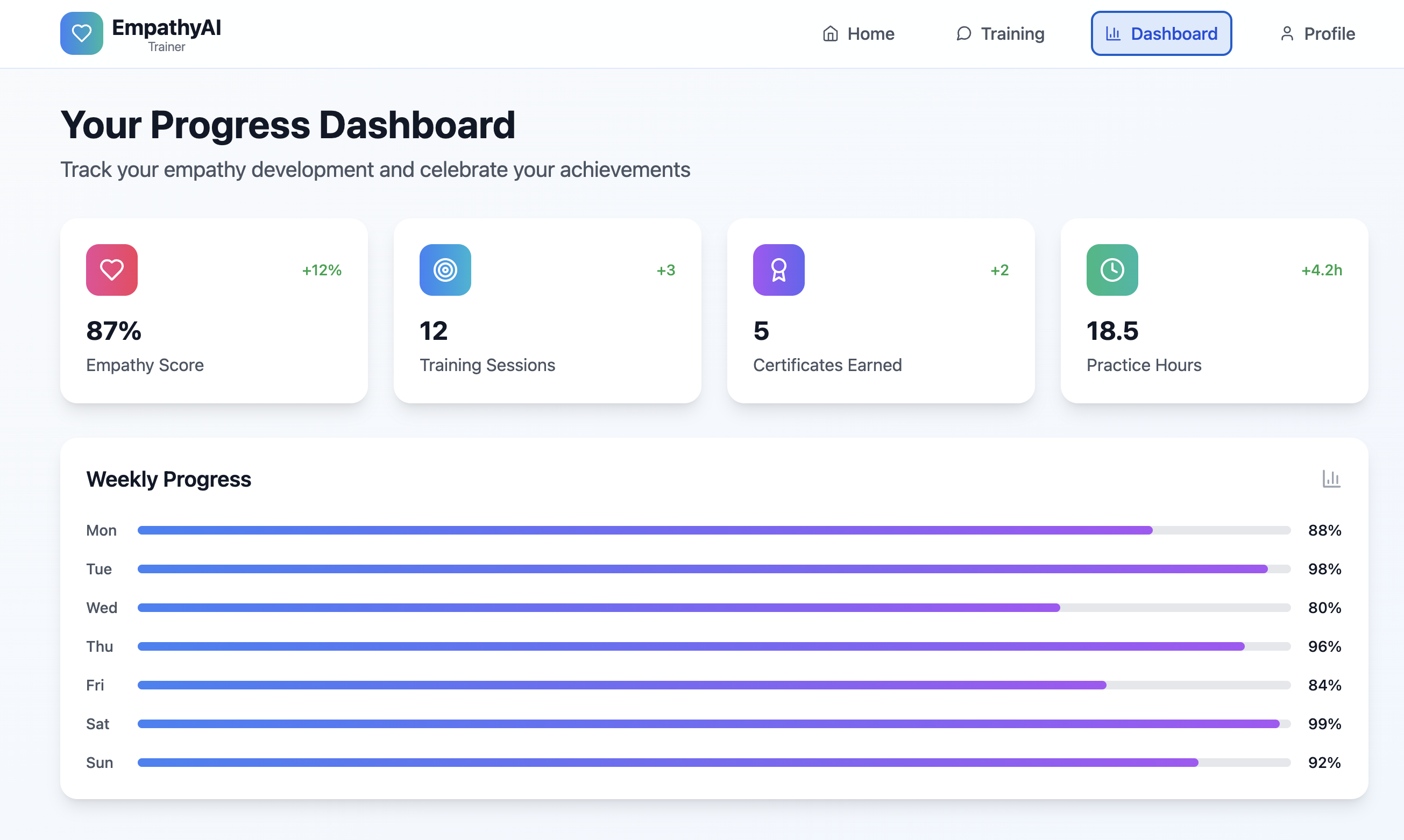
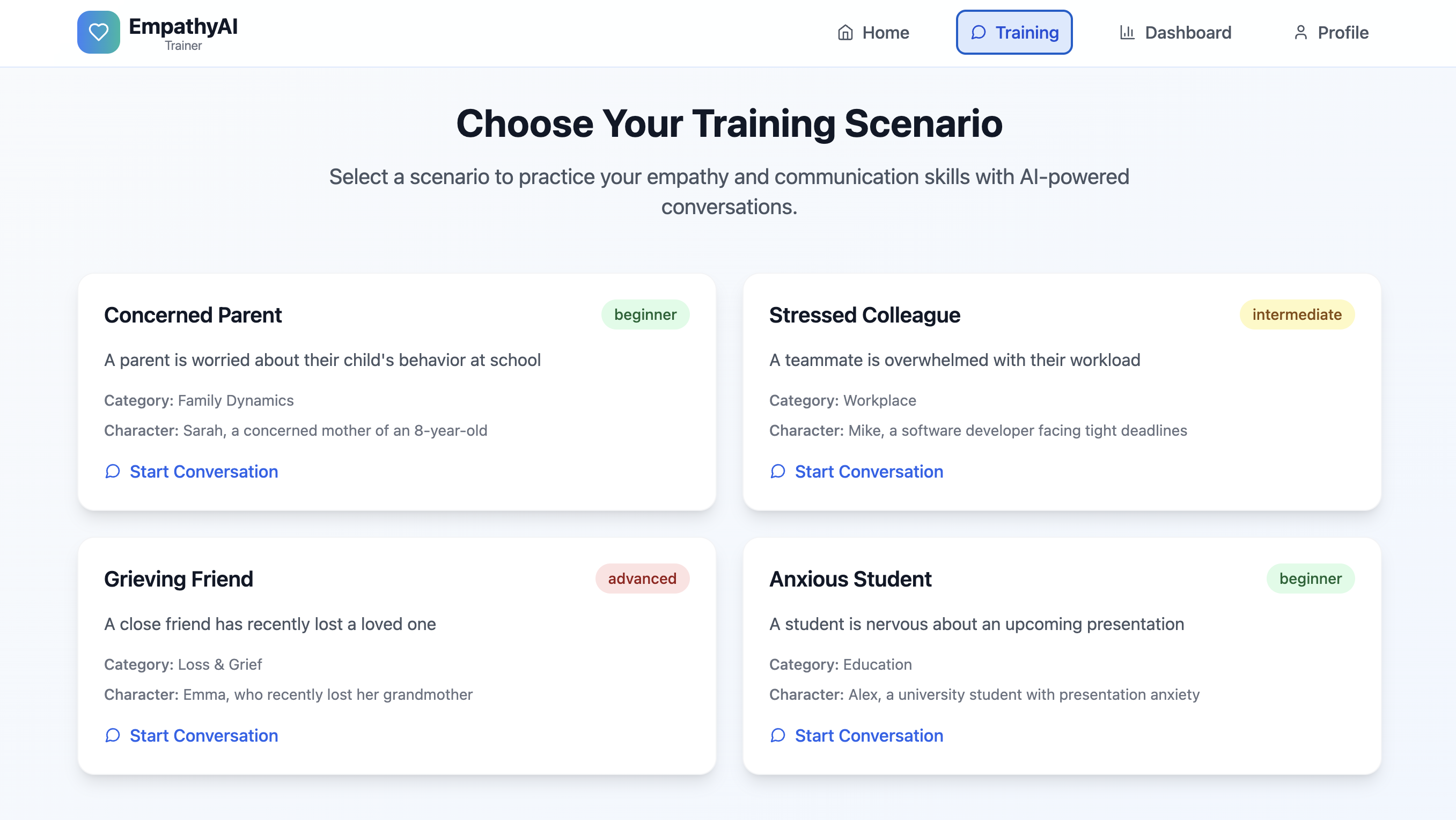
EmpathyAI Trainer is a web-based platform that allows users to: • Select realistic emotional conversation scenarios (e.g. concerned parent, grieving friend) • Respond naturally to AI characters • Receive AI-powered feedback on empathy, tone, and engagement • Track progress over time through a personalized dashboard • Build stronger communication skills through repetition and reflection
Each AI character adapts to the user’s response quality—creating a unique training experience that evolves with the user’s empathy level.
How we built it
We developed EmpathyAI with a strong focus on AI integration, user experience, and scalability: • Frontend: React + TypeScript with Tailwind CSS for styling and responsiveness • AI Analysis: GPT-4 API from OpenAI, integrated to analyze user responses and generate feedback • Backend (optional): Supabase Edge Functions used to deploy the analyze-empathy endpoint • Icons & UI: Lucide-react for clean, accessible visual design • Environment Config: .env-based API key setup for local and hosted deployments
We followed a modular approach to easily scale across new empathy scenarios and user types.
Challenges we ran into
• Empathy Scoring Logic: Designing an AI-based scoring system for intangible traits like “active listening” and “validation” was complex and required extensive prompt engineering and tuning.
• Balancing Guidance vs. Realism: I had to ensure the AI character responses felt natural while still being educational.
• Privacy Considerations: I explored how to balance storing progress data with ethical AI feedback.
• API Performance: Ensuring low-latency, high-reliability interaction using OpenAI APIs without overloading cost or hitting rate limits.
Accomplishments that are proud of
• Created four high-impact empathy training scenarios for diverse emotional challenges
• Implemented a fully functional scoring and feedback engine powered by GPT-4
• Built a professional-grade UI with real-time response and empathy scoring
• Designed modular architecture for future expansion and team use
What’s next
• More Scenarios: Expand into additional domains like customer service and crisis management
• Team Analytics: Build an institutional version with team dashboards and aggregated reports
• Multi-language Support: Make empathy training accessible globally
• Mobile Version: Build an iOS/Android app for empathy training on the go
Built With
- lucide
- openai-gpt-4
- react
- tailwind-css
- typescript

Log in or sign up for Devpost to join the conversation.