-
-
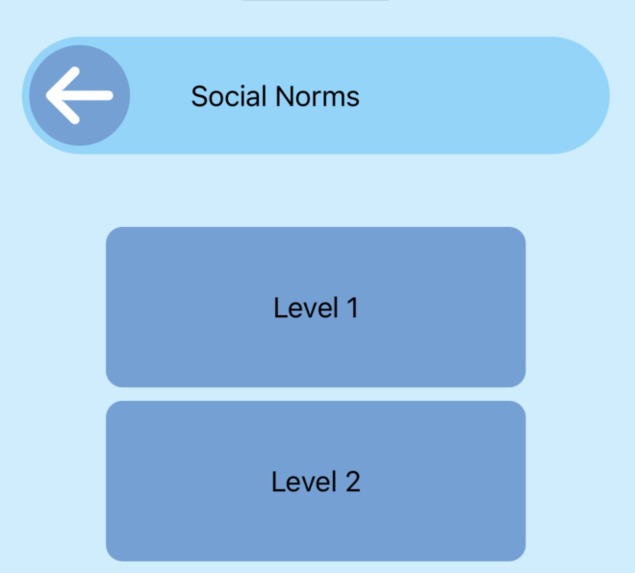
Part of levels screen
-
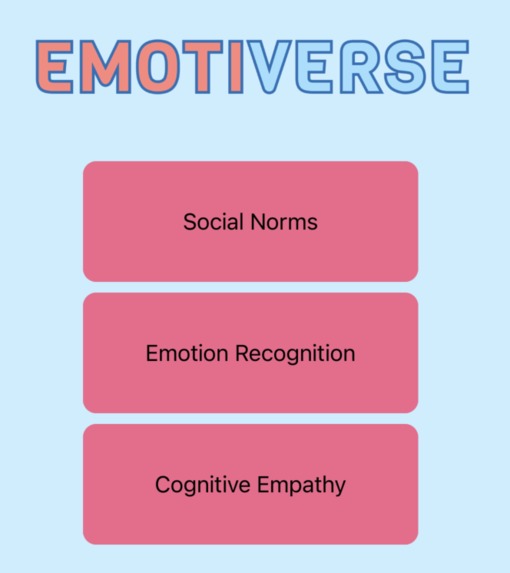
Part of home screen
-
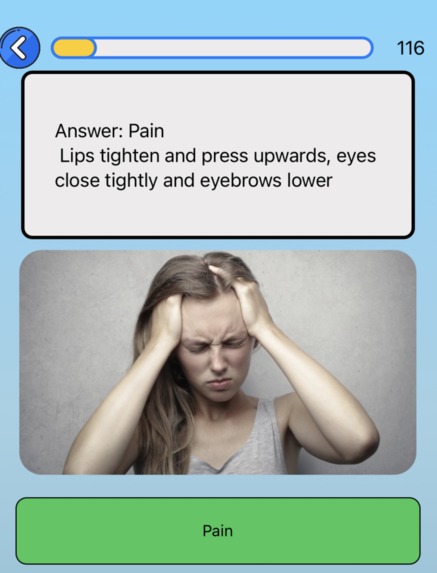
Part of play
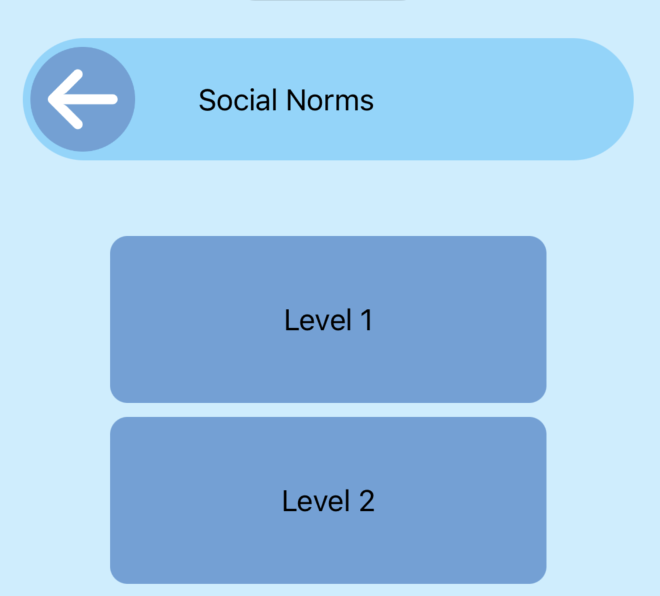
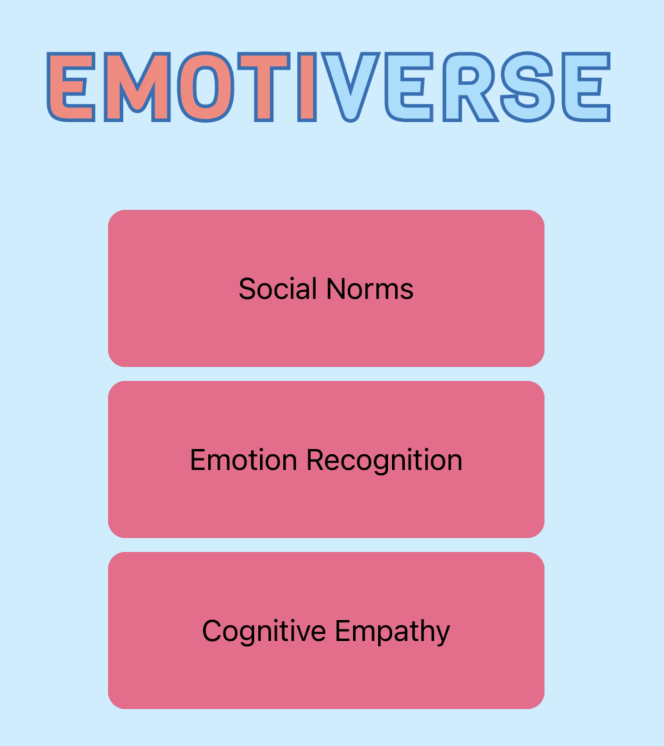
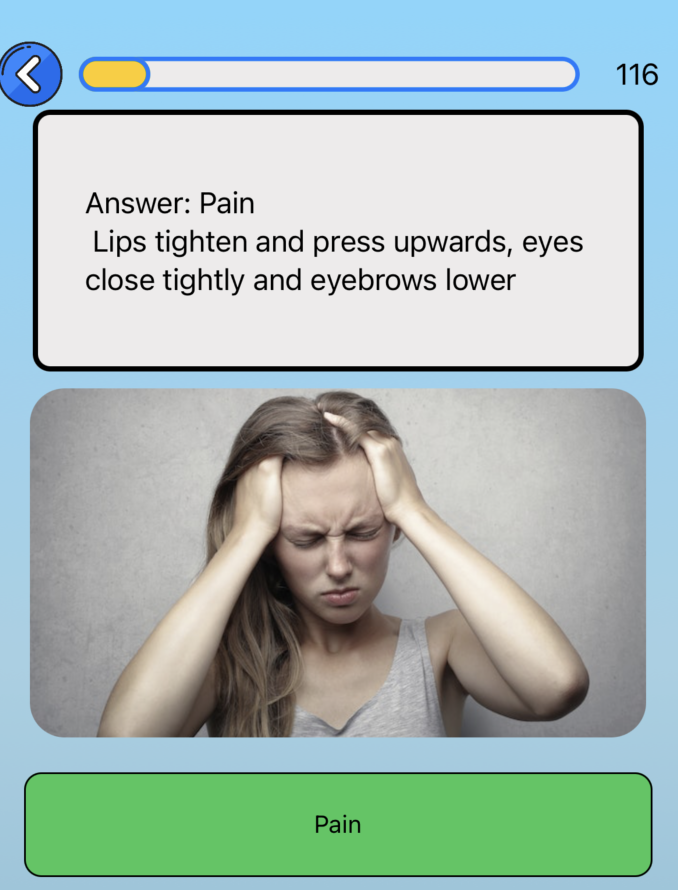
Inspiration
Growing up with a relative with Autism Spectrum Disorder (ASD), I’ve been able to witness firsthand her constant struggles in social interactions. This has led to difficulties for her in forming close relationships with others. Often, she was left to the company of her phone because of something she couldn’t control, isolated in a world of her own against her own will.
I resolved to help her. Conducting research, I discovered that while there are many apps on the App Store which help more low-functioning children with ASD, there are few widely accessible tools available to help more high-functioning teens develop their social skills and none at all specifically targeted at Asian teens. The desire to fill this gap and provide the necessary tools to people with ASD led me to develop Emotiverse.
What it does
Emotiverse is a unique app aimed at helping moderate to high-functioning adolescents with ASD learn to navigate social interactions more easily, especially localised in an Asian context. People with ASD generally struggle with 3 areas of social interaction: identifying social norms, recognising facial expressions, and demonstrating cognitive empathy, which refers to understanding what others are feeling in certain situations. Emotiverse develops skills in these 3 aspects through 3 game modes through common Asian social norms, photographs of faces, and short stories. The situations taught by the app are highly relevant to teenagers, being drawn from scenarios in school or with friends, and have been designed in collaboration with my school counselor with the specific needs of teens with ASD in mind.
How we built it
The user interface of the app was first designed in Figma. With the help of my school counselor, who has experience working with kids with developmental disabilities, I compiled the question sets for each mode of play. I coded the app in SwiftUI.
Challenges we ran into
Initially, it was difficult to adapt the app specifically for users with ASD. For instance, I had to consider details such as colours that people with ASD tend to be more sensitive to (bright colours like yellow) in designing the user interface. In crafting the question sets for each mode, I also had to put myself in their shoes and consider the situations that they would encounter on a daily basis and the problems I would have in order to truly tailor my app to their needs and maximise its effectiveness.
Accomplishments that we're proud of
I was able to find ways to simplify the code, such as by using an optionView function to display each of the options for my questions as opposed to manually coding each one. Additionally, I was able to create an application specifically for adolescents with ASD, tailored to their needs.
What we learned
I gained valuable insights and experience in coding with Swift and in UI/UX design. I also gained new perspectives and greater depth of understanding on the issues faced by people with ASD on a daily basis, and how we can be more supportive in helping them.
What's next for Emotiverse
Emotiverse is currently undergoing trial on a small user group within my school in collaboration with my school counselor and has been effective for approximately 40% of users so far in helping them build social connections. Additionally, it is also being tested by the Rainbow Centre and St Andrew’s Autism Centre. Going forward, I plan to use the initial user feedback to make improvements to the app, such as in providing a variety of difficulty settings to cater to users across a spectrum of needs. Ultimately, I hope to hone my skills and develop more technologies to help neurodivergent people.
Built With
- swiftui

Log in or sign up for Devpost to join the conversation.