Modern wellness tools track physical health such as steps, heart rate, and sleep. However, emotional and environmental factors that influence our wellbeing are still largely invisible.
In daily life, people often experience stress, fatigue, or loss of focus without clearly understanding the cause. Work environments, noise levels, social tension, and mental overload all affect emotional wellbeing but remain difficult to measure.
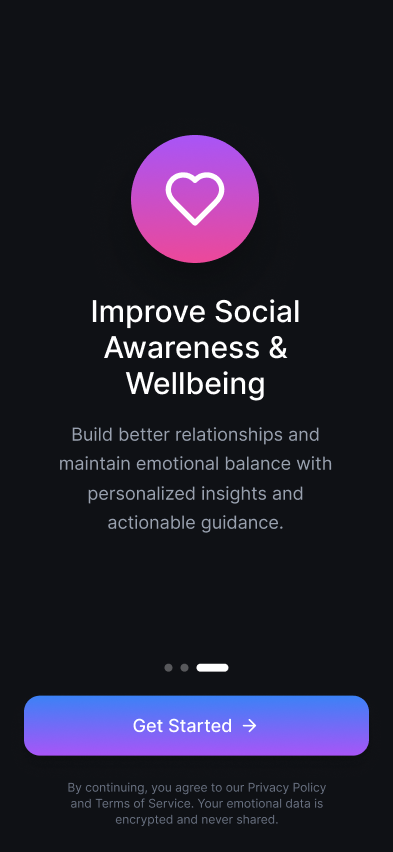
EmotionSense was inspired by the idea of expanding the “quantified self” movement beyond physical health to include emotional awareness. The project explores how future technologies could help people sense invisible emotional signals in their surroundings and better understand their own mental state.
Concept
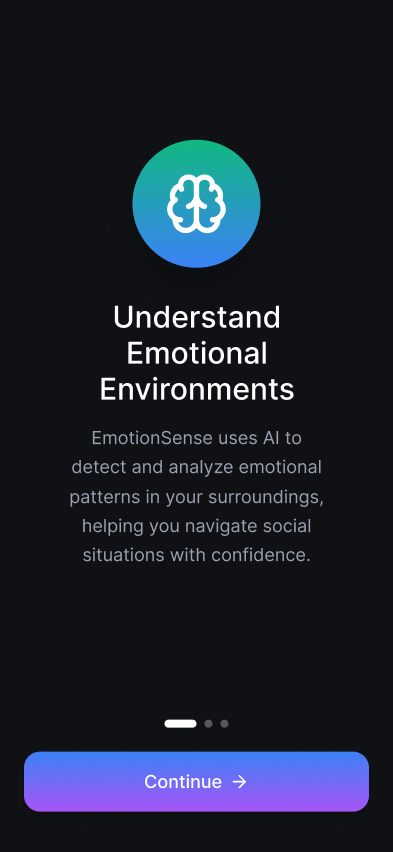
EmotionSense is a speculative wellness interface designed to detect and visualize emotional and environmental signals.
The system analyzes data from wearable sensors and environmental inputs such as:
heart rate variability
movement patterns
noise levels
environmental conditions
device interaction patterns
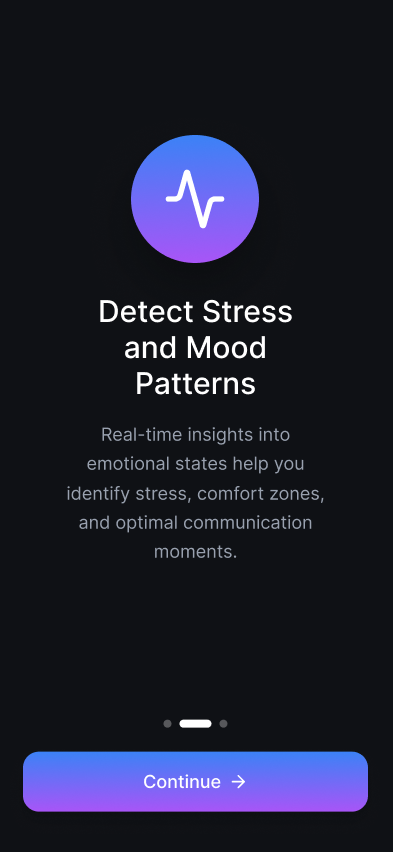
Using AI analysis, these signals are translated into clear visual insights that help users understand their emotional energy, stress levels, and environmental impact.
The goal of the tool is to provide a new type of awareness: emotional environment intelligence.
User Experience
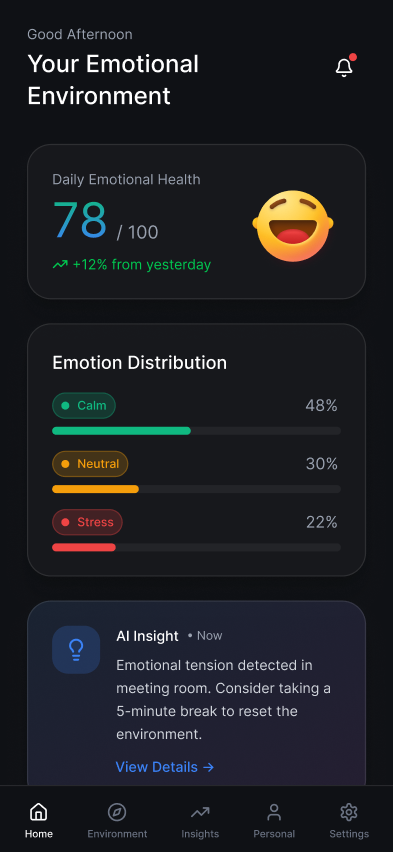
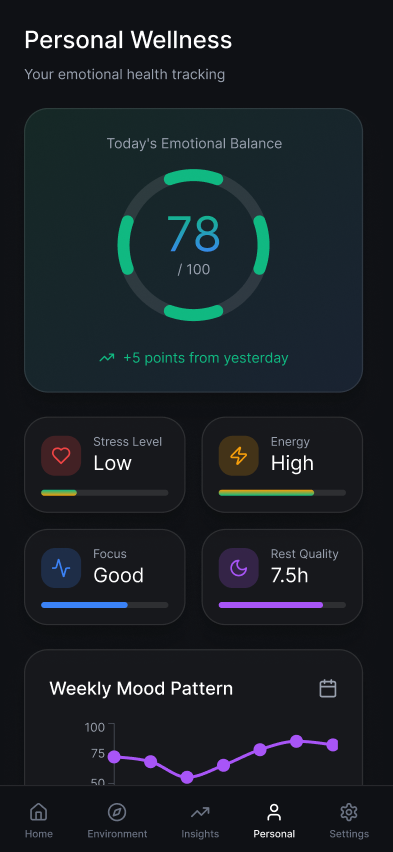
The app provides a simple and intuitive dashboard where users can view key indicators such as:
Stress Level
Focus Level
Energy Level
Mental Fatigue
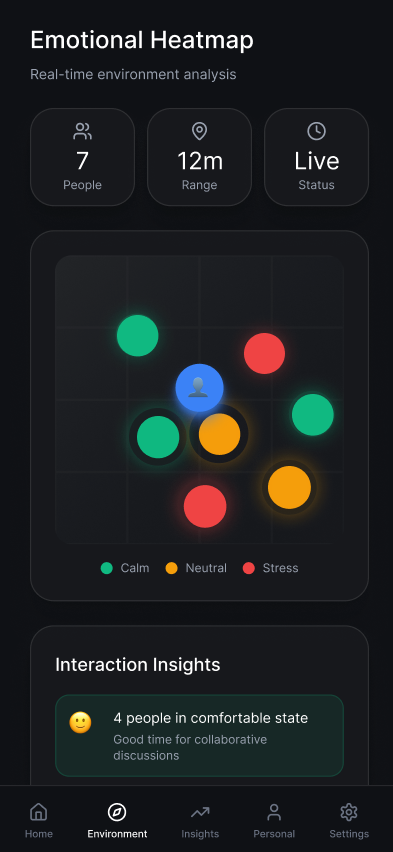
EmotionSense also analyzes environmental factors like noise and surrounding activity to estimate how a space may affect emotional wellbeing.
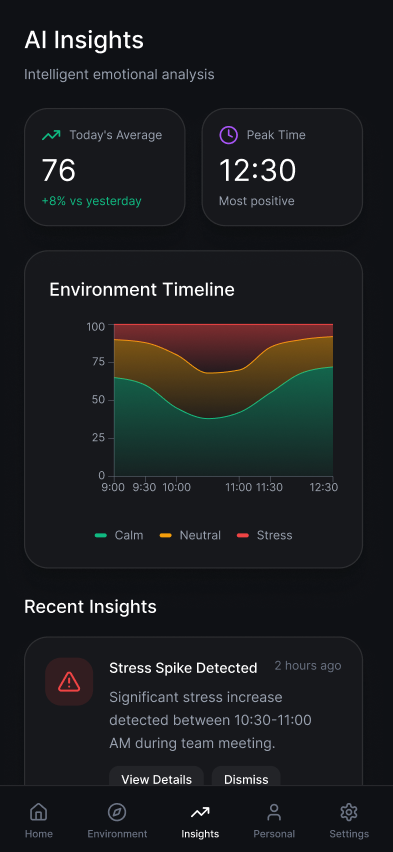
These insights are visualized through dashboards, charts, and radar visualizations, allowing users to quickly understand their emotional state and the impact of their surroundings.
The interface also provides AI-generated insights and recommendations to help users manage stress and maintain focus.
Use Cases
EmotionSense can support users in several everyday situations.
An office worker may check the dashboard before entering a meeting to understand their stress levels and prepare accordingly.
A student studying for long hours may receive a suggestion to take a break when the system detects signs of mental fatigue.
Managers or teams can also use emotional trend insights to understand workplace wellbeing and improve collaboration environments.
Privacy and Ethical Considerations
Because emotional data is sensitive, EmotionSense prioritizes privacy and responsible design.
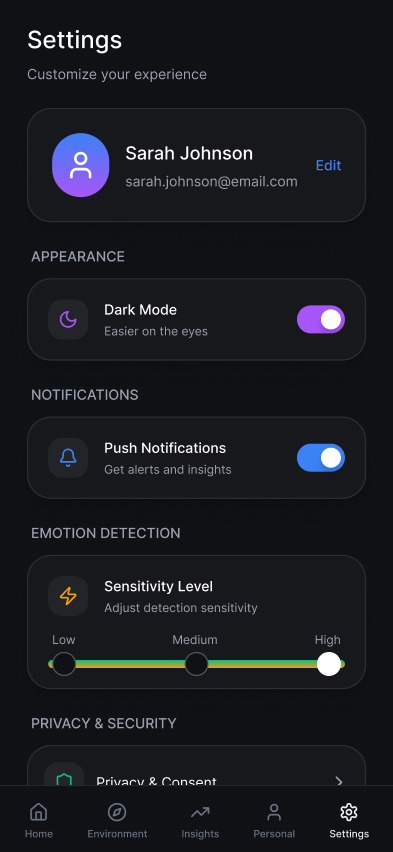
The system does not identify individuals or store facial data. All emotional insights are generated using anonymized sensor signals and environmental data. Users maintain full control over their personal data and can choose what information to share.
The goal of the system is to support wellbeing while respecting user privacy.
Challenges and Learnings
Designing EmotionSense required thinking about how invisible emotional signals could be translated into meaningful data visualizations.
One of the key challenges was designing a system that provides emotional insights without violating privacy or creating intrusive surveillance.
The project also explored how data visualization, AI insights, and speculative design can help people better understand their emotional environments and make healthier decisions.
Built With
- app
- component-design-system
- figma
- figma-make-ai
- interactive-prototyping
- mobile
- ui/ux-design
- ux


Log in or sign up for Devpost to join the conversation.