Inspiration
Many individuals—such as those with allergies, limited mobility, strict housing regulations, or time constraints—are unable to own traditional pets, leading to increased feelings of loneliness, stress, and a lack of emotional companionship. There is a need for an accessible, engaging, and emotionally responsive alternative that can simulate the companionship of a real pet without the associated physical, financial, or logistical burdens.
What it does
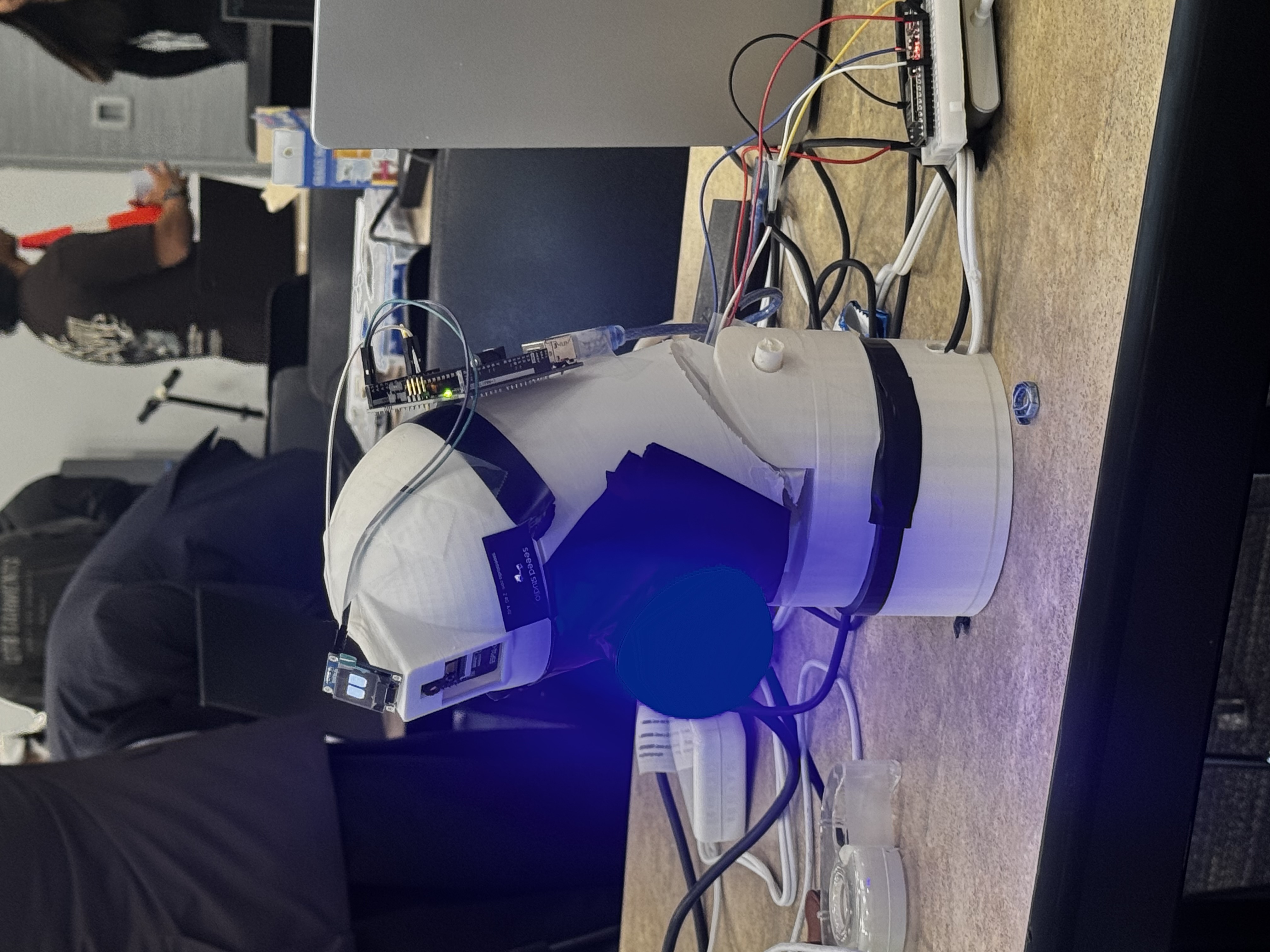
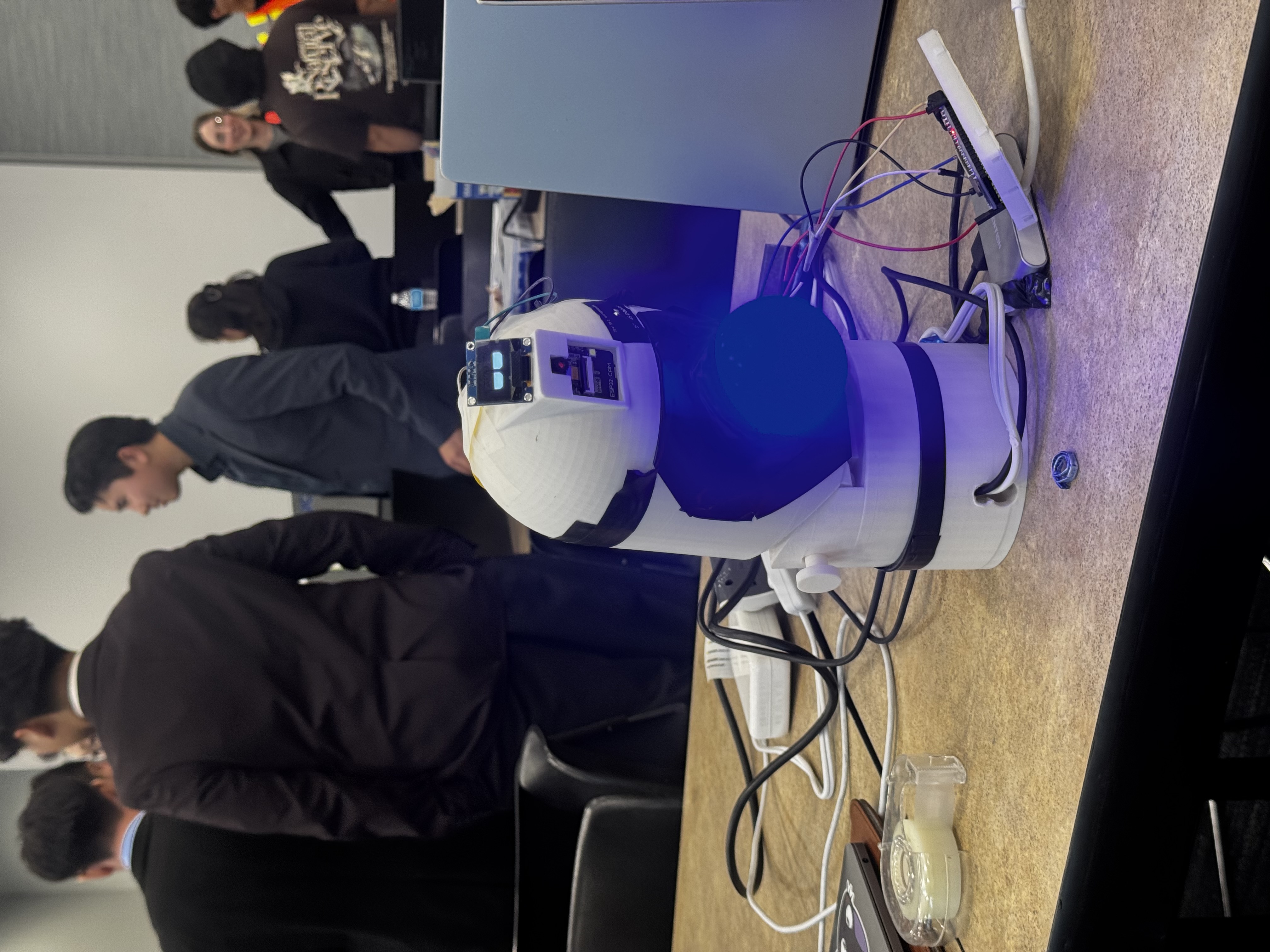
Emotionally Supported Lamp 32 is a smart lamp with a clingy personality. Built on an ESP32 with a camera and sensors, it tracks your movements, reacts to touch, and expresses emotion through light, motion, and sound. If you leave, it gets sad. When you return, it perks up.
How we built it
We built it using a combination of Python, Arduino, and ESP32 to interface the various sensors and components together. The servo motors and load cell sensor are interfaced through esp32, and the oled screen is interfaced through arduino. Additionally, we control a light source wirelessly using Python and an esp32 camera to perform facial recognition and tracking. Together, all these components, along with a personality state machine, allow the user to interact with this electronic pet
Challenges we ran into
One of the biggest challenges was getting a reliable stream from the esp32 camera. Ultimately, this was solved by making it so we used the camera as the router itself and connected via wifi instead of having both the camera and computer connect to the same wifi. Additionally, lowering the clock frequency helped reduce interference with the signal. Another issue was with coding the OLED display,y as it produced a lot of unwanted effects.
Accomplishments that we're proud of
We were very proud when we finally got the camera working properly because that ended up taking a lot more time than we expected. Additionally, a lot of us have only had very limited coding experience, so we were all able to learn about how to code various components and integrate them together.
What we learned
We learned how to use load cell sensors, how to work with OpenCV for facial recognition, and how to integrate sensors from Arduino and esp32 into Python.
What's next for Emotionally Supported Pet 32
We hope to make the entire device run locally on one esp32 without needing a separate laptop


Log in or sign up for Devpost to join the conversation.