-
-
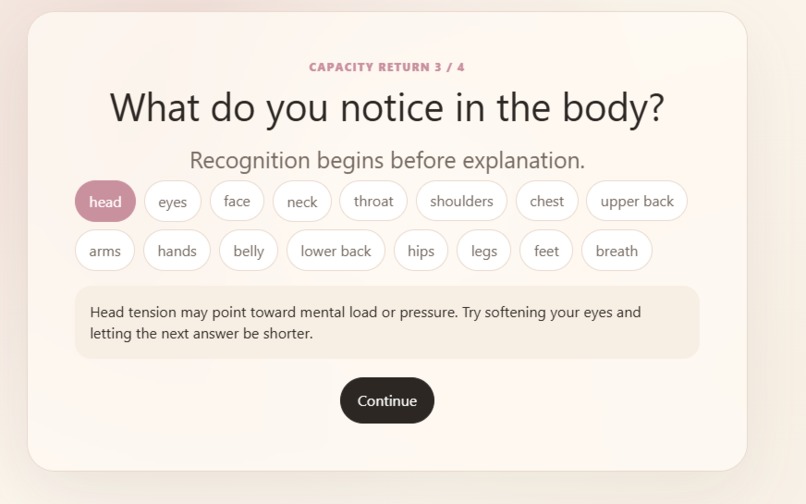
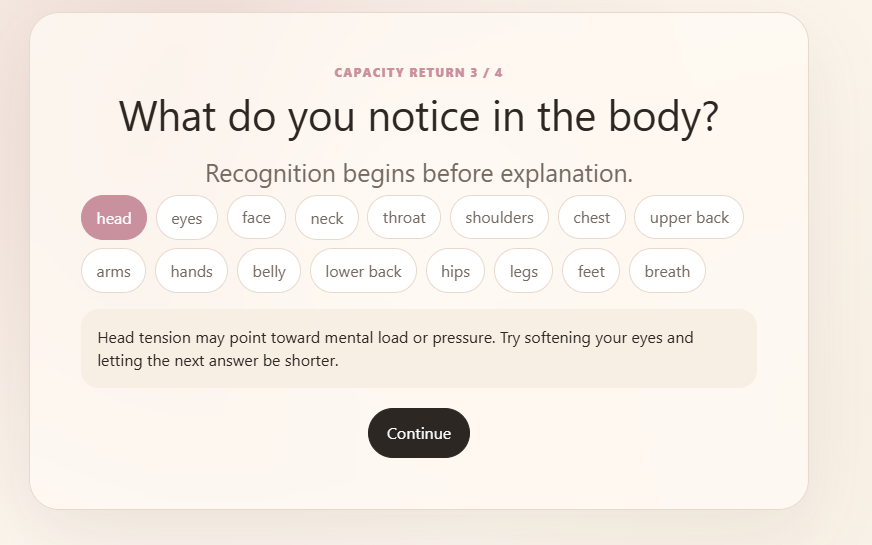
Users begin by observing physical sensations to reconnect with the present
-
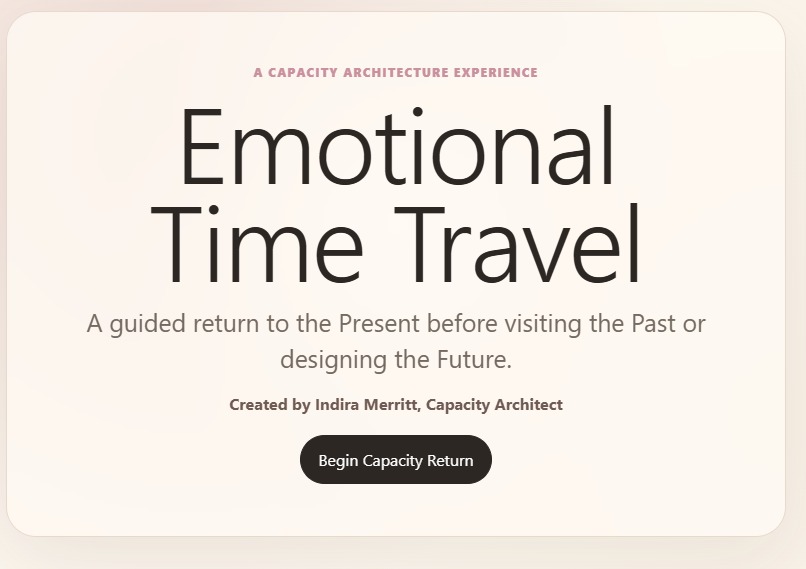
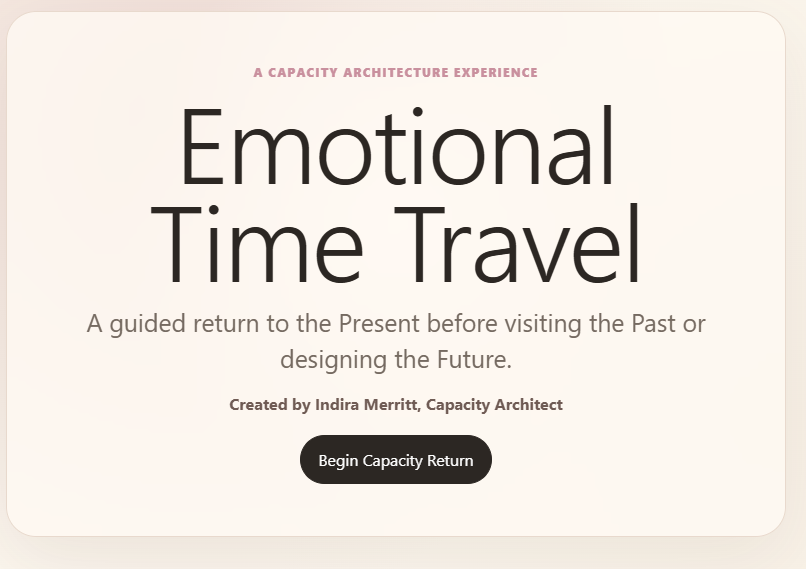
The Emotional Time Travel home screen introduces the interactive experience
-

Breathing and grounding exercises welcome users to the Capacity Design Platform

Inspiration
I wanted to create a tangible way for people to experience Emotional Time Travel and Capacity Architecture instead of only reading about them. The goal was to build an interactive experience that helps people move through the past, present, and future in a structured way while recognizing patterns and identifying the capacity they want to practice.
What it does
Emotional Time Travel is an interactive prototype that guides users through three perspectives: Visit the Past to recognize adaptive patterns. Stay Present to identify the capacity available right now. Design the Future by choosing the capacity needed for where they want to go. The experience ends with a Capacity Return that summarizes the user's selections.
How we built it
I built the prototype using Codex, HTML, and GitHub Pages. I worked through several iterations, refining both the language and the interaction until the experience reflected my Emotional Time Travel framework as closely as possible. Rather than writing every line of code myself, I focused on designing the experience, improving the prompts, and shaping the prototype through multiple revisions.
Challenges we ran into
One challenge was translating an abstract psychological framework into a simple interactive experience. Another was deciding what to include in the prototype while keeping it focused enough to complete during Build Week. Each iteration required simplifying the experience without losing the core ideas behind Emotional Time Travel.
Accomplishments that we're proud of
I'm proud that I was able to transform an idea I've been developing into a working interactive prototype that people can actually experience. I'm also proud that I learned enough about AI-assisted development to publish my first live web application, despite not having a traditional software engineering background.
What we learned
This project completely changed how I think about software development. I learned that someone without a traditional programming background can still build meaningful technology by combining subject-matter expertise with AI-assisted coding tools. The experience made software development feel much more accessible than I had imagined.
What's next for Emotional Time Travel
This prototype is the beginning rather than the finished product. My next steps are expanding the experience, refining the interaction design, and continuing development alongside my upcoming books, including It's About Time and Emotional Time Travel, which explain the broader Capacity Architecture framework. I also plan to continue developing my website and educational content so more people can experience and understand the framework.


Log in or sign up for Devpost to join the conversation.