Inspiration
As a manager, I watched talented teams struggle with miscommunication and unaddressed emotions—costing trust and productivity. Goleman’s EQ framework stuck with me: emotional intelligence isn’t innate, it’s teachable. I wanted to build something accessible, not just for leaders, but anyone craving deeper connections—no fancy workshops required.
What it does
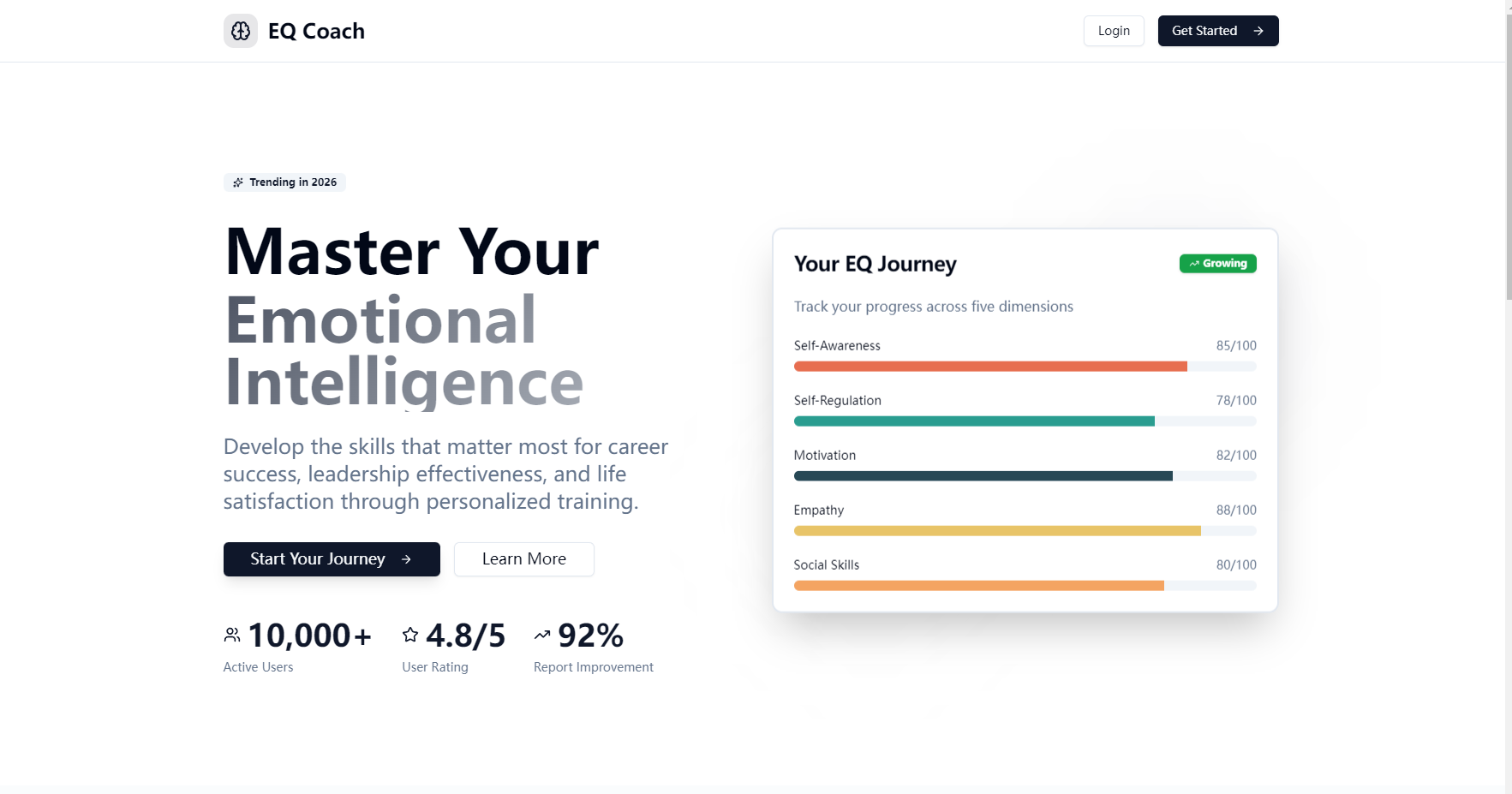
EQ Coach is a personalized training platform that builds self-awareness, empathy, and conflict resolution skills. Users practice emotional vocabulary, step into others’ perspectives via real-world scenarios, log and analyze conflicts, and track growth across 5 core EQ dimensions. Every module delivers actionable feedback to turn insight into daily habits.
How we built it
We started with mapping user journeys—from daily practice to long-term progress tracking. Frontend: React for intuitive, calm UI (soft gradients, rounded corners) aligned with emotional safety. Backend: Node.js/Express to handle user data, score calculations, and module logic. MongoDB stores user entries; AWS hosts the platform; Stripe manages subscriptions. Chart.js visualizes EQ growth, making progress tangible.
Challenges we ran into
Balancing structure with flexibility: Scenarios needed to feel real but not overwhelming. We iterated 4x on the perspective-taking interface to keep prompts guiding, not restrictive. Calculating EQ scores fairly was tough—we weighted module activities to reflect real skill relevance (e.g., empathy scenarios impact that dimension more) and tested with diverse users to avoid bias.
Accomplishments that we're proud of
The platform feels human: Users don’t just “complete tasks”—they reflect. Early testers shared how conflict log analysis helped them recognize their emotional triggers. We also nailed the UI: calm blues/teals reduce cognitive load, making tough emotional work feel approachable.
What we learned
Emotional intelligence tools need to meet users where they are—no jargon, just actionable steps. We also learned that progress tracking is as important as the training itself: seeing small wins keeps users engaged. Technical win: Integrating multiple APIs (Stripe + Chart.js) smoothly taught us to prioritize modular, scalable code.
What's next for this project
First, expand scenario libraries—adding customer service and remote work contexts. We’ll refine score calculations with more user data to make feedback even personalized. Long-term: Add short, audio-guided reflection prompts (for busy schedules) and optional weekly check-ins to keep users accountable—no live coaching, just gentle, consistent support.

Log in or sign up for Devpost to join the conversation.