Inspiration
https://coda.io/@lowcy/emotional-catalyst-journals
Mental health issues affect millions of people worldwide, yet there are still significant barriers preventing individuals from seeking help, such as stigma, limited resources, and lack of understanding. The inspiration behind "Emotional Catalyst" was deeply rooted in addressing the critical issue of mental health in today's society. The creator recognized the growing prevalence of mental health challenges and the need for accessible, personalized, and proactive solutions to support emotional well-being. "Emotional Catalyst" was motivated to bridge this gap and create a platform that empowers individuals to take control of their emotional health proactively. The goal was to provide a safe and non-judgmental space for users to express their emotions, thoughts, and experiences freely. By incorporating AI technology, such as Coda AI, the app could offer personalized insights and support tailored to each user's emotional needs.
Addressing a Growing Market:
Mental health and emotional well-being have become increasingly important topics in society. The demand for tools and solutions that help individuals manage and improve their mental health is on the rise. Emotional Catalyst taps into this growing market by offering a unique and innovative approach to emotional exploration and support. According to the World Health Organization (WHO), more than 450 million people globally were estimated to be living with mental or neurological disorders at that time.
- TAM: 1 billion potential users globally seeking AI-driven emotional well-being support.
- SAM: 200 million users residing in regions where Emotional Catalyst operates with multilingual support and tailored resources.
- SOM: 20 million users expected to be acquired within the first year of launch, considering marketing efforts, competitive positioning, and other factors.
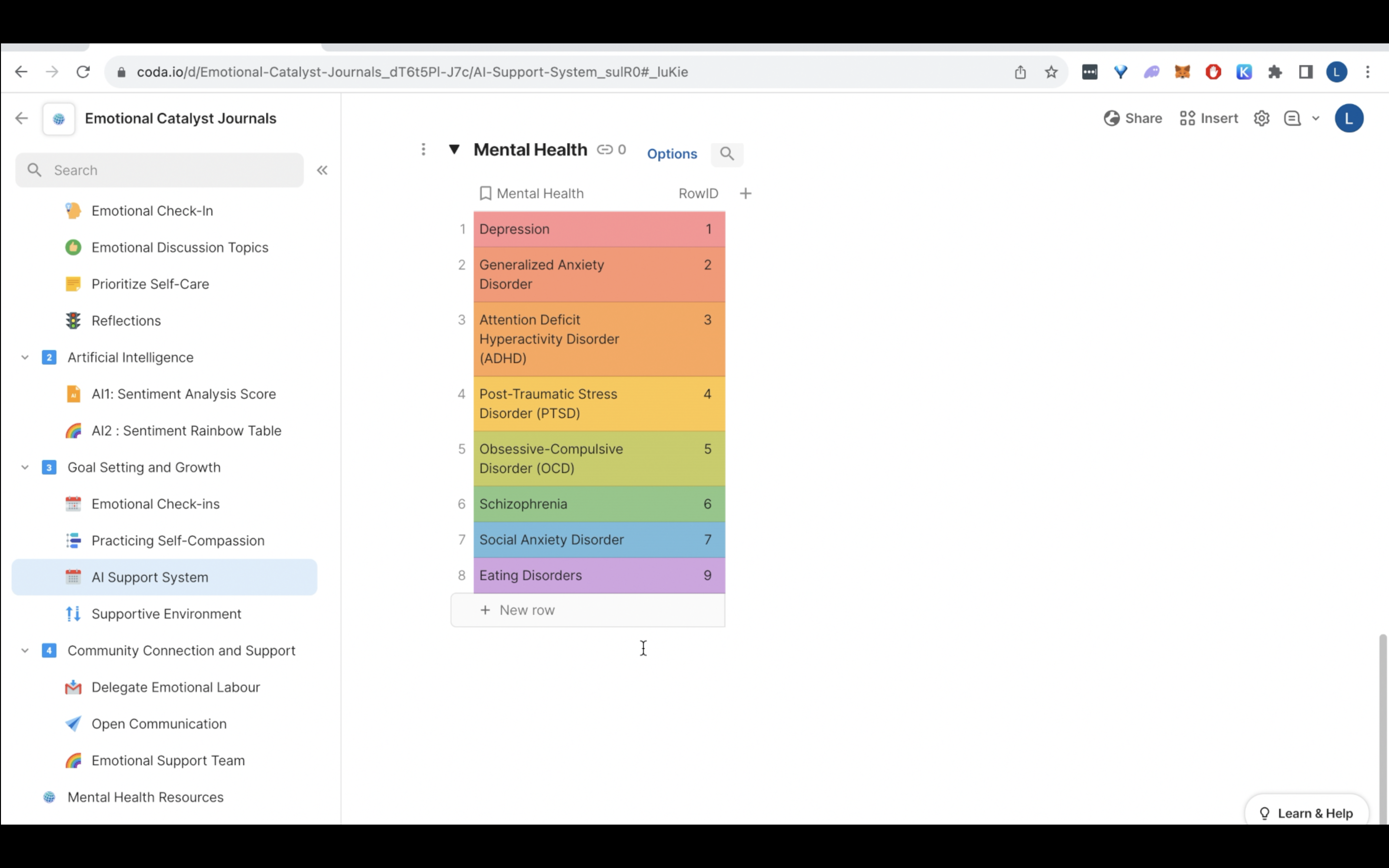
The eight mental health conditions may have been chosen to provide a diverse representation of different types of mental health challenges that people commonly face. This allows users of Emotional Catalyst to find relevant resources and support for their specific needs.
Depression:
- General population seeking emotional support and stress management.
- Individuals with a history of depression or mood disorders.
- Corporate employees facing workplace-related stress and burnout.
- College students dealing with academic pressures and transitions.
Anxiety:
- Individuals with generalized anxiety disorder (GAD) seeking anxiety management tools.
- Students preparing for exams or facing test anxiety.
- Professionals dealing with social anxiety in networking or public speaking situations.
- Individuals with specific phobias, such as fear of flying or heights.
Bipolar Disorder:
- Individuals diagnosed with bipolar disorder seeking mood tracking and management.
- Family members and caregivers of individuals with bipolar disorder.
- Mental health professionals working with patients with bipolar disorder.
Post-Traumatic Stress Disorder (PTSD):
- Veterans and active-duty military personnel dealing with PTSD.
- Survivors of traumatic events seeking coping strategies.
- Mental health professionals specializing in trauma therapy.
Obsessive-Compulsive Disorder (OCD):
- Individuals with OCD seeking tools to manage compulsive behaviors and intrusive thoughts.
- Parents or partners of individuals with OCD looking for ways to provide support.
- Mental health professionals with expertise in OCD treatment.
Schizophrenia:
- Individuals diagnosed with schizophrenia and their caregivers.
- Mental health facilities and hospitals offering support for individuals with schizophrenia.
- Research institutions studying schizophrenia and related disorders.
Borderline Personality Disorder (BPD):
- Individuals diagnosed with BPD seeking emotional regulation and self-care techniques.
- Therapists and counselors specializing in BPD treatment.
- Support groups for individuals with BPD and their loved ones. Eating Disorders (e.g., Anorexia, Bulimia, Binge Eating Disorder):
- Individuals with eating disorders looking for resources on body image, self-esteem, and recovery.
- Dietitians and nutritionists working with clients with eating disorders.
Educational institutions and organizations promoting body positivity and mental health awareness. It's essential to note that mental health disorders can often overlap, and individuals may experience more than one disorder simultaneously. Therefore, the market segmentation should be flexible and allow for addressing the diverse needs of individuals seeking support for their mental health concerns. Additionally, targeting mental health professionals and organizations working in the field can also be an important market segment to consider for partnerships and institutional use of the Emotional Catalyst app.
Journaling for Mental Health
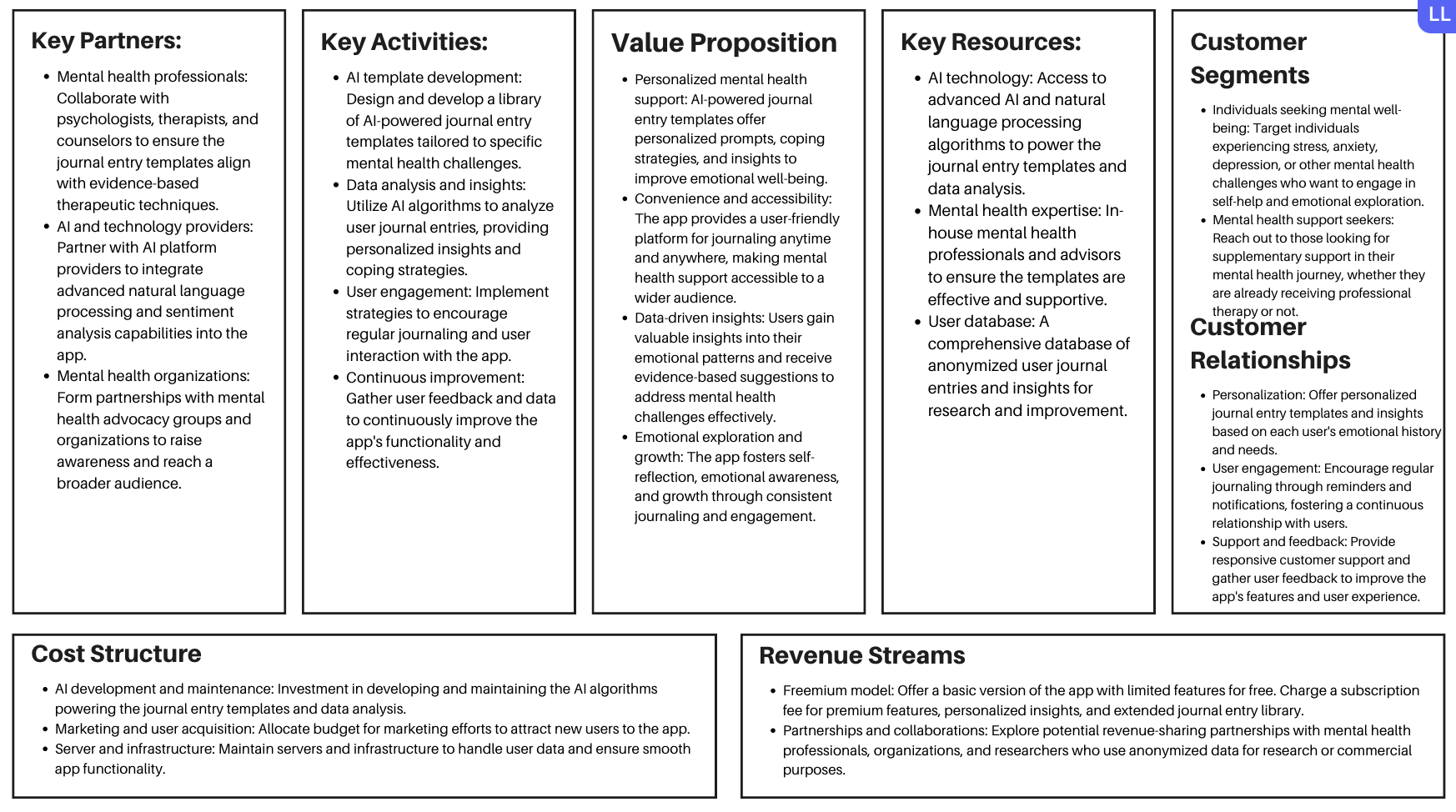
Emotional Catalyst offer personalized mental health support, data-driven insights, and convenient accessibility, making it an effective and valuable business idea for fostering emotional exploration and growth in users. The combination of AI technology, mental health expertise, and user-friendly design positions Emotional Catalyst as a promising solution to empower individuals seeking emotional well-being and provide valuable support in their mental health journey.
Structured and Guided Expression: Many individuals find it challenging to articulate their emotions and thoughts effectively, especially when dealing with mental health issues. AI templates provide structured and guided prompts that encourage users to express their feelings, experiences, and reflections in a clear and organized manner. By having a framework to follow, users can better understand their emotions and gain insights into their mental well-being. This process of self-expression can be therapeutic and help individuals process their thoughts, reducing stress and anxiety. Journaling is a powerful tool for mental health, but it requires consistency to be truly effective. AI templates offer a convenient way to maintain a regular journaling practice. Users can receive automated reminders and prompts, ensuring they engage in the journaling process consistently. This consistent support and encouragement can foster positive habits, such as self-reflection and emotional check-ins, leading to improved emotional resilience and mental well-being over time.
Personalization and Relevance: AI-powered journal entry templates can be personalized to cater to individual needs and mental health challenges. The AI can analyze previous journal entries to understand the user's emotional patterns and offer relevant prompts and suggestions. This personalization enhances the user experience, making the journaling process more meaningful and impactful. Additionally, the AI can adapt to the user's progress, offering targeted coping strategies and self-care practices based on their journaling history, creating a tailored mental health support system.
Emotional Catalyst Journal - Example Entry for DEPRESSION
https://docs.google.com/document/d/1SGKLGvH-sA8OcKnD-HhICy4KL-OGWOjJJAZ2YlCsR0I/edit
Emotional Catalyst Journal - Example Entry for Generalised anxiety disorder
https://docs.google.com/document/d/1uZbLRERU7DUxrhugqPaBKkx2_3kGjqlif_dpsrZBJGs/edit
Emotional Catalyst Journal - Example Entry for Attention Deficit Hyperactivity Disorder (ADHD)
https://docs.google.com/document/d/1rxiQ6wE0W83zJDtoqBG-N7VXii5L-vpNFNIiG0QNdXo/edit
- Emotional Catalyst Journal - Example Entry for PTSD
https://docs.google.com/document/d/1rUf9C230lnXOjFa0EZ3yIkbXTR6l-Y6tVjWrWp8gLO8/edit
- Emotional Catalyst Journal - Example Entry for Obsessive-compulsive disorder
https://docs.google.com/document/d/1x1w887hbqLYZh79Yn7B8pxXUTnd47DRZWi6cgTp63XM/edit
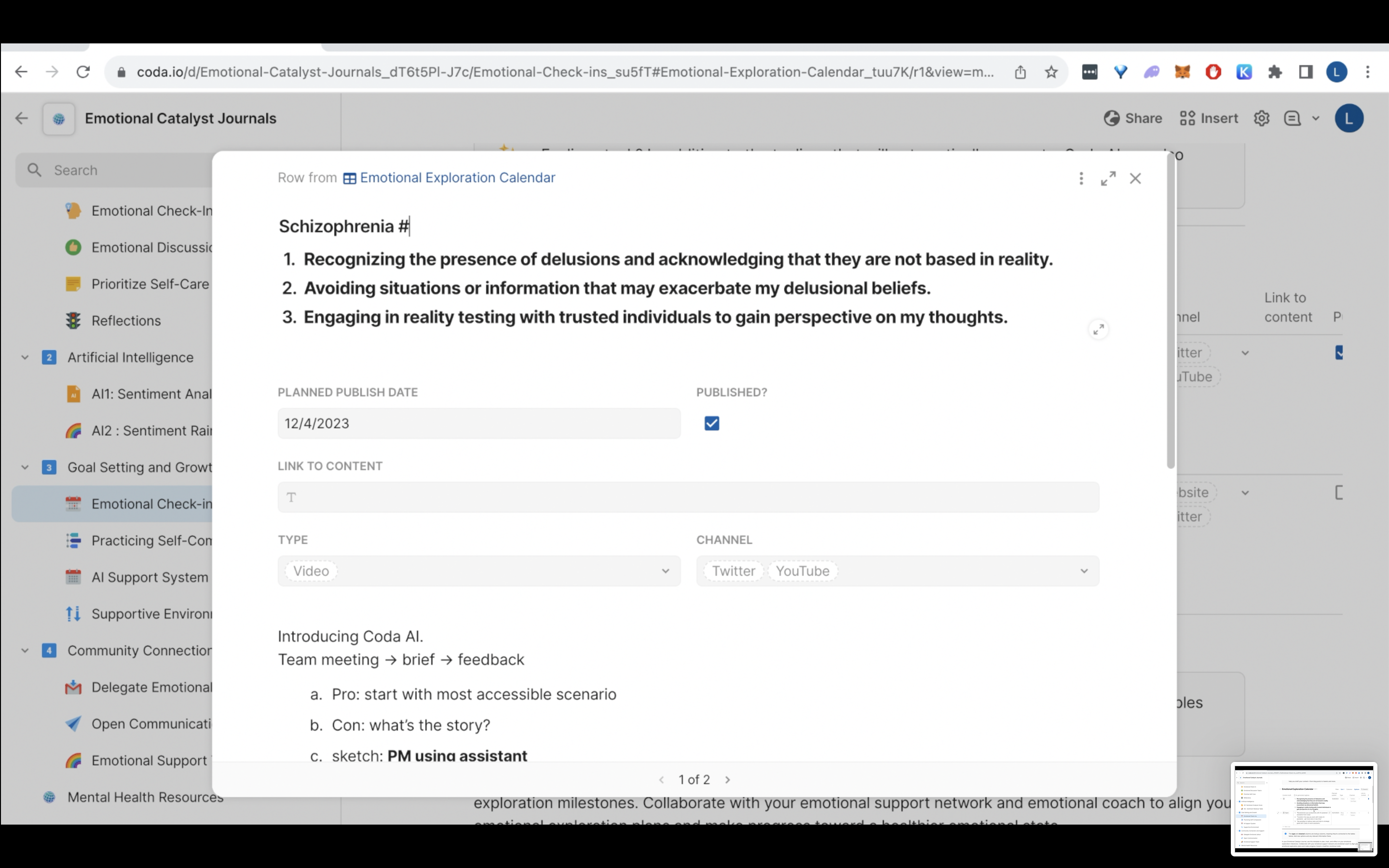
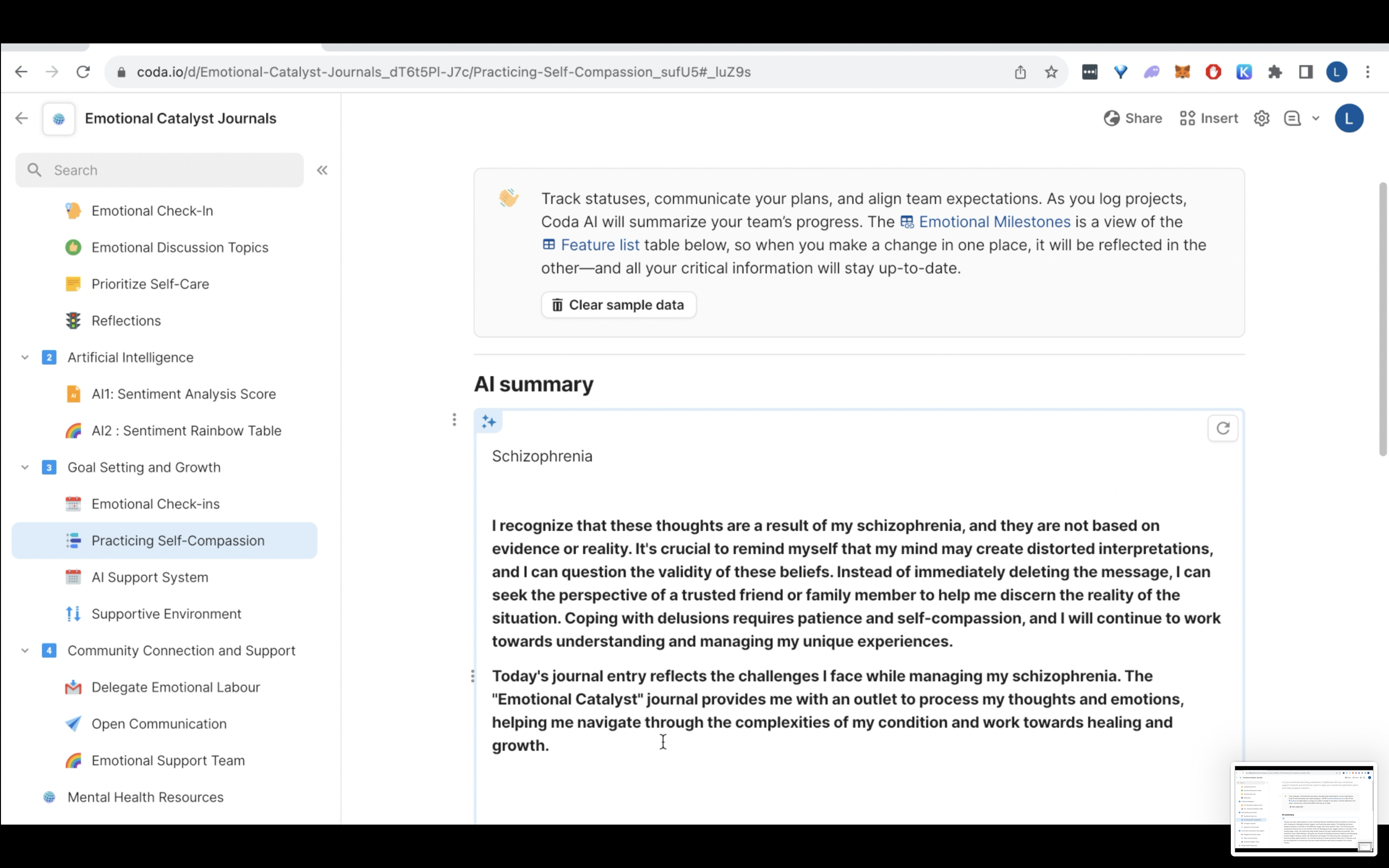
- Emotional Catalyst Journal - Example Entry for Schizophrenia
https://docs.google.com/document/d/1QxWtNW8KplmKhgRdUpCS3XVSesMZx_uQUm5VHKWcaiA/edit
- Emotional Catalyst Journal - Example Entry for Social Anxiety
https://docs.google.com/document/d/1jD0C7tTj1B1fSz2-lIigWYA3lUfJPtUy37zbXnCbXxE/edit
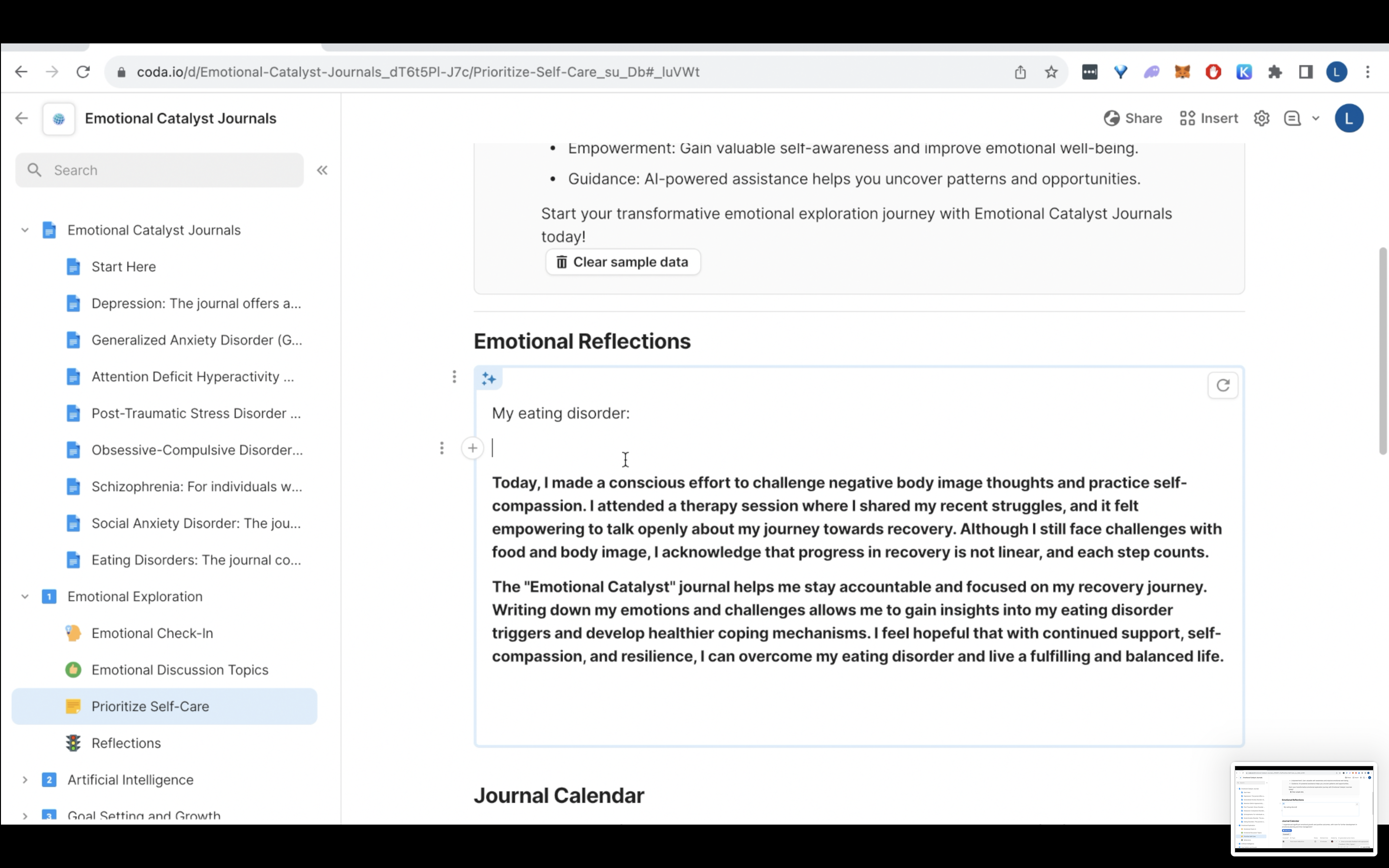
- Emotional Catalyst Journal - Example Entry for Eating Disorders
https://docs.google.com/document/d/1lneYu7oo9cD1zyf4fcxSnDl4Tcqapwufk5TpKesH-fI/edit
- Data-Driven Insights: AI templates can collect and analyze data from journal entries, allowing users to gain insights into their emotional well-being and mental health trends. The AI can detect patterns and changes in mood, providing users with data-driven feedback on their emotional states and potential triggers. This data-driven approach empowers users to identify areas of concern and take proactive steps to improve their mental health. Moreover, aggregated and anonymized data can also be used by mental health researchers and professionals to gain valuable insights into mental health trends and inform evidence-based practices.
Business Model Canvas

What it does
https://coda.io/@lowcy/emotional-catalyst-journals
"Emotional Catalyst" combines cutting-edge technology with empathetic design to provide users with a comprehensive emotional journaling experience. As technology evolves, there is a growing opportunity to leverage AI and NLP (Natural Language Processing) advancements to revolutionize emotional well-being support. Emotional Catalyst offers a comprehensive approach to emotional well-being, leveraging artificial intelligence and fostering personal growth within a supportive community.
Sentiment Analysis:
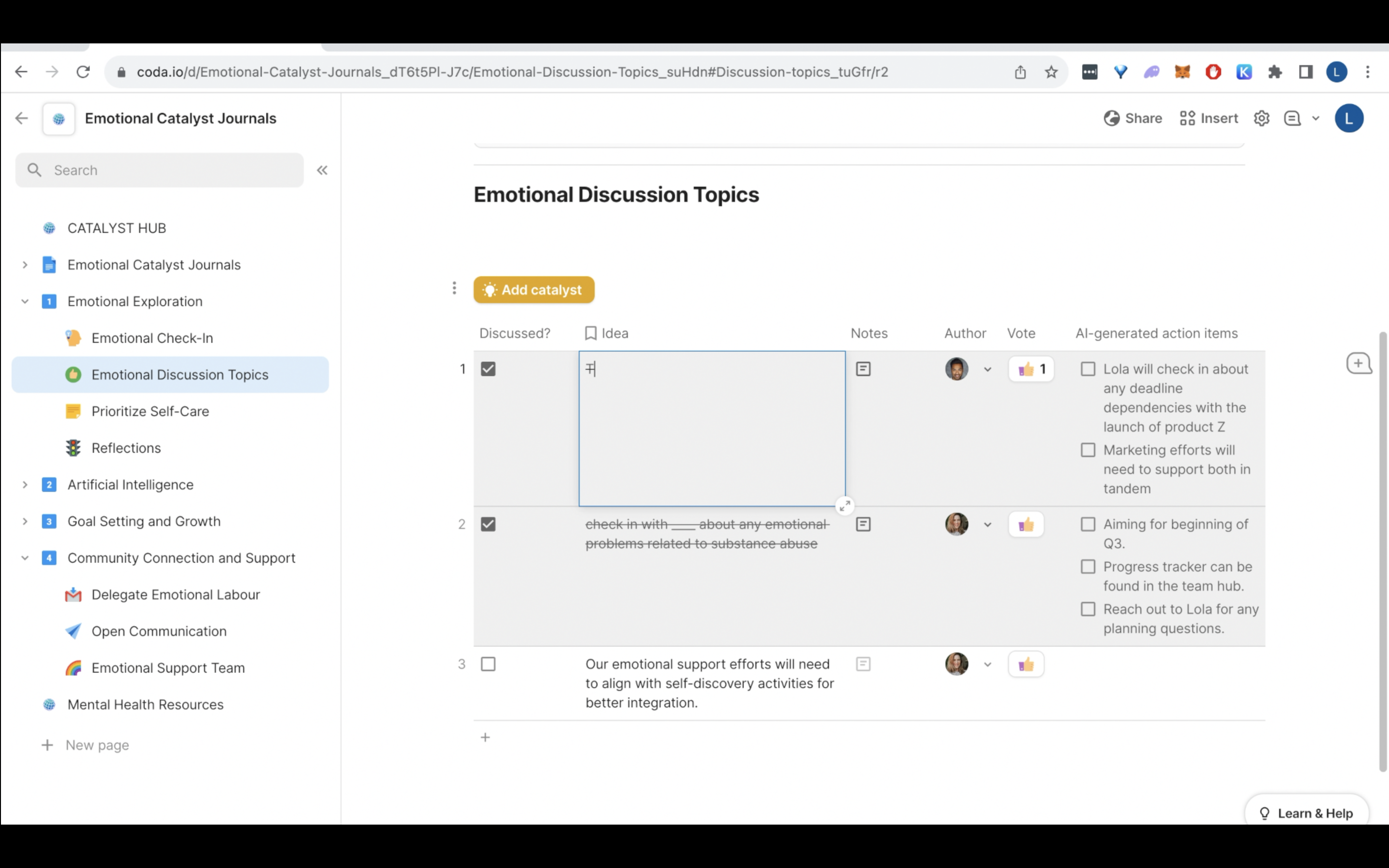
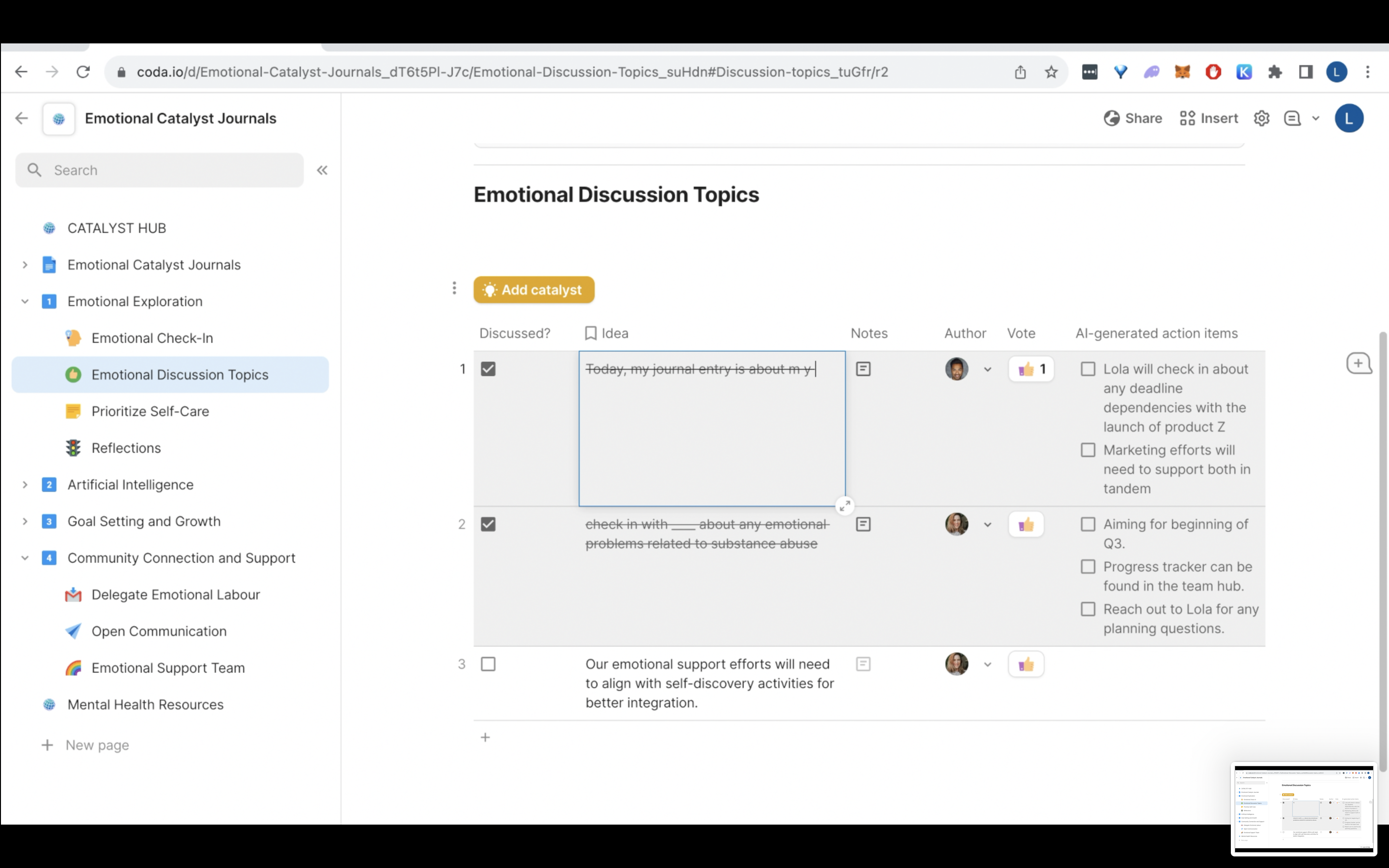
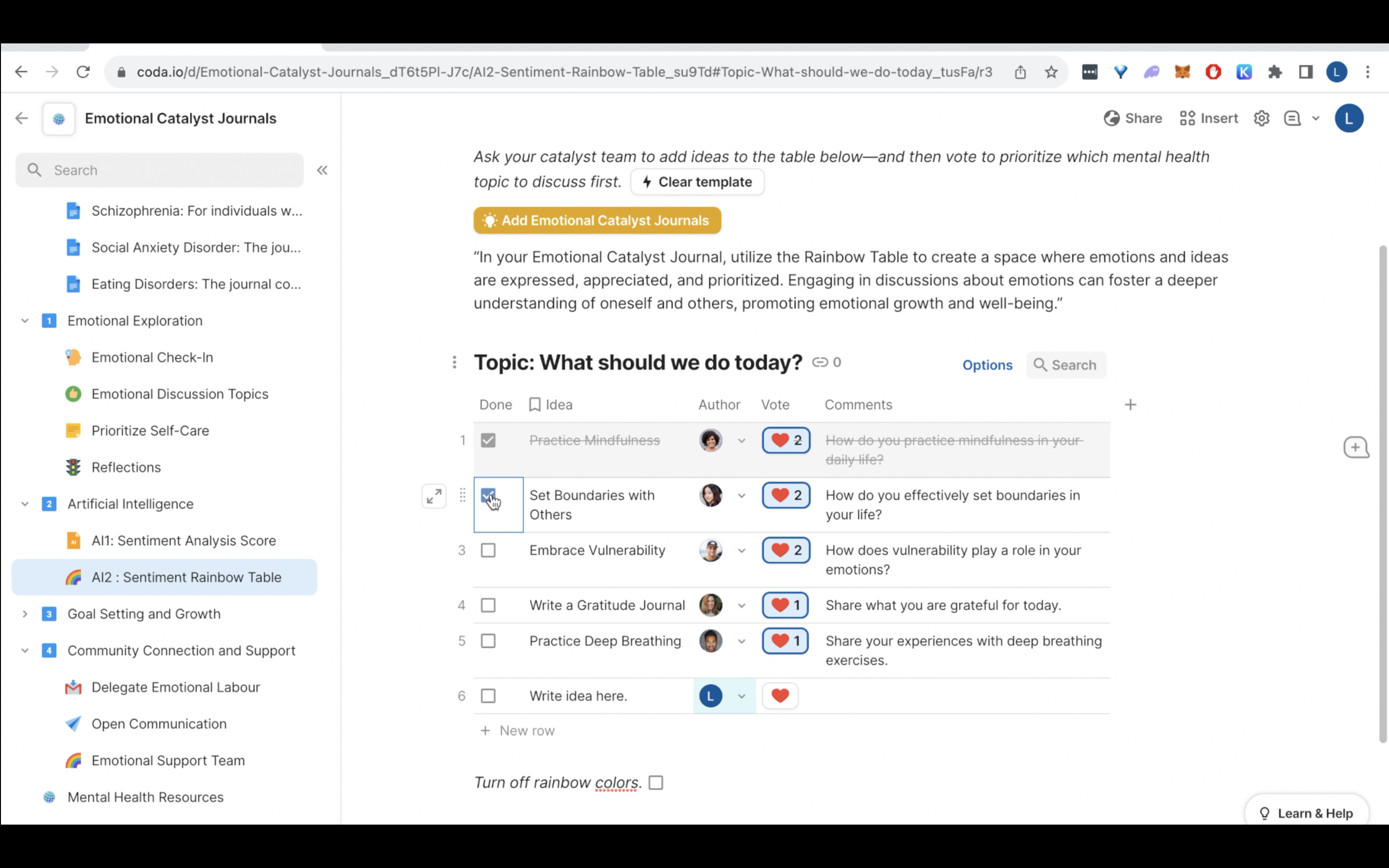
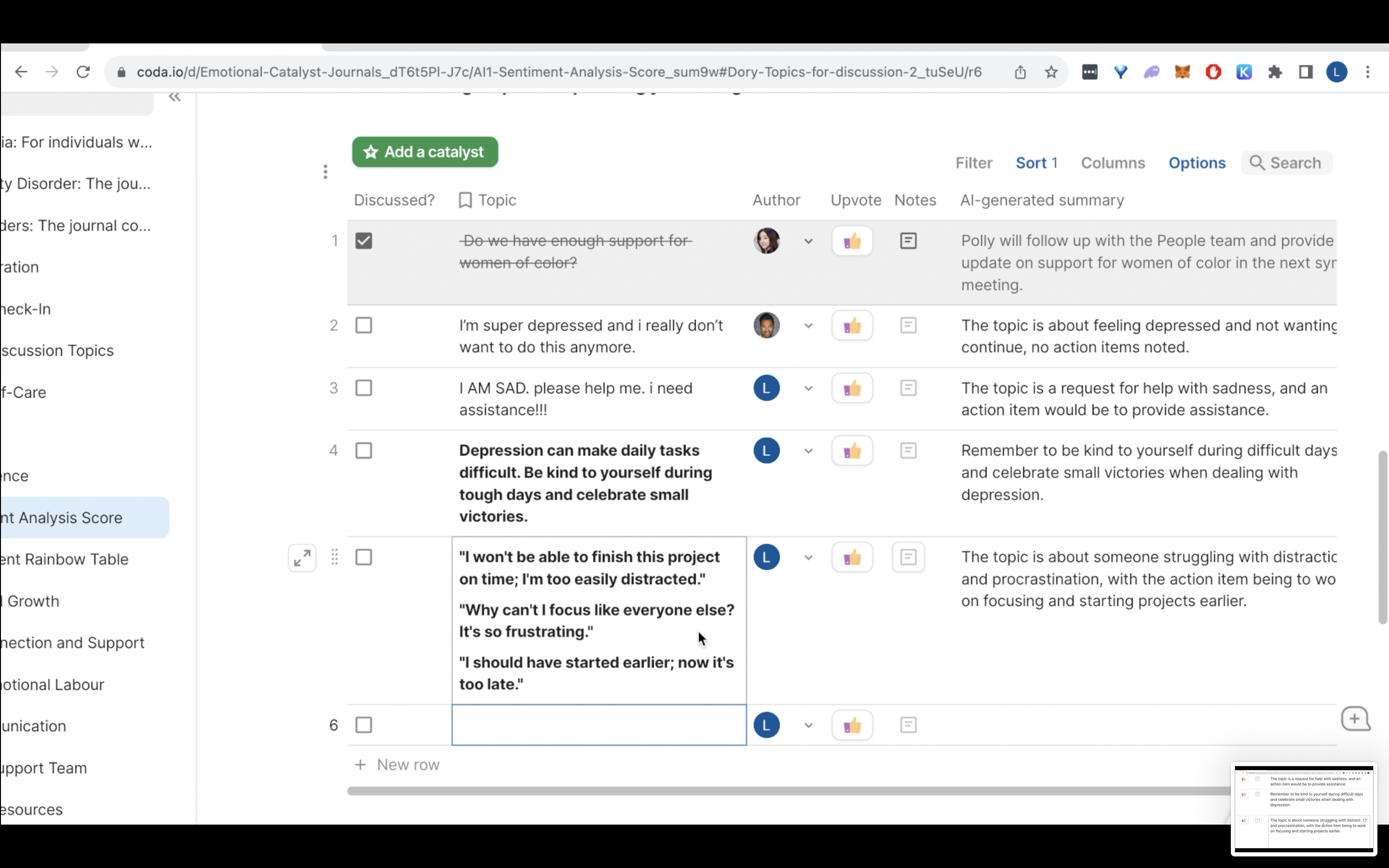
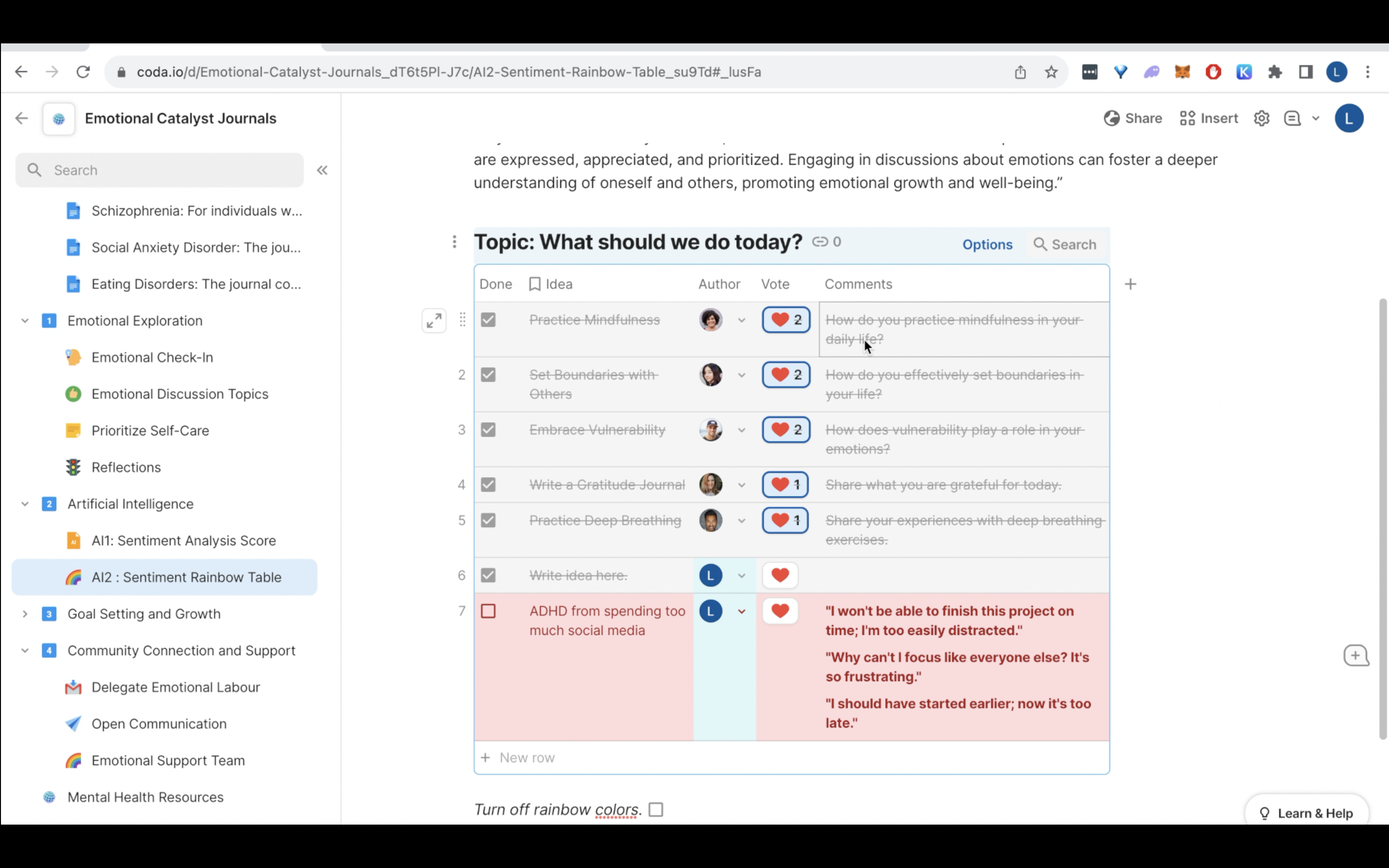
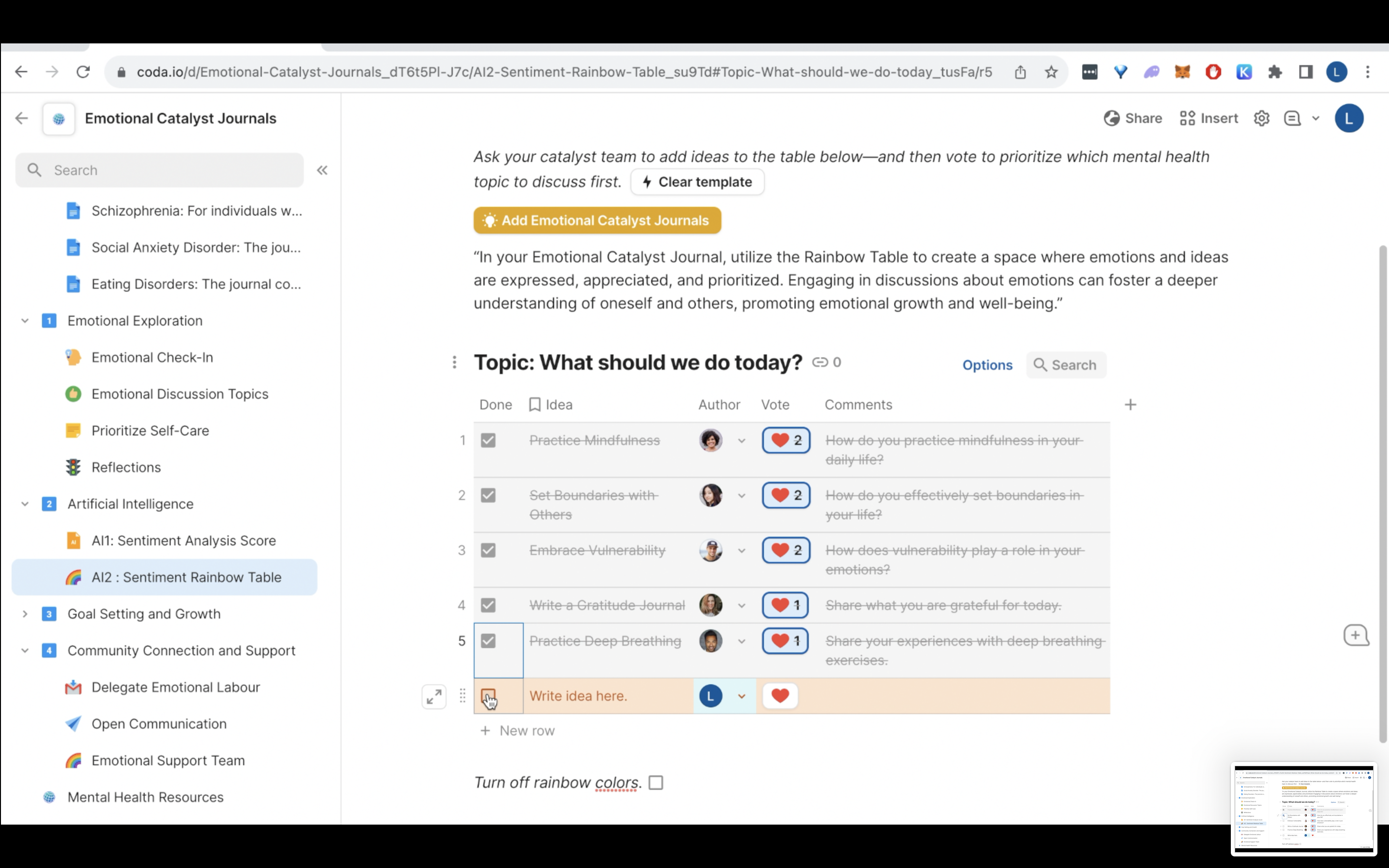
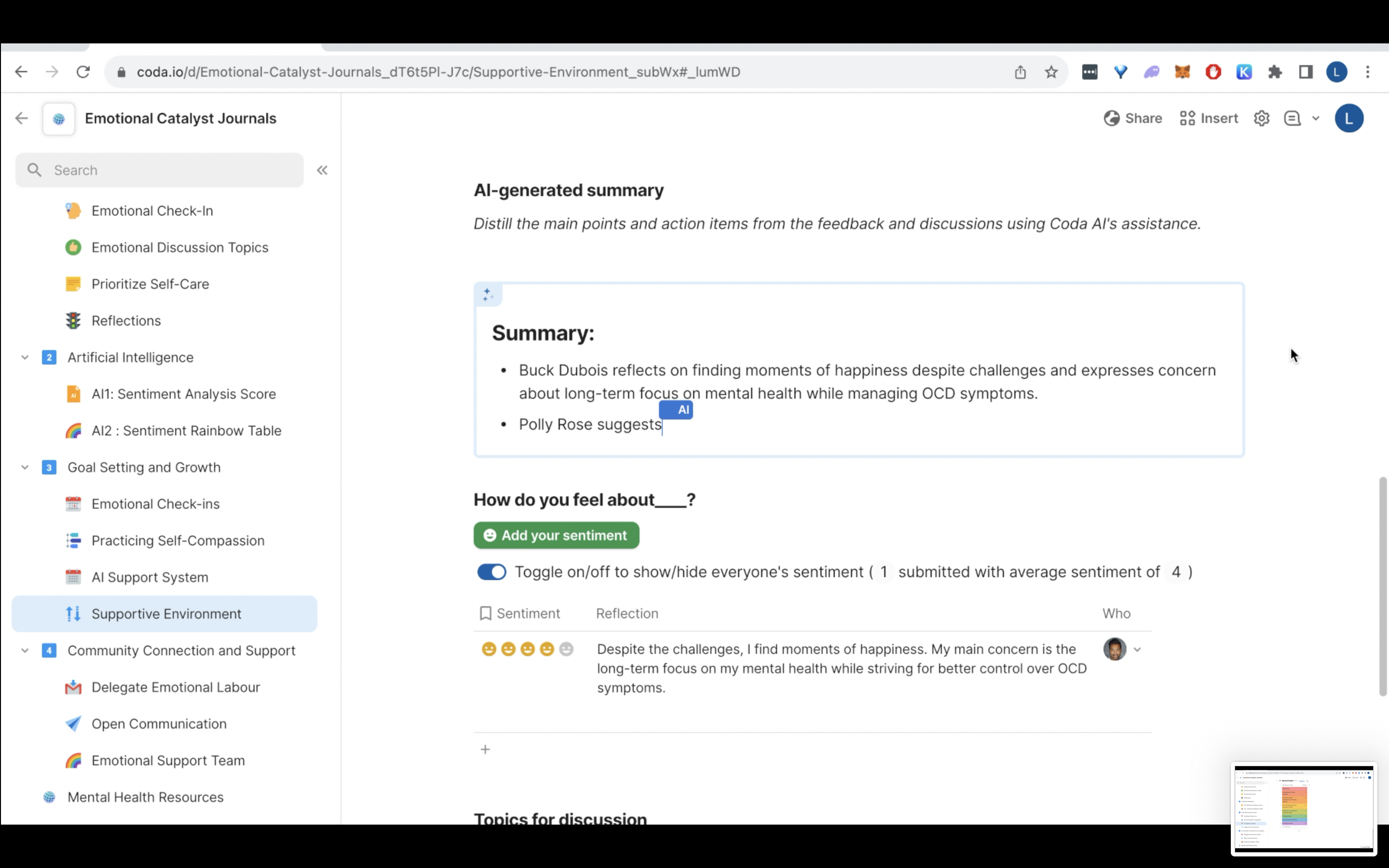
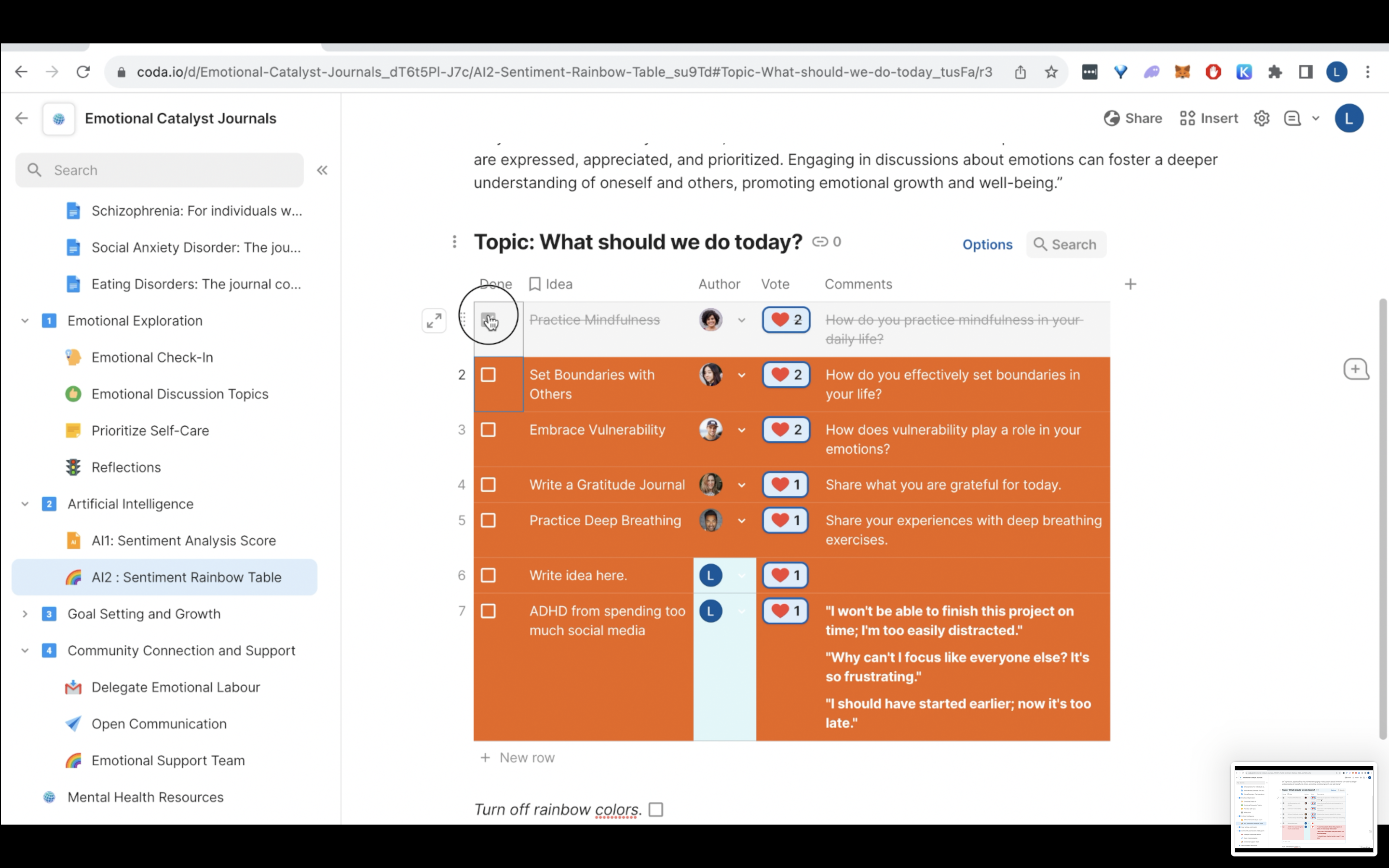
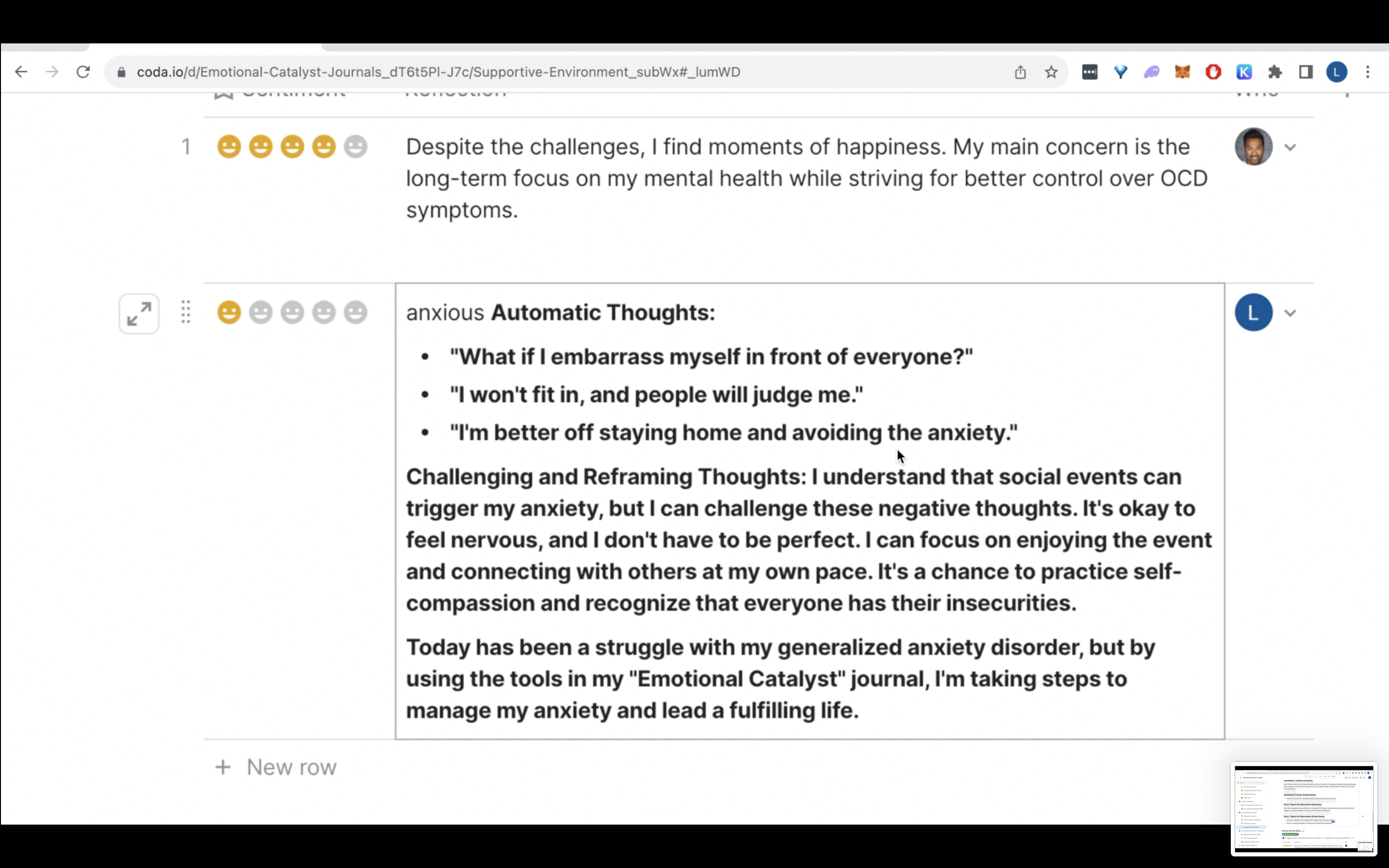
Emotional Catalyst utilizes AI-powered sentiment analysis algorithms to analyze and understand the emotional content in the data provided by users. For example, when users input their emotional check-ins or journal entries, the AI system can assess the emotions expressed in the text, such as happiness, sadness, anxiety, etc. This analysis helps users gain insights into their emotional patterns and well-being over time. AI2 : Sentiment Rainbow Table: Express your feelings, ideas, and priorities with the constantly changing rainbow background of the Emotional Catalyst Rainbow Table. Each color represents a different emotion or topic. Ask your catalyst team to add ideas to the table below—and then vote to prioritize which mental health topic to discuss first. Clear template or Turn off rainbow colors options. Add Emotional Catalyst Journals. “In your Emotional Catalyst Journal, utilize the Rainbow Table to create a space where emotions and ideas are expressed, appreciated, and prioritized. Engaging in discussions about emotions can foster a deeper understanding of oneself and others, promoting emotional growth and well-being.”
Natural Language Processing (NLP):
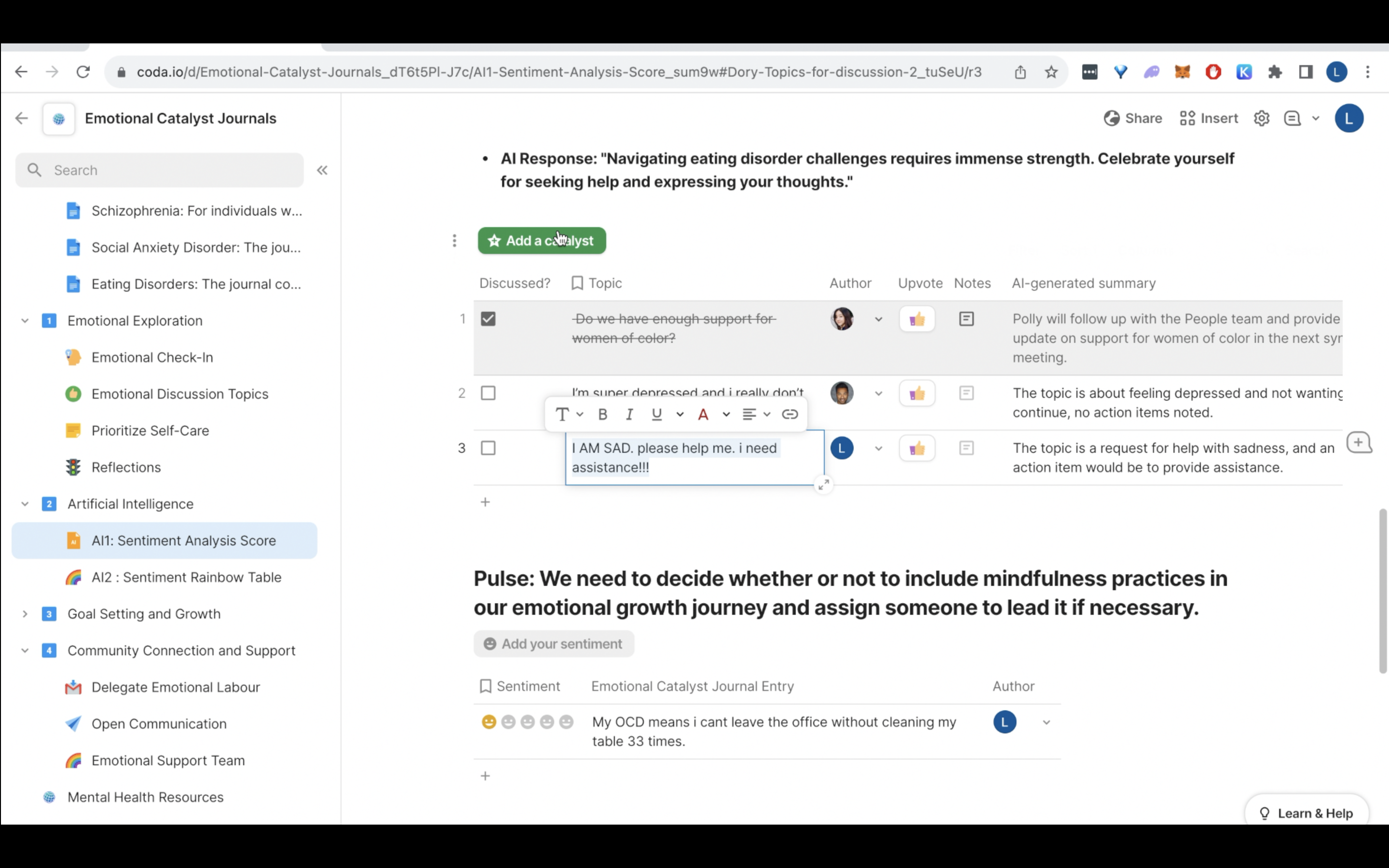
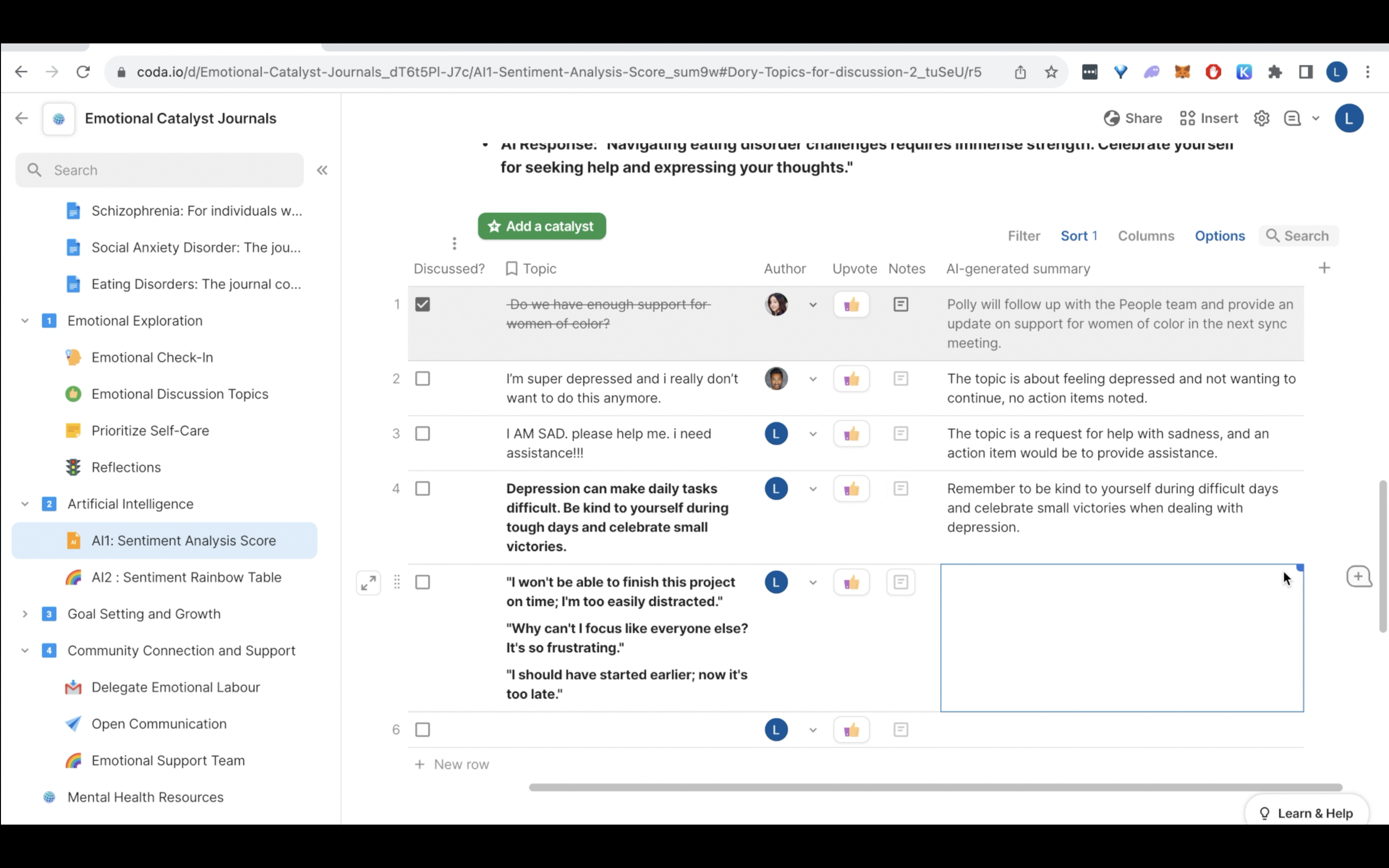
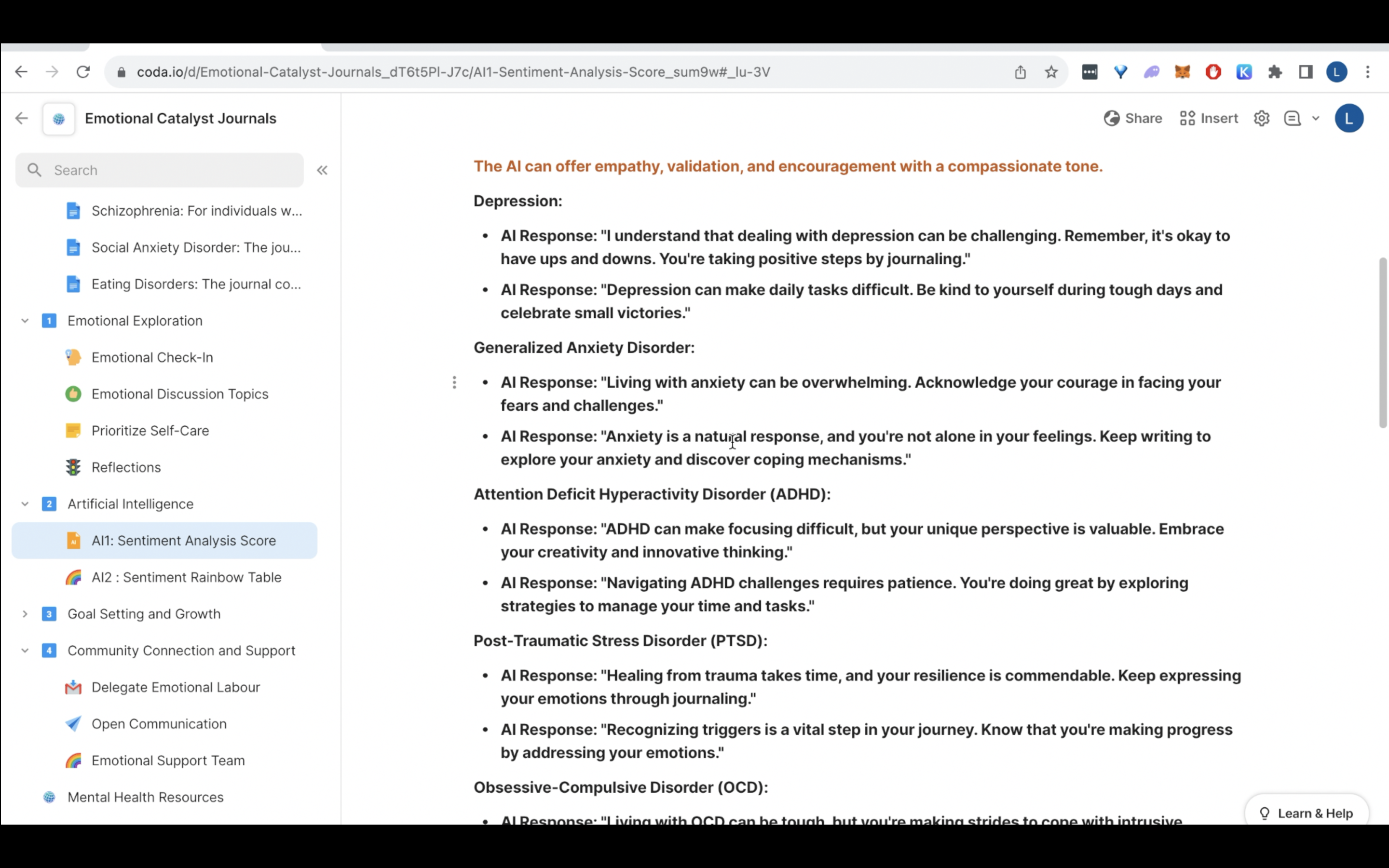
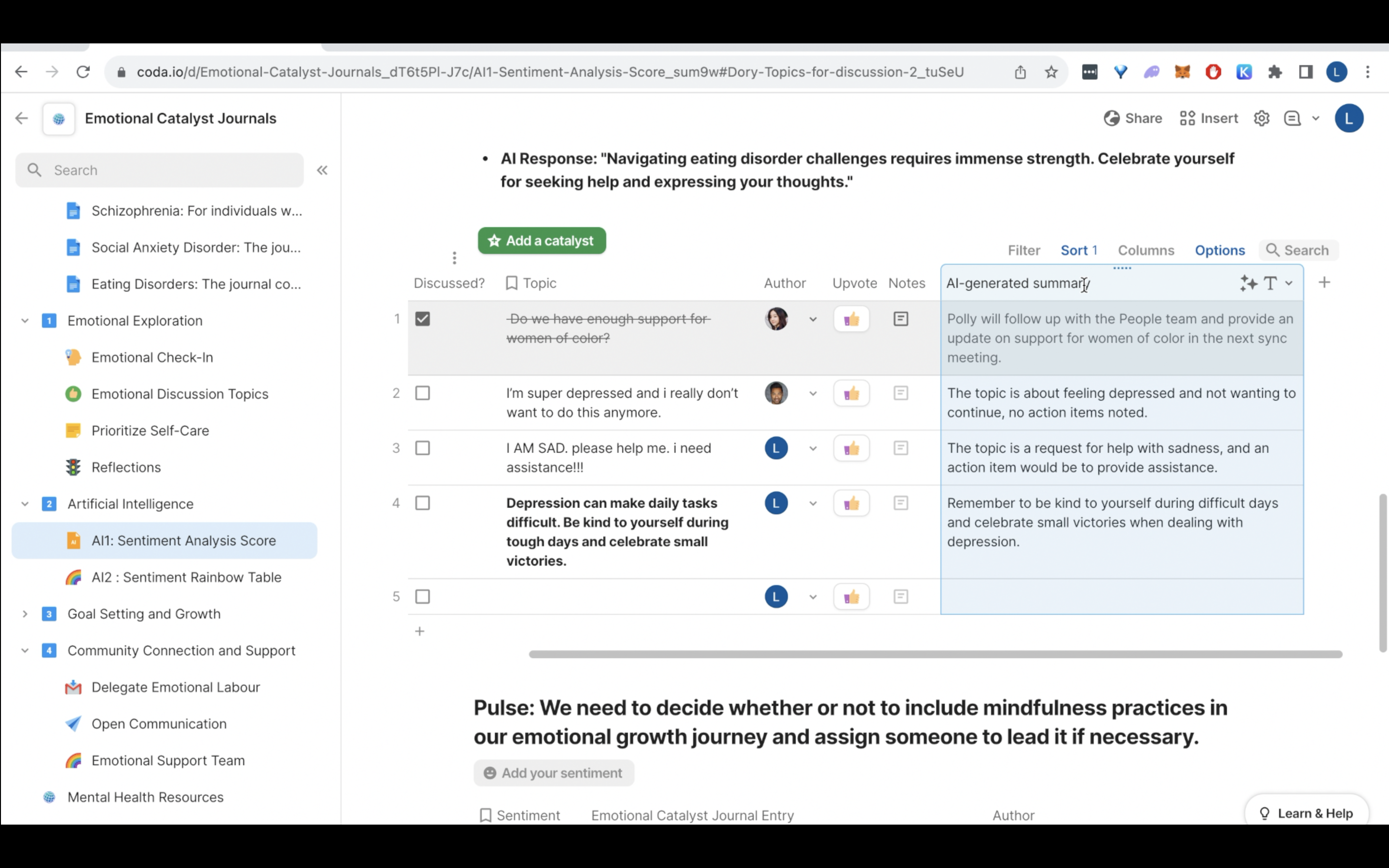
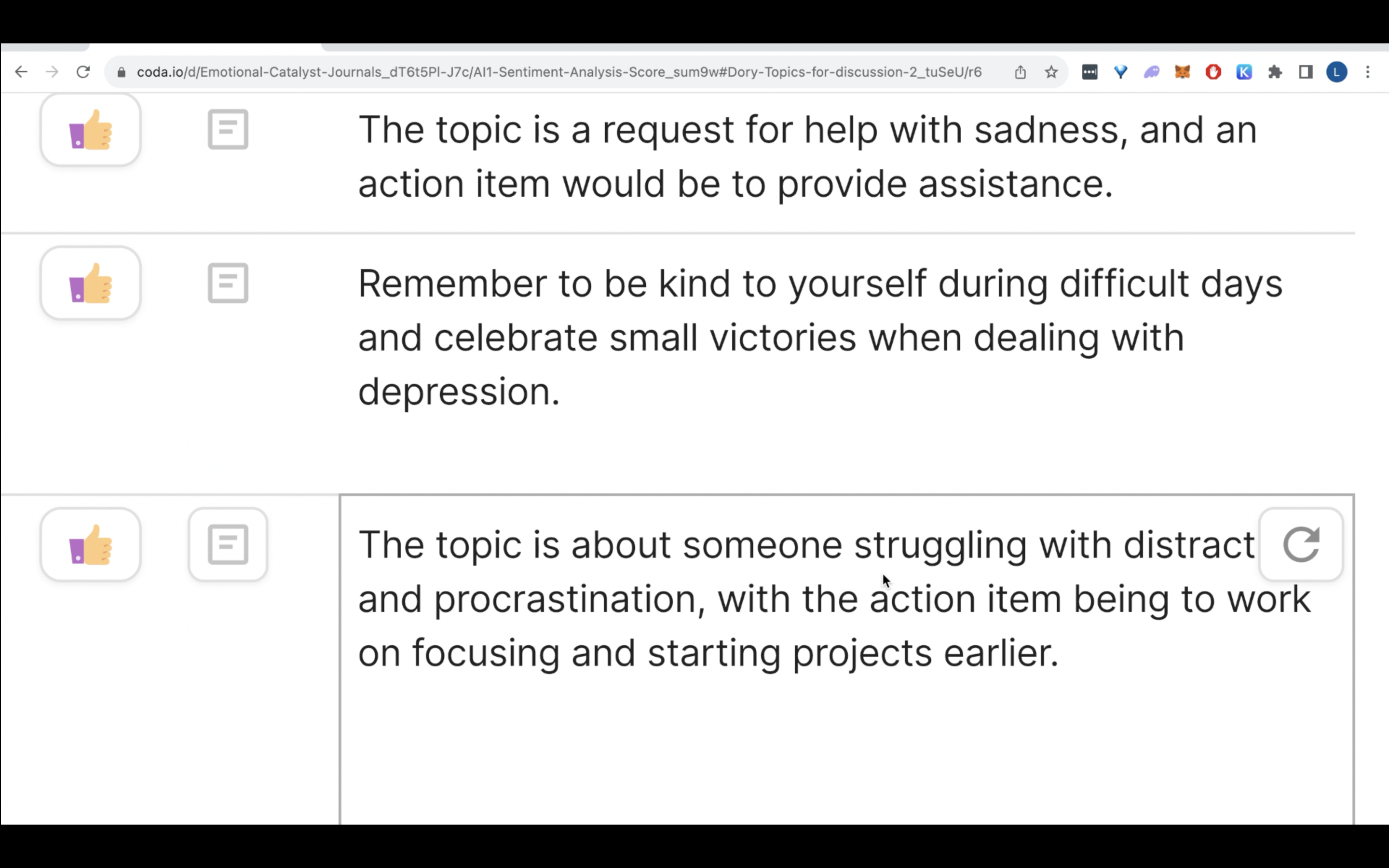
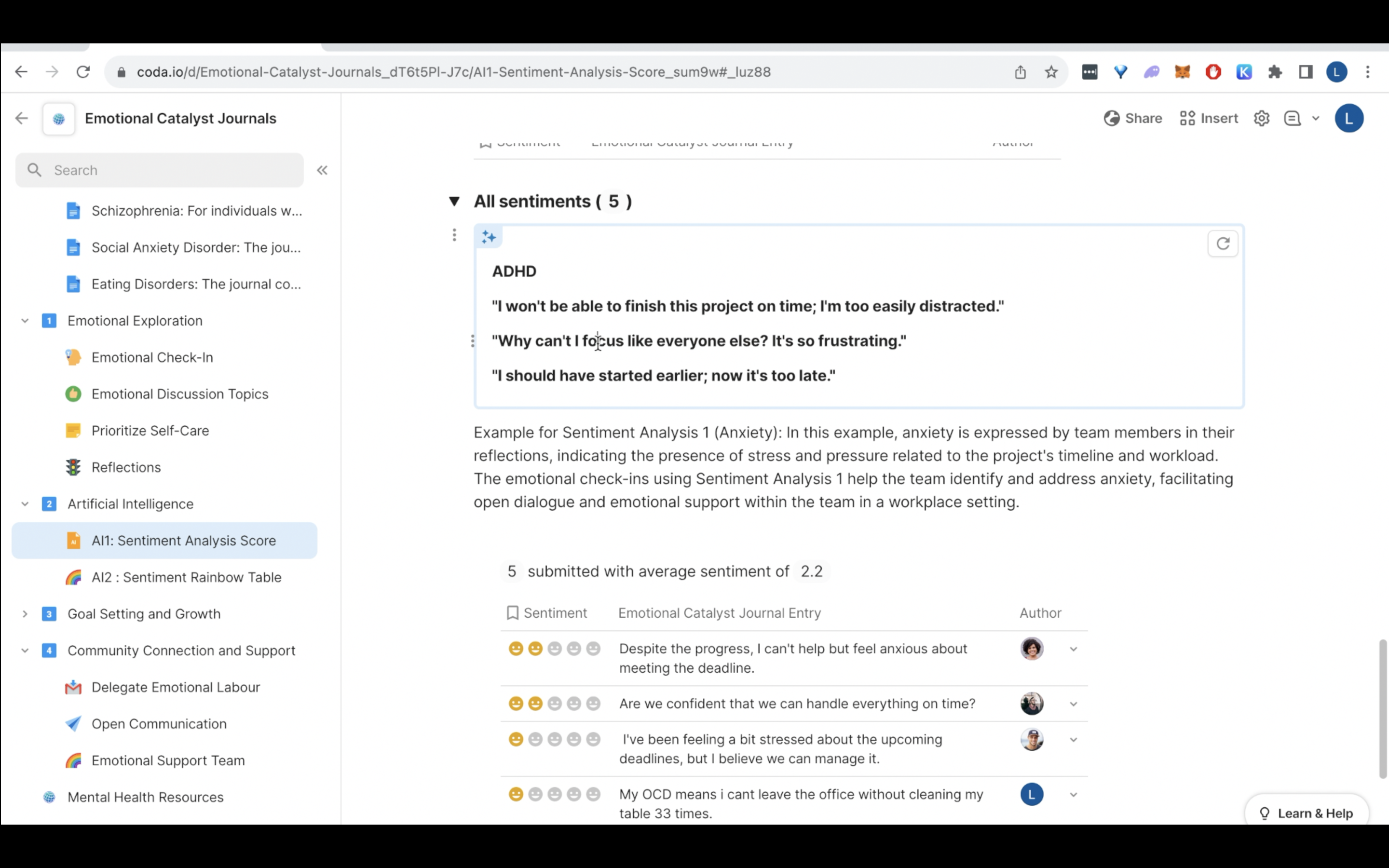
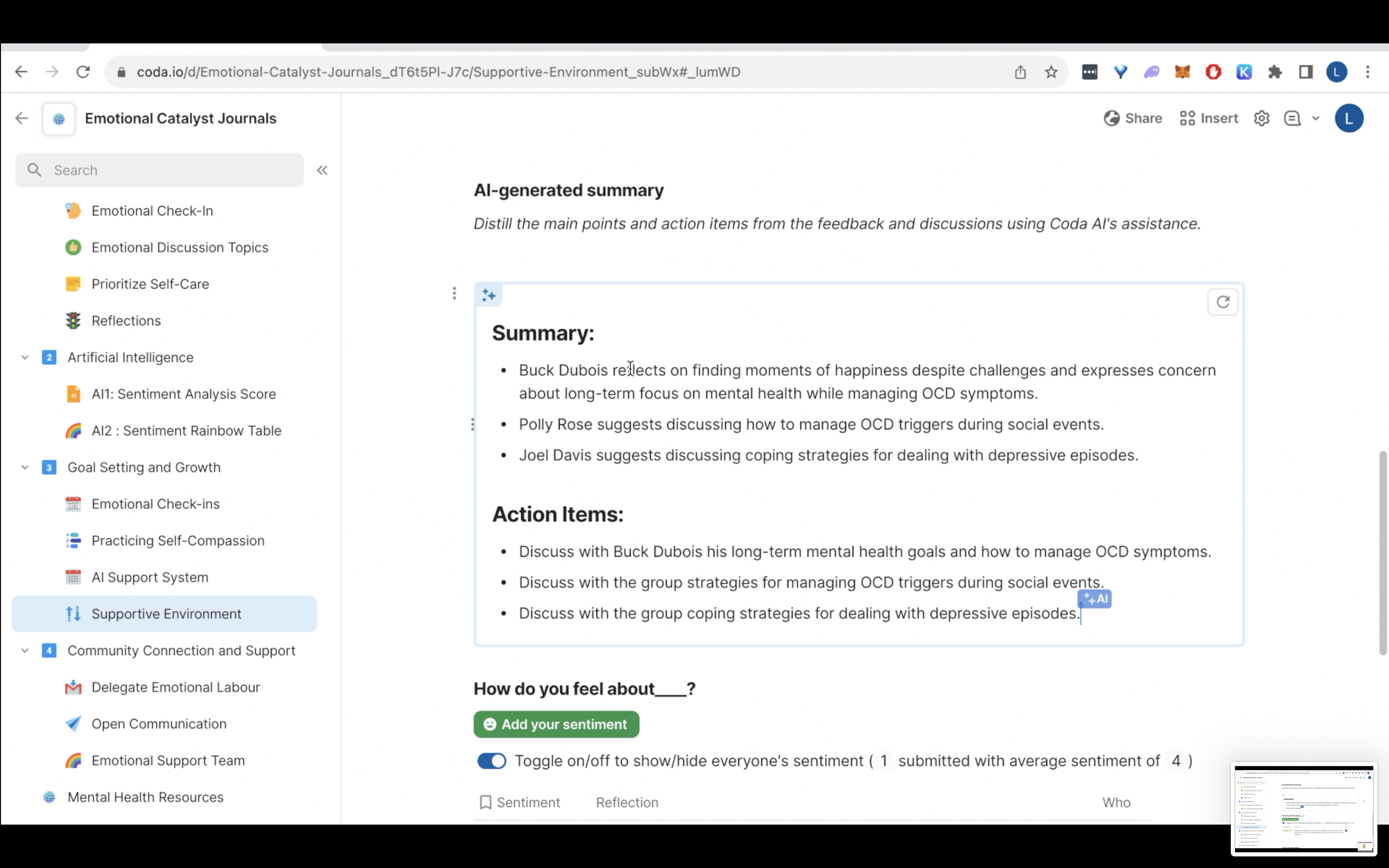
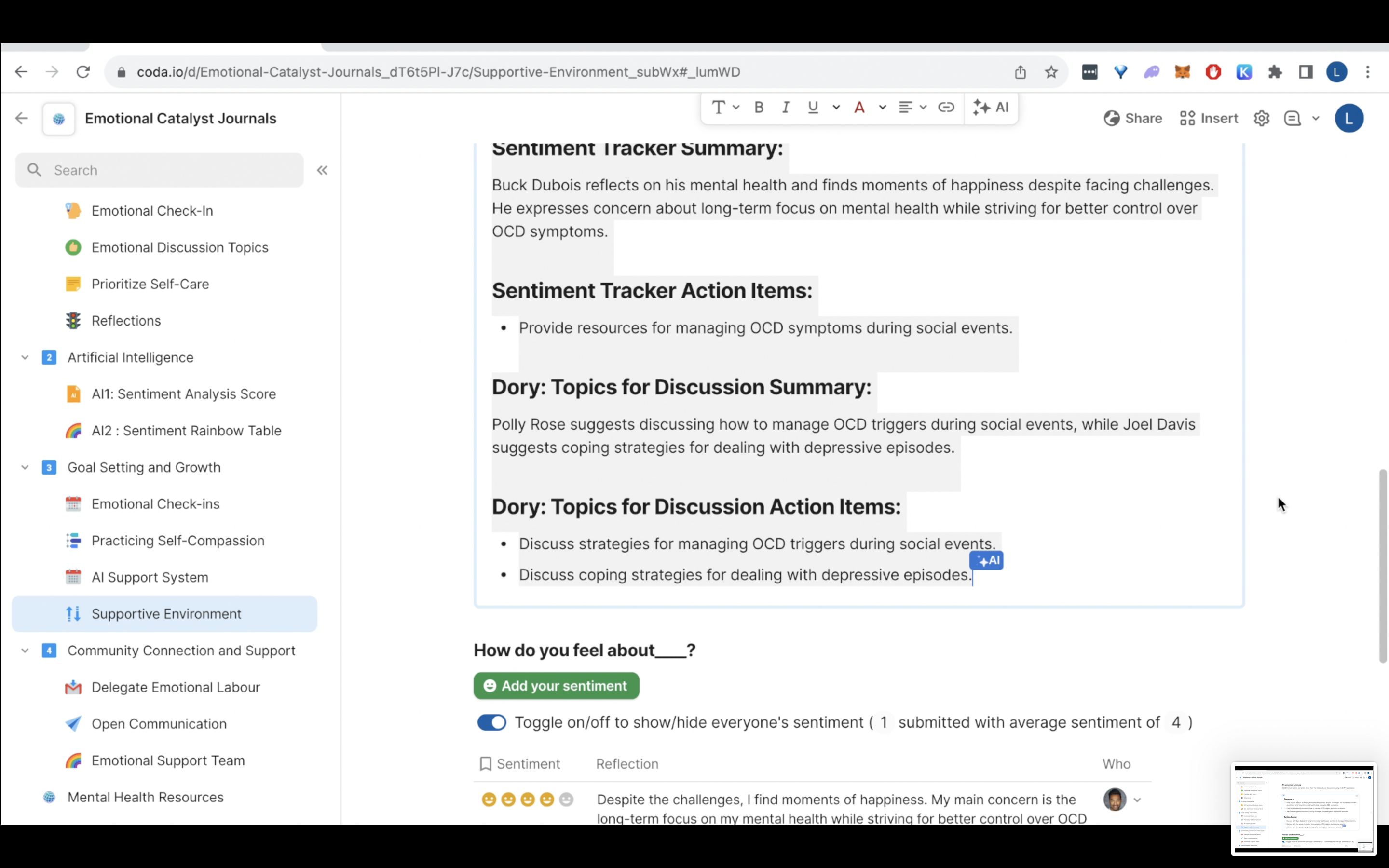
NLP is a crucial aspect of AI that enables Emotional Catalyst to process and understand human language. NLP algorithms are used to extract meaningful information from unstructured text data, such as journal entries and emotional discussions. This allows Emotional Catalyst to organize and categorize emotional data, making it easier for users to reflect on their emotions and identify patterns. Sentiment Analysis Score: Engage in open dialogue with your emotional support catalyst team to enhance your emotional well-being. Dory: Emotional Topics for Discussion Through Dory and Pulse with AI, Emotional Catalyst Journals fosters open emotional discussions, captures sentiments, and generates summaries to support your emotional growth journey. With real-time feedback and organization, Emotional Catalyst Journals enables you to enhance emotional well-being effectively. The AI can offer empathy, validation, and encouragement with a compassionate tone. Examples of prompts below:
Depression:
* AI Response: "I understand that dealing with depression can be challenging. Remember, it's okay to have ups and downs. You're taking positive steps by journaling."
* AI Response: "Depression can make daily tasks difficult. Be kind to yourself during tough days and celebrate small victories."
Generalized Anxiety Disorder:
* AI Response: "Living with anxiety can be overwhelming. Acknowledge your courage in facing your fears and challenges."
* AI Response: "Anxiety is a natural response, and you're not alone in your feelings. Keep writing to explore your anxiety and discover coping mechanisms."
Attention Deficit Hyperactivity Disorder (ADHD):
* AI Response: "ADHD can make focusing difficult, but your unique perspective is valuable. Embrace your creativity and innovative thinking."
* AI Response: "Navigating ADHD challenges requires patience. You're doing great by exploring strategies to manage your time and tasks."
Post-Traumatic Stress Disorder (PTSD):
* AI Response: "Healing from trauma takes time, and your resilience is commendable. Keep expressing your emotions through journaling."
* AI Response: "Recognizing triggers is a vital step in your journey. Know that you're making progress by addressing your emotions."
Obsessive-Compulsive Disorder (OCD):
* AI Response: "Living with OCD can be tough, but you're making strides to cope with intrusive thoughts. Celebrate your efforts in managing your rituals."
* AI Response: "Your willingness to challenge OCD patterns is inspiring. Remember, progress is a step-by-step process."
Schizophrenia:
* AI Response: "Schizophrenia can present unique challenges, but your experiences are valid. Continue to explore your thoughts and emotions in your journal."
* AI Response: "Your courage in facing schizophrenia is commendable. Know that you're not defined by your diagnosis."
Social Anxiety Disorder:
* AI Response: "I understand that social anxiety can be isolating. You're not alone, and taking small social steps counts as progress."
* AI Response: "Social anxiety can be tough, but keep in mind that it's okay to take your time in social situations. You're making strides in your personal growth."
Eating Disorders:
* AI Response: "Recovery from an eating disorder is a journey, and every step counts. Embrace self-compassion and remember that you are worthy of love and care."
* AI Response: "Navigating eating disorder challenges requires immense strength. Celebrate yourself for seeking help and expressing your thoughts."
AI-Powered Prompting:
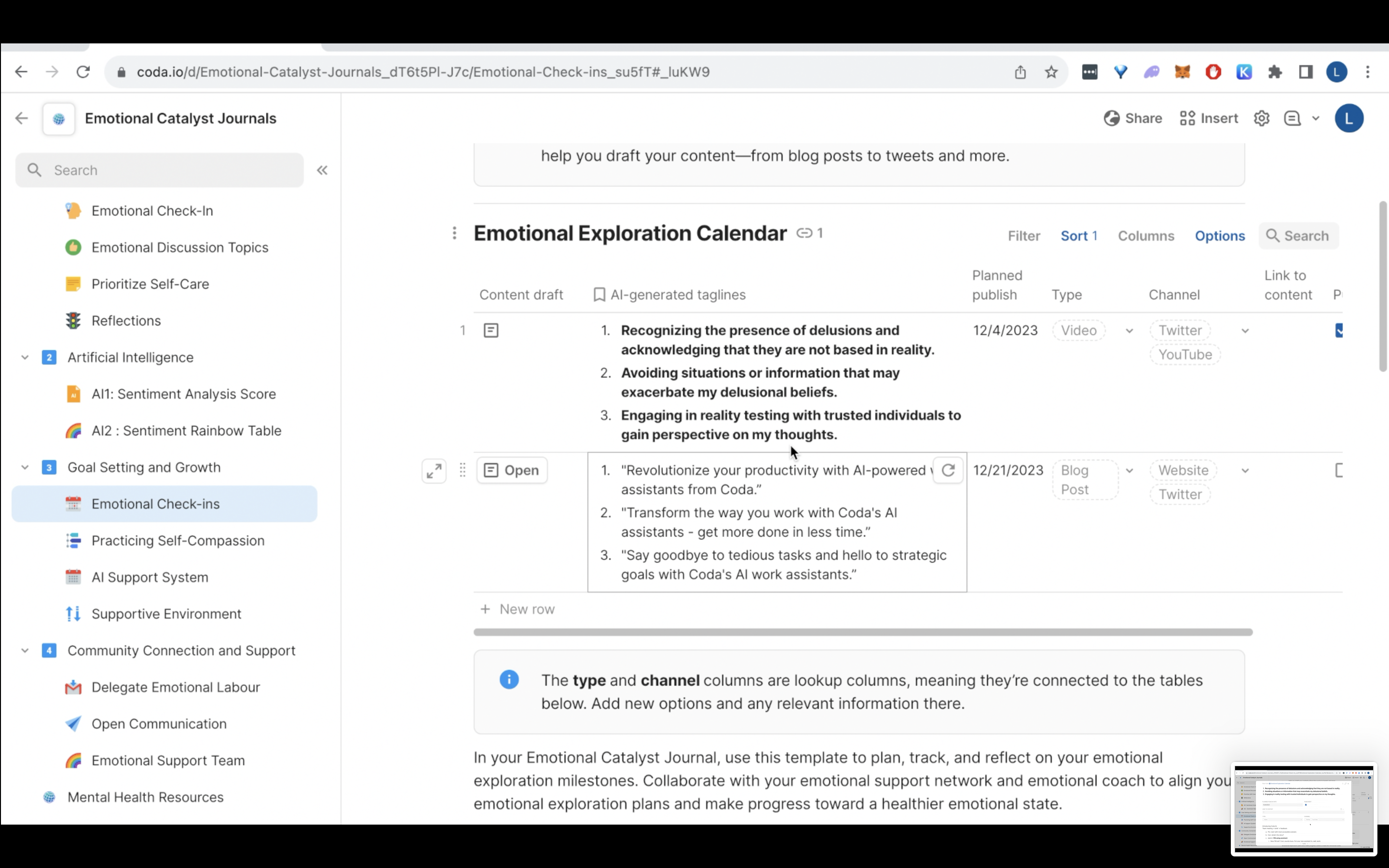
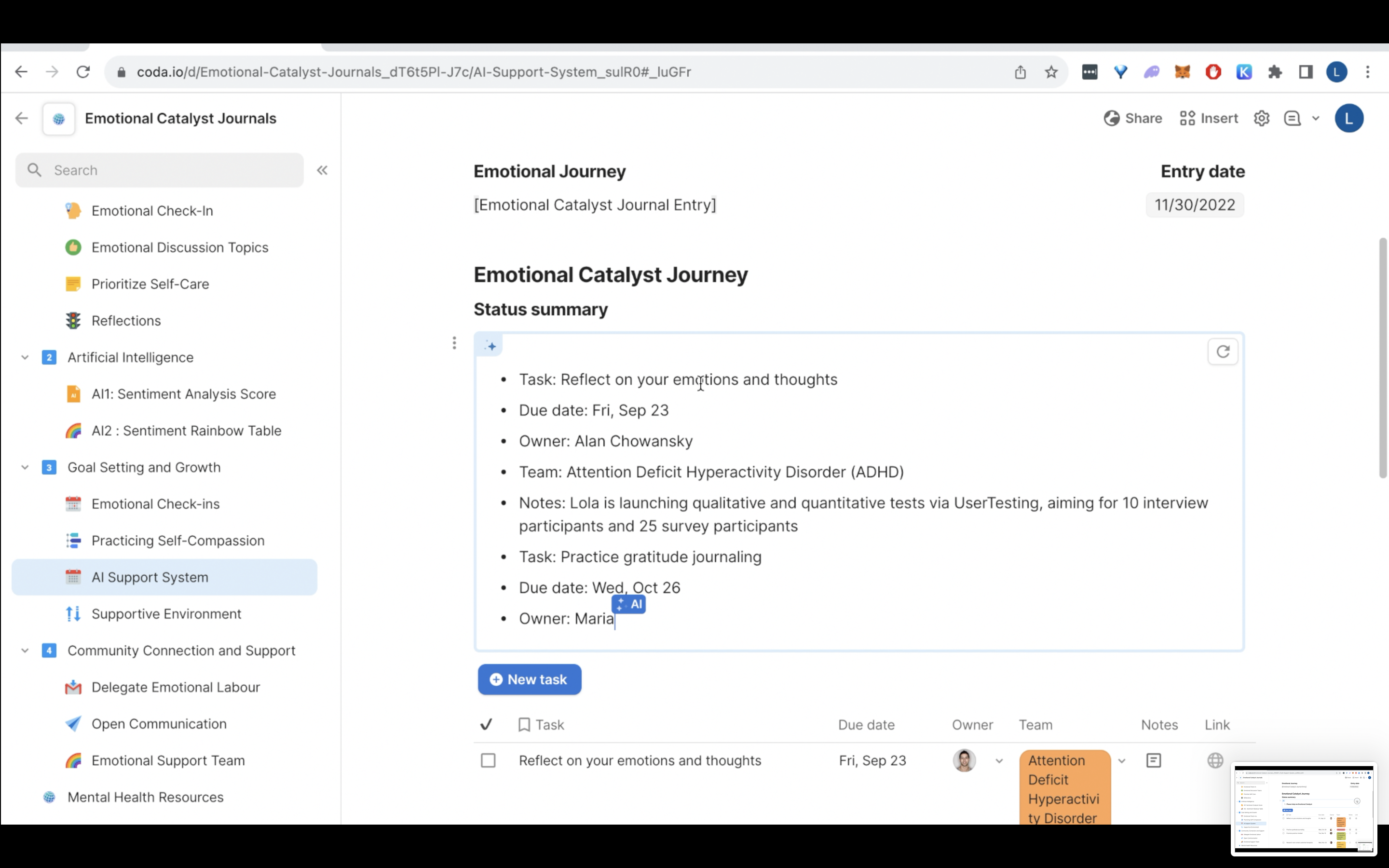
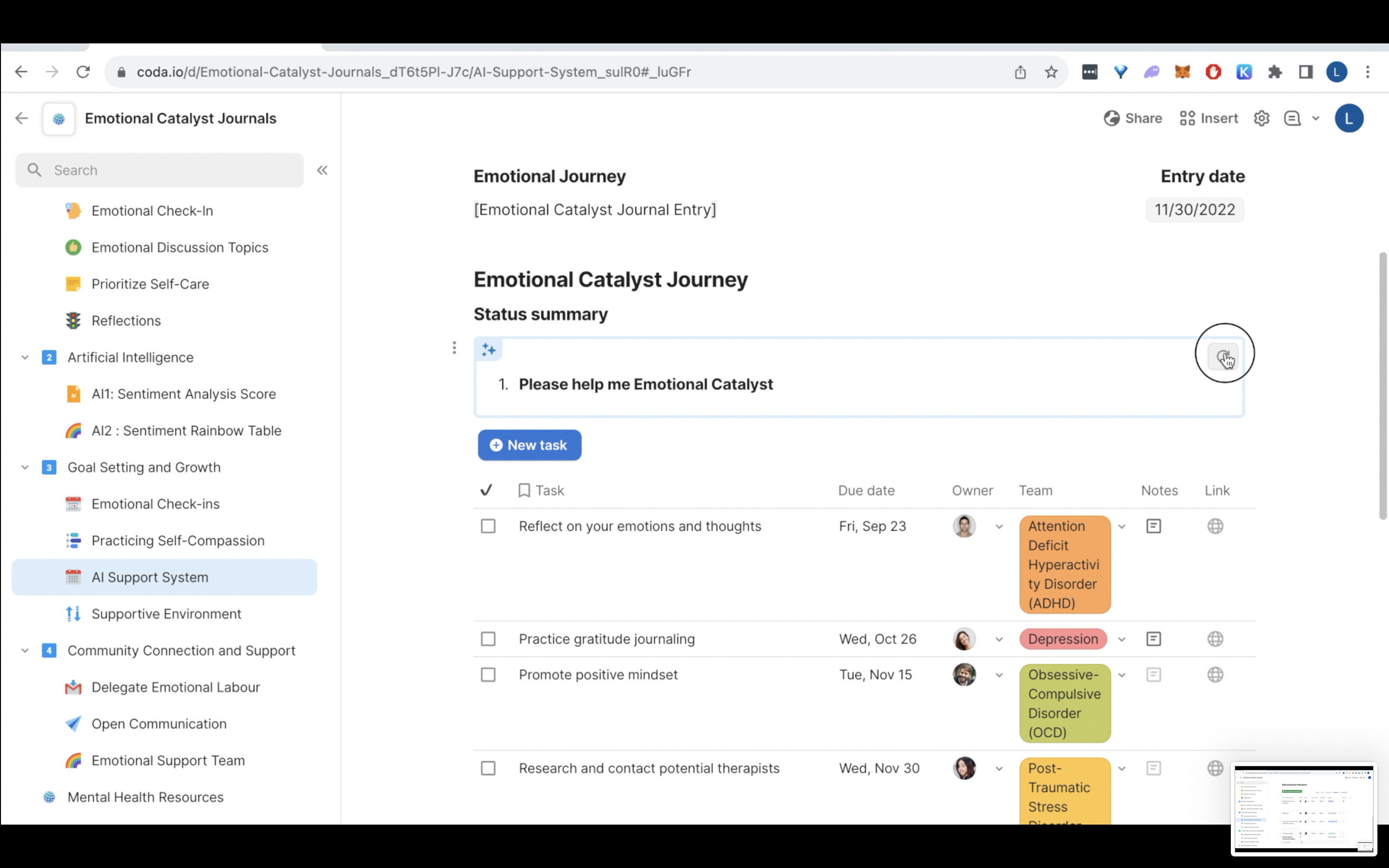
Emotional Catalyst incorporates AI to generate prompts for emotional check-ins and reflections. These prompts can be personalized based on the user's emotional history and preferences. The AI system can learn from previous user interactions and responses to generate more relevant and supportive prompts over time. Post-session reflections included actionable insights and personal reflections, with positive feedback on emotional growth and outcomes, but with opportunities for further development in emotional planning and time management. The emotional catalyst explored sharing personal stories and determining the best approach, with plans to continue learning and monitoring emotional progress. The emotional decision log will be used to track transformative breakthroughs. Schedule regular emotional check-ins to maintain engagement and consistency. Draft, plan, and track your emotional exploration journey with a little help from Coda AI. Use the table below to track and plan your emotional milestones and reflections.
- Reflective Journaling: Write and organize your thoughts, feelings, and experiences.
- AI Assistance: Coda AI identifies key emotional topics and provides valuable insights.
- Action Items: Track action items and coping strategies discussed during the session.
- Personal Growth: Set goals and monitor progress in your emotional well-being journey.
Personalized Recommendations:
Through AI, Emotional Catalyst can offer personalized recommendations for self-care and emotional well-being based on the user's emotional patterns, responses, and specific mental health goals. These recommendations can be tailored to individual needs, providing a more effective and supportive experience.
- Brainstorm, ask questions, and keep your emotional exploration meetings on track with the AI-powered Discussion Tracker. Utilize this template to gather questions, feedback, and discussion topics related to emotional well-being.
- Mental Health Journal Prompt: Seamlessly capture your thoughts and feelings, enabling quick additions to your emotional inventory. Share this transformative experience with your teammates who can empathetically vote on their favorites. This interactive process helps uncover your most impactful emotional insights, allowing you to nurture self-awareness and growth. Explore your emotions, prioritize your feelings, and foster connection and support within your emotional community. Emotional Catalyst Journal - the catalyst for authentic emotional expression.
Feedback and Support:
AI in Emotional Catalyst can provide real-time feedback and support to users during emotional discussions or journaling. The AI system can recognize and respond to emotional cues, offering empathy and understanding, which can be beneficial for users seeking emotional support.
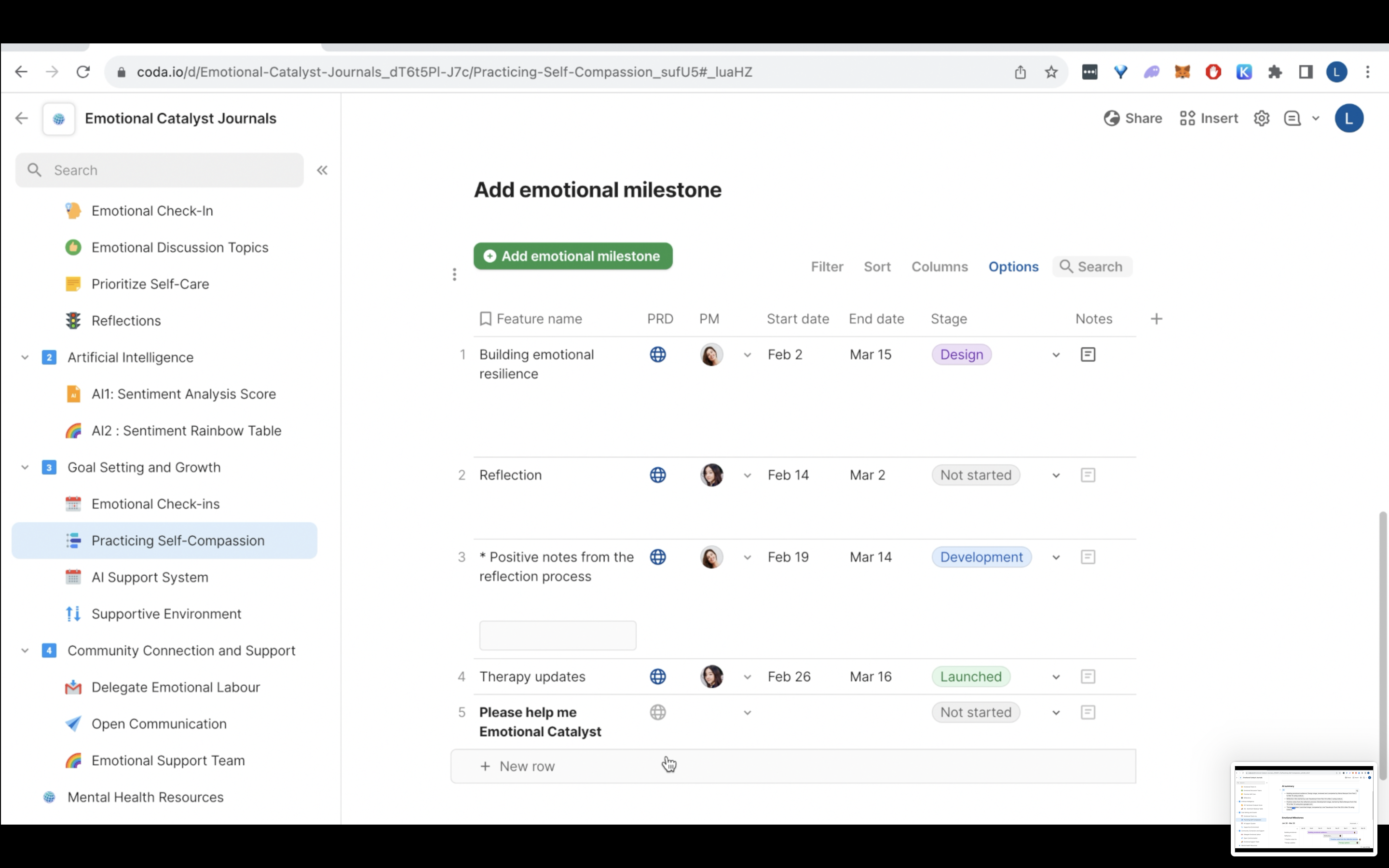
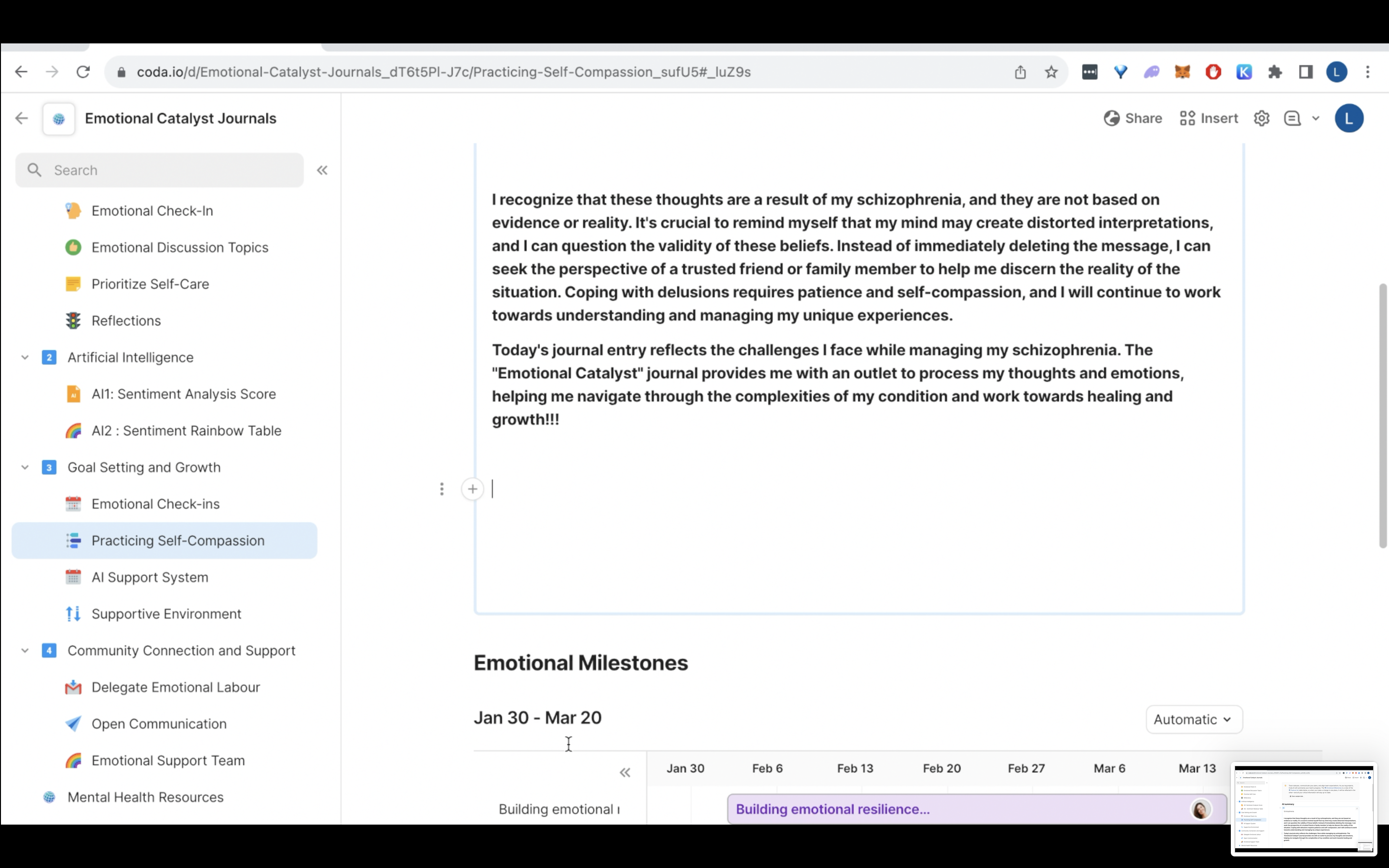
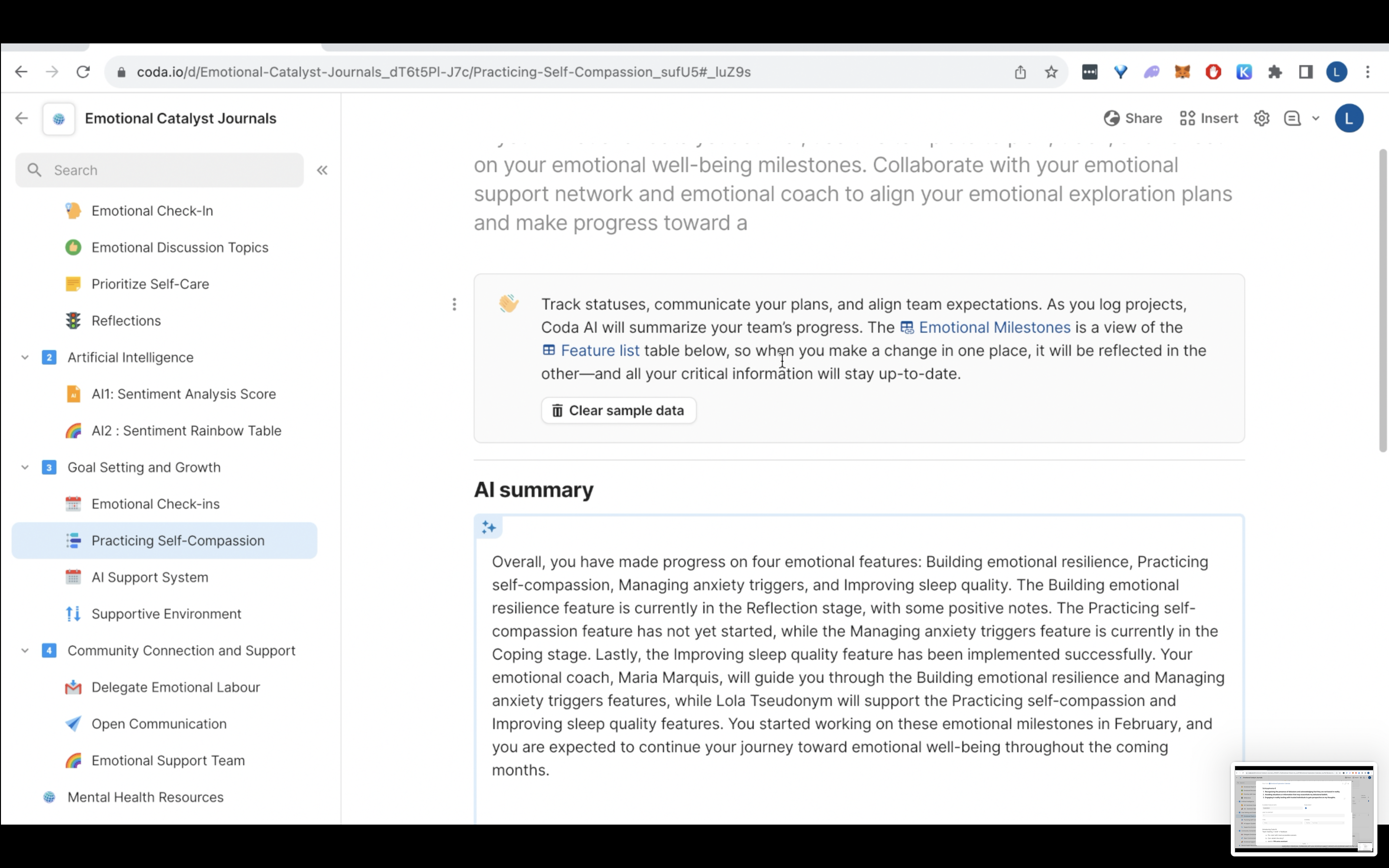
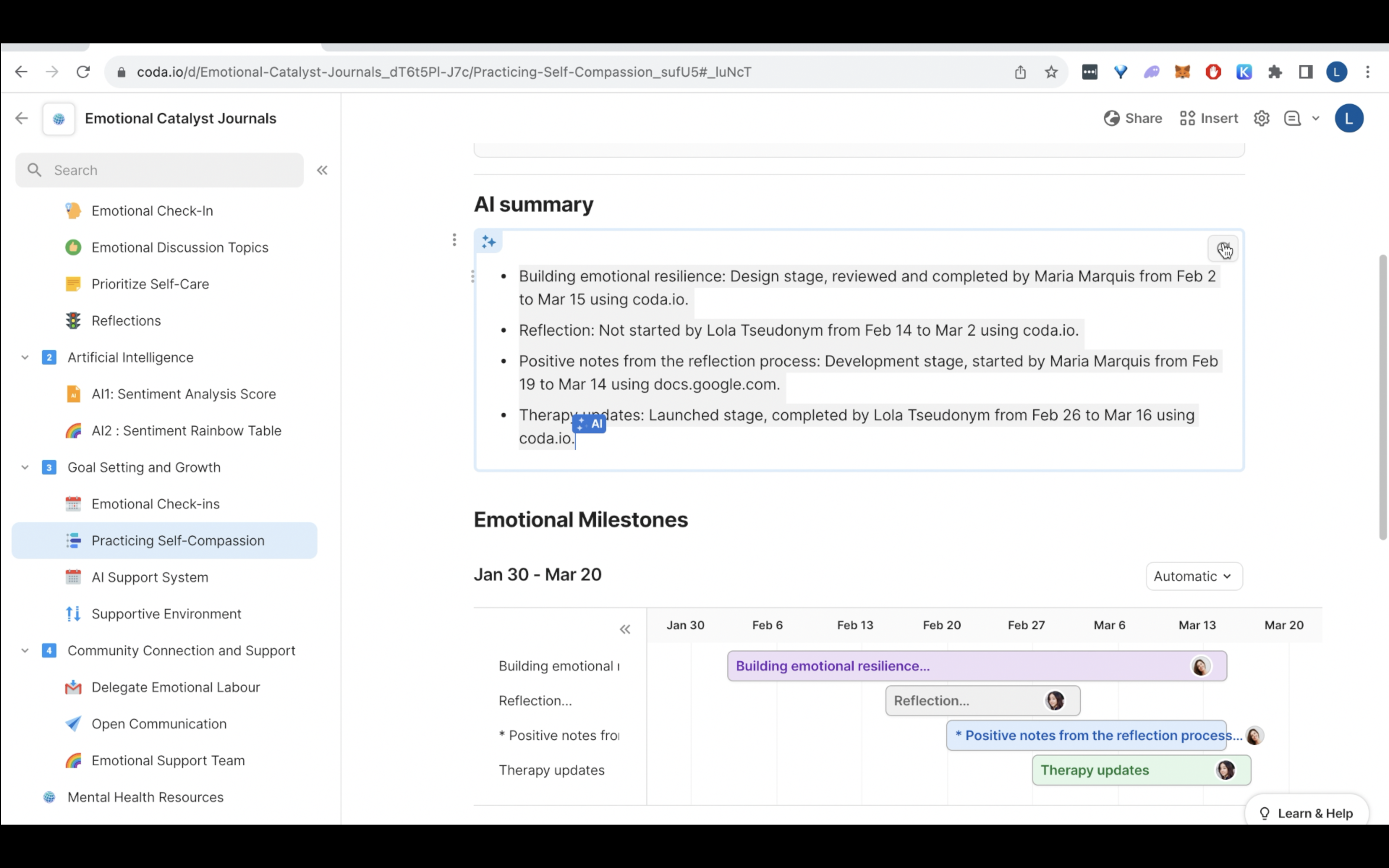
- In your Emotional Catalyst Journal, use this template to plan, track, and reflect on your emotional well-being milestones. Collaborate with your emotional support network and emotional coach to align your emotional exploration plans and make progress. Overall, you have made progress on four emotional features: Building emotional resilience, Practicing self-compassion, Managing anxiety triggers, and Improving sleep quality. The Building emotional resilience feature is currently in the Reflection stage, with some positive notes. The Practicing self-compassion feature has not yet started, while the Managing anxiety triggers feature is currently in the Coping stage. Lastly, the Improving sleep quality feature has been implemented successfully. Your emotional coach, Maria Marquis, will guide you through the Building emotional resilience and Managing anxiety triggers features, while Lola Tseudonym will support the Practicing self-compassion and Improving sleep quality features. You started working on these emotional milestones in February, and you are expected to continue your journey toward emotional well-being throughout the coming months.
Adaptive Learning:
Emotional Catalyst can leverage AI's adaptive learning capabilities to continuously improve its performance and user experience. As users engage with the platform and provide feedback, the AI system can learn from this data and enhance its emotional analysis and prompting capabilities.
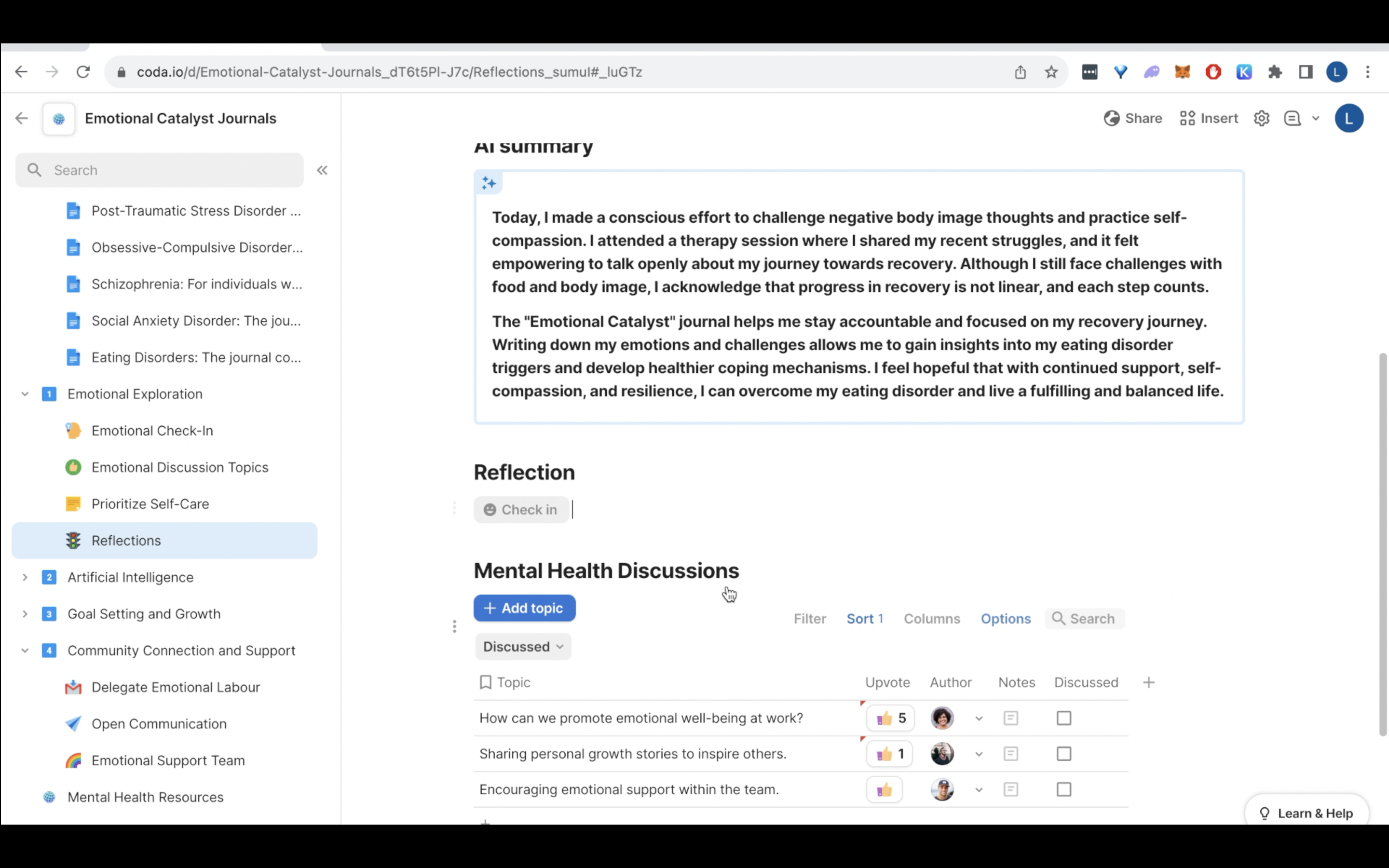
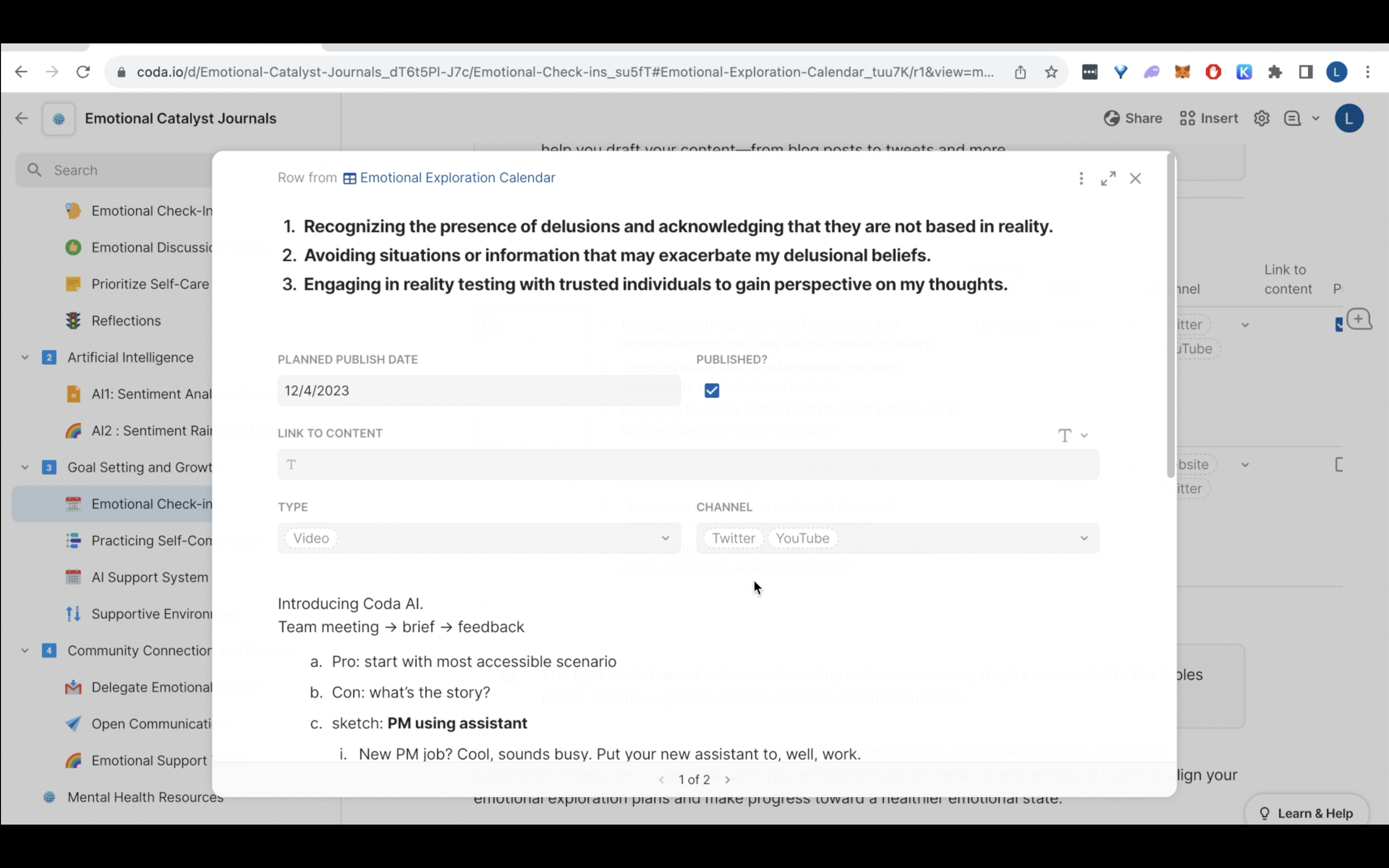
- Emotional Exploration Calendar to track your mental health journey
- “ I experienced significant emotional growth and positive outcomes, with room for further development in emotional planning and time management.”
- Emotional Transformations and Breakthroughs : Share experiences with your support team
Mental health issues affect a substantial portion of the global population, and existing approaches often fall short in delivering accessible and individualized care. The vision for "Emotional Catalyst" was to harness the power of AI, specifically Coda AI, to create a sophisticated platform capable of understanding, analyzing, and responding to users' emotional expressions in real-time. The technical foundation of "Emotional Catalyst" relies on integrating advanced sentiment analysis algorithms powered by Coda AI's NLP capabilities. As you take notes on each emotional topic, Coda AI will automatically pull out action items, making them clearly visible for the whole team and ensuring that emotions are validated.
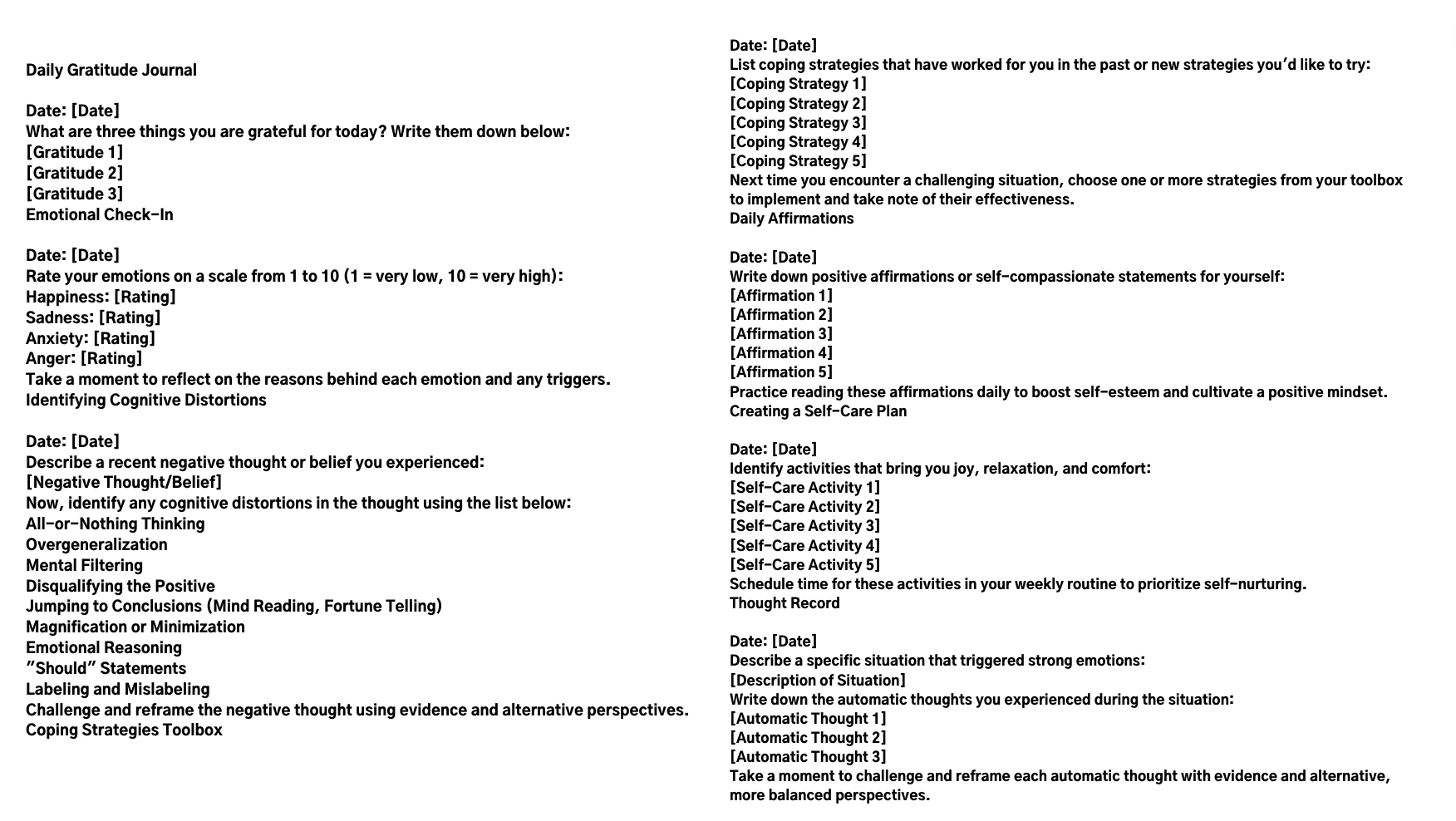
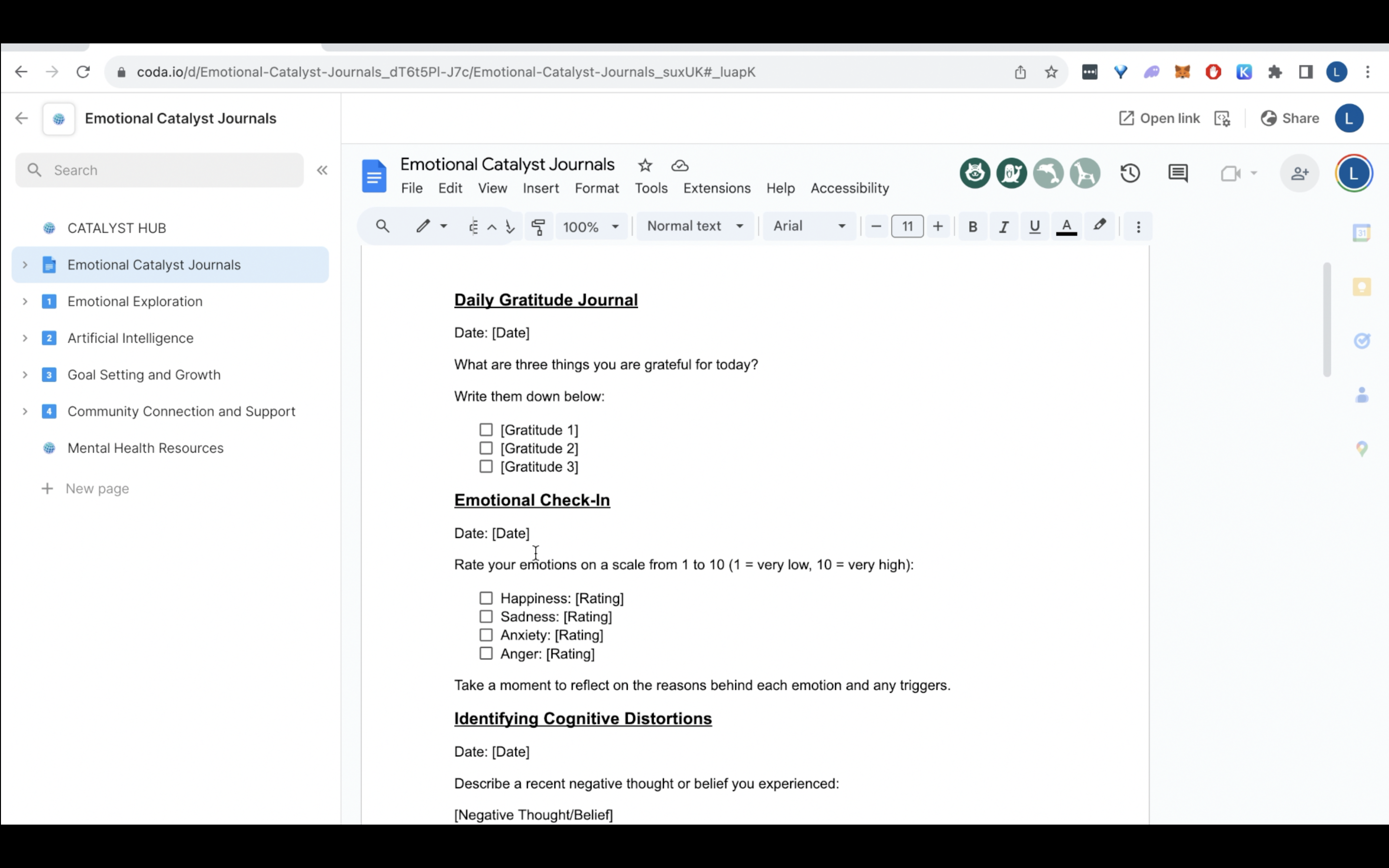
Emotional-Catalyst CODA Template:
Daily Gratitude Journal
- Date: [Date]
- What are three things you are grateful for today?
- Write them down below:
- [Gratitude 1]
- [Gratitude 2]
- [Gratitude 3]

Emotional Check-In
- Date: [Date]
- Rate your emotions on a scale from 1 to 10 (1 = very low, 10 = very high):
- Happiness: [Rating]
- Sadness: [Rating]
- Anxiety: [Rating]
- Anger: [Rating]
- Take a moment to reflect on the reasons behind each emotion and any triggers.

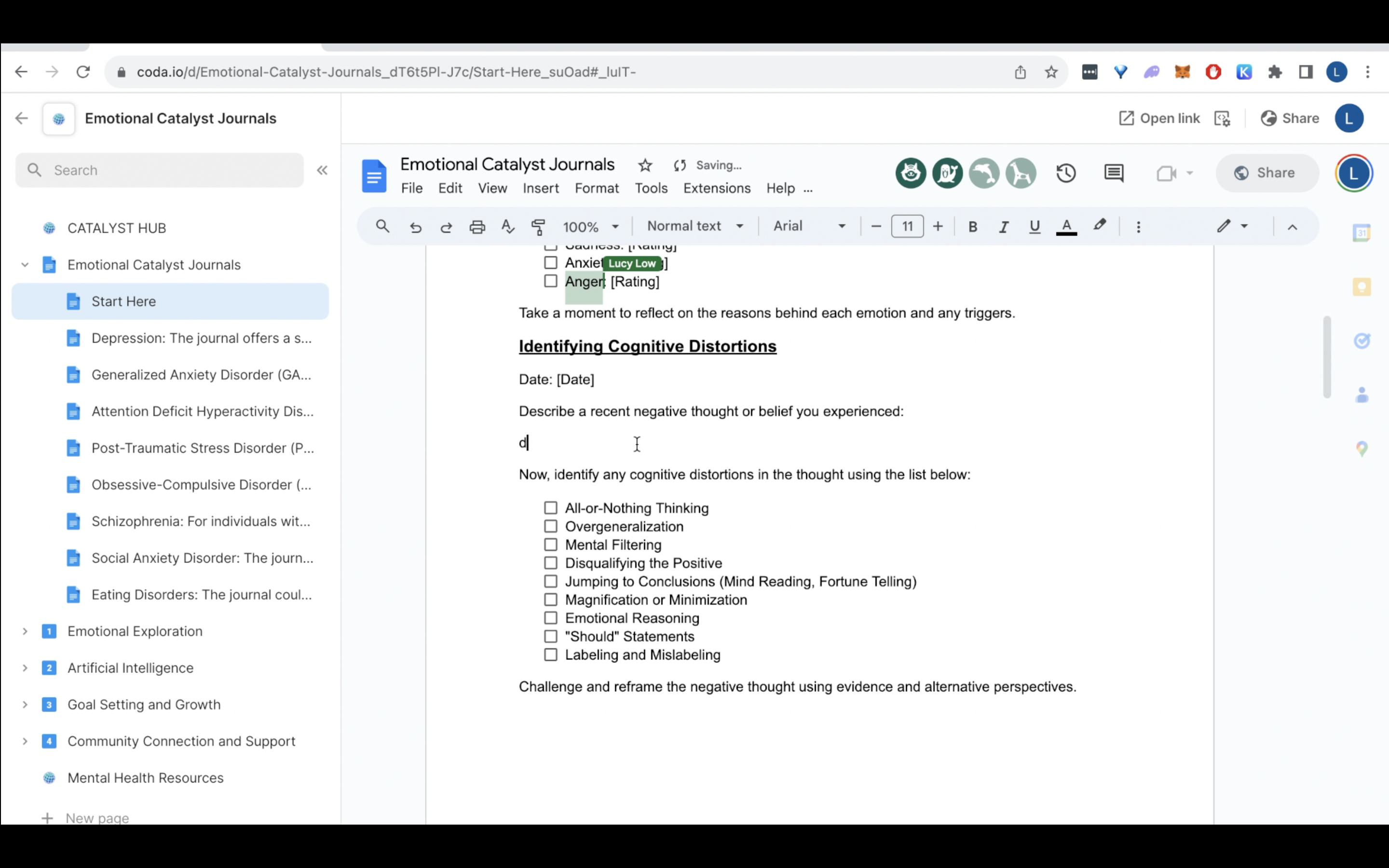
Identifying Cognitive Distortions
- Date: [Date]
- Describe a recent negative thought or belief you experienced:
- [Negative Thought/Belief]
- Now, identify any cognitive distortions in the thought using the list below:
- All-or-Nothing Thinking
- Overgeneralization
- Mental Filtering
- Disqualifying the Positive
- Jumping to Conclusions (Mind Reading, Fortune Telling)
- Magnification or Minimization
- Emotional Reasoning
- "Should" Statements
- Labeling and Mislabeling
- Challenge and reframe the negative thought using evidence and alternative perspectives.

Coping Strategies Toolbox
- Date: [Date]
- List coping strategies that have worked for you in the past or new strategies you'd like to try:
- [Coping Strategy 1]
- [Coping Strategy 2]
- [Coping Strategy 3]
- [Coping Strategy 4]
- [Coping Strategy 5]
- Next time you encounter a challenging situation, choose one or more strategies from your toolbox to implement and take note of their effectiveness.

Daily Affirmations
- Date: [Date]
- Write down positive affirmations or self-compassionate statements for yourself:
- [Affirmation 1]
- [Affirmation 2]
- [Affirmation 3]
- [Affirmation 4]
- [Affirmation 5]
- Practice reading these affirmations daily to boost self-esteem and cultivate a positive mindset.

Creating a Self-Care Plan
- Date: [Date]
- Identify activities that bring you joy, relaxation, and comfort:
- [Self-Care Activity 1]
- [Self-Care Activity 2]
- [Self-Care Activity 3]
- [Self-Care Activity 4]
- [Self-Care Activity 5]
- Schedule time for these activities in your weekly routine to prioritize self-nurturing.

Thought Record
- Date: [Date]
- Describe a specific situation that triggered strong emotions:
- [Description of Situation]
- Write down the automatic thoughts you experienced during the situation:
- [Automatic Thought 1]
- [Automatic Thought 2]
- [ Automatic Thought 3]
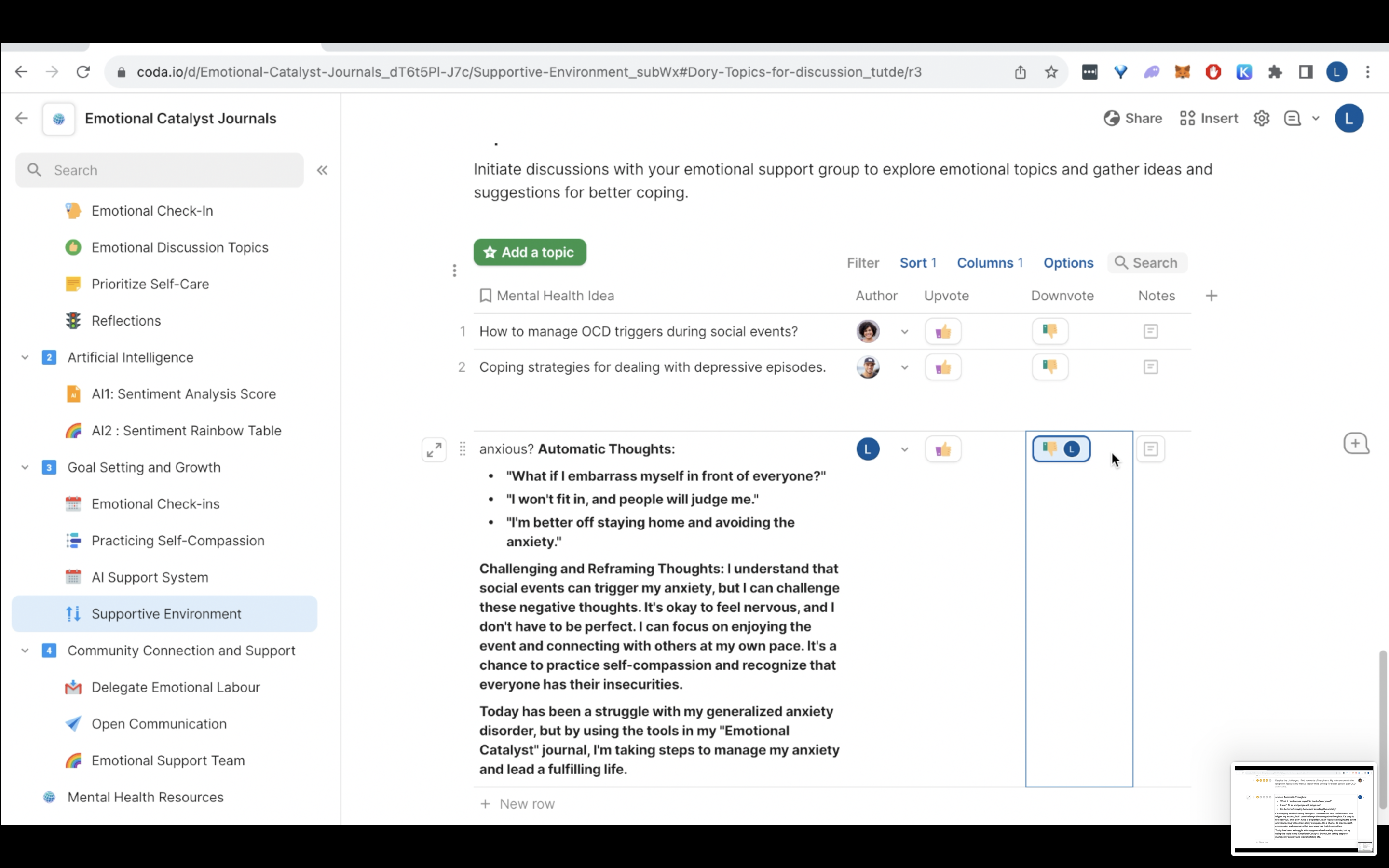
- Take a moment to challenge and reframe each automatic thought with evidence and alternative, more balanced perspectives.
By processing users' journal entries, the app can extract valuable emotional insights, identify patterns, and even recognize potential signs of distress or crisis. This technical infrastructure allows "Emotional Catalyst" to go beyond conventional journaling apps and offer intelligent, empathetic responses. The AI-driven chatbot enables natural language interaction, providing empathy, validation, and encouragement to users in their emotional exploration.
CODA TEMPLATE LIVE LINK
https://coda.io/@lowcy/emotional-catalyst-journals
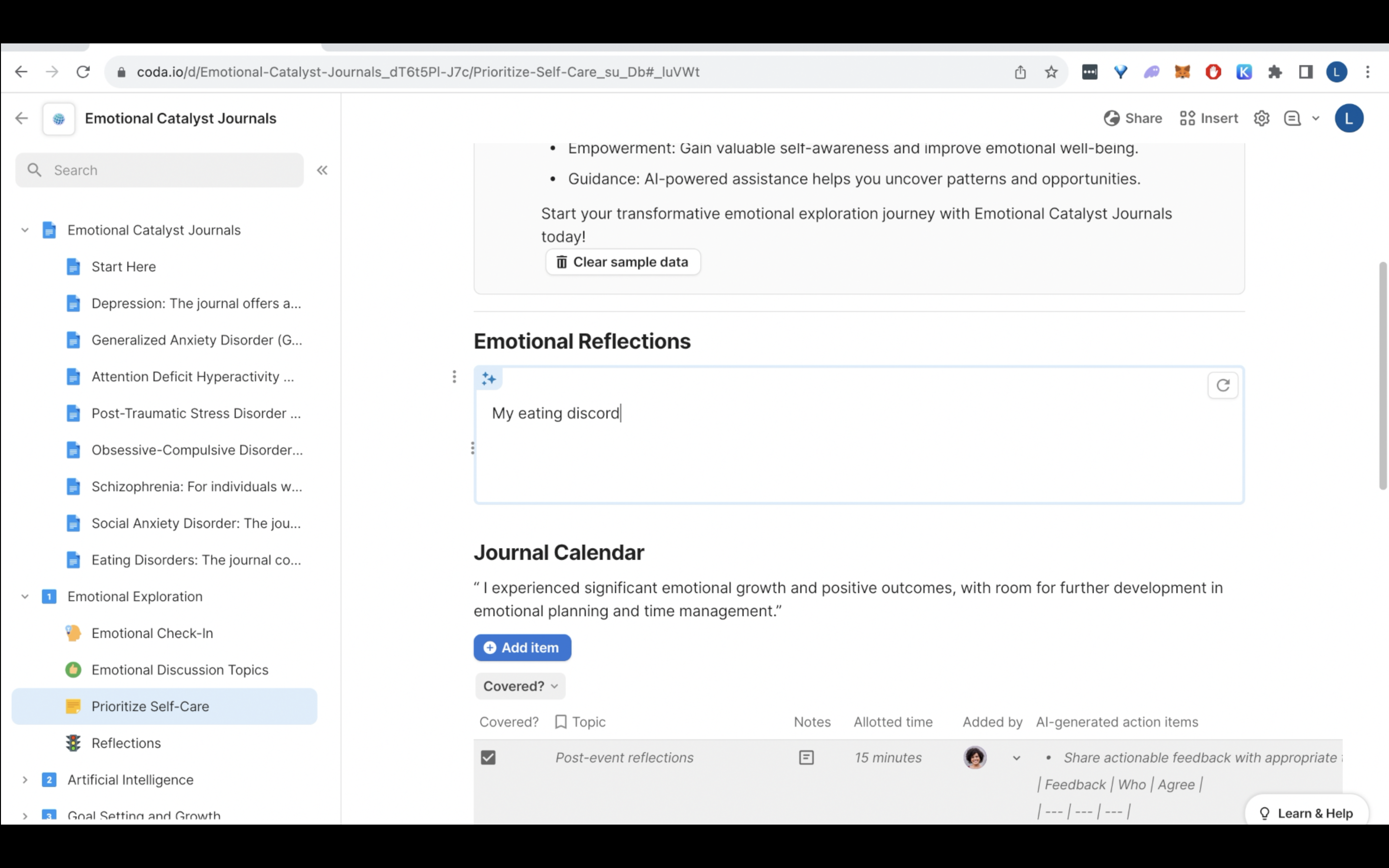
Emotional Exploration
- Emotional Check-In
- Emotional Catalyst Journals
- Emotional Discussion Topics
- Prioritize Self-Care
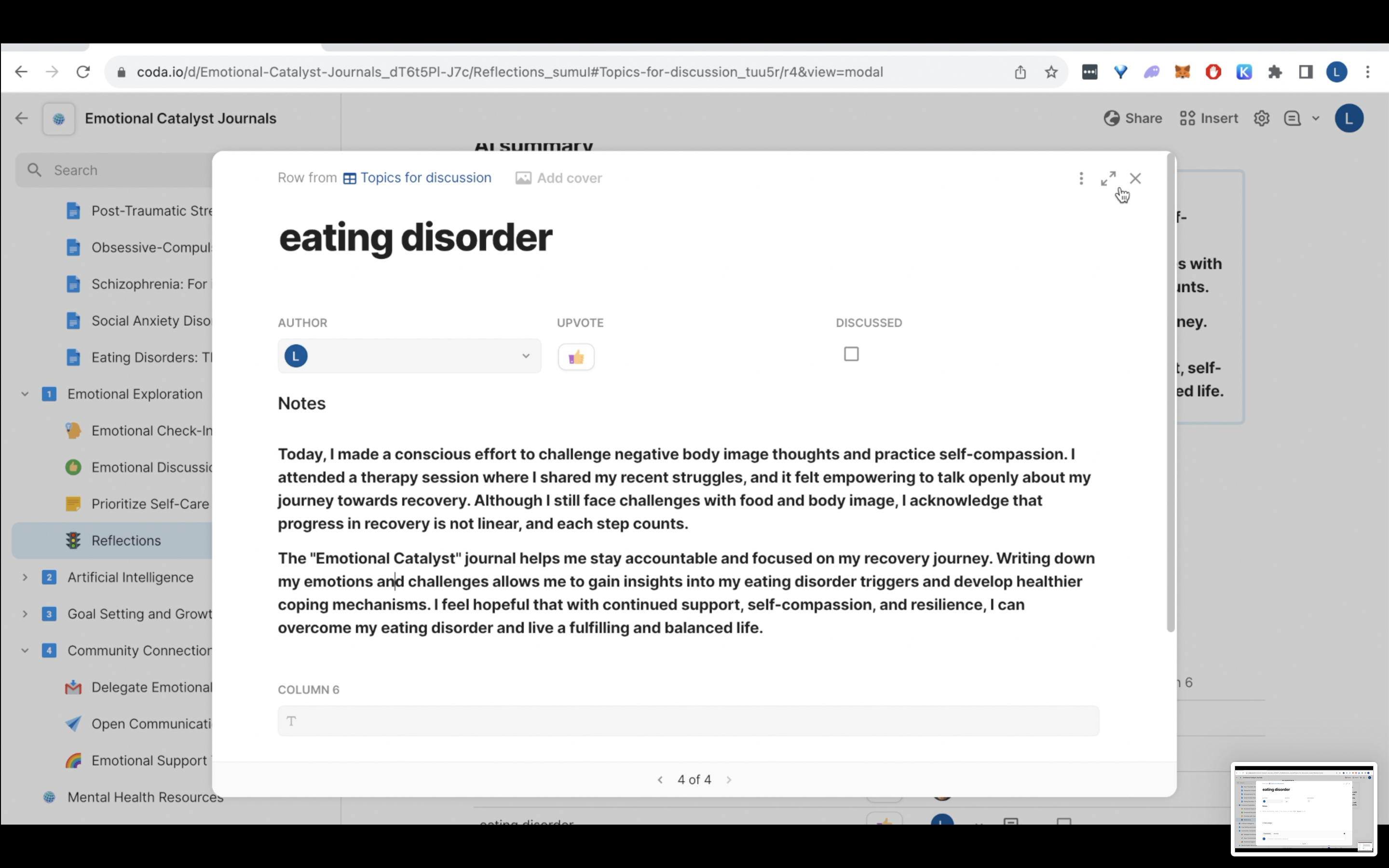
- Reflections
A comprehensive platform designed to support individuals in understanding and managing their emotions effectively. The platform incorporates various features to foster emotional well-being and self-awareness. Here's a summary of the key components:
- Emotional Check-In: The Emotional Check-In feature allows users to regularly assess their emotional state and well-being. Users can log their current emotions and feelings using a rating scale or descriptive prompts. This check-in process encourages users to pause, reflect, and become more in tune with their emotions.
- Journal Entries: Emotional Catalyst provides users with a space to write journal entries where they can express their thoughts, feelings, and experiences. This journaling activity serves as a therapeutic tool, helping users process their emotions, gain insights into their thought patterns, and track emotional progress over time.
- Emotional Discussion: The Emotional Discussion feature fosters open dialogue and connection among users. It allows individuals to initiate discussions on emotional topics, seek support from others, and share experiences. This interactive space provides a sense of community and helps users feel heard and understood.
- Prioritize Self-Care: Emotional Exploration emphasizes the importance of self-care in promoting emotional well-being. The platform offers resources, tips, and reminders to encourage users to prioritize self-care practices. This could include mindfulness exercises, relaxation techniques, or personalized self-care plans.
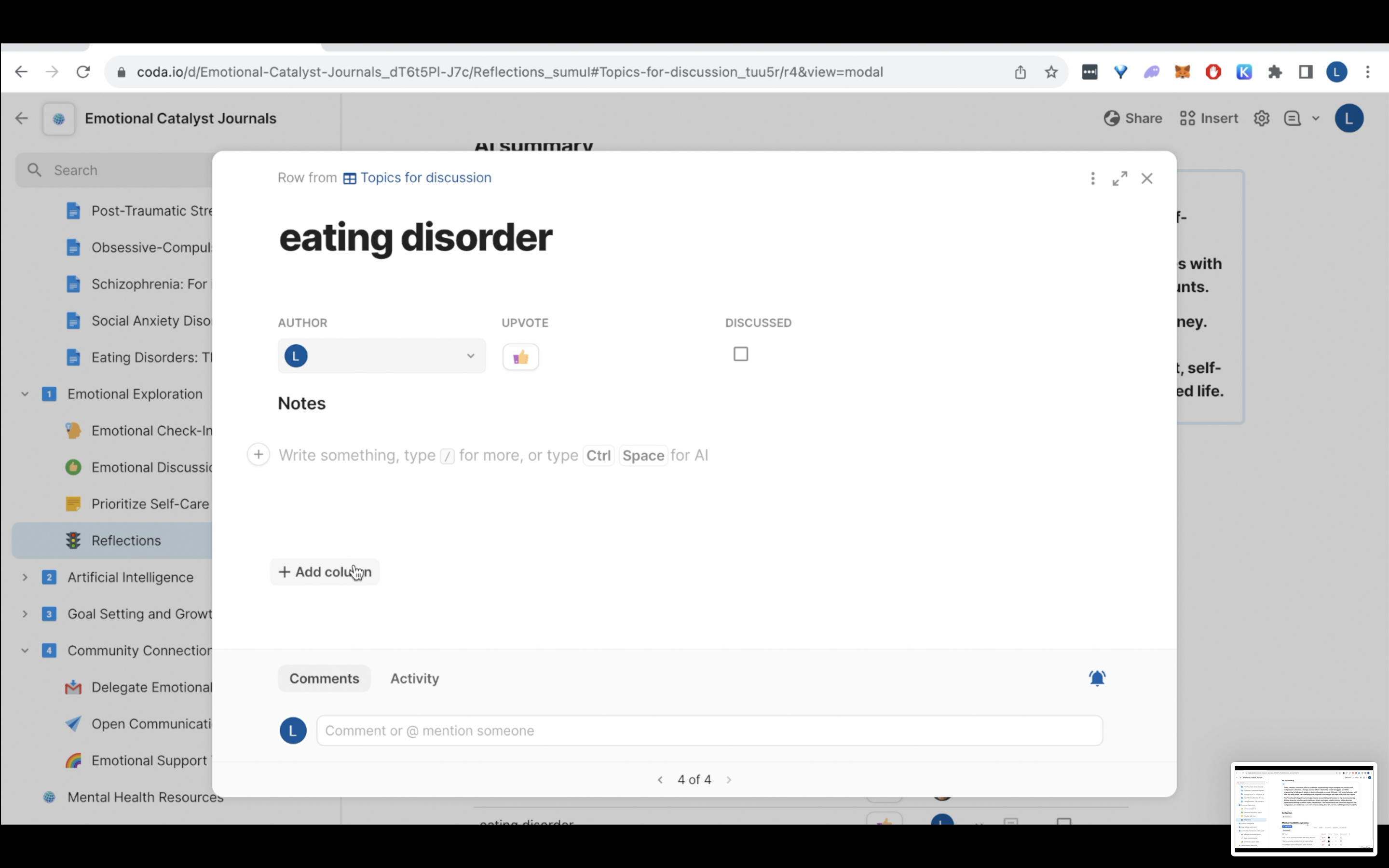
- Reflection: The Reflection feature prompts users to engage in introspection and self-reflection. Users can review their journal entries, emotional check-ins, and discussions to gain insights into recurring patterns, triggers, and areas of personal growth. Regular reflection can lead to increased self-awareness and emotional resilience.
By integrating emotional check-ins, journal entries, emotional discussions, self-care prioritization, and reflection, Emotional Exploration offers a holistic and supportive environment for individuals seeking to explore and enhance their emotional well-being. The platform empowers users to develop emotional intelligence, navigate challenges, and cultivate emotional resilience in their daily lives.
- This template seamlessly pulls your emotional reflections from your inbox, via the Gmail Pack, and connects them to a personalized emotional task list. Now, your inbox and emotional to-dos work in unison, empowering you to prioritize your emotional well-being.
- Streamline follow-up by taking notes and generating email drafts in the same table. Encourage open communication about the purpose and benefits of the journal to encoSave time by connecting to the Gmail Pack and sending meeting notes to attendees seamlessly.
- In your Emotional Catalyst Journal, engage in open conversations with your support group, exploring emotional topics related to OCD and depression. Gather insights, share coping strategies, and prioritize mental health goals for a more emotionally supportive environment.
- Option 1: Emotion Focused Approach Describe how this approach focuses on recognizing and understanding emotions, allowing individuals to express themselves freely.
- Option 2: Mindfulness and Resilience Explain how mindfulness practices and building emotional resilience can help individuals cope with challenges.
Artificial Intelligence
- AI1: Sentiment Analysis Score
- AI2 : Sentiment Rainbow Table
Artificial Intelligence in the context of Emotional Catalyst comprises two integral parts that leverage AI capabilities to enhance emotional well-being and promote open expression within the team:
AI1: Sentiment Analysis Score
- AI-driven sentiment analysis tools are utilized to facilitate open and meaningful dialogues between individuals and their emotional support team. The AI system analyzes the sentiments expressed by team members during discussions, journal entries, or emotional check-ins. By doing so, it can identify emotional patterns, changes, and potential areas of concern. This analysis aids emotional support teams in understanding the emotional states of individuals better, enabling them to provide more personalized and effective support. The AI system can also assist emotional support teams by summarizing emotional trends and suggesting appropriate interventions based on the sentiments expressed. This supports the emotional support team in their efforts to enhance the emotional well-being of team members and create a supportive and empathetic environment.
AI2 : Sentiment Rainbow Table
- Encourage Expressive Communication with the Emotional Catalyst Rainbow Voting Table: This part employs AI-powered sentiment analysis to facilitate expressive communication within the team. The Emotional Catalyst Rainbow Voting Table serves as a colorful and interactive platform where team members can express their feelings, ideas, and priorities related to different emotions or topics. The AI system continuously analyzes the sentiments expressed by team members through their votes and comments on the Rainbow Voting Table. Each color in the table represents a distinct emotion or topic, making it easier for team members to share their feelings openly. The AI system also helps prioritize the most significant topics based on the sentiments expressed by the team. This ensures that the team can collectively focus on the most relevant and impactful emotional aspects, fostering deeper connections and understanding among team members. By combining these two parts of AI-driven sentiment analysis, Emotional Catalyst harnesses the power of AI to create a supportive and emotionally enriching environment. The integration of AI in emotional exploration allows for more comprehensive emotional insights, improved communication, and the development of personalized emotional support strategies, ultimately leading to enhanced emotional well-being and team cohesion.
Goal Setting and Growth
- Emotional Check-ins
- Practicing Self-Compassion
- AI Support System
- Supportive Environment
Goal Setting and Growth is a comprehensive framework designed to facilitate personal development and achievement. It consists of four key components that work together to empower individuals in reaching their goals and fostering growth. Let's explore each part:
- Emotional Check-Ins: Regular emotional check-ins are a fundamental aspect of Goal Setting and Growth. By pausing to assess and acknowledge their emotional state, individuals can better understand how their emotions may influence their goals and progress. Emotional check-ins provide valuable insights into areas that may require extra support or adjustments to ensure emotional well-being while pursuing their objectives.
- Practicing Self-Compassion: Self-compassion plays a crucial role in maintaining motivation and resilience during the goal-setting journey. Encouraging individuals to practice self-compassion means treating themselves with kindness and understanding, even when facing challenges or setbacks. This component helps individuals cultivate a positive and nurturing attitude toward themselves, promoting perseverance and self-belief in the face of obstacles.
- AI Support System: The integration of AI as a support system enhances the effectiveness of Goal Setting and Growth. AI can offer personalized insights, track progress, and provide recommendations based on data analysis. This intelligent support system helps individuals stay focused, make informed decisions, and adjust their goals as needed. AI support can also help identify patterns and trends that may contribute to a more efficient and targeted goal-setting process.
- Supportive Environment: Creating a supportive environment is essential for goal achievement and growth. This component emphasizes surrounding oneself with a network of positive influences, such as mentors, peers, or family members, who provide encouragement, constructive feedback, and understanding. A supportive environment fosters a sense of accountability, motivation, and belief in one's capabilities.
By combining emotional check-ins, practicing self-compassion, utilizing an AI support system, and fostering a supportive environment, Goal Setting and Growth offers a comprehensive and empowering approach to personal development. This framework equips individuals with the tools they need to set meaningful goals, navigate challenges with resilience, and experience growth and fulfillment on their journey of self-improvement.
Community Connection and Support
- Delegate Emotional Labour
- Open Communication
- Emotional Support Team
Community Connection and Support comprises three essential sections that aim to foster a strong and supportive community environment. Each section addresses specific aspects that contribute to creating a sense of belonging, understanding, and empathy within the community:
- Delegate Emotional Labour: Recognizing and addressing emotional labor is a crucial element in building a healthy community. This section emphasizes the importance of distributing emotional labor among community members rather than burdening specific individuals. By delegating emotional labor, the community can ensure that everyone has a role in supporting and understanding each other's emotions and needs. This approach fosters a more inclusive and sustainable support system, preventing emotional exhaustion for a few and promoting shared responsibility.
- Open Communication: Effective communication is the backbone of any thriving community. Encouraging open communication means creating an environment where members feel comfortable expressing their thoughts, feelings, and concerns without fear of judgment. This section promotes active listening, empathy, and non-judgmental responses to enable meaningful dialogue and deeper connections among community members.
- Emotional Support Team: Establishing an Emotional Support Team within the community provides a dedicated group of individuals focused on offering assistance, guidance, and emotional support to community members in need. This team could consist of trained volunteers or professionals who are adept at providing empathetic and understanding responses to emotional challenges. Having an Emotional Support Team in place ensures that community members have a reliable and accessible resource to turn to during difficult times.
By incorporating these three sections into the community's framework, Community Connection and Support aims to create an environment where emotional well-being is prioritized, and individuals feel valued, understood, and supported. This approach fosters a sense of community belonging, promotes collective growth, and strengthens the overall resilience and cohesion of the community.
Challenges we ran into
- Integrating Coda AI into the heart of "Emotional Catalyst" posed initial challenges due to the complexity of AI model integration.
- In pursuit of utmost user trust, ensuring data privacy and security demanded meticulous attention to encryption and access controls.
- Fine-tuning Coda AI's sentiment analysis model for personalized insights necessitated relentless iterative testing and optimization.
- Crafting AI-powered CBT exercises demanded striking the delicate balance between AI support and adherence to professional mental health practices.
Accomplishments that we're proud of
- Success unites us as we expertly integrated Coda AI, elevating "Emotional Catalyst" with its advanced NLP capabilities, delivering spot-on emotional insights.
- Early users bestowed their hearts on the app, profoundly touched by its personalized prompts and resourceful emotional support.
- Fueled by a desire for inclusivity, the app's seamless emotional journaling experience became accessible to users of all backgrounds and expertise levels.
- AI-powered CBT exercises received warm accolades, applauded for their efficacy in nurturing emotional well-being.
What we learned
- "Emotional Catalyst" taught us that empathetic design and a user-centered approach are paramount in mental health applications.
- Learning about "Michelle's Journey With Austim" and "Data Driven Approaches to Societal Challenges ", and from attending workshops https://docs.google.com/spreadsheets/d/18xMeKqLEpNh-FuXJSjAu6h6puFsJEDfS78zA0BvH8kE/edit#gid=0
- AI model fine-tuning necessitates careful data selection and validation, ensuring an understanding of diverse emotional expressions.
- User feedback served as a guiding compass, refining "Emotional Catalyst" and amplifying its capacity to address users' emotional needs effectively.
What's next for Emotional Catalyst
Mental Health: Collaborating with Mental Health Professionals: Emotional Catalyst will work tirelessly to collaborate with mental health professionals to enrich the app's resources and support. By involving experts in the development process, the app can offer tailored solutions to cater to the unique needs of every user, ensuring that their emotional well-being is effectively addressed. Early Detection of Distress: The app will focus on expanding its AI capabilities to detect early signs of distress and crisis. By serving as a vigilant early warning system, Emotional Catalyst can provide timely support and resources to users who may be experiencing emotional challenges, helping prevent potential crises. Inclusive Multi-Language Support: Emotional Catalyst will integrate Coda AI's multi-language capabilities to foster inclusivity and connect with a global audience. By transcending linguistic barriers, the app can reach and support users from diverse cultural backgrounds, making emotional well-being accessible to all.
Business: Data Analysis and Visualization: To contribute to vital mental health research, Emotional Catalyst will integrate data analysis and visualization capabilities with Coda AI. By processing and interpreting users' emotional journal entries, the app can derive valuable insights into emotional trends and patterns, providing researchers with valuable data. Strategic Partnerships with Educational Institutions: The app will collaborate with educational institutions to empower students by nurturing emotional intelligence through personalized emotional journaling experiences. By incorporating Emotional Catalyst into school curriculums, students can develop essential emotional skills and mental resilience from a young age.
Technical: Continuous AI Advancements: Emotional Catalyst will continue to invest in AI research and development to enhance its capabilities. By leveraging the power of AI, the app can provide more accurate and personalized emotional support to its users, improving their overall well-being. User-Centric Design: The technical team will focus on creating a user-friendly interface and experience. By prioritizing user needs and feedback, Emotional Catalyst can ensure that the app remains intuitive and easy to navigate, encouraging more users to engage with the platform.
Built With
- coda

Log in or sign up for Devpost to join the conversation.