-
-

-
-
-
-
-
-
-
-
-
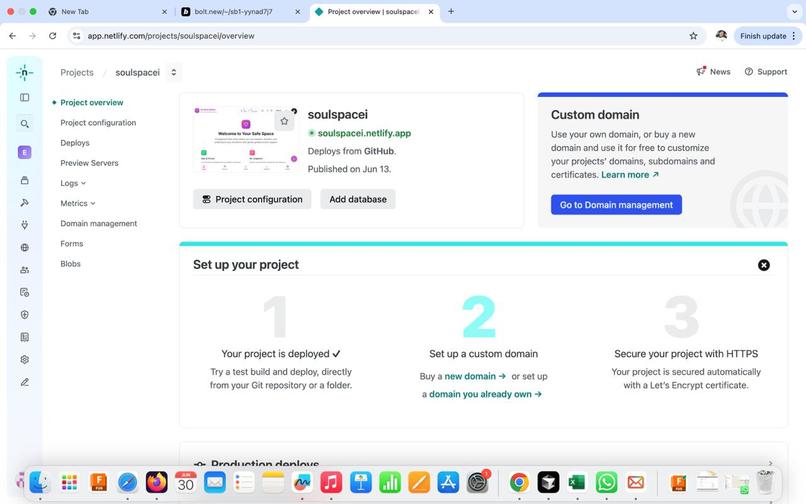
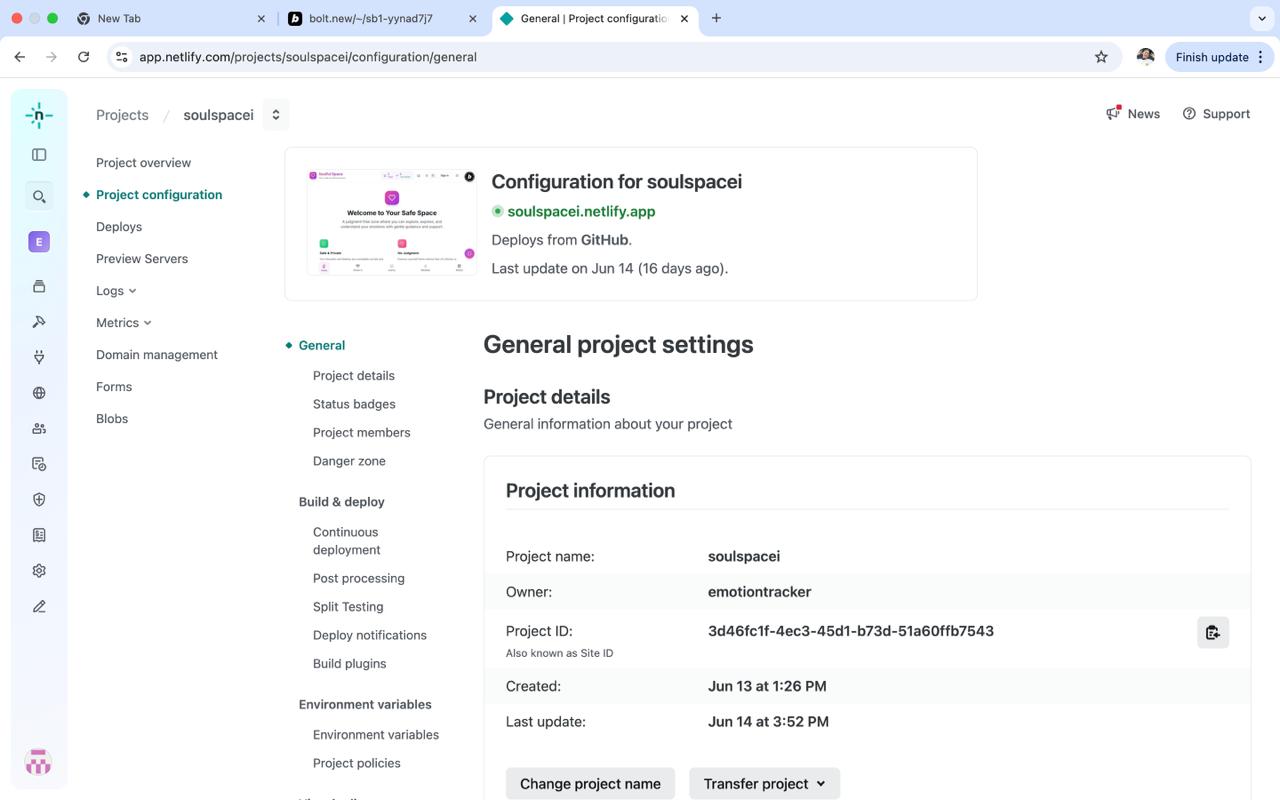
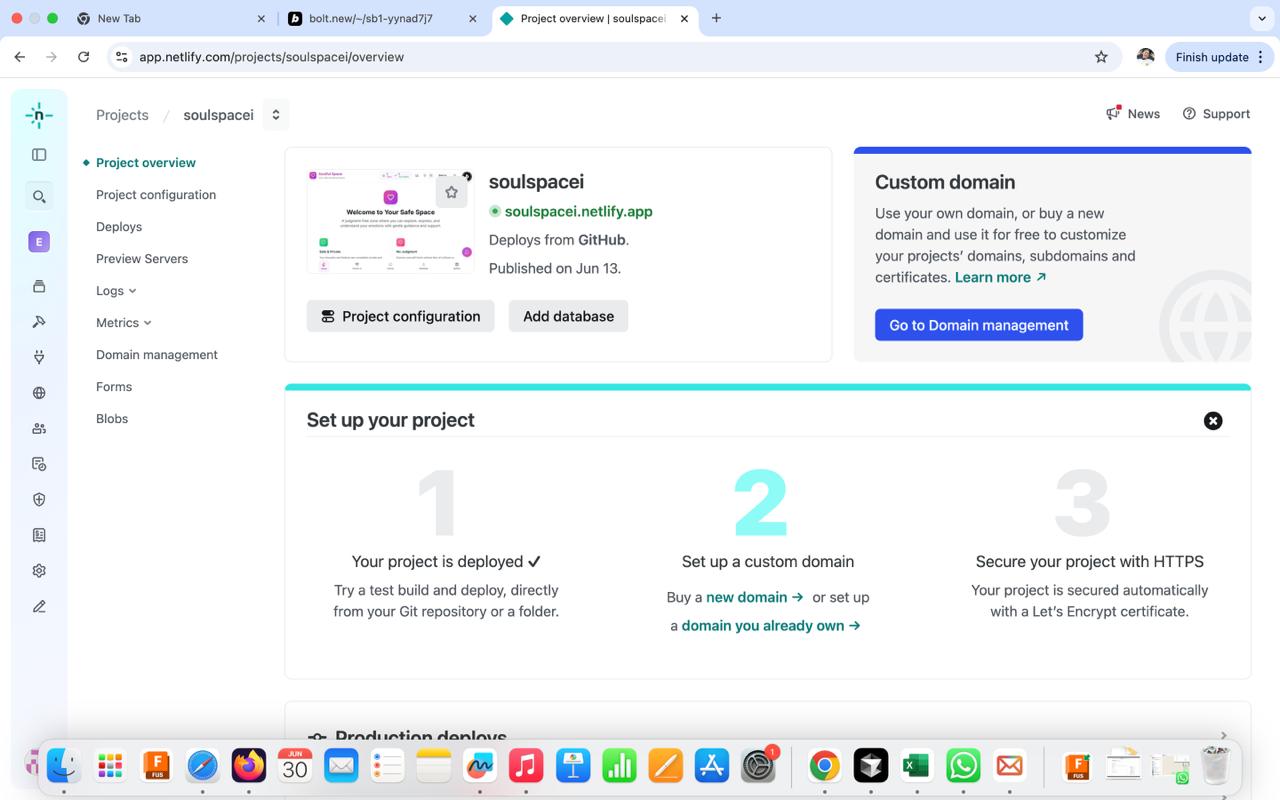
netlifi deployment

Inspiration
As someone who feels emotions very deeply, I often struggle to express what I'm going through. Being sensitive can feel isolating in a fast-moving world where there’s little room to just pause and feel. There have been countless moments when I didn’t want advice or a solution — I just wanted to be understood, to be accepted as I am, even in my messiness. I tried several emotional wellness apps in the past, but most of them felt too robotic, too structured. They would offer surface-level affirmations or tell me what to “do” about my feelings, but none truly gave space to just feel without judgment. And many had designs that didn’t engage me emotionally or aesthetically. That’s when the idea for Soulful space came to me. I wanted to create something I personally needed — a place that doesn’t try to fix you, but allows you to simply be. A space where your emotions are not problems to be solved, but parts of you to be heard and honored. That’s how this project began — as a deeply personal attempt to create a space for emotional release, reflection, and gentle growth.
What it does
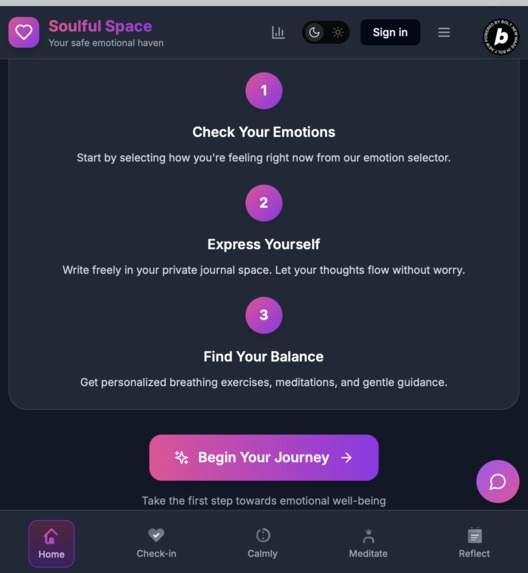
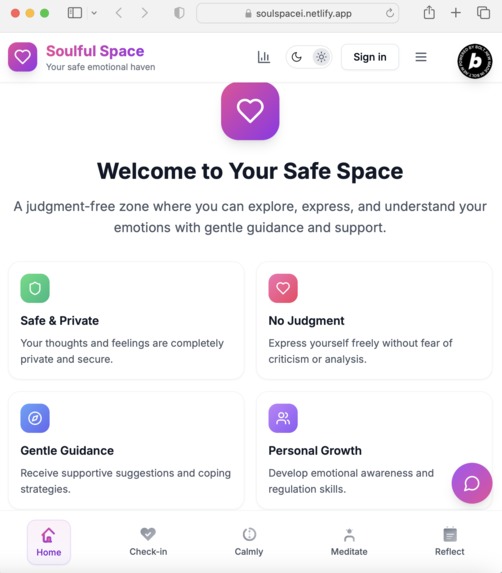
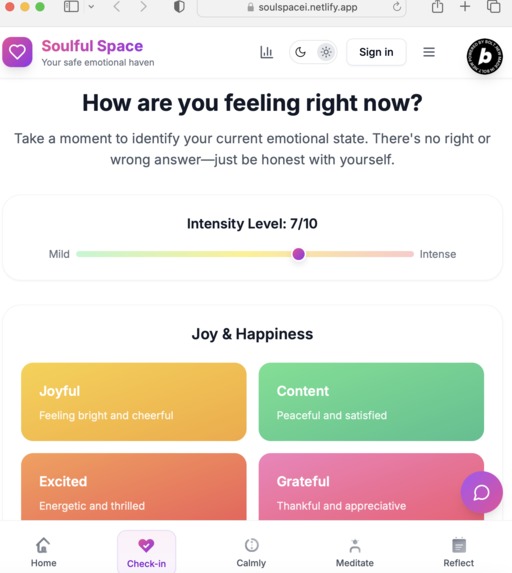
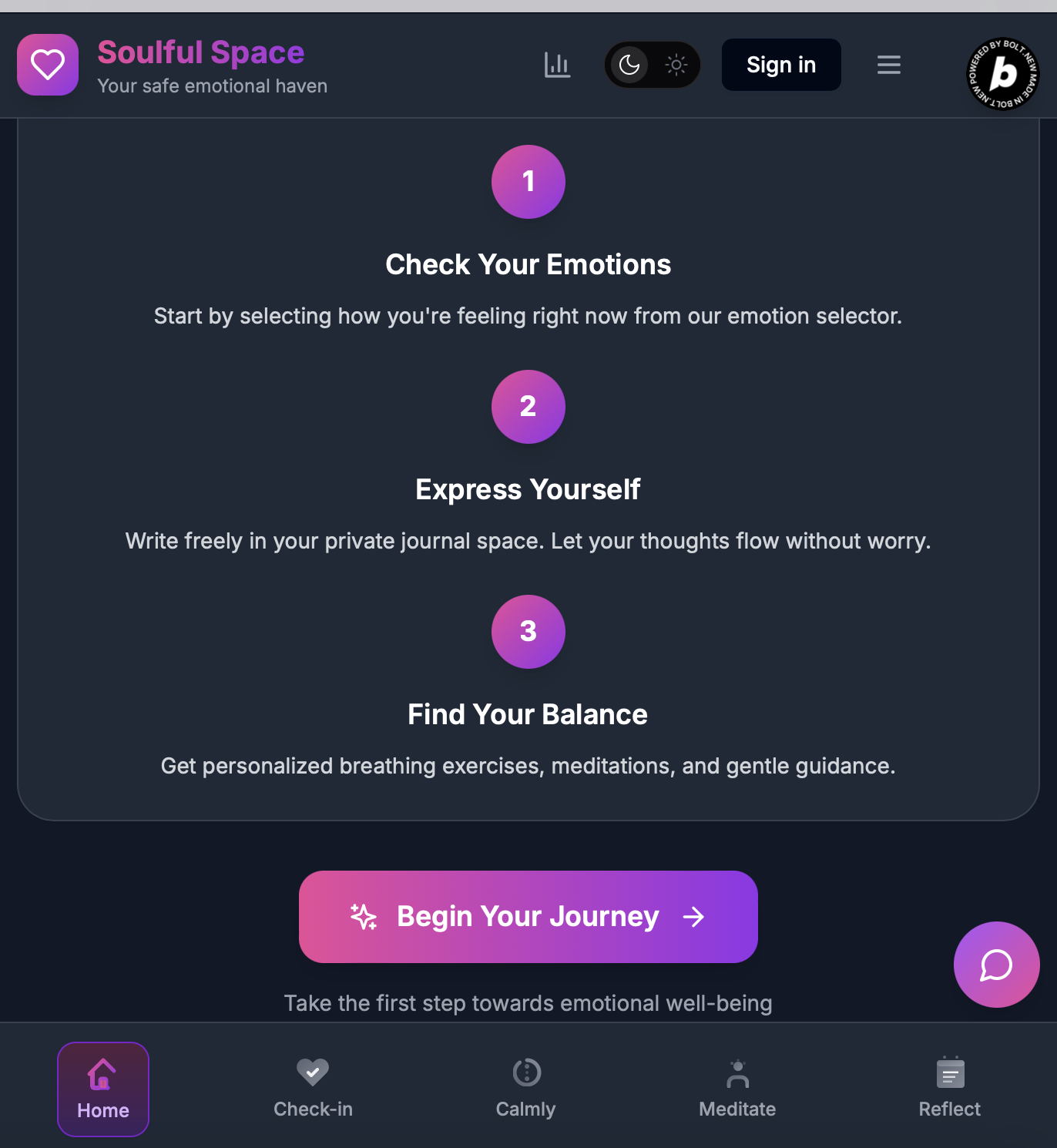
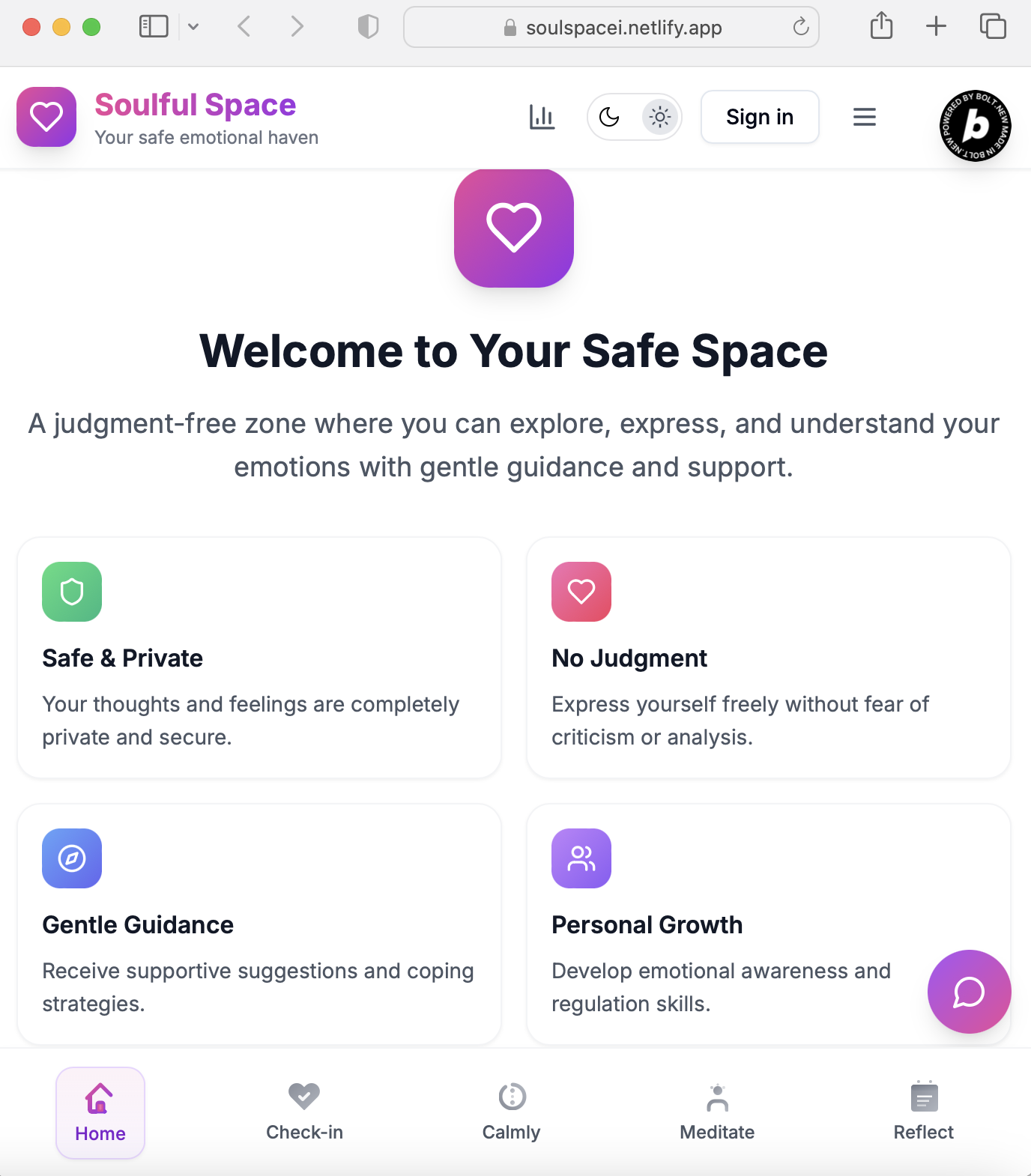
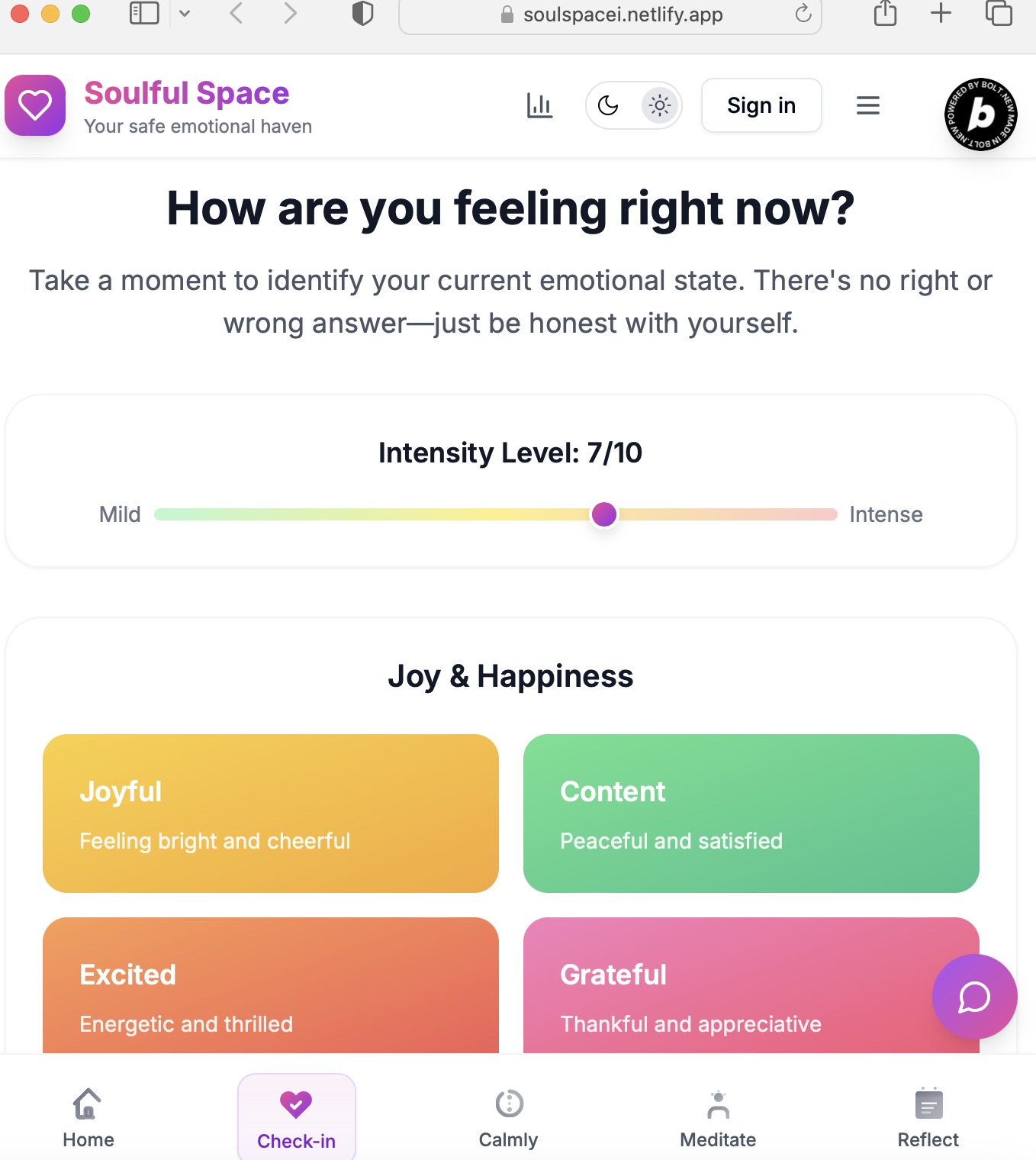
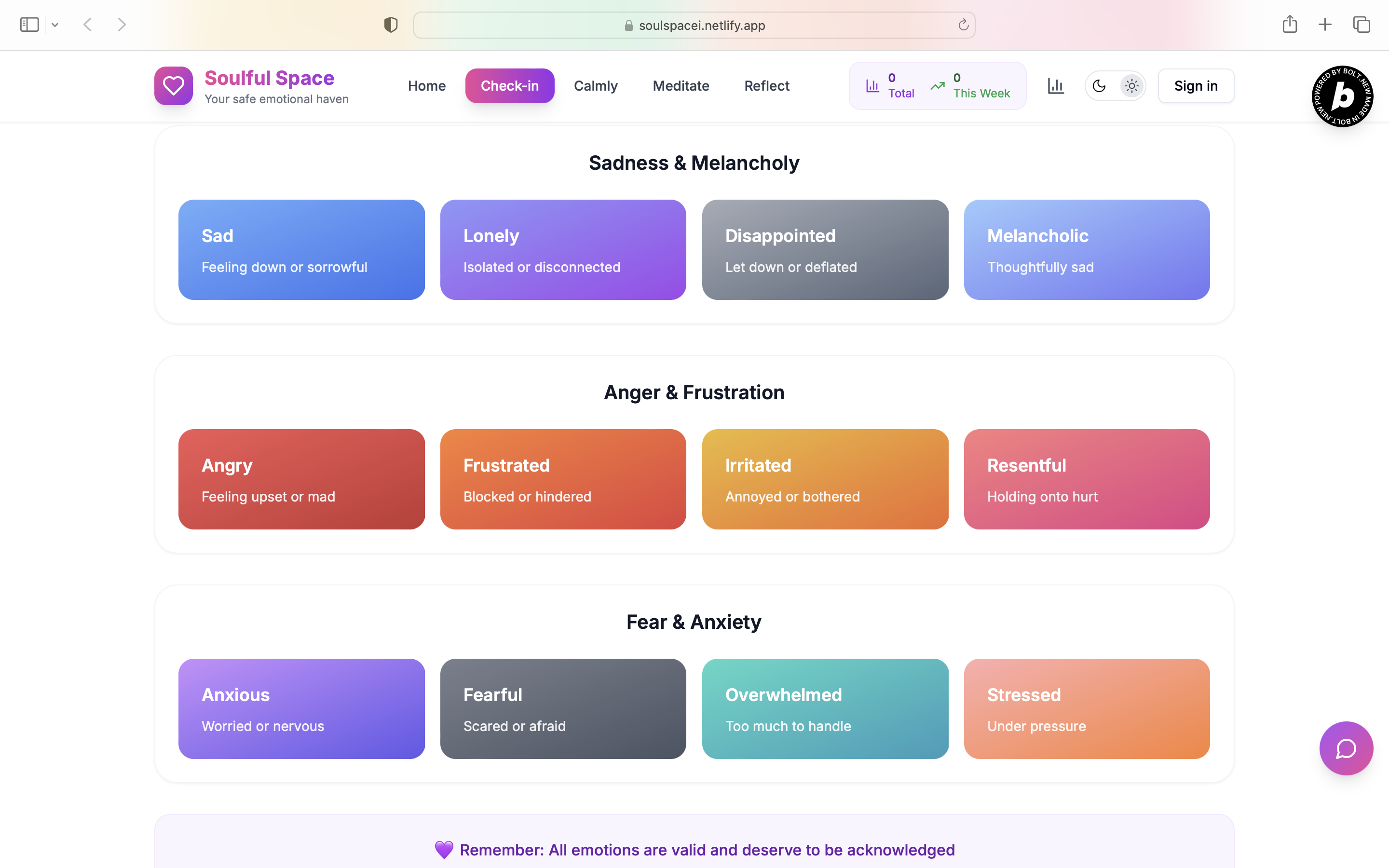
Soulful space is an emotion-first platform designed for highly sensitive individuals, emotional souls, or anyone navigating life’s emotional highs and lows. Here’s what it offers: -A safe and anonymous space to vent your emotions freely, without advice or judgment. -Tools for self-reflection, guided breathing exercises, and simple meditations to help you center yourself. -Validation and emotional check-ins that support your feelings and encourage self-awareness. -Emotional progress tracking using graphs to visualize your emotional journey over time.
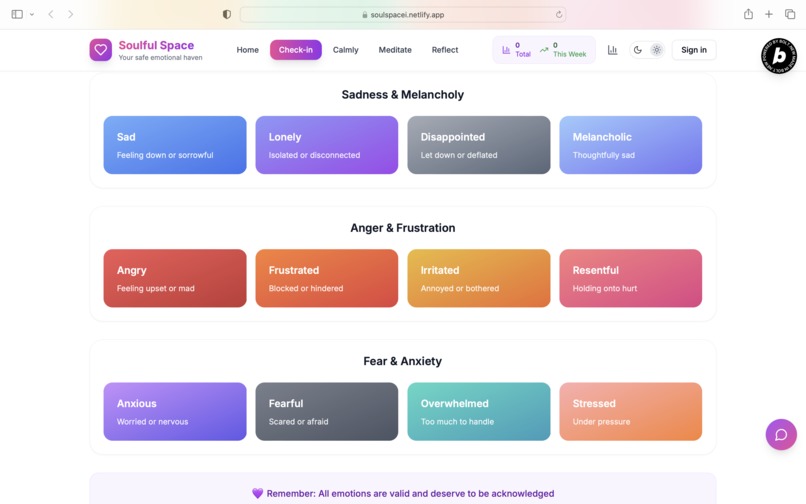
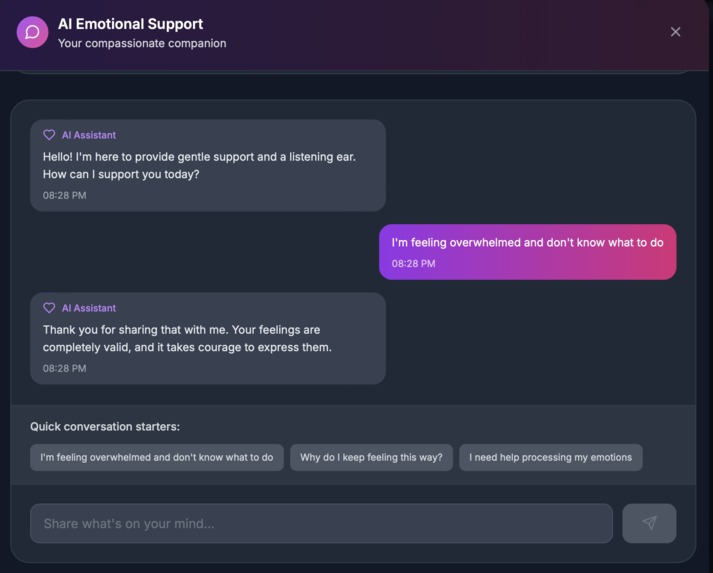
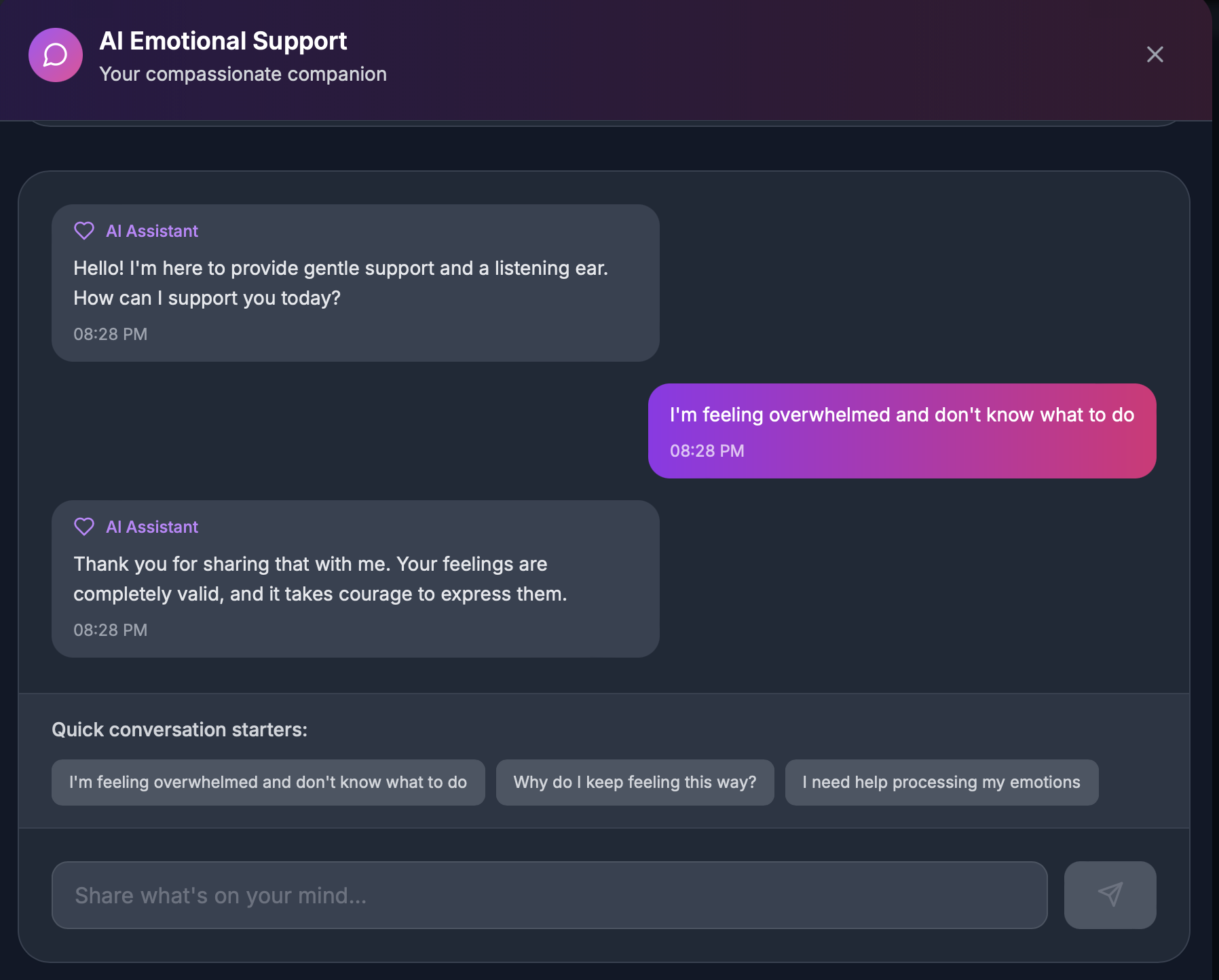
- An overview showing distribution of all emotions so none are invalidated — every emotion matters. -AI-powered emotional support using Dappier to ensure you never feel alone in your journey. The goal is not to fix emotions, but to help users grow with them, and ultimately handle life with more understanding, grace, and strength.
How I built it
The project was developed using Bolt.new, where the entire structure was created with the help of AI-generated prompts. I began with a basic idea for layout and design, using a single prompt in ChatGPT, and then iteratively modified the look and flow until I was satisfied with the experience. This process included refining the placement of sections, adjusting the format, and ensuring the overall feel of the app aligned with the emotional tone I wanted to set.
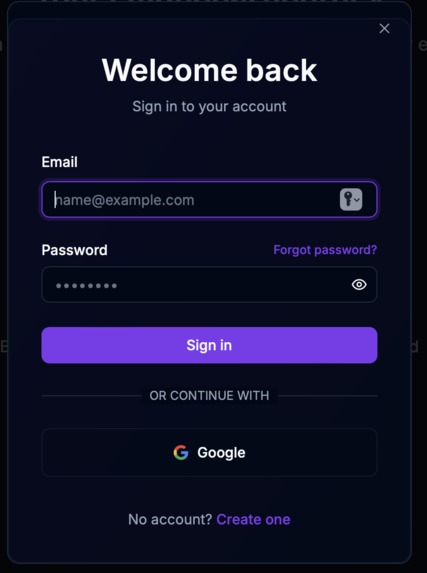
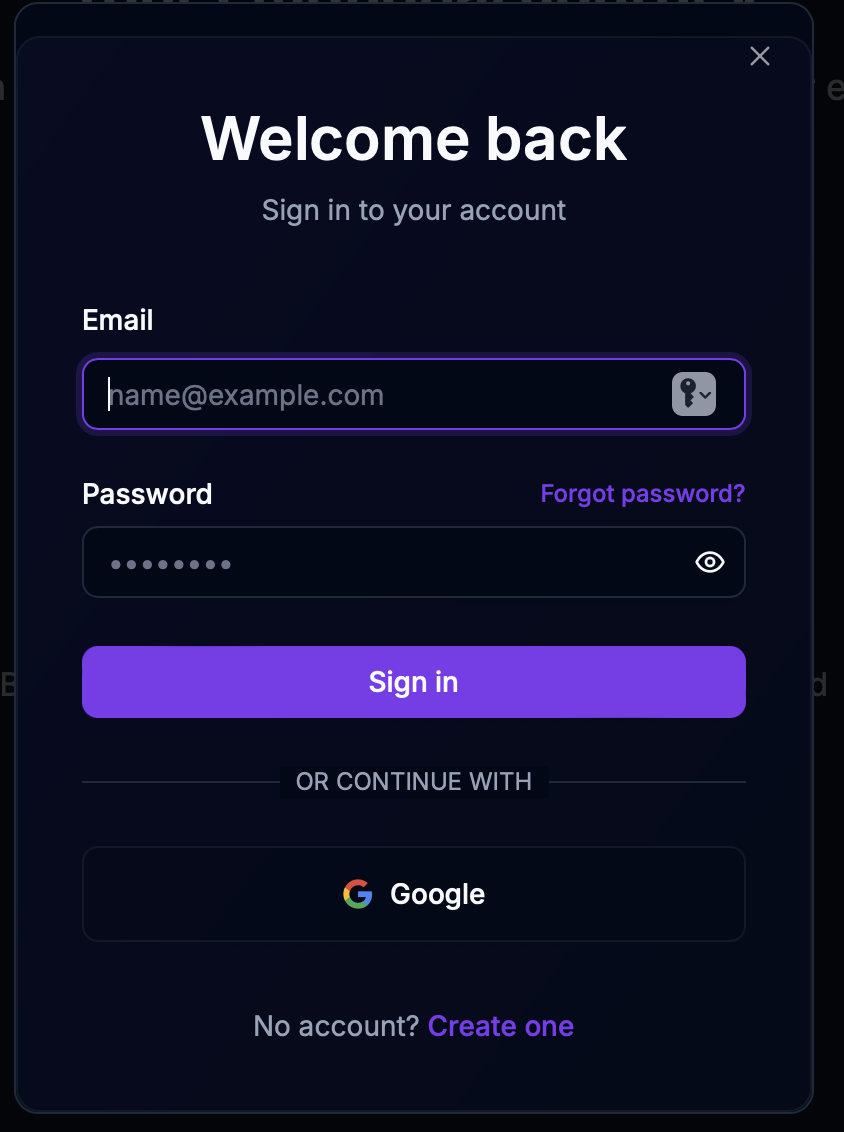
During development, I used various tools offered by Bolt.new. I integrated Dappier to enable an AI-based emotional support assistant, and used 21st.Dev to help design the sign-in interface and light/dark mode toggle for user personalization.
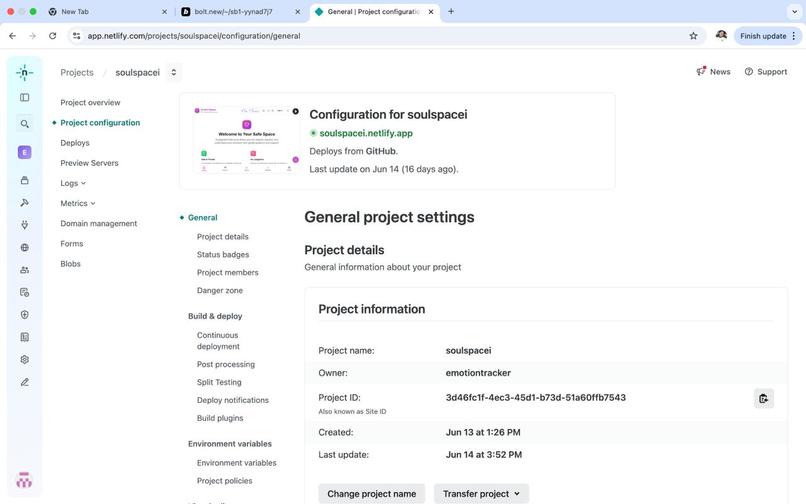
One of the most challenging but exciting parts was working on the domain. I acquired a free custom domain — thesoulspace.me — using ENTRI, and spent considerable time trying to make it work. However, due to persistent sign-in functionality issues I couldn’t resolve within the given time, I chose not to use this domain for submission. Instead, I’m submitting the version hosted at soulspacei.netlify.app, which is functionally complete and includes working sign-in and core features.
For backend support, I used Firebase Authentication to enable both email/password and Google sign-in methods, and Firebase Realtime Database to securely store users’ emotional data. I also used Google Cloud services for authentication support. The final deployment was done via Netlify, connecting through GitHub, making the project publicly accessible and fully functional.
This process — though filled with trials, learning curves, and debugging challenges — was incredibly rewarding and helped me grow both technically and personally.
Challenges I ran into
- Design Prompt Limitations in Bolt.new One of the earliest challenges was achieving the exact design vision I had in mind, especially regarding the icon placement in the bottom navigation bar. It took over 7–8 specific prompt iterations in Bolt.new to get it reasonably close to what I wanted. Although Bolt.new offers an enhanced prompt option that works well for frontend/backend error resolution, it often fell short when used for UI/UX design prompts. The generative output didn’t always align with my design expectations, requiring frequent trial-and-error adjustments.
- Integration of External Tools Integrating third-party tools like 21st.Dev (for UI enhancements such as light/dark mode and login design) and Dappier (for AI-based emotional support) into the Bolt.new ecosystem was another challenge. Bolt.new’s structure is relatively abstracted, so integrating external modules required careful attention. Thankfully, I was able to follow the step-by-step video tutorials provided by the Bolt.new team on YouTube, which guided me through the process effectively.
- Firebase Authentication and Database Setup The most complex and time-consuming challenge was implementing Firebase services. Configuring Firebase Authentication — including enabling Google Sign-In via Google Cloud Console, setting up authorization domains, and linking it to my frontend — required substantial debugging. I encountered multiple errors related to misconfigured OAuth consent screens, incorrect redirect URIs, and Firebase console settings. It took considerable effort to understand the structure and resolve authorization issues before it functioned properly.
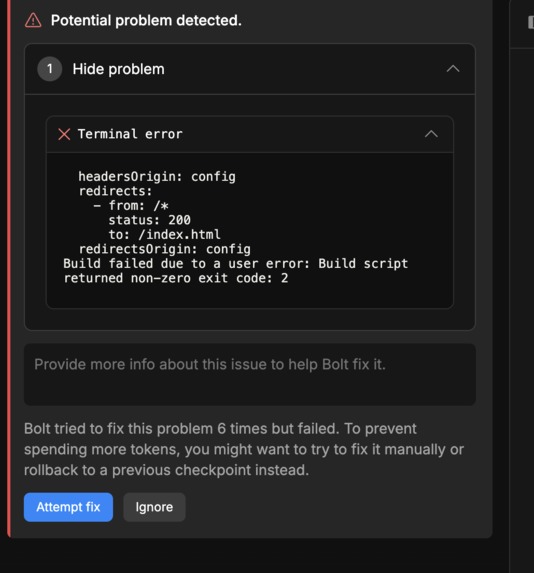
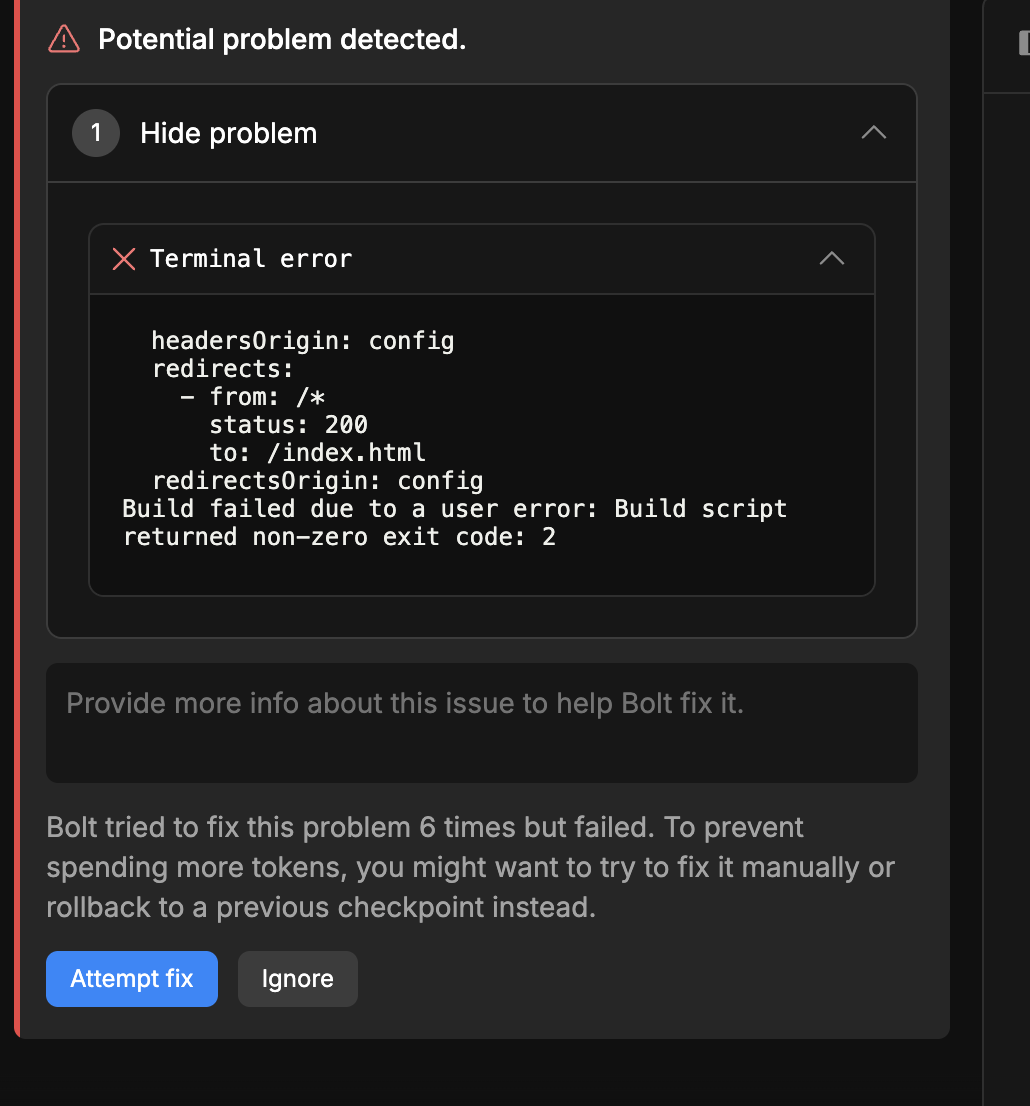
- Netlify Deployment Errors I faced persistent deployment issues while hosting the project on Netlify. The application repeatedly failed to build or deploy successfully, often throwing ambiguous errors. I attempted to resolve this via both Bolt.new's internal deployment options and by manually configuring deployment files such as netlify.toml and project.json. Eventually, I gave a more specific, polite prompt in Bolt.new like “please try to ruminate the deployment error and fix it,” which seemed to trigger a better automated resolution.
- Custom Domain Integration Failure I purchased a free custom domain thesoulspace.me via ENTRI and verified it through Netlify. This process itself involved several steps like domain verification, DNS record management, and linking it with Firebase hosting settings. Despite successfully acquiring and connecting the domain, I was unable to resolve a sign-in functionality issue associated with it. The authentication didn’t work reliably on this domain, and repeated debugging efforts failed to correct it.
It was especially disheartening because the domain name perfectly represented the essence of my project, and I had hoped it would qualify for the domain-related challenge. Unfortunately, the functional integrity of the app — especially Firebase authentication and data storage — mattered more to me than using a non-functional domain, so I chose not to submit the ENTRI domain version and instead submitted the fully working version at soulspacei.netlify.app.
Accomplishments that I am proud of
- Building a Full-Stack Application Without Prior Experience One of the biggest accomplishments is that I was able to build and deploy a full-stack web application from scratch, despite coming from a background where I only had basic knowledge of C and Python. This was my first time working with frontend technologies like React, Vite, and modern component-based architecture, as well as backend technologies like Firebase Realtime Database and Authentication services.
- Using Bolt.new as a Learning and Development Platform Thanks to Bolt.new, I was able to transform abstract emotional concepts into a working product. I learned how to generate structured design and logic using prompt engineering, iteratively refining UI/UX with enhanced prompt options. The token system on Bolt.new was generous enough to allow continuous trial-and-error, which enabled me to experiment freely and learn practically.
- Hands-on Integration of Advanced Tools and APIs I successfully integrated multiple services and APIs:
Dappier for conversational AI integration to provide emotional support through natural language interaction.
21st.Dev for frontend modules like responsive sign-in design and light/dark mode.
Firebase for real-time data storage, user authentication, and session management.
Google Cloud Console for configuring OAuth2.0 credentials and securing Google Sign-In.
Working with these tools gave me practical understanding of API configuration, environment variable management, and third-party service orchestration within a React project.
- Deploying on Netlify with Manual Configurations Deployment was a challenge, but I gained valuable experience using Netlify, especially when configuring deployment settings using netlify.toml and optimizing project.json. I also learned how to debug failed build pipelines and how to handle client-side routing on Netlify through rewrite rules.
- Domain Setup and Web Hosting Knowledge I registered and configured a custom domain (thesoulspace.me) via ENTRI, linking it with Netlify and Firebase. Though I couldn’t use it for final submission due to authentication issues, I learned how to:
Navigate domain verification and DNS configuration.
Map domain to deployment platform.
Handle SSL and HTTPS settings.
- Understanding the Application Lifecycle I now understand what it takes to build, test, deploy, and maintain a functioning application. From UI design and backend connection, to authentication logic and error handling — this project made me appreciate the depth of effort behind every app we use daily.
- Prompt Engineering and Iterative UI Development Writing over 7–8 refined prompts just to perfect icon placement, navigation bar styling, and responsiveness taught me the art of being precise with instructions. I understood how prompt specificity affects the frontend structure, and how to debug through prompt chaining.
- Building Something Personally Meaningful Beyond the technical, I’m proud of creating something deeply personal — a space for emotional expression and healing, based on a need I felt strongly. This project isn’t just a technical prototype — it’s a reflection of who I am and what I care about.
- Grasping Full-Stack Fundamentals By working with a client-side framework (React), backend services (Firebase), deployment (Netlify), domain hosting (ENTRI), and third-party APIs (Dappier, Google Cloud), I now have a working understanding of how full-stack web applications are structured and brought to life — something I never imagined I could grasp in such a short time.
- Developing a Problem-Solving Mindset Facing so many errors — from failed deployments to authentication bugs — helped me develop patience and resilience. I learned to debug both through prompt-based methods in Bolt.new and manual trial using deployment logs and browser consoles. This entire experience has been one of growth — not just technically, but personally. I now feel confident in starting a project from scratch, and most importantly, in my ability to learn by doing.
Thank you, Bolt.new, for providing the platform, support, and freedom to explore and create.
What i learned
Through this project, i gained a deeper understanding of how different services interact within a modern web application — from frontend design logic to backend authentication and deployment. I learned how to troubleshoot integration issues, fine-tune AI-generated design instructions, and adapt quickly when automated tools didn’t deliver the expected results. Most importantly, i developed a stronger intuition for the real-world workflow of building and deploying an application — not just technically, but in terms of emotional problem-solving, adaptability, and self-driven learning.
What's next for Soulful Space
Moving forward, I envision Soulful space reaching a much wider audience — especially those who often feel emotionally overwhelmed, unseen, or disconnected. I plan to introduce features like Nodlify integration to allow users to save, export, or share their emotional progress reports, making it easier to track growth and reflect meaningfully. Beyond that, I aim to enhance the overall usability of the app by making it more intuitive, personalized, and responsive across all devices.
One of my core goals is to make the platform a tool not just for emotional release, but for developing emotional intelligence and self-reliance. I want users to learn how to identify, understand, and regulate their emotions independently, without judgment or dependency on external validation. To deepen this, I also plan to introduce features rooted in spiritual philosophies, especially inspired by Buddha’s teachings — such as guided reflections on impermanence, mindfulness-based journaling, and thought detachment exercises.
In the long run, Soulful space will not only be a space to feel and reflect but also a gentle guide for people on a journey inward — toward healing, inner peace, and deeper self-awareness.
Challenge complises
As part of the challenge compliances, I completed the Deploy with Netlify challenge by successfully deploying my project using Netlify’s GitHub integration. Throughout the process, I faced multiple build errors and deployment failures, which required me to dive deep into debugging through both Bolt.new and Netlify configurations. I edited files like netlify.toml and project.json manually and experimented with deployment settings until the application was fully functional. This experience not only taught me the technical flow of frontend deployment but also gave me valuable insight into CI/CD pipelines, error resolution, and live hosting. The final working version of the application is available at soulspacei.netlify.app, submitted successfully under the Netlify deployment challenge.
Soulful space is more than just a web application — it’s a piece of my heart, crafted through every prompt, error, and breakthrough. It was built not to impress, but to express — with the hope that even one person might find comfort, reflection, or healing within it. Every line of code carries the intention of softness, empathy, and growth.
This project began as a personal need, but it now stands as an offering — to anyone who feels deeply, to anyone who needs space, and to anyone learning to hold themselves with gentleness.
– Akanksha, creator of Soulful space
Built With
- 21stdev
- bolt.new
- css
- dappier
- firebase
- google-cloud
- html
- javascript
- netlifi
- node.js
- react
- typescript
- vite

Log in or sign up for Devpost to join the conversation.