Inspiration
The idea for the Emotion Recognition System stemmed from the need to enhance human-computer interaction. We wanted to create a solution that could interpret human emotions in real-time, bridging the gap between technology and human behavior. This can be especially useful in areas like mental health, education, and customer service, where understanding emotions plays a crucial role.
What it does
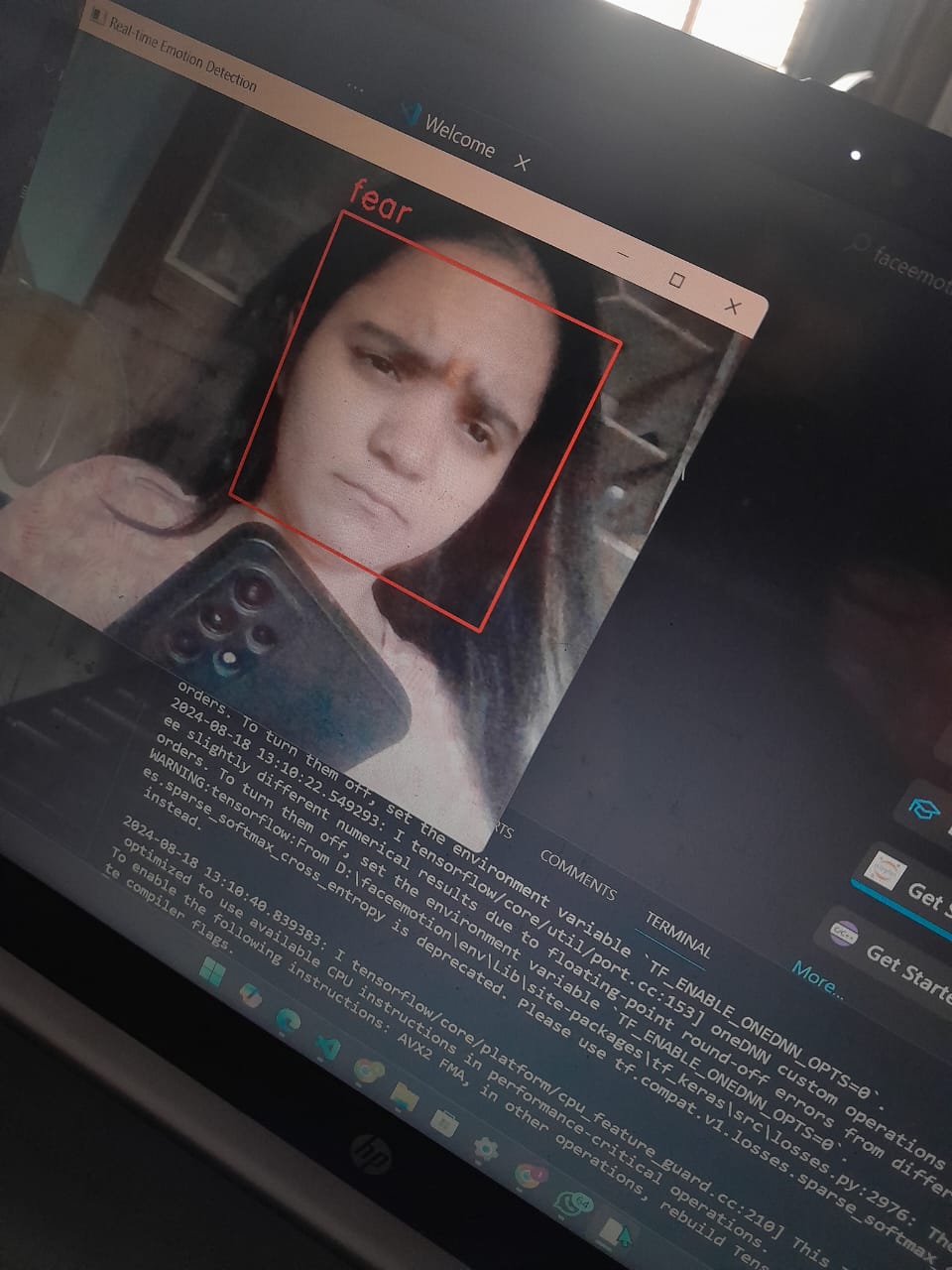
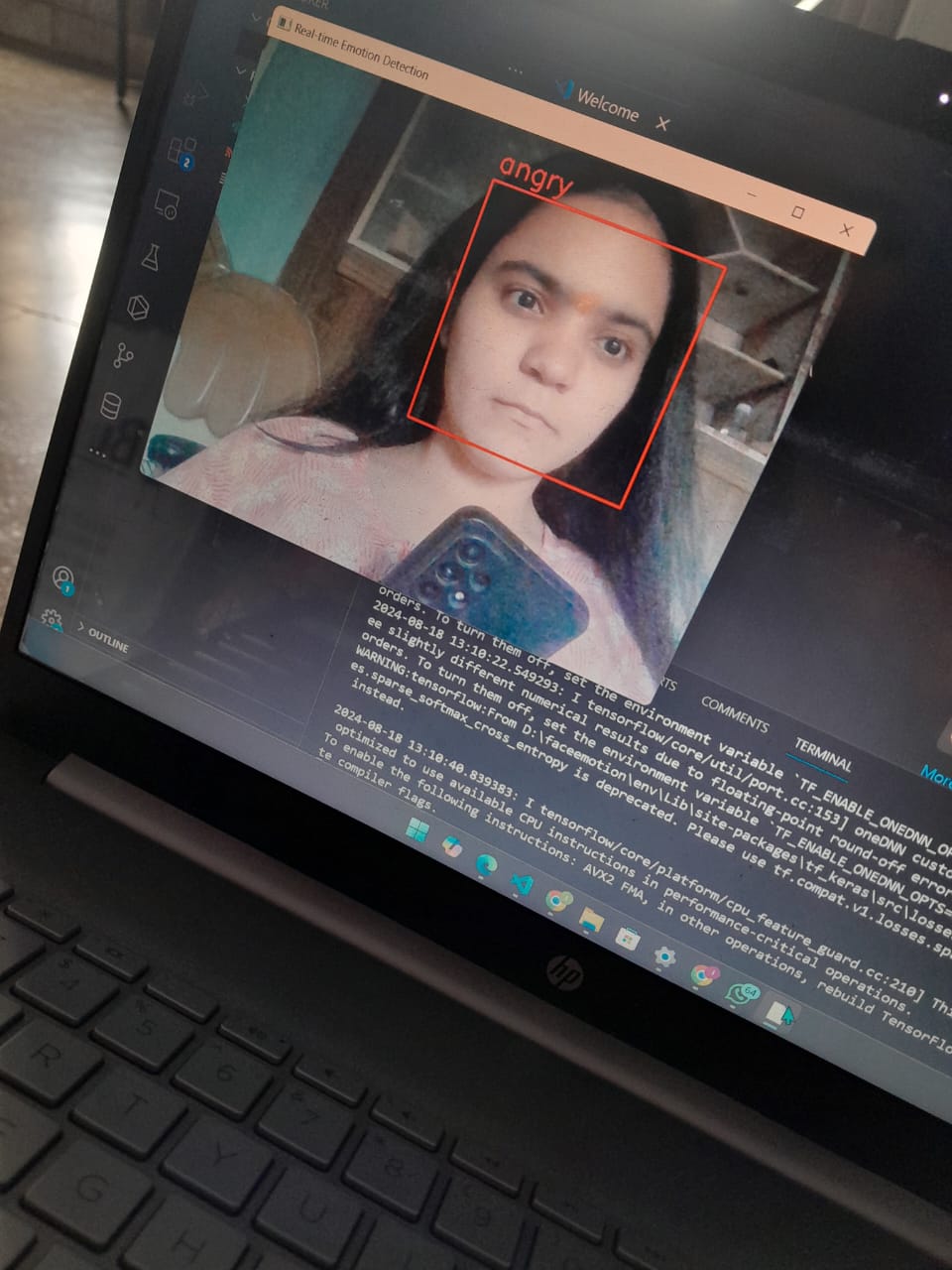
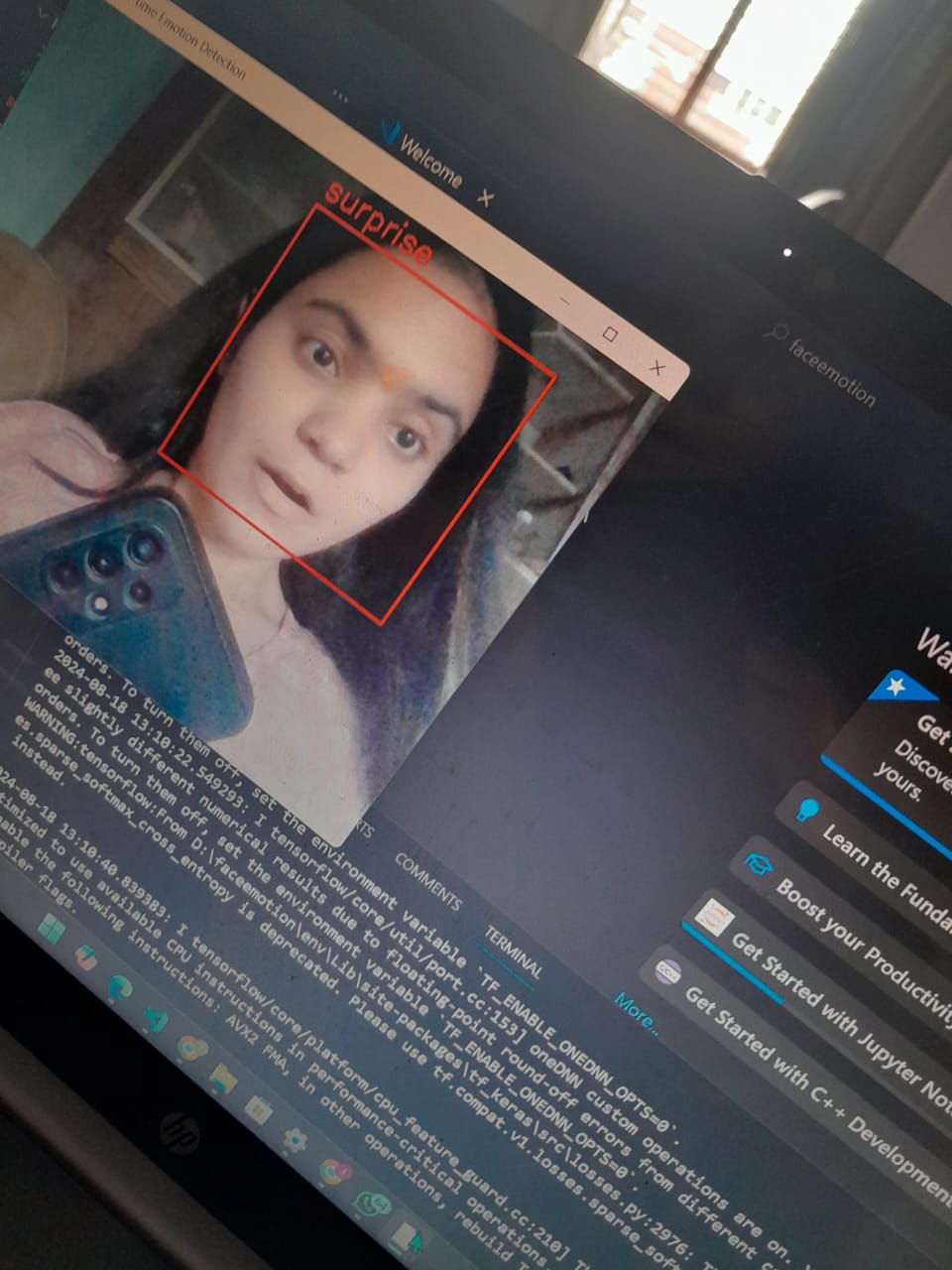
Our system uses DeepFace to detect and analyze facial expressions in real-time. It classifies emotions such as happiness, sadness, anger, fear, surprise, and more. By capturing and analyzing live video or image feeds, the system provides immediate emotional feedback, which can be used for various applications like mood-based recommendations, emotional analytics, or interactive systems.
How we built it
Technology Stack: We leveraged Python for backend development and integrated the DeepFace library for emotion analysis. Frameworks and Tools: Used OpenCV for real-time video processing, ensuring smooth facial detection and tracking. Workflow: Captured facial data from video feeds using OpenCV. Analyzed the captured faces with DeepFace to predict emotions. Displayed results in a user-friendly interface for real-time feedback. Testing and Refinement: We trained the system using various datasets and tested it in diverse lighting and background conditions to improve accuracy.
Challenges we ran into
Real-time Processing: Ensuring low latency while analyzing live video streams was challenging. Accuracy in Diverse Conditions: Handling variations in lighting, face angles, and expressions required optimization and additional preprocessing steps. Integration: Combining multiple libraries like OpenCV and DeepFace seamlessly took considerable effort.
Accomplishments that we're proud of
Successfully implemented real-time emotion detection with high accuracy. Created a robust system capable of analyzing multiple faces in a single frame. Optimized the model for real-time performance without compromising accuracy. Made the solution scalable for potential integration into larger applications.
What we learned
gained deeper insights into computer vision and facial recognition technologies. Learned how to optimize AI models for real-time performance. Enhanced understanding of user experience design to create intuitive interfaces. Mastered integrating third-party libraries like DeepFace and OpenCV.
What's next for Untitled
Improved Emotion Analysis: Incorporating advanced models to detect subtle emotions and microexpressions. Real-time Sentiment Analysis: Integrating with NLP to correlate facial emotions with spoken words for comprehensive sentiment detection. Applications: Expanding the system for use in mental health diagnostics, virtual classrooms, and customer feedback analysis.

Log in or sign up for Devpost to join the conversation.