Inspiration: Emotions impact everything we do, yet most people struggle to understand what they’re feeling in the moment. I wanted to build something that doesn’t just track emotions, but actually responds to them. The idea came from noticing how often students feel overwhelmed, stressed, or demotivated but don’t know why. I wanted to create a tool that gently guides users toward clarity, without judgment.
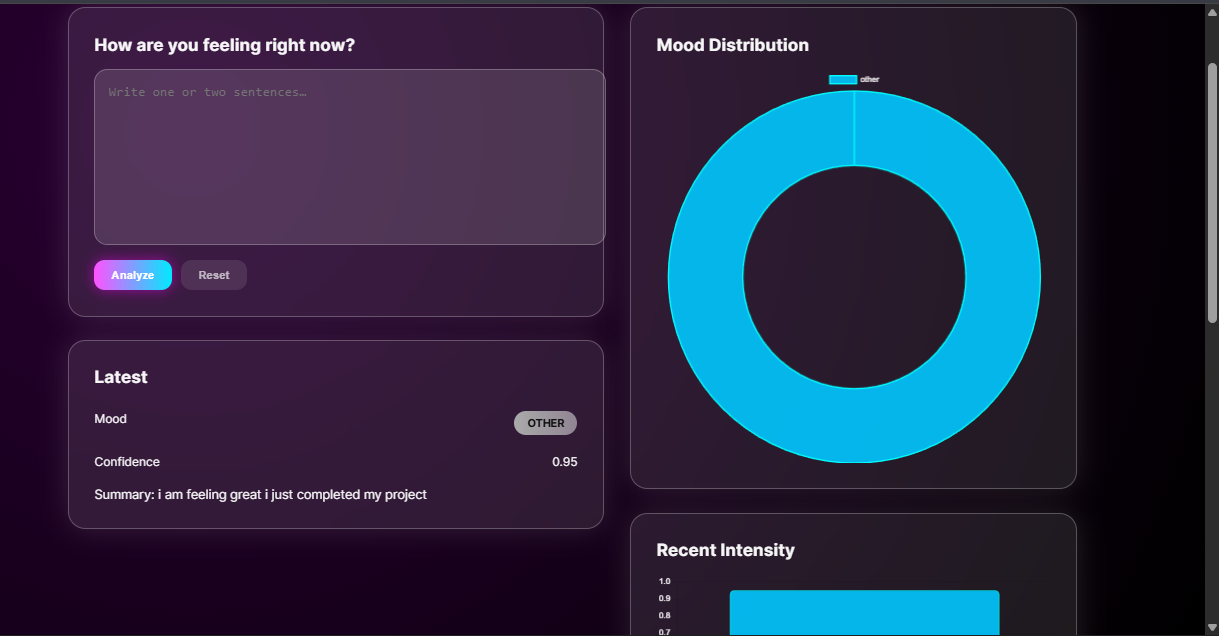
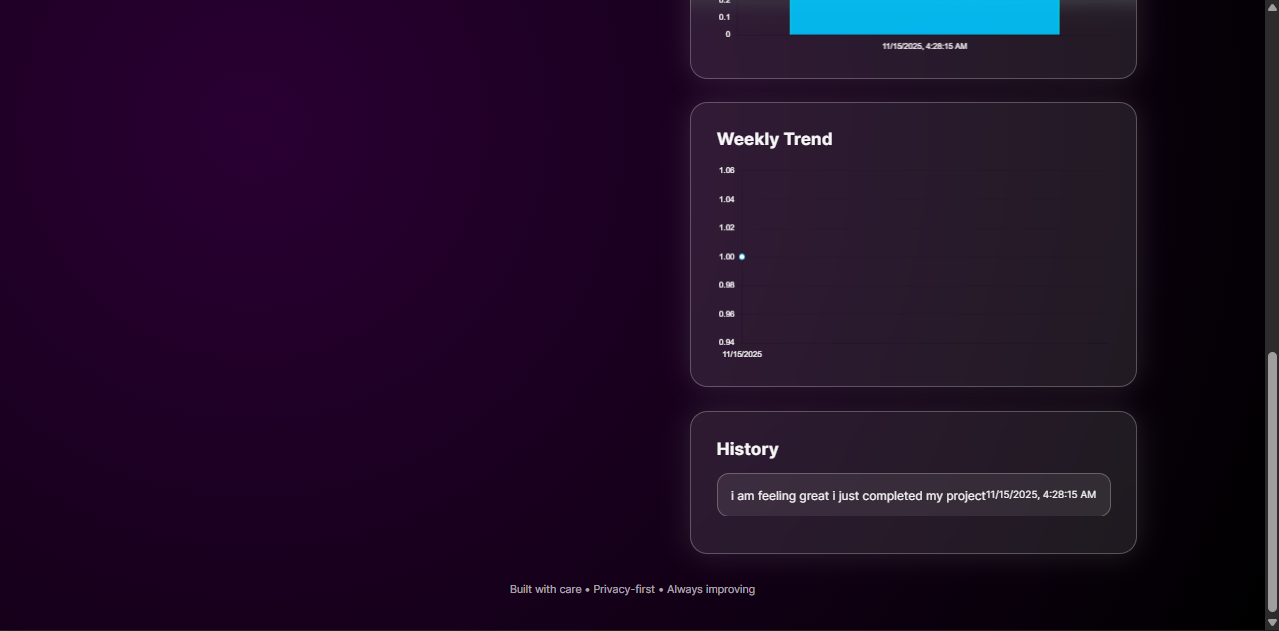
What it does: Emotion Aware is an AI-powered emotional companion that identifies the user’s mood in real time through text-based sentiment and emotion analysis. It then translates those insights into meaningful visualizations, showing emotional trends and patterns over time. The tool also provides personalized support such as calming prompts, motivation boosters, and journaling suggestions, helping users understand their emotional state and build healthier habits. Instead of simply recording data, Emotion Aware actively responds to the user’s feelings, making emotional well-being more accessible and intuitive.
How we built it: We built Emotion Aware using a modern full-stack workflow. The frontend is developed with React and Tailwind, giving the interface a smooth, responsive, and minimal design. Real-time data handling is managed through React state and custom hooks. For mood visualization, we used Recharts to display emotion trends in a clear and engaging way. The backend is powered by FastAPI, which processes user inputs and connects them to the AI models. The AI component performs sentiment analysis and emotion classification using probability-based predictions. The frontend communicates with the backend through custom API endpoints, sending user input for analysis and receiving processed emotional insights. Throughout development, we used GitHub for version control and coordination.
Challenges we ran into: We faced several challenges while building Emotion Aware. Achieving stable and accurate emotion predictions was more complex than expected, especially when different inputs triggered inconsistent results. The frontend also brought difficulties, including blank screens, component issues, and charts that refused to render correctly. API connections between FastAPI and the React client caused CORS conflicts and communication failures, which took time to resolve. Styling the interface was another challenge, particularly when fine-tuning themes, neon colors, and overall responsiveness. One of the biggest non-technical challenges was designing the app so that it felt supportive and comforting rather than clinical or overwhelming.
Accomplishments that we're proud of: We’re especially proud of building a complete emotion-aware companion in such a short time. Integrating the AI layer with both the backend and frontend was a major milestone, and seeing the whole system work together smoothly felt incredibly rewarding. Creating a clean, intuitive interface that provides real-time emotional insights was another strong achievement. We were able to overcome multiple debugging obstacles, from chart issues to API errors, and the final result is a tool that not only functions well but genuinely supports emotional well-being. Most importantly, we created something meaningful—a project that can actually help people understand their emotions better.
What we learned: Working on Emotion Aware taught us a lot about connecting different technologies into one seamless experience. We learned how to integrate a FastAPI backend with a React frontend and how sentiment and emotion models generate probability-based predictions. We also gained experience debugging complex rendering issues, handling asynchronous state, and resolving API communication errors. Beyond the technical side, we learned how crucial thoughtful design is when working on a wellness tool. Every detail—from color choices to tone—affects how supported a user feels, and this project made us more aware of emotional UX design.
What's next for Emotion Aware: In the future, Emotion Aware will expand into a more holistic emotional support system. We plan to add facial expression analysis for multimodal emotion detection, giving users deeper and more accurate emotional insights. We also want to generate daily summaries and weekly emotion reports so users can reflect on their progress. Another goal is to introduce gamification elements such as streaks and emotional improvement milestones. A chatbot companion for real-time conversational support is also in development. Ultimately, we want to bring Emotion Aware to mobile, allowing users to track and understand their emotions anywhere, anytime.


Log in or sign up for Devpost to join the conversation.