-
-
Logo
-
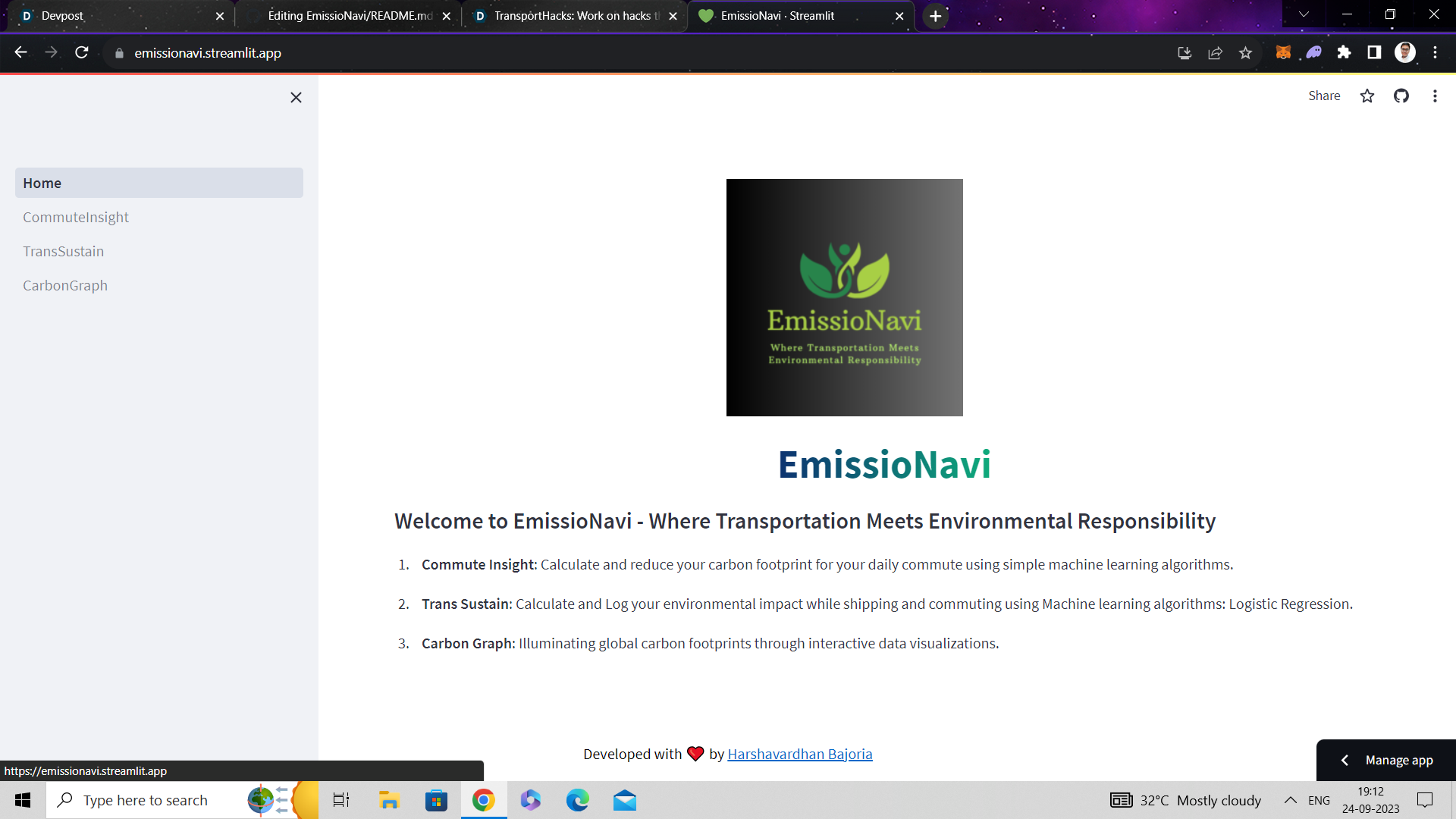
Homepage
-
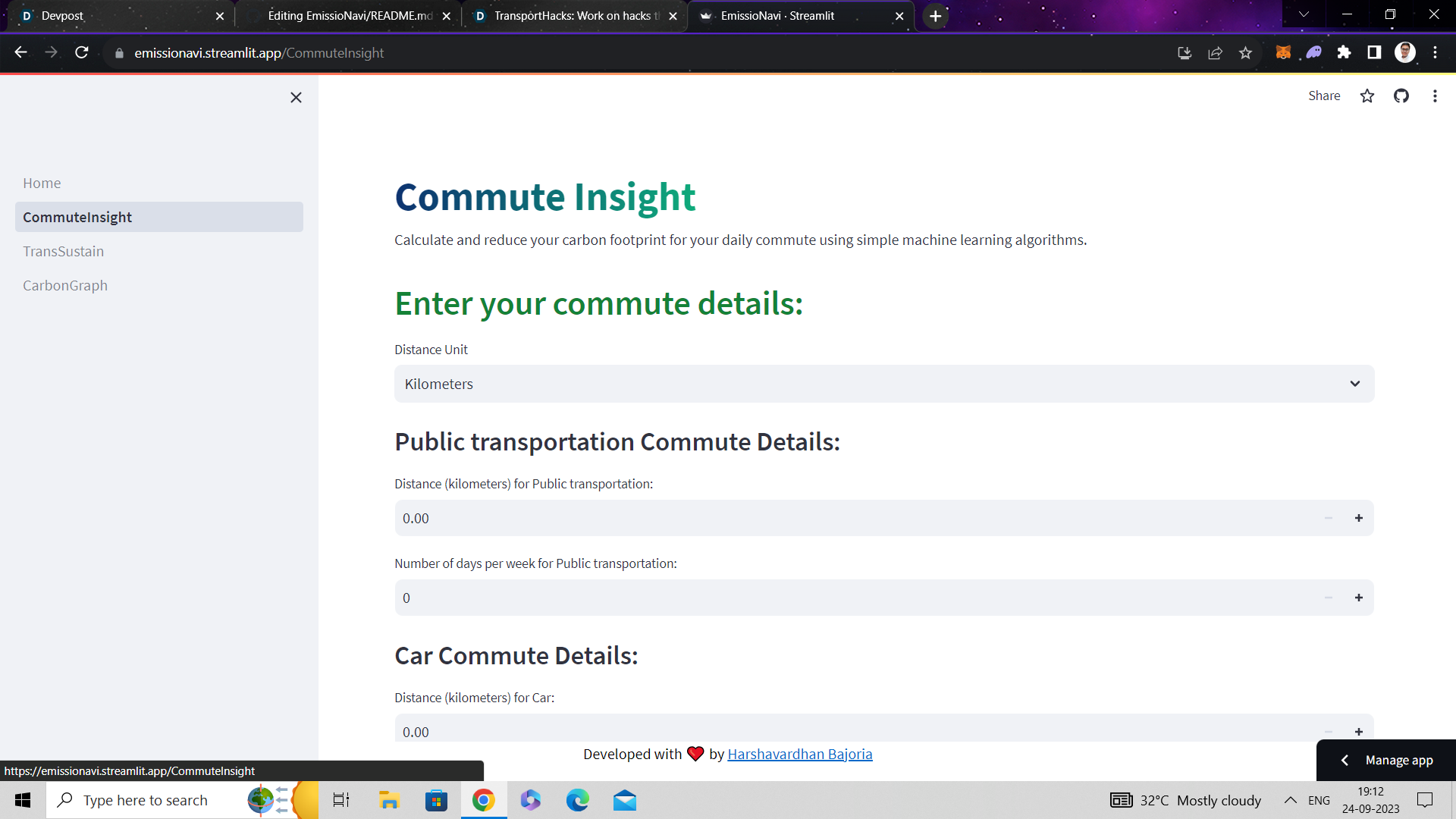
Commute Insight
-
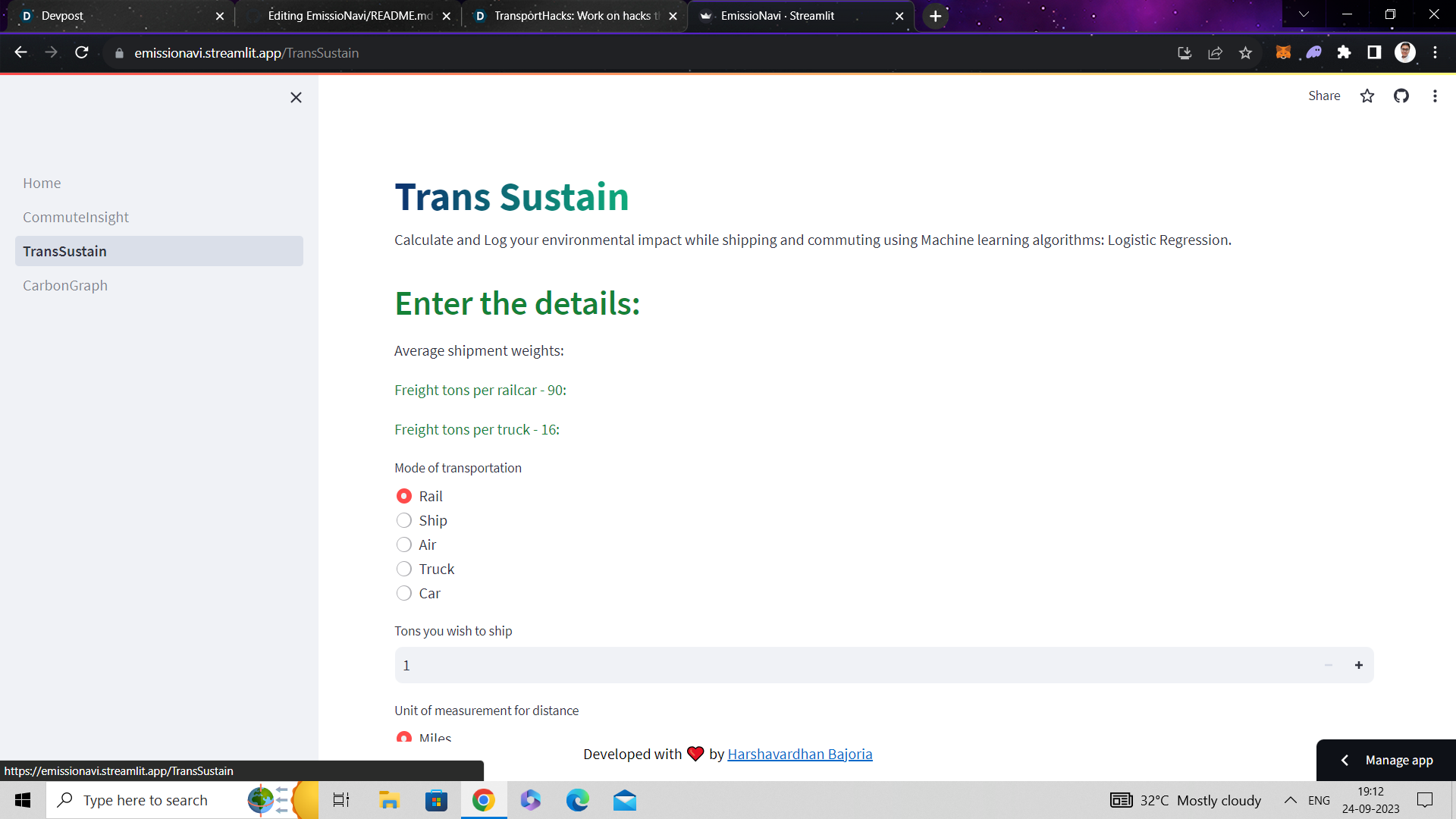
Trans Sustain
-
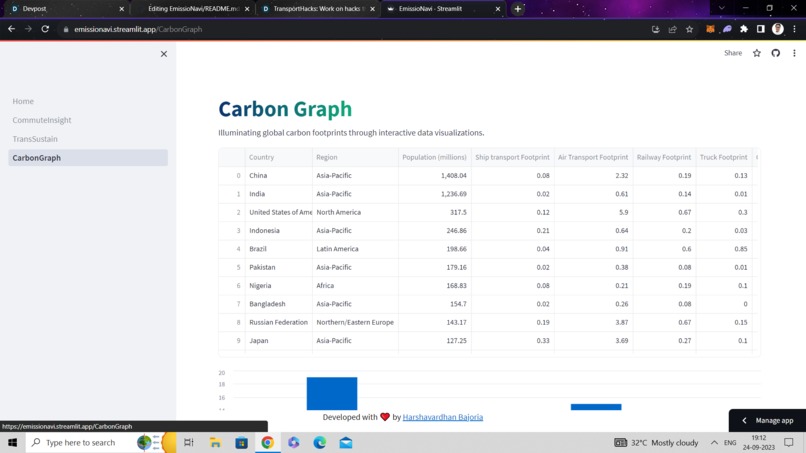
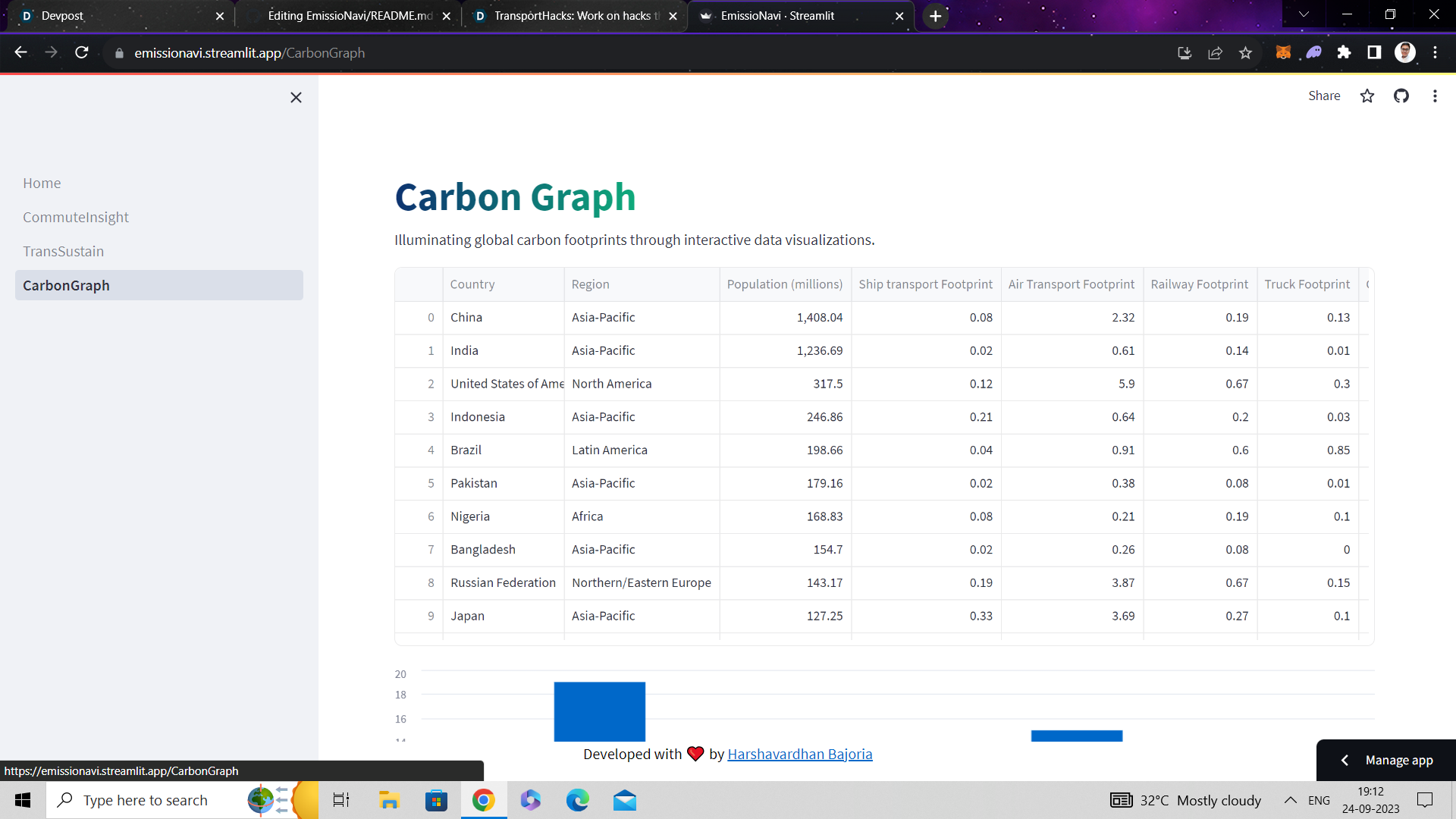
Carbon Graph
-
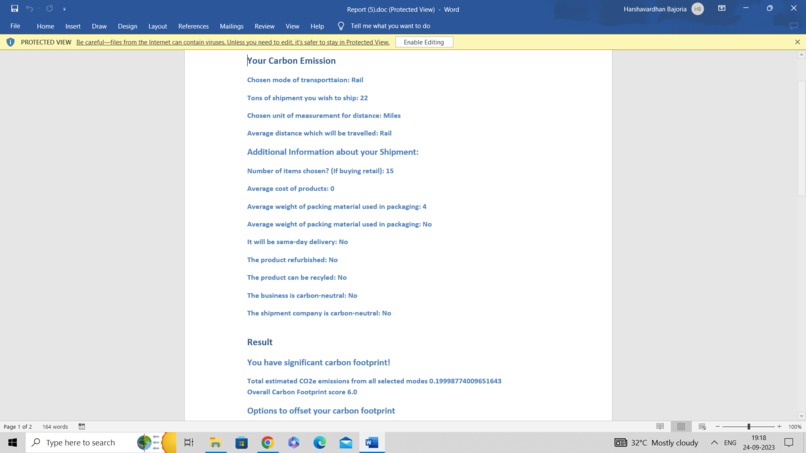
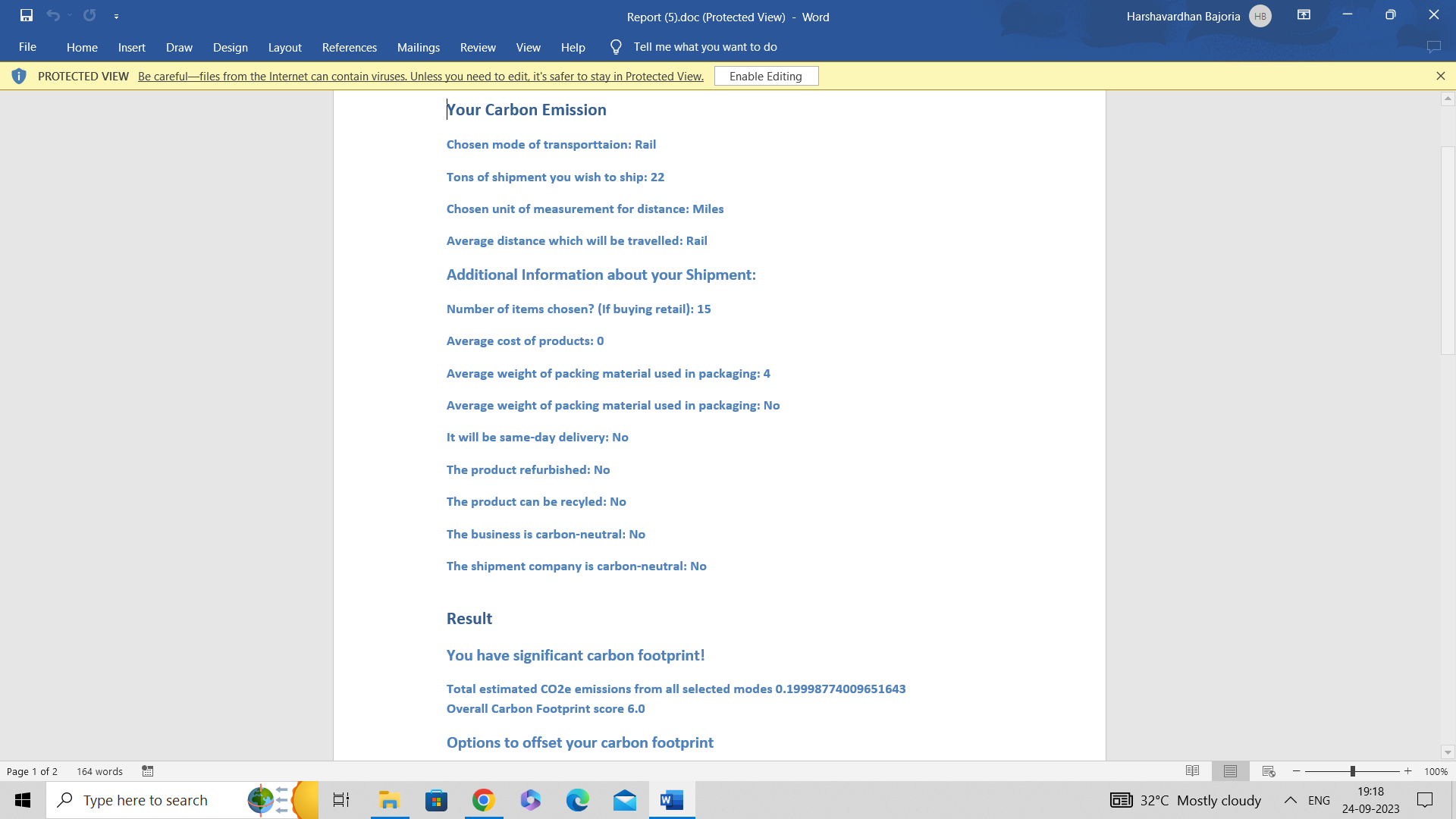
Generated Report
Inspiration
The transportation and supply industry faces significant challenges related to carbon emissions and environmental sustainability. To address these issues, there is a need for a software solution that empowers individuals and organizations to calculate and mitigate their CO2 emissions effectively. The software should aim to solve the following problems:
Lack of Awareness: Many individuals and businesses are unaware of the environmental impact of their daily commutes or shipments. There is a lack of accessible tools to quantify and visualize the CO2 emissions associated with transportation choices.
Difficulty in Calculating Emissions: Calculating CO2 emissions from daily commutes, whether by public transport, car, or bike, can be a complex and time-consuming task. Existing tools may not be user-friendly or readily available.
Uncertainty in Shipment Emissions: Businesses often struggle to estimate the carbon footprint of their shipments accurately. This leads to challenges in implementing sustainable supply chain practices and meeting environmental goals.
Lack of Guidance for Emission Reduction: Once users identify their emissions, they may not know how to reduce them effectively. There is a need for guidance and suggestions on adopting eco-friendly transportation options and supply chain strategies.
Limited Global Emission Insights: Understanding the broader picture of CO2 emissions across the globe is essential for making informed decisions. However, access to comprehensive, up-to-date data and visualizations is limited.
Difficulty in Comparing Features: Users may find it challenging to compare different transportation options or shipment methods in terms of their environmental impact. Clear, user-friendly visualizations are needed to facilitate these comparisons.
In light of these challenges, the proposed software aims to provide a comprehensive solution that enables users to calculate, visualize, and reduce their CO2 emissions related to transportation and supply chain activities. By addressing these problems, the software will contribute to a more sustainable future for the transportation and supply industry.
What it does
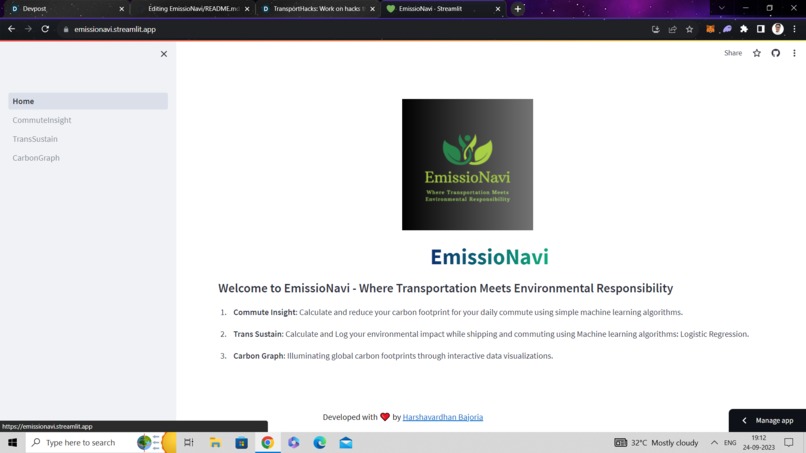
EmissoNavi is a comprehensive software solution designed to address the pressing challenges faced by the transportation and supply industry regarding carbon emissions and environmental sustainability. It offers a wide range of features and functionalities to tackle these issues effectively:
Awareness and Education EmissoNavi provides a user-friendly interface that educates individuals and businesses about the environmental impact of their transportation choices and shipments. Through clear visualizations and explanations, users can gain a better understanding of their carbon footprint.
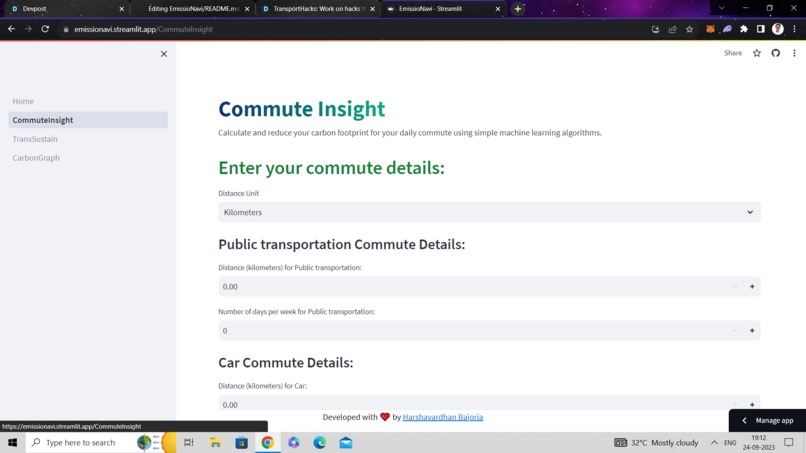
Effortless Emission Calculation Calculating CO2 emissions is made simple with EmissoNavi. Users can input their commute details, including mode of transportation (public, car, or bike) and distance traveled. The software then performs the complex calculations behind the scenes, presenting users with accurate emission data in an easily digestible format.
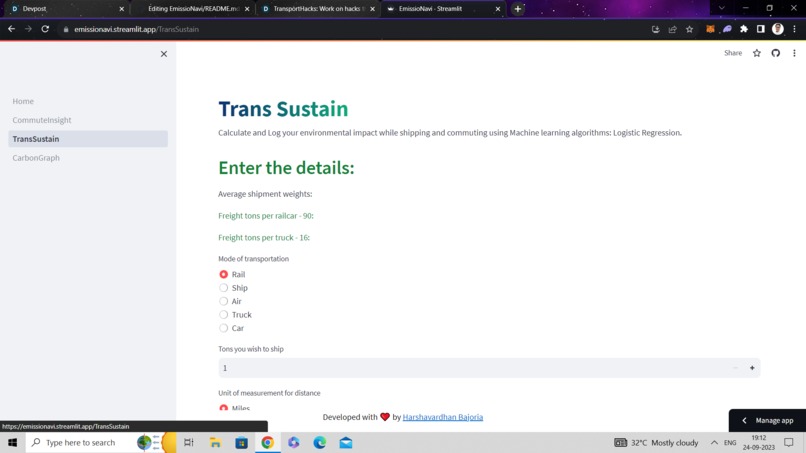
Precise Shipment Emission Estimations Businesses can rely on EmissoNavi to accurately estimate the carbon footprint of their shipments. By inputting shipment details, such as weight, distance, and transportation method, companies can gain insights into the emissions associated with their supply chain operations.
Guidance for Emission Reduction EmissoNavi doesn't stop at calculation; it actively guides users toward reducing their emissions. It offers personalized recommendations and eco-friendly alternatives for daily commutes and supply chain decisions. Users receive practical suggestions to make more sustainable transportation and logistics choices.
Global Emission Insights EmissoNavi's global database provides users with a broader perspective on CO2 emissions. Users can explore interactive maps and graphs that display emissions data across regions and industries. This information empowers informed decision-making and fosters a global awareness of environmental challenges.
Feature Comparison and Visualization EmissoNavi allows users to compare various transportation options and shipment methods side by side. Through intuitive area charts and visualizations, users can assess the environmental impact of different choices, helping them make greener decisions.
How we built it
The following tech stacks have been used to create the application and deploy it:
- Python to build the application.
- Streamlit to create a responsive web application along with widgets.
- Streamlit Community Cloud to deploy the web application for anyone across the globe to access it.
- Python Libraries (sklearn, matplotlib) to plot and fetch the results.
- GitHub to host the source code, use the version control (collaboration history) to understand the changes, and go back and forth if required to complete the software.
Social Impact/Novelty:
EmissoNavi, the sustainable transportation and supply chain solution, has the potential to create a significant positive social impact in the industry. Here's how it can contribute to a more sustainable and responsible future:
Increased Environmental Awareness EmissoNavi promotes environmental consciousness among individuals and businesses. By providing easy-to-understand information about carbon emissions, it empowers users to make informed decisions. This heightened awareness can lead to a collective effort to reduce the carbon footprint associated with transportation and supply chain activities.
Eco-Friendly Behavior Change The software offers practical guidance and suggestions for reducing emissions. As users adopt eco-friendly transportation options and supply chain strategies, they contribute to the reduction of harmful pollutants. This behavior change, when embraced on a large scale, can lead to cleaner air and a healthier environment.
Support for Sustainable Business Practices EmissoNavi aids businesses in making environmentally responsible decisions within their supply chains. Companies that integrate sustainability into their operations often attract socially conscious consumers and investors. This can enhance a company's reputation and contribute to a more responsible corporate ecosystem.
Global Environmental Collaboration The global emissions insights provided by EmissoNavi foster a sense of shared responsibility for the planet. Users can visualize emissions on a global scale and understand their role in the broader environmental context. This can encourage collaboration and cooperation among nations, industries, and communities to combat climate change collectively.
Data-Driven Policy Decisions Policymakers can use the data and insights provided by EmissoNavi to inform environmental regulations and policies. Access to accurate emissions data allows governments to implement measures that further incentivize sustainable transportation and supply chain practices.
Challenges we ran into
In my journey, I faced some interesting challenges that turned out to be exciting learning opportunities. First, I had to figure out the important features that are required to calculate the CO2 emissions. Next, I wanted to add a cool feature to create .doc files with all the details and the report generated in a professional manner. Then, I dove into the world of Machine Learning along with Streamlit, which was new for me. Lastly, I explored how Streamlit Plots can be used to display graphs in the most insightful manner. Each challenge was like a puzzle piece that made my journey more exciting and motivating.
Accomplishments that we're proud of
Reflecting on this journey, I'm immensely proud of the accomplishments that emerged from each challenge. One accomplishment that I am proud of is successfully completing a project in which I calculated CO2 emissions and generated professional-looking .doc files with detailed reports. This project involved several interesting challenges, including identifying the necessary features for CO2 emissions calculations, learning and implementing Machine Learning with Streamlit, and effectively using Streamlit Plots to display insightful graphs. Each of these challenges contributed to my growth and made the journey both exciting and motivating.
What we learned
During this journey, I learned valuable lessons that encompassed various aspects. I honed my ability to select critical features for precise CO2 emissions calculations and developed proficiency in generating professional .doc files for detailed reports. Venturing into Machine Learning alongside Streamlit expanded my technical repertoire. Additionally, I discovered how to effectively employ Streamlit Plots for insightful data visualization. These challenges nurtured my problem-solving skills and further ignited my motivation for tackling complex tasks. Overall, this experience enriched my technical knowledge and enhanced my problem-solving abilities while fueling my enthusiasm for continuous learning and growth.
What's next for EmissioNavi
EmissoNavi, the sustainable transportation and supply chain solution, has a promising future with a wide range of potential developments and impacts in the transportation industry:
Integration with Smart Transportation Systems EmissoNavi can evolve to integrate with emerging smart transportation systems. This integration would provide real-time data on traffic conditions, road congestion, and public transit schedules. Users could receive dynamic recommendations for the most environmentally friendly and efficient routes.
Electric and Sustainable Vehicle Adoption As the transportation industry shifts toward electric and sustainable vehicle options, EmissoNavi can expand to offer comprehensive data on the emissions associated with various electric vehicle models. This would assist users in making informed decisions about transitioning to cleaner transportation options.
Incentive Programs and Carbon Credits EmissoNavi could partner with governments and organizations to introduce incentive programs. Users who consistently reduce their emissions through the software's guidance could be eligible for rewards or carbon credits, further motivating eco-friendly transportation choices.
Supply Chain Optimization The software's supply chain features could advance to offer optimization algorithms that help businesses reduce emissions while maintaining operational efficiency. This could involve route optimization, load consolidation, and alternative transportation methods to minimize the carbon footprint of shipments.
Continuous Data Improvement Keeping its emissions database up to date is essential. EmissoNavi can invest in partnerships with satellite providers, environmental agencies, and IoT devices to ensure the accuracy and comprehensiveness of its emissions data.
In summary, EmissoNavi has the potential to play a pivotal role in shaping the future of the transportation industry. By embracing technological advancements, fostering collaborations, and continuously innovating, it can contribute significantly to a more sustainable and environmentally responsible transportation ecosystem.
Built With
- github
- jupyter-notebook
- logistic-regression
- machine-learning
- matplotlib
- python
- python-libraries
- streamlit
- streamlit-cloud

Log in or sign up for Devpost to join the conversation.