What it does
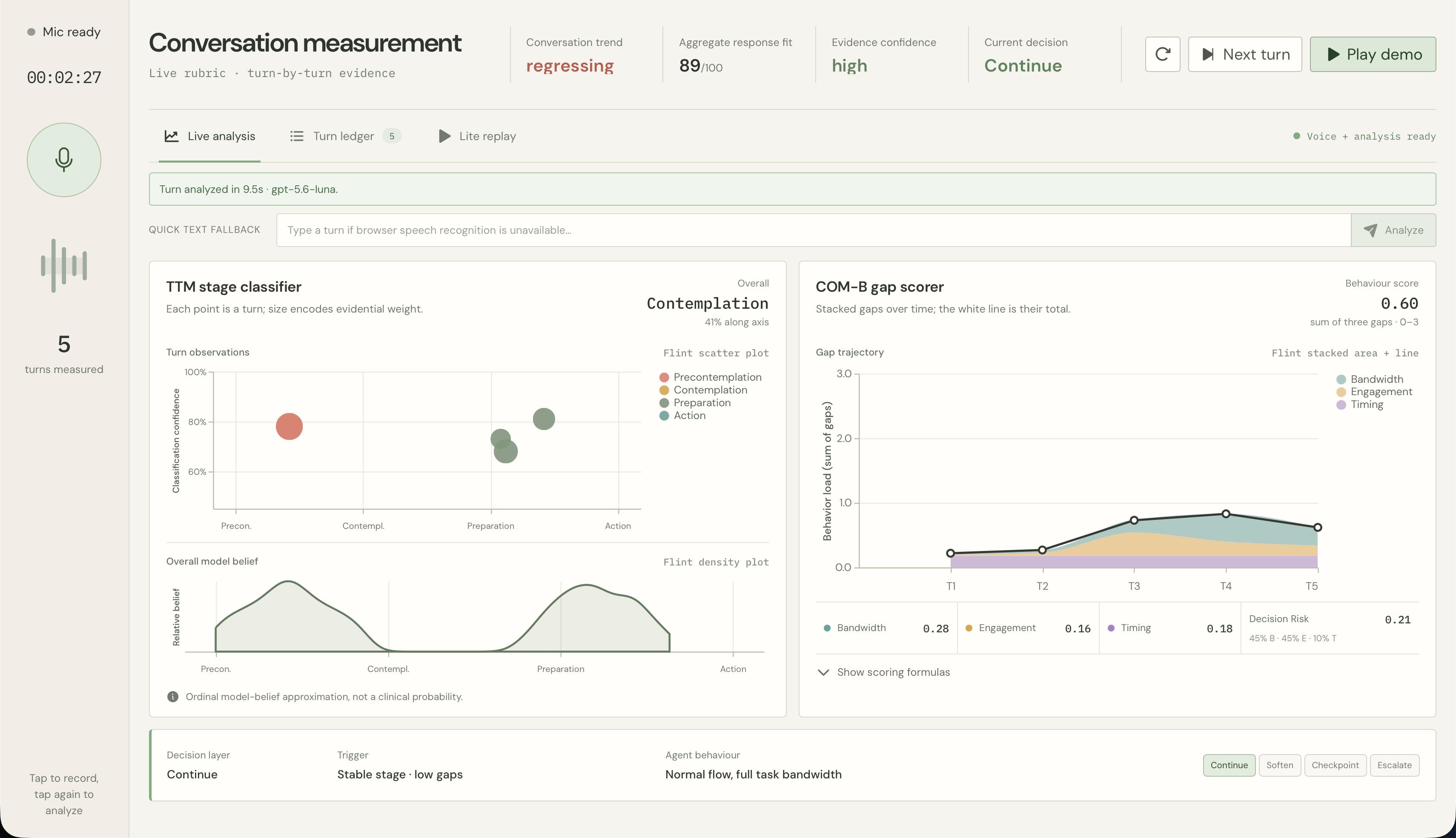
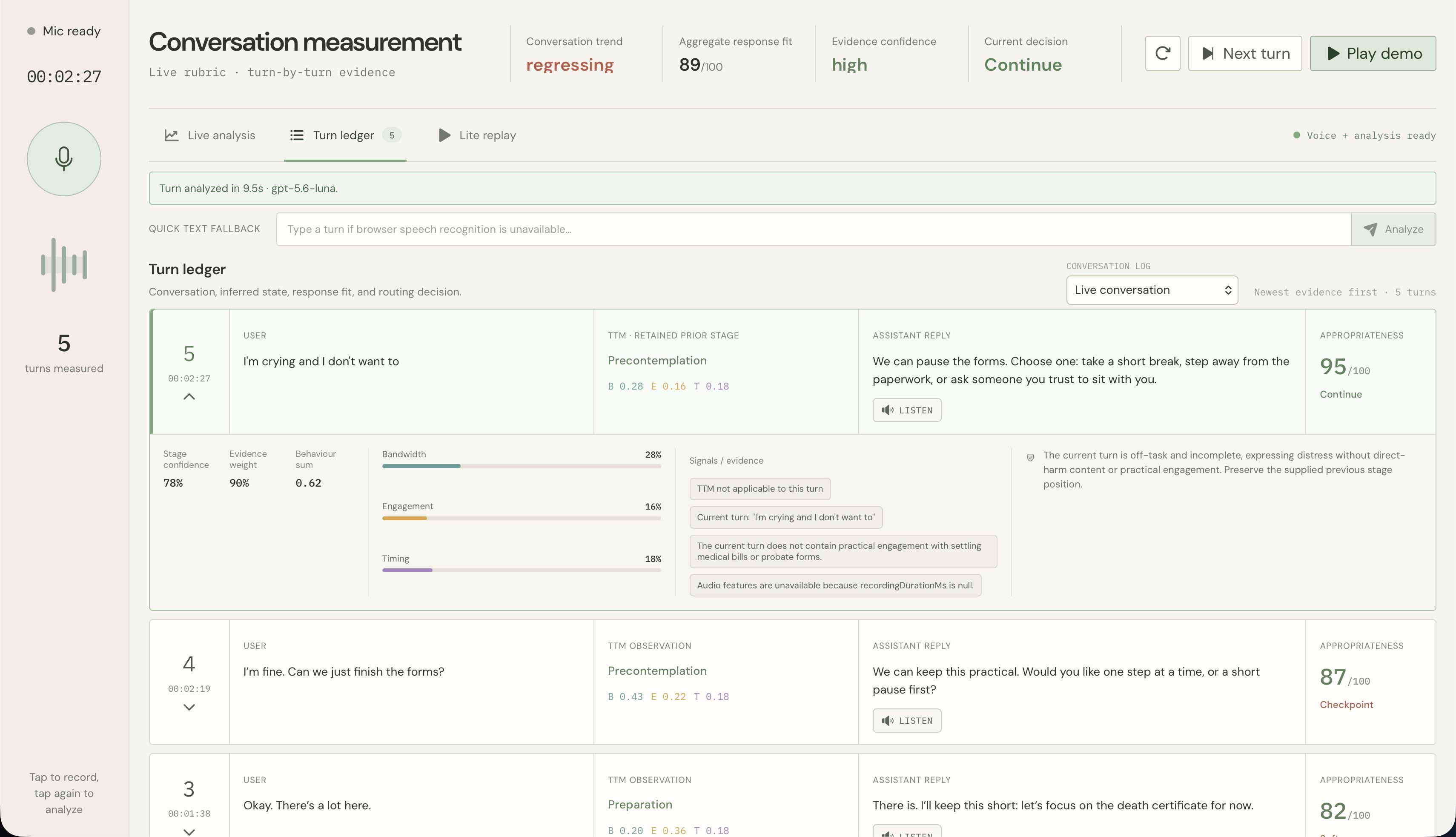
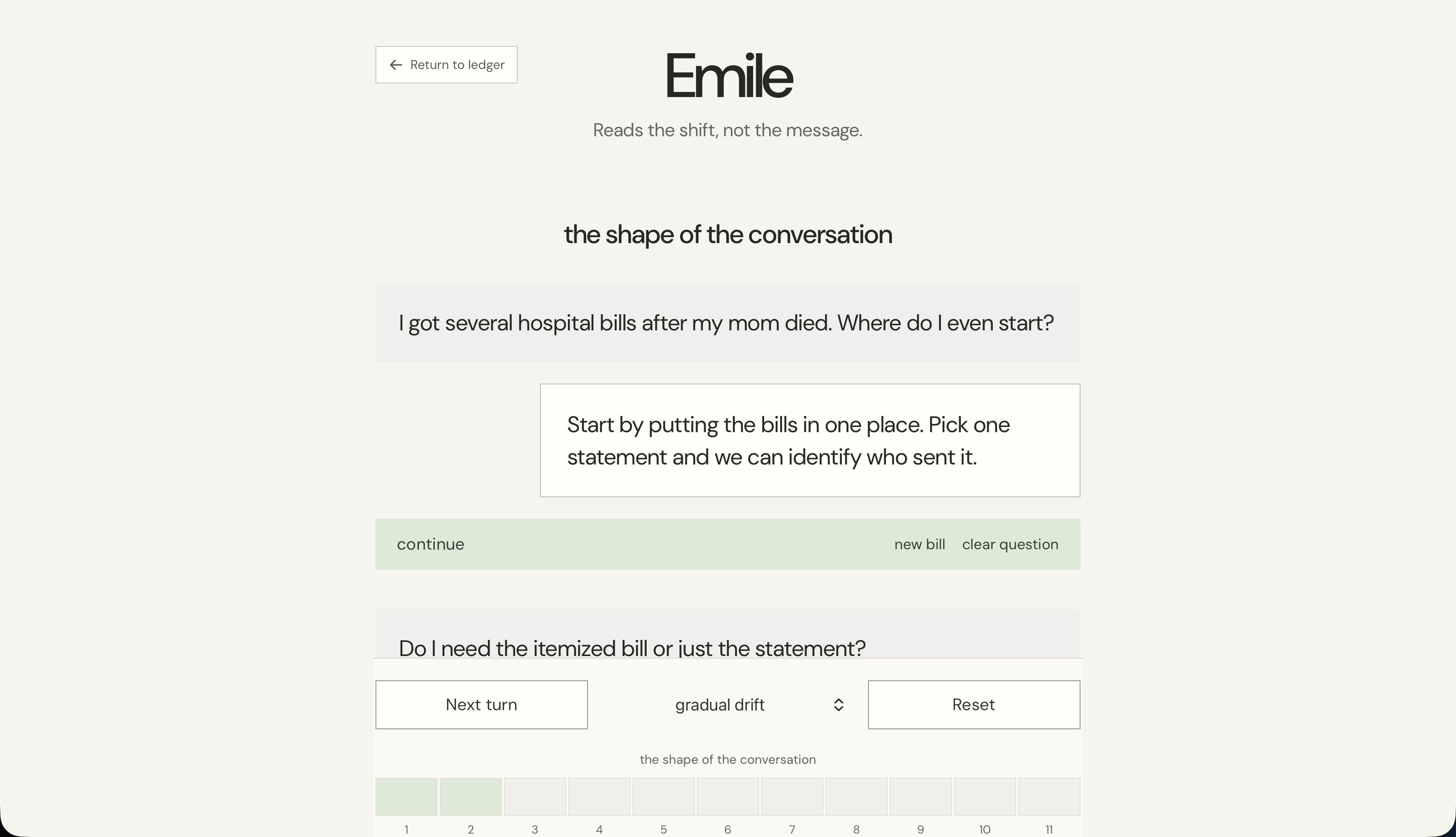
Emile sits underneath an empathetic agent and watches how someone is talking, not what they say when you ask. Every turn gets compared to how that same person sounded ten minutes ago. Then it does one of four things: carry on, slow down, check in, or step back completely.
The bit that matters: we score the change, not the state. Someone quiet the whole way through is sad, not in danger. Someone who was fine and stopped being fine is the one worth catching and you can only see that by looking across turns.
How we built it
Two behavioural science frameworks, written as plain rules instead of a trained model, so you can read exactly why it fired.
One tracks where someone's at: avoiding it, circling it, getting ready, getting on with it. The other checks whether they've got the bandwidth, the timing and the engagement to keep going right now. Underneath sit a handful of chosen signals — answers getting shorter, steering away from the subject, absolutes creeping in, and speaking about someone who has died in the present tense.
Nothing escalates on a single word. It takes several things going wrong together. That's why it catches a calm, well-organised message that's actually a crisis, and ignores someone loudly complaining that the paperwork is killing them.
Why "Emile"
Emile Durkheim studied what happens to people when the rules of their life stop applying. He found the danger isn't the grief — it's the gap after the old structure goes and before the new one arrives. That gap is what we built for.
What's next
Our thresholds are sensible starting points, not calibrated ones. The real next step is tuning them against actual transcripts instead of scripts we wrote ourselves.
Built With
- elevenlabs
- openai
- react

Log in or sign up for Devpost to join the conversation.