-
-
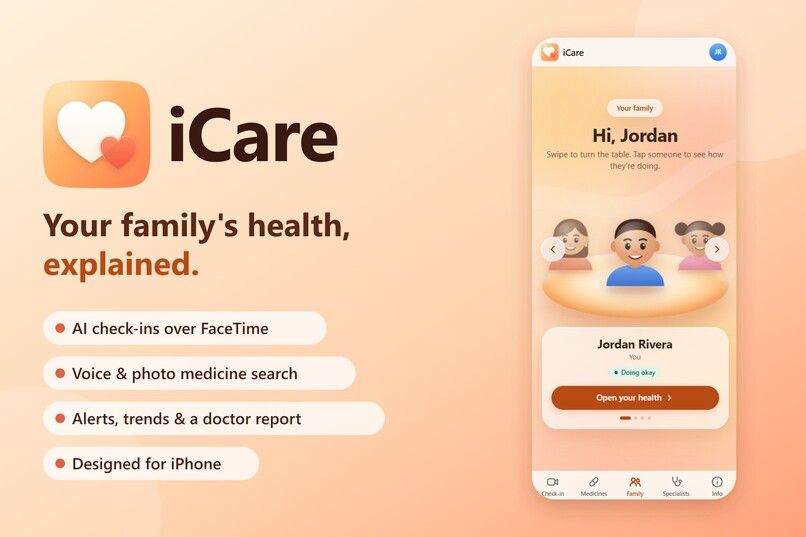
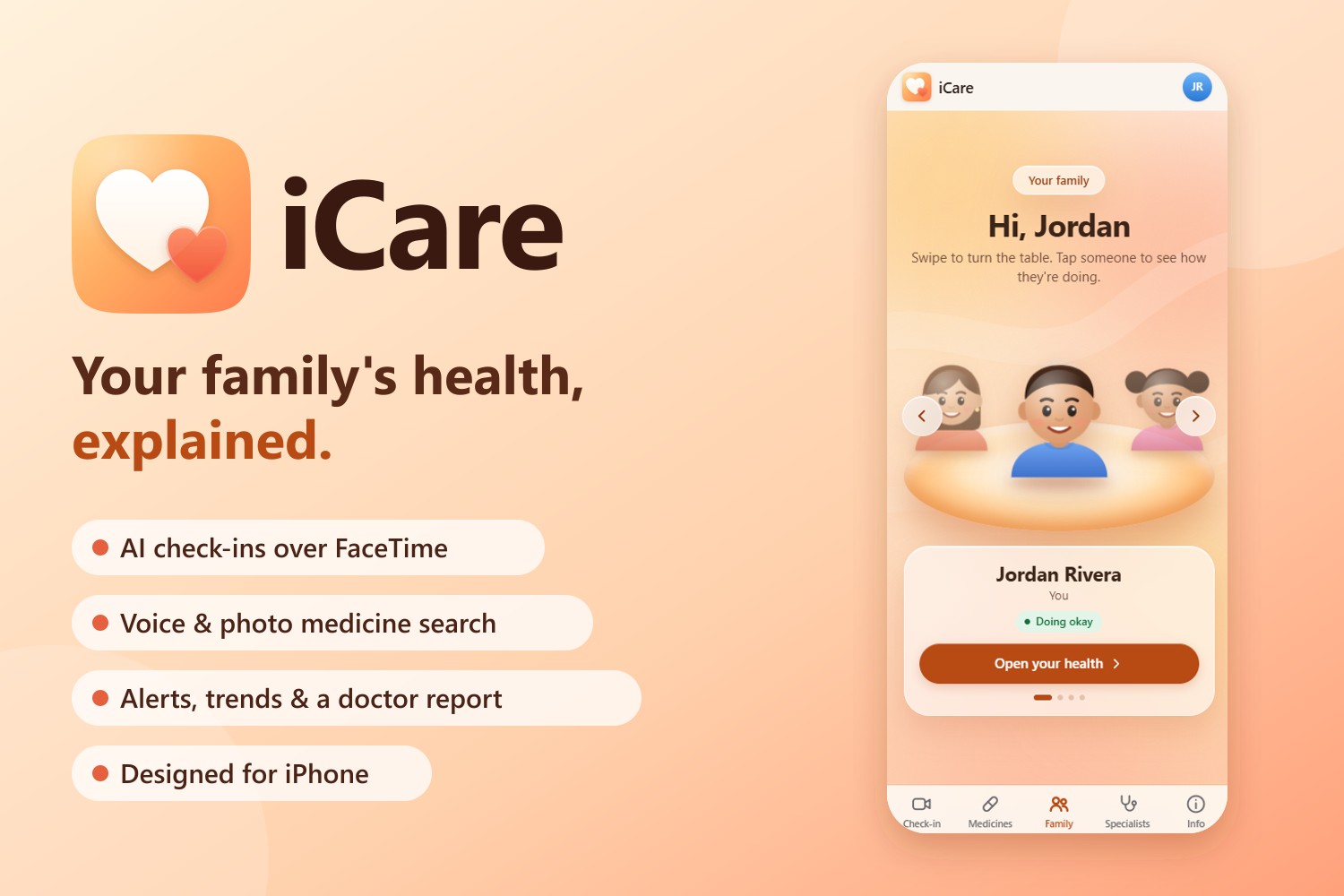
iCare: your family's health, explained. Built for iPhone, alongside Apple Health and Apple Watch.
-
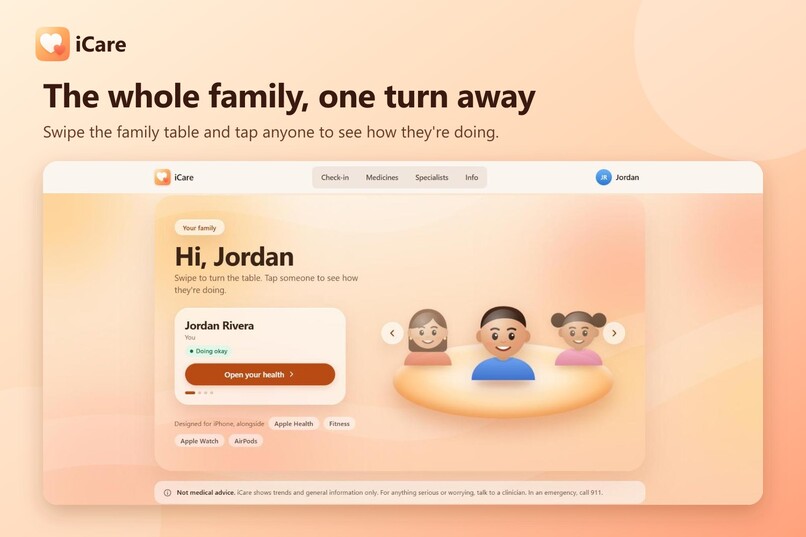
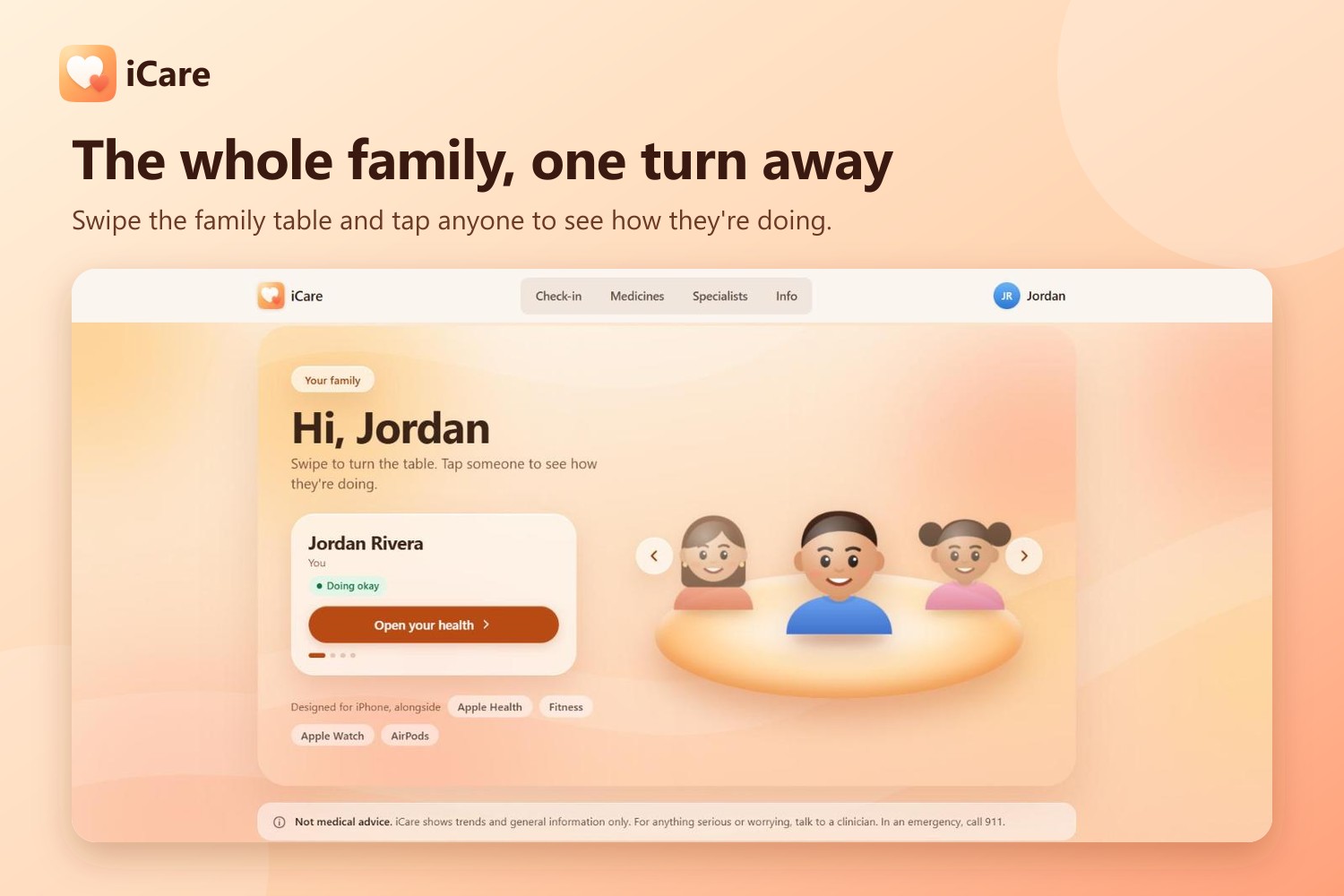
Home: the fictional Rivera family on a turning table. Tap anyone to open their health.
-
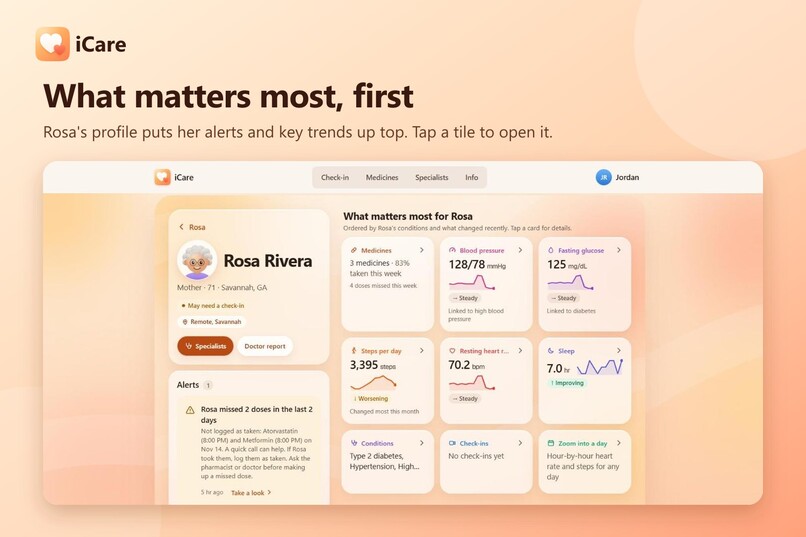
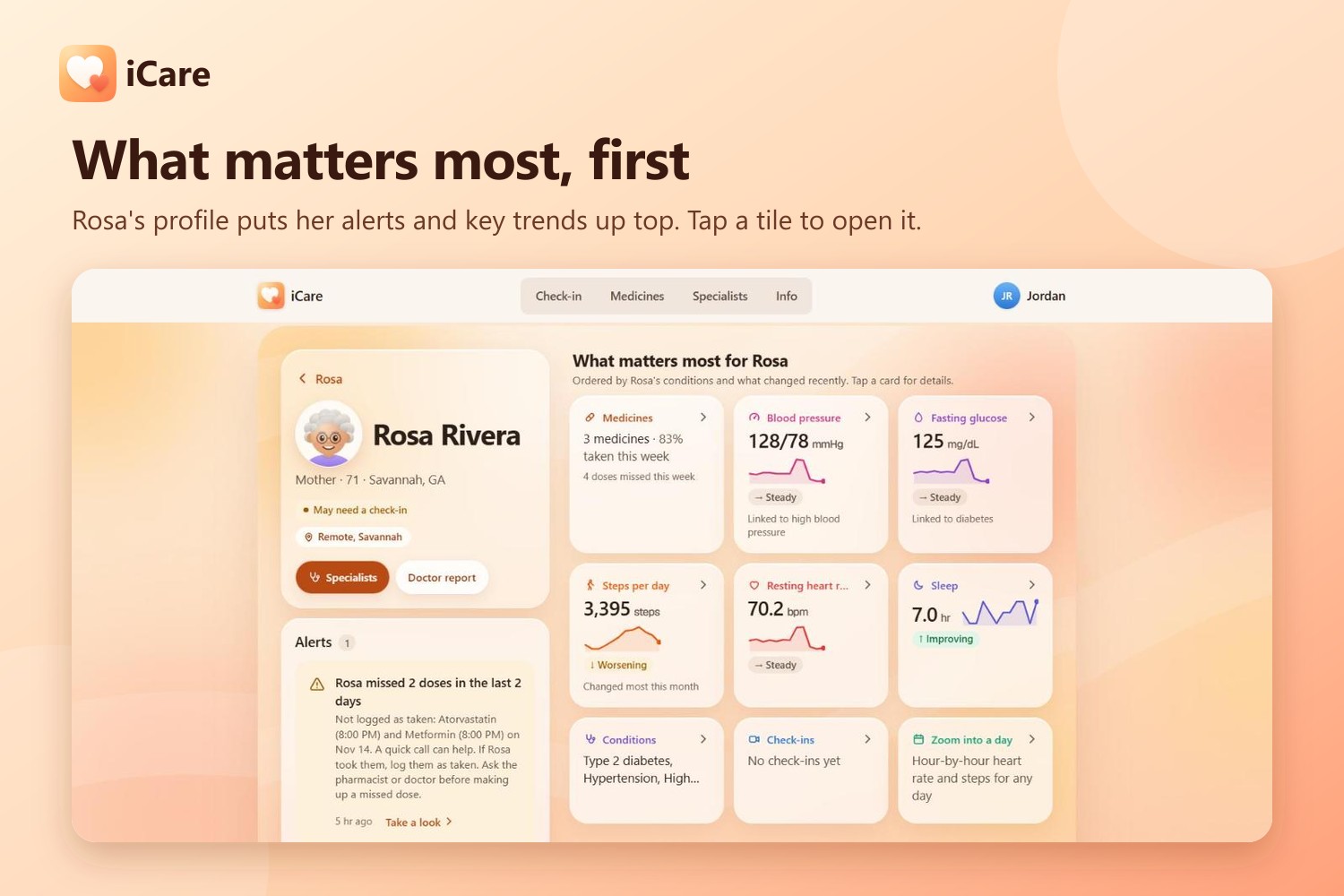
Rosa's profile: alerts and the trends that matter most for her conditions come first.
-
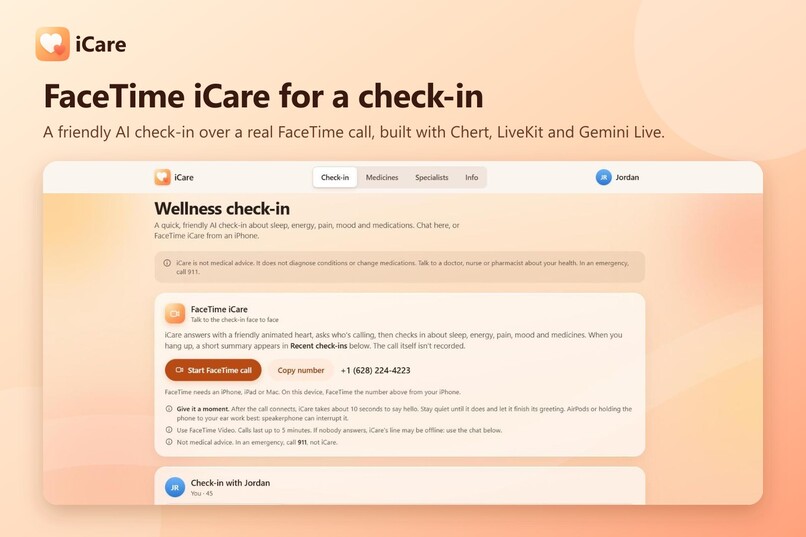
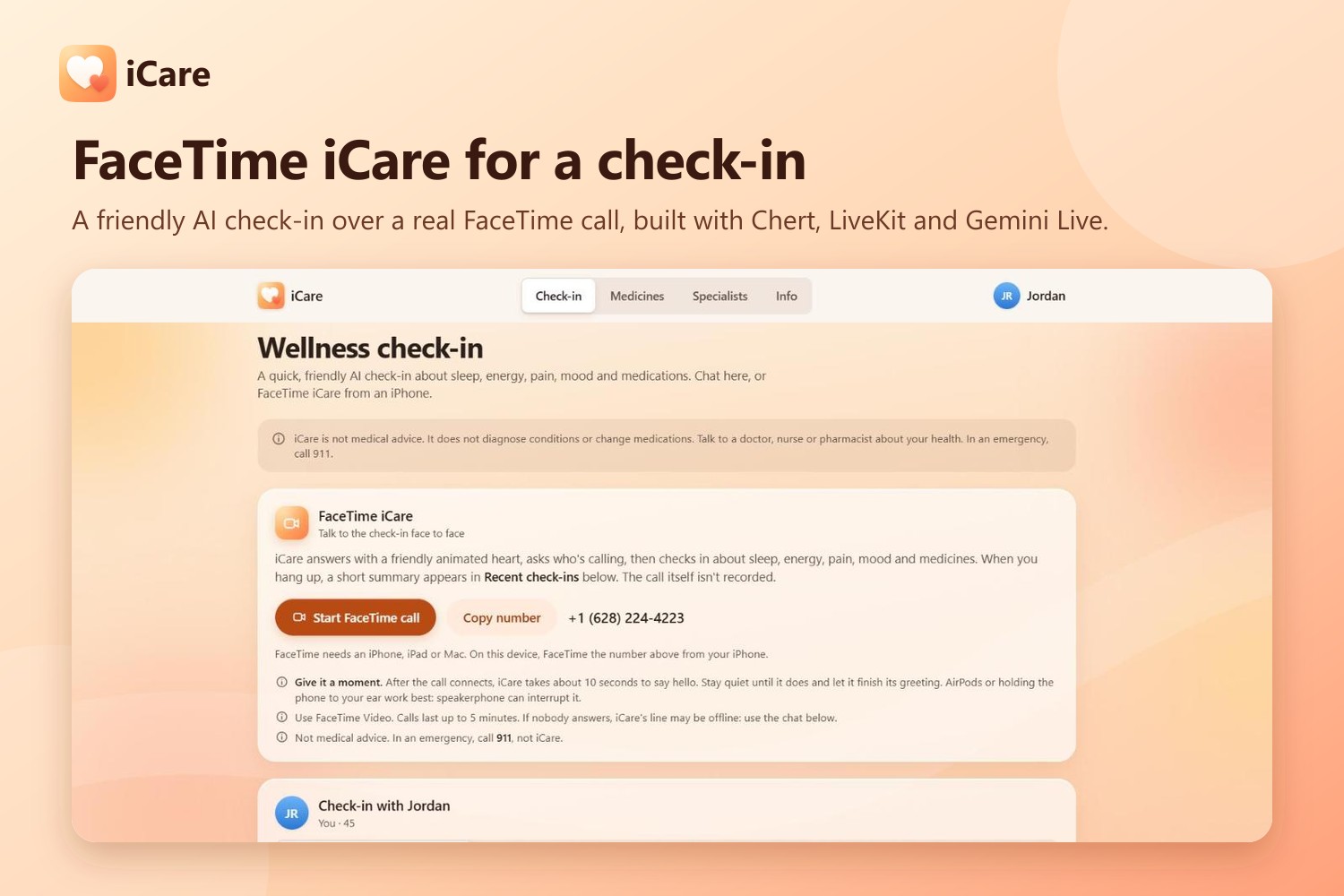
Check-in: FaceTime iCare for a friendly AI check-in (Chert + LiveKit + Gemini Live).
-
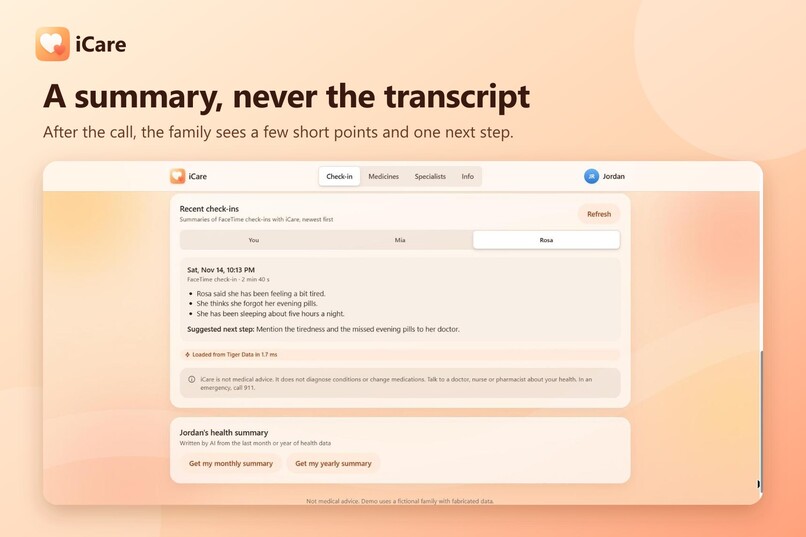
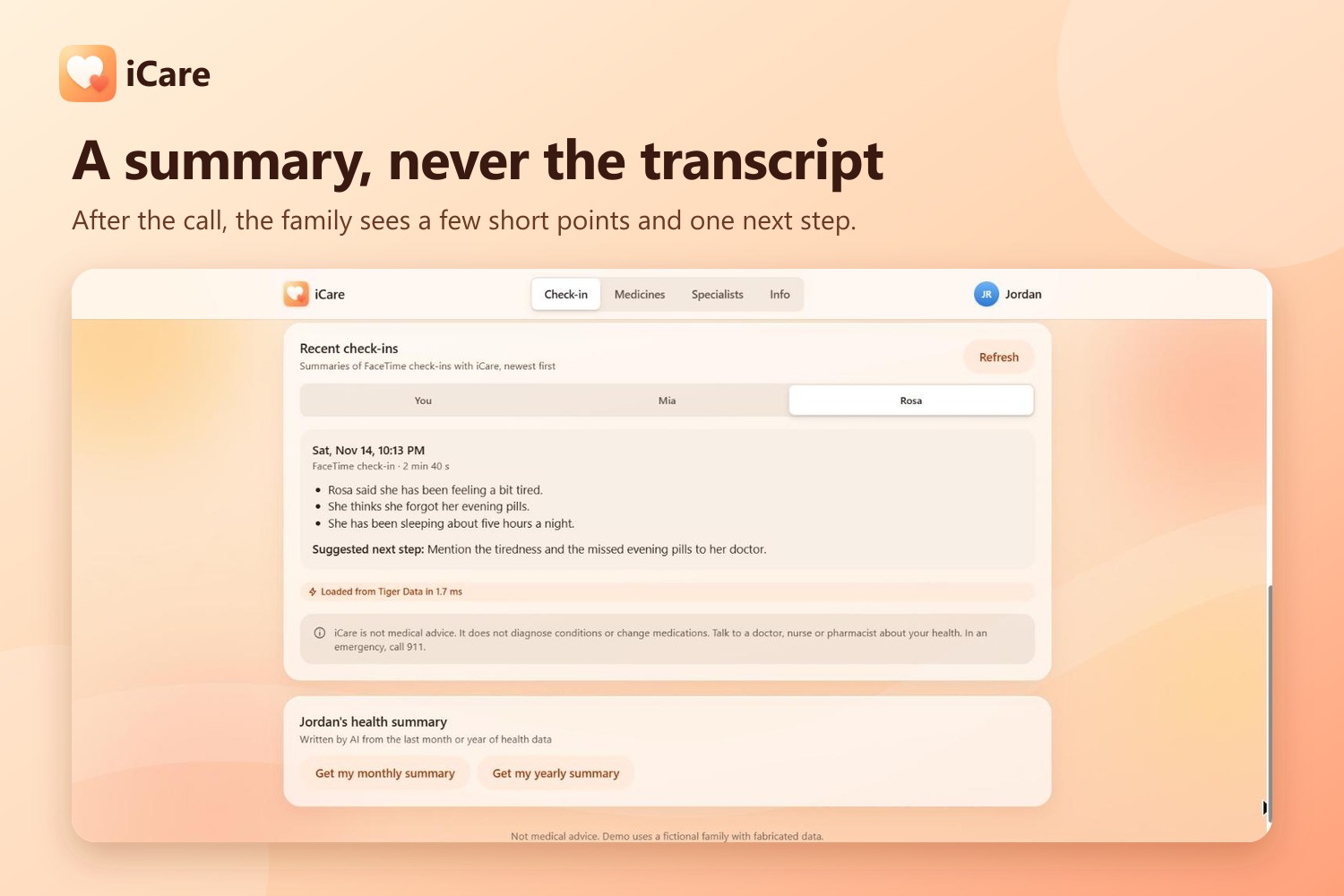
After the call: a short summary and one next step, never the transcript.
-
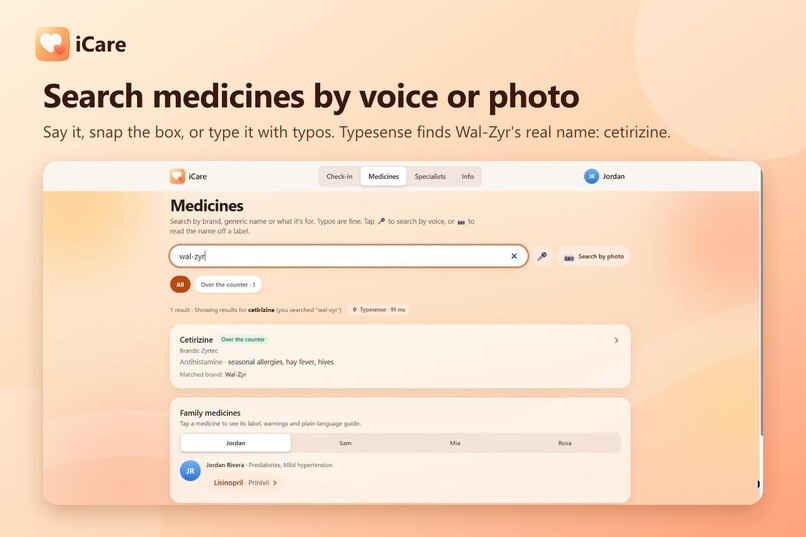
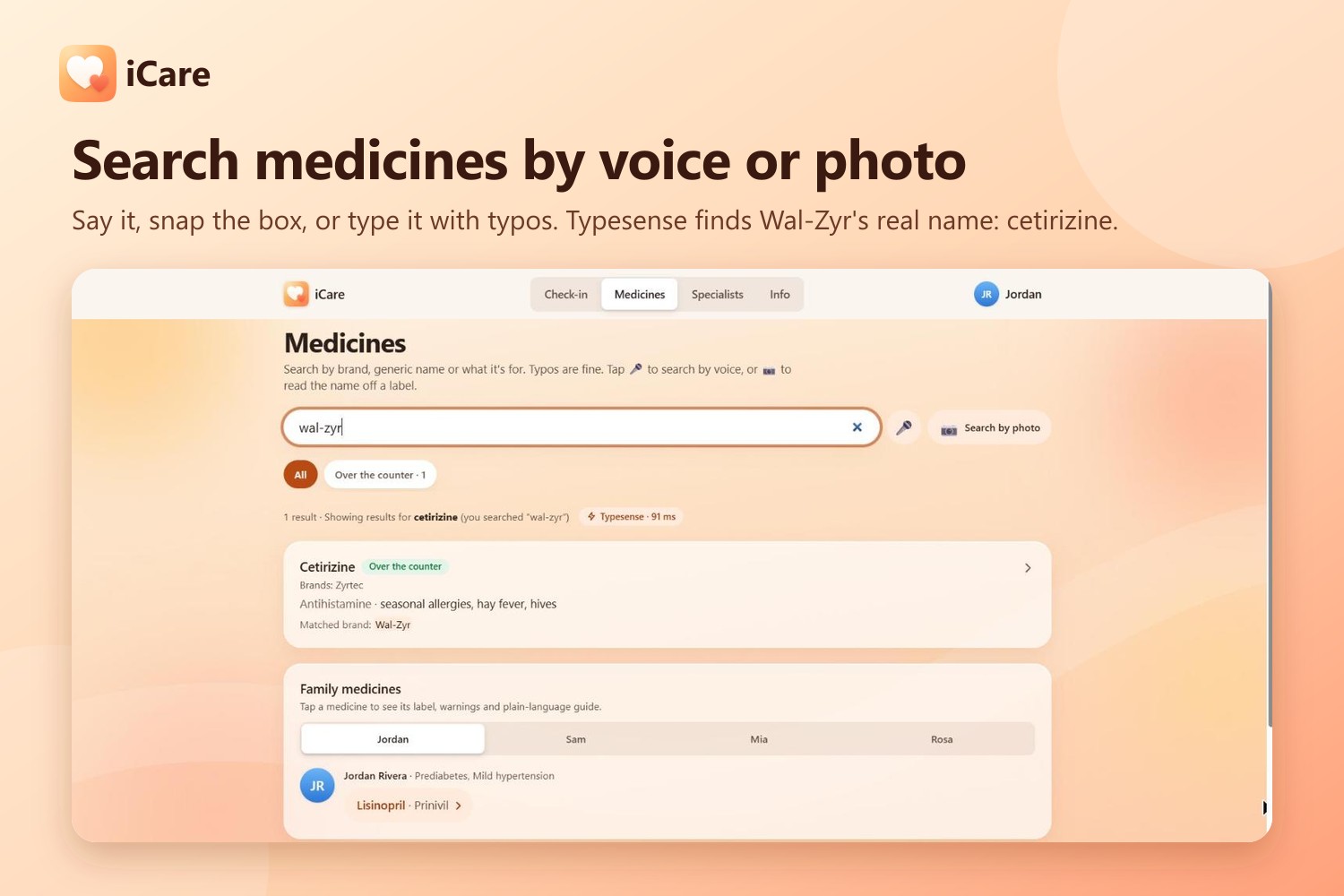
Medicine search by voice or photo: Typesense matches 'Wal-Zyr' to cetirizine, typos and all.
-
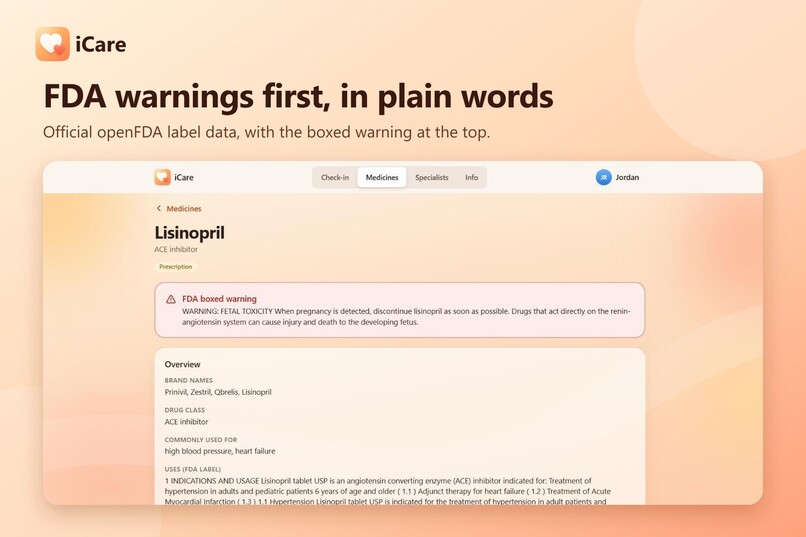
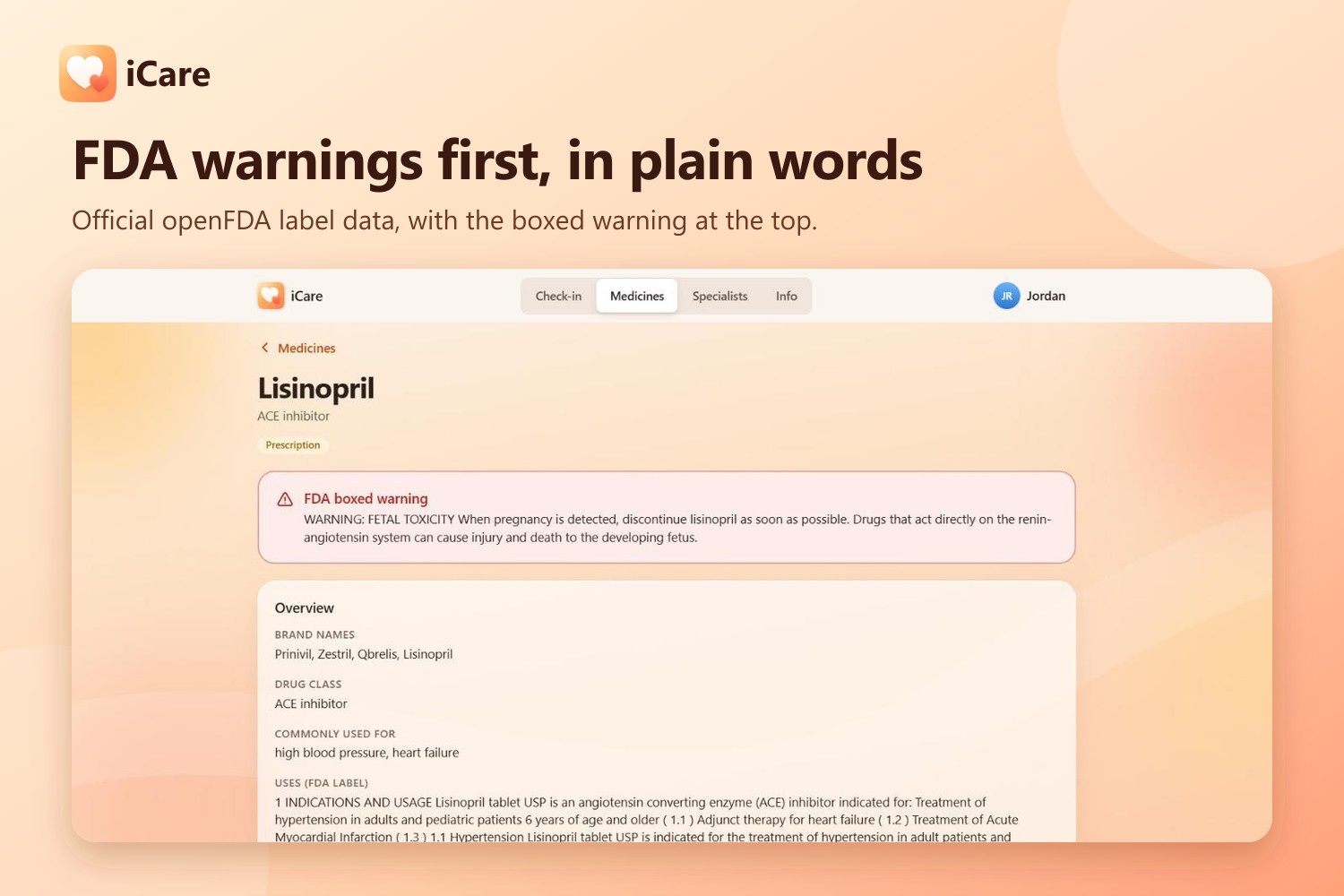
Medicine pages put the FDA boxed warning first, in plain words (openFDA).
-
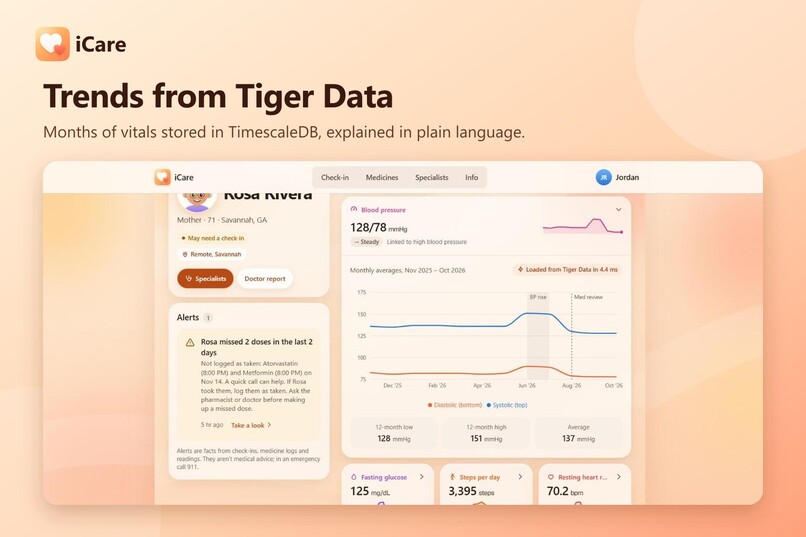
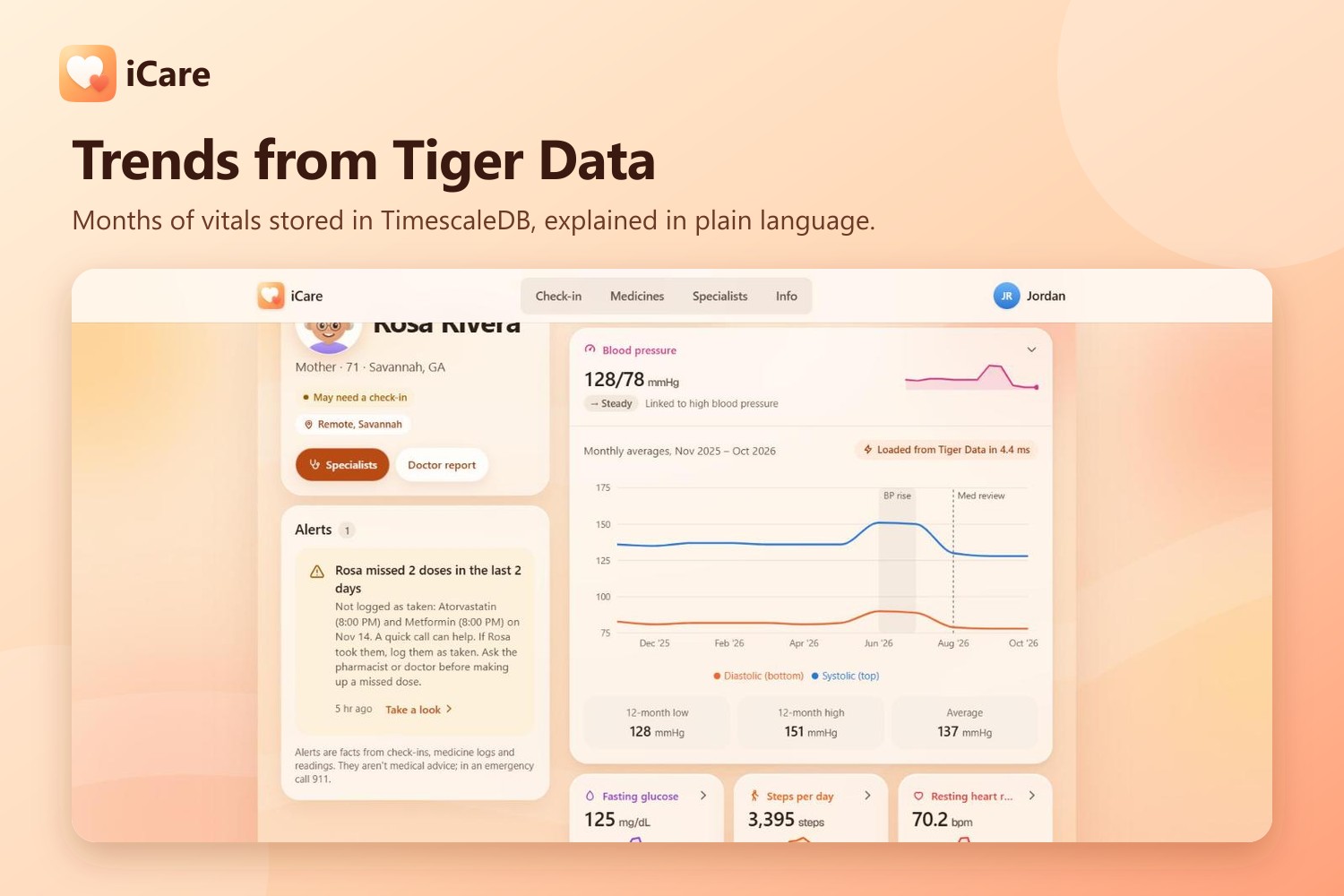
Blood pressure and glucose trends stored in Tiger Data (TimescaleDB), explained simply.
-
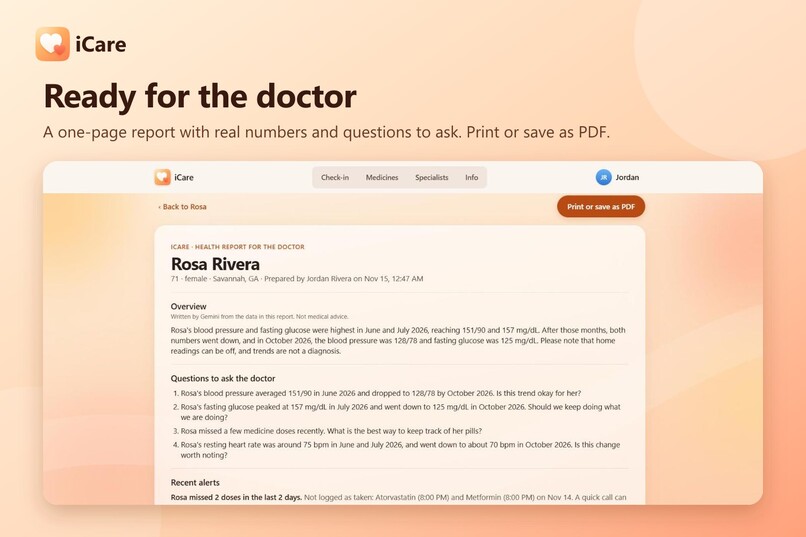
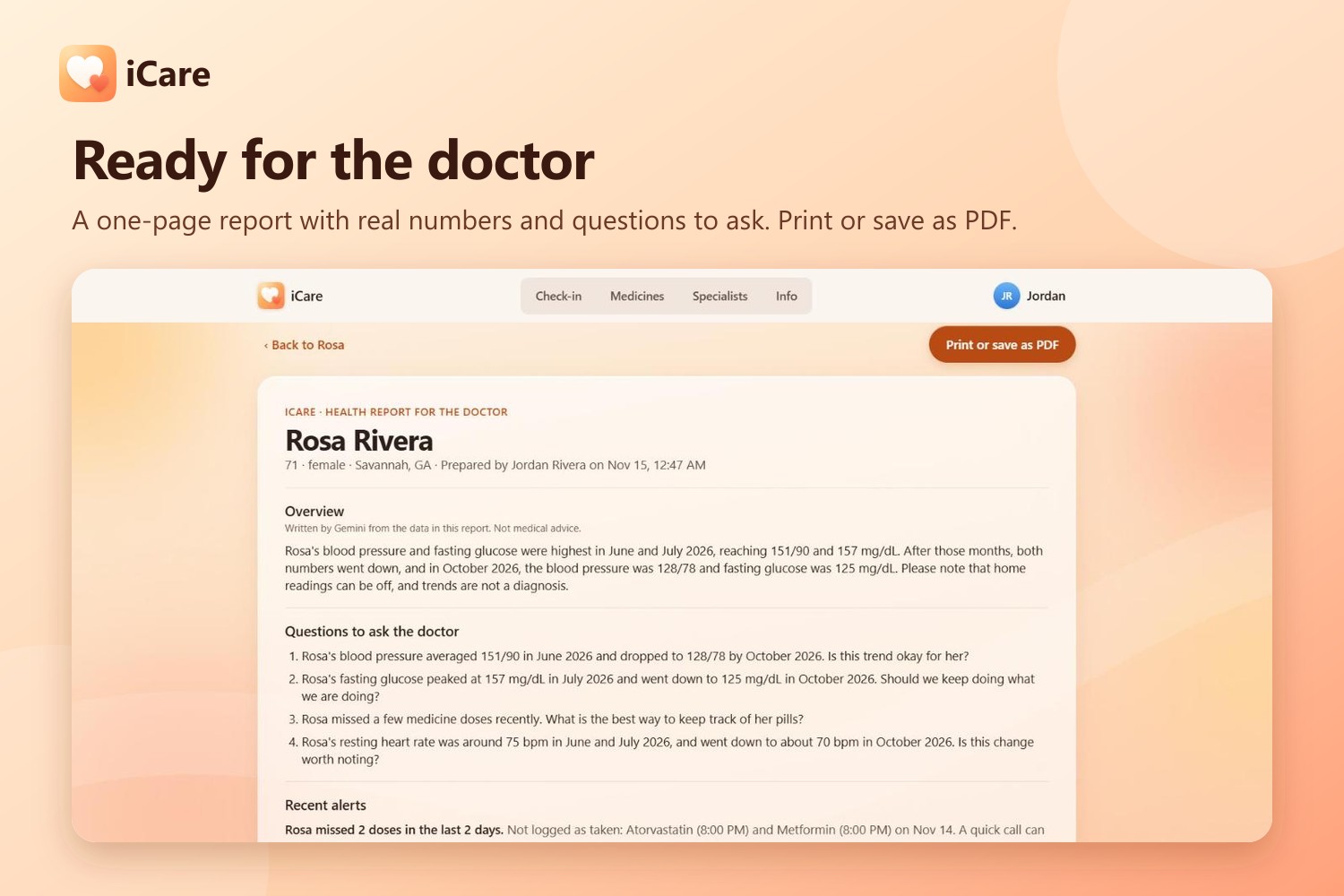
Doctor report: real numbers and questions to ask, ready to print or save as PDF.
-
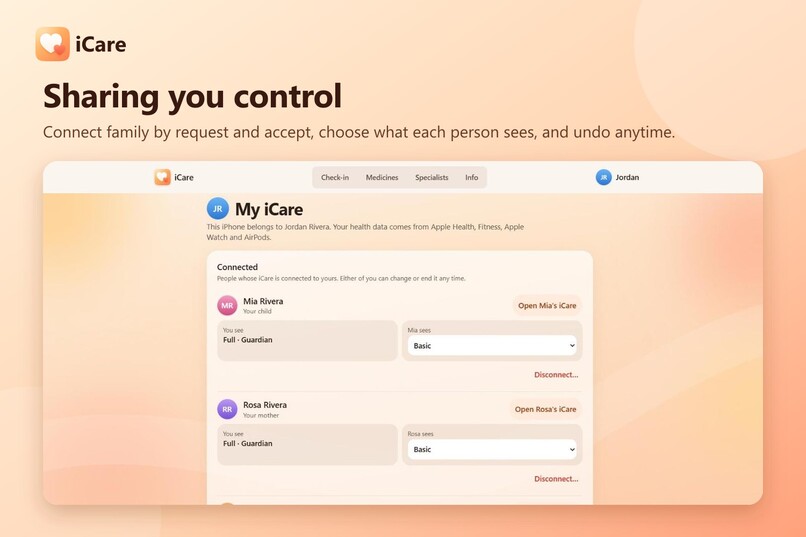
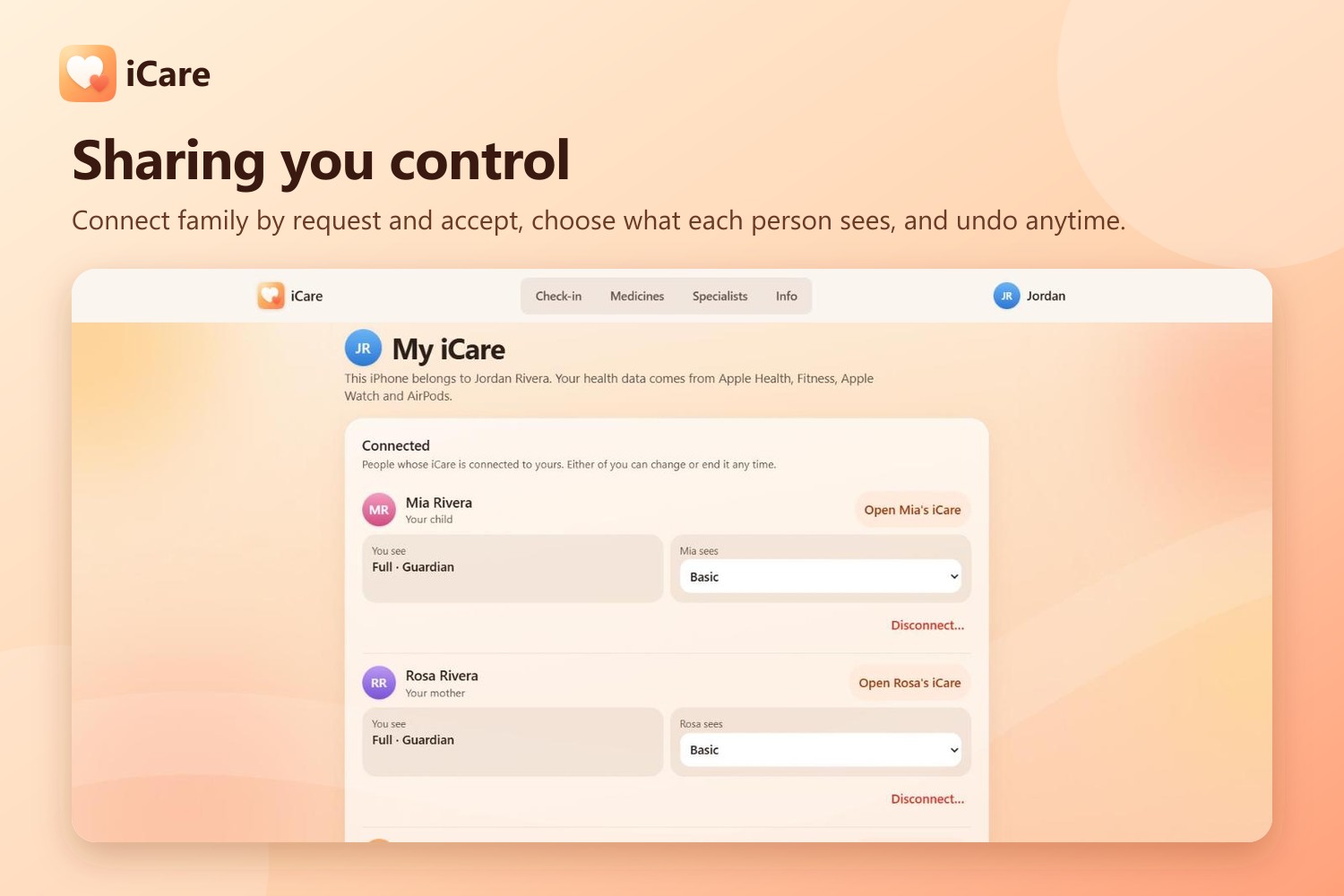
Sharing by request and accept, with per-person access you can change or undo anytime.
Inspiration
Health information is everywhere, but it's scattered and hard to act on. Your watch counts steps and heart rate, your parents' medications live on a pill bottle in another city, and drug labels are written for pharmacists, not families. When something changes, like a parent's blood pressure creeping up, nobody notices until it becomes a problem.
We wanted one place where a family can see its health over time, understand it in plain language, and know who to talk to next.
What it does
iCare is a family telehealth companion. Our demo follows the Rivera family, a fictional family with a full year of realistic, Apple Watch-style health data.
- Family health dashboard: every family member's latest month at a glance (steps, resting heart rate, sleep, blood pressure, glucose), compared with the month before. Small month-to-month noise shows as "steady" so nobody gets alarmed by nothing.
- 12-month trends with the story marked on the chart: Grandma Rosa lives in Savannah; her blood pressure jumped to 151/90 over the summer (missed doses) and came back down after a medication review in August. Jordan's blood pressure fell from 138/88 to 126/81 after he started walking.
- Zoom into any day: hour-by-hour heart rate and steps, rolled up from minute-by-minute readings: Sam's 6 PM run, Rosa's morning walk, Jordan's flu week.
- Medicine information from the FDA: brand names, generics and typos resolve to the right drug through RxNorm (a store brand like "Wal-Zyr" finds cetirizine), with the official FDA label, boxed warnings first, a plain-language MedlinePlus guide, and a one-tap Gemini explanation of the label that uses only the label's own text.
- AI wellness check-in: a friendly Gemini check-in asks one question at a time (sleep, energy, pain, mood, medications, new symptoms) using that person's own data, and ends with a short summary and a suggested next step, like "mention the missed doses to your doctor." Emergency phrases such as chest pain or trouble breathing get an immediate 911/988 message before the AI is even called.
- Check in over FaceTime: Grandma Rosa doesn't need an app. She can FaceTime iCare from her iPhone and the same check-in answers by voice, with an animated heart, powered by Chert and Gemini Live. Tap Start FaceTime call on the check-in page, and when the call ends a short summary (never the transcript) is saved to that person's check-in history.
- Plain-language health summaries: Gemini turns a month or a whole year of Tiger Data trends into a short report: what changed, what to ask your doctor, and encouragement. For Rosa it explains her summer blood pressure spike and her recovery after the medication review.
- Real specialists nearby: each condition maps to the right kind of specialist, and iCare finds real, licensed doctors near that family member from the national NPI Registry.
- Family sharing, like Apple Family Sharing but per person: iCare is built as an iPhone app, so the phone is the identity: no sign-in, nothing expires. Family members connect by request and accept and choose what each other sees: Full, Health summary or Basic ("doing okay" plus important alerts), with guardians for kids and aging parents. The dashboard only shows people you're connected to, and the server checks every request.
- Medication reminders and dose tracking: each person's schedule from their prescription label, a one-tap Taken button and a 7-day history. Guardians can log doses for a parent or child. Rosa's card shows she missed her evening pills twice this week. iCare never suggests doses.
- Family alerts: missed doses, blood pressure running high and, most important, a check-in (including a FaceTime call) where someone mentioned emergency symptoms. Each person sees only the detail their sharing level allows; a Basic connection just gets "Rosa may need help. Consider calling her."
- Doctor report: a one-page report to print or save as PDF before a visit, with conditions, medicines, doses taken over 30 days, a year of monthly averages, recent check-ins and alerts, plus Gemini's overview and questions to ask the doctor, written only from the numbers in the report.
- Search by photo: photograph a medicine box or bottle label and Gemini reads only the printed drug name, then the normal search runs. It refuses to identify loose pills by how they look, and the photo is never stored.
- Installable app: add iCare to the iPhone home screen and it opens like an app, with an offline screen. Health data is never cached on the device.
- Works on Apple Watch: glance at the family (whoever needs a look comes first), tap a person for their alerts and next medicine, and start the AI check-in with a FaceTime audio call from your wrist. We tested it on a real Apple Watch: the call reached our Chert agent and the summary saved to Tiger Data. Shareable views: /iphone and /apple-watch.
iCare never diagnoses. It explains, tracks and points you to a professional, and every screen says it's not medical advice.
How we built it
- Next.js + TypeScript + Tailwind, deployed on Vercel, with an iOS-style responsive design and Recharts for charts.
- Tiger Data (TimescaleDB) is our only database. It holds relational family profiles and high-frequency metric streams side by side:
- a hypertable of 2.1 million minute-by-minute heart-rate and step readings, in 7-day chunks
- 3 continuous aggregates (hourly, daily, monthly) that power every chart, so the dashboard reads pre-computed rows instead of millions of raw ones
- compression: 212.3 MB down to 6.2 MB (97% smaller)
- every chart shows how fast Tiger answered: 2-4 ms on the live site, and a live speed test shows a year of daily heart rate in ~3 ms from the continuous aggregate vs ~22 ms from raw data
- Five free public health databases, no patient data: openFDA (drug labels), RxNorm, MedlinePlus Connect and Clinical Tables (U.S. National Library of Medicine), and the NPI Registry (CMS).
- Typesense indexes our medicine list enriched with every RxNorm brand name and the FDA "uses" text for fast, typo-tolerant search.
- Google Gemini (gemini-3.5-flash-lite) powers the check-in chat, the monthly and yearly summaries and the label explanations, all behind one shared set of safety rules: plain language, no diagnoses, no medication or dose advice, and an emergency check that runs before any AI call.
- Chert + LiveKit Agents + Gemini Live power a FaceTime check-in agent: call iCare from an iPhone and the same check-in answers with an animated glowing heart and a natural Gemini voice, using the caller's own health data. Every sentence the caller says goes through the same emergency check.
- How our team worked: all four of us coded with Claude Code inside Coder workspaces. Every workspace was identical and came with Git, Node and Claude Code ready, so a teammate went from a browser tab to a working environment with one setup script. Every change went through a pull request on a protected main branch, with Vercel preview links for review.
Challenges we ran into
- Medical data without patient data. Real health records are off-limits, so we generated a fictional family whose year contains realistic, explainable stories, and paired it with public reference databases that describe drugs, conditions and doctors rather than people.
- Messy public data. The NPI Registry matches a city on any address, including mailing PO boxes, so we filter to where doctors actually practice. openFDA returns many labels per drug, so we deduplicate them.
- Secure database connections. A brand-new Tiger Cloud service briefly serves a certificate from Timescale's own authority before switching to a public one. Instead of turning verification off, we trust exactly that authority plus the public ones.
- Time zones. Daylight saving time shifted our hourly charts by an hour until we bucketed everything on a fixed offset.
Accomplishments that we're proud of
- A full year of minute-by-minute vitals for a whole family (2.1M readings) in 6.2 MB, with every chart answering in a few milliseconds.
- Five public health databases working together behind one simple app.
Safety built in from the start: no real patient data, FDA warnings shown prominently, and "not medical advice" everywhere.
Privacy by design: every health route checks who is asking and what that person shares with them, so new features (reminders, alerts, reports) got privacy almost for free.
Search by photo that refuses to guess a loose pill from how it looks: Gemini only copies the printed name, and the server enforces it.
A doctor report where the numbers that matter (like the highest blood pressure month) are worked out in code and handed to Gemini, so the AI can't mix up months.
What we learned
- How much useful, free health data the U.S. government publishes, and how much cleanup it takes to make it family-friendly.
- How time-series databases make "how has this changed over the year?" questions fast and simple.
How much faster a team moves when every environment is identical and an AI coding agent knows the project's rules.
AI is most accurate when code does the math: giving Gemini precomputed changes and peak months fixed mistakes that prompting alone didn't.
Real-time voice is unforgiving: a FaceTime agent has seconds to speak, and background noise or a speakerphone can cut it off, so we tuned and tested it on real calls.
What's next for iCare
- Smarter, more human AI conversations: we plan to build on conversational AI research tools from Professor Jinho Choi (Emory NLP) to make iCare's check-ins feel more natural: remembering context across calls, asking better follow-up questions, and noticing when someone needs more support.
- Mental health, for a whole-person view of health: regular mood, stress and sleep check-ins alongside physical health, trends that show when someone has been struggling for a while, gentle encouragement to reach out, and a direct path to the 988 Suicide & Crisis Lifeline and to a clinician. iCare would support, never diagnose or replace therapy.
- Prevention for common conditions, using Apple's health data: condition-specific features that turn data people already collect into early warnings:
- Asthma: combine respiratory rate, blood oxygen, sleep and activity from Apple Watch with local air quality and pollen, and logged inhaler use, to flag tough days before they turn into attacks.
- Diabetes: connect glucose readings from glucose monitors that write to Apple Health, and show how meals, activity and sleep relate to highs and lows, with reminders for regular lab checks like A1C.
- High blood pressure and heart health: readings from connected blood-pressure cuffs, plus Apple Watch heart notifications, to spot a rise like Rosa's summer spike weeks earlier.
- Native iOS app with live Apple HealthKit: real data from Apple Health and Apple Watch replaces our sample data, and the iPhone stays the identity, with no sign-in.
- Real reminders on iPhone and Apple Watch: medicine reminders as notifications, a "Taken" tap from the watch, and a nudge to a guardian when a dose is missed.
- Apple Watch safety signals in family alerts: with permission, fall detection, irregular rhythm and high or low heart rate notifications flow into family alerts, at the detail each person's sharing level allows.
- FaceTime check-ins that know who's calling: a call from a family member's own iPhone arrives already linked to them, with no "who's calling?", and the next check-in follows up on last time, using summaries only.
- Closing the loop with clinicians: send the doctor report to the clinic through a secure link that expires, clinician review of AI summaries, and real records from patient portals through standard health-data connections (FHIR).
- Booking and refills: request appointments with suggested specialists (with in-network filters), and refill reminders when a prescription is running low.
- Built for every generation: Spanish and more languages, simpler reading levels, and a voice-first, large-text mode for grandparents like Rosa.
- Privacy you can see: each person can see their own activity log ("who looked at my health and when"), with healthcare-grade security and encrypted check-in summaries.
- Testing with real families: a pilot with families and caregivers, and clinicians reviewing our safety rules before anyone relies on iCare.
Not medical advice. All patient data in iCare is fictional.
Built With
- apple-watch
- chert
- claude-code
- coder
- gemini
- gemini-live
- livekit
- medlineplus
- next.js
- npi-registry
- openfda
- postgresql
- pwa
- react
- recharts
- rxnorm
- tailwindcss
- tiger-data
- timescaledb
- typescript
- typesense
- vercel

