-
-
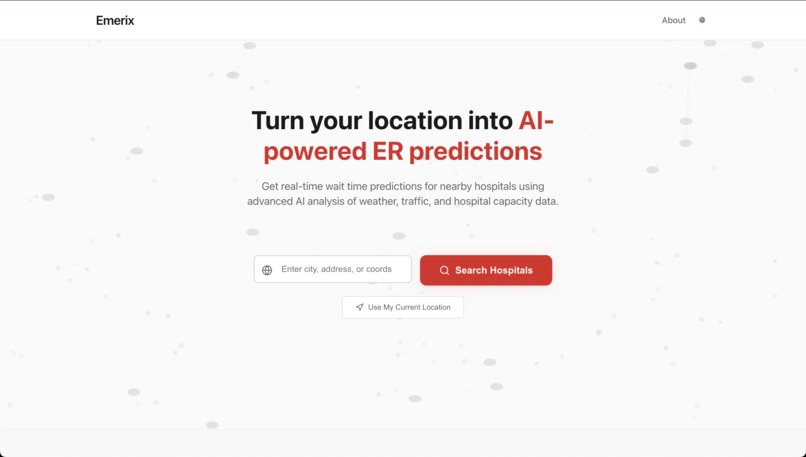
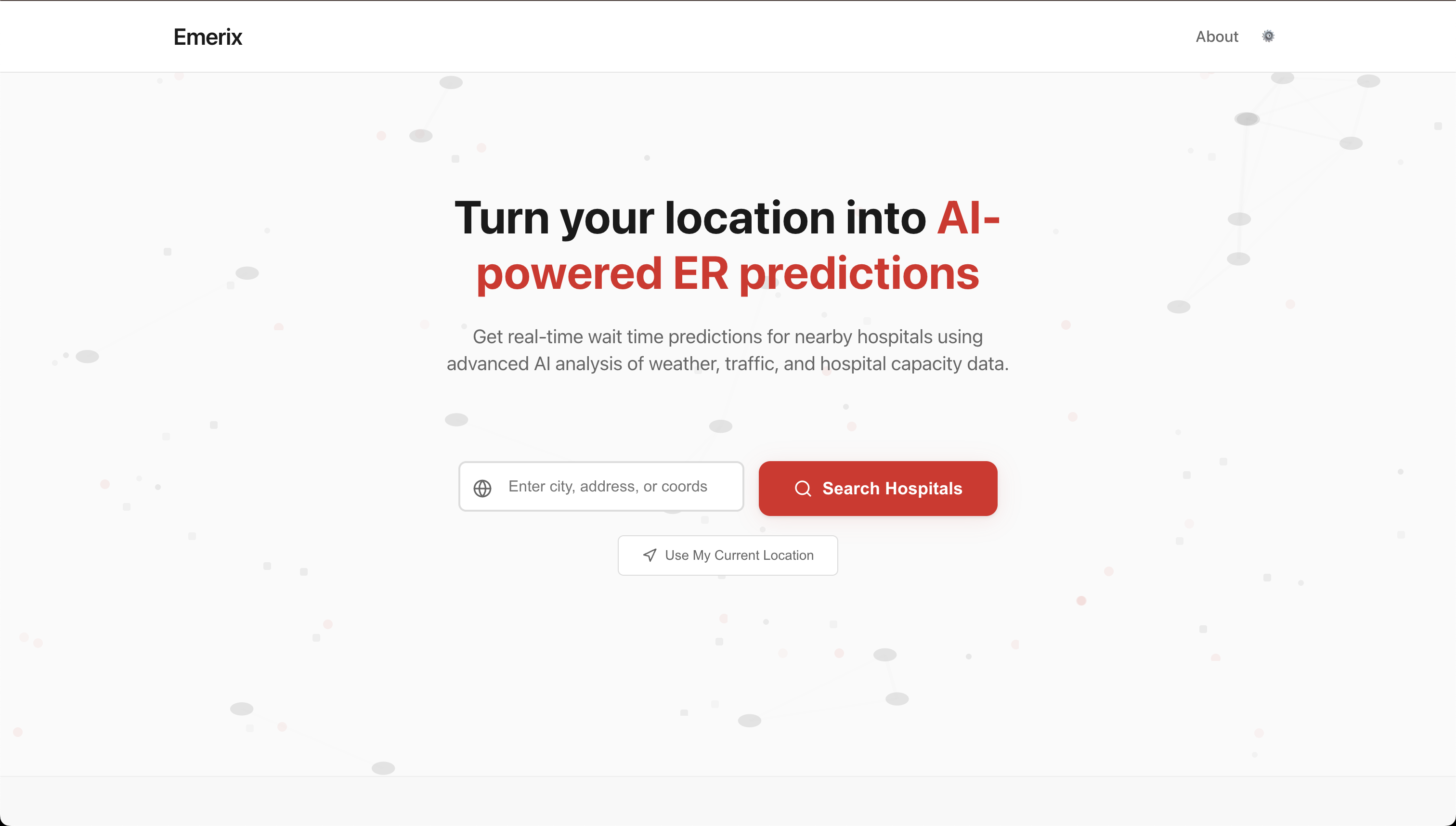
Home Page
-
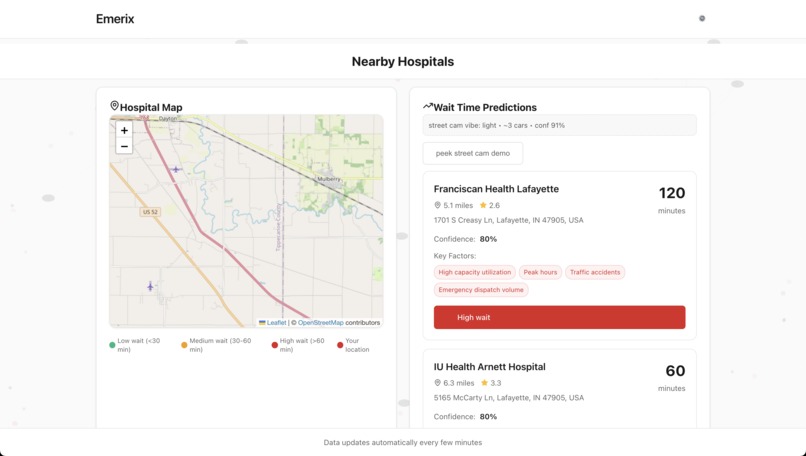
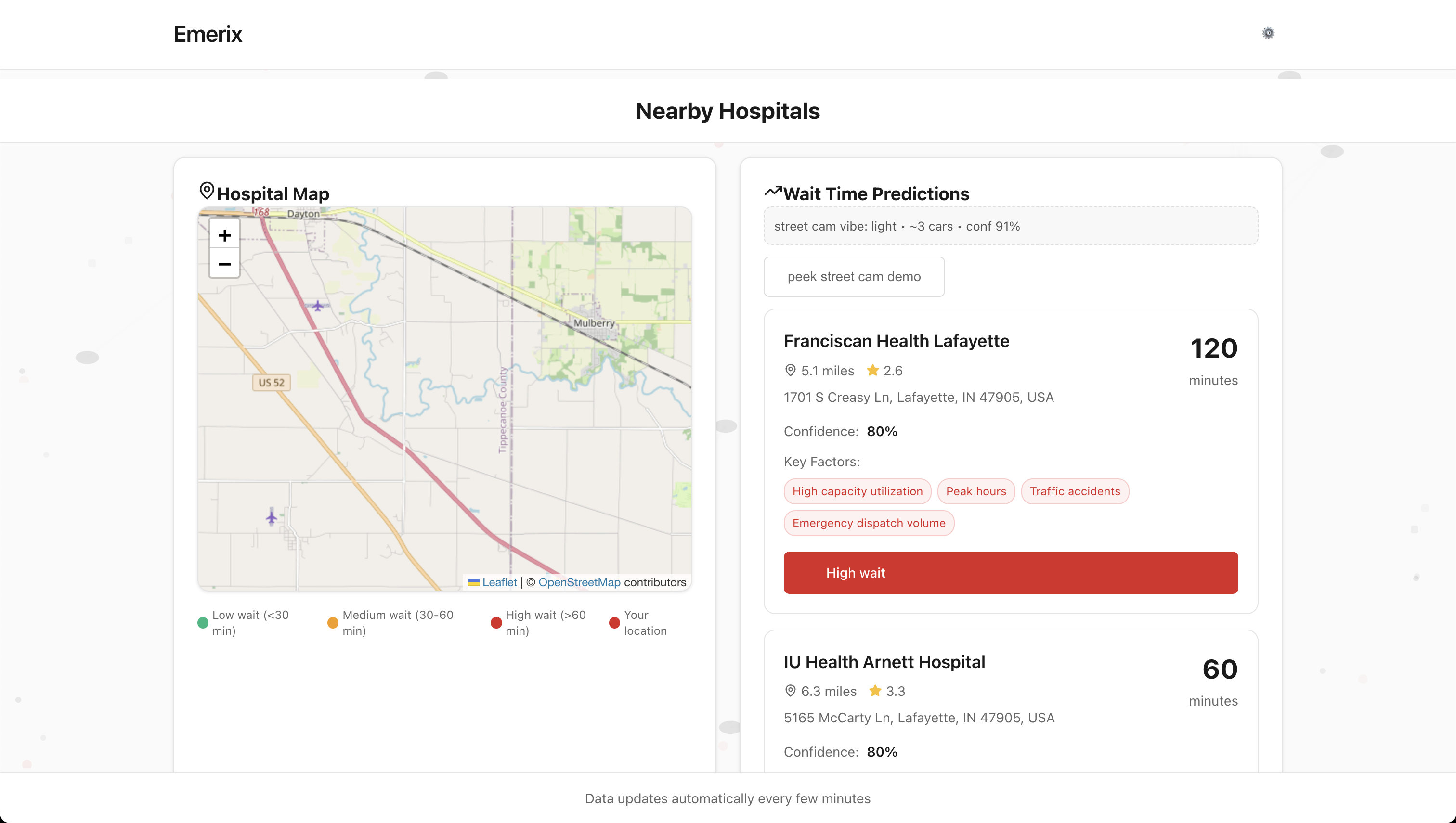
Results Page
Inspiration
ER visits are stressful and unpredictable. Even though its an emergency room, the treatment might not be urgent enough to save someone. We wanted to make a simple tool that answers “Where should I go right now?” in seconds.
What it does
Finds nearby hospitals based on your location and shows predicted ER wait times (low/medium/high) with confidence. Uses Weather data(heart attacks are more prevalent in certain weathers, ex rain), Traffic data, News sentiment, and Seasonal Analysis to predict Visual map + cards view with distance, ratings, and quick context. Optional “street cam demo” button that simulates traffic cam vibes near the ER for extra signal Lightweight, clean UI designed to be usable in stressful moments.
How we built it
Frontend: React with a minimal, fast UI Backend: Python/Flask with on demand prediction flow to save tokens and speed up results. Data: Google Places for hospital discovery. Open-Meteo for weather Traffic signal proxy via our “street cam demo” stub AI: Anthropic Claude for combining signals (weather, time, location context) into a wait time estimate. Realtime map powered by Leaflet, with custom markers and compact popups.
Challenges we ran into
Balancing accuracy vs. token usage: solved with on demand AI calls at search time instead of background polling. Inconsistent public data for ER wait times: we engineered a context prompt and added a traffic cam demo to showcase future directions. Performance: early animations looked great but caused weird optimized effects and simplified layers without losing the nice look to the website
Accomplishments that we're proud of
It's already production ready, you can type location and see real hospitals + predictions quickly. Clean, nice color theme, UX with beautiful, but calm visuals. A credible street cam vision concept heavy CV infrastructure.
What we learned
Users care more about what they see than raw model output things like “Low/Medium/High wait” with confidence beats long paragraphs that no one wants to read. The last 10% of polish (sticky map, centered actions, visual calm) dramatically changes perceived quality. Working in a team for 24 hours straight brought us together and made us a lot closer as friends
What's next for Emerix
Real traffic camera ingestion pipeline (city open feeds) with lightweight CV for vehicle counts and flow speed.(to analyze volume of vehicles in the hospital) Hospital capacity partnerships to incorporate live queue data when available.(makes it a lot easier to estimate wait times) Push alerts: inform the user that this hospital has better wait times, it could potentially save their life if their on the way to a hospital with more wait time “Wait times dropped near you, go now.” Multi signal scoring: layer weather anomalies, event calendars, and historical patterns for smarter forecasts.

Log in or sign up for Devpost to join the conversation.