


Inspiration
In emergency situations, every second matters. In Senegal and across many developing countries, first responders often lack access to realistic, repeatable, and safe training environments. Traditional methods like mannequins are useful, but they are not immersive, interactive, or scalable.
This project was born from a strong desire to equip first responders with modern training tools, using Artificial Intelligence (AI) and Virtual Reality (VR) to simulate high-stress environments without putting real lives at risk.
What it does
EMERGIA VR is a dual-platform solution:
A web-based platform powered by AI that enables theoretical training through medical chatbots and intelligent quizzes.
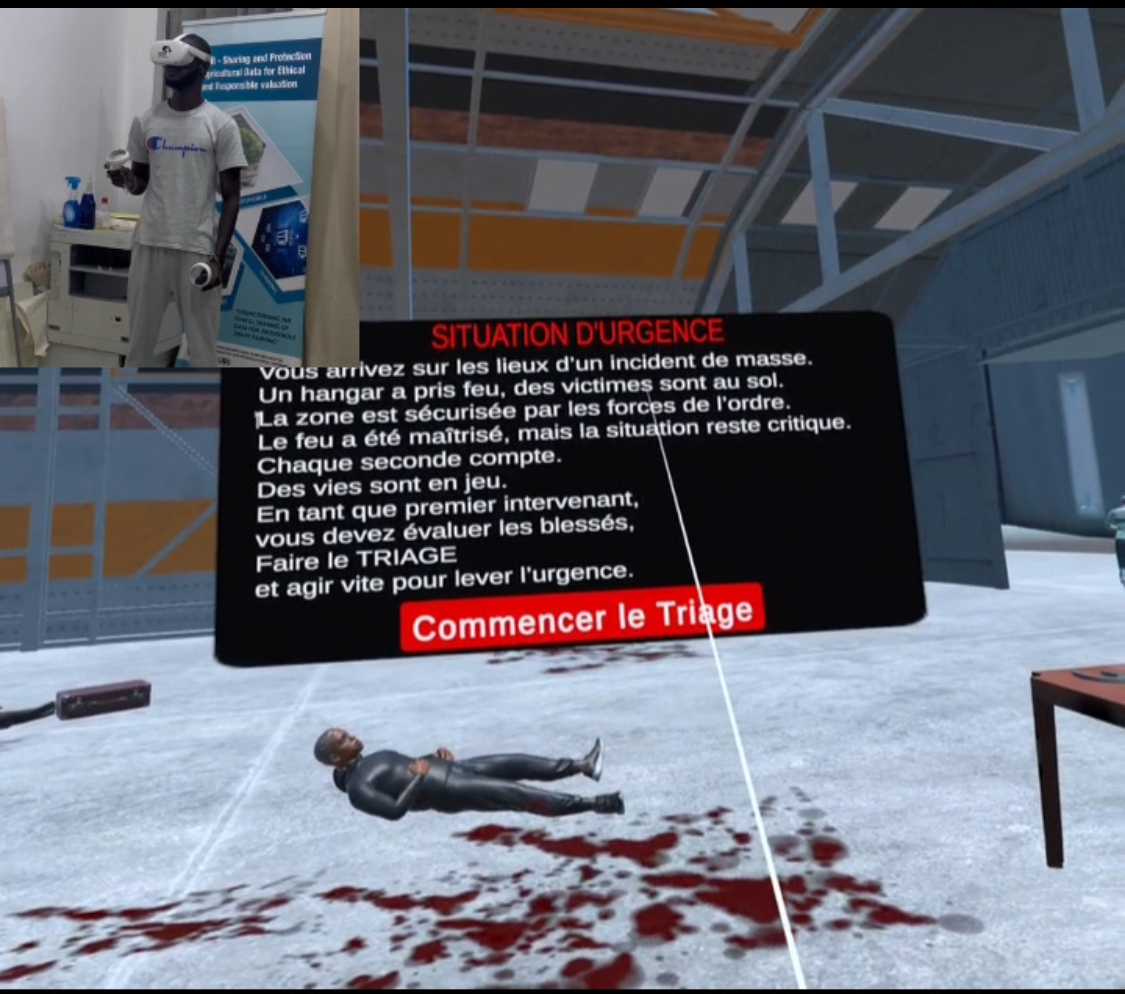
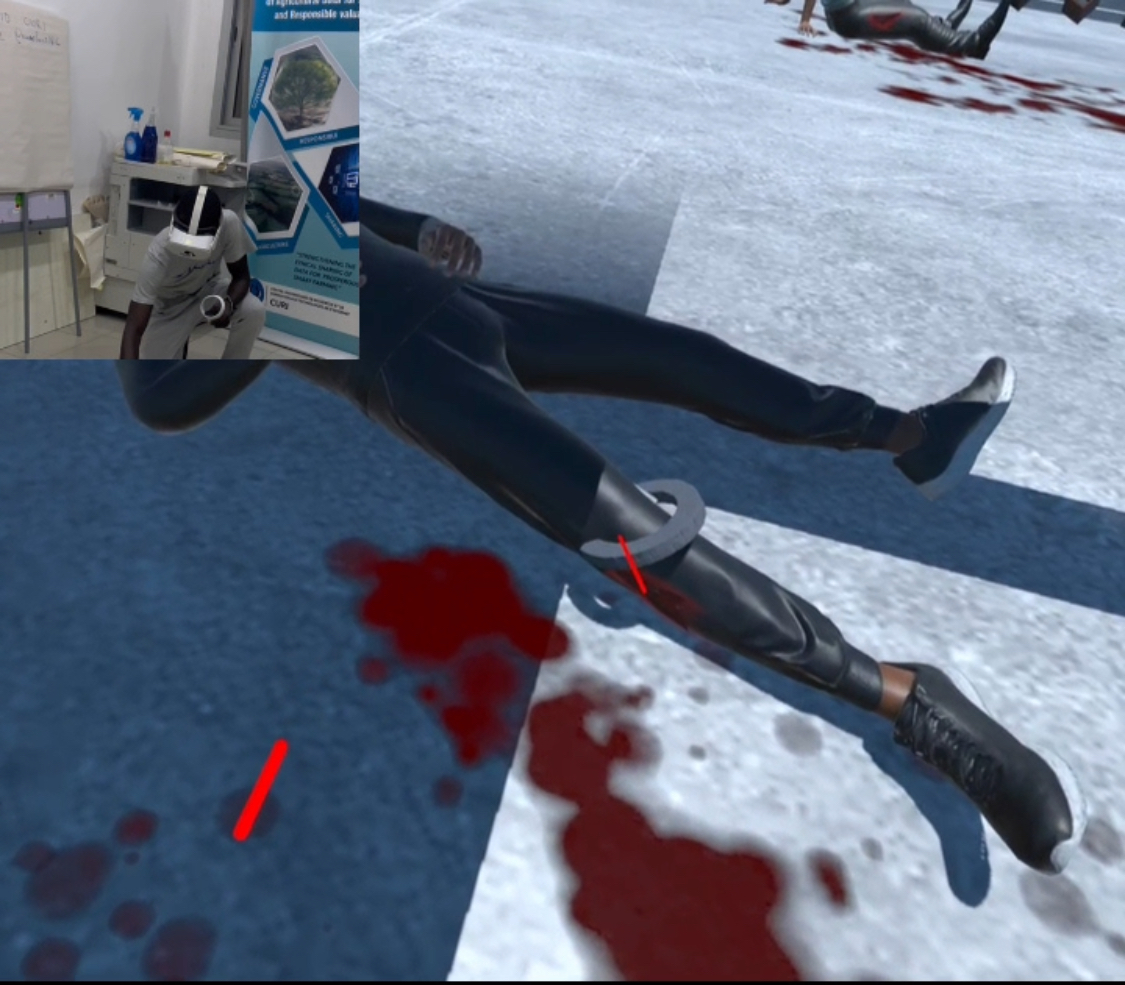
An immersive VR simulation that places the trainee in the heart of a mass-casualty scenario, where they must triage victims, apply emergency techniques, and make real-time decisions.
It combines learning, practice, and evaluation into one seamless experience.
How we built it
As an engineer in Artificial Intelligence & Big Data at the École Supérieure Polytechnique of Dakar (UCAD), I built: • The web interface using React, Vite, Flask (Python), and MySQL. • The AI components using LangChain, ChromaDB, Gemini Flash, and BLIP for multimodal reasoning (image + question). • The VR experience using Unity 2022, with 3D models (Blender, Mixamo), interaction logic (XR Toolkit), and realistic environments.
Challenges we ran into
• Creating realistic injury textures and interactions for VR without overwhelming hardware constraints.
• Handling multimodal inputs (text + image) and retrieving accurate medical answers using RAG (Retrieval-Augmented Generation).
• Ensuring smooth coordination between AI reasoning and real-time user interface response under 3 seconds.
• Managing dual data sources: relational (MySQL) and vector-based (ChromaDB).
Accomplishments that we’re proud of
• We successfully delivered a fully functional AI-powered chatbot capable of answering emergency care questions using verified protocols.
• We built an immersive VR triage mission that mimics real-life urgency and chaos.
• Collaborated with professionals from the National SAMU and local medical experts to ensure realism and relevance.
• Ensured accessibility using standalone VR headsets (Meta Quest 2) with hand-tracking.
What we learned
• The triage process is not random  it’s a structured, skill-based protocol.
• Traditional mannequin-based training is valuable, but it lacks feedback, interactivity, and immersion.
• We gained hands-on experience with VR development, semantic search with vector databases, and chatbot fine-tuning.
• Above all, we learned that training emergency responders is not just about knowledge  it’s about preparing the mind for chaos.
What’s next for EMERGIA VR – Emergency Intervention Training with AI & VR
• Partnering with SAMU, fire brigades, NGOs, and emergency medical services to deploy the solution at scale.
• Adding multiplayer simulations for team-based missions.
• Expanding the AI modules to cover other domains of prehospital care

Log in or sign up for Devpost to join the conversation.