-
-
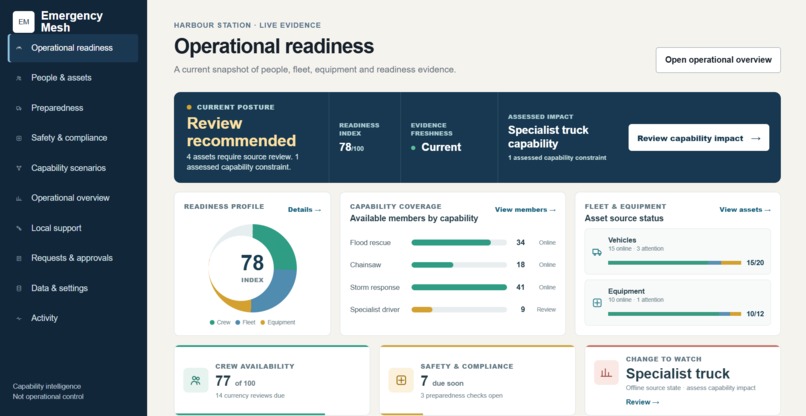
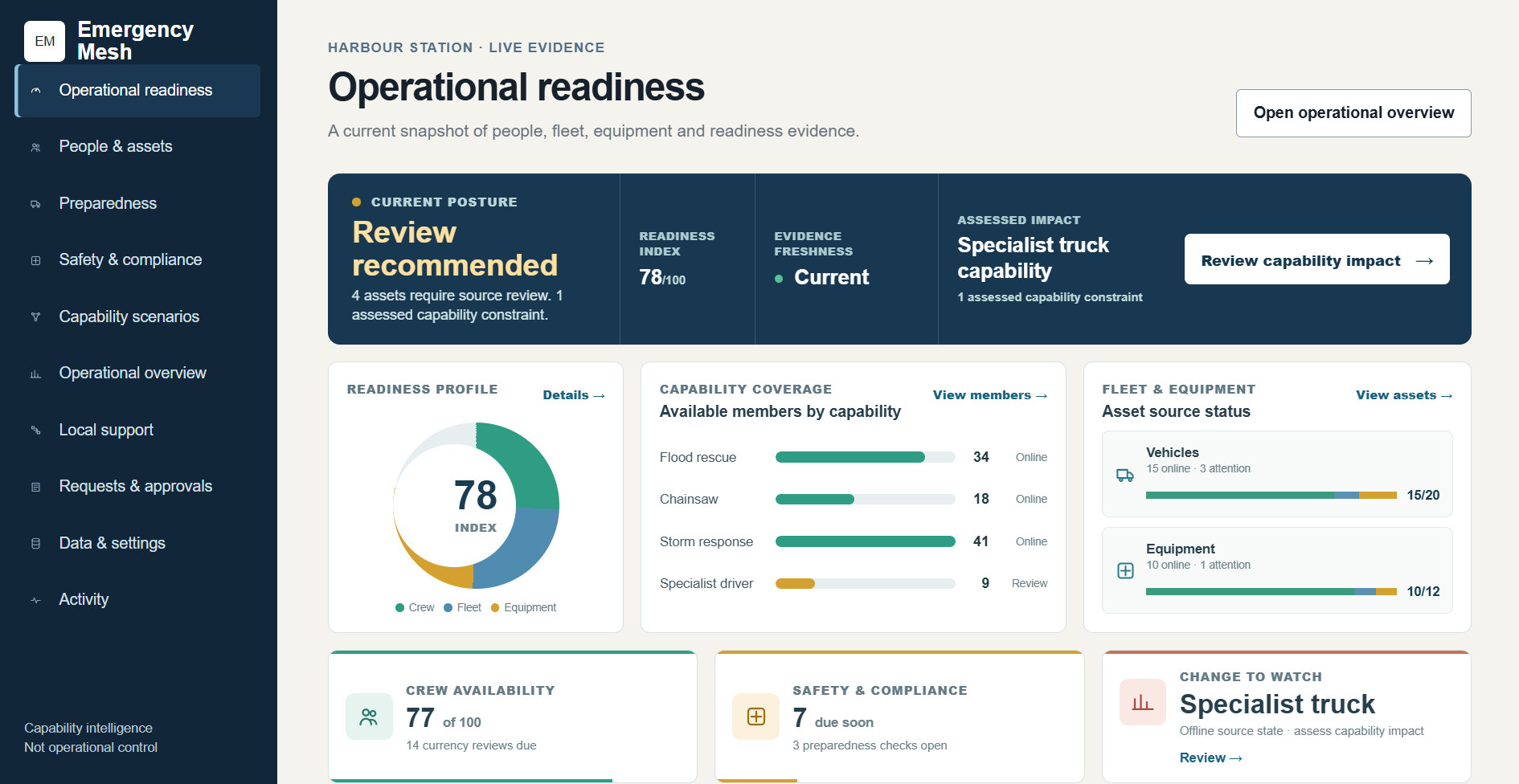
Hero / Operational readiness — overall capability status and key evidence.
-
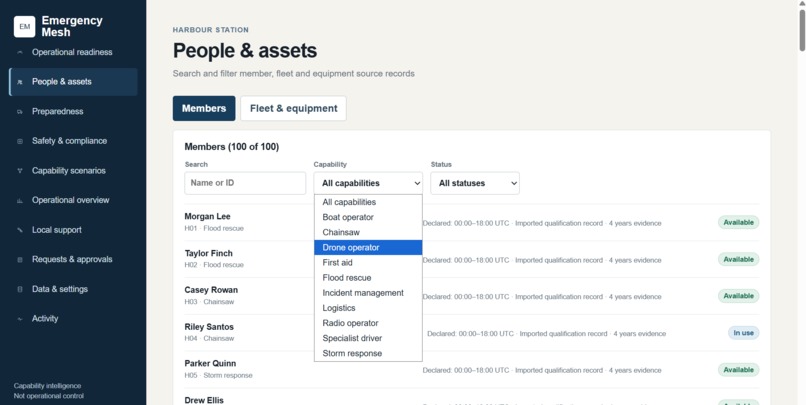
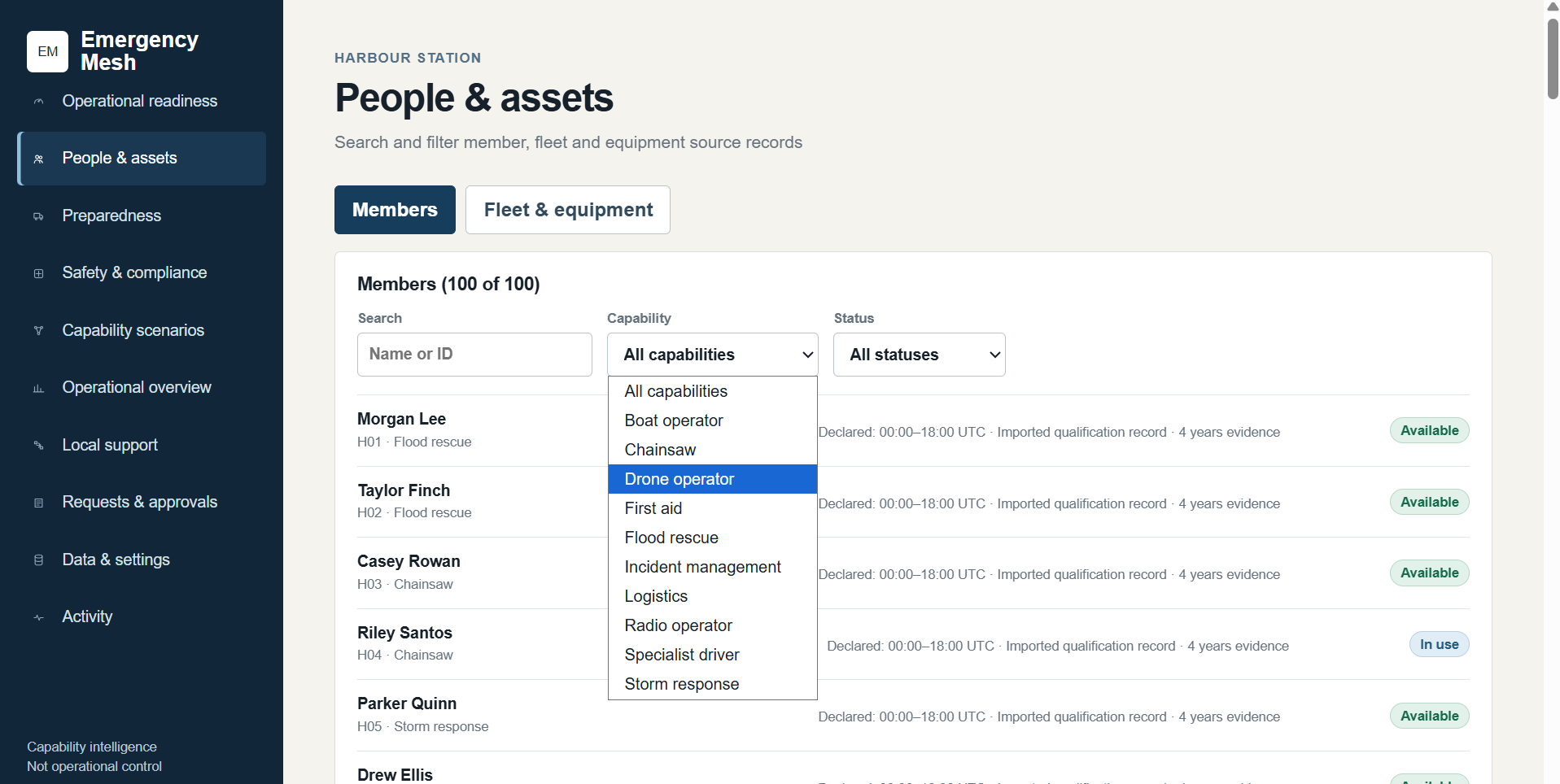
People & assets — show the unified resource view.
-
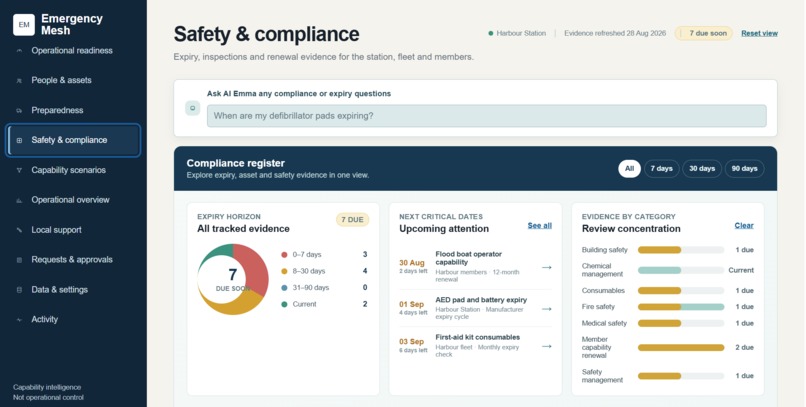
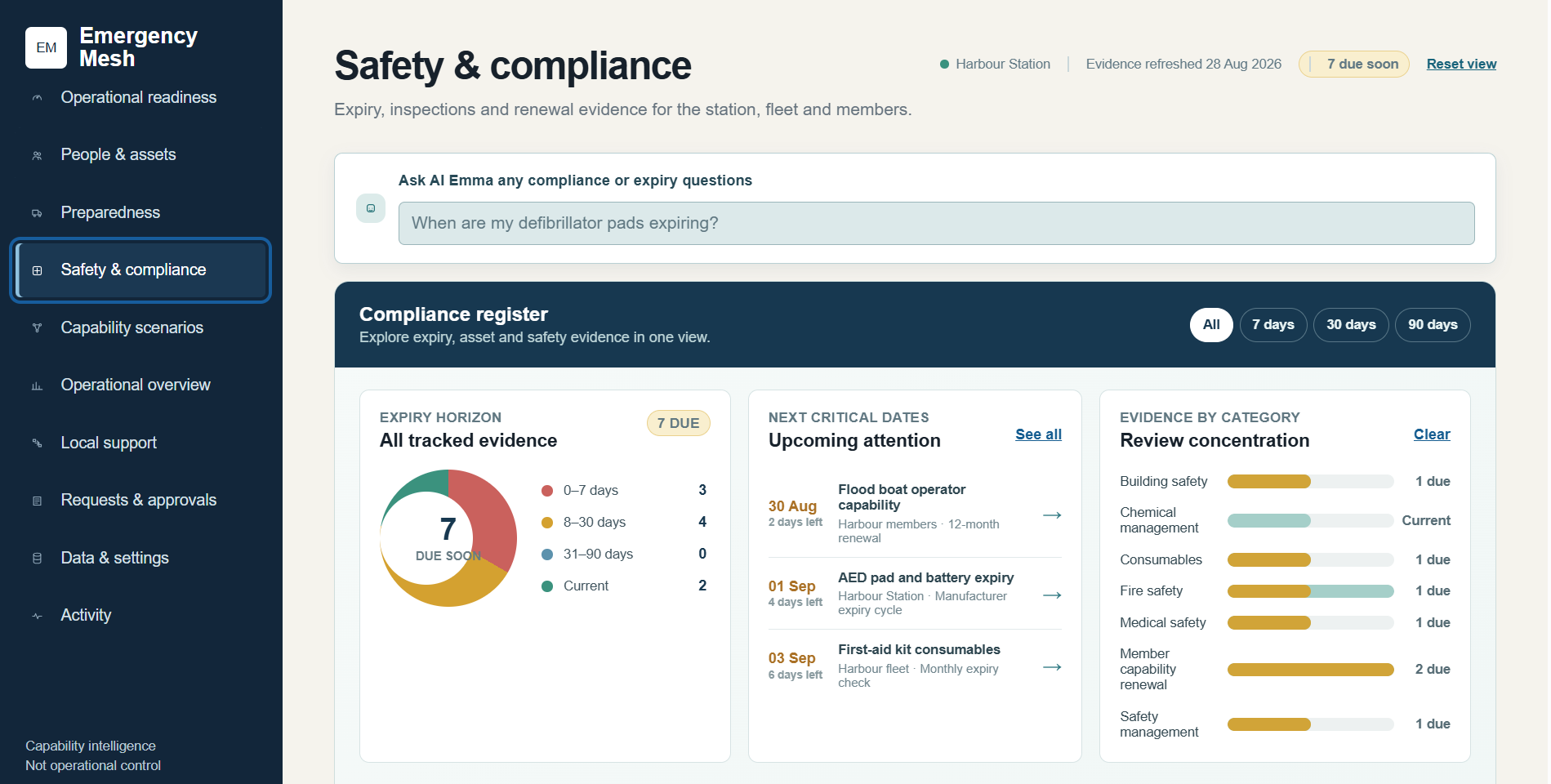
Safety & Compliance — view status and expiry of mission critical safety
-
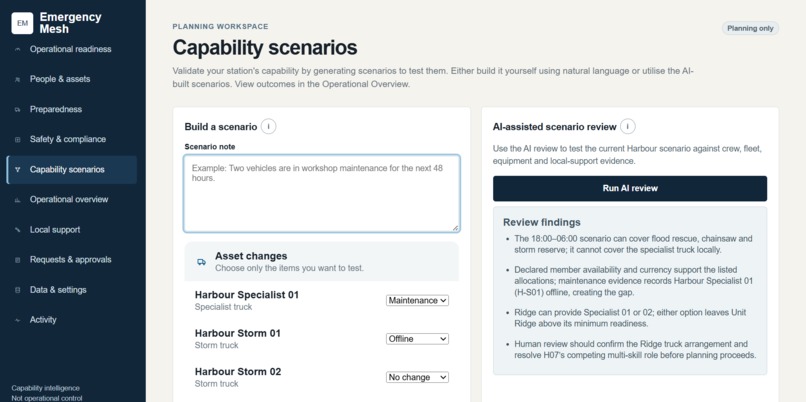
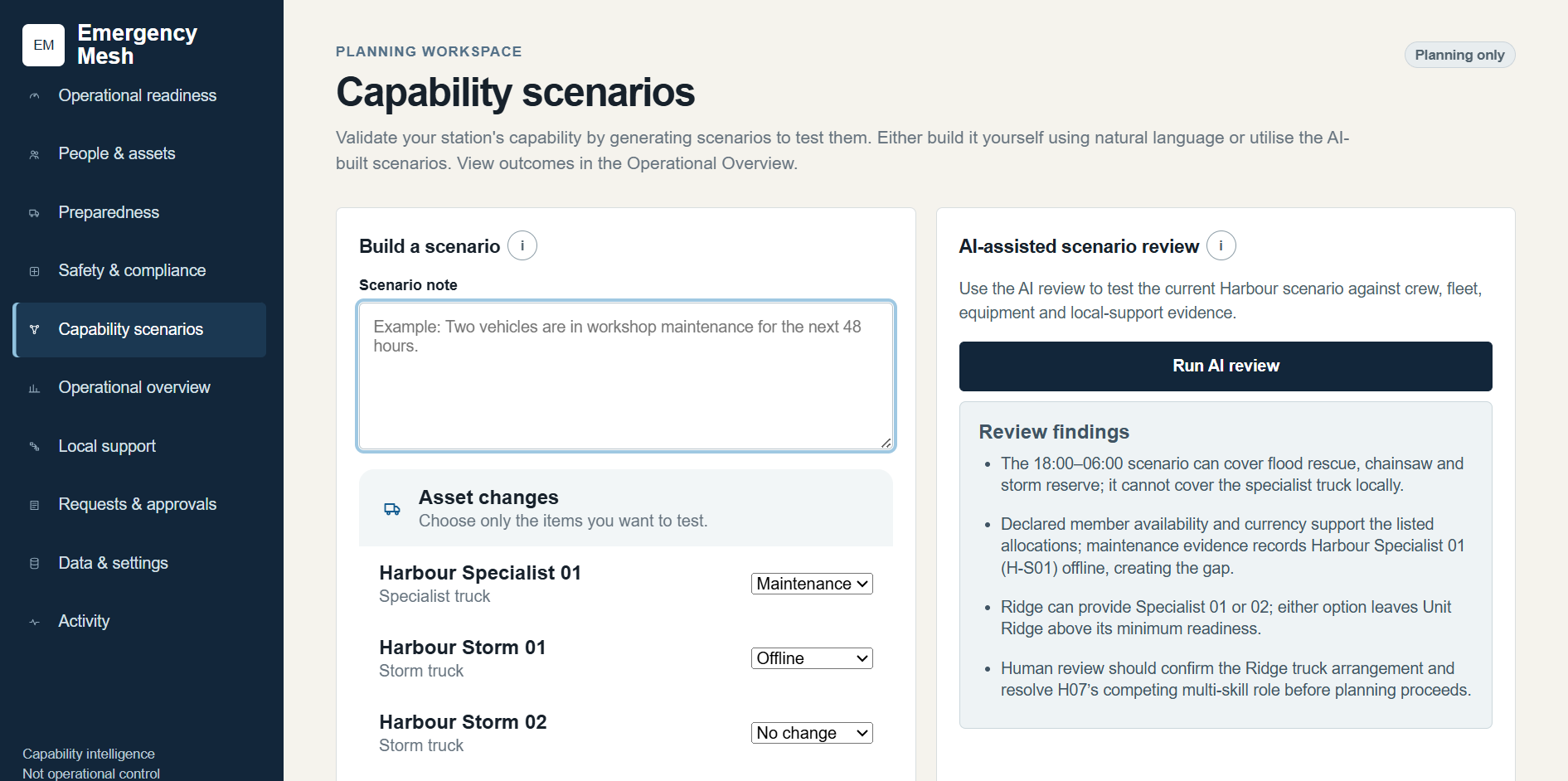
AI Capability scenario — wargaming a planning-only change.
-
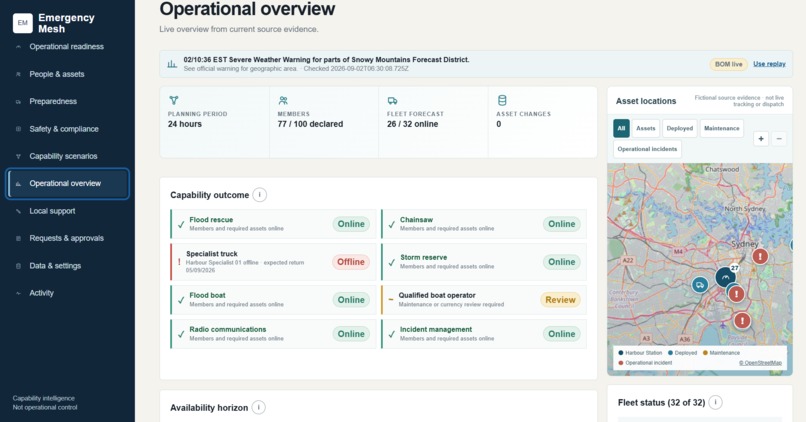
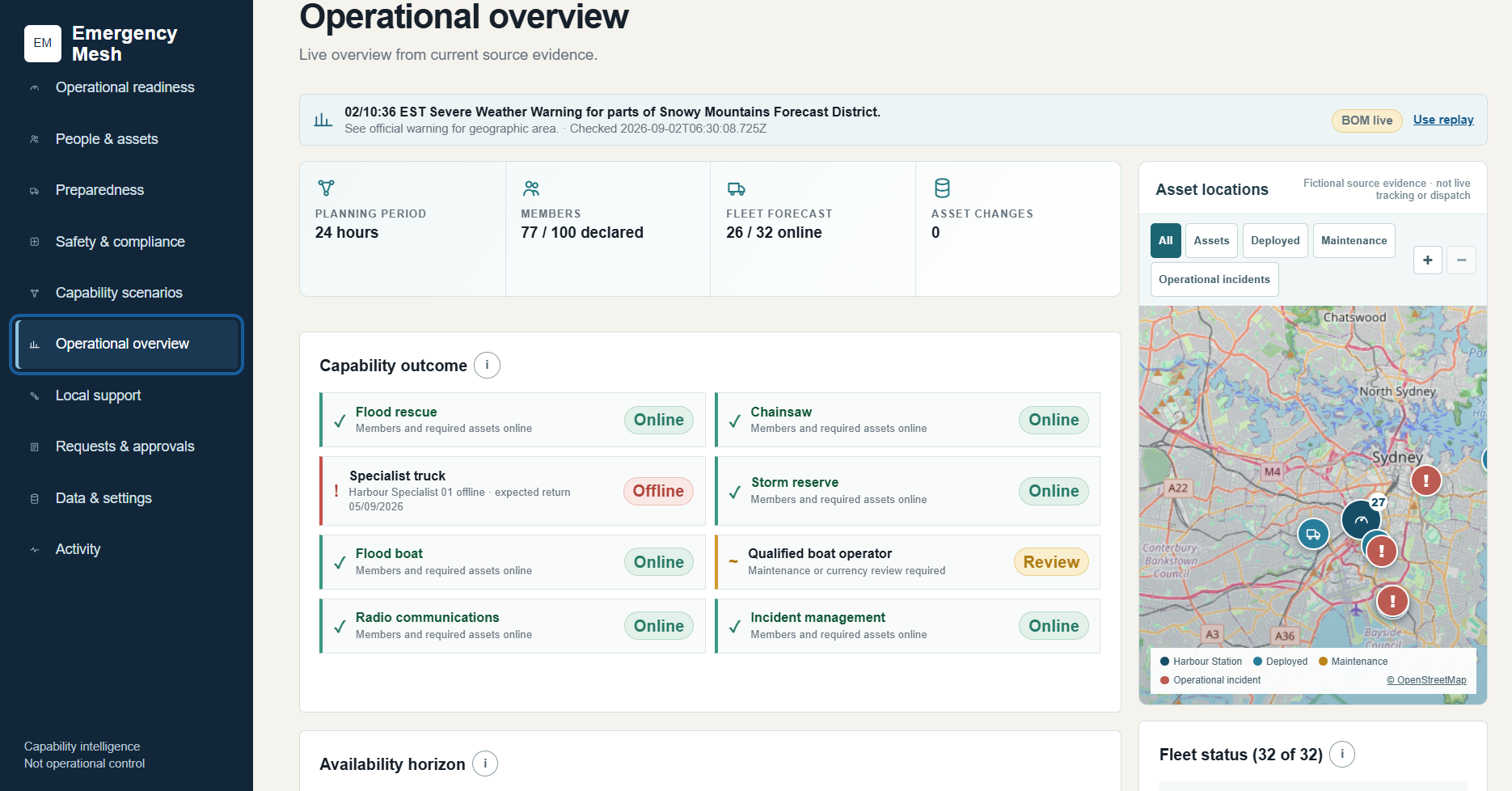
Operational overview — capability outcome and availability overview
Inspiration
As a Commander of specialist unit within an emergency service in Australia, I have no single view across my Preparedness, Response and Recovery data. In an emergency, crucial information is often scattered across disparate systems- ranging from operatational incidents, officer training/currency/availability and asset management. I wanted to explore how an agent-native web could help first responders turn that fragmented information into coordinated, safe action.
What it does
Emergency Mesh unifies emergency-readiness and response data into a real-time operational network. Responders can use WebMCP-powered tools to run scenarios to challenge operational readiness, to locate resources, review incidents, coordinate safety without navigating complex interfaces.
How I built it
I built Emergency Mesh as a web application with a responder-focused (non-technical) interface and exposed its core actions through WebMCP. Structured tools let agents retrieve incident data, search available resources, update coordination tasks, and support responders through the same system people use directly.
Challenges I ran into
The hardest part was deciding how emergency data should be represented. Incidents, resources, locations, capacity, urgency, ownership, and status all change quickly—and need to make sense to both responders and agents. I designed a shared, structured model that preserves context and relationships while keeping the information clear enough to act on under pressure.
Accomplishments that I'm proud of
I created a cohesive experience where emergency officers and AI agents work from the same operational picture. Rather than adding AI as a chat layer, WebMCP is integrated into meaningful responder workflows: understanding incidents, finding resources, and coordinating action. Also the ability for 'war-gaming' to see how capabilities in my station would cope with AI generated scenarios.
What I learned
I learned that WebMCP works best when tools map to real user goals, have clear inputs and outcomes, and complement—not replace—human judgment. In emergency contexts especially, agent assistance must be transparent, structured, and safety-conscious. It must not be the decision maker but collate data in a meaningful and easy to understand way.
What's next for Emergency Mesh
Next, I want to add live data integrations, richer source validations, more data-source connectors, and scenario simulations that help communities and organisations prepare for emergencies.
Built With
- next.js
- openai-codex
- tailwind-css
- typescript
- vercel
- webmcp


Log in or sign up for Devpost to join the conversation.