-
-
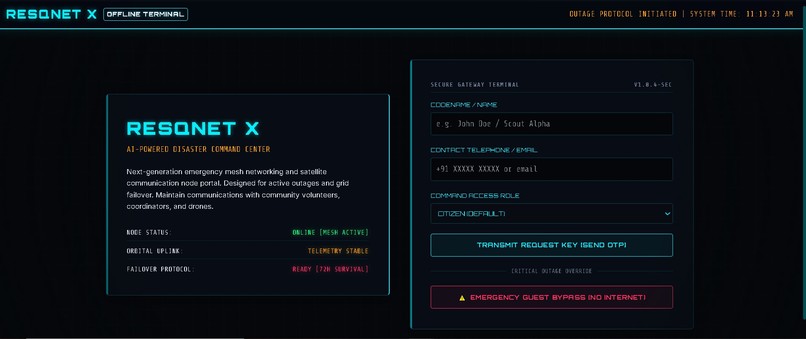
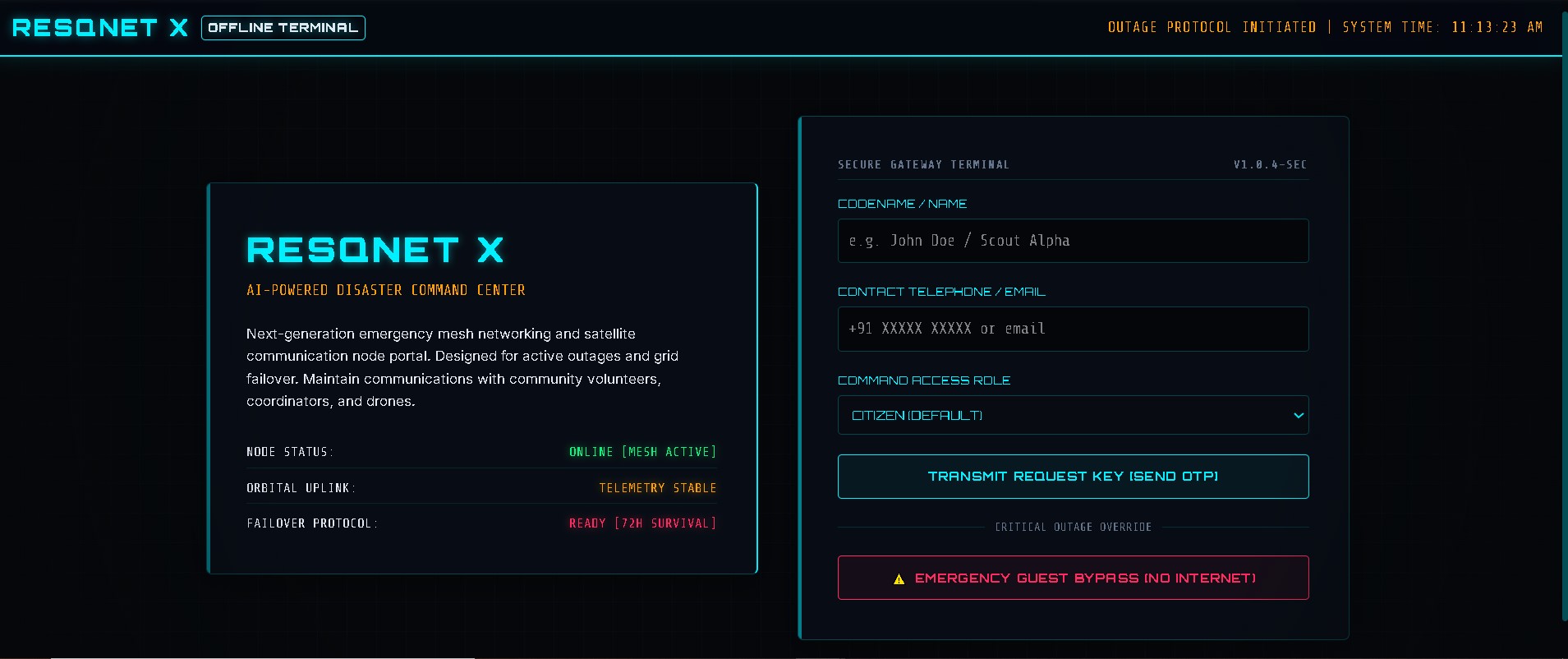
this is the login page
-
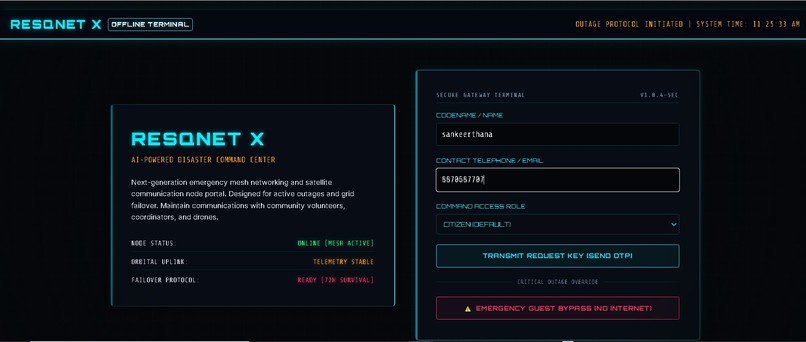
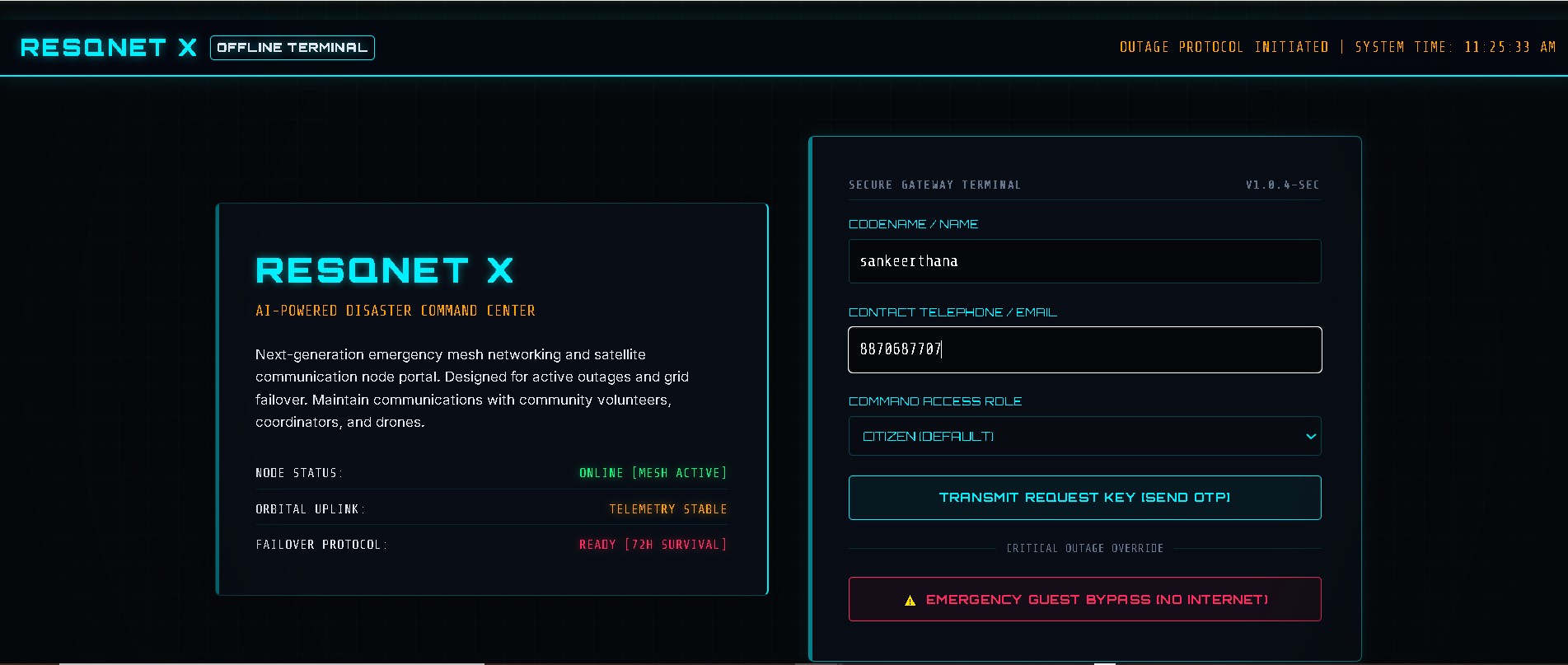
here we can give our phone number and name
-
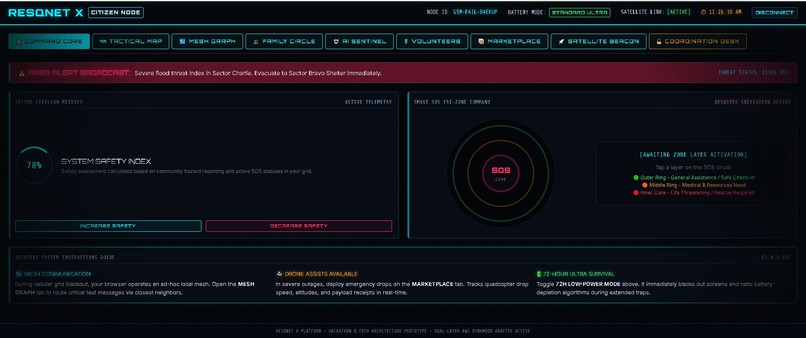
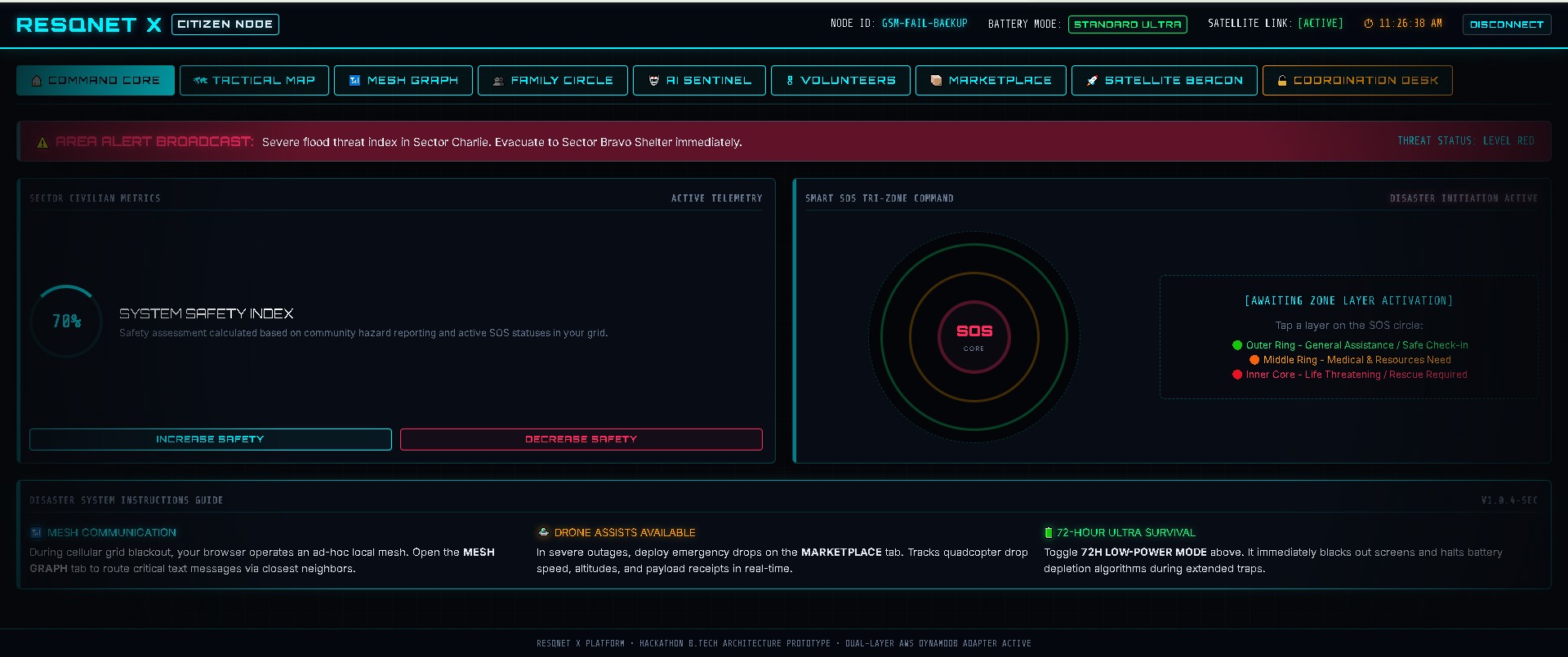
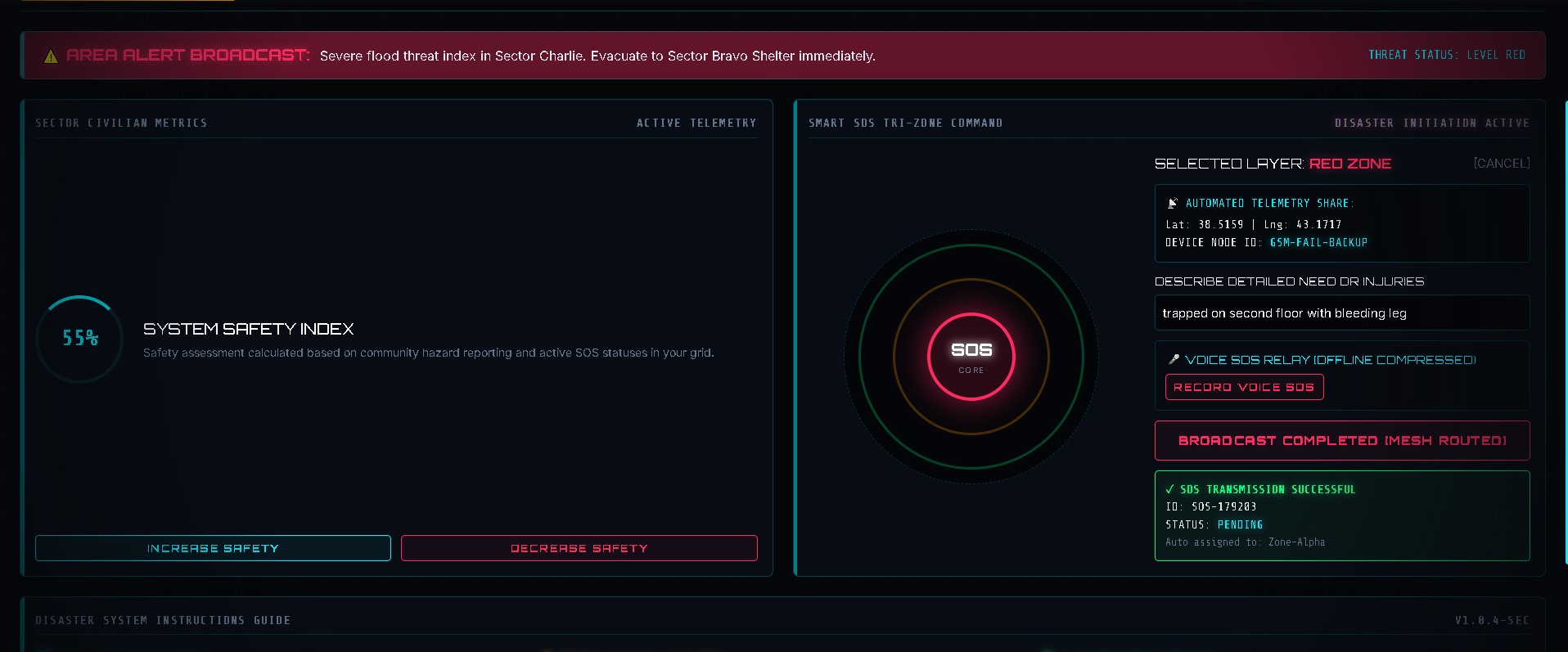
this is the SOS page,here we cn choose our zone and we can select our reason
-
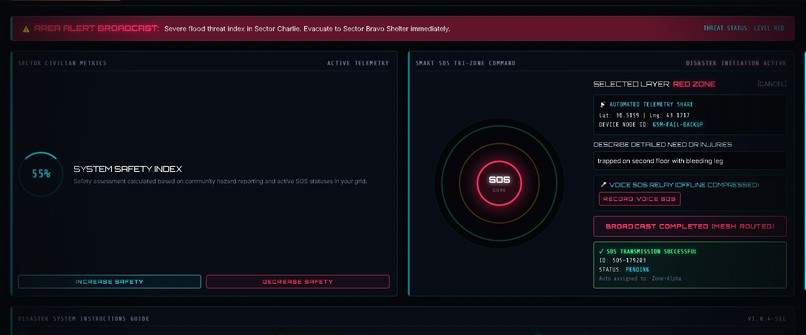
if we give emergency message, the message will be transmitted successfully
-
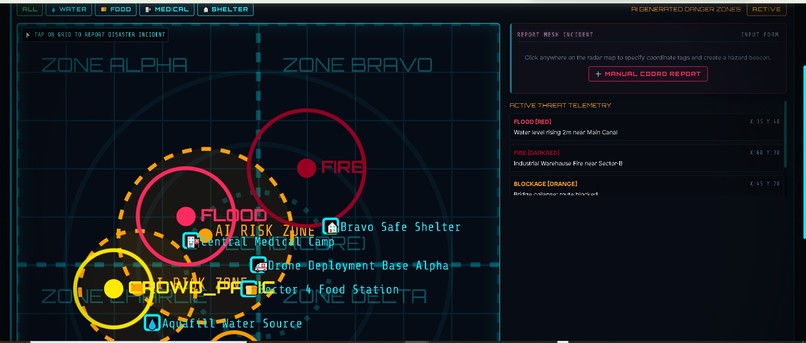
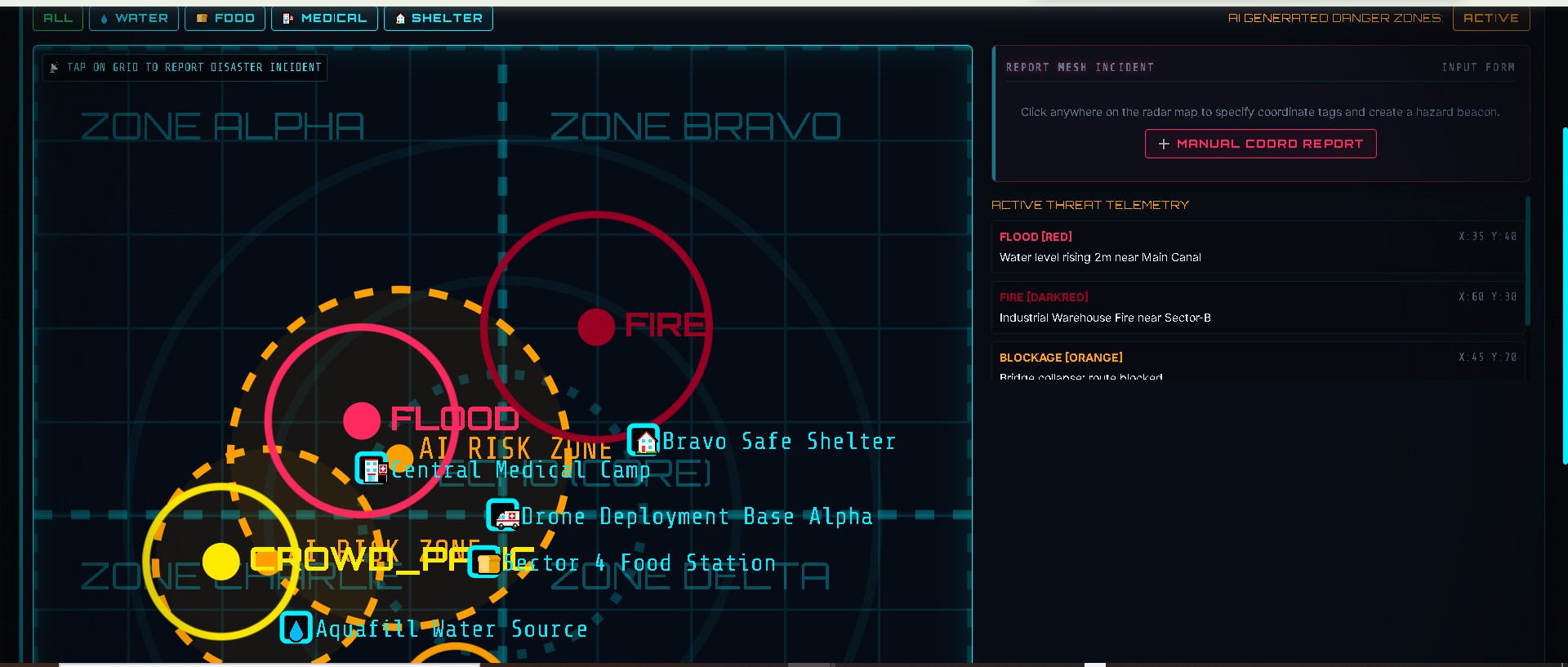
it is the tactical map page, here we can see the availability of water, food , and medical camp,
-
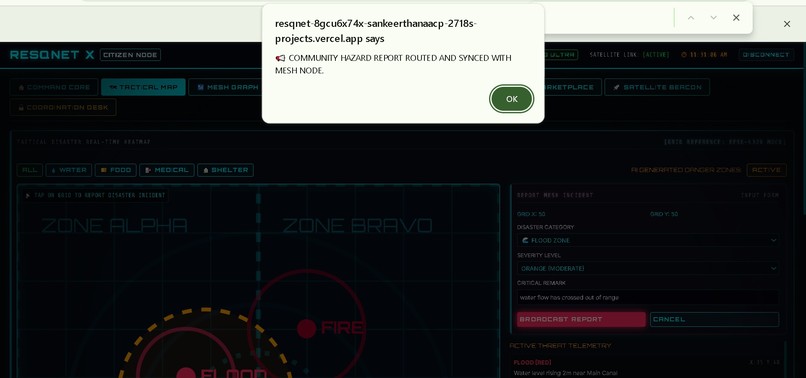
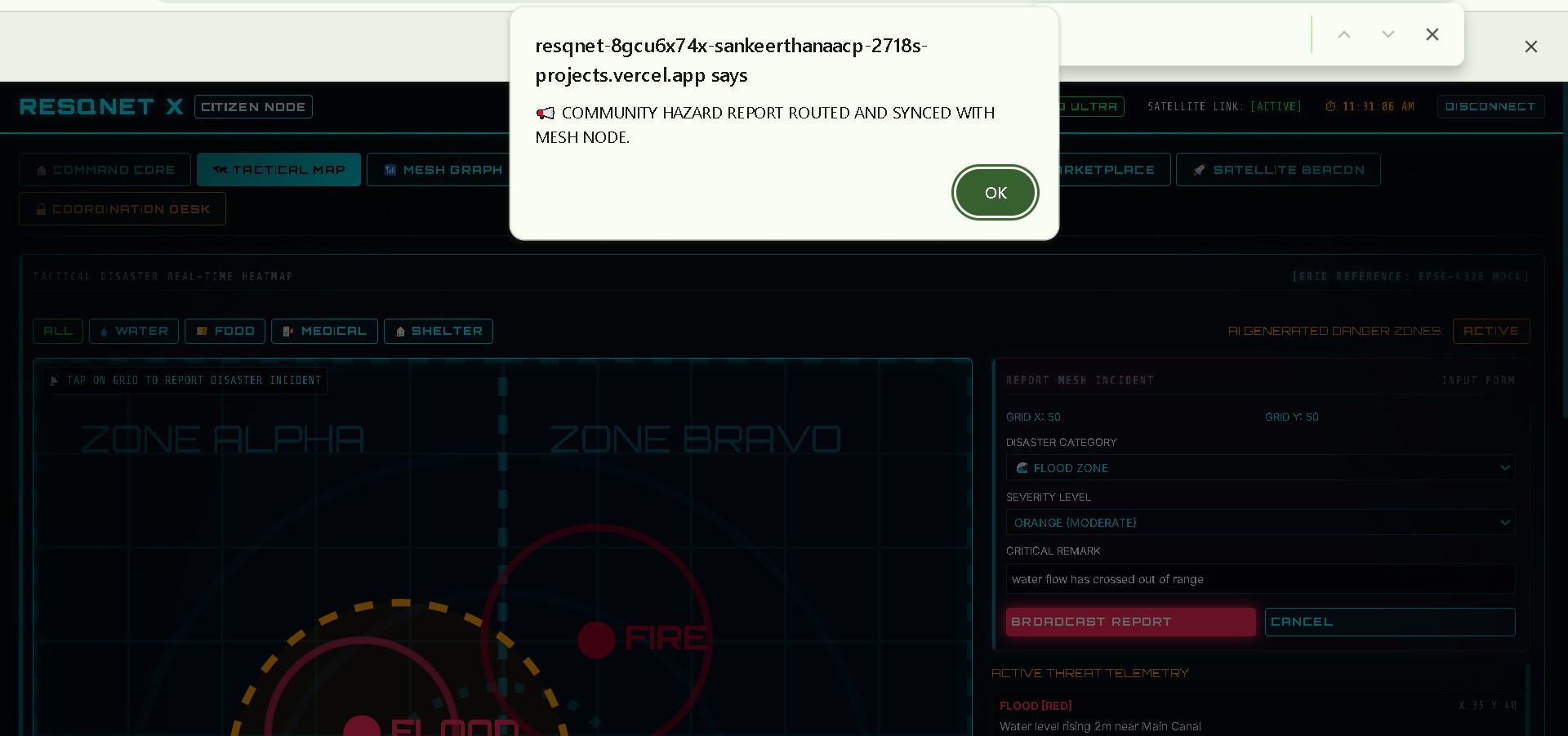
if we select our need,the message will be conveyed successfully
-
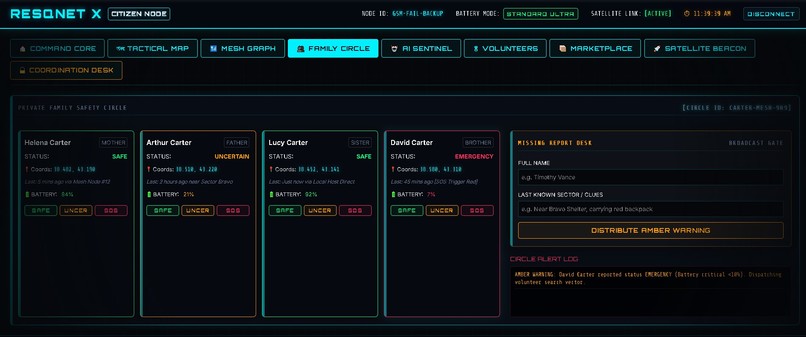
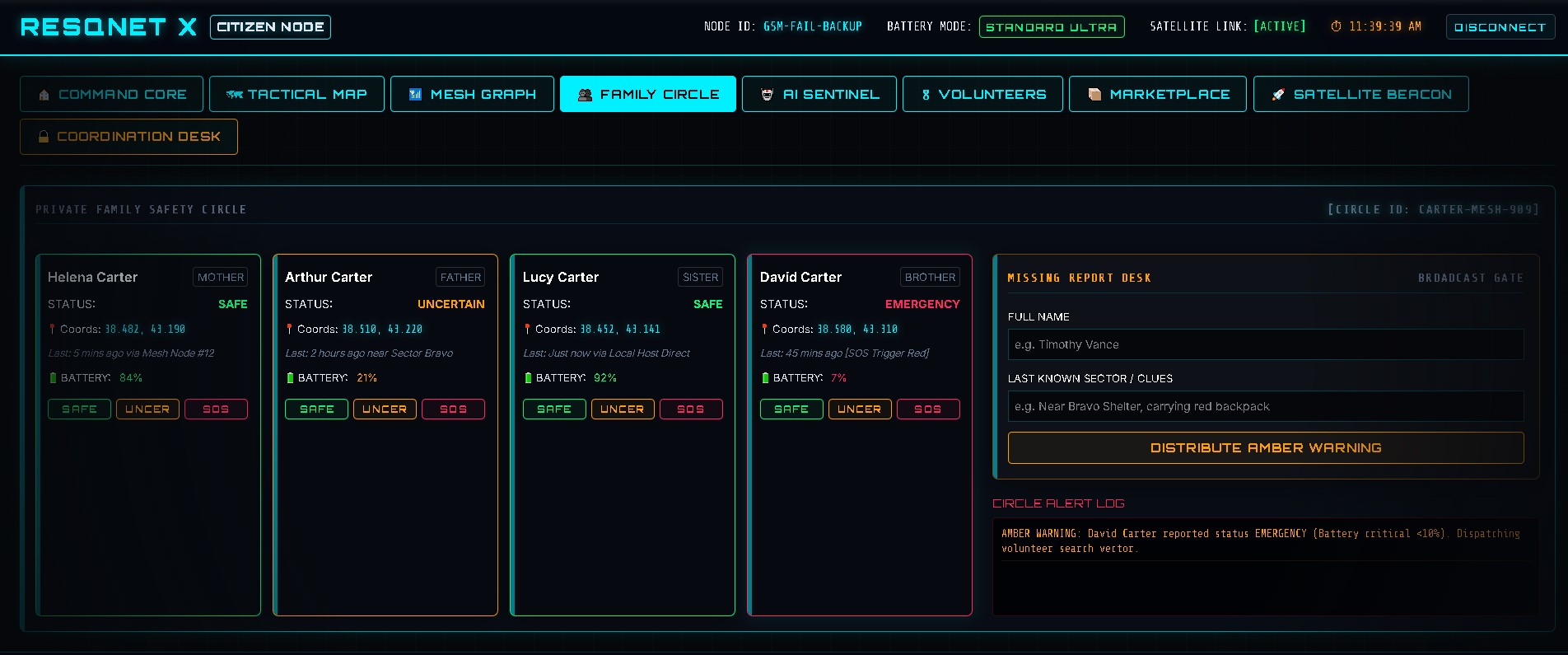
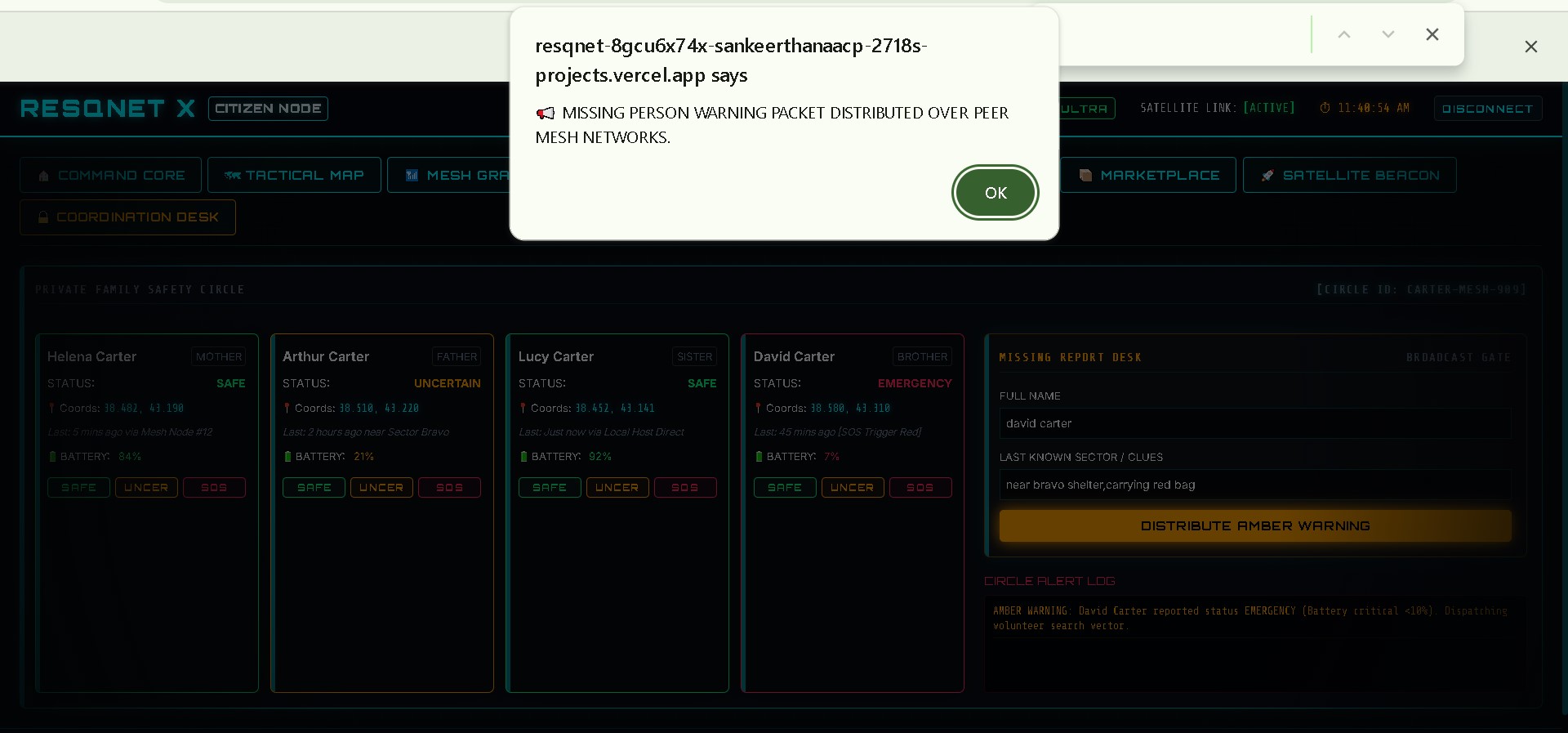
the next page is family members page . here we can se wheather our family members are safe or they are in danger zone
-
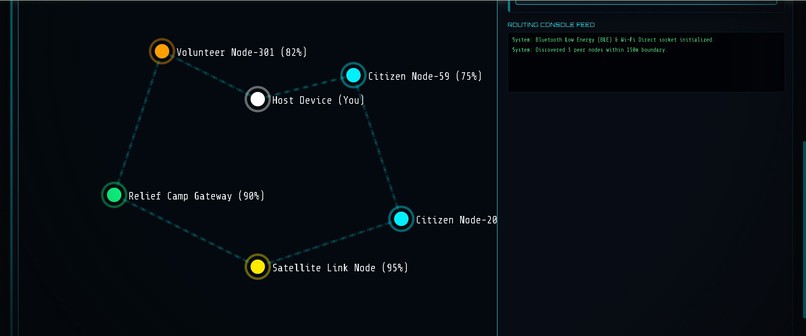
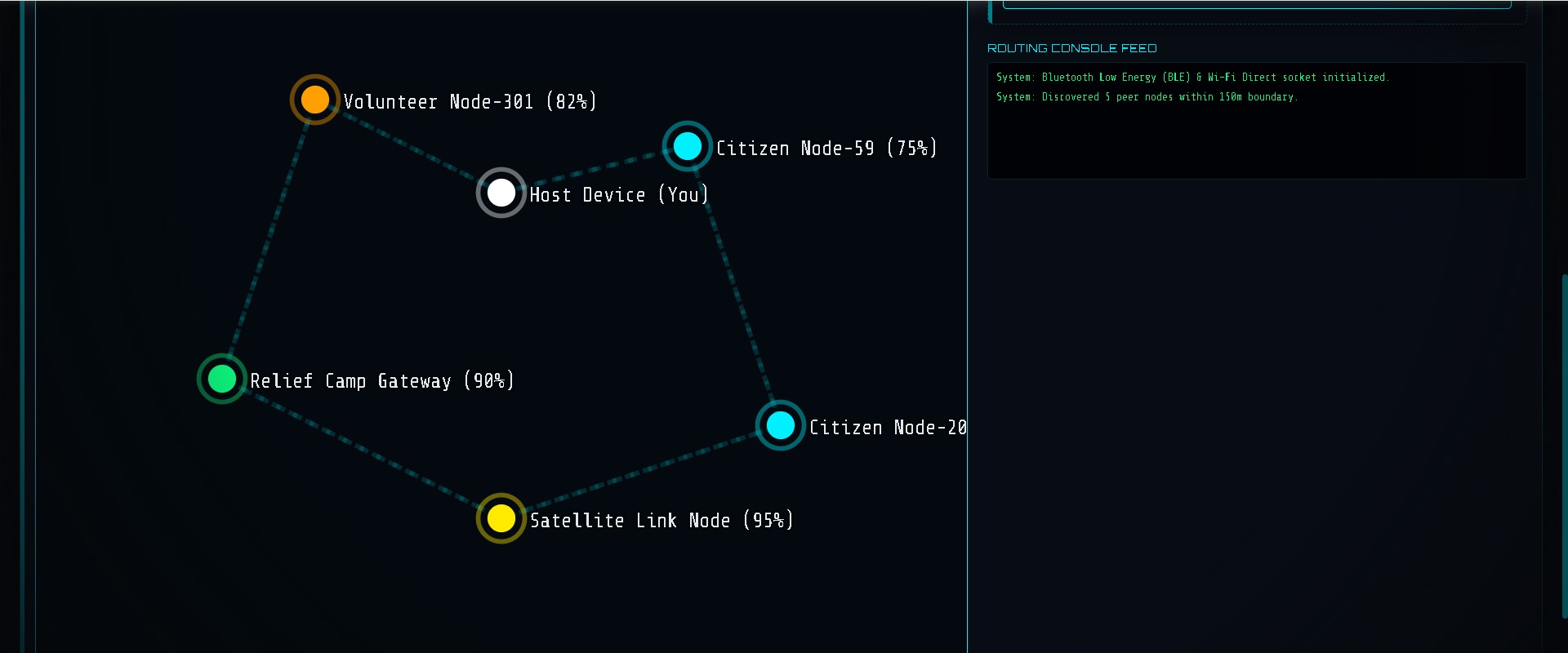
it is the mesh graph, if we select our needs, the map will represent the location of the particular volunteer
-
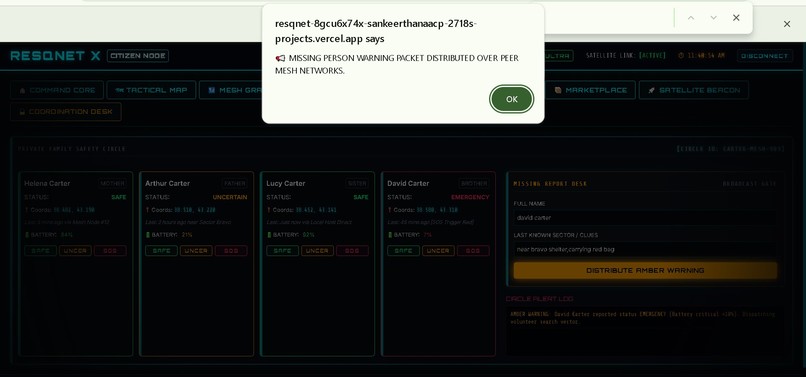
if we select any one of our famil members name ,it will get their location , and tell where they are at present
-
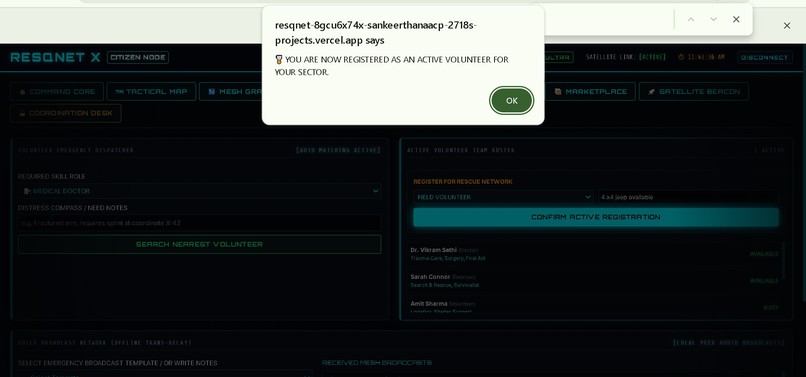
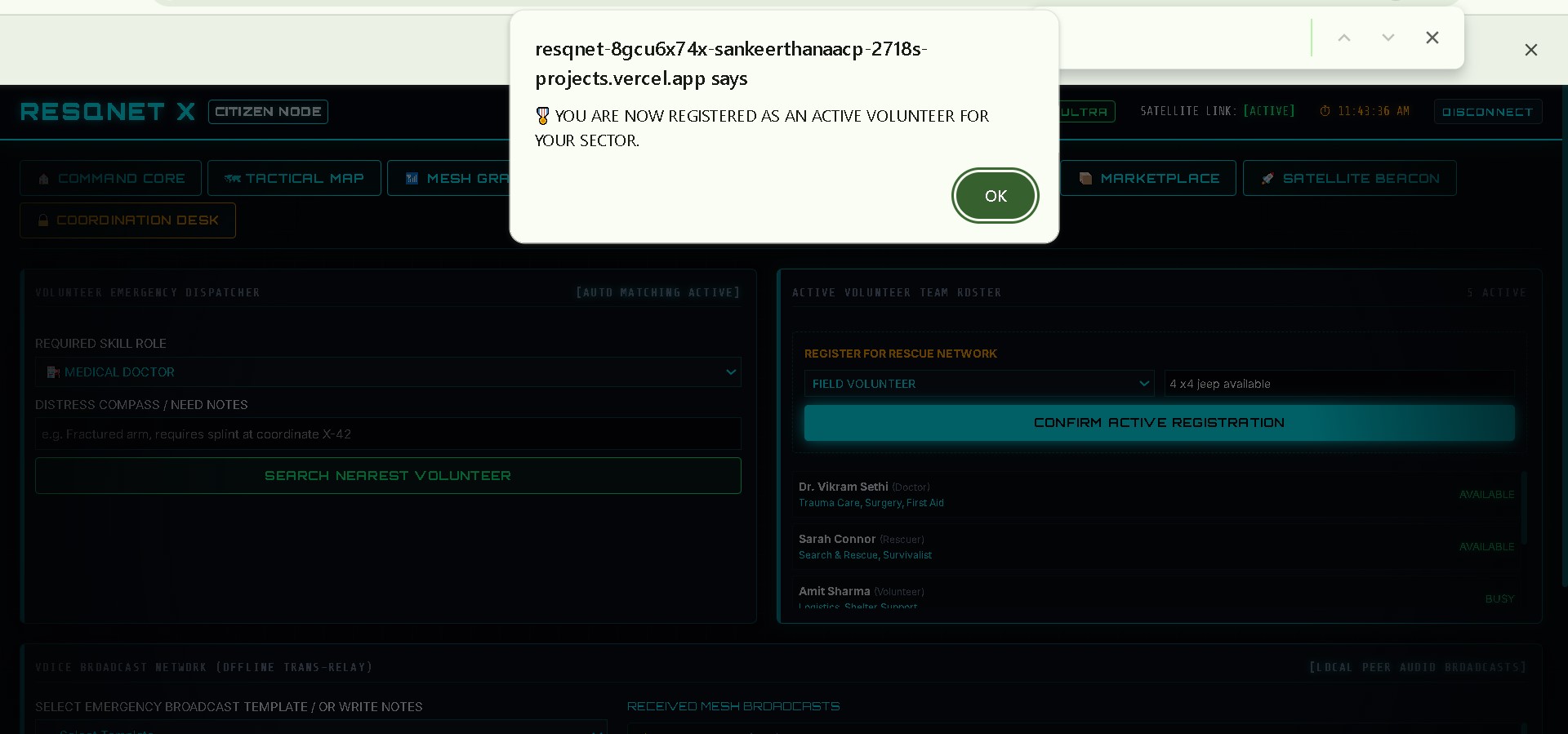
the next page is , we can find the volunteers and their particular roles
-
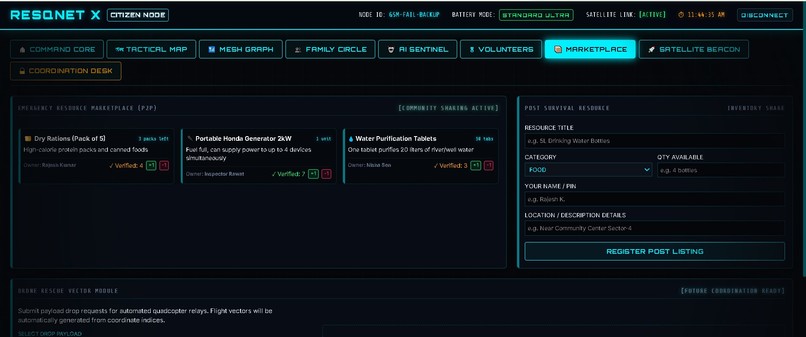
if we want to register as a volunteer, we can register the form and our respective role
-
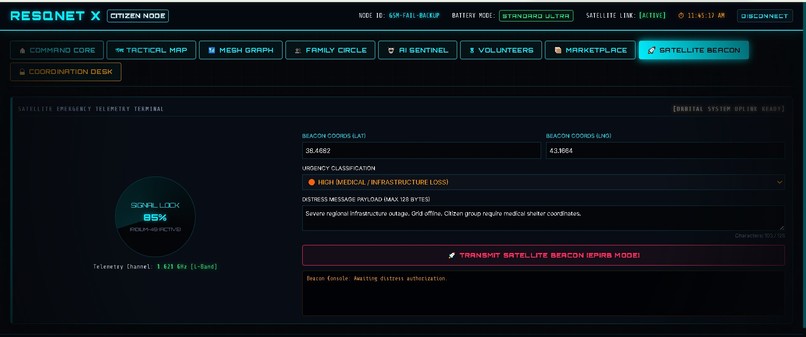
it is the AI sential page, here we can see how we are safer, or when an disaster is going to occur
-
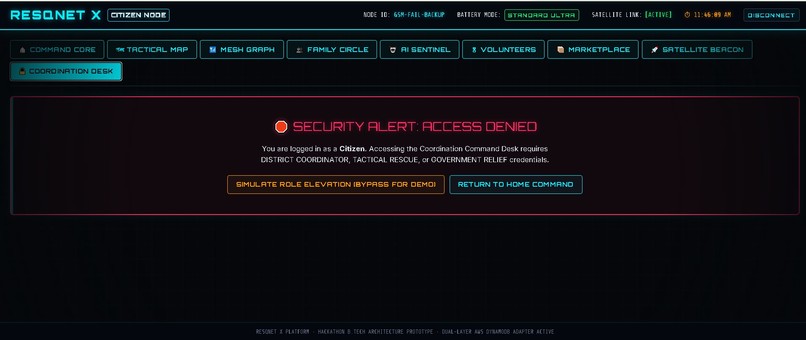
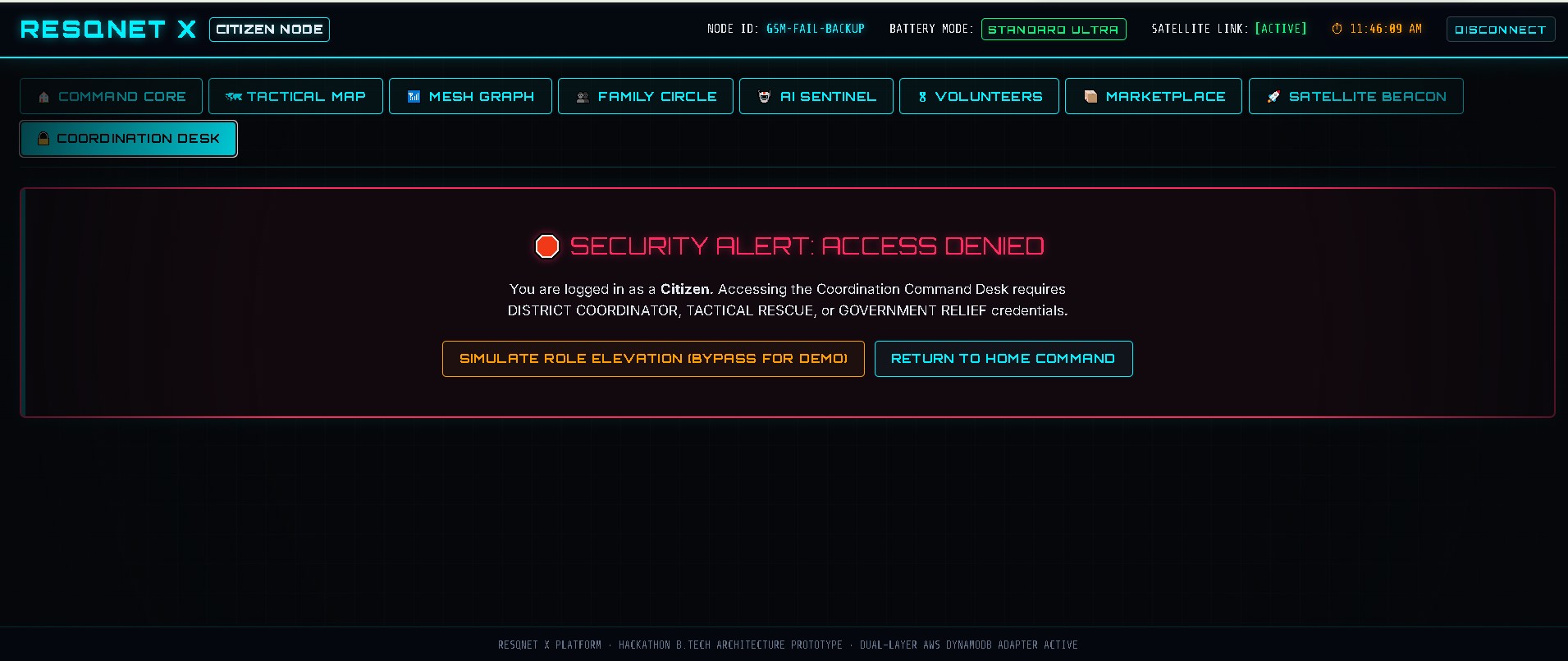
this page is not visible to the user, it is visible only to the manager of the website
Inspiration
Natural disasters, cyclones, floods, earthquakes, and large-scale network failures often leave communities disconnected when communication is needed the most. During such emergencies, traditional communication systems become unreliable, making rescue coordination difficult. This inspired us to create ResQNet -X, a next-generation emergency communication platform that ensures connectivity, coordination, and resource sharing even during network outages.
What it does
ResQNet- X is an **AI-powered **disaster command center designed for emergency communication during network outages. The platform provides:
- Offline emergency communication support
- AI-powered disaster monitoring and alerts
- Smart SOS tri-zone emergency system
- Tactical disaster map and hazard reporting
- Family safety tracking
- Volunteer coordination
- Community resource sharing
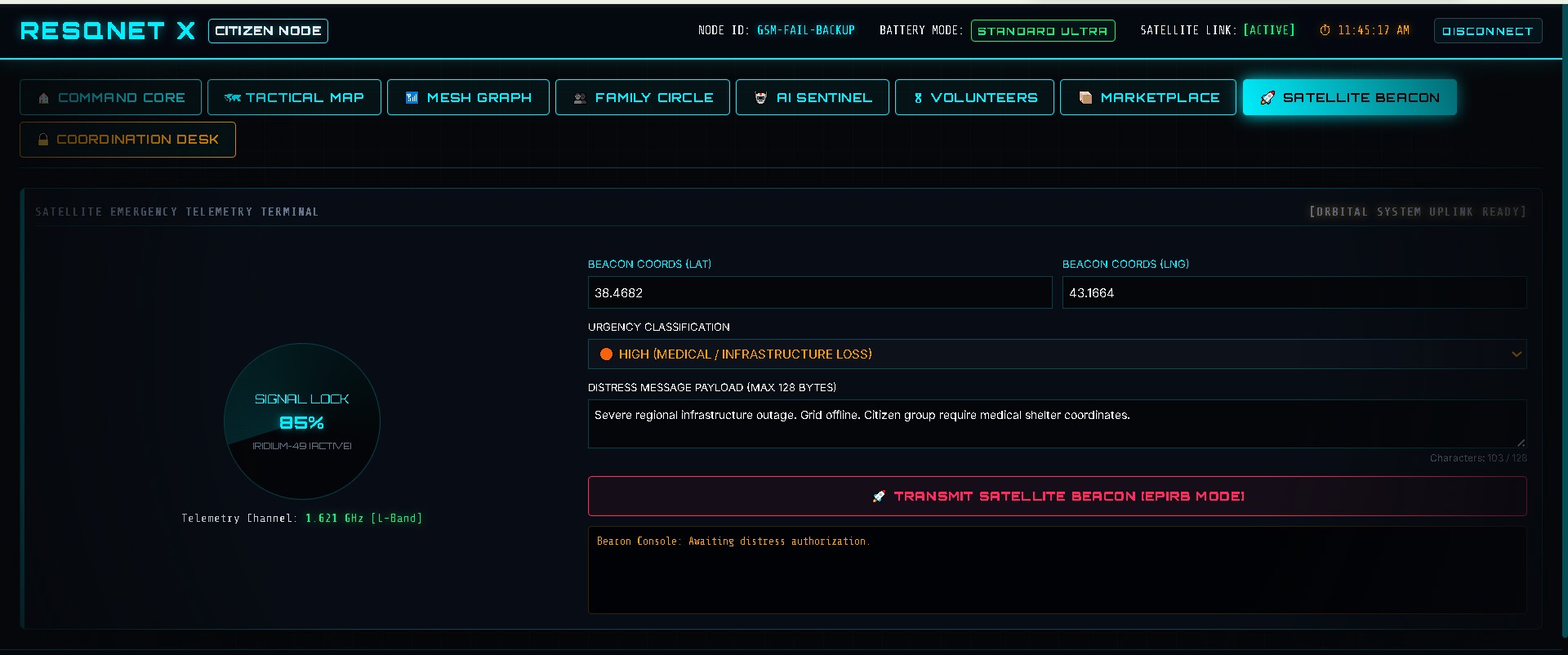
- Satellite beacon simulation
- Disaster heatmap and risk-zone visualization
The system helps citizens, volunteers, and emergency responders stay connected and coordinate effectively during critical situations.
How we built it
We built ResQNet X using modern web technologies and cloud-based architecture.
- Frontend: Next.js, React, TypeScript
- UI Design: Vercel v0 AI-generated interface
- Hosting & Deployment: Vercel
- Database Architecture: AWS Database Services
- State Management: React Hooks
- Interactive Mapping and Dashboard Components
- AI-assisted design and workflow generation
The platform was designed with a futuristic emergency operations center interface to provide a realistic disaster management experience.
Challenges we ran into
- Designing an intuitive disaster management dashboard
- Creating an engaging real-time tactical map interface
- Simulating emergency communication workflows
- Managing multiple emergency modules within a single platform
- Ensuring usability during network outage scenarios
- Balancing advanced features with a clean user experience
Accomplishments that we're proud of
- Successfully developed a complete emergency communication platform
- Built an interactive tactical disaster monitoring dashboard
- Integrated AI-inspired emergency response workflows
- Created a unique futuristic user interface
- Implemented hazard reporting and emergency coordination modules
- Designed a scalable architecture suitable for future real-world deployment
What we learned
Through this project, we learned:
- Emergency communication system design principles
- Disaster management workflows
- Next.js application development
- Cloud-based architecture planning
- User experience design for critical situations
- Rapid prototyping using Vercel v0
What's next for Emergency communication during network outage
Future improvements include:
- Real mesh-network communication
- Real-time satellite connectivity integration
- SMS and phone-based emergency authentication
- AI-powered disaster prediction
- AWS cloud database integration
- Live emergency responder network
- Offline peer-to-peer communication support
- Real-world deployment for disaster-prone regions.
Built With
- ai-assisted-development
- aws-database-architecture-(aurora-postgresql
- beacon
- community-hazard-reporting
- css3
- disaster-monitoring-dashboard
- dynamodb)
- emergency-mesh-network-simulation
- family-safety-tracking
- html5
- interactive-tactical-mapping
- javascript
- next.js
- react
- responsive-ui-design
- satellite
- sos-alert-system
- typescript
- vercel
- vercel-v0
- volunteer-coordination

Log in or sign up for Devpost to join the conversation.