-
-
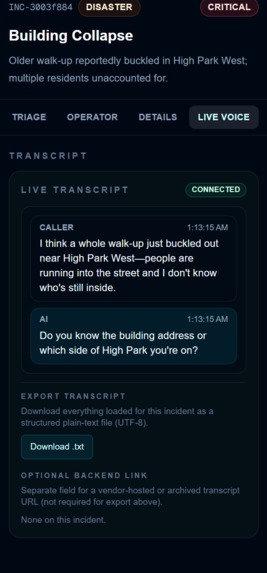
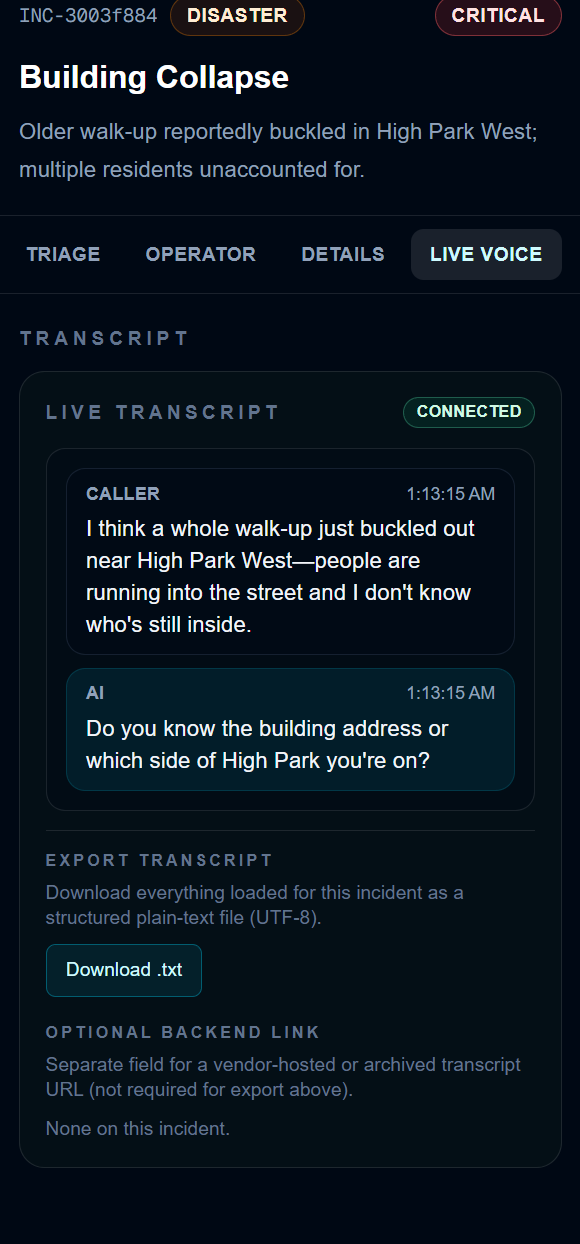
Live voice page
-
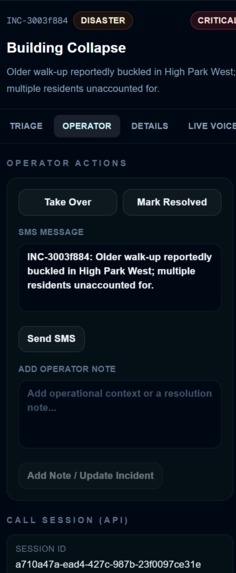
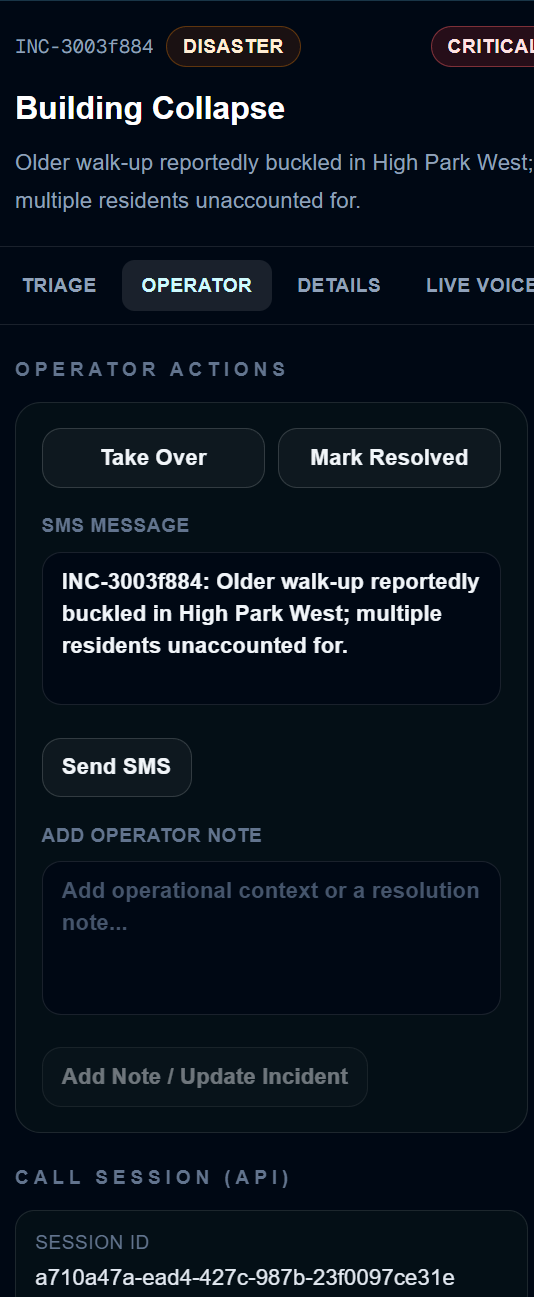
Operator page (more info not included in pic)
-
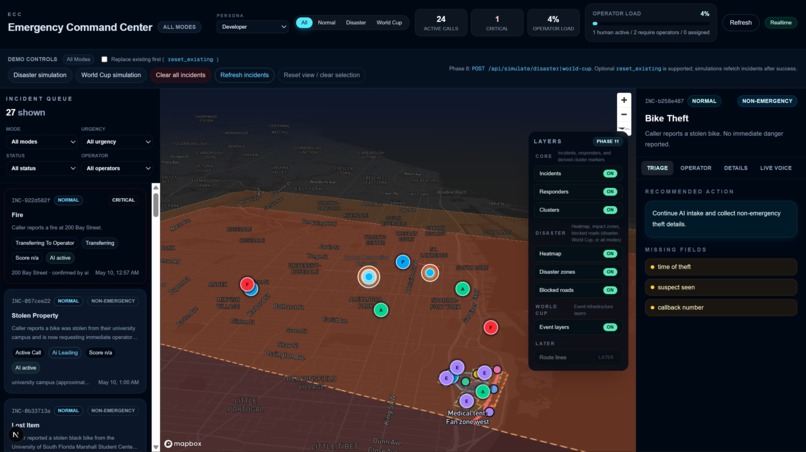
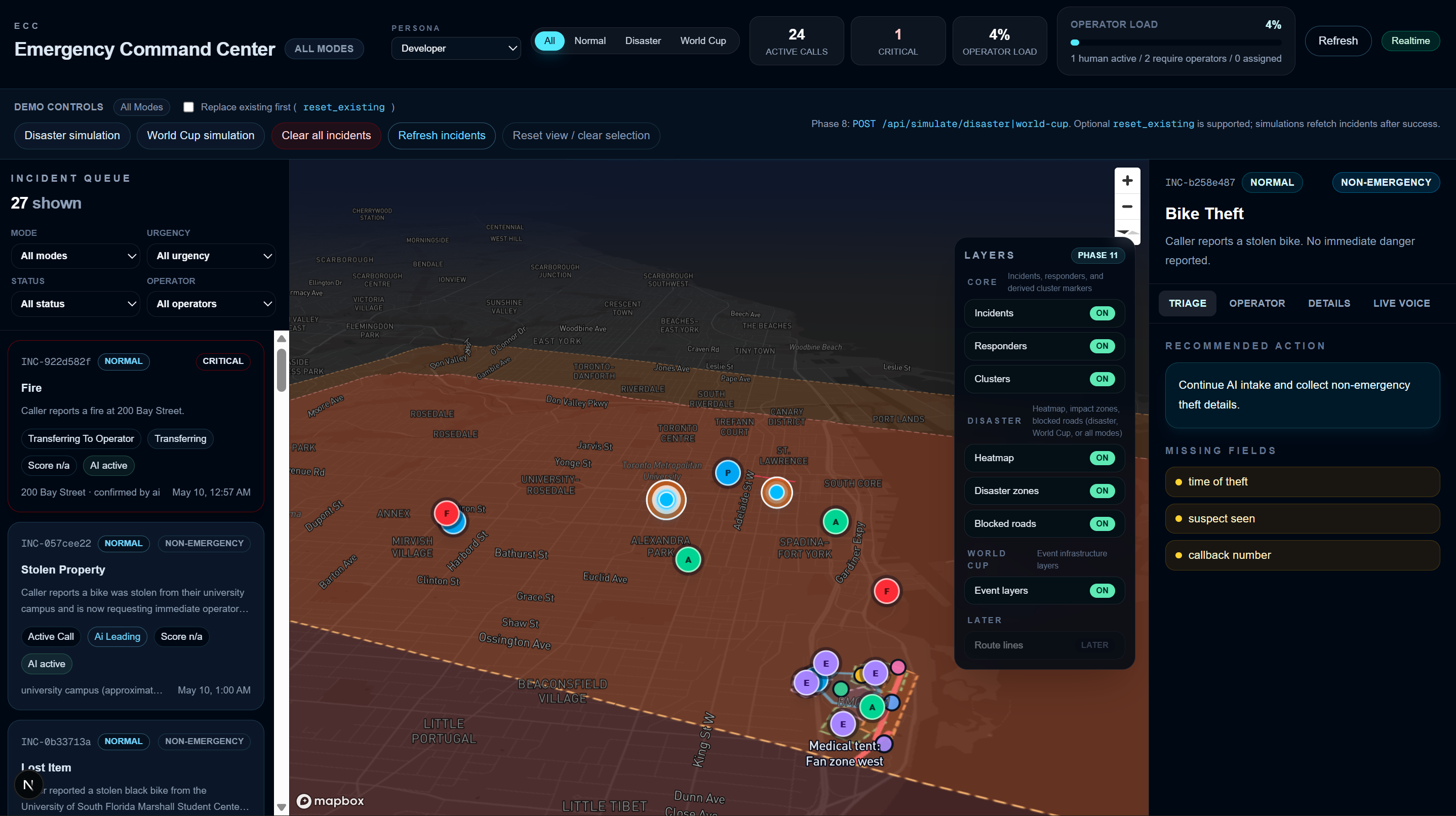
Dashboard
-
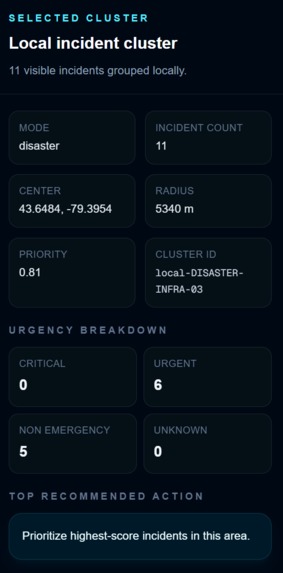
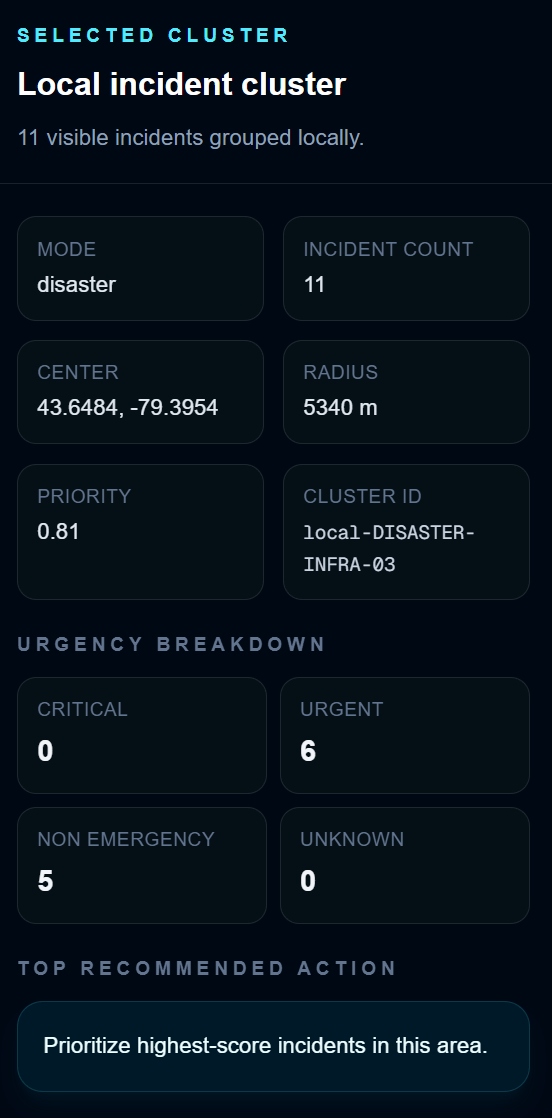
Cluster drawer
-
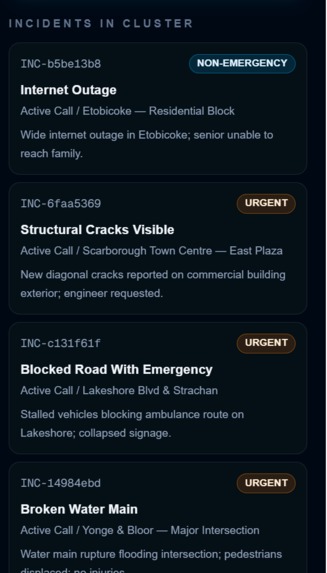
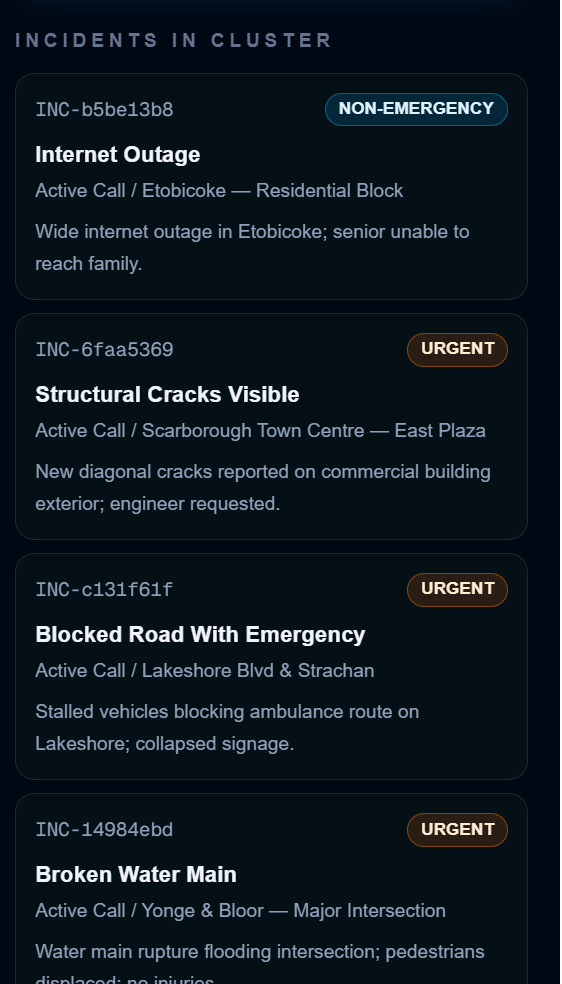
Cluster incidents (all grouped together)
Inspiration
“Toronto is expected to welcome more than 230,000 additional daily visitors during the tournament, which will place increased demand on the medical emergency response system and transportation networks”. The current average 911 wait time for emergencies in Toronto is far longer than official standards set by the National Emergency Number Association. Response times for life-threatening emergency calls have increased 22% since 2019 and Non-emergency wait times can be hours long since police are swamped with emergencies.
What it does
Our solution is an AI emergency operations platform during emergency call surges when operators are understaffed. Operators can immediately focus on the most life-threatening emergencies, while our AI voice agents can triage other incoming calls, gather critical details, update incident records, and escalate anything that needs human attention. This is all built on a live command map that visualizes which areas are becoming hotspots, clusters duplicate calls, and which incidents need the fastest response.
How we built it
We prioritized system architecture -> ensuring api contracts, backend structure, database schemas, organized markdown files were created. Furthermore, we wanted to understand what the ideal demo would look like and work backwards. We used Figma to help with design and created mock data to visualize and iterate quickly. This helped us integrate features really quickly and helped scale later in the hackathon. We used AI agents like cursor, codex, claude code (cowork) to ship quicker. Since we worked with a bunch of APIs like featherless, IBM Multilingual Incident Layer - watsonx.ai, Mapbox we used Skills.md files and mcps to give models context/documentation to prevent hallucination. We also committed code frequently to make rollbacks easier.
Challenges we ran into
We had a lot of merge conflicts since splitting up tasks/communication remotely is difficult. We also had to figure out how to integrate a bunch of APIs like featherless, IBM, mapbox, and elevenlabs in a short time period. While our system design approach was very useful, we pivoted a lot, spent time debugging so we had to update context for models frequently.
Accomplishments that we're proud of
Elevenlabs, IBM, Mapbox, featherless were all new tools that we had never used before. We managed to grasp the fundamentals really quickly by splitting tasks for each member so they can be proficient in their specific skillset rather than being moderately knowledgeable across 4 different sections. We spent a lot of time on calls to make sure there wasn't silence and everyone was aware of what they needed to do. We created a working demo that we're really proud of.
What we learned
We accelerated our workflow a lot throughout this hackathon. Hours spending time crawling over documentation was replaced by using mcps and agent skills. We also spent a lot of time debugging featherless and eleven labs since we had to optimize the most value out of them without wasting credits. Lastly, we're all familiar with git but during this hackathon we learned a lot about working together remotely without causing fatal errors to our codebase.
What's next for Emergency Command Center (ECC)
While our project has a ton of features and applications the possibilities are really endless. Roads/emergency systems in other countries are far different that in Canada. So we want to be able to scale our product across multiple different nations. Furthermore, integrating
Built With
- claude
- codex
- elevenlabs
- featherless
- gemma
- ibm-watson
- javascript
- mapbox
- mcp
- next.js
- supabase
- twilio
- typescript


Log in or sign up for Devpost to join the conversation.