-
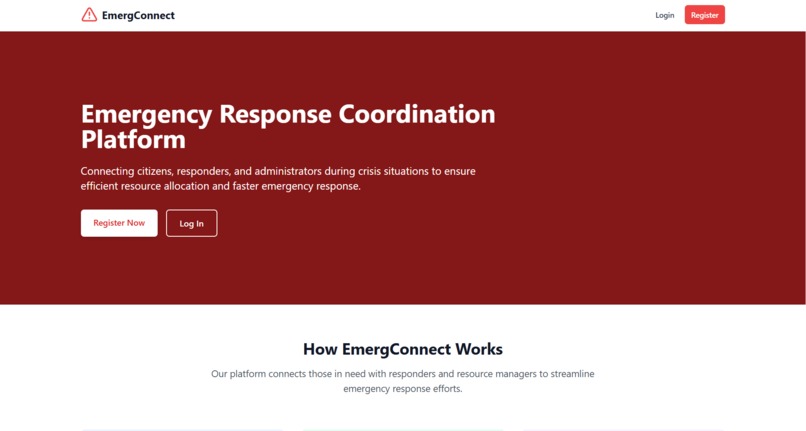
landing page
📝 About the Project: EmergConnect
🔍 What Inspired Us
EmergConnect was born out of the realization that in times of crisis — whether natural disasters, accidents, or local emergencies — response time and coordination are critical. We wanted to build a system that empowers citizens to request help easily, enables responders to act quickly, and gives admins the tools to manage resources and alerts effectively.
The project was inspired by real-world events where delays in communication and lack of resource visibility led to avoidable loss. EmergConnect is our attempt to bridge that gap using technology.
🛠️ How We Built It
We used a modern web stack to ensure real-time performance and scalability:
- Frontend: ReactJS with TailwindCSS for clean, responsive UI
- Maps: LeafletJS integrated with OpenStreetMap to show real-time geolocation of requests, shelters, and resources
- Backend: Node.js with ExpressJS for API handling
- Database: Supabase (PostgreSQL) with real-time subscriptions
- Authentication: Firebase Authentication to manage user roles (Citizen, Responder, Admin)
- Hosting: Vercel (Frontend) and Render (Backend)
- Notifications: OneSignal for push alerts and Resend for email updates
We also incorporated React Hook Form for reliable form handling and Umami for lightweight analytics.
💡 What We Learned
- How to manage real-time geolocation data and sync it across multiple roles and dashboards.
- Designing with role-based access control (RBAC) in mind from the start.
- Implementing live map markers using Leaflet and Supabase Realtime was both rewarding and educational.
- Building a system that is not only functional but also resilient and user-friendly during stressful situations.
⚠️ Challenges We Faced
- Setting up reliable real-time updates without overwhelming the UI required careful optimization.
- Managing asynchronous events (like SOS submissions and resource updates) in a way that remains intuitive for users.
- Ensuring a smooth user experience on slow or unstable networks, especially critical for emergency use cases.
- Keeping things cost-effective by using free-tier services while still achieving a functional MVP.
EmergConnect is still evolving, but the mission remains the same:
To make emergency response smarter, faster, and more accessible for everyone.
Let me know if you want a shorter version or a version tailored for a hackathon, grant application, or investor pitch!
Built With
- leaflet.js
- react
- supabase
- tailwind

Log in or sign up for Devpost to join the conversation.